- Video
- Audio Only
In this episode of People + Strategy, SHRM President and CEO Johnny C. Taylor, Jr., SHRM-SCP, talks with renowned business scholar and HR thought leader Dave Ulrich about how and why HR has reached a true inflection point. Ulrich reflects upon his decades of experience to explore how AI, workforce burnout, and rising expectations from boards are reshaping what organizations need from HR today. Their discussion dives deep into how HR leaders can move beyond employee experience alone to create measurable stakeholder value. Together, they reflect on the hard truths facing HR, and what it will take for the function to lead with credibility, evidence, and lasting impact.
Related to this Episode:
Gain hands-on skills, ethical guidance, and a practical AI roadmap to lead responsibly and deliver measurable impact.
Advance your career as an HR leader by earning a SHRM-SCP certification and begin transforming your workplace.
The podcast is just the beginning. The weekly People+Strategy Brief also features articles on all aspects of HR leadership excellence. Explore these must-read stories featured in the latest issue. Subscribe now and elevate your strategy.
News + Insights

Discover six best practices for a culture audit, from gathering quantitative data to sharing the lessons learned in a compelling story to enact an action plan.

HR strategy must be aligned with business priorities to deliver value. Discover gaps between CEOs’ and CHROs’ 2026 priorities and learn how to bridge them.

Discover five ways to focus your development efforts to support leaders at your organization. Plus, learn why influence is the new currency of leadership.

As AI expands talent analytics, HR leaders must turn metrics into better feedback, smarter development, and stronger trust to reach analytics maturity in 2026.
Episode Guest
-
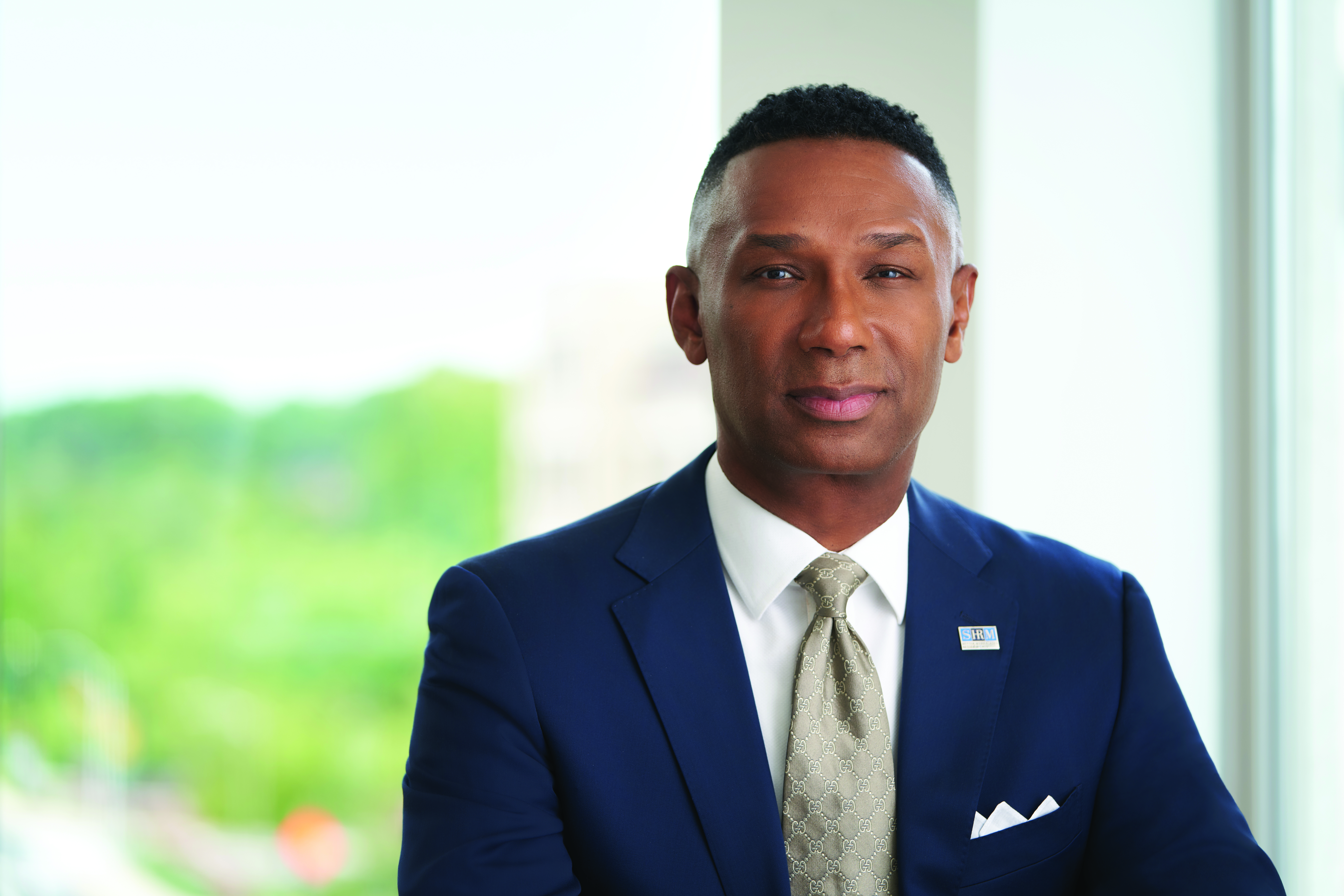
Johnny C. Taylor, Jr.
Johnny C. Taylor, Jr., SHRM's President and CEO, is a dynamic, revolutionary leader whose thought leadership is shaping current and future generations of the global workforce. Johnny’s magnetic delivery and research-backed content will help you and your organization elevate your executive leadership, maximize the power of human capital, future proof your business, and more.
-

Dave Ulrich
Dave Ulrich is the Rensis Likert Professor Emeritus at the Ross School of Business, University of Michigan, and a partner at the RBL Group. His work creates ideas with impact about how to deliver stakeholder value through human capability.
Episode Transcript
Ad: [00:00:00] Great news for HR leaders. The winter issue of People and Strategy Journal is now live exclusively for SHRM Executive Network members. The theme of this issue is risk management. Get expert insights on leadership, resilience, building agile teams, and more. All in our new interactive digital format. Read the winter issue now on the SHRM Executive Network website at SHRM dot org slash ian.
Mo: Welcome to today's episode of People and Strategy. I'm your host, Mo Fathelbab, president of International Facilitators Organization, People and Strategy is a podcast from the SHRM Executive Network, the premier network of executives in the field of human resources. Each week we bring you in-depth conversations with the country's top HR executives and thought leaders.
For today's conversation, I'm excited to share an important discussion around what many are [00:01:00] calling a moment of reinvention for the HR profession. Today's speaker argues it's something more precise, an inflection point. Keep listening for insights from renowned HR thought leader Dave Ulrich, the Reis Linkard professor at the Ross School of Business, university of Michigan, and the partner at the RBL Group.
This is a conversation with Sean, president and CEO Johnny C. Taylor, Jr. Ulrich has spent decades shaping how organizations think about leadership talent, and hrs role in value creation. Today's conversation is an unfiltered, evidence-based conversation on stakeholder value ai and whether HR is truly ready to lead in a period of uncertainty.
Johnny C Taylor: Welcome to the fourth annual SHRM Better Workplaces Virtual Retreat. Today's conversation is an important one and a special one for me. Now I'm gonna introduce a person who you all know, but Dave Alrich is the [00:02:00] RINs lt, professor Emeritus at the Ross School of Business, university of Michigan, and he is also a partner at the RBL Group, a consulting firm focused on building human capability.
That creates value for all stakeholders. But one of the things I count most important at his bio is he's my friend. And I mean, over time we've really become friends. So this'll be, I'm really looking forward to this conversation. David spent decades shaping how business and HR leaders think about leadership, talent, organization, and hrs role in value creation, get that value creation.
And he's done this with over 30 research based books. Today we're going to push beyond slogans and, and we're gonna ask the tough questions around stakeholder value, organizational capability, ai. Yes, ai and how HR is truly able to lead in this period of uncertainty, disruption, and declining trust. So Dave, Dr.
[00:03:00] Alrich, welcome back and thank you for joining me for this candid conversation.
Dave Ulrich: Johnny, I can't imagine a more exciting time for our field and anything more engaging to me than to spend time with you. Ah, every time. Uh, one of my great tests of leadership, a simplest test. We do all the research. When you leave an interaction with someone, do you feel better or worse about yourself?
Hmm. I've never left an interaction with you feeling anything but better about myself. Oh man. I I, by the way, by the way, we should end the session right now. That's right. That's right. If that's, uh, I mean it's, uh, but it's such a great task 'cause you say, oh, let's go do research. Let's go do another great theory book.
You feel better about yourself, and I hope in this discussion, those who are listening in, it's a tough time in HR. You just said it. We hope everyone who listens into this is walking away feeling a little better about themselves, a little higher, a little stronger, little more confident. Let's make that happen.
Johnny C Taylor: Let's make it happen. Well, let's go then. So you've said this [00:04:00] moment isn't just another evolution of HR. I mean, you don't like this, but you're the godfather. Of modern HR, and you've seen this, I mean, you've seen us go, people talk about personnel, they talk about HR. Is it people, is it culture? Is it like all of that?
You've seen this entire evolution, but now you say we're at an inflection point. So tell me what you mean by that, like what's so distinctive about this since you've seen the evolution?
Dave Ulrich: Well, first of all, let me just say. I'm not sure I like that term. Godfather. I'm the father of this family. That's, that's more fun.
I mean, this is a people organization and so there I am. That's the, I'm the father of this family. Uh, that's more fun. Um. Inflection point is such a fun term because it comes out of Intel. So it's got a technology and history to it. And what it says is there's some fundamental external trends shaping our world.
I'll just highlight a couple. We got social trends, employees. Moles is high. Yes. Employee [00:05:00] expectations are tough. Burnout, mental health. We obviously have technology trends everywhere. Uh, we should start every program by saying, Hey, I a, I, now we can go out in it. We got economic trends, uh, uncertainty, trade wars, shorter life cycles, horrible political trends.
And I know Johnny, you're working on it. I'm passionate about it. Civility, um, ability to work with each other, managing trade wars. We got environmental trends, demographic trends. All of those external trends begin to say something's gotta happen around the way we manage inside the organization.
Johnny C Taylor: That's right.
Dave Ulrich: That's the inflection point. Are we gonna respond or are we not gonna respond? So. I love your words. We're seeing revitalization of HR. We're seeing renewal, reinvention, whatever you wanna call it. I don't care. But HR has gotta step up. Its game. More is expected of us in this field than ever, ever, ever before.
Johnny C Taylor: Is this more different than anything we've seen before? So like I was talking to a group of technologists and they're saying, yeah, there was this techno [00:06:00] technological intervention and it took 10 years before it was mainstream. And AI though, has taken us, and I mean, it's been adopted at a rate that has never happened before.
Is that what's happening in HR? Is the, are we still just, are we doing the evolution or in your sense, your sense of it is, is this going much faster than it's ever been? Demand is one thing, but fast is another.
Dave Ulrich: Well, let me, let me give an example that's very personal. I've written a lot of books. Takes a year to write a book, takes about seven to eight months to produce it and it comes out 20 months after you've had the idea and you're going, you know, all those stories I told in the book are outta date.
That's a simple example. So I'm playing a lot more with this kind of podcast, with webinars, with LinkedIn where you can go quickly. Now, the danger is you've gotta be stable, you've got some eternal principles. Uh, uh, fundamental principles don't change. People are people. Uh, one of the greatest things I ever heard was Peter Drucker that says, I'm old.
And he said the one of the greatest management [00:07:00] activities ever was the pyramids.
Johnny C Taylor: That's right.
Dave Ulrich: They put together people and they built the pyramids. And with no technology, with no science that we have. The principle and management are somewhat the same, but the pace of change is so fast and you gotta keep up.
You can. The half life of knowledge. Uh, when I teach at the university, uh. It's fun. It would be fun to look at some of your, uh, keynotes and talks that you give. When is 50% of that stuff outta date? And it's about every year now. I mean, I gotta, I gotta get new data, I gotta new ideas. That's tough to continue to reinvent.
So yeah, inflection point. Um, get ready. HR people, if you're not ready to play with the world of agility, transformation, change, vitality, zest, whatever term you want, you're gonna get left behind.
Johnny C Taylor: And I mean, really left behind. So you and I grew up in an era where we were often talking about HR and its desire to be at the table.
It actually drove me insane to even [00:08:00] hear that, but, but I heard it over and over and over. Well, today, the. I think very few. If you're not at the table, that's a problem. It may be reflective of you. 'cause organizations have put people, culture, human beings at the front of their, their thinking. Right. But too often we're at the table after the strategy is set.
Yeah. And, and, and that is, that can be very frustrating because a little, little late. Right. What distinguishes HR leaders who shape business decisions from those who are brought in only at the end to implement them?
Dave Ulrich: Two issues here. The first is if somebody comes to me and say, what do you wanna do? NHL, I wanna get to the table.
My comment to them lately is, you know, given that's what you said, don't worry about it. You probably won't ever get there.
Johnny C Taylor: You won't ever
Dave Ulrich: get because, because you've lost it. So, and the issue is at the table, the human capability issues are there. Oh, you've done CEO studies, everybody does CEO studies. What are the big issues?
And there's three technology, no question, uncertainty, volatility, [00:09:00] and people. People, senior executives at Davos, this is the agenda. And, and so human people, uh, people, I call it human capability, their issues are at the table already. Are we in HR able to respond? So the second thing is, yes, it's at the table.
You said it beautifully. I think the legacy is, and I love metaphors. HR has been like looking in a, a mirror. So the mirror is the strategy. What do we do? We respond, strategy, formulate, we execute. I think we've gotta look at a window and so look outside my window. I can see the trees, I can see the outside.
I can see the outside world. When you look in a mirror, you're responding to what's already there. When you look out the window, you go, what's coming, what's next? And how do we begin to see what that future might look like? So guess what? There may be some things happening politically, socially, economically.
How do I get ahead of that? How do I in HR become a contributor to the [00:10:00] future, not just repeating the past.
Johnny C Taylor: You talk about the four pivots that HR leaders must make. You didn't say should, but must make up to reinvent the profession and there function for the first one. You argue that HR contributes more to business dialogue when it starts with thinking about all stakeholders, not just employees.
Like everyone, not just employees, which is a little counterintuitive to what we've said over the time, right? We are maniacally focused on the people and the employees. That's new. For many HR leaders. You see a pivot from strategic HR to stakeholder HR. Yeah. Now why is this pivot so important for the evolution of HR impact and more importantly, break that down because I got it when I saw it instantly, but there are a lot of folks out there who you're gonna have to like take them through that.
'cause that's,
Dave Ulrich: this is so fun. I mean, the whole field of HR continues to evolve and so let's [00:11:00] be proud of that. We were, we were functional experts, we were administrative experts, we were strategic HR stakeholder says. And it's a fascinating difference. And I'm gonna talk in random and we'll get engaged with this, please, but I'd love to get you, who's the human in, human resources and for decades?
The human in Human resources, the employee, the workforce, the labor, the talent, the confidence. I believe the human in human resources is every human being who touches our company. Hmm. So who's a human being Who touches my company? The employee. No question. The executives, no question. The board. They're inside the the walls.
But guess what? A customer is a human being. An investor, for the most part, is a human being. They may not be trained that way, but they are. They make judgements. The community is full of human beings and citizens. When we say hrs job is to help every human who engages with the company, have a better experience, wow.
And suddenly, suddenly the whole vista opens up and that's the window. When I look through the window, [00:12:00] I'm not just implementing what somebody else came up with. I'm out there saying, let's visit with customers. Lemme give some examples. 'cause I really wanna unbundle this 'cause it, it becomes so critical.
Um, I'll give two or three. I love this stuff 'cause it, and it breaks frame because people don't get it. First of all, let me tell you where people don't get it. So if you're listening to this, go through a a thought exercise. I've done this two or three times in the last few days. What's the biggest challenge in your job today?
Had a group of HR people. Today I'm in compensation. It's building a compensation plan that drives behavior. I'm in learning and development. I'm building a training program. I'm hiring some people. I'm trying to build employee engagement better. Phenomenal stuff,
Johnny C Taylor: right?
Dave Ulrich: And then I say, why? Right. Why? What's the outcome of that?
And so this is where I think the outcome has to be. It has to be about stakeholders, not just inside the company, but outside. For example, retail company [00:13:00] won't name it doesn't matter. I can use any, the example, big company, new head of HR, they say, you know, you're new. We need to build a leadership training program.
Let's go ask for $500,000. Okay, that's reasonable. And she said, no. I need some research. We have a thousand stores. I'll make it up. What's the average basket size, $40. Us in stores that have a higher, some form of engagement, whatever index you want. Create your index. Could be any index. Right? Right. Their, their retention, their morale, their productivity.
What's the basket size? 48? Well, that's 20%.
Johnny C Taylor: 20%. Yeah.
Dave Ulrich: We're a $400 billion company. 20% is $80 billion. So she said, I'm not gonna ask for $500,000. I'm gonna go in and sit with the executives and I'm gonna say, I'm here to give us $80 billion. Right? And the senior executives, where in the world did you come up with that data?
And she said, here's the data. It's ours. [00:14:00]
Johnny C Taylor: Right?
Dave Ulrich: Wow. I don't believe it. Okay. 40 billion. I'll cut it in half. Sometimes you get all excited about precision. 40 billion. They said, well, what do you want? She said, I want a billion. Oh, woo. And they said, okay. And she got it. Wow. And she was able to demonstrate that.
Now, the real question, I mean, that's for me, Johnny, so exciting because you're huge. You're saying, I'm not here to run a training program. I'm here to get customers to go from 40 to $48 a basket.
Johnny C Taylor: Right.
Dave Ulrich: That mindset is so critical, and I think HR people don't go there very often. If you're an HR professional, small company especially, and I know SHRM has got so many small companies who are the heart of our world and we care about you go out with your salespeople.
So go to a salesperson and say, may I do a visit with you? And their first thought is, you're gonna obsess me. Here comes HR. Go. Sit with customer. At the end of the meeting, the customer's gonna look at the [00:15:00] salesperson who sold a product or service and say, who are you? And say, hi, I am from HR, and say, thank you.
What a privilege to join you today. You've got a great salesperson. She or he just sold you a product and a service. But let me tell you what I just learned. I know what matters most to you. I know why you're buying our product and why you're not buying our product. Half of what you buy is from us, and half of what you buy is from a competitor,
Johnny C Taylor: right?
Dave Ulrich: Well, in HR, I'm gonna go back. Guess what I'm gonna do? I'm gonna hire people, train people, pay people, develop people, engage people against what you just taught me. We are gonna build everything we do inside our system against what matters most to you. Strategic HR is phenomenal. Implement our strategy.
Stakeholder HR is co-create our strategy. That's right. With customers and investors and communities. You only, Johnny, if we could get the HR community to move this way even a bit. Yes. I think it creates [00:16:00] so much more excitement and enthusiasm.
Johnny C Taylor: So back in the day, uh, early nineties, I think it was maybe late eighties, you introduced for us this concept of HR business partner.
This is pulling this through. It was brilliant and, and at the time I think it was exactly what we needed. But right now, especially as we evolve this, the challenge that I always said with HR business partner is the strategy was set and you were a partner to the business. In fact. Implicit in the language was HR is a, is not a part of the business.
We're a partner to the business. So the business people went over here and developed a strategy and then we were partners to the business people. And I think that was brilliant because that was the evolution of it. I've argued now, and I'd love you to react to it and I know this is cold, that because of what you just described, if we, we have to be a part of the business from the outset, like you can't have the strategy be built and then help [00:17:00] people execute it.
'cause that's a partner to something. I think what you are now evolving into it, maybe, maybe I'm putting words in your mouth, but this notion is yes, there is a role to partner with business, but the real value. Is to be a part of it from the beginning. You are a business people. A business person. I've said this when I've been in a room and I'm on a big board, and one of the things is the CEO says, well, I'm gonna bring my business people in and then I'll bring in the legal, finance, HR people as if they're not business people.
I was like, what do you mean? We are all business people, especially if we're all focused on. Shareholder and stakeholder returns. Is that where you're going now?
Dave Ulrich: Absolutely. Absolutely. And I don't care what term you call it, but it's that mindset because look back to that retail store and, and I'll give an example when, when HR goes into a business meeting to present a proposal for an HR investment, the first few slides should have nothing to do with the investment
Johnny C Taylor: at.
Dave Ulrich: I'm here to get a customer to buy a more product.
Johnny C Taylor: That's
Dave Ulrich: right. I'm here to get new customers. I'm here to invent [00:18:00] new products. So here's my request to everyone listening to this. I don't care where you are. You could be a CHRO in a Fortune 50. You could be a an intern. What will you do today that will help a customer someday in the future have a better experience?
Johnny C Taylor: That's it.
Dave Ulrich: And, and the line of sight may be, may be curvy, it may be ambiguous. But can I begin to see that we gotta build a culture of innovation? But we do that. So, oh, here's the other activity I love. What's the biggest challenge in your job today? I mentioned some compensation, training, development. Put a so that behind it so that I wanna do training so that our strategy happens.
Johnny C Taylor: So what end
Dave Ulrich: So that a customer buys a product, an investor has more confidence. And I'd add community. I think organizations have a social stewardship and, and I think we should be building communities that, that are appropriate. So I love to, so that question.
Ad: Not every HR leader wants to chase trends.
Some want clarity, compliance, and solutions that [00:19:00] actually work. The AI Plus HI Project 2026 is a hands-on working environment where you practice using AI responsibly through real world demonstrations and collaborative labs. With four tracks designed around your AI journey, you'll gain practical insight you can bring back to your organization.
This event will sell out. Secure your seat at SHRM dot org slash ihi. Pod
Johnny C Taylor: SHRM's 2026. State of the Workplace Survey, HR professionals and executives, so both levels. Say, stress and burnout levels are among the most pressing needs organizations must address in 2026. And it's their stress, their executive stress, their people's stress.
Everyone's stress is a problem. In fact, one third now have another problem. And that is they believe trust between workers and their organizations has eroded over the past [00:20:00] year. A third now and finally, so you got stress. Then you have, I don't trust you, which may lead to some of your stress, but then one quarter feel the relationship between employees and leadership is deteriorating.
This is not pretty. The situation that we find ourself in, and if this is not. If all of that didn't like keep you up at night, nearly three quarters, some 72% say employees today have higher expectations from their employers than in the past. Yeah. So against that backdrop, the the, we're moving the goalpost, right?
Employees want more. They expect more from their employer, and the employers are saying, you're stressing me out. You're burning me out. In fact, I don't want. To to deliver more expectations for you. Like I wanna keep it simple. I can't be your pastor. I can't be your, yeah. I can't beat everything to your social worker, your psychologist.
There's a problem right now. And so Dave, how do HR leaders [00:21:00] reconcile sort of your outside in logic with employee experience and the frequent employee malaise that's inside of our organizations? 'cause this is keeping CEOs up at night. I think you're right. Tariffs, technology and talent. Those are the three Ts I described you, I, I had, I had two before, which is talent and tariffs.
But when you add the other T, which is technology, this is a, a, a moment where people are struggling. So question, what do you, how do you reconcile all of this?
Dave Ulrich: Let me start with the first. It matters. I think mental health. Is the issue, if I had to pick one issue in this year to work on, mental health is there, and you got the data.
I mean the, the Gallup survey is flat declining a little. We feel it, and every one of us feel that stress and that enormous tension. So I think that mental health is there. I. The first thing I do with that data is help the executive. See, this is not just about mental health. There's a [00:22:00] strong correlation, and it's been around for a long time with the group at Harvard and elsewhere.
Employee engagement is highly correlated with customer engagement,
Johnny C Taylor: period.
Dave Ulrich: And, and, and in fact, we've all got an example. Think of a company you've been in where the employee was disengaged, disenchanted, and you don't want to go back to that company, a restaurant with a waiter. On the other hand, think of a place where you've been, where the, and I don't wanna name companies 'cause that always gets me in trouble, where it's been phenomenal, right?
You go back and, and you go back. I'd go to the executives and say, we need to manage this employee, whatever you wanna call it, sentiment in a way that, because it affects our customer and, and everybody sees that. I think the group at Harvard did great research on it. We've seen the research. What's interesting about the research, I'll just give you some data facts back.
The correlations between employee engagement and customer engagement are usually 0.6 to 0.8. So they're strongly correlated. The employee engagement is a lead indicator of customer engagement. So if you lose [00:23:00] employee engagement, you're likely then to lose customer engagement. So some companies have said like retail with a lot of rooftops.
If we see a a, a store or a, a fast food quick service restaurant, lose employee engagement two or three periods in a row, we're gonna intervene. 'cause we can't afford to let that go back. 'cause once you lose it, it's hard to get back. The other thing that's fascinating is the most critical employee on employee engagement is not the executive, it's the frontline employee.
The two things I'm hearing right now that may help that employee have a better experience at work, one is hope. Hope
Johnny C Taylor: it's
Dave Ulrich: beautiful. I, I, it's a funny word, but it's, it's what gives me a sense of hope, a sense of the future, a sense of opportunity, a sense. And, and Marty Seligman, the father of Positive Psychology, talks about hopefulness.
There's efficacy. If I do something, I have hope I can accomplish it. Hope is the future, not the past. It's optimism. I can do it. Give your [00:24:00] employees a sense of hope. And number two, personalize it. Make it work for them. What works for you? Johnny May not work for me. That's, but we each, I mean, I think we share a hope in this field and, and I, I hope we'll talk about that more.
Why are, why are you and I seeing this as a calling, not a job, you know, uh, why are we doing crazy things with our lives? 'cause we hope that something will happen. So if I'm an HR person. What can I do to give my employees a sense of hope? That if they work hard, something good will happen in their lives.
That matters to the employee? That matters to the employee. Personalize it. And if I can think about that, by the way, we can get checklists. There's all kinds of things we can do, but if I can give my employees efficacy, if they work hard, good things will happen. If I give them a sense of, of inventiveness innovation.
Uh, for example, an employee, it's difficult to work. We just had a family tragedy. Something went wrong. You know what I care about? You go take care of your family,
Johnny C Taylor: right? [00:25:00]
Dave Ulrich: I'll give a personal story. I'm at the University of Michigan. I, uh, end up not having tenure. That's a long story. Probably I'm not smart enough and I was doing a lot of things.
I get asked to spend three years doing service for a church. I'm on contract. I don't have a guaranteed job. By the way, I'm gonna get emotional. This is the kind of thing I hope companies can do. The dean, I see him in the cafeteria briefly, and he said, Dave, I heard you just got asked to do something for your church for three years.
I'm gonna tell you something. I guarantee you'll have a job when you come back. Go do this. It's gonna serve the world in a way that matters to you. I'm not of your faith, that's not the issue, but you're doing something. That's right. I'm proud of you doing it. Never in the history of the University of Michigan have we promised a contract employee a job three years from today.
You've got it.
Johnny C Taylor: Wow. Wow. Hope.
Dave Ulrich: Why do I stay? By the way, my loyalty to him, my loyalty to the institution, by the way, I think he had to fight for that. But boy do I [00:26:00] hope HR give your employees personal hope, whatever that means. That's where I see the in, uh, mental health coming. Yeah.
Johnny C Taylor: And I think that's, I mean, we've been talking about it, but you're right, this is the year especially because the data, SHRM's data is telling us this Gallup's data, everyone's data is pointing the same direction and it's not pretty here.
I wanna pivot for a second, and I'm gonna use the word pivot to your pivot two of year four. You talk about integrated human capability. And you've said that most human capital assessments are piecemeal and that we need to broaden hrs impact on stakeholder value. What are the best ways for companies to do this?
Dave Ulrich: Let me illustrate it really quickly with an example. You and I had the privilege in November of going to the Drucker Forum. What a, what A wonderful experience with a thoughtful people creative. I, I looked through, I think there were 37 sessions, 38 sessions. Imagine if you're an HR person, you go through these 38 sessions with some of the real creative people in the [00:27:00] world.
And it was, frankly, it was so fun to listen to some of those folks. 'cause they're so good. You go back to your business and say, I got 38 ideas to do. They're gonna look at you and go. What I mean, it's a little bit like going to the Cheesecake Factory. I, you don't go there as much as I do, but they got 250 items on the menu and say, what do you want?
Imagine at the Cheesecake Factory, if those menu items were randomly assorted, you'd go crazy. So what have they done? They put a, here's appetizers, here's soups, here's salad, here's main courses, here's three pages of cheesecakes, whatever they are. Um. We need in our field a taxonomy. That's a big word. And it's so simple.
It's a way to organize complexity. There's four things I think we in HR do, and that's the integrated approach. When I go into a business leader and say, I wanna help you increase investor confidence 4%, I wanna help you increase basket size 20%. There's four things I'm gonna tell you. Talent, how do you get better people?
Yep. All the things we could do [00:28:00] in talent organization. How do we get the right culture systems, teamwork. We know that talent matters, but in some ways teamwork matters even more. And leadership. There's three things I'm gonna give you. Talent, organization and leadership, and then I am gonna build the HR system to enable that.
I don't care where I am. If I'm listening to this. Think back to the next meeting you have with your business team. You're saying, I'm gonna create value for customers, investors help make strategy and finance happen. Because my talent. What are you gonna do with your people? Hire, train, develop, motivate, connect people.
What are you gonna do with your organization? Culture, innovation systems, teamwork. What are you gonna do with the leaders who you're working with, and what are you gonna do to build the HR system? That's it that. That's
an integrated
Dave Ulrich: approach
Johnny C Taylor: that's very integrated, and that takes me to your pivot three.
You talk about how the HR function needs to reinvent itself, and one of the things we've been doing here at SHRM is moving this conversation from aspiration to evidence. [00:29:00] Okay, you gotta prove it that. So we've developed an HR excellence or what we call HRX Framework Taxonomy. I'm gonna use your word by stepping back and asking a very important question.
What must the HR future, the function, I should say, of the future look like to maximize its impact, its value, and its ability to drive measurable business outcomes and stakeholder value? Like how do you organize this? Thing because we found high performing HR functions don't just excel at one thing, they operate across four dimensions from being a strong functional accelerator.
To optimizing talent, to acting as a market to Cerner and ultimately as an organizational driver. When HR is performing strongly or to a high degree of maturity across all four of those, that is when we start to see love it, real stakeholder value, not just good intentions. How do you react to that?
Dave Ulrich: I love it.
I love it. I love it. If I were advising someone to build the HR structure that will allow this stakeholder [00:30:00] value to occur, number one, make sure it matches with the organization structure. Sometimes we make HR more complex in the organization. If you're in a small, medium enterprise, don't talk about centers of expertise.
No, I got an HR person. If you're a single business and you're doing basically the same work worldwide, I. Do that work specially. You got a comp person for the world, you got a staffing person for the world. You're a single business match the business. Think about holding companies, you know, build an HR system for each of those subunits.
Now, lots of people in SHRM are those small businesses,
Johnny C Taylor: right?
Dave Ulrich: When you hear people talking about all the complexity in HR, Mike Big counseled you let them talk. Go back to your world, do what the business requires, and get the job done. But there may be times when you're a larger company and SHRM has large companies.
Mm-hmm. You've got a diversified, integrated ally, global company, guess what? You're gonna have specialists. That's right. Whatever you wanna call 'em. Compensation labor. Talent [00:31:00] training. They've gotta be deep experts. You're gonna have generalists. They're gonna be embedded in a business unit, a geography, or a function.
You're gonna have operations work that gets it done. You're gonna have folks at corporate who pull things together, make sure that each of those four elements work together. The taxonomy work is evidence and basis. So here's what you say I could do Talent leadership organization in HR. Which of the investments in those areas, and I love your evidence, are gonna get me the stakeholder value I want.
Johnny C Taylor: That's right.
Dave Ulrich: Do I need new people? That's staffing. Do I need to train existing? Do I need accountability? That's compensation. Do I need to work at product lifecycle? That's innovation. Do I need to manage my culture? Where should I invest? And as an HR professional, I think you should could be asking yourself that question without evidence means thinking rigorously even without full data.
But. Given what we're trying to accomplish with our stakeholders, customers, investors, employees, where should I invest to get the biggest bang for the buck? I think your [00:32:00] new competency model is not just a competence. It's a competence. So that something good's gonna happen.
Johnny C Taylor: So
Dave Ulrich: good. And we're gonna make that.
That's the so that,
Johnny C Taylor: love that.
Dave Ulrich: So you know the one, and I don't know how much it shows up in yours, but we got all these CO and we know what the competencies are. I'm gonna be honest. We know you gotta know the business. You gotta know HR. You gotta know change. The one that jumps out at us right now is courage.
Johnny C Taylor: Yes.
Dave Ulrich: Oh, courage. Is that coming up in your, is that coming out of your world
constantly. I talk about this Dave all the time. I know a lot of people who are really competent. The issue is courage. And listen, I have been in the room with CFOs of Fortune 500 companies, CEOs, general counsel, et cetera, and frankly, you know the right thing to do.
You actually know what's wrong here. It takes a lot of courage that comes from a place of we're humble by nature, right? That's there's a humility in knowing, uh, in the HR professional most of the time. And so you're sitting there saying, should I say this? Should I not say this? Am I smart [00:33:00] enough? Will the, do I know enough about business to say like, you're so constantly questioning yourself.
We lack courage.
Dave Ulrich: I, I love that because I'm finding that that executive presence is what we want every one of SHRM's members to have. We want you to have an executive and you gotta know the skills. You gotta know what's good in HR. You gotta discern good from bad. You gotta do evidence, you gotta do analytics.
You gotta know business. No finance. That courage comes from your, your presence comes from your courage. You're willing to say in a way that's meaningful.
Johnny C Taylor: That's right.
Dave Ulrich: I hope we in HR can build and, and now what, what's the underlying premise of that courage?
That's right. That's correct. You have, yeah. No, Dave, I, I could talk with you forever, but I gotta ask one final question 'cause I told our audience that you had four pivots and so we gotta talk real quickly about Pivot four.
You discussed the power of integrating analytics and AI for HR impact. So you've talked about there being five waves of AI from access to impact. Where do you [00:34:00] see most HR teams today focused? And where do they need to go and why? And how can AI be used to deliver stakeholder value through human capability?
Dave Ulrich: We've gotta move it on. Everybody's doing, I asked two years ago, everybody, how many use ai? 10, 20%. Now it's 90%. We're all using it, right? It accesses information. There's a couple of things we've gotta know about ai. One, it's not perfect. I give you, if you're listening to the exercise, have AI do your resume.
When a group of a hundred, I say, just take the next two minutes, do your resume. How many of you found a mistake usually 60, 70%. Be careful with ai. Yes. It's really helpful as an algorithm to summarize the past and give parody. Let me say that again. It will summarize the past really well, and it will tell you what others have done to be equal.
It will not create a future or differentiate. I call that human ingenuity. I know you use the same concept,
Johnny C Taylor: right? Totally.
Dave Ulrich: I believe that the formula for [00:35:00] talent today and organization and and leadership, human capability is AI times ai. AI is human ingenuity. That's right. Human ingenuity is vision. Seeing a future that's never been done.
AI can't do that. Human ingenuity is innovation. Do something nobody's ever done before. AI can't do that. It can summarize. Human ingenuity is emotion. Share the passion. I let myself feel emotion about our coming together and partnering. I feel that passion, human ingenuity. I. Is, is is wisdom and judgment Rom Sharan, who's one of our, both of our mentors, and he's everybody's mentor and friend.
That's
Johnny C Taylor: right.
Dave Ulrich: ROM talks about wisdom and judgment and decision making is an executive skill. That's the human ingenuity. And then AI is the algorithm. We're real. We're real
Johnny C Taylor: human. That's
Dave Ulrich: right. We're human. That's the human and, and I hope that those of us in human resources never lose sight of that. Never lose sight of that.
So if we get this [00:36:00] right, if HR gets this right, everything that we've talked about for the last 45 minutes or so, what does the profession look like five years from now? And if it doesn't, what will we lose?
Dave Ulrich: My sense is, I'm not a hundred percent sure what it will look like, I'll be honest. 'cause I think ai, we're gonna have a GI, we're gonna have, uh, a SI and I think what we lose if.
I watch the news and sometimes I start to cry. I see the political divisiveness. I see people fighting with each other politically, socially, economically, morally, and I think that's not a world I want to give my kids and my grandkids. I mean, I wanna give my kids and grandkids a world where we can disagree better, where we can work together, where we can, we can find a place where our differences become strengths.
I think organizations are an incredible setting to make that happen. Absolutely. That's an incredible setting because that's where we spend time. You've got data on that. This is our time, this is our identity. This is our energy. I [00:37:00] hope we can help. As HR people, people discover their values.
Johnny C Taylor: Yes.
Dave Ulrich: And their potential, and personalize that if, if you need to take a year sabbatical, go, come back.
We, we care about you. We want you to do your best. I know that's the agenda at SHRM. I know that's the agenda at SHRM and not only SHRM, but it's our agenda. Those of us who care. It's our profession. This is our agenda. So I'm gonna ask you a question.
Johnny C Taylor: Yes.
Dave Ulrich: Why do you stay? You could you, you've been so successful.
You could do a consulting business. You could go off and run a all kinds of companies. Why do you stay?
Johnny C Taylor: I'm not done with this. Like you, I have a passion for this profession. I can just tell you and I, it's actually. Something I, I don't even understand. As, you know, I'm trained as a lawyer. Um, as you know, I could go to industry, a whole bunch of other things.
This thing is in my blood. I want to see this through. I think we are hat, to use your word, I truly believe in inflection point for the profession. And I think, [00:38:00] um, leaders like the two of us can't leave now. We have to have the stomach for it. And you know, people resist change as much as they ask for it.
They resist it because unless things are broken, they're out. And I've been on the, the side of people not being happy. In fact, I remember back in late eighties, or was, it, was when you first put out your, your thesis of where HR was going, there were people, there were naysayers everywhere. I'm actually here to prove them wrong, but not because Johnny wants to say that he was right, but because I'm convinced that we need this for society.
Workplaces need it. Society need it. So it's more than HR for the sake of HR, it's sake. It's HR for all stakeholders. I'm gonna land 'em right there, just as you said it. It's the all human beings are stakeholders and I'm committed to that.
Dave Ulrich: I loved your statement of purpose. That's what keeps all of us going.
Thank you, my friend, and coming from you, it means a lot and I really mean that. So I want to thank you. Thank you for your candor, your challenge, and your continued [00:39:00] commitment to advancing this profession. Now to our audience. This moment isn't about more programs, more technology, or better slogans. It's about whether HR will lead grounded in evidence, anchored in stakeholder value, and courageous enough to rethink its own role.
If this is truly an inflection point, what comes next depends on us, and history won't judge us on intent only on impact. So I wanna thank you. Thank you for joining us. And I look forward to seeing you the next time,
Mo: and that's where we'll end it for this episode of People and Strategy. A huge thanks to Johnny and Dave for your valuable insights
Dave Ulrich: m.
Featured Story

In this Directors Roundtable, three veteran board members discuss how boards can evaluate team effectiveness and drive succession planning.
Enjoy On Your Favorite App
Feature Stories
As part of SHRM's commitment to providing cutting-edge resources, get additional perspective and more insights in content curated from SHRM and around the web.

Explore five trends reshaping HR technology strategy including hiring transparency, digital wellness, talent investment, and governance risks facing CHROs.

Discover six best practices for a culture audit, from gathering quantitative data to sharing the lessons learned in a compelling story to enact an action plan.
HR strategy must be aligned with business priorities to deliver value. Discover gaps between CEOs’ and CHROs’ 2026 priorities and learn how to bridge them.