- Video
- Audio Only
In this episode of People + Strategy, we sit down with Drew Holler, former senior vice president of associate experience at Walmart, where he worked for 20 years in operations and supply chain. He’s now the CHRO at the homebuilder Lennar. Holler explains how a focus on process, technology, and first-principles helped Lennar centralize HR, streamline routine work, and redirect teams toward higher-value, “inspired” work. He reflects on how the homebuilder is navigating industry headwinds around affordability and labor supply, while strengthening leadership capabilities to improve retention and readying HR for an AI-enabled future.
Related to this Episode:
Gain hands-on skills, ethical guidance, and a practical AI roadmap to lead responsibly and deliver measurable impact.
HRBP: Becoming a Strategic Influencer Seminar
This hands-on program equips you with the mindset, tools, and strategies to become the strategic HR business partner your organization needs.
The podcast is just the beginning. The weekly People+Strategy Brief also features articles on all aspects of HR leadership excellence. Explore these must-read stories featured in the latest issue. Subscribe now and elevate your strategy.
News + Insights

After the holidays, many employees struggle with motivation and focus. It’s a problem employers can address with a thoughtful ramp-up period, goal setting, recognition, and more.

Discover three proven strategies leaders can use to transform and strengthen workplace culture, boosting engagement, retention, and performance.

As part of the Fall 2025 edition, People + Strategy journal asked three accomplished HR executives how to build connection and credibility in the c-suite.
Learn how CHROs can solve their leadership succession problems by supporting managers with work/life integration strategies, perks, and flexible policies.
Episode Guest
-
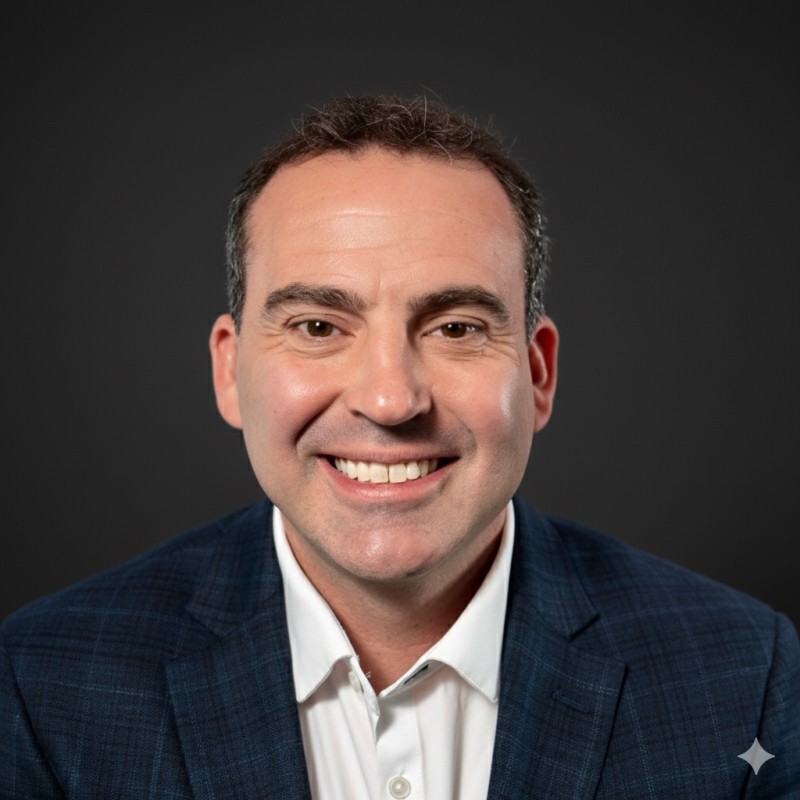
Drew Holler
Drew Holler joined Lennar in October 2022 as CHRO. Holler previously spent more than 20 years at Walmart, having started in supply chain operations and ultimately growing into several senior leadership roles across supply chain, regional store management, and people innovation.
Episode Transcript
[00:00:00] Welcome to today's episode of People and Strategy. I'm your host, Mo Fathelbab, president of International Facilitators Organization. People and Strategy is a podcast from the SHRM Executive Network, the premier network of executives in the field of human resources. Each week we bring you in-depth conversations with the country's top HR executives and thought leaders.
For today's conversation, I'm excited to be joined by Drew Holler, CHRO of Lennar, one of the nation's largest home builders. He spent 20 years in leadership roles at Walmart, and today we're going to talk with Drew about the home builder industry, his leadership experience, and later we'll discuss how he transformed Lennar's HR department and processes.
Welcome Drew. Thank you so much, Mo. I, I really appreciate the opportunity to talk to you guys and your audience, and I'm looking forward to today. Thank you. Great to have you with us. So, drew, [00:01:00] tell us about your career journey and what brought you to the field of HR. Well, I'll try to make a long story as short as possible.
Um, but, uh, I started, uh, in retail, uh, right outta college. And, um, if you remember, back in 2000 mm-hmm. Uh, it was the.com bubble bubble. Uh, I had a aspiration to go work in the tech sector. Uh, did a lot of interviews. Uh, the only person that gave me a job offer was Walmart. So my first role was working on second shift, uh, inside of one of the large distribution centers there in Arkansas.
Uh, little did I know it is gonna turn into a 20 year, uh, career, and it really put me on a path that I, uh, could never have dreamed on and turned that into, uh, operational roles. And at the time Walmart was going through, um, probably the word of the day back then was future of work. Uh, how was technology and automation going to impact our, uh, 1.5 million associates in the United States?
And I was asked to come in and help, uh, help lead that. [00:02:00] Strategy and how we were going to adjust it. So that was my first step into people type impactful roles. We rolled out what was called Live Better You, which was our educational, uh, product, uh, of how we, uh, allowed associates to go back to school and Walmart would, would fit the bill.
So we did a lot during that time. Uh, and I really fell in love with, uh, working on projects and initiatives that impacted not only the business, but also impacted people's lives. Uh, and I gotta see that firsthand. And, um, fell in love and had the opportunity to move into more traditional HR roles. Uh, and eventually my last role at Walmart was supporting Walmart, US operations from an HR perspective, both supply chain and merchant in, uh, in store operations.
And, uh, 20, 21 years, uh, a lot of different things that I was able to do. I had felt like I had four different careers. Um, but when I was leaving Walmart, it was, it was what did I wanna do? And really felt like there was an opportunity for me to add value in, in an HR space, in a CHRO role because I [00:03:00] felt like I brought a little bit different mentality, um, and some different thinking, uh, and different backgrounds to that role.
So had the opportunity to, uh, come and work here at Lennar. Uh, my dad was a home builder. I grew up in the industry. Um, I know how important it is to the American dream for people to have home ownership, and I know how hard that is for a lot of people as well. I've been here three years. Uh, it's been a lot of changes in the market, a lot of changes in the company, uh, but have been thrilled, um, to be here.
Well, thank you for sharing your exciting journey with us. Uh, so during your time at Walmart, you worked, uh, on supply chain management. You mentioned Drew. How has your supply chain management background influenced your approach? To HR leadership. You know, it's so funny you say that I, the 10 years I spent in supply chain taught me supply chain 1 0 1 taught me leadership, but also taught me how important process and technology is.
And, uh, when I think about, um, uh, the cool things in supply chain is it's very process oriented and [00:04:00] there's certain, uh, first principles of supply chain that apply everywhere. And you can apply those first principles and you can apply process and you can make a difference. HR. I have come to find out is a series of processes and technologies that you can put in place that makes the business better.
It just happens to be on the people side. So I have found a lot of similarities. Obviously it's different first principles, but the concepts of how you actually go after a problem and try to solve it, I found to be very, very similar. So, uh, you know, I take my very, my, everybody takes their filter, what they, they grew up on, uh, and, and apply it to the role that they have.
My filter happens to be. People, processes and technology. And I take that in, uh, how I run the HR team. Uh, you also mentioned you loved Lennar's mission. What is Lennar's mission? It's really the ability to offer, uh, affordable, uh, housing, uh, to our, uh, our customers. Lennar's been here 70 years. It's really crystallizing this mission based on our scale, [00:05:00] and we think we have a huge role to play, uh, in the coming years as we bring that affordability to more customers.
That is wonderful indeed. So, um, from your time at Walmart, what leadership principles did you carry over to Lennar? Which ones did you adapt? Which ones did you abandon entirely? Hmm, that's a great question. You know, um, from a, what I brought over is, um. People really do make the difference. We used to see that at Walmart and, uh, our people are our greatest asset, and I think that's the same here at at Lennar.
Um, I have seen us make really strategic decisions, uh, that's best for our customers and best for our people, but may not be best for our shareholder right away. Uh, over time we believe it will be. Uh, but I've seen us make those investments and so that key. Value, uh, that your people that you have in the organization is really what propels you forward and helps you serve customers at a higher [00:06:00] level.
And I think that's a key key, just value and mission that we have. The other one is, is around integrity, uh, and how important it is that we have a high expectations for all people. That's from CEO down to the front lines. You have one standard and you apply that standard, uh, which is a high degree of integrity.
And I see that same, uh, here at the leadership team here at Lennar, uh, is that we look through the lens of, uh, what's the right thing, uh, and doing the right thing for the right reason. And, uh, I think that that plays across both companies. And, uh, and I understand Lenar is one of the largest home builders in the us.
Uh, what are some of the unique challenges that you're seeing in the industry right now? It's a tough, uh, it's a interesting market. Um, there's, uh, uh, not as much supply that is needed, uh, to fulfill the demand. Uh, and that is both resale, so homes that people are putting up for sale to sell resale, but then also new homes.
So there's this huge supply gap, [00:07:00] but there's also higher interest rates, uh, and then affordability has become an issue. If you think about over the pandemic, home prices really rose significantly from 2020 to now. And that has priced out a lot of customers because of that. So there's an affordability, uh, concern for most people.
Uh, and then also there's just not enough supply in the marketplace. Uh, and so that pres presents itself, uh, an opportunity for us and others to be able to, to work on those two issues is how do we work on affordability and then how do we put more homes into the marketplace? So that we can solve the supply constraints.
Uh, and so I think we're doing both of those. Um, and, uh, we're one of the few builders that have continued to grow through this downturn. Uh, and we have, uh, commitments that we want to think about our volume as a core. Um. Diff differentiator, uh, for us to be able to lower costs over time. Uh, and so I think that's kind of been our approach.
Uh, I think the market, uh, is gonna respond, [00:08:00] um, over time and, uh, you know, we think pretty positively about, uh, over the next few years. And Drew, what do you think has enabled you all to grow during a downturn? You know, we've been really focused on volume. And so what that means is, uh, in inside of a market, we try to have as most consistent, um, uh, production as possible.
So if we're gonna build, let's say, a thousand homes in a particular market a year, we wanna stay pretty close to that thousand. And the reason why we do that is that it creates efficiencies on our side, in our supply chain, but also with our trade partners. Uh, so they're the trade partners that we partner with to actually build the homes.
And how do the challenges, how do the industry challenges affect your role as a CHRO? Yeah. You know, uh, we, uh, are focused on three things, uh, from a people perspective, uh, our team, and that's how do we hire the right person? How do we train them in the most effective way possible? And then how do we retain them?
So it's hire, [00:09:00] train, retain. My team's probably sick of me talking about those three things, but those are the three things that we focus on. I would tell you in the marketplace, uh uh, where we're in a slower market, uh, all three of those can be a challenge. Uh, but I would tell you we're finding a good opportunity to hire great talent.
We've, we've focused very heavily on leadership development and training of our people, especially when they first arrive. And then we're doing pretty well from a retain. Our turnover is, is the lowest it's been since the pandemic. And, uh, we're continuing to see people that wanna join Lennar and we're, we're working hard to be able to keep them engaged.
So, uh, even though there's challenges, uh, we're doing those things well, the other thing I would tell you is. Uh, in a growing where we're trying to grow volume or in some markets hold volume steady, uh, there is a challenge from a workforce perspective to make sure we have, uh, the right, uh, individuals in the right seats.
Uh, and so there's a lot of, uh, I think [00:10:00] focus on, uh, how we. Especially in our construction side of the business, how do we hire, uh, individuals that can come in and grow with us, even in a market that may be, uh, from a perception perspective, maybe down and maybe I don't wanna join the industry and so we're working hard to attract the right people.
To, what do you attribute, uh, your ability to have such great retention? Always comes down to the leader I work for, uh, is a big part of that. And so whether I am, uh, the CHRO or whether I'm a construction manager or a vice president somewhere, a lot of it comes down to the work that I do and who I work for.
We rolled out a, what we call a continuous improvement plan to all leaders where they get four feedback sessions, uh, a year and they get a rating. And one of those ratings is on leadership matters, which is our competencies and how we. We define leadership. So we think giving that feedback, uh, providing coaching, uh, at various levels is how we actually drive retainment.
Uh, because if we have the right leaders in [00:11:00] place, we find we have the right teams in place. Uh, in your time at Lennar, you've led, uh, change transformation for the organization. You've transformed Lennar's HR. From a decentralized model with 50 divisions each having their own HR team to one centralized structure.
How did that go over? How did you do it? Did you have resistance along the way? Yeah, for sure. Uh, you know, there was some resistance. This is what I'll tell you. You asked me about supply chain and what I learned from that. And one of the things that I have done through various positions, and I've done it in HR, uh, in my last company, I've done it in HR here, is really understanding the work that your team does.
And what I've found is that there's three, what I call levels of work. The first level is routine work. The second level is specialized work, and the third level is inspiration work. Hmm. And if you ask individual, you ask the CHRO how much of your your work is routine, how much is specialized, and how much is inspired?
I have all three of those levels. Uh, every job [00:12:00] does. Uh, but what I have found is if you can really target the routine work, the work that is routine that most people don't wanna do anyways, really under understand what that work is being done across your organization, centralize that work through routine work, and then provide automation to that work, you can actually start to reduce the amount of routine work there is to be done.
Specialized work is kinda like what COEs do. Think about a comp analyst, think about somebody in talent. Those are very specialized skill sets. And so what you wanna do there is create an op opportunity that all routine work is outta their world and they're really focused on their specialty and you try to make them as productive as they possibly can be.
And then the goal is you get as many people as many resources into inspiration work. So that's coming up with new talent programs, that's coming up with new compensation programs, new associate experience programs. Most HR teams never get to inspiration because they're bogged down by routine or they're bogged down by specialty and they never get to inspiration.[00:13:00]
And so a big part of how do I get more people working on inspired work is I had to automate the routine. And so when we looked across our teams is we created an organizational structure around those three things. And routine is really operations. So we put all operational processes all together. Uh, we did it very manually, very quickly.
Not a lot of technology. Using a lot of spreadsheets is very kind of bumpy, but once we did that, we now knew what we had in front of us. And over the past, probably 12 to 18 months, we've been automating. As much of that routine work as we possibly can. And what that's done is it freed up resources to actually worked on inspired work and to make our specialized work more productive.
So just a couple of examples of what you consider inspired work. Yeah. So inspired work is what are, what can you do? What products or what services or what programs that you can launch. First you create it, test it, and launch That makes the business better. Um, and I [00:14:00] think that's very key. These are HR programs, but how do you make it better?
So example would be onboarding. Uh, we really struggled with how we onboarded associates. It was different across all 50 locations, and it's very, uh, individual and there was a high range of experience. So we centralized that and we created a three day, uh, we did it in person and in virtual. A three day experience that really brought people into the organization and really inspired them on the backside of that week.
And so that was a program that created, was created because we were able to move a resource that was actually a, uh, specialist in recruiting. So she was working in routine work. We moved her into inspiration work and she spent about six months recreating that onboarding experience. And it is, it's a huge success today.
So, you know, that's an example of moving somebody from routine to specialized or uh, routine to inspiration, uh, and seeing them, seeing them flourish. So that's an example. You know, I think in recruiting, there's a lot of [00:15:00] those examples. There's a lot of mundane routine work in recruiting that we've been able to.
Optimize and, and refine through this process. And that allows them to do executive recruiting or filling the pipeline or doing things that are more, uh, inspirational work for them. Uh, and so I think it applies just about to every role. So what were the biggest challenges you faced in getting buy-in from division leaders who are used to having their own dedicated HR teams?
You wanna be in control. And, and mainly because, uh, you're on the line. You own that p and l, your job is to, to make it as, uh, and to achieve your goals. And so when you're not in control, that can sometimes be a scary moment. Uh, and I think some operators may have thought, Hey, I'm gonna lose control of my team, of what I can do.
HR is gonna come in and tell me what I can't do. Uh, and so we were very, very particular that our role is to enable those leaders to lead. It wasn't to lead for them, it wasn't to take decisions away from them, but we're gonna give them resources, tools, and [00:16:00] programs so that we enable leaders to lead. And during this centralization process, was there a cultural shift?
And if so, how did you handle it? You know, there's a cultural shift. I would tell you this was more of change management with my team, the HR team, than it was for the business. Hmm. Uh, and uh, you know, I think whenever you're, uh, an HR B VP that had a lot of, um, your own processes, your own way of doing thing in your little part of the world, you losing that control was pretty scary as well.
Uh, and so I think part of this was also bringing the team along. Uh, to know, uh, where we're going, why we're doing this, and thinking of moving people from that routine to inspired moving people through that cycle. Sounds like a herculean effort. And, uh, and you've gone through it. Congratulations. What's been the impact?
We've seen a lot. Uh, it took us, we had, uh, uh, our, our time to hire with six months, uh, before we started this process. And we're now down to below [00:17:00] 30 days as an example. We went from, uh, having, um. Benefits, uh, that, uh, were in the lower quartile of how we'd measure benefits across our peer sets to being towards one of the best.
So we were able to, to take that work and make it inspired work, which turned into programs, which turned into better benefits. Uh, we were able to, uh, start up an executive research or executive recruiting. Team, which we didn't have before, and it's allowed us to be able to get talent at our division president level that we never thought we could get.
We provided those services and those tools and those products to make the business better. Our team has actually gotten more efficient through this time, uh, at the same time hiring or uh, uh, delivering higher value, uh, work. So looking back on all of this, would you do anything differently and what would it be if you had to do it all over again?
That's a great question. Um. I think what I would do a little bit differently, uh, is think through [00:18:00] the team dynamics in a more granular way. We kind of just went and did this, right? We, we worked, we worked really, really fast. We made a decision. Uh, we got buy-in and we went and did it, and then we adjusted along the way.
I think if we would've put a little bit of thought in the beginning and think through, specifically across the COEs. Which work needed to be in operations or needed that routine work, we would've able to move a little bit faster with that. Uh, even though this was a very fast process, I think we could have gotten more value in a short amount of time if we would've opened our eyes a little bit across all the work that was done on the team.
Now we're coming back, we're moving more and more of the routine work into the operations group, but I think I could have done a little bit faster, uh, if we would've thought through it a little bit differently. And now that it's, uh, again, in the rear view mirror as they say, would you advise this transformation process for other leaders who are considering, uh, going from a decentralized to a centralized [00:19:00] HR model?
Yeah, I mean, listen, uh, uh, you know, AI's the, the name of the game right now, uh, I'm telling you, you're not gonna be able to get value out of that technology, uh, if you don't have consistent processes, um, and business processes. Uh, across the entire team. Uh, the other thing I would tell you is I think most of what HR does today will be partially or fully automated over time.
That's not a negative, that's a huge opportunity, which means that more and more and more we'll go into that routine bucket. More and more and more will be fully automated, which means that we actually go spend more and more time on inspiration. Uh, and so I would say is, is don't fight it. See, uh, see the fourth through the trees, understand where the tech stack is going.
Um, lean into it. It's gonna be a radically different world, I think for HR in the next five years. Uh, but if you lean into it, the front side, really work on your processes, adopt this technology, it's gonna free you and your team up to really develop strategies [00:20:00] that makes not only the business better, uh, but your people, uh, will make a very positive impact.
Good stuff. Good stuff. Uh, drew, uh, last question. What is one piece of advice that has shaped your work or personal life? Uh, I have this thing I'll, uh, my dad, my dad gave this to me. He was a, uh, he was a, my coach, my high school coach growing up, and he gave me a quote from Dior Roosevelt, and I kept it on my desk for.
Gosh, I don't know, 25 plus years. And, uh, it follows me everywhere I go, but it says, far better is it to dare mighty things, to win glorious triumphs, even though checkered by failure than to take rank with those poor spirits who neither enjoy much, nor suffer much because they live in the gray twilight that knows neither victory nor to defeat.
And that's something that I constantly live by. Uh, and I think it's very, uh, applicable to our world today. With all that's changing, and I just encourage everybody to lean in. Don't lean out, lean in [00:21:00] and, uh, embrace what's coming our way. Drew, what an inspiration, and that's what will end it for this episode of People and Strategy.
A huge thanks to Drew for your valuable insights. Appreciate it. I really enjoyed it. Thanks for tuning in. You could follow the People and Strategy podcast wherever you get your podcasts. Also, podcast reviews have a real impact on podcast visibility. So if you enjoyed today's episode, leave a review to help others find the show.
Finally, you could find all our episodes on our website at SHRM dot org slash podcasts. And while you're there, sign up for our weekly newsletter. Thanks for joining us, and have a great day.
SHRM.
Featured Story

How HR leaders can create space for reflection and get the most out of their executive coaching experience.
Enjoy On Your Favorite App
Feature Stories
As part of SHRM's commitment to providing cutting-edge resources, get additional perspective and more insights in content curated from SHRM and around the web.

Discover three key elements playing out across the C-suite and how they are projected to shift in the year ahead. Plus, learn CEOs' top macroeconomic challenges.

Gain insights on global culture and leadership from an HR leader in the hospitality industry. Plus, learn how travel restrictions are impacting the workforce.

Fixing a broken culture isn’t easy — learn the steps taken by the CEO of the U.S. Olympic & Paralympic Committee to win back team trust and repair the culture.