In late January 2013, Amgen CEO Bob Bradway and I were sitting in a conference room talking about an organizationwide transformation that we had been quietly preparing to launch in the first quarter. At this stage, barely a handful of the senior leadership team knew about the plan. We were focusing on how best to engage our C-suite colleagues to help lead our ambitious effort.
We were discussing who to enlist to lead the transformation, considering several executives who were one level away from reporting to the CEO. The person would need to leave their current job and focus 100 percent on the transformation. This was unlike anything we had ever done before at Amgen, and it would be an important signal to the organization that this wasn’t business as usual.
Then Bradway tipped his hand. “If none of these names turns out to be the right person, I may need to ask you to take this one on,” he said. I froze for a second, and said that if it came to that, I’d do whatever was needed. I also pointed out that this would be a great assignment to test someone who might be in the running to take over as CEO someday. I had been the CHRO of Amgen for 13 years, and I was in my late fifties. I was more grizzled veteran than high-potential CEO candidate.
Even so, Bradway’s signaling to me was clear, and I started to absorb the reality that I was going to leave my HR career and lead the transformation. Soon after, we announced my appointment as the Chief Transformation Officer. A week later, I traded my office for an open workspace, where I started with a team of eight people who we had handpicked to get work up and running. Our project was called Full Potential because that was the animating idea of the transformation. Amgen was doing well overall, but there was a sense that the company needed a refresh, in much the same way that a 40-year-old house needs new windows, roof, heating system and other infrastructure upgrades. Amgen was not operating at its full potential, and we needed to reorganize and streamline to set the company up for our next phase of growth.
Like many career shifts, I had not predicted this one, but it turned out to be one of the great learning experiences of my career. I was somewhat prepared for the role. I knew the talent in the organization. After 13 years in the CHRO job, I knew how Amgen operated and had a sense of what didn’t work as well as it could. But what I didn’t know was a much longer list.
I learned key lessons about this role during our six-year effort, which by just about any measure achieved significant success. During this period Amgen achieved an operating margin increase from 38 percent to 53 percent, 89 percent of net income returned to shareholders and the share price increased from $98 to $207. In 2020 Amgen became the first biotech company to be added to the Dow Jones Industrial Average. While every company is different, my hope is that these insights will help other HR leaders in their company’s transformations, whether they are tapped to lead those efforts, as I was, or to help drive them.
1. Start with clear roles and accountabilities.
Leaders tend to assume that the management style that worked in more stable times will work just as well as the company embarks on a transformation effort. In the early stages, the CHRO’s role as truth-teller is important. The transformation will create uncertainty in the organization and will require leaders who are willing and able to evolve and adapt. The CHRO will need to help the CEO diagnose who on the team is best suited to contribute to the change effort and who must be replaced.
The CHRO should build a deep partnership with the Chief Transformation Officer (CTO) before the effort launches. A key consideration is: Is the CTO 100 percent dedicated to the transformation, or is it just one of many responsibilities? The likelihood of success goes way up with a 100 percent dedicated leader. I’ve seen many organizations simply add the CTO role to an executive’s current portfolio. Not surprisingly, they almost always revisit this decision down the road.
We then assembled a full-time team to drive the transformation, named the Results Delivery Office (RDO). The CHRO is critical to ensuring the right talent is tapped to support the transformation, and that the high-potentials receive support and career development to feel comfortable leaving their roles. We provided that confidence by telling them that the CEO would review the career development plans for everyone working full time on the transformation each year.
Our next focus was to clarify what the Results Delivery Office was responsible for, and what it wasn’t. It was critical that the company didn’t perceive this to be the CEO’s and/or CTO’s transformation, but rather a change effort being driven by the entire leadership team.
At Amgen, we determined that the RDO team would be accountable for:
Fair process, meaning that we would make sure that the best ideas for the organization were being put on the table by the teams and not getting screened out by leaders who might have an interest in seeing them blocked. The CEO staff wanted ideas that pushed our thinking, which came to be known as “presenting ideas that are on the edge of achievability.”
My role wasn’t to advocate for certain options; rather, it was to make sure the options presented by an initiative team represented our best cross-functional thinking. A CHRO can help a CTO fulfill this fair-process guiding principle by serving as a check in case the CTO drifts out of their role by putting their finger on the scales to influence outcomes. More than one transformation effort has crashed into the rocks because the CTO was steering to outcomes that matched what they wanted to change from their prior role, which in turn will damage the trust of the rest of the leadership team.
The CHRO likely will be engaged in inevitable conflicts and points of tension that will arise among the leaders. They will have to help resolve questions such as, how do we handle disagreements among C-suite leaders who want different outcomes on a certain initiative that will impact both of them? How do we prioritize the work when conflicts arise over talent and investment resources? When a senior leader disagrees with a decision, how do we ensure they remain supportive to help implement the decision?
Resourcing for the transformation includes talent, managing the investment dollars, managing highly impacted areas of the company, as well as time and energy. We had one “book of truth” on the numbers to track costs and savings estimates and investment proposals and returns. Those numbers were run from the transformation office and coordinated with finance.
Co-creation process and tools were the responsibility of the RDO. From the start, one of our main goals was to build a capability to drive ongoing change in the company that would sustain itself for years after the formal transformation was over. Introducing a new set of tools and learning experiences into the organization will be helped tremendously by the CHRO’s deep involvement in designing workshops to build these skills, starting with the senior leadership team. At Amgen, we asked ourselves several questions. How do we take a leadership team that has been accustomed to a more top-down management approach and involve them deeply in co-creating the transformation effort? How do we use co-creation to engage leaders at many levels in the company to draw on their best thinking?
Change management becomes a critical part of both co-creation and implementing change. At the highest levels, this included how to deal with the board of directors and our largest investors. Change management requires a deep partnership among the RDO, human resources and corporate communications. The CHRO can add tremendous value and energy by involving key people in their talent, data analytics and leadership development teams early on. In some cases, internal communications is part of HR, and they played a vital role as we worked through a series of questions. How do we talk to our staff about the transformation? How and when do we engage our VP ranks and then the rest of our employees?
Some of the initiatives were inspiring in their ambition and helped energize the organization. Other initiatives involved cost reductions and expenses that raised understandable concerns, so how do we deal with employees in a way that is transparent and builds trust? How do we support and reassign executives who became disrupted as a result of the transformation efforts? In a transforming company, there may be 1,000 people directly working on changes in their areas, and 20,000 people focused on the day-to-day efforts to keep the organization running. How do we communicate to both of these groups so that those who may be impacted in the future are communicated to and engaged in a supportive way?
Governance of the transformation initiatives from start to finish was critical. The CEO staff became the main governance body, and that team approved any new initiatives and owned their resourcing and outcomes. The CHRO can contribute to navigating these challenges. How does an initiative progress to the next step? Who holds the decision rights on matters involving any initiative? How did resourcing issues get resolved? What talent was going to be dedicated to any initiative? How were the employees working on an initiative impacted in terms of compensation and resourcing? When would people driving an initiative be released to return to their old jobs or assigned to a new role?
2. Overcome the powerful force of the status quo.
Among the many key roles that a CHRO can play in an organization that is transforming, the most important may be to infuse the effort with a deep understanding of how people deal with change and disruption. Leadership teams too often invest energy in devising a bold vision for the transformation, but underinvest in creating alignment and engagement deep within the organization A strong CHRO will provide critical inputs around talent, culture and change that will play a crucial role in creating a strategy that is more likely to take root across the organization and succeed.
Along with supporting broader changes, the CHRO must commit to making significant changes to the HR function itself to drive efficiencies and innovation. Role modeling will be important as the CHRO supports their peers as they restructure their functions.
Time and again I see that the most successful CHROs in dealing with transformation are early adopters of the need for change and are open to learning new ways of working. An entrenched leader who wants to maintain the status quo will find it very difficult to survive a serious transformation effort.
3. Unleash the power of co-creation.
Successful transformations in the corporate world have proven to be elusive over the years. According to a McKinsey study, just 20 to 25 percent of executives view their own companies’ programs as very or completely successful.1
A Bain survey of senior executives who have led large-scale change programs reports only 12 percent of their companies achieve their full transformation targets. By their own admission, the large majority of those executives say that the results are mediocre, with 68 percent settling for value dilution, achieving more than half of their stated goals, but falling well short of achieving their ambition.2
Every transformation is a battle for energy. Some companies can muster the energy if there is a burning platform to galvanize the effort, but as the crisis fades, the focus on transforming often lags. Even companies that are running successful programs tend to reach fatigue and lose momentum. Driving change is challenging work.
A CEO and leadership team must be fully committed to owning the changes as an aligned team. Visible cracks in that alignment will sap the energy of people in the teams below them who are being asked to do the difficult work of making changes stick. Leadership teams that aren’t willing to put challenging issues on the table and work through conflicts can be prone to rushing to a false consensus.
This is where co-creation, used in a purposeful and focused way, can help provide a tailwind for the leadership team to work through the inevitable headwinds of implementing change. Many employees, despite initial fears that arise from change, want to be involved and engaged in the transformation effort, and co-creation provides the mechanism to tap that energy.
Co-creation is most effective as a choreographed series of engagements by the leadership team that creates and reinforces alignment of the group and the broader organization. The design of the engagements will differ based on the unique context of every organization, but generally will cover the following stages in sequence. Here are some questions that are on the table at each stage and include many areas where the CHRO can contribute their voice.
- Ambition: What is our case for change, and what is our ambition for the future? How inspiring are our goals? How do we want our people to think and act differently? Are we as leaders fully aligned before we start working with the organization? Are we clear about what won’t change?
- Intent: What do we want to achieve and why is this important? How will we get there, and what will we do to mark progress? Who will be impacted as our efforts progress and how will we deal with those groups?
- Risk: Why do so many transformation efforts struggle to achieve their goals? What are the common causes of failure? How do we anticipate and mitigate delivery risks?
- Roadmap: How do we equip leaders to be effective in their change roles? How do we ensure the plan is achievable? How do we ensure that impacted parts of the organization have capacity to drive the changes, and don’t get overwhelmed with competing priorities?
The greatest benefit of a sustained transformation effort is creating a generation of leaders that deeply understand how to drive change.
For any CHRO, an organization undergoing transformation presents a once-in-a-career opportunity to develop leaders who can create a sustained capability for transformation for years to come, making it more of an ongoing process rather than an event.
That starts with the leadership team building a collective muscle so that challenging issues and different points of view are welcomed at the leadership table. A “red is good” mindset creates a desire to understand risks and to surface them early. Ideally, teams learn to lead themselves and co-create initiatives, rather than waiting for a leader to tell them what to do. A team learns to present options for potential outcomes and takes a clear-eyed view of confirming and disconfirming data for each option, so that the best answer for the organization can emerge.
The CHRO has an opportunity to develop managers throughout the organization to be effective sponsors of change. How do you set the right context for the changes? How do you establish a fair process in your organization? How do you anticipate and mitigate risks to the changes? How can you accelerate adoption of the desired changes?
Transform or Else
Transformation has been a buzzword in corporations for years, but too often they are narrow efforts to drive a few strategic changes, to reduce expenses or to shift an operating model. They had a discrete beginning and endpoint, and many in the organization just wanted to survive the transformation and get back to normal.
Some high-performing organizations, however, came to realize that change was going to be a constant and wanted to create a capability to adapt and change that would help sustain an organization well into the future. This isn’t a discrete effort; it is an investment in creating a continuously improving organization. The global pandemic forced everyone to adapt to dramatic change. If we needed a nudge to make sure our organizations were capable of driving and sustaining changes, 2020 gave everyone a hard test.
Culture eats strategy for lunch, as the saying goes. Culture will also quickly consume misguided transformation efforts, as human beings naturally are resistant to uncertainty and disruption that might threaten their job security or career plans. The chances for sustained success improve significantly though if the CEO, CTO and CHRO are aligned at the outset and use co-creation to design thoughtful steps for the CEO staff to move forward as a team to lead the transformation.
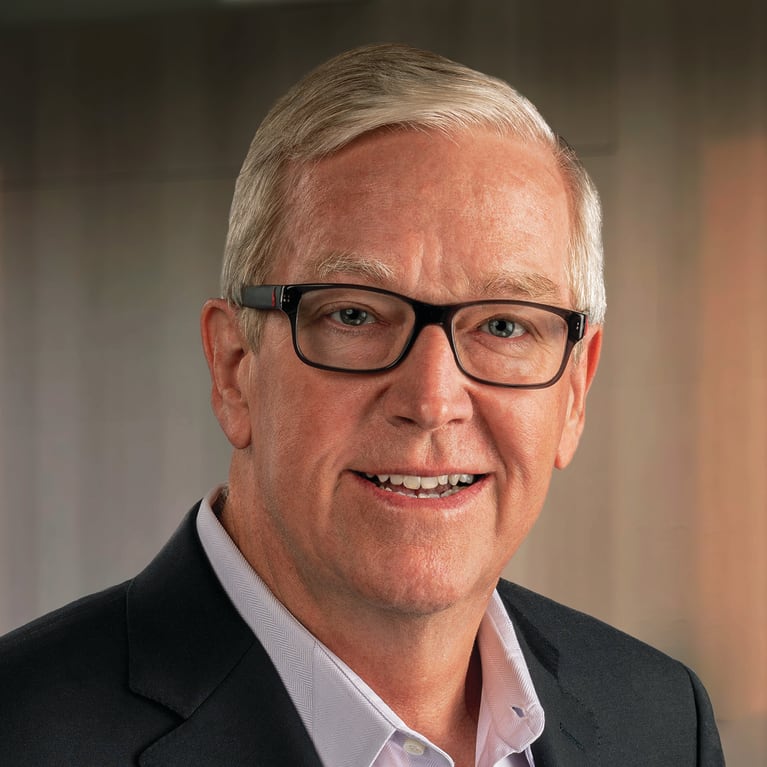 | Brian McNamee is the former Chief Transformation Officer of Amgen who served as CHRO of Amgen for 13 years prior to his CTO role. He currently advises CEOs and leadership teams on transformation. |
References




