
The powerful connection between CHRO and CEO is the hidden engine behind every high-performing organization. In this candid Q&A, SHRM President and Chief Executive Officer Johnny C. Taylor, Jr., SHRM-SCP, breaks down what makes the relationship thrive, including what he views as “the 3 C’s” of CHRO success. Plus, real-world examples from the CHRO-CEO teams at Kraft Heinz and Mercedes-Benz illustrate these principles in action.
* * * * *
Q: Why is the relationship between CEO and CHRO so important?
TAYLOR: I’ve often said that among the many important relationships in the C-suite, the one between the CEO and the CHRO may be the most pivotal. Why? Because it touches every part of the enterprise. HR intersects with finance, marketing, legal, IT — you name it. Unlike most roles that naturally focus on a single domain, the CHRO has visibility across the entire organization.
That vantage point is invaluable. HR hears directly from employees at every level, giving them a finger on the true pulse of culture. And let’s be clear — at the end of the day, culture sits squarely with the CEO. You cannot delegate culture. But you also cannot lead it effectively without a trusted partner who brings unfiltered insight into how people are experiencing the work, how things get done, and where challenges are emerging.
Every C-suite leader brings essential expertise — the CFO on financial health, the CIO on technology, the GC on risk. But the CHRO is uniquely positioned as the connection point between the C-suite and the rest of the organization. They bridge strategy with culture, translating executive decisions into the daily experiences of people at every level. That’s why I rely so heavily on HR to tell me the truth — especially when it’s uncomfortable. I need a partner who can anticipate issues, see around corners, and keep me grounded in the realities of our people and culture.
When trust exists between the CEO and CHRO, the impact is profound. HR becomes more than programs and processes. It becomes a strategic driver of culture and performance. That’s the true power of the CHRO — serving as a confidant and a partner, ensuring culture is not only talked about, but lived at every level of the organization.

A great CHRO must have the courage to challenge the CEO, push back when needed, and stand up for what’s right for employees and culture, even when it’s difficult.”
Q: What do CHROs need to know about the role of the CEO?
TAYLOR: The CEO role is all-consuming. You don’t clock in and clock out. You live it. You breathe it. Even when you’re running errands on a Saturday, you’re still the CEO in the eyes of the people around you. It’s a rewarding yet exhausting job, and the pressure never lets up.
Every C-suite leader needs to understand that reality, but for the CHRO, it’s especially critical. Supporting the CEO isn’t just about people strategy, it’s also about mental wellness. It’s about helping the CEO clear the clutter, manage the weight of the role, and get through those tough days.
The best CHROs understand this. They step in and say, “I know the pressure you’re under. Let me take some of that off you. Because when you’re at your best, the entire organization benefits.” That’s when HR becomes a true multiplier of performance. The CHRO is the person who makes sure the leader is unencumbered, in the right headspace, and able to make the big strategic and tactical calls with clarity.
Q: In your view, how can CHROs be most effective in the role, including when it comes to working closely with the CEO?
TAYLOR: The best CHROs have what I call the 3 C’s: competency, courage, and being a confidant.
A successful CHRO is a competent CHRO. They must be at the top of their game — deep in knowledge, data-savvy, and always pushing the organization forward. And perhaps most important, they must be experts on their people.
A great CHRO must also have the courage to challenge the CEO, push back when needed, and stand up for what’s right for employees and culture, even when it’s difficult. I don’t need another “yes man.” I need someone willing to speak the truth, laying out both the good and the bad, so together, we can confront reality head-on and craft solutions to help the organization successfully move forward.
And lastly, as a CEO, I need a confidant. Someone I can trust implicitly, brainstorm with, vent to, and ask the tough questions. The only way you’re going to prepare to be a CHRO is by building deep, trusting relationships with the executives you’re working with before you work with the top executive, the CEO. If you can master those 3 C’s — not just one or two, but all three — you will be a phenomenal CHRO. It’s not easy. It requires a balance of EQ [emotional intelligence] and IQ. But when you get it right, you elevate both the role and the entire organization.
Q: How do you encourage courage?
TAYLOR: I encourage courage in CHROs, in part, just by talking about it. I want to make it clear that technical competency alone isn’t enough. CHROs must be willing to step up, call things as they are, and be truth-tellers. And the best thing a CEO can do is to recognize and reward that courage when we see it.
But here’s the reality: You can’t be courageous without also being competent. I’ve seen people speak up in meetings without the facts to back them up. They had the courage, sure — but they weren’t prepared. They hadn’t done the work, hadn’t gathered the data, and, as a result, they didn’t speak with authority.
For me, courage comes from preparation. I am far more confident — and therefore far more courageous — when I know my stuff. When I’ve done the research and mastered the data, I can call things as they are and stand my ground. Without that preparation, I’m just another loud voice in the room. Anybody can stir the pot. But the leaders who make a difference are the ones who can back up their conviction with substance.
Q: HR professionals are under a lot of pressure. What can CHROs do to retain the best people in HR and prevent them from burning out?
TAYLOR: The CHRO role is one of the hardest jobs in the organization. In fact, I often say it’s the second most difficult job on the executive team — right behind the CEO. And I don’t say that just because I lead SHRM — I say it because it’s true. We all saw it during COVID: The world finally began to understand the weight that CHROs carry.
If you want to reduce turnover, it starts with hiring. You’ve got to bring in sharp, talented people. A CHRO can be brilliant, but if they surround themselves with average talent, they’re going to fall short. The team matters.
The second piece is mental wellness. CHROs have to take care of themselves. This job can consume you. One moment you’re focused on long-term strategy, and the next, you’re comforting an employee who just lost a family member. It’s deeply personal work, and it’s nearly impossible to leave it all at the office.
That’s why I tell HR leaders: Before you burn out, be intentional about your own wellness. Step away. Reflect. Rejuvenate. And yes, sometimes that means seeking therapy or counseling. Because make no mistake — when you’re the CHRO, you’re carrying the weight of the entire organization. And you can’t carry that weight if you’re running on empty.
People + Strategy podcast: Johnny C. Taylor, Jr., was a guest this year on the 100th episode of the SHRM Executive Network’s People + Strategy podcast. Listen to Taylor’s reflections on the critical CHRO-CEO relationship, plus his leadership philosophy and HR’s role in a rapidly changing world.
* * * * *
Debate in Private, Unite in Public: The CHRO-CEO Alliance at Kraft Heinz
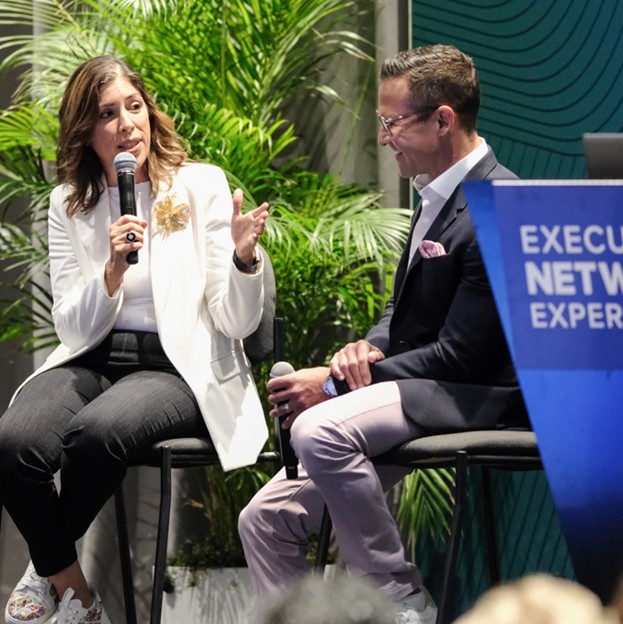 A good CHRO-CEO relationship thrives on healthy debate. The best CEOs don’t just tolerate spirited discussion — they invite it. But once that office door opens, both leaders need to understand the value of stepping out with one voice and a united front.
During a decade as the head of HR at The Kraft Heinz Company, Melissa Werneck said she and CEO Carlos Abrams-Rivera were on the same page when it came to encouraging candid discussions. Both spoke on this topic at the Executive Network Experience at SHRM24.
“We definitely don’t agree on everything, but what makes it easier is that one of Carlos’ main leadership traits is allowing people to speak their minds. Very early, he told me, ‘I don’t want to be surrounded by people who only agree with me. I want people to challenge me,’ ” said Werneck, who recently moved to a senior advisor role at Kraft.
“We have a mantra that two hats think better than one,” Werneck said. “The outcome will always be better, because if [the CEO] has an opinion about something, he will share his view and maybe make me change my mind or the other way around. But that communication and transparency is very important to the partnership.”
That openness fuels better decisions, but Werneck emphasized that disagreements are always handled privately so the broader organization sees a united leadership front.
“When we disagree, we do so behind closed doors, because it’s very important that the organization feels and sees the alignment between the CEO and the CHRO,” Werneck said.
Abrams-Rivera agreed, saying, “Having a unified front helps.” He also added that making big decisions together is easier when the CEO gives the CHRO time and space to reflect, rather than pushing for a quick answer — a practice he believes strengthens the partnership.
“If I’m thinking about changing something about the strategy of the company or something I’m working with the board on, I say to Melissa, ‘I’m thinking about this. Take your time and reflect on it, and in a couple days, let’s talk about it,’ ” Abrams-Rivera said. “Giving space for her own reflections versus having to push to say, ‘Give me the answer right now,’ has helped to make sure we both come into the conversations in a better way.”
What Kraft’s CEO Values Most in a CHRO
In organizations, not every CHRO will fit the CEO’s vision. Abrams-Rivera said he prioritizes these key qualities in a CHRO:
Being an agile learner. “The world is changing so fast. So even if I said, ‘This is the skill set we’re going to need,’ the reality is that in four years, those skills may no longer be relevant,” he said.
Being a strategic business partner. “HR is not a side function of business. It is the function of business,” Abrams-Rivera said. He recommended that organizations “look for CHROs who are actually passionate about the whole business … and are business leaders as the first hand, not a second hand.”
Being a good human being. “It’s easier to create an environment in which you have psychological safety when you can surround yourself with people who have good values,” he said.
* * * * *
Candor and Clarity: The CHRO-CEO Relationship at Mercedes-Benz
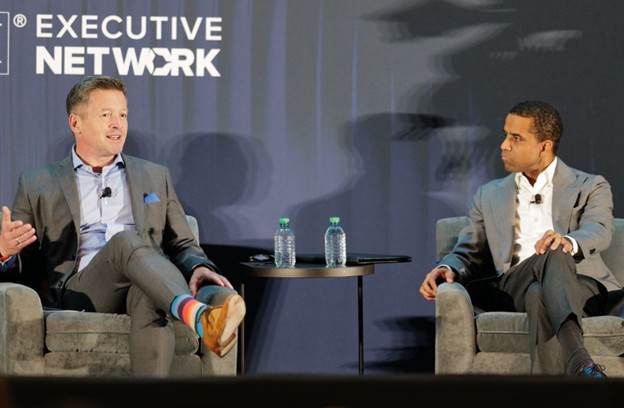
Leadership change at the top can quickly redefine the relationship between a CHRO and CEO. When Adam Chamberlain (in photo, left) was named CEO of Mercedes-Benz USA earlier this year, CHRO Lars Minns (in photo, right) held a series of conversations with him to align on priorities and lay the groundwork for a strong partnership.
“We had a number of calls before [Chamberlain’s first day], and that helped me be really clear about what his intentions were, and he was very open to hearing my perspective on his intentions. That combination was really something foundational,” said Minns, who joined Chamberlain in a discussion at the SHRM Executive Network’s Visionaries Summit 2025 in Atlanta this fall.
Minns said the CHRO-CEO relationship works best when “it’s founded on dignity.” And he noted that the transparency and respect between the two leaders has helped set a standard in their C-suite.
“I think it’s given the rest of the executive team a chance to model what the relationship could look like,” Minns said. “Oftentimes, in an executive capacity, we get so stuck on things that really don’t matter at the end of the day.”
One issue that both Minns and Chamberlain agree created new efficiencies was bringing more clarity to the meeting process at Mercedes-Benz. When Chamberlain took over, he pared down the number and the length of meetings, and each meeting now needs to have a clear, decision-making objective.
“When you have so many meetings, there’s no pressure to make a decision. You want employees to understand what we’re trying to do as a result of the meeting … and be intentional about what you’re going to do” with the decision and how to act on it, Chamberlain said.He added: “We created energy in our company by collapsing some of those structures that didn’t need to be there. People feel a bit liberated.”
Related Articles

Transform HR with mobile technology to streamline workflows, enhance communication, and boost employee engagement across distributed teams.

A new study found that talent development practitioners believe performance-based assessments are more effective at measuring employee learning outcomes than knowledge tests.

As AI makes deeper inroads into organizations, employee concerns about the technology continue to grow. Here's how HR leaders can address the fear of AI among their own staff, as well as in the wider organization.