- Video
- Audio Only
What does it take for organizations to turn AI investments into measurable business results? As companies navigate rapid technological change, HR leaders are increasingly using AI to drive efficiency, improve decision-making, and create more strategic impact across the enterprise. These findings can be used to provide HR’s value-add across the c-suite — from conversations with the CFO to the CEO.
In a special recording with a live audience for SHRM’s podcast, People + Strategy, HR leaders from global organizations share how they are approaching AI adoption, measuring ROI, and balancing innovation with human-centered leadership.
Related to this Episode:
AI Field Manual for Employers: 138 Use Cases for AI at Work
Learn all the ways HR departments are using AI — and which use cases make the easiest starting points. SHRM researchers analyzed over 250 reported HR use cases for AI, condensed them into 138 archetypes, and categorized them under the 16 practice areas that characterize mature HR departments. SHRM surveyed HR professionals to determine each use case’s prevalence, as well as its perceived risks and costs.
AI Use Case on Job Description Drafting and Refinement Job Descriptions
The first in a new series on real-world AI use cases in HR. This article, How a Fire Department’s HR Leader Used AI to Rebuild Recruiting, explains how Chesterfield County in Virginia’s fire and EMS department uses AI for job descriptions.
The podcast is just the beginning. The weekly People+Strategy Brief also features articles on all aspects of HR leadership excellence. Explore these must-read stories featured in the latest issue. Subscribe now and elevate your strategy.
News + Insights

Discover how seven HR trends predicted for 2026 are playing out halfway through the year, including AI recruiting, upskilling, and I&D. Gain executive insights.

Workforce Pell could help employers expand talent pipelines, support upskilling and reskilling, and build skills-based career pathways aligned with workforce needs.

Leadership and management skills are a top priority for L&D and HR executives, but getting managers to invest in their own development remains a challenge.

As AI adoption climbs, critical thinking is becoming a top priority. Discover why human judgment now defines workforce readiness — and how to build the skill.
Episode Guests
-

Bettina Deynes
Bettina Deynes is the global CHRO at Carnival Corporation, where she leads HR strategy for eight global cruise line brands and a workforce of over 160,000 employees from 150 countries. Reporting directly to the CEO, she drives talent acquisition, retention, rewards, and workforce optimization, while fostering a collaborative culture and advancing wellness initiatives across the organization. With more than 25 years of management and HR experience, Bettina has held senior leadership roles at companies such as Carnival Cruise Line and the Society for Human Resource Management (SHRM).
-
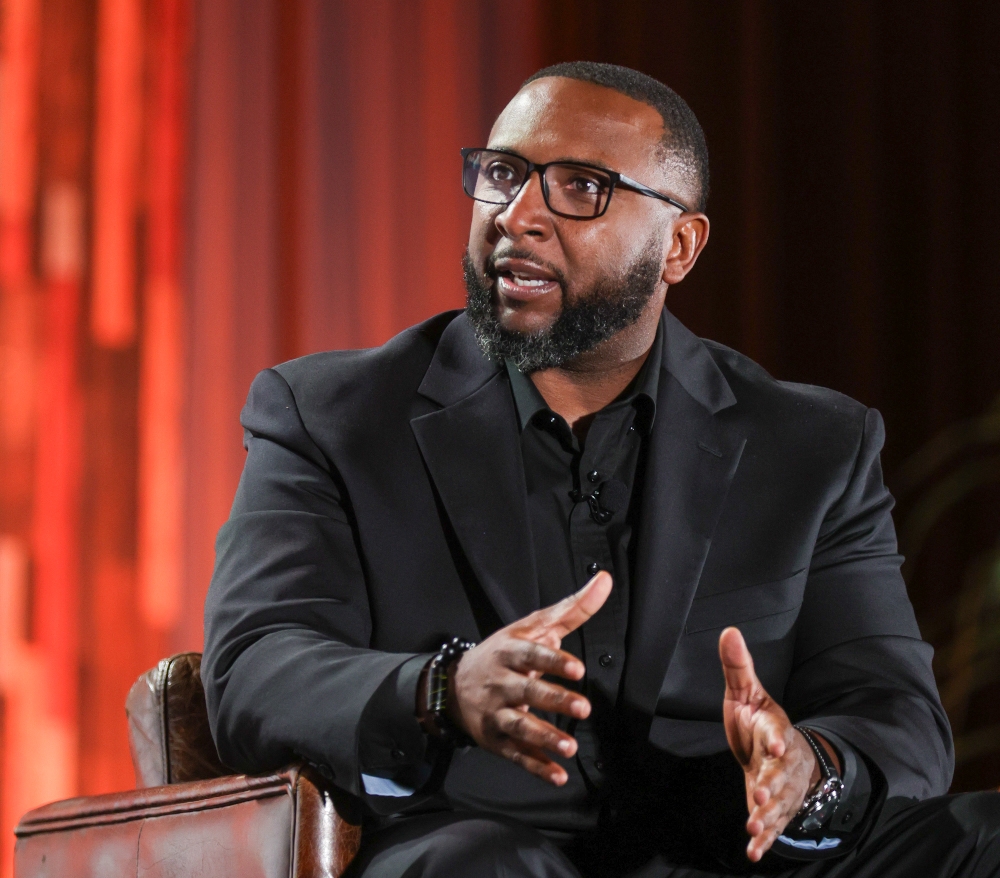
Njsane Courtney
Njsane Courtney is a global HR executive, executive coach, and creator behind My Friend in HR, a platform built on the conviction that great HR is a business strategy, not a support function. With 22 years of HR leadership across six continents, Njsane bridges the C-suite and the people function, equipping executives and organizations to unlock performance through bolder people strategy. As VP of HR at the American Bureau of Shipping, Njsane oversees HR operations across North and South America, Europe, the Middle East, and Africa.
Episode Transcript
Mo: [00:00:00] Welcome to today's episode of People and Strategy. I'm your host, Mo Fathelbab, President of International Facilitators Organization. Today, we're recording our episode at SHRM 26 in Orlando with a live audience Welcome, welcome People and Strategy is a podcast from the SHRM Executive Network, the premier network of executives in the field of human resources.
Each week, we bring you in-depth conversations with the country's top HR executives and thought leaders. For today's conversation, I'm excited to be joined by Jesani Courtney, Vice President, Human Resources, American Bureau of Shipping, and Bettina Danis, CHRO Carnival Corp and former CHRO at SHRM. Welcome, Jesani and Bettina.
Thank you for having us. Thank you. Thank you. Thank you. So, uh, we're gonna start with a little bit of a story of each of your career journeys and what got you into [00:01:00] the field of HR. Bettina, I'll start with you. Wow. How, how much time do I have? Couple of minutes. Okay. Yeah. So I have a very untraditional path.
Bettina Deynes: I actually s- my first job, I was, um, uh, a janitor for an office building. And I guess I did a really good job that I was asked to work for the cleaning company in the payroll department, and it was back in the days when HR was not a thing, it was still personnel management. I, uh, researched and found that SHRM could provide me with some, uh, tools and guidings in building an HR department for that, um, uh, company.
Fast-forward 10 years later, I find myself in my first real director of HR job, uh, working at the same building that I used to clean, uh, which was incredibly, um, you know, a moment where I [00:02:00] really thought, you know, I made it, uh, I was meant to, to do this. And so after that, I had some very interesting jobs in various industries.
Um, I worked for the Washington Nationals Baseball Club as they relocated from Montreal, uh, to Washington, DC. Did not know anything about baseball. Um, I'm originally from Uruguay, so always been, uh, football or soccer. Uh, so I am missing some of the World Cup by being here. So I hope you give me some credit.
Uh, but I, you know, I always, uh, you know, build a career in HR by being a kind of a maverick, uh, and looking at HR through a business lens. Eventually, I was able to go to school. I got a degree in Business Management and then an MBA and a Master's in International Management and SHRM certifications. And, um, and so it was incredibly [00:03:00] rewarding when SHRM called and said, uh, "We're looking for a head of HR and head of diversity."
And so I... It was like going back home to the organization that helped me build my career. And so I worked there for a few years. Um, uh, we have always wanted to move to the South. My husband is from Puerto Rico and- And, you know, begging me, "Let's, let's, let's move to, to Florida." So when Carnival had an opportunity, um, back in 2019 and the job was in Miami, um, you know, we took a leap of faith, moved the family, um, in June of 2019, right before the big apocalyp- apocalypses that came with COVID.
Uh, and as you know, in the cruise industry, I think we were probably the most impacted. Uh, but, um, it really positioned HR, uh, to be the most critical [00:04:00] role, uh, for the entire organization because of everything that we had to face. Uh, so coming out of COVID in 2022, we- a new CEO was named, and one of the first people that he called, it was me, because he wanted to, um, you know, kind of pick my brain about his structure and team.
And little did I know, uh, that he wanted me to become part of his team, uh, which was amazing. And so I accepted the global role, and right now I oversee 162,000 crew members, another 10,000 shoreside, another 5,000, uh, ports and destinations from 152 nationalities. We have eight brands. Um, we have, uh, many offshoring, so it is, um, incredibly complex and possibly the most challenging job I have ever had, but I now just celebrated [00:05:00] my seventh year, and so I am hoping to finish my career with them.
You must have been one heck of a janitor. Amazing. I did, I did very well, but I used to get in trouble because I used to sit in the corner office and fantasize about one day working- Mm ... in a place like that. So to come back 10 years later to that same office that was mine, you know, it kinda, you know, led me to believe that, you know, that I was meant to be and that I wasn't alone, and I- How was that first day?
How did that feel stepping into that office 10 years later, having that as your office? Oh, I had a meltdown. You know, when you go into a building, I didn't know because it was a confidential search, and I didn't know that it was, um, where it was gonna be. So I came into the building thinking I'd been there, like a deja vu.
I got on the elevator, walked to the corner office, and [00:06:00] they had said that it had an amazing view of the Capitol. And so when I got in, I knew it was the same office, so I kinda, you know, got down to my knees and just thanked the Almighty- Mm ... that had brought me there. Wow. What a s- what a story. Thank you.
Njsane Courtney: Well, Mo, you, you know my story. I'm, I'm a country boy at heart. Um, I, uh, I w- was born and raised in a little town in North Louisiana. It's funny, when you say Louisiana, I take, "New Orleans?" No, there's more cities in New Or- ... than New Orleans. Uh, if you ever watch the movie Steel Magnolia, um, Dave and myself- Yeah.
Mm-hmm. Yeah ... that town it was filmed in, that's my hometown. And, uh, I am a lifelong HR person. That is all I know. Um, I started my HR career in the US Army. I was an army officer. I got my commission at Georgia Military College. And, uh, yes, the, the army does have HR. And, uh, and so I was there. Um, once I transitioned to the civilian side, I found it real difficult, Mo, to, to get civilian employees to really understand what I did.
I was an officer who [00:07:00] re- who led an entire division in terms of training and things like that. But back then, the transition services really weren't that, weren't that, as robust as they are now. Um, so I had to start at the bottom. So my first civilian job was HR admin. Um, and I worked my way up. I've been an admin, I've been a recruiter, I've been a benefits administrator, I've been a business partner, senior business partner, HR manager, director, and now I'm blessed to be a vice president of human resources.
Um, and so I'm like, because of that experience, I am uber defensive of my team, especially my HR administrators. Um, don't nobody mess with them, right? Um, because I understand, like, every job is difficult. HR administrator, they get stuff from all over the place. They have to multitask every day. Um, and their job is to make the business partners and myself look really, really good, like we know what we're doing.
Um, as a business partner- It's one of the most thankless jobs, um, but it's one of those things that I real- I'm really passionate about. And, um, in addition to my current role, I started off at, at a, a small petrochemical [00:08:00] company out in West Texas. Um, I still, I'm a, I'm a field guy at heart. Um, I hate being in the office too long.
Um, it gets kind of stuffy on the top floor. And so, uh, I have my PPE in my duffle bag, and I go out and visit the field. I have to be very careful, though, um, 'cause on my boiler suit, I have to say HR 'cause they'll put me to work. And, uh, that's actually happened. I was on a vessel once, and they were like, "What are you doing standing around?"
I was like, "Ah." Um, but I am really passionate about what it is we do. Um, 'cause you and I have had these conversations before on my podcast. We have. It's, you- HR is uniquely positioned to handle almost everything because being able to pivot, having to influence, having to direct people who are four or five levels above us, we call that Thursday, right?
And, uh, so I'm very passionate about what it is we do, and I'm excited about this conversation about AI. It's gonna be awesome. Well, I'm excited to have you both here. Let's dive in. So SHRM recently released an AI in HR report, which found that most HR pros believe that HR function should be active contributors to [00:09:00] AI rollouts rather than the sole leader.
How involved do you feel HR leaders should be in AI rollouts? Jasani, I'll start with you this time. You're gonna see or hear a recurring theme from me. Um, HR is uniquely positioned to lead this. Whenever an organization or just the workforce in general has gone through a season of change, who do they call?
They call us because we are the change agent when it comes to things that impact our people, and for those of us who work in organizations that don't make widgets, our value proposition to our clients is our service, us, our knowledge and expertise of our people. Whenever there's gonna be, whenever there's a dynamic shift in skill sets or technology or anything like that, we know the people.
Monday through Friday, sometimes on weekends, 9:00 to 5:00, we manage people. So when we talk about AI and this AI revolution, I say this all the time. We have to make sure that when our CEOs and COOs and whatever C-suite you want to mention goes to a conference, and they [00:10:00] come back and says, "Ooh, I saw this in a magazine."
We have to make sure that we tell our leaders, "Great. That's awesome. Now let's talk about the people impact." And we want to make sure whatever our strategy is, you, you can coin this, we do this with our employees and not to our employees. Mm. If we hold their hand and we say, "Hey, here's what this means for us.
Here are where the efficiencies are going to be. So if we took this off your plate, what would you do with that time?" And when you do that, just that little bit of due, due diligence and care, then you take the hype and you take the fear out of the process. And so when you roll out these new efficiencies, now all of a sudden this person has skills and talents that you didn't even know, but we asked the question, and when it rolls out, guess what?
I feel better about where I am. I feel better because you talked to me about what's going on, and guess what? Now I'm a champion for what it is you want to put on your agenda. Good stuff. Bettina? Yeah, I agree. I, I believe that [00:11:00] HR is co-leading because I don't think it's just on HR, uh, to lead the way for AI.
Uh, I think that, you know, so much has happened in the last two years. I think last year was the year that we were piloting and trying to figure out where the greatest impact will be. Mm-hmm. Um, and that meant leveraging everything that was coming our way. The big companies, Copilot was the first thing that we started doing, and, uh, isn't it wonderful that now Copilot and Claude have merged, and I think that's opened a lot of opportunities.
ChatGPT enterprise level, uh, and then, you know, talking to the big firms out there and seeing what they had to offer. And then the realization came in that we needed to, uh, grow AI from within, and to build a function that was internal. It wasn't gonna be a consultant that was gonna come in, tell us what to do, or engage with these big firms, and there comes all the [00:12:00] licensing fees, and royalties, and everything else.
So we were gonna build it ourselves. And then how do we get our employees through talent enablement to, you know, to be curious, uh, to figure ways of, you know, really, uh, optimizing and automating c- current processes? So that was all last year. Uh, we actually had an AI summit. We invited all the smartest people, and all the people that had created c- certain tools and agents, and, you know, coupled with a few boutique organizations that we contracted so we could own the technology.
And that is, you know, that has been part of our strategy because there's so many products out there, and, oh, you pay 10 cents for a candidate that applies. Well, we have 10 million candidates that apply every year. Hmm. It will get very costly. So we, you know, we are putting the money [00:13:00] up front, the investment, um, and because we're gonna own it, and we're gonna build it ourselves.
So I think that HR is also helping the organization- With organizational effectiveness, do we have the right structure, layers, span of control? Uh, I think coming out of COVID, you know, we went through the great resignation, and then we hire a lot of people. We were, uh, highly regarded as being, you know, critical during this period, and now I think we're finding ourselves, you know, having to reinvent ourselves.
So that honeymoon phase of appreciation is kinda over, and now it's all about, you know, how we optimize, where are the efficiencies, where is the return on investment, how are we gonna do this and do it better? And at Carnival Corporation, we are growing. Uh, we're building new ships. We have a new generation of ships coming [00:14:00] '28, '29, '30.
Some of the ships are 8,000 pas- passengers. Mm. Plus, plus 2,000 crew members. 10,000 people. So we're growing as an organization, but does that mean we're growing in headcount? Possibly not. And so we're looking at ways of how do we remain flat, uh, because technology's gonna enable, it's gonna help us, it's gonna enhance what we do.
And we're in the hospitality, you know, similar to, you know, where you are in your industry, where, you know, what makes us who we are is our people. It's the experience provided, uh, by our crew. Uh, but we know that there's so many different opportunities to get out of the transactional administrative and, you know, where every time there is a vacancy, it's no longer we're gonna replace this vacancy one for one.
No, we look at the structure. Can it be consolidated? Can it be optimized? Is there an [00:15:00] automation, uh, component? Uh, can we offshore? I mean, there's all these questions that we are asking ourselves. And so HR is really, uh, enabling the talent to optimize in a way that can take us into the future, um, in, in an effective and efficient manner.
The regulatory landscape won't simplify while you wait, and every week without a clear I&D strategy is a week of legal exposure and missed performance. SHRM Blueprint for I&D, part of All Things Work 2026, is built to close that gap fast. Early bird pricing ends August 28th, so the cost of delay climbs by the day.
Register now at shrm.org/blueprint26-earlybird. That's shrm.org/blueprint26-earlybird.
Can, can I piggyback off that? 'Cause you said something that was really, really [00:16:00] important for people to understand, is that when you're looking at efficiencies and when you're not always gonna be able to ad- add headcount, right? Again, and I'm always about just taking the fear out of it. I, the, the, the hype and what's on social media, and, oh, it's, they're gonna- the bots will take over in the morning, or this won't be anything.
I think it's really important as HR that we work closely with business leaders. So if a business leader comes to you and says, "Hey, I want to realize some level of efficiency. I wanna take this transactional act- activity out of it," it's really important for us because we know our people, we know the job descriptions, we know the KSAs.
We sit down and say, "Okay, specifically what is the end goal?" Like Simon Sinek in one of his best books says, "Start with the end in mind." Where are we trying to go? Okay, cool. Great. So it's probably gonna im- impact this group of employees. Okay, great. Now, again, what does that mean for those employees?
Because we need to tell the story, and where you see in the news where companies go wrong, is they roll out all these bright and shiny programs, and the employees find out the same day [00:17:00] as the general public. And all of a sudden it's, okay, now people say, "Now what is, what about me? What does it mean for my job?
Am I getting fired?" And now people are sitting at their desks, at their cubicles, freaking out about their jobs when they may not need to, if we would just take, again, that extra duty of care and do it with our employees and just say, "Leader, we're gonna get there. We're gonna roll out your new shiny tool, but guess what?
We're also gonna prevent a bunch of unnecessary turnover if we just do it the right way." Thank you. Great stuff. So I wanna ask the audience, uh, by show of hands, uh, if you think HR is perceived as an active contributor in AI rollouts Okay, that's like 30% maybe? Thank you. Uh, please raise your hand if you think HR is perceived as a leader in AI rollout And that's more like 5%.
Okay. So, Jasani, you saw the raised hands. Can you walk us through the moment when you realized AI wasn't just [00:18:00] a nice-to-have technology for HR, but a strategic imperative for your organization? So I am what you would call an early adopter, right? So although I'm a country boy, I, I still like- ... I still like my toys, right?
Um, and so I was one of those first folks in the office before the company let us play with AI. I had the paid-for ChatGPT on my phone, right? And I was playing for- playing with it, and I, I thought it was real, real fancy 'cause I would talk to it, and I changed the voice to the British accent, and I was like, yeah.
And, uh, I thought I was really doing something. Um, what happened with me, though, I realized it on a commute to work. So I have about... I live in Houston, um, and Houston's so freaking spread out, so our commutes are about 45, 50 minutes. And I have had a lot of deep conversations with ChatGPT. And, and when I say deep, when I- This is what I mean.
I mean that as a HR leader, so my... I manage HR for North and South America, Europe, Middle East, and Africa, so pretty much everything except Asia. I have a s- HR staff of 114 [00:19:00] people across four continents, and so there's... My inbox is pretty full. There's a lot of stuff going on. And on my way to my commute one morning, there was a situation that happened, and I had to be ready with some kind of solution by the time I got to the office.
So between my 50-minute commute, I had to, I had to figure something out, because they think, for some reason, they think HR knows everything. Even though sometimes we're the last to know. Um, and so I literally talked to my AI agent, and I talked... I, I keep saying her, but I talked to it. And, uh, and by the... And I, I asked it, I said, "Hey, listen."
And of course, you sterilize the information. Be careful. Don't be telling it a bunch of HIPAA stuff or sensitive things, 'cause once you put it out there, it's in the ethos sphere. You can't pull it back. But I sanitized it, and I said, "Hey, here's the situation I'm dealing with. I need to be prepared with this, this, and this.
I'm thinking I should go about it from this route, but looking at all the trends and what's going on in the news and the sensitivities and the impact to our employee population, what are some things that I'm missing?" And it said, [00:20:00] "You should think about this, and you should think about this, and you should think about this."
Great. Okay. Knowing what you know about me, and you know my communication style, how should I say it? Because I need to be a little more sensitive, and I need to make sure that I c- come across the right way. Also, I'll have a lot of, I have the CFO and a lot of financial folks in there, so I have to talk about the numbers.
I hate numbers. You give me a spreadsheet, and you know how when Windows gets locked up, that circle? That's me, right? Um, a- and so anyway, so my point is, is by the time I pulled into my parking garage, I had a good working thesis. And I said, "Holy crap. Okay." This was really something that was really ambiguous, and by the time I got to my parking garage, I had a working theory.
What would this mean for our ma- our HR administrators who spend 30% of their time doing repetitive tasks? Mm. Offer letters, transfer letters, promotion letters, all those things. And every time they open up a Word doc, there's a chance for human error, right? And it's so embarrassing. You send a letter to somebody and, and you forgot to change the name in the template, and it's the other person's name.
[00:21:00] Um, and I really started thinking about it, and I thought I started understanding the power of this. Um, now the challenge is, in any organization, you have folks who are like, "Let's do it tomorrow. Let's do it, let's do it now. Let's get it done." And then you have the other folks who are like, "Ooh, bright and shiny.
It's scary." And these are leaders who are deciding the direction of the organization. And so as you roll these things out, and the same thing applies. If you find an efficiency, if you find something that might be able to optimize your team or give your team just an extra hour of time back, you have to do it with your leaders and not to your leaders.
Because I don't care what leaders say, we think we're agile, and we think we're flexible. We're really not. We're, we're, we're flexible in terms of what's in our head, and we take them on this journey and say, "I can eliminate this amount of, of wasted time and wasted productivity. And oh, by the way, I can help bring that project you were, you were happen...
You were, you've been looking to do for the last six months without adding to headcount." "Ooh, tell me more." [00:22:00] And so that's how I realized the power of it and how I started my journey of building what we now have at ABS, our center of excellence. Um, and I actually just got approved for, like, two and a half million dollars to actually invest in it.
It ain't because I'm a snappy dresser. It's because I - My wife said. Humbly said. Right? But but it was because I started with the end in mind. I didn't go in with what we do as HR. We go in with these freaking slides with 15 agenda bullet points. I, I almost treat it like an Instagram post. I started with the hook.
Right? Literally, and I, I'm gonna do a presentation at some point about presentations. If you're, if you're trying to build a business case for AI, give up that antiquated McCormick slide deck. You start... I hate it. I hate it every time. It's an agenda slide. I know what the meeting's about. I, I, I said accept, right?
I know what the meeting's about. And you start with the hook. What are they gonna get out of it? Why is it worth the change? Why should I do anything? And what's the risk of what I, of what, of if I don't [00:23:00] do anything? And then eventually they'll ask, "How much is it?" So anyway, we can talk more about that, but that's, that's the moment I realized, like, this is something really powerful.
Thank you. Thank you. Thank you. Bettina, you recently hired a senior director for AI department to build the function from within. Yes. Why was investing in an internal AI team important for your company, and how closely do you partner with them as an HR leader? Yes. Like I said, you know, we soon realized that we needed to build this from within, and we couldn't depend on consultants or big firms and their technologies and licensing fees.
And it's, you know, it was gonna get very costly, and you don't really get the level of long-term engagement that you need. And so, you know, we built a business case, and the hook for us was, "So what? What is this gonna do for us?" And, uh, we were able to convince our CEO, [00:24:00] who, back to the question that you asked earlier, when was the moment where we thought, "Okay, AI is here, and we gotta be able to adapt."
Um, and so he had gone to the SHRM equivalent, but for CEOs, and, um, he came back with a list of things, and one of them was, you know, "AI is not gonna replace people, but people that know AI will replace people." And that really stuck in my mind. And I said, "Okay, you know, we gotta do what we gotta do, and we gotta go out from all different angles."
And so, um, our new senior director has now been with the company for, uh, three months, uh, really working with a boutique agency that is building some AI capability. Uh, we are one of the, uh, functions that is, uh, leveraging this technology. Uh, th- with our talent acquisition [00:25:00] team, they're building a platform that can, uh, filter resumes, and if you can imagine, with our, how big we are, the amount of resumes that we get, over 10 million a year.
Uh, so it's making the job of the recruiters a lot easier. And really enhancing the output as well. Uh, so, and Alan is coming up with, you know, things such as, you know, how do we test in this environment? What's the, you know, guardrails that you need to put in place? Uh, how do we make sure that, you know, it's doing what we expect it to do?
And, you know, and those are questions that we're asking, uh, the firm that is helping us build the technology. Otherwise, we will be totally dependent on them telling us what we need to do. So having somebody internal that is part of the processes, you know, data has become such a huge aspect of AI. You know, we [00:26:00] all get very excited we can do this, and we can do that, and then we realize we need the data first, all the processes.
We need to map all of this out. You know, it's not gonna be an automatic, uh, thing. And so having the internal and, and the people that are writing code and, uh, and it's even having a tremendous, uh, impact in realizing efficiencies in other departments. So he went to legal, and he says, "You know, we're spending so much in legal fees with contracts and outside counsel reviewing all of this.
You know, we can create our own agent, you know, to do at least the preliminary reviews." And we cut by 30% the use in, uh, external, um, legal firms. And then we looked at IT. Um, you know, we work with a lot of, um, contractors that build, um, technology, code, maintain, and we realized that what we were [00:27:00] spending three years a- ago, before AI was into the picture, was the same that we were spending now.
And we know that they're only taking 10% of the time in, in some of these functions. Mm. Mm. So but having that knowledge internally and somebody that is invested in the company from within, I think has been remarkable. And, you know, I talk to a lot of my colleagues that are still trying to figure it out, uh, when to build a function, where it should sit, um, you know, what's the scope, um, you know, what are the real, the, the so what.
Uh, but for us it's really been, uh, not only reassuring in the path that we have taken, but incredibly informative and giving us confidence in making the right decisions. Our goal for starting SHRM's AI enablement program was to figure out where we were as a team and a function. It helped us focus on [00:28:00] what available AI resources that we had, and it gave us confidence in turning them on and using them, and training employees on how to use them.
The program is so good, I wish it lasted even longer.
So the other thing that's remarkable to me, which you said twice now, and the first time I thought maybe you're just exaggerating. You guy- you guys get 10 million applicants. We got so many applic- I mean, we have 160,000 crew members that are actually active. So imagine all that it takes, uh, to hire that, and then the off- the, uh, shore side, which are the people that work offshore, uh, it's massive Amazing.
Toussaint, your company has a center for excellence devoted to AI with a goal for the HR team to, for the HR team to be automated by 50% by 2030. Correct. [00:29:00] Uh, what does that 50% automation look like and how do you measure it? Well, first I want to be very clear. Um, be very careful when you make promises over a bottle of wine.
Uh, no, really it's really about looking at all the different areas of human resource and say, "Okay, where is the low-hanging fruit? What are the transactions that don't really require that human touch?" Um, there are things that we do every day that are transactional, they're repeatable. There's very little variation, if any.
Maybe you change an employee ID number, maybe you're changing salaries, but 80, 85% of the output is the same. And so I went to all of my dir- I went to all the directors and say, "What transactions like that can we put on this list?" And the things that came back from ben- between benefits, between, uh, HCM and, and recruiting and all these things, you'd be surprised once you add it up.
You add in that we're in 61 countries, um, becomes even more massive. And so I'm like, holy crap, if we were able to automate just a smidgen of this, you know, what would this do in terms of, you know, [00:30:00] throughput and freeing up time for our people? And, and again, and again, and I always want to say this, like when we talk about efficiencies with AI, we...
I, I always start it off by saying freeing up time for our people, right? I, I start off almost every single conversation, um, because again, I'm going to need my team to help push this and make it a reality. It's not going to be me sitting in a boardroom making this happen. It's going to be the benefits specialist and the 401specialist and the recruiters and the HR admins and the business.
They're the ones who are going to have, who are going to be helping me lead the charge. And so when I'm, when we're sitting down having these conversations, it's about looking, talking to them as well, right? And it's, it's really funny. Um, I think we said this in one of our discussions. We have a, we have an HR admin and she's, she's going to rule the world one day.
She's going to be on some power magazine. And we started having these AI discussions and she was, she was terrified. She was terrified. She's just... And she came to me with tears in her eyes and just saying, "I can't lose my job. I c- I, you know, I have... I'm a single mother," and all these things. [00:31:00] And I, I said, "First off, let's take a breath.
You're good." I'm actually wanting to help you, um, realize some of your unique gifts, right? You just went back to college. You just got that MBA. How can we leverage that MBA? Because I guarantee you there's some stuff that you're doing right now that's keeping you from being amazing. She said, "Well, yeah." I said, "So why don't you go back to your desk, go have a cup of coffee, go and write down five things that you just- that is just brain-draining, energy-sucking, that you just could do without, and let's figure this thing out."
Now, it does not mean that what she wrote is gonna be exactly what we did. It's not a democracy, and I'm not trying to paint it as though it is. But when you do that, and you just take that three minutes, number one, I don't need her worrying about her job, right? That does- that doesn't help push anybody's agenda.
But I actually found out things [00:32:00] that I didn't know. I'm a VP, I don't know what she does on Tuesday. All right. I know she makes miracles happen, but... And when we came back with the solution, we took one, and what happened then was we implemented it, and we were able to, because we had the COE, we were able to focus on those things.
Th- they're not worried about IMS, they're not, I- IT, they're not worried about finance, they're just worried about HR. And we came back and we worked with her. She is now one of our top champions, and now she's doing data visualization for our business process teams, our HR admin And that lets you know that if you're able to tap into a power of someone at that role, imagine for some of your more professional teams.
What untapped potential will h- leveraging AI bring out? Because I'll tell you right now, the minute you go to your employees and say, "We're going to be able... Those things that you wanna do, those things that you are great at, those things that God made you to be, uniquely made you to do, we're gonna figure out, figure this out."
Doesn't mean we're gonna do it all. Whatever you come back with, they feel like you [00:33:00] did it with them. And so some of those people are now in those centers of excellence. I was, it was sad for me to lose them, but now they're being their best selves, doing work that they're now more engaged in, and engaged employees are always part of a ROI, right?
I love that. What a great story. Uh, Bettina, can you- Can I say something? Please. Because, you know, I, we just had a meeting earlier this week, and we believe that AI will be soon monetized in a way that it will be a lot more difficult, uh, to leverage. And it almost feels like all these companies are coming out with all this AI technology to hook us in, to get us to be very dependable on the technology, and then soon there's gonna come the, this is how much you're gonna have to pay for, for what you've been using fairly, you know, accessible.
There is a free version for everything, uh, that we're using. And so we had a meeting with Gartner and they, [00:34:00] well, we talked about, um, you know, how do we really help, especially the generations. I mean, for the first time in our history, we have five generations now working in the workplace. Uh, all very uniquely positioned to help and contribute to the organization.
Uh, we all... We're not gonna get into what each contribute, but I am a huge believer that they all, uh, have, bring a lot of impact. And so how do you bring the later generations to really adapt AI, uh, AI to enhance and enable and help them? Uh, you know, the human in the loop is always gonna be the human in the loop.
But the biggest concern is not the older, it's the youngest, that they become so dependable and they're losing their critical thinking, their creativity, and, you know, you hire people and you don't know who you're hiring because their offer letter, their resumes, their, the questions that they ask, the things that they say, everything is AI - Mm
uh, ready. [00:35:00] And, you know, the job is gonna require you to have foundational knowledge, foundational experience. So I know there is a lot of hype and concern. I think that we are just at the beginning of, you know, oh, wow, this is really powerful stuff. Companies are looking, we're gonna be so much more efficient.
We're gonna cut costs. We're, you know, we're gonna stay flat here. But the reality is that we are gonna be at a point, and, you know, this is one of the learnings that we got from Gartner, you're gonna have to start doing assessments when you hire to make sure that the people you're hiring, they know what they're telling you that they know, and they know it without the AI, um, you know, enhancements or abilities that it provides.
Thank you. I'm sorry. I thought that was important. And, and, and that was... Yes, please. And I, and I'm so sorry. You just... See, there's a severe danger as well with AI, right? 'Cause even what I just said, right? So I'm gonna be a little [00:36:00] hypocritical. I spent most of the time talking about a lot of the transactional low-hanging fruit.
Here's the problem. How do your business partners become senior business partners, right? It's that low-hanging fruit. It's those low-hanging activities. So if all of a sudden AI is taking care of that, how are you growing your bench? And so you have to take that into account as well, and not just completely do away with it.
Or you just gotta figure out, so how do I ensure that they're still getting that exposure that makes them good business partners, good benefit manager, whatever that is? It, that is a real risk that a lot of organizations who have been doing AI, who, who are early adopters, are now seeing, so. Thank you.
Thank you. So Bettina, um, I wanna hear a story about how you brought somebody along to adopting AI. Uh, Ghizhani shared a story with us, and I thought it was really, uh, just lovely, and I think that's a challenge that everybody here is gonna face at some point. So how do you bring people along? You know, I had a meeting about a year ago when we were seriously [00:37:00] considering AI for HR, and we were talking to this company that was gonna help us with this technology for the talent acquisition team.
And I brought my direct reports, and we had a meeting, and I said, "We have to stop making false promises and telling people that their jobs are secure." You know, this whole thing that no jobs are gonna go away, because that's a lie, and we've been hearing that a lot. And just like the CEO came back and said, you know, AI's not gonna replace people, people that know AI will replace them.
I said, "We, we gotta be very mindful of how do we get our people ready, and giving them the tools and the resources so they can pivot from where they are, and they can become AI-enabled." We need the human in the loop, the, the soft skills that we bring into the roles, the leadership, the psychology, the coaching, the mentoring, the, you know, the technical [00:38:00] abilities that we bring to the job, but how do we enhance that?
And, and I said, "Everybody, you know, think about this from, from a real perspective." And I remember, you know, somebody said, "Well, you know, 100 years ago, there were so many jobs that don't exist today." And, you know, somebody else says, "You know, I remember back in the days, you got on the elevator and there was a elevator operator that would touch the buttons for you."
I mean, we're thinking about that. How crazy was that? And then when somebody decided we don't need, uh, elevator operators, there was a 92% decline in the use of elevators because people were afraid to get into the elevator without an operator, right? And, you know, we come a long way from those days. So kinda the same applies to where we are today with AI.
So, you know, what's the one thing that we hate the most in HR? Um, personally, I hate performance management and, you know, I hate it for myself and I [00:39:00] hate to do it- ... because I feel if we're doing it well, it's a, it's a continuous process. Um, but we are a pay-for-performance organization, and we need to do performance, uh, management, and people hate to write.
I mean, it's... it is one of the things that, uh, is hard to get started, especially when you're being critical. So, you know, someone from the team decided to look into that using Copilot, and this was very early stage of AI. Um, and they came back with a few samples of on how to do performance management, and of course it is incredibly, uh, kind, um, and everybody was a superstar.
So I said, "Well, at least you have something to start with- ... and you can downplay because you gotta be constructive, and it can't be that everybody's a superstar because nobody is." Uh, but that was, like, our earlier adoption, and then we realized that, you know, this was gonna cut a lot of [00:40:00] our time, and if we can spend more of that time actually talking to people instead of having to write all these long reviews and, um...
And, and, you know, it really was an enabler at the time, and it proved to the team that we have to think, you know, beyond the fear of what... how it may impact our roles as it i- as they are today. And let me tell you, I'm gonna be very honest. I am at the pinnacle of my career. I am so glad this AI business didn't come much earlier.
Uh, because I would be petrified as well. You know, you go to school and you earn, you know, you go through your, the career ladder. I mean, I, I know about career ladder. I started as a janitor, so I know, uh, all that it takes to be where, where I am today, and, you know, what would that journey mean now in the era of AI?
It would probably very different. Um, I, [00:41:00] I, but I think you gotta embrace it, but not use it to replace who you are, y- the intrinsic value of what you bring to the table. And AI without competence, without, you know, knowledge. Because y- you can't believe everything that it gives you. No. Um, you know, I play around with, you know, with my husband, and sometimes we both ask the same question and we get different answers.
Mm. And it's giving me an answer based on who it thinks I am and what it is that I'm asking. I have to filter it. I have to, you know, go through my own critical thinking to figure it out, is this good enough? Is this something that I can, you know, represent and have my name on it? Uh, so I, I think there is a lot of, um, you know, really positive things, but by no means it is a, you know, fix, do it all, um, you know, it's, [00:42:00] it's gonna do as good as a job as anyone else.
It's not a panacea, not just yet. No. Yeah. So real quick, I wanna talk about return on investment, ROI. And, uh, I just wonder, 'cause one of the things that comes up, uh, often is as a, as an HR leader, you certainly make the case, uh, financially in order to get things done, uh, so that it's, it's based in, in some sort of, uh, logic and, and, and, and a spreadsheet perhaps, Jasani.
Ugh. So how do you- A spreadsheet. So how do you measure the ROI and, uh, on investment in AI? I, I'll say real quickly, the, here's the problem with it, with, with doing that with HR. Most of the key things that we track in HR are lagging indicators. Right? Engagement doesn't immediately show up on the P&L at the end of the month.
It shows up in turnover, and then turnover re- re- begets, you know, you don't have the, you can't service your customers. And then eventually it shows up, and then somebody up high says, "Why are we losing this [00:43:00] customer?" Well, remember that, remember that spike in turnover. And so as a HR leader, our job is, is to make those lagging indicators real.
We have... And to do that, you have to know the business. You have to get out of the office. You have to understand how money is made. You can no longer sit in the office and just do your spreadsheets and not be part of the business conversations. And so if you understand the business and you understand how the people impact that business, whether it's, whether it's based on, uh, billable hours or whether it's based on anything like that, you have to go in there knowing the cynicism that you're gonna get from leaders about this, because they're like, "This is not a problem.
I haven't heard that there was an issue." And you have to go in and say, "This is wh- this is what's going to happen if we don't do it. Here are the risks." And the last thing I'll just say about it is I do have a leader, and he's just hardcore, didn't wanna, like AI, no, ugh, evil. I said, "Okay. Y- do you remember Blockbuster?"
Right? It, it- Block what? Block who? Well, there you go. There you go. But yeah, [00:44:00] y- y- y- because at the end of the day, our competitors are using it, and the more you allow them to get ahead, then the more you're giving them a competitive advantage, and that's not what we're about. And so I think just when you talk about ROI in terms of your people, again, especially if you're in a service business, you have to go in there knowing that and don't worry about trying to, trying to match it for dollar for dollar because, again, it's all about the lagging indicators.
But you say, "Okay. Well, we're also, th- this also about the, it's not about the decisions that we make, it's about the decisions that we choose not to make." What about you, Bettina? Yeah, I, I think, you know, unfortunately, companies love spreadsheets. They do. They do. And yeah, for me, has been more on the cost avoidance and, you know, not really adding to.
So w- we're not in a place where we're cutting or having hiring freezes or anything. It's like, you know, how do we really negotiate better terms with all of our outside vendors and contractors, IT, [00:45:00] legal, benefits. Uh, you know, the way that your benefits vendor used to support your account has changed tremendously.
You're still paying them the same money that you were paying them a few years ago. So for us, the return on investment is mostly on cost avoidance and realizing efficiencies by optimizing and automating for the future growth. So, eh, like I mentioned earlier, right, kinda keeping our costs flat. And that's where we'll end it for this episode of People and Strategy.
A huge thanks to Jasani and Bettina. Thank you.
SHRM
Featured Story

Unlock the potential of AI for your organization with this comprehensive guide to AI use cases in HR . Gain insights into adoption with minimal risk and maximum impact.
Enjoy On Your Favorite App
Feature Stories
As part of SHRM's commitment to providing cutting-edge resources, get additional perspective and more insights in content curated from SHRM and around the web.
As AI adoption climbs, critical thinking is becoming a top priority. Discover why human judgment now defines workforce readiness — and how to build the skill.

Discover real-world strategies to strengthen the CHRO and CCO partnership, build trust, and align HR and communications for lasting organizational impact today.

Discover six best practices from HR leaders on how to implement internal talent mobility solutions, such as building a talent framework and aligning goals.