
The skillsets of unemployed job seekers versus the required skills for open jobs aren’t adding up. This occupational mismatch is among one of the many problems HR is experiencing when attempting to fill open roles at their organization.
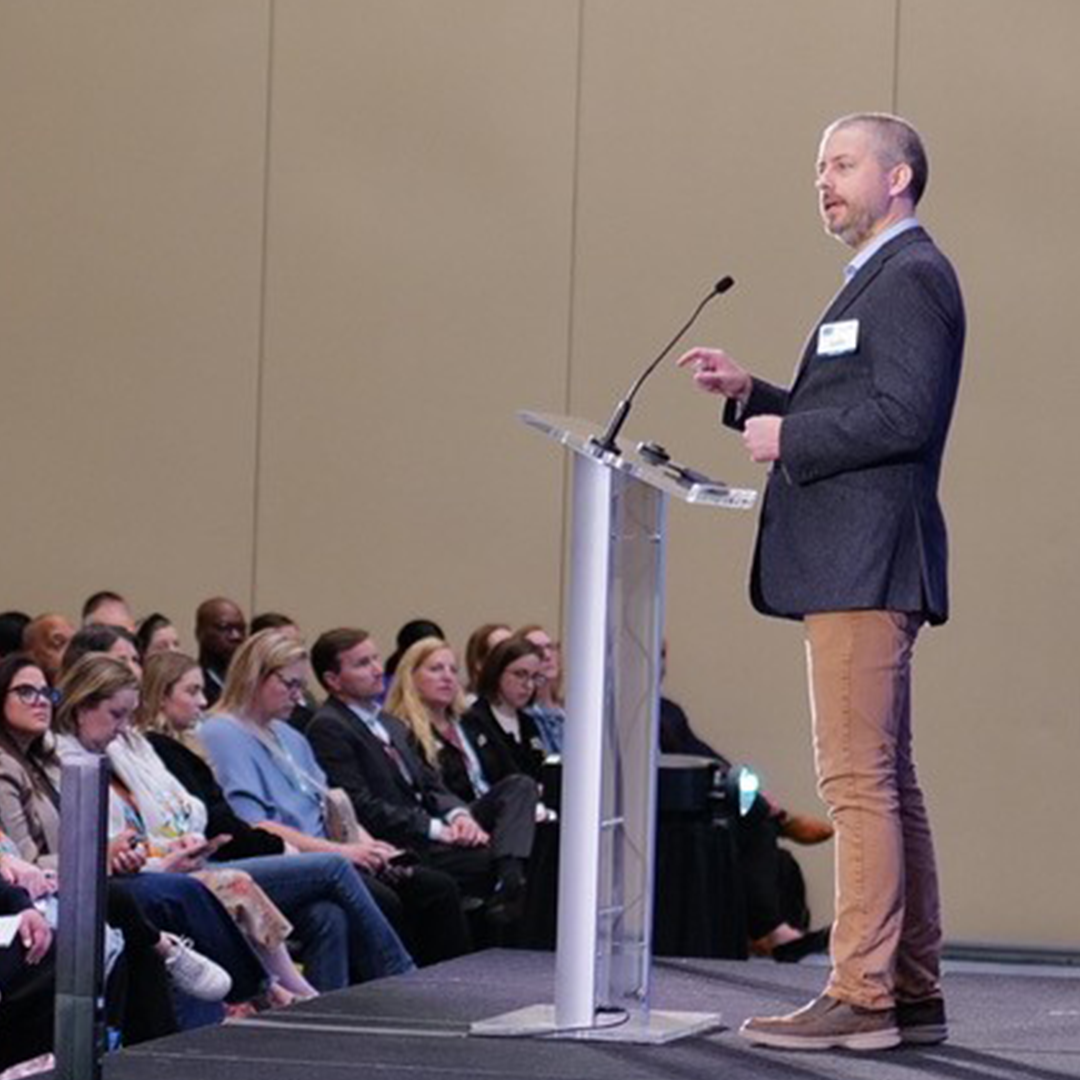
“HR leaders and employers need to remain vigilant and continuously monitor labor market conditions as you guide your workforce during these times," said Sydney Ross, economist at SHRM during the Talent26 conference in Dallas.
During the session, Recent Trends in the U.S. Labor Market, SHRM economists shared the major U.S. labor market trends. These are a few of the key things to know.
Negative Net Employment Growth by Industry, Apart From Health Care
For the majority of industries, net employment growth was negative in 2025.
According to Sydney Ross, economist at SHRM, only eight of 21 major industrial sectors added jobs in the last year, and just three saw employment grow by over 50,000.
The industry with the most growth was health care and social assistance. This upward trajectory is due to the growing aging population.
Possible Explanations for Current Employment?
The unemployment rate by state is rooted deeply in how the U.S. industrialized and in how populations changed over time.
There are short-run effects, such as current economic conditions, as well as long-run structural effects such as more industrialized states with large metropolitan areas tend to have somewhat higher unemployment rates, whereas states with large agricultural sectors often have low unemployment.
On average in 2025, the national unemployment rate was 4.3%; however, jobless rates varied across states, ranging from a low of 2.5% in South Dakota to a high of 6% in Washington, D.C. Several factors influence the different labor market characteristics and outcomes across states, and some of the variation in jobless rates reflects long-standing structural and population differences across regions.
“For example, states that are more industrialized, have larger populations, and bigger metropolitan areas tend to have more elevated jobless rates, whereas states with large agricultural sectors (e.g., the Dakotas) often have lower unemployment rates,” Ross said.
However, it’s plausible differences in these rates have been driven by the degree current economic conditions have affected local labor markets across regions.
“Although states like California, Nevada, and Washington have robust and technologically advanced industrial bases, elevated average unemployment rates in 2025 likely stems in part from supply chain disruptions and shifting regulatory policies impacting labor demand in technology and trade sectors in these states,” Ross noted.
“Similarly, weakness in heavy duty manufacturing sectors has likely contributed to the relatively high jobless rates seen in states like Michigan, Ohio, and Illinois.”
Labor Demand Across Occupational Groups Softens
While the labor demand has softened significantly since post-pandemic times in 2022, this cooling is uneven across occupational groups.
According to SHRM senior economist Justin Ladner, the average number of job postings in health care during the most recent 12-month period was 3.9% higher than the equivalent average in 2022.
Meanwhile, all other occupational groups saw job postings fall — by more than 40% in business and financial operations, office and administrative support, and computer and mathematical jobs.
Employers and Job Seekers Face Occupational Mismatch Barriers
There are several demographic shifts happening which are fueling growth across the labor market that prove challenging.
When it comes to filling jobs, one of the big barriers is a mismatch of the skills required, known as occupational mismatch. Constrained unfillable job postings share (UJS) and constrained unmatchable unemployed share (UUS values), further defined here, shows the impact.
Based on the three-month average UJS and UUS values between March 2015 and February 2026, there was a spike in 2020 amid the labor shortage and then a boom in 2023.
The pandemic-era labor market boom — which included a massive rise in job postings and falling unemployment — produced UJS values of around 60% in 2022, suggesting that a significant majority of job postings during this period could not be filled by unemployed people with aligned occupational experience. However, as labor market conditions have cooled, this UJS has fallen steadily while the UUS has risen.
“As of February 2026, we estimate that about 31.7% of job postings cannot be satisfied by the existing unemployed population under our occupational matching constraint. Similarly, 30.8% of unemployed people cannot be matched to a job posting aligned with their most recent occupational experience,” Ladner said.
However, one of the reasons it’s hard to solve the labor shortage in this sector is the labor timeline.
The Everlasting Challenge: Where Should HR Focus Their Energy?
Given the ongoing labor shortage and market competition, recruiting will continue to be a challenge for HR teams.
One session attendee mentioned the challenge their organization is facing with filling c-suite roles.
Meanwhile, another attendee is focused on filling the mid-level gap. The challenge of where HR professionals need to place their energy for hiring keeps shifting.
“We’re trying to upskill our younger generation of 25- to 35-year-olds, so that before our chief engineers retire, we are ready to fill their position. Right now when we’re sourcing for that type of role, it’s really hard to find certified professionals,” said Medelyn Garrett, talent acquisition specialist at Patel, Greene, and Associates, LLC, a transportation engineering company in Orlando.
When working in such a specialized industry, having the right credentials are critical. Garrett’s team is looking for job seekers with a professional engineering license and experience with 3D modeling.
On top of the requirements for hiring in a specialized industry, Garrett noted that when all your energy goes towards filling one job-level gap, the concern then becomes whether the other job levels are being supported.
“I’m concerned that right now we’re so worried about how we fill that chief engineer senior level role, that we’re really not looking at that entry level position. They need five to seven years of experience for an entry level role, and that’s not an entry level position — we want to provide internships and experience,” Garrett said.
Was this resource helpful?

Validate your HR expertise
Earning your SHRM-CP credential makes you a recognized expert and leader in the HR field.
Related Content

Transform HR with mobile technology to streamline workflows, enhance communication, and boost employee engagement across distributed teams.

A new study found that talent development practitioners believe performance-based assessments are more effective at measuring employee learning outcomes than knowledge tests.

As AI makes deeper inroads into organizations, employee concerns about the technology continue to grow. Here's how HR leaders can address the fear of AI among their own staff, as well as in the wider organization.