- Video
- Audio Only
In this episode of People + Strategy, we sit down with Kris Bahner, senior advisor for Mars Snacking and former chief global corporate affairs officer at Kellanova, to explore the state of employee retention in 2026. Drawing on a 35-year career with two decades with Kellogg and Kellanova, Bahner shares why staying can be a powerful career strategy in an era defined by job hopping. She explains how long-term investments in relationships, trust, and institutional knowledge can accelerate growth and leadership impact. Bahner also reflects on leading through major transformations, including Kellogg’s spinoff in 2023 and the Mars acquisition of Kellanova in 2025. She offers insights on retaining talent and helping employees thrive through change.
This episode is sponsored by:

Related to this Episode:
Toolkit: Managing Organizational Change
Learn practical strategies to lead organizational change with confidence, align stakeholders, and help employees navigate transitions successfully.
Toolkit: Improving Employee Retention and Reducing Turnover
Discover proven approaches to boost employee retention, reduce turnover, and build a workplace where top talent wants to stay and grow.
The podcast is just the beginning. The weekly People+Strategy Brief also features articles on all aspects of HR leadership excellence. Explore these must-read stories featured in the latest issue. Subscribe now and elevate your strategy.
News + Insights

Track how talent challenges evolve each quarter and what rising difficulty means for hiring and retention strategies.
Employee retention is critical, with turnover costs estimated to range from one-half to two times an employee’s salary.
People + Strategy is a quarterly journal that delivers the most current theory, research and practice in strategic human resource management.

Concerned about frequent job changes? Discover how to highlight your achievements and keep your career on track with smart transitions.
Episode Guest
-
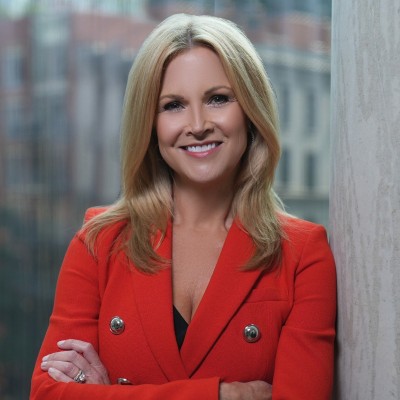
Kris Bahner
Kris Bahner serves as Senior Advisor to Mars Snacking, commencing with the acquisition of Kellanova by Mars, Incorporated in mid-December 2025.
Previously she served as Kellanova and Kellogg Company’s Senior Vice President, Chief Global Corporate Affairs Officer, overseeing Communications, Philanthropy, Sustainability and Government Relations.
She led through the company’s major transformational changes, including acquisitions, divestures, major reorganizations, crises, labor relations strikes, the spin-off of Kellogg Company’s North America cereal business (creating Kellanova and WK Kellogg Co respectively), as well as through the acquisition of Kellanova by Mars, Incorporated.
Bahner was the chief architect of Kellanova/Kellogg Company’s Better Days Promise purpose platform, committed to creating Better Days for four billion people by the end of 2030, providing equitable access to food for all.
Bahner has more than 35 years of Corporate Affairs experience within the food industry. She began her Kellogg Company/Kellanova career in 2006. Prior to joining, she held a variety of corporate affairs roles with Kraft Foods and led public relations programs for food industry clients at Edelman Public Relations Worldwide as well as at Powers Agency.
She served as the Executive Sponsor of the company’s Women of Kellogg business employee resource group for more than nine years.
Bahner was the President of the Kellanova Fund Board of Trustees and continues as President of Kellanova’s 25-Year Employees’ Fund, Inc.
She serves on the boards of MiracleFeet, Sleeping Giant Capital, Battle Creek Unlimited, and the Miami University College of Arts and Science.
She was named as one of top 100 Women Leaders in Consumer Products in 2021.
She has a Bachelor of Arts degree in communications and public relations from Miami University in Oxford, Ohio.
Episode Transcript
Ad 1: [00:00:00] Explore the magic of Paycom's full solution automation at SHRM 26 Booth 3525. After a demo, you can spin the wheel for a chance to win a cool prize. And don't forget to pick up your passport for a truly immersive experience at SHRM 26 and its sponsored after-hours takeover of Disney's Hollywood Studios.
Ad 1: Don't miss the magic. Stop by Booth 3525 and set your HR and payroll to automatic
Mo Fathelbab: Welcome to today's episode of People and Strategy. I'm your host, Mo Fathelbab, President of International Facilitators Organization. People and Strategy is a podcast from the SHRM Executive Network, the premier network of executives in the field of human resources. Each week, we bring you in-depth conversations with the country's top HR executives and thought leaders. For today's [00:01:00] conversation, I'm excited to be joined by Kris Bahner, Senior Advisor for Mars Snacking. Previously, Senior Vice President, Chief Global Corporate Affairs Officer at Kellanova, the leading global snacking company, formerly Kellogg Company. We'll be discussing the state of employee retention in 2026. Welcome, Kris.
Kris Bahner: Thanks, Mo. It's my pleasure to be here.
Mo: Great to have you with us. So Kris, uh, I wanna start with your career journey and what brought you to the C-suite.
Kris: So I, uh, started my career, uh, has always been in communications. I started on the agency side, worked for a small agency, then a larger agency, went to the client side with Kraft Foods for seven years in corporate affairs, doing a wide variety of roles, and then was recruited to join Kellogg Company 20 years ago, um, and have had just a fabulous career there. Uh, for the last decade, I've been, um, Chief Global Corporate Affairs Officer and, and that entails [00:02:00] leading communications, philanthropy, sustainability, and government relations. So a really interesting portfolio of work.
Mo: Sounds interesting indeed. Um, so what is your, uh, point of view on job hopping versus staying with one employer?
Kris: Yeah, and I have a pretty strong point of view on this, um, because I've only been with four employers in my c- career to date, which I guess I'm gathering is kind of unusual these days. I mean, uh, it certainly depends on the individual. My father worked for one employer his whole life, but it might be a generational thing, and I think, uh, the generations that we're seeing come up now might value different varieties of experience. But from my own personal experience, I feel like there's a number of real benefits of staying with one employer for a long period of time, and that's, that's been my m- my point of view. I, I think it's about building real connection, uh, the [00:03:00] ability to earn a respected reputation over time, um, building institutional fluency, you know, really understanding how an organization works. The ability to earn mo- more autonomy over time in your career, and then also the, the ability to learn from your decisions over time and see the impact over the long term. And, and happy to break down each of those themes, um, but as I reflect on it, um, the benefits are really quite significant.
Mo: Yeah. And by contrast, how often are you seeing, uh, peers in executive level job hop? And does this differ from what you've seen in the past?
Kris: I mean, I think it's kinda hard to judge the broad mar- market. It no doubt depends on the individual as well as the sector and the company. Uh, but my experience going through our recent transformation, both the spin and, and followed by the acquisition, was that [00:04:00] my peers and s- fellow senior executives tended to stay. I mean, I think there's probably several reasons for that exciting future that we were creating together. Uh, typically senior leader compensation includes long-term incentives. Um, and you know, I think that one might find with executives, um, it isn't always our choice when we stay or we leave. There's a number of external factors, whether it be M&A or strategic direction change, change of control and so forth, that might lead to, uh, a departure. Um, so fully recognize that, you know, leaving a job is not always of one's own volition, right? We don't always have a choice in the matter, but that's what I'm seeing.
Mo: And at Kellogg for 20 years, uh, and y- you've continuously chosen to stay in the same company, which is amazing. Was there a particular moment or realization, uh, which made you say, "Oh yeah, this is [00:05:00] absolutely the right decision"?
Kris: I mean, I think I, I stayed for all the reasons I mentioned a moment ago. I, I love who I work with. Uh, I continue to learn new things. It was not a static role and, and the ability to be challenged and learning was really appealing to me over time. And, and I don't think there's really any single moments, but it's rather the collective of all those moments that reinforce why staying was right for me. Um, you know, I think that there's the, the little nuances of things, Mo, like You know, when you are deeply known and trusted in an organization and you've been through a lot together, you tend to get the benefit of the doubt, and you give the benefit of the doubt to others. Mm-hmm. Yeah. So, you know, what do I mean by that? None of us are perfect, and when one makes a misstep, and you inevitably do 'cause we're human- Mm. Mm ... um, you know, you've got people around you who say, "Well, I... Actually, I know [00:06:00] Mo, and, and, uh, you know, I, I know his track record and, and I'm gonna give him the benefit of the doubt." So it's, it's little things like that.
It's, uh, what I talked about before, the, the, the benefit of those really deep relationships, uh, where you know how things work, right? You know how to get things done. You know the, uh, unwritten as well as the written, uh, the implicit as, as well as the, the, the, the known, if you will, rules of the road. And I think, feel like that's undervalued when people think about moving for a role. Particularly if you're earlier in your career, you might have your head turned, for example, by a bigger title or slightly more money. Um, but I would really carefully weigh the benefits of that, um, sort of short-term gain against those longer term benefits of, of staying.
Mo: So I'm curious what you would say to a [00:07:00] young HR professional who, 20 years ago, where you were 20 years ago, uh, had to evaluate, "Is this the right place where I'm gonna stay for the next 20 years?" Because a- as we did discuss, that tends to be less likely in this day and age. Yeah. So how do you know?
Kris: Well, one of the things I looked for at the time and continue to look for is values alignment with your employer and the people you work with, right? Are they... Is it an organization of integrity? Do they say and do what they in- you know, intend to? It... Is there clear follow-through? And those, the evidence of that happens both initially and then over time, right? Um, how are you treated, and, uh, you know, if you're promised things and those things come through. Um, are you fairly, uh, reviewed? Is your performance fairly assessed? Are you getting positive feedback? Are you... As well as constructive feedback, super important [00:08:00] for growth. Are you getting learning and development opportunities? What kinds of programs do they have? So I think there's some key questions one can ask if you're a HR professional starting off in your career and you're thinking, "Is this a place I can learn and grow and really stay?" Um, that might give you some clues. Um, and then of course there's the other questions you're asking yourself the more time you spend somewhere is, "Is this a place I should stay?" And, a- and is that sort of mutuality of what I'm giving and what I'm learning, uh, uh, on balance.
Mo: Yeah. And, uh, early in your career, a mentor, uh, told you, "Don't us- underestimate the power of compounding." And, and we all understand that as it relates to compounded interest.
Kris: Sure.
Mo: Uh, but in this context, I think it goes back to, uh, something you said earlier, but maybe you can, can just expand upon that for us a little bit.
Kris: Yeah. Uh, as you said, it, it certainly applies to financial assets, and [00:09:00] I think that was the sort of base level meaning that this mentor was saying is, you know, make sure you max out your 401and company match, right? It's just smart. But I think it cer- the dual meaning or the levels of meaning relate to also relations, the relationships, the power of long-term relationship building, the credibility that you get that I spoke about, the knowledge, the reputational, uh, compounding that, uh, really pay dividends, uh, in another way over time.
Mo: So tell us about the spinoff. Yeah. I'm, I'm very, uh, and I'm sure much, many of our audience members would like to hear more about that, 'cause, you know, we grew up with Kellogg and Kellogg's cereals and, and now there's this new brand, Kellanova. So please break it down for us.
Kris: Yeah. So Kellogg Company, 118-plus-year company, uh, and it's known for cereal, right? A category that's been around for a long time. But increasingly, our portfolio was quite [00:10:00] diverse and growing in the area of snacking, which is, is actually categories that are faster growth. And so we're a publicly traded company. We were, uh, before the acquisition, which I can speak to. And as you think about the s- company strategy, the cereal business, um, was slower growth, needed some significant reinvestment, uh, to continue to, uh, thrive, and so the company made the bold decision to spin off our North America cereal company. Hmm. When you think about the fact that our founder was one of the originators of that category in 1906- Hmm ... um, that's a pretty visionary thing to do and, and some would say, you know, quite challenging. Um, but it ended up being really a great move. We spun off the s- the cereal company, which became WK Kellogg Co., recently acquired by Ferrero, and then we became Kellanova, a rebrand so that we [00:11:00] could focus on our growing global snacks portfolio.
And, uh, you know, the name is, I think, pretty self-explanatory. The root of our heritage with Kell and then anova, which signals a, a new. And we were enjoying tremendous success as that, as that company when along came a phone call from the CEO of Mars Incorporated, who also has ambitions in, in the snacking, uh, world, and, and saw the beauty of the, those two coming together. So the company's been through a, just a tremendous amount of transformation over the past few years, which has been really exciting and a great opportunity to lead through as well.
Mo: And how have these transitions been for you personally, and, uh, what was it like? I mean, was it challenging? Was it a piece of cake? How did you get through it?
Kris: Definitely not a piece of cake. Uh, you know, I [00:12:00] talked before about, to me, I, uh, the desire to continuously learn and grow is tr- really important. And talk about a growth opportunity. Those types of situations, a spin, an acquisition, often once in a career of that size, I mean, those are... The acquisition was one of the largest in the CPG industry to date. And, you know, I think, wow, as I approached it and, and knew about it early on, I thought, "This is tremendous. It's a strategic fit. It's a great place for our brand and our people, and we're gonna learn a lot through this transformation, both from each other, from the process, and from our new colleagues at Mars."
And that's exactly what it's turned out to be. Our, our theme through the integration planning and, and through, uh, the close and then post-close integration has been better together, um, which speaks to really using your curiosity and your humility to say, "What, uh, [00:13:00] what can I learn from my partner across the table?" Um, and, uh, you know, this is another tremendously successful company. How do you guys do it? How can we do it better together? And it's been a really awesome experience. At the same time, it's not easy, because change impacts people's lives, right? Uh, what happens through, uh, transformation like an acquisition is that there's talent selection that happens as two companies come together. Hard choices are made. Individuals make choices about what they want for their future. And as a leader, I consider it a privilege to walk alongside people to help them navigate through that. And, and certainly you're navigating through it as an individual yourself, as a leader.
Mo: You know, I, I can't help but make a parallel to this notion of stepping into the fire during a tumultuous time versus running away, and it's almost [00:14:00] as if those who choose not to stay through such experiences really miss out on something that could be profoundly transformative for their careers. And yet, if they don't stay, they miss out.
Kris: Yeah. I mean, I think it's, it's so individual, right? Everyone has their, their own circumstances. I tend to agree with you. You should at least see it through. If you're going through that kind of change, you should at least see it through, maintain an open mind, right? Try not to go into it with a closed mindset of, "This isn't for me. I didn't choose this path," et cetera. But, "Huh, this could mean really interesting things for my career." Um, and I think for the most part that that, that turns out to be true for people. Um, it's certainly a growth experience, even for those people who decide to, you know, turn the page to another chapter.
Ad 2: SHRM Certification, the global standard for HR professionals ready to lead with impact. Whether you're building your foundation or driving strategy, SHRM [00:15:00] Certification validates what you can actually do on the job, not just what you know. Stand out, grow your career, and turn HR expertise into real business results. Get certified, get recognized. Lead the future of work with SHRM. Get certified today. SHRM.
Ad 3: Manager effectiveness directly impacts performance, retention, and cost. People are stressed, and they're stressed because of their people manager. Traditional training builds awareness but often fails to change behavior. SHRM developed this thing called PMQ. That stands for People Manager Qualification. PMQ. Teach managers how to manage, how to be more effective, more empathetic, more understanding, and better motivators of people. Driving behavior change when it matters most. Where the plus part comes in is Life Guides. We unleash the power of every employee if your manager was better and you were feeling [00:16:00] mentally well and safe. What Life Guides does is serve as that coach to connect with another human being who can help you navigate through all those real-life examples that relate to you from the things that you learned in that training. PMQ+ is an addition to my toolbox. I've seen a better relationship with my managers and how they collaborate, how they work with each other. There's not that stress anymore 'cause they feel like they have somebody to release. That's why we created this PMQ+, Life Guides plus SHRM's PMQ. Increase performance. Get PMQ+ today. SHRM.
Mo: And so what advice would you give, uh, somebody who is about to go through a similar transition? What do they have to know? What do they have to do to get through it effectively and, and come out on the other end in a better place?
Kris: I think having an other-focused mindset is really important, and I'll tell a brief story. Through [00:17:00] this process of spin and acquisition, I met one-on-one with my global function team members several times, and it was great learning for me personally because I did a lot of listening. I asked questions, and I listened. "What are you concerned about? What questions do you have? What are you excited about? What are you looking forward to, uh, or, you know, interested in from a career perspective?" And I also asked, "Have you ever been through something like this before?" Cause you can't assume people haven't. And really interestingly, a number of people had been through acquisitions before or similar transformations, at all levels of the organization.
And I said, "Well, what did you learn?" And to a person, every one of them said, "Well, I wouldn't have chosen this path necessarily, for the company that I work for to be acquired or to acquire someone else. I came out the other end better for it, more resilient, more [00:18:00] empathetic, wiser, and whether I stayed with that company or took that with me, it was a, it was a good thing." Yeah. So, you know, that kind of growth mindset, I think, is a great place to start from. An open mind. Um, this could be great learning. This could be the next step in my career. Um, and asking questions, seeking to understand. And then I think that other-focused mindset is really about rather than having a scarcity, fear-based mindset, "Oh no, what does this mean for me? It's gonna be bad." Hmm. Thinking, "How can I be most of service to the people around me during this transition? How can I show up as my very best self?" And that's always a good place to be, right? Um, you're, you know, you and the people around you are gonna be better off for it. So, um, those are, you know, some of the things that I've observed from talking to team members about what [00:19:00] worked for them and, and certainly the experience of w- of what I witnessed.
Mo: I would imagine also as you went through the spinoff and then the transaction with Mars, that there probably have been three shifts in terms of the arc of the culture, of what it was like-
Kris: Yeah ...
Mo: and then what it became, and then what it became again.
Kris: Yes.
Mo: Was there, was it a clear change in the culture throughout those, those transactions?
Kris: I would call it an evolution, not, versus, you know, wholesale change. So I think anytime you're part of a company that's 100 century, you know, plus years old, as, as Kellogg company is, has a really deep culture, very relationship-based, um, you know, certain ways of doing things, lots of positives. And then with the spin you're creating and you have an opportunity to create a new culture.And we took that opportunity and asked people, asked our employees, [00:20:00] "What do you wanna take with us and what do you wanna leave behind?" Right?
Mo: And what did they wanna leave behind?
Kris: Well, I mean, I think it varied, but it, it's like, oh, I wanna be, make sure that, you know, 100-plus-year-old company that has these iconic brands, um, are you moving as quickly as you could? Are you making decisions super rapidly? And so those were some of the themes that might emerge, right, from a company like that, that, you know, I'd like to see us even more agile, more entrepreneurial. Um, and then what do you wanna keep, uh, and maintain going forward, and how do we even strengthen that further? So it's an opportunity to be even more intentional about culture. Um, but of course, culture takes time to develop, and it's about the behaviors that we each come forward with. And then of course, two companies coming together like Mars and Kellanova, uh, is another culture moment, as you, as you so rightly pointed out. And that one even more complex, [00:21:00] right? Because these are two century-plus old companies coming together. Lots of similarities in culture, but seldom are cul- two cultures the same, right? And so again, that's where that humility comes into play.
Mo: And did you feel that humility from the other side?
Kris: Oh, tremendously. And you know, I'm not sure that's always the case in an acquisition, but I give such great credit and respect to Mars. Um, it was a real feeling of partnership. For example, my, uh, counterpart and I, who, uh, led corporate affairs from our snacking, worked together, and oftentimes in an acquisition situation it's, uh, um, command and control. But that was not the case here. Um, they s- said, "We respect you and what your team brings to bear, and we want to equally learn from each other." And it was, it was tremendous. It was refreshing. Um, but I think it's incumbent upon each of us to look at the partner across the [00:22:00] table, uh, in those situations as just that, um, not as competition, um, but as the only way forward is together, and that if we put our, put our brains and collective teams together, we're going to, you know, come out the other end even stronger, and that was the case.
Mo: Uh, Kris, now that you've covered the three big changes you've experienced in your career, let's discuss what employee engagement looks like on the ground level. What early signs tell you that a key employee might leave, and what interventions have you found most effective in changing that trajectory?
Kris: Hopefully you have close relationships with your people, and you're having frequent one-on-ones, and so that's the best approach that should give you a sense of disengagement or plans to leave, right? But certainly broadly, some early signals could be an uncharacteristic drop in performance or decline in work quality. I think the watch-out there is it could [00:23:00] also be a sign of other challenges, whether mental health or, you know, personal or family situations, so seeking to understand there is critical. Maybe another sign would be withdrawal from future planning, so, you know, a subtle sign of reluctance to commit to a long-term project or engage in career development conversations. A shift in attitude, you know, more recalcitrance or silence, reduced enthusiasm, apathy. Um, I think it doesn't necessarily mean they're going to leave. It means it's an opportunity to seek to understand, right, as a people leader And then I think in terms of interventions, um, it's just about the conversation. What's on your mind? What-- It's like a stay interview, right? That's the HR, uh, terminology, a term of art. And, you know, you don't wanna wait for the exit interview. We're proactively asking employees, "What's keeping you here? What might make you [00:24:00] leave?" And if there's, you know, some key signs around concern around comp, then there might be an opportunity for a comp review, or concern around workload and burnout, let's look at that. You know, there's a number of avenues, of course, that we can take. Career pathing, upskilling, uh, you know, incremental investment in learning and development. All of those, I think, are effective ways to, um, try to intervene if we, if we see, uh, some wobbling.
Mo: Uh, and Kris, what motivated you to stay early in your career versus later? How has that changed over time?
Kris: Well, I think early in my career it was certainly about working with great people, learning and growing, as I said, and that, that has not changed. What develops over time in one's career, I think, is the deepening joy of helping to coach and develop other people and seeing them learn and grow. And those deep [00:25:00] relationships, uh, again, are a real motivator to stay. Um, and as I said, continued challenges. So for me, the transformation journey has been absolutely incredible. Uh, continued learning development that has kept me highly engaged. But quite frankly, even before that, you know, you get phone calls, right? We-- Everyone gets phone calls from... It's, it's, you know, depending on the job market, there's, there's lots happening out there. And, you know, deep reflection about, um, what is working for you where you are, um, i-is really called for. And I think on balance, um, certainly, uh, situations where it might be time to go, but on balance, um, there's a lot of benefits to staying.
Mo: So when you look back on your illustrious 35-year career journey, uh, what's the moment that made you especially proud?
Kris: I think there are many. Um, one that comes to [00:26:00] mind is part of our team's work was around creating our purpose for Kellogg Company and Kellanova, which is called Better Days. Um, and helping to architect that purpose platform to help ensure equitable access to food for all across sustainability and wellbeing, uh, hunger and e-exac- uh, equity, diversity and inclusion was just a tremendous joy. It was having impact in society and in our communities all around the world. And I think it's not just about one group in this instance of, uh, employees creating something and being the stewards of it. Um, what was really gratifying was that the entire company adopts that purpose and lives that purpose, whether it's through volunteerism or the, the programs that they, they do. Um, so that has been just a tremendous highlight and [00:27:00] a true team effort across the entire company and across functions.
Mo: And your first cereal as a child was?
Kris: Oh, well, I mean, I don't know about you, but we weren't allowed to have special cereal except for on Saturday mornings, right? When you're watching cartoons. So Froot Loops always come to mind, and Frosted Flakes, and they're still good as adults. I will tell you, more people eat those cereals as adults than even kids.
Mo: Is that so? It's true. Is that statistically the case?
Kris: It's true.
Mo: Oh my God. Okay. Okay. Well, good to know. Thank you. Um, and so Kris, as you think about the next phase of, uh, your career, uh, what are you still hoping to learn and experience? What's energizing you looking ahead as you were energized in the past?
Kris: Yeah. So I was offered an opportunity very generously to, to keep going in my role with Mars Snacking, but, [00:28:00] uh, again, through deep reflection and a, and a lot of careful thought, chose, um, to step back a little bit. I'm serving in the transition role as a senior advisor at this point. Um, and that feels good because it's helping to ensure a smooth transition, helping to ensure knowledge transfer, and that team members are set up for success, um, and that that transition is, is a strong one. And so I'm not sure what's next. Um, I know I'm still looking to, uh, learn and grow and- Mm ... as well as contribute, hopefully my own experience to others. Um, that would be tremendously gratifying. So we'll see.
Mo: Wonderful. And last question. Mm. What is one piece of advice that has shaped your work or personal life?
Kris: That's a tough one, Mo. You know what comes to mind is, uh, one of my all-time favorite books. I don't know if you've read it. It's called How to [00:29:00] Know a Person: The Art of Seeing Others Deeply and Being Deeply Seen. Ooh. And it's written by a terrific author I highly recommend by... called David Brooks. And in it, he really eloquently summarizes the truisms that, for me, have shaped my personal life as a communicator and corporate affairs leader as well as my personal life. And the quote that comes to mind is talking about the one skill that lies at the heart of any healthy person, organization, community, society, and that's the ability to see others deeply and make them feel seen, to know someone, to seek to know them, and to help them feel valued, heard, and understood. So I think at the heart of that idea is, is EQ, empathy, and listening, right, which are a real, I believe, superpower. Um, it's core to understanding your audience or who you're talking and engaging with is [00:30:00] core to really everything in life, right? Leadership, um, decision-making, uh, deeper understanding, driving innovation, and, you know, more importantly on a human level, these are critical skills to being a better human, to, to being more connected to the people around you. Um, and, and that can only be a good thing.
Mo: And that's where we'll end it for this episode of People and Strategy. A huge thanks to Kris for your valuable insights.
Kris: Thank you, Mo. It's such a pleasure.
Ad 3: Explore the magic of Paycom's full solution automation at SHRM26 at Booth 3525. After a demo, spin the wheel to win a prize. Plus, pick up your passport for a truly immersive experience at SHRM26 only at Booth 3525. [00:31:00] SHRM
Featured Story

People + Strategy is a quarterly journal that delivers the most current theory, research and practice in strategic human resource management.
Enjoy On Your Favorite App
Feature Stories
As part of SHRM's commitment to providing cutting-edge resources, get additional perspective and more insights in content curated from SHRM and around the web.

Discover Johnny C. Taylor Jr.'s leadership insights on agility, empathy, culture, and change to build stronger teams and stay relevant.

A NASA mission lead shares how enabling continuous communication as a leader drives team connection and engagement. Avoid knowledge hiding to create inclusion.

Learn what strategic HR looks like when the CHRO-CFO relationship is aligned. Discover a real-world example of HR alignment as told by a fractional HR company.