- Video
- Audio Only
This special episode of the People + Strategy podcast features host Carolynn Johnson, president of SHRM CEO Action, in conversation with Annette Tyman, partner at Seyfarth Shaw and chair of the firm’s People Analytics practice group. Together, they unpack what inclusion and diversity (I&D) compliance really looks like in today’s shifting legal landscape. As scrutiny intensifies and expectations evolve, Tyman provides clarity by moving beyond theory into the real-world decisions CHROs are making every day. She offers a nuanced view of I&D as both a legal and leadership challenge — one that requires balancing compliance and communication without losing sight of core organizational values.
Carolynn Johnson on Reinforcing the Importance of Inclusive and Civil Workplaces
Related to this Episode:
Advance your career as an HR leader by earning a SHRM-SCP certification and begin transforming your workplace.
SHRM PMQ+ Manager Qualification
SHRM’s People Manager Qualification paired with one-on-one professional mentorship (PMQ+) gives your people managers the skills, confidence, and peer support they need to lead effectively.
The podcast is just the beginning. The weekly People+Strategy Brief also features articles on all aspects of HR leadership excellence. Explore these must-read stories featured in the latest issue. Subscribe now and elevate your strategy.
News + Insights

A NASA mission lead shares how enabling continuous communication as a leader drives team connection and engagement. Avoid knowledge hiding to create inclusion.

New SHRM research shows talent analytics is key to HR maturity. Learn how CHROs can use data to align talent strategy with business performance.

Discover key takeaways from SHRM’s latest research, Navigating the C-Suite, from where the CFO-CEO perceptions of CHROs differ to how to build executive trust.

With older workers ready to embrace AI, learn how inclusive training, respect, and transparency can unlock their potential and drive workforce innovation.
Episode Guest
-

Annette Tyman
As the co-chair of Seyfarth Shaw's people analytics practice group, Tyman advises employers on pay equity, diversity and inclusion metrics, and people analytics. She also advises and counsels federal government contractors in federal compliance and audit defense. She is an experienced litigator in a wide range of employment discrimination matters, with an emphasis on complex, collective, class action and multi-plaintiff litigation.
-
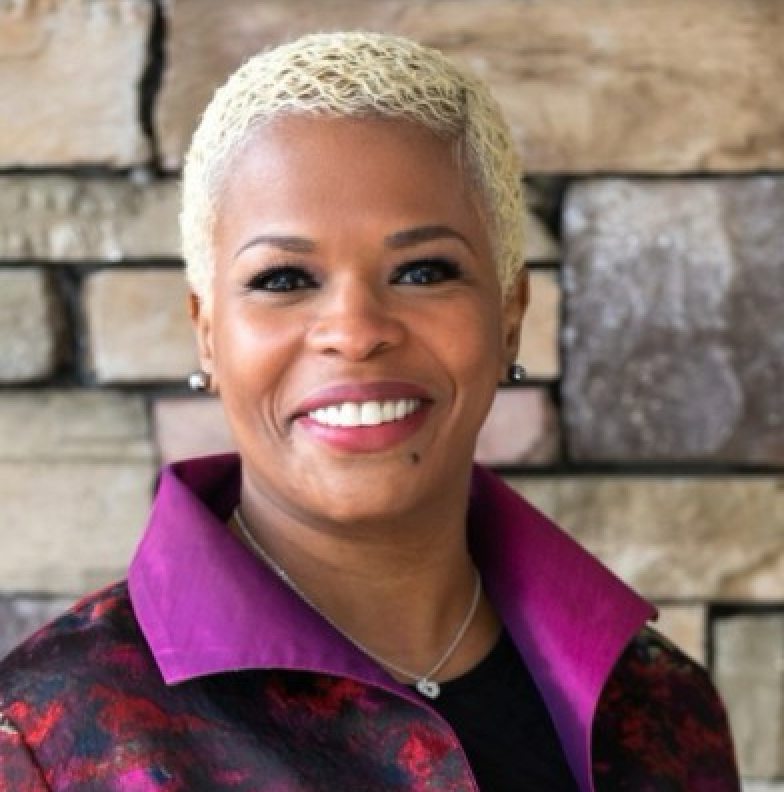
Carolynn Johnson
Carolynn Johnson is president of SHRM CEO Action, a credible, research-based “source of truth” think tank and member community for inclusion and diversity. Before joining SHRM, she served as chief executive officer and executive editor of Fair360 (formerly DiversityInc), the leading workplace fairness management platform for content comparative benchmarks, and predictive workforce analytics. She led teams of data scientists to build advanced analytics, benchmarking tools, and predictive models measuring inclusion, diversity, and performance.
Episode Transcript
Mo: [00:00:00] Welcome to today's episode of People and Strategy. I'm your host, Mo Fathelbab, president of International Facilitators Organization, People and Strategy is a podcast from the SHRM Executive Network, the premier network of executives in the field of human resources. Each week we bring you in-depth conversations with the country's top HR executives and thought leaders.
Today's conversation is a special episode featuring two subject matter experts who are well versed in inclusion and diversity. We're taking a practical look at legally compliant I&D for HR leaders. This discussion is moderated by Carolynn Johnson, president of SH RM CEO. Action with special guest Annette Tyman, partner at Seyfarth Shaw and chair of Seyfarth People Analytics Practice Group.
Enjoy this special recording.
Carolynn Johnson: I am Carolyn Johnson, president of SHRM [00:01:00] CEO, action, and today I will be your moderator. During this session, we'll take a practical look at the legal landscape of inclusion and diversity, and offer actionable guidance for some of the most common workplace scenarios. HR Leaders encounter.
But before we begin, I want to share the perspective I bring to this conversation. Workplace inclusion isn't a side product project. It's a core operating system for talent, productivity, risk management, and growth. My prior experience leading Fair 360 formerly Diversity Inc. Taught me that the real impact of IND comes from building robust, measurable, and sustainable practices, not just winning debates about terminology.
When language becomes the battleground, the work itself can become collateral damage. That's why at SHRM we're focused on delivering value that is legally compliant, workplace unifying and business accretive. The stakes are real. SHRM's research shows us [00:02:00] organization lose an estimated $2.7 billion per day due to incivility.
Highlighting that inclusion is not just a moral imperative, but a business critical one In an era of legal uncertainty and heightened polarization, trust and belonging are fragile, and the cost of dysfunction is significant. Just a few weeks ago on April 10th. We saw IBM agreed to pay $17 million to settle a Department of Justice, DEI investigation IBM denied wrongdoing and the agreement stated explicitly it is neither an admission of liability by IBM nor a concession by the United States that its claims are not well founded.
IBM paid to end the distraction versus have the expense of a prolonged fight. This folks is an example of the co cost benefit analysis we're seeing C-Suite leaders have to make when it comes to i and d compliance. And that's why today's discussion is so important, as you heard, we're joined by Annette [00:03:00] Tieman, partner at scifi Shaw and Chair of the Firm's People Analytics practice group, who brings deep expertise in the legal and operational realities of I and d.
Together we'll explore how HR leaders can navigate compliance, build resilient cultures, and create measurable impact. So, Annette, let's dig in.
Annette Tyman: Thank you so much. Really appreciate it.
Carolynn Johnson: Thank you for joining us today.
Annette Tyman: Absolutely. My pleasure. Looking forward to the co conversation on this really, really important topic.
Carolynn Johnson: Wonderful. So first question, Annette, let's discuss the legal framing around I and D that businesses are grappling with for HR leaders trying to separate signal from noise, what actually counts as unlawful I and D today, and what still remains clearly lawful.
Annette Tyman: Okay. It's a great question. It's one that, you know, we have been talking through so much just internally with colleagues and [00:04:00] also with so many employers, um, as clients, uh, you know, grapple with the, the, the changes.
And, you know, when you really think about it, the law has not changed, right? So, what has been unlawful remains unlawful, uh, before the executive orders, before s. SFFA, um, all of the decisions that we have seen, um, come down there really has not been a change in the actual law. It's about enforcement, right?
So if we really look at Title vii, if we look at section 1981 or the other civil rights laws that are currently on the books, we want to think about. Programs that actually have, uh, that either provide a consideration or a preference that exclude or divide, that confer some sort of harm or a benefit or impair a right.
Okay. A contr, whether that's a contract right. Or a benefit. Um. And doing that on [00:05:00] the basis of demographics is where we are seeing the lines being drawn much more clearly now, much more explicitly now from agency documents, from guidance materials, from, uh, there's a lot of, of, uh, guidance that's getting pushed out or what we're hearing from the EOC commissioners and others.
Um, specifically on IND. So that's a high level, a very high level. Um, I think answer to, to that specific question.
Carolynn Johnson: No, thank you very much. And, and just double clicking on, um, one of the things that you said that I think, uh, requires reminding the law hasn't changed, but the enforcement action is what we're seeing, um, an increase, um, in.
So, um, that's important to note, which brings me to, um, the March, 2026, um, uh, contractor executive order, um, which brought up a range of employee requirements. Given this and other EEOC regulations in place around DEI, um, [00:06:00] if you were auditing an employer tomorrow, Annette, what are the first three parts of a program you would review?
Annette Tyman: So, it's so interesting, I had to really think about this, um, when we were talking about this specific question. Um, and if, you know, we're setting this up as, you know, grounding it in the executive order. So one of the first things I would ask is, you know. Are you a federal contractor or not? Right? If you're a federal contractor that puts you or a grant recipient, that's another one you're receiving federal, um, funds in some way, that's gonna put you in a much different category than private employers generally will have.
Same laws apply, so I don't want to minimize that same laws apply, but when I was thinking about the programs, the first thing I would do is start looking at any external communications. Right. So your websites 10 K reports, sustainability reports. How are you as an organization describing your own I and D programs?
Um. [00:07:00] Sometimes it's the language and not the practice that is actually driving some of the concerns and questions. So I might see something and ask a question about it, and they're like, oh, we really don't do that. This is how it we roll it out. But sometimes in an effort to really demonstrate how inclusive an organization
is,
Carolynn Johnson: some of the language,
Annette Tyman: maybe it's going through a comms lens, right?
Uh, gets softened so much that it's. Grabbing the attention of potentially an agency or, um, an advocate that, um, is against certain, um, practices and programs. So reviewing, um, communications, another area, especially with this new executive order, uh, executive order, 1, 4, 3, 9, 8, that, uh. It's gonna sound perhaps, um, surprising, but I'd look at how an organization is allocating and deploying its resources.
That is a new component. And the reason why I'm elevating it is because it is a new component that [00:08:00] frankly. Is not unlawful under our current civil rights laws, but if you are a federal contractor or a grant recipient, you are gonna be at risk. So understanding what some of those programs might be, and what am I talking about here?
Uh, things like philanthropic, um, giving. Your investment programs, how you might spend marketing dollars. Um, those areas maybe aren't their traditional sort of employment lifecycle, but because we haven't focused as much on that, it's an area that. Warrants review to just determine whether or not any of them are based on race.
And if so, then how to deal with, um, deal with that issue. And then of course, um, another one I would, uh, add here is, you know that everything in employment cycle is. Critically important, right? So, I mean, it's kind of a, it's a pretty big bucket. Hopefully, uh, employers have been looking at it, but it's everything from your, your sourcing, uh, and recruitment process [00:09:00] all the way through the, the talent pipeline.
I would also add supplier diversity in there. That's another area that, um, I think that these, um, inclusion, uh, programs. Deserve a wide lens. So it's not just about the HR look, although obviously for sure r members, that's gonna be the area of focus. But companies have to really take a, a, a step back, especially if you're a federal contractor or grant recipients, to look at this in a very, very holistic, uh, way.
And of course, the employment, um, pieces are critically important, the talent. Process is critically important, um, but it's not the only part of the a puzzle.
Carolynn Johnson: Okay, so I wanna, I wanna double click on, uh, on that with the next question, right? Sure. And, um, and I'm sure that this may be a question that's already in the chat, so we're going to get to it now because we planned it.
Um, so Annette, where are employers overstepping most often right [00:10:00] now? Um, is it talent slates? Would it be through leadership programs? Um, employee resource groups known as ERGs. Is it training metrics, bonuses, or is it something else entirely?
Annette Tyman: Well, it sort of depends 'cause these are, you know, these are.
Nuanced issues, right? So I could take a, just about any DEI program and we could bring it, you know, to a low risk profile or a high risk profile depending on how that program is deployed, right? So we see lots of programs in, in many, many different ways. I do think that diverse slates are a hot button issue, um, for, uh.
Various agencies and they're looking at them and scrutinizing them. And if you have them in place, you're going to want to assess how you're actually rolling them out, what your justification, um, is for them. Um, any sort of mentorship or leadership program that has a, um. [00:11:00] Component of a demographic group, right?
So it's limited to women in leadership or, you know, uh, you know, diverse workers or looking at high potential, uh, workers, but only in certain, uh, groups or categories. I think that is another area where we're seeing some pushback, some concerns, some reshaping mm-hmm. Of prior programs, um, goals. Certainly this administration is very concerned about just having workforce goals, and here I'm talking about representation goals.
Um, and certainly any tie in to, to, um, compensation for leadership and holding accountability. Um, those programs are going to be heavily scrutinized. Now, I, you know, I still come back to a goal itself should still be lawful. It's how you go about achieving that goal that may be unlawful. Um, but that's what I mean.
This is very, very [00:12:00] nuanced. However, there is an absolute sort of reaction. To goals and the perception that it's dealing with workforce balancing. Um, and so, you know, it's gonna create concerns for, um, many, uh, employers, whether you're dealing with the EEOC, you could just have an employee that, that, you know, maybe didn't get the promotion that they want.
And because the organization has a workforce goal, they try to, you know. Link the two together where you're seeing cases that are coming through, uh, that way. So it's not only for federal contractors or grant recipients that have to navigate this issue, but those I think are, are certainly top of mind. Um, we get lots of questions about ERGs, especially since the new executive order.
Mm-hmm. Um, and it's really gonna depend on how the groups are created, what the purpose of the groups are, um, making sure that they're open and accessible to everyone. Um, that you have charters that [00:13:00] allow multiple, uh, types of employee resource groups, and you're not excluding any group on the basis of a protected category.
Particularly race is, uh, gonna be a, uh, a significant, uh, concern. So making your charters, um. Clearly, uh, demonstrate that it is open to all, not just in participation to an event or participation to an ERG group, but that the organization, um, does have a framework that if the requirements are generally met, there isn't a limitation on demographic, uh, characteristics.
And the other thing on ERGs, I would say, um. Certainly the administration or, you know, um, EOC Commissioner has been talking recently about, um, some of the programs and making sure that they're open, not just from a, um, on paper, but functionally is what's important, right? So. Making sure that that's actually happening, [00:14:00] uh, is gonna be, uh, important.
Uh, throughout that people don't feel like they're excluded, um, uh, from a particular, uh, group or event is gonna be really important.
Ad: One person at SHRM 26 brings back great ideas. A whole team brings back a strategy Register by May 15th before rates increase and make this year's investment count for your entire organization.
Carolynn Johnson: So Annette, when we were preparing for our discussion today, um, you mentioned that you're currently doing calls and surveys with clients to identify what they need to scrub from their programs to stay in compliance. Do the risks we mentioned mirror the challenges you're seeing organizations needed to improve when it comes to I and d compliance.
Annette Tyman: Yeah, I think so. I believe everything that we've talked about so far, it really does track with many of the programs that we're [00:15:00] talking about, and that's why we can't just say this one program. Obviously, if you're making. Hiring decisions or promotion decisions on the basis of race or gender or protected category.
That's not what we're talking about here. We're talking about the broader, um, programs that have traditionally been used, and then we look at what does your eligibility look like, how, you know who's attending. So in the example of the ERGs, we're really focusing on your charter documents, how you describe them, um, and look and helping employers.
Reshape it if they need to. Um, there, there have been some programs that we've worked with clients to just say that is a program that it's too difficult to fix it. I mean, there's no way around it. If it's literally titled the Women in Leadership Program, how do you fix that without, you know, you could certainly make it inclusive for all.
Um, but if companies aren't willing to do that, some of them are winding the program down. Uh, others are reshaping it completely and. Just calling [00:16:00] leadership programs, uh, in general. So that's where we spend a lot of time with companies understanding their risk profile, understanding. Uh, and, and when I talk about risk profile in this context, especially for this audience, I'm not just talking about the legal risk.
There is real reputational risk from your own employee base, from your customers. We have seen some, um, industries get. Hit, you know, because there's blowback on all sides. So being mindful about who you are as an organization, what are the values that matter to you, right? And how you go about engaging in that way of moving equal opportunity for all.
Um, forward is a concept that I think we can all agree on. How you shape that and how you get there. Um, I think sometimes takes some, some work. Sometimes clarity comes through these discussions, right? When we say if we wanna be inclusive and have belonging for all. Have we been [00:17:00] unintentionally through really good efforts and really good reasons why perhaps we got here?
Um, taking a fresh perspective, uh, is really important and that has helped the conversations. Um. To sort of reshape, um, and reimagine certain programs.
Carolynn Johnson: Hmm, absolutely. And, and I love the focus on, it's not just about, uh, the legal risk.
Annette Tyman: No.
Carolynn Johnson: It comes to making sure that your workforce understands what your plans are and how you have included them.
Um, that is a huge part of managing your retention strategy. So, Annette, thank you for calling that out for multinational employers. How do you reconcile US risks around IND with very different expectations in other countries?
Mo: That is very challenging. That is one thing I'm gonna say right off the bat,
Annette Tyman: right?
This probably is an area where you can have a global lens overall, but you really gotta think [00:18:00] about the local implications, right? You've gotta, uh, implement on a local basis. You may have a hierarchy or a, a kind of a, the hierarchy is not the right word, a uh, global framework, but implementation needs to be local.
Um. Even with regard to protected categories across certain countries, they're going to be different. You will have certain, um, countries that take an expansive view and do have expectations. For instance, in Canada, around a women's leadership program is gonna be very different from how we might look at it in the us.
Right. And so how do you make those changes and make them new, you know, nuanced to the, to the locality? It's unfortunate, but the reality is that some companies have had to say, you know, in the US we are not gonna have participation in certain programs that are available in other countries because frankly, some countries.
[00:19:00] Require some sort of affirmative pro program, and they do take into account things like, you know, leadership programs or high potential programs, um, especially on the basis of, of gender. Mm-hmm. So, uh, it's, it's a real challenge. Um, I do a lot of pay equity work as well, and I know companies like to often have a, uh, a nash or a, a global framework for how they have transparency, so they, you know, it can be consistent across all.
Um, uh. Countries that's not always, um, possible. And this is one example where the high level framework, the high level themes, what the company or the organization cares about. Um, and their underlying principles are, you know, sit at the top. But implementation really should be done on a local basis.
Understanding what each country or jurisdiction, uh, does require, I mean. Frankly, we even are having that challenge here in the States. When you look at the federal requirements and some [00:20:00] of the states, especially for, uh, state government contractors, if you're a federal contractor and a state contractor, sometimes those two jurisdictions aren't necessarily aligning.
Mm-hmm. Um, you might have a state that requires certain kinds of activities and affirmative action programs that if you engage in, in the way that the particular state is asking, um. You might have some conflict at the federal level. And so, um, reconciling that is, is really important, um, for, uh, for, for companies, uh, as they think about these issues.
Carolynn Johnson: And so reconciling. So let's, let's stay there for a moment. So the, the way in which, um. Uh, leaders within organizations, um, planned for and then executed their i and d strategies. Very different, um, now than it was even, you know, four years ago. Right?
Ad: Absolutely.
Carolynn Johnson: And so with that question, how should private companies, I should [00:21:00] say that statement, Annette, how should private companies, public companies, federal contractors and federal funding recipients think differently about compliance in this current environment?
Annette Tyman: Uh, I, I, it's such a good question and important one. Now, we have to keep in mind that Title VII is going to apply unless you're, you know, tiny organization under the threshold limits. Mm-hmm. These laws are gonna apply to everyone, so that framework is going to be there, the scrutiny, the enforcement who can, um, sort of.
Come after you, right? Who, uh, in, in, in these processes, that is what's very, very different, right? So if you are a federal, especially if you're a federal contractor or a grant recipient, um, you've gotta be very, very mindful as. Especially now under the new executive order, that direct is specifically directed to race and specifically directed to federal contractors.
You're not [00:22:00] necessarily gonna have the benefit of a court weighing in on whether or not your specific ERG program is lawful or unlawful. Right. I don't think there's, you know, a program that we could say that one's clearly out. This one's clearly in, maybe we can have some debate about that. But, you know, in, in general, right?
ERG programs are not nec inherently unlawful, but how you might, um, roll them out could potentially cross the line. But if you're a federal contractor, you are going to have to deal with agencies and a contracting officer who might take differing views from even another agency, right? So there are some.
Definitional concerns that we have. What does it mean to deploy, uh, to have, you know, uh, to look at your allocation of your resources? What does that actually mean? We don't have court cases that tell us one's unlawful and one's. One's lawful, right? And so we, there's a whole, like, there's missing [00:23:00] information that we have.
And so you, so a federal contractor in particular is gonna have a, a different level of risk and it's going to be immediate. We've already seen the FAR council come out with, um, guidance. It's not just new contracts, um, that they're going to be inserting these clause in. They are gonna be looking for bilateral modifications.
So this is gonna be potentially existing contracts that have already been in place. And so if you're a federal contractor, understanding that nuance and understanding the rationale and the why.
Carolynn Johnson: Mm-hmm.
Annette Tyman: If you do get a contracting officer asking you questions. How do you explain the lawfulness of your programs is going to be critical?
That same information applies to private employers that might be dealing with the EEOC or a litigant, an employee that's asking questions and you want to avoid. Nobody wants to be in court to, you know, deal with these issues. So answering an employee or a candidate or even a customer's questions about your programs.
Um. [00:24:00] Is going to be, um, very, very, uh, important as you, as you move forward. So, uh, you know, while the, the legal framework, I think still is the same mm-hmm. Federal contractors, uh, grant recipients are going to have a, uh, a, a. Additional impetus because, you know, they are also gonna be subject to False Claims Act.
Carolynn Johnson: Mm-hmm.
Annette Tyman: Um, violations. Right? They're gonna be subject to Department of Justice. Um, you know, uh, concerns, they have all the agencies that can bring their own investigations and reviews. And frankly, you know, your, your contract dollars are on the line. And as a matter of contract, you might be agreeing to engage in, uh.
You know, uh, or eliminating certain practices that might still be lawful, um, to do. Um, but you're, you know, the distinction is a matter of contract. What are you actually taking on
Speaker 5: waiting for your career to take off? Well, don't, with SHRM [00:25:00] certification, you earn more, get promoted faster, and lead with confidence.
This is your sign to act. The best workplaces are led by SHRM certified experts. If it's a work thing, it's a SHRM thing.
Carolynn Johnson: I'm thinking that a lot of our members, um, join today for two things. One, uh, to hear an overview of what's happening, um, um, from a, a legal perspective. And you have covered that brilliantly.
So thank you, Annette. Um, but now I'd like for us to prob to, to transition into the second part of what I know many people have joined, and that's the practical guidance.
Ad: Mm-hmm.
Carolynn Johnson: And so with that. What workhorse data can employers still analyze and what documentation should they maintain? And I'm gonna say that again.
Should they maintain to show they are measuring opportunity without creating unlawful preferences?
Annette Tyman: Yeah. This is another area where we spent a lot of time thinking through. Right. Um. For federal contractors that used to [00:26:00] do and were required to, to prepare certain plan materials and certain analytics.
Mm-hmm.
Annette Tyman: This became a really important question. I still think it is, uh, important to, uh, conduct workforce analytics. Um, the question is how you're doing them, why you're doing them, and who you're sharing the data with.
Carolynn Johnson: Mm-hmm.
Annette Tyman: Um, I would say this administration, um, has. Publicly, you know, in, in public, uh, presentations or, uh, before various presentations have, has cha not challenged, but questioned mm-hmm.
The use of, um, analytics outside of the privilege context. I, and it sounds so self-serving and I apologize for that, but, you know, um, if you're running it for purpose of assessing risk and assessing legal risk, that might happen, and you're including all groups in that. That's one kind of analysis, right?
Um, I'll give you an [00:27:00] example in the, in the, uh, equal pay context, right? So when we're doing compensation analysis, um, we adjusted our framework. Um, in the, in the affirmative action space, there's this concept called favor group, right? Mm-hmm. So we're not just looking at, um, uh, employees of a certain group.
We're letting the data tell, tell us of everybody in this group. White, black, Hispanic, Asian, all the categories, which group in this particular line of data am I looking at, is favored. Meaning they have the highest selection rate or they have the highest pay, and then every group is being compared against that group.
So when you're letting the data tell you, you're not making assumptions right? About demographic information and saying, oh, it's white or male. That's not what this is about. It's about ensuring that everybody has access, um, to opportunity. Everybody has access to equal pay, right? That's really what Title VII provisions, um, and some of the other civil rights laws are there to enforce.
[00:28:00] So you want to ensure you're doing that. Why are you doing it? If you are going to engage and do these a. What is the why, and then the who in terms of who you're sharing it with is really important. If what you're trying to do is uncover whether you have a policy or program that's creating a barrier to your hiring process or to your recruitment process, the data should help you do so.
But I will tell you that. Running the analytics at the highest level probably isn't gonna get you there. You've gotta do some double clicking to understand, okay, I have a potential hiring issue at this particular level, or a potential promotion, um, or excuse me, promotion issue at this particular level.
How do I unpack that? How do I understand what the hiring process looks like? Do we post all of our jobs for promotional opportunities so that everyone is aware, um, if not. Is that a change we should make? Is there an assessment that I'm using? Is that assessment, you know, has been validated? Is it [00:29:00] fair to everybody?
Um, or is it causing some differences that we didn't realize We're creating a barrier to, uh, hiring process. So it's, it's not just about the outcome, that's just the starting point that tells you the what. It does not tell you the why. And scoop. That's where the work is. That's where you get meaningful insights from, um, that I believe remains lawful.
So everything from hiring, promotion, terminations, uh, retention, uh, processes, your turnover data, your equal pay, uh, analysis. Um. Tying to promotion like velocity, right? How off, how much, how much time does it take to get promoted, uh, through the process? Looking at your performance metrics, all of that is still valid.
Um, I do recommend that it's done under privilege and then understanding the why behind it is what is important, um, and keeping that, um, you know, analysis. Uh. Kept to a, [00:30:00] to a smaller group, I think is, is important.
Carolynn Johnson: Yeah, absolutely. And, um, just adding to that, in the, the work that I did around the, the, uh, analytics and then the storytelling behind it.
Mm-hmm. Um, there was also a, a, a positive way of looking at this. So, but when you start with the ended mind, as you said, with the outcomes, so present state of your workforce
Ad: mm-hmm.
Carolynn Johnson: Um, that also can tell you what programs. That have been executed properly are working that you need to make sure that you are, um, you know, in whatever way you can, um, spreading out so that your entire workforce, um, benefits from it.
Uh, so that's another way of looking at why we should really pay very close attention to the numbers and what they mean for the business.
Annette Tyman: That's so important. You, you could actually uncover certain really wonderful programs that a particular organization, you know, within your larger organization, a division or a department is doing, and take that and roll it out as being a success story.
[00:31:00] And that's where I think, you know, inclusion works in such a beautiful, beautiful way when done in that lens, like saying, you know, Hey, let's see what they're doing in a positive way and, and maybe carry that out, um, to other, to other groups.
Carolynn Johnson: I think a way to, um, end this portion is to really talk about how HR leaders, um, can explain policy or language changes to employees without eroding trust or creating a new employee relations problem.
Annette Tyman: Uh, yeah, this is, you know, this one I think requires some, you know, delicate balance and some delicate thinking, but also I think transparency is the way to go here.
Carolynn Johnson: Yes.
Annette Tyman: Being transparent and saying. We care about the same things we have always cared about, right? I think is an important message that you're going to want to, um, leave your employees with and being transparent about the changes that are being made, demonstrating that you [00:32:00] still have a commitment mm-hmm.
To equal opportunity for all, which is the basis for IND programs from the beginning. This wasn't about pre preferring a certain group, it was more about wanting to ensure that no one was left behind. And that message, I think, remains intact and clear, and you should be able to, as an organization, link that by still demonstrating the commitments that you have within an organization, um, to those, uh, principles and how you're working towards achieving them.
So I think just. Being really transparent about what you're doing, um, and why, and demonstrating your continued commitment, um, to, uh, the, the principles, uh, remains, uh, important. And, and that's, you know, it might be a little challenging navigating how you go about communicating that, but, but being transparent and clear, um, about your principles, um, is, is the recommended approach.
Mo: Thanks for [00:33:00] tuning in. You could follow the People in Strategy podcast wherever you get your podcast. Also podcast reviews have a real impact on podcast visibility. So if you enjoyed today's episode, leave a review to help others find the show. Finally, you could find all our episodes on our website at SHRM dot org slash podcasts.
And while you're there, sign up for our weekly newsletter. Thanks for joining us, and have a great day.
Carolynn Johnson: SHRM.
Featured Story

IBM settles DOJ allegations over DEI practices for $17M, highlighting how federal anti-discrimination laws and the False Claims Act impact HR strategies.
Enjoy On Your Favorite App
Feature Stories
As part of SHRM's commitment to providing cutting-edge resources, get additional perspective and more insights in content curated from SHRM and around the web.

AI is reshaping HR, but gaps in trust, data, and adoption persist. Explore 5 key trends — from payroll risk to AI resistance — and what they mean for HR leaders.

A NASA mission lead shares how enabling continuous communication as a leader drives team connection and engagement. Avoid knowledge hiding to create inclusion.

New SHRM research shows talent analytics is key to HR maturity. Learn how CHROs can use data to align talent strategy with business performance.