  • Personal
  • Business
  • Foundation
    Close
  • Select Region
    • Global
    • India
    • MENA
  • mySHRM Login
  • MySHRM
    • Dashboard
    • Account
    • Logout
SHRM
  • Membership
    • Membership

      As a SHRM Member®, you’ll pave the path of your success with invaluable resources, world-class educational opportunities and premier events.

      Membership Benefits
      Secure your membership
  • Learning
    • SHRM Certification

      Demonstrate your ability to apply HR principles to real-life situations.

      • Register for the SHRM US Batch
      • Self-Study for your SHRM CP/SCP Certification
      • Book your SHRM CP/SCP Exam
      Prepare for the Exam
      • Exam Preparation
      • SHRM BASK
      • SHRM Learning System
      • Instructor-Led Learning
      • Self-Study
      Specialty Credentials

      Demonstrate targeted competence and enhance your HR credibility.

      ACHRM
      CEHRM
      AI in HR
      ACE.W
      PMQ
  • Events
    • MENA Events

      Demonstrate your ability to apply HR principles to real-life situations.

      • MENA Annual Conference
      • CEO Academy
      • SHRM Leadership Circle
      Global Events
      • US Annual Conference
  • Resources
    • Resources

      Stay up to date with news and leverage our vast library of resources.

      • Flagships
      • HR Research
      • Tools & Guides
      • Webinars
      HR Topics
      • AI in the Workplace
      • Civility at Work
      • Inclusion & Diversity
      • Talent Acquisition
      • HR Technology
      • Workplace Violence Prevention
  • Partners
Become a Member
Renew
Rejoin Now
Renew
Close
  • Personal
  • Business
  • Foundation
  • Membership
    back
    Membership
    • Membership

      As a SHRM Member®, you’ll pave the path of your success with invaluable resources, world-class educational opportunities and premier events.

      Membership Benefits
      Secure your membership
  • Learning
    back
    Learning
    • SHRM Certification

      Demonstrate your ability to apply HR principles to real-life situations.

      • Register for the SHRM US Batch
      • Self-Study for your SHRM CP/SCP Certification
      • Book your SHRM CP/SCP Exam
      Prepare for the Exam
      • Exam Preparation
      • SHRM BASK
      • SHRM Learning System
      • Instructor-Led Learning
      • Self-Study
      Specialty Credentials

      Demonstrate targeted competence and enhance your HR credibility.

      ACHRM
      CEHRM
      AI in HR
      ACE.W
      PMQ
  • Events
    back
    Events
    • MENA Events

      Demonstrate your ability to apply HR principles to real-life situations.

      • MENA Annual Conference
      • CEO Academy
      • SHRM Leadership Circle
      Global Events
      • US Annual Conference
  • Resources
    back
    Resources
    • Resources

      Stay up to date with news and leverage our vast library of resources.

      • Flagships
      • HR Research
      • Tools & Guides
      • Webinars
      HR Topics
      • AI in the Workplace
      • Civility at Work
      • Inclusion & Diversity
      • Talent Acquisition
      • HR Technology
      • Workplace Violence Prevention
  • Partners
Become a Member
Renew
Rejoin Now
Renew
  • Select Region
    • Global
    • India
    • MENA
SHRM
mySHRM Login
  • MySHRM
    • Dashboard
    • Account
    • Logout
Close

  1. Topics & Tools
  2. Workplace News & Trends
  3. Compensation & Benefits
  4. SHRM Study: Lower-Income Earners, Women, Minorities Face Greater Mental Health Challenges
Share
  • Linked In
  • Facebook
  • Twitter
  • Email

Lorem ipsum dolor sit amet, consectetur adipiscing elit. Vivamus convallis sem tellus, vitae egestas felis vestibule ut.


Error message details.

Copy button
Reuse Permissions

Request permission to republish or redistribute SHRM content and materials.


Learn More
News

SHRM Study: Lower-Income Earners, Women, Minorities Face Greater Mental Health Challenges

Many groups disproportionately affected by depression, job burnout

May 4, 2021 | Stephen Miller, CEBS

A woman wearing a surgical mask sitting on a couch.


​The COVID-19 pandemic has taken a toll on working Americans' mental health, but some groups have been disproportionately affected by depression and feel more emotionally drained or "burned out" by their jobs than others.

In recognition of Mental Health Awareness Month, new research from the Society for Human Resource Management (SHRM) highlights the psychological toll of the COVID-19 pandemic on employed Americans. More than a year into the pandemic, widespread symptoms of depression and of feeling emotionally exhaused persist. Of note, working women and younger employees reported experiencing burnout at significantly higher rates than men and older workers, respectively.

"There's no shortage of challenges facing Americans right now—the COVID-19 pandemic is a public health crisis, an economic crisis and a mental health crisis," said Johnny C. Taylor, Jr., SHRM-SCP, president and chief executive officer of SHRM. "Now more than ever, employers must be alert and look for signs that may indicate employees are hurting and take concrete actions to help them as we start returning to work."

"What we know is the pandemic has uprooted the daily routines and responsibilities of so many employees in our country, and it's causing anxiety and depression," said Paul Gionfriddo, president and CEO of Mental Health America, a nonprofit that addresses the needs of people living with mental illness. "The American workplace was unprepared for the COVID-19 pandemic and the effect it would have on workers."

SHRM surveyed 578 employed Americans March 25-29, weighting the data to reflect the U.S. adult population. The responses were compared to results from a SHRM survey of employed adults conducted in April and May 2020. 

SHRM Resource Hub Page
Mental Health

Workers Feel Burned Out

While millions try to integrate their professional and personal responsibilities, 48 percent of U.S. workers overall feel "used up" at the end of the workday, while another 41 percent report feeling burned out from their work. SHRM's survey also showed that 32 percent of respondents who are working remotely report often feeling tired or having little energy, while 25 percent of those who go to work in person report feeling the same.

"2020 was an anomaly of a year," said Christine Randazzo, co-leader of consultancy PwC's rewards and benefits practice. "From the pandemic to the political unrest to the social justice movement, it was difficult for many people to cope with everything going on while still protecting their mental health."

Employers have responded, she noted, by introducing or expanding well-being programs that range from access to mental health coaches and therapists to mental health days off.

[Does your workplace support employee well-being? Take the quiz.]

Lower-Income Workers

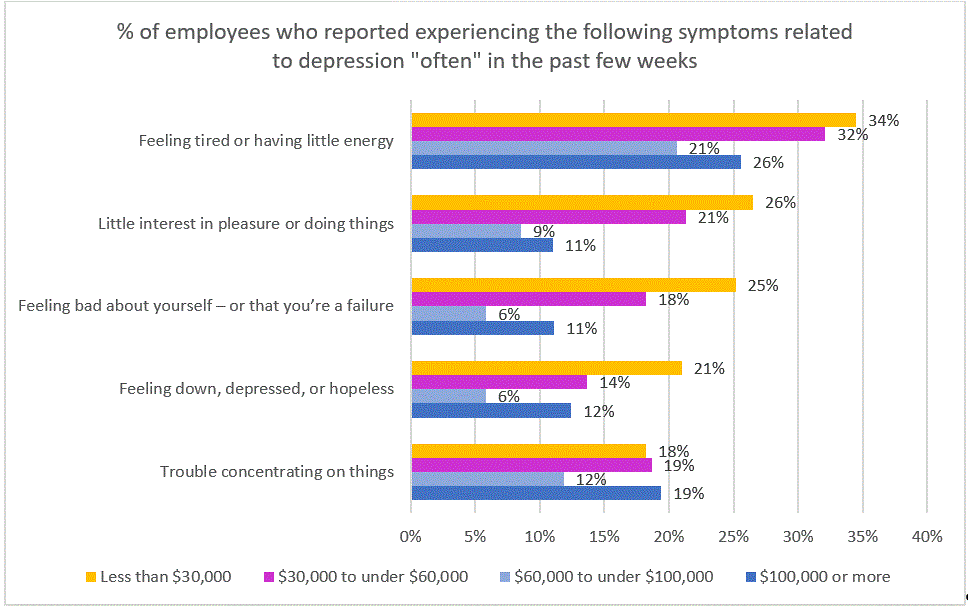
Among the groups that faced greater mental health challenges over the past year are workers with lower household incomes. In SHRM's survey, those with reported household incomes of $60,000 or less were more likely to report experiencing depressive symptoms often; this was particularly true of those who earned $30,000 or less. 
SHRM-MH-1a.gif


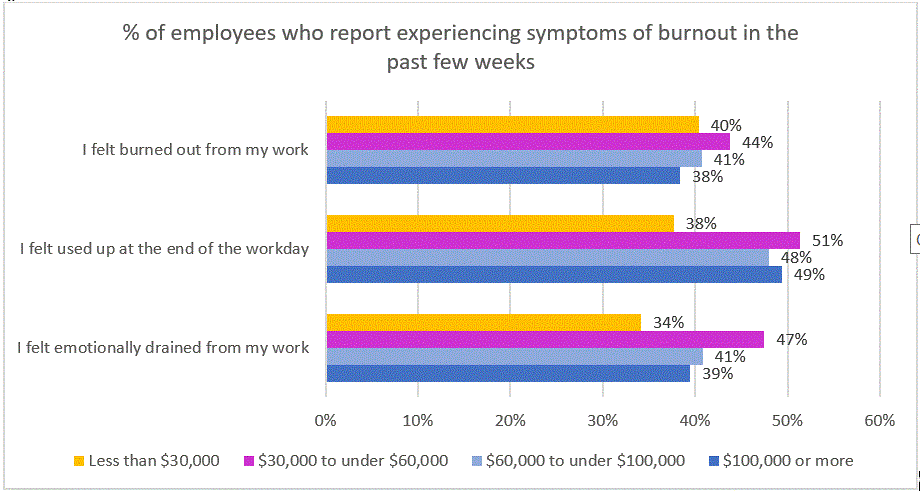
When asked about job burnout, however, lower-paid workers—often performing nonmanagerial work that is traditionally referred to as "blue collar"—were less likely to report feelings of being "used up" and emotionally drained by jobs than were midlevel workers in the $30,000 to $60,000 range, who reported the highest rates of burnout.
SHRM-MH-2a.gif

Gender Differences

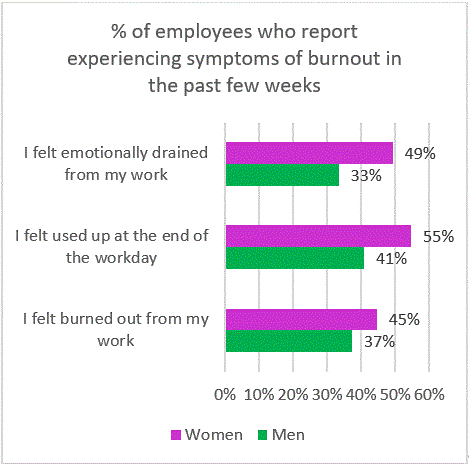
Women had higher rates of job burnout than men, with nearly half of working women (49 percent) reporting that they feel emotionally drained by their work—16 percentage points higher than working men.
SHRM-MH-3a.gif


Women have consistently reported feeling symptoms related to depression more than men have reported over the past year, although both have shown improvement since pandemic lockdowns first became widespread:

  • In April 2020, 25 percent of women reported feeling bad about themselves, or that they are a failure "often," compared to 21 percent of men.
  • In March 2021, 17 percent of women reported these symptoms of depression, compared to 11 percent of men.

A factor to consider is whether men may be less likely than women to admit feeling depressed and emotionally drained.

Children at Home

While child-rearing responsibilities—which fall disproportionately to women—are often noted as a cause of stress, the survey showed that having children at home can also aid emotional well-being: 43 percent of working Americans without children in their household report feeling burned out and emotionally drained from work, compared to 34 percent of those living with children.

Racial/Ethnic Differences

While there were no significant differences between the percentage of Black, Indigenous and people of color (BIPOC) workers and white workers who reported they often experience depressive symptoms, over one-third of BIPOC working Americans reported that they have sometimes felt down, depressed or hopeless over the past few weeks (36 percent), compared to about one-quarter of white working Americans (26 percent).

Generational Differences

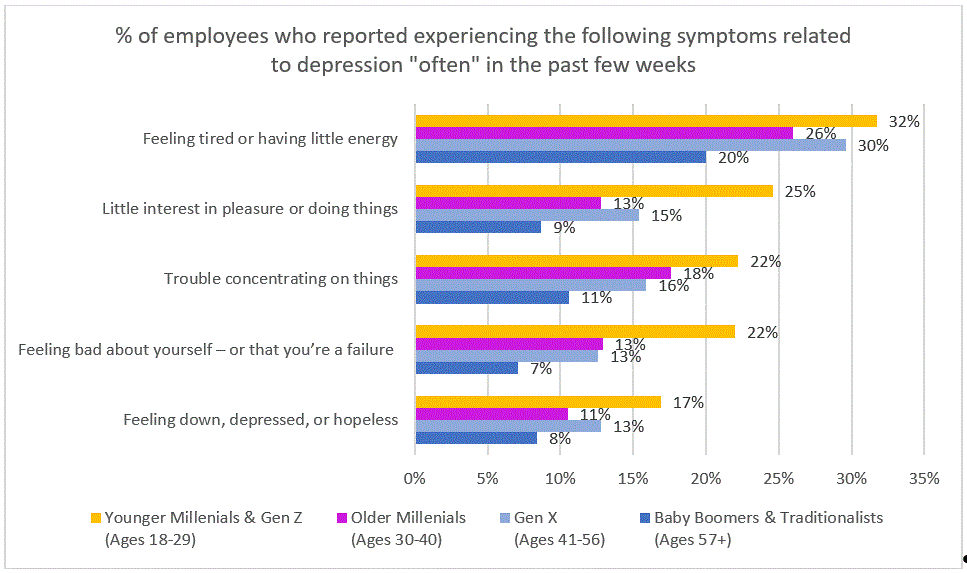
The youngest workers also seem to be disproportionately affected by the pandemic—they consistently report experiencing poor mental health outcomes at higher rates than older workers.
SHRM-MH-4a.gif


Employed older Millennials were more likely to say they have experienced symptoms of burnout compared to other generations.

"This data underscores how mental health and our work/life are inextricably connected," Taylor said. "Above all, we want to ensure that HR is there for employees—ready with the resources and tools they need to help the workforce. If we're not prioritizing our employees' mental health, we're not doing our jobs."

Related SHRM Articles:

Employers Believe Many Well-Being Programs Are Ineffective, SHRM Online, March 2021

One Year into the Pandemic, COVID-19 Fatigue Takes Hold, HR Magazine, Spring 2021

Benefits Solutions
Total Rewards

Was this resource helpful?

Leave Feedback

SHRM-CP Promo Image
Validate your HR expertise

Earning your SHRM-CP credential makes you a recognized expert and leader in the HR field.

Get Certified


Related Content

(opens in a new tab)
News
How One Company Uses Digital Tools to Boost Employee Well-Being

Learn how Marsh McLennan successfully boosts staff well-being with digital tools, improving productivity and work satisfaction for more than 20,000 employees.

(opens in a new tab)
News
A 4-Day Workweek? AI-Fueled Efficiencies Could Make It Happen

The proliferation of artificial intelligence in the workplace, and the ensuing expected increase in productivity and efficiency, could help usher in the four-day workweek, some experts predict.

(opens in a new tab)
News
Rising Demand for Workforce AI Skills Leads to Calls for Upskilling

As artificial intelligence technology continues to develop, the demand for workers with the ability to work alongside and manage AI systems will increase. This means that workers who are not able to adapt and learn these new skills will be left behind in the job market.

HR Daily Newsletter

Stay up to date with the latest HR news, trends, and expert advice each business day.

Success title

Success caption

Manage Subscriptions
Our Brands

SHRM Foundation Logo
SHRM Executive Network Logo
CEO Circle Logo
SHRM Business Logo
SHRM Linkage Logo
SHRM Labs
Overview


  • About SHRM
  • Careers at SHRM
  • Press Room
  • Contact SHRM MENA
  • Ask an Advisor
  • SHRM Newsletter
  • Copyright & Permission
Contact Us


Email: SHRM.MEA@shrm.org
Landline: +971 43649464

SHRM KSA Office (Riyadh)
+966507266968

SHRM UAE Office (Dubai)
+971581101786


© 2026 SHRM. All Rights Reserved
SHRM provides content as a service to its readers and members. It does not offer legal advice, and cannot guarantee the accuracy or suitability of its content for a particular purpose. Disclaimer

Follow Us

  • LinkedIn
  • Facebook
  • Twitter
  • Instagram
  • YouTube

  1. Your Privacy Choices

  2. Terms of Use

  3. Accessibility

Join SHRM for Exclusive Access to Professional Content

SHRM Members enjoy unlimited access to articles and exclusive member resources.

Already a member? Login
Free Article

Login to unlock unlimited access or join SHRM today to get unlimited access to articles and member-exclusive resources.

Already a member? Login
Limit Reached

You've reached the limit of 1 free article this month. Join to access unlimited articles and member-only resources.

Already a member? Login
Free Article

Login to unlock unlimited access or join SHRM today to get unlimited access to articles and member-exclusive resources.

Already a member? Login
Exclusive Executive-Level Content

You've reached the limit of 1 free article this month. Join the Executive Network and enjoy unlimited content.

Already a member? Login
Unlock Your Career with SHRM Membership

Please enjoy this free resource! Join SHRM for unlimited access to exclusive articles and tools.

Already a member? Login
Join SHRM for Exclusive Access to Professional Premium Content

SHRM Members enjoy unlimited access to articles and exclusive member resources.

Already a member? Login
Join SHRM for Exclusive Access to Student Content

SHRM Members enjoy unlimited access to articles and exclusive member resources.

Already a member? Login
Join SHRM for Exclusive Access to Executive Network Content

SHRM member enjoys unlimited access to articles and exclusive member resources.

Already a member? Login

Your membership is almost expired! Renew today for unlimited access to member content.

Renew now

Your membership has expired. Renew today for unlimited access to member content.

Renew Now

Your Executive Network membership is nearing its expiration. Renew now to maintain access.

Renew Now

Your membership has expired. Renew your Executive Network benefits today.

Renew Now
