ENX AT SHRM25: Preparing HR For What's Next

At the SHRM25 Executive Network Experience (ENX) in San Diego this summer, nearly 500 of the country’s top HR executives gathered to explore the future of work and the changing nature of HR itself. Across two days of real-world insights, here are key takeaways to help CHROs lead with agility and strategic impact.
Identify ‘Bright Spots’ — Don’t Just Fix Problems
When the results of an employee engagement survey arrive, executives typically focus on what’s going wrong and how it can be fixed. That’s because leaders see themselves as “the problem-solvers-in-chief” and thus, spend an excessive amount of energy trying to get the 10% of unengaged workers engaged, said Dan Heath, a No. 1 bestselling author of six business books, including Reset (Simon & Schuster, 2025).
“I dispute that framework because I think leaders should be in the business of improvement,” Heath said. “If you’re looking for the seeds of improvement, you’re going to find them by carefully and analytically studying what’s already working in your company.”
Leaders should overcome their problem-solving bias, Heath said, and instead focus on “bright spots” — identifying, celebrating, and incentivizing positive performance and behaviors you want to see in your organization. This type of management is an outgrowth of solution-focused therapy, a goal-oriented approach that Heath said “is obsessed with two questions: what’s working and how can we do more of it.”
Heath offered an example: A health care company experiencing a nursing shortage got meager results when it aimed to solely solve the concerns of its departing and unengaged nurses. When the company flipped its approach to study the nurses who were super engaged, it learned that those employees thought of the nursing profession as a true identity. The company then formulated a series of new recognition and engagement programs that reinforced that sentiment.
“Are you on the lookout for bright spots?” he asked. “Sometimes we can unlock positive leverage points simply by understanding more deeply about the times when we’re already succeeding.”
* * * * *
HR Execs Can Shape Workforce Policy from the Inside Out

As the head of HR, when was the last time you had a one-on-one meeting or lunch with the leader of your government affairs department? That relationship is critical to aligning on the policies that directly impact your workforce, said Emily M. Dickens, J.D., SHRM’s chief of staff, head of government affairs, and corporate secretary.
“As the leaders of the largest expense on the bottom line — the humans in your organization — you should know why policy issues matter, and you should be able to convince your CEO why they matter,” Dickens said.
Having influence within your workplace on policy issues is important, but Dickens also encouraged CHROs to use their knowledge and position to impact policy outside of the workplace. She urged attendees to join workforce development boards in their county or state.
“You are the experts. You know what is needed in terms of training and reskilling and upskilling in the locations where you have businesses,” said Dickens, who noted that SHRM has reached out to state labor leaders in all 50 states to encourage them to add people with HR backgrounds to their workforce development boards.
“We’ve got to get you the experts to be seen by more people as experts,” Dickens told the ENX attendees. “You can influence where and how the state and county are spending their resources on workplace issues. It won’t be overnight, but you can leverage your experience to convince people to think differently about how resources should be spent.”
* * * * *
Spark Innovation by Listening for Needs, Not Solutions
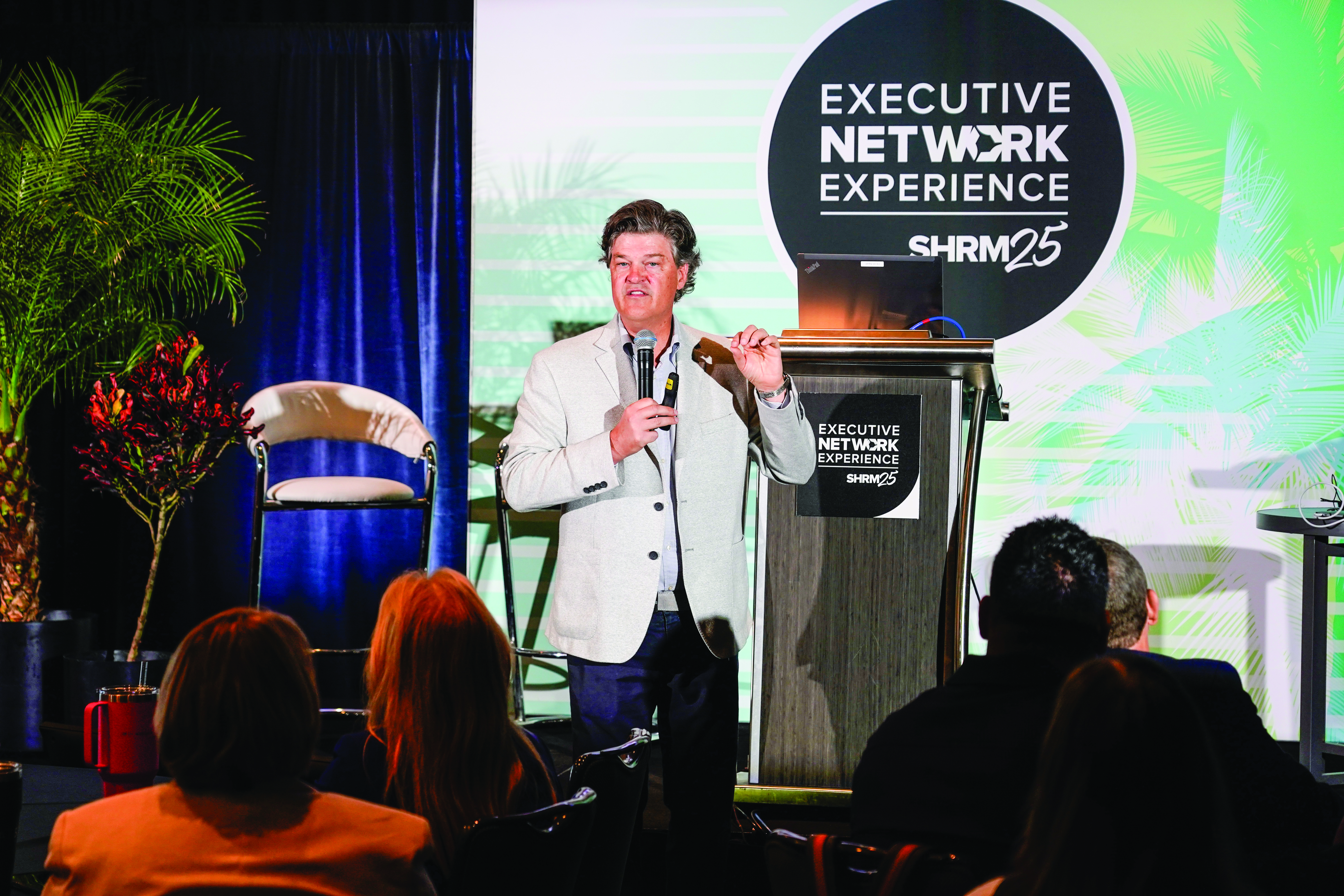
Innovation is essential for business growth and change, but the origin stories of most innovations are romanticized — and just plain wrong.
“The idea of a lone genius sitting in a dark room coming up with the future is not actually how things work,” said Justin Ferrell, founder of the professional fellowship program at the Institute of Design at Stanford University. “The goal should not be to get to the single answer, but to generate as many possibilities that we can start to evaluate. The more ideas you generate, the higher the likelihood that one of them will be that unique value.”
Also, if you’re looking for radical innovation, don’t expect your customer base to generate those ideas through focus groups or surveys. For example, a quote often attributed to Henry Ford says that if he listened to people, he would have developed a faster horse instead of a car.
“When you’re trying to create something new to the world, you can’t ask others to articulate what it is,” Ferrell said. Instead, when asking customers what they want, listen for verbs, not nouns. “Nouns are solutions. The verb is the need.”
To build a creativity engine and consistently come up with new possibilities, Ferrell recommended the folllowing:
- Assemble diverse groups. “Diversity is the core of creativity,” he said. “The more different you are from people that you work with, the higher the likelihood you have to come up with creative ideas.”
- Encourage bold ideas. When groups collaborate, they often agree to combine their thoughts rather than swing for the fences with bold plans. “Do we want to create things that are born of meeting in the middle? That, by definition, is mediocre,” Ferrell said.
- Get closer to your end user. Don’t host focus groups to discuss products or ideas that are far down the line. It’s better to conduct “early-stage empathy interviews, which is really about understanding peoples’ behavior and their context and needs rather than a solution.”
* * * * *
Solve the ‘Bench-Strength Crisis’: A 4-Step Framework

As companies face increasing turnover and a critical shortage of ready-now leaders, succession planning needs to be a year-round priority.
“We’re in the middle of a bench-strength crisis. Over 80% of companies lack confidence in their internal pipelines and we’re feeling that pressure in the boardroom,” said Jill Morrison, CHRO of Paylocity. Specifically, CEO turnover hit record highs last year, particularly among companies in the S&P 500.
More than two-thirds of companies are using predictive tools and performance data to guide their succession planning, Morrison said. Still, “the most powerful insights still come from the conversations and sitting down with succession candidates to hear about their aspirations and mapping real development plans. ... Data and AI can help inform decisions, but it can’t replace the dialogue.”
Morrison shared this four-step framework for leading your succession planning:
- Determine your business objective. Succession planning starts with determining your “why.” Tie your talent pipeline to your business strategy so leaders see value beyond compliance.
- Identify critical roles. Focus on the 5% to 10% of positions that could potentially break the business if they’re left vacant for too long.
- Assess and review talent. Layer performance data, skills inventories, and manager insights. Make sure to always include a human element.
- Develop custom plans. Build readiness road maps, mix learning with stretch assignments, and track progress quarterly, not yearly.
* * * * *
Where is HR Headed Next? 3 Predictions Every CHRO Must Face
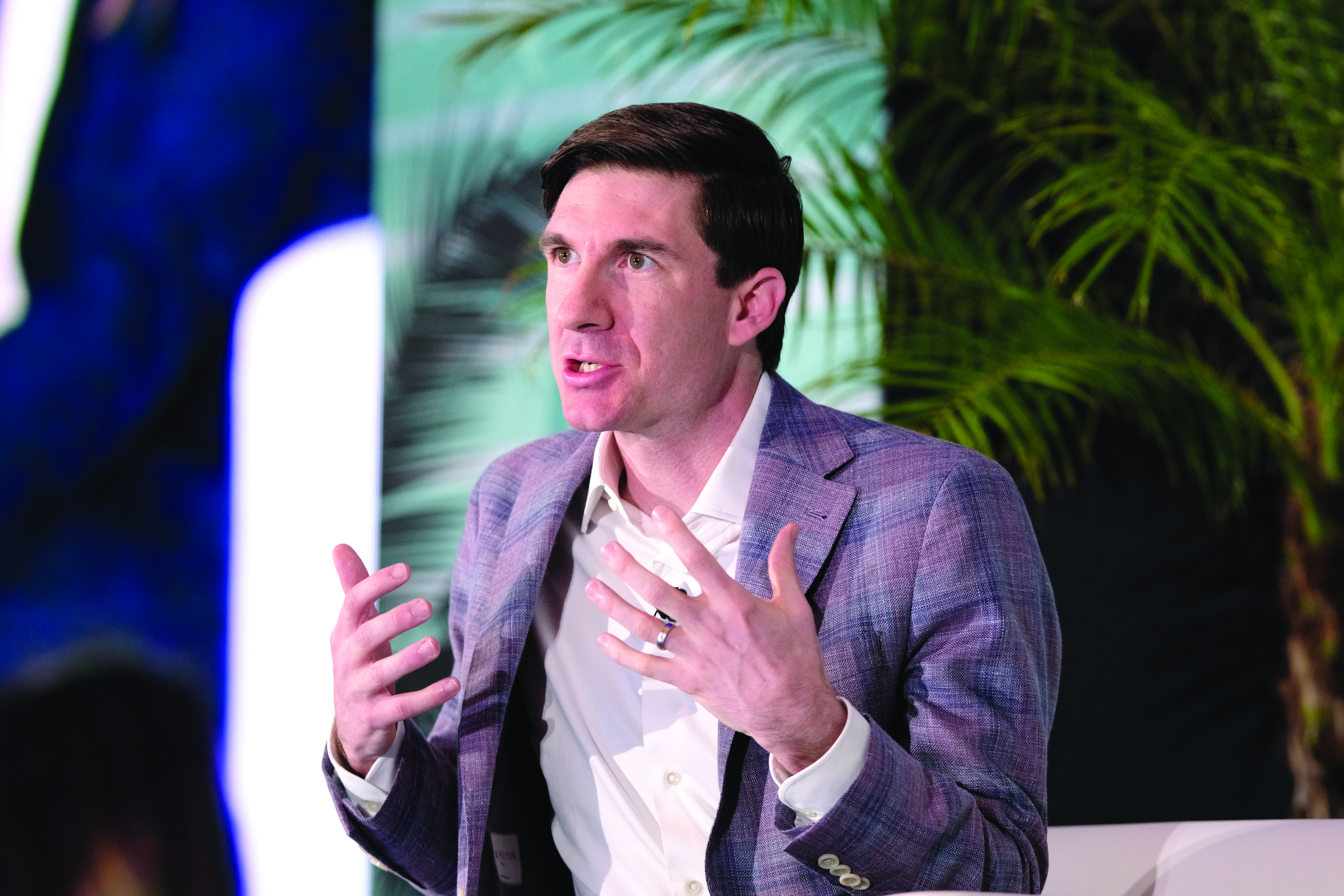
With the HR role expanding, how should CHROs prepare to tackle what’s next? Here are three predictions from Andy Biladeau, SHRM’s chief transformation officer.
- HR’s role will expand into new, complex territory. CHROs are the connective tissue within the organization, and they are being asked to take on an increasing number of tasks. “I think the mandate for HR going forward is going to be, ‘We’re going to tackle this big, complex problem that no one else wants to touch but we know is creating massive inefficiencies,’ ” Biladeau said.
- AI will reshape HR’s compliance role. With policies and regulations around AI increasing, there will be a heightened awareness on whether HR processes are compliant. The regulatory environment needs to change rapidly, and that will impact employees and HR tools. “It’s going to be strategic compliance that sets HR departments apart,” he said.
- The looming retirement cliff will require more cross-training. Given the aging workforce, now is the time to bring together older and younger generations of workers to ensure your organization doesn’t lose that institutional knowledge when older employees are ready to leave. Through cross-training, Biladeau said, younger employees bring their creativity with technology, and the older generation brings institutional knowledge.
* * * * *
Help Managers Debunk the Myths About the ‘Silver Tsunami’
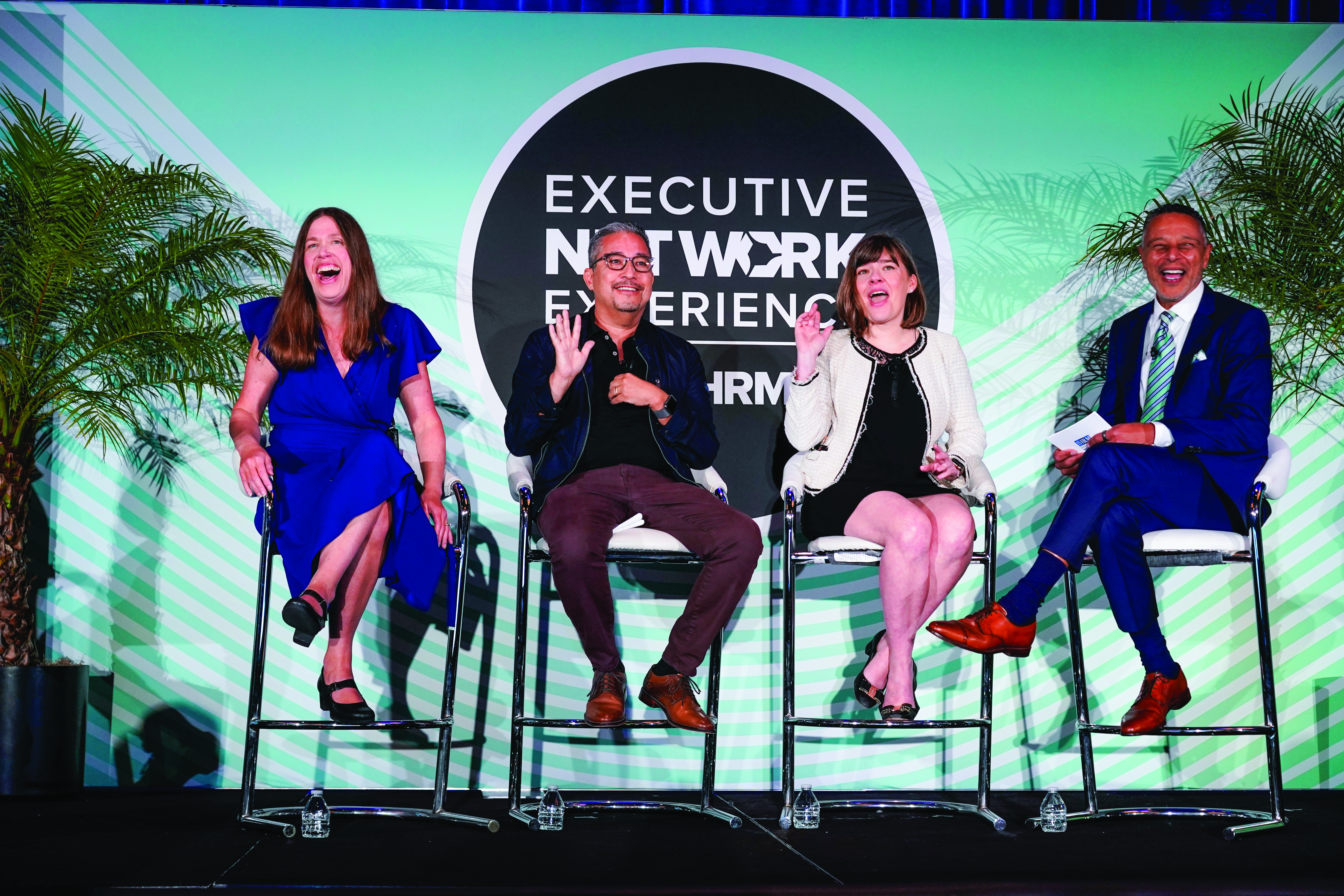
In the past two decades, the number of U.S. workers over the age of 50 has grown by 47%, while the number of those under 50 increased by only 3%. As the workforce ages, both HR leaders and managers need to be aware of any preconceived notions or unconscious biases they may have about older workers.
“It’s our responsibility to make sure hiring managers aren’t using coded language,” said Andy Ortiz, CHRO at Cedars-Sinai Medical Center (second from left in photo).
Here are two myths to be aware of:
Myth 1: Older workers won’t be receptive to AI. “We know that Baby Boomers are integrating AI into their workflows at the same rate as everyone else,” said Claire Casey, president of the AARP Foundation (third from left). “Older workers have a massive appetite for training and for learning, but they’re actually just being offered those opportunities at half the rate of everyone else.”
Myth 2: Once retired, workers are unlikely to return. Many recently retired people quickly realize they miss working and want to maintain their sense of purpose and impact. Boomerang employees may opt to return in part-time or consultant roles.
“Often folks will want to step back into an individual contributor role from a manager role. Allow those folks to do that and mentor in that way,” said Colleen Paulson, founder of Ageless Careers (at far left).
* * * * *
Watch for the Quiet Signs of Employee Burnout
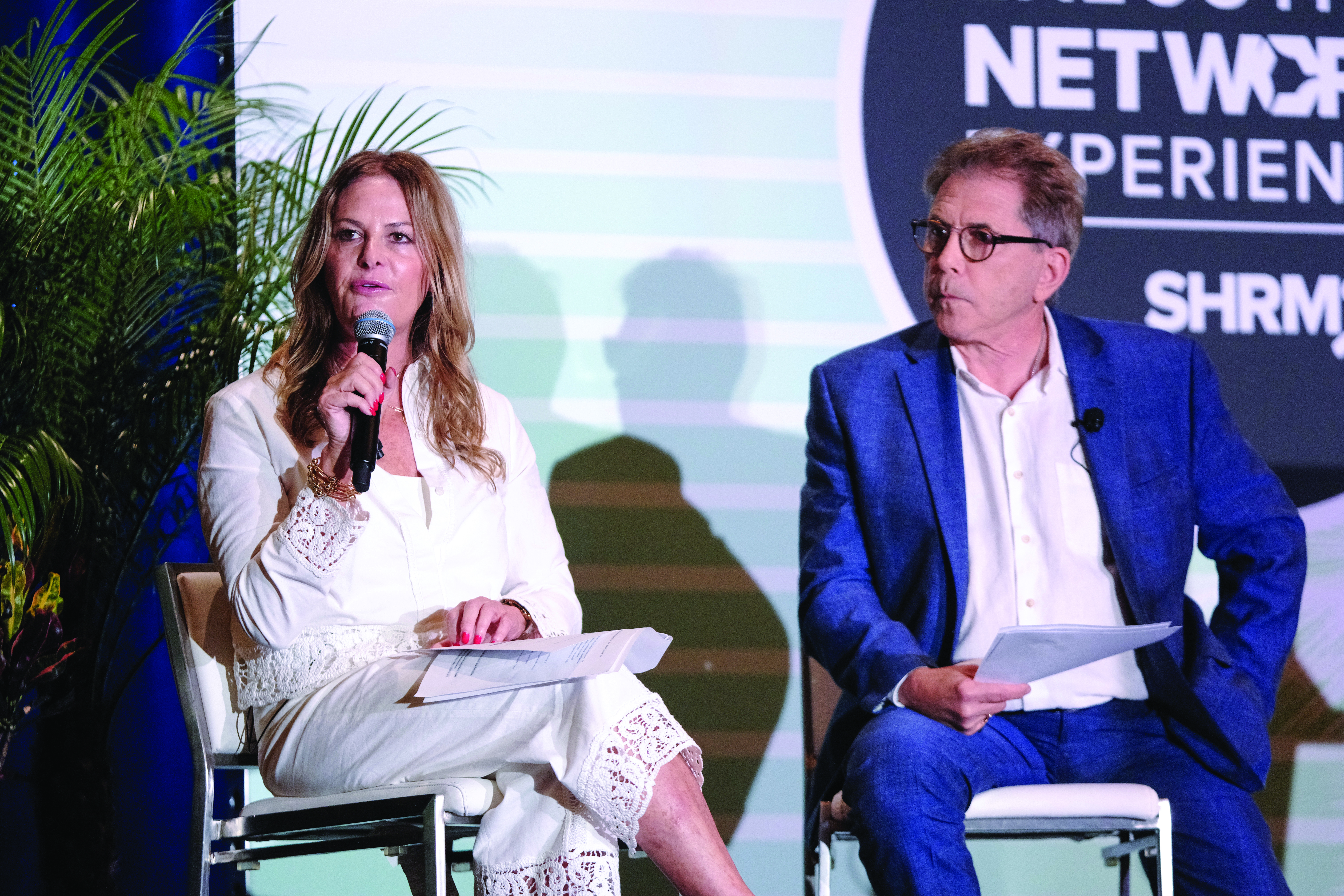
“Burnout doesn’t just show up, it creeps in. It’s a process and you can see it build slowly if you look,” said Marjorie Morrison, a licensed clinical psychotherapist and SHRM’s executive in residence for mental health.
There are several signs an employee may be burning out: They stop speaking in meetings, they miss deadlines, they turn off cameras in Zoom meetings, or they show little emotion. Displaying a need for control can also be a sign of burnout.
“Look for people that are getting more controlling in their departments. That’s because people are most controlling of their environments when they are most out of control in their minds,” said James Huysman, a licensed clinical social worker, psychologist, and executive director of the STAR Network.
Nearly a third (30%) of employees globally report feeling burned out, and these employees are more than three times as likely to look for a new than their counterparts, according to SHRM’s The State of Global Workplace Culture in 2024 report.
Huysman said employers can help workers avoid burnout with strategies such as consistent workloads and supportive management. But the best way is to help them learn techniques to regulate their emotions — everything from expressing emotions constructively to using physical strategies such as deep breathing and sleep hygiene.
“The point of burnout is this: We’re responsible for our own systems, and emotional regulation is the key to healing,” Huysman said.
Related Articles

Transform HR with mobile technology to streamline workflows, enhance communication, and boost employee engagement across distributed teams.

A new study found that talent development practitioners believe performance-based assessments are more effective at measuring employee learning outcomes than knowledge tests.

As AI makes deeper inroads into organizations, employee concerns about the technology continue to grow. Here's how HR leaders can address the fear of AI among their own staff, as well as in the wider organization.