How to Operationalize Resiliency
Lessons learned by supply chain leaders during the pandemic can help your organization inject more agility into its culture.

The pandemic unleashed multiple waves of lasting change on the business world, including digital acceleration, stakeholder capitalism inclusive of hybrid work and remote learning. Each requires leaders to show up with more humanity, compassion and transparency. COVID-19 also tested us at a deeply personal level, especially our individual resilience. Amid all the stress, uncertainty and disruption, those who were able to find a way to create an internal sense of control were able to better navigate this unprecedented period.
But what about organizational resilience? What lessons have we as leaders learned from this period that we can add to our collective business playbook, so we can better weather the volatility that now seems simply a fact of life for anybody operating a business with a global footprint?
These are questions I experienced daily since the start of the pandemic, given my roles as chief supply chain officer—first at Rockwell Automation and now at HP.
Some industries were hit harder than others by the pandemic. But any business dependent upon a supply chain of any sort was suddenly facing the same new challenges: forecasting demand, sourcing raw components, securing production capacity, and assuring accurate, timely delivery, while the underlying conditions for doing so changed dramatically over a very short period. It was as if the chessboard that our profession had spent decades working on—refining and improving our skills for playing the game—was suddenly overturned and replaced with a new game that we had never seen before.
But the changes in the problem-set are not isolated to supply chain. Every senior leader is facing the multidimensional challenge of addressing rapidly evolving customer and stakeholder demands while anticipating the future, based on a mix of strong and weak signals from a volatile market. This has become a mindset challenge for every senior leader as we strive to instill resiliency into our business models and cultures.
Learning Curve: From Lean to Agile
Early in my career, the trend to outsource manufacturing to low-cost countries was ramping up. As an engineer at GM, I decided to move beyond engineering and focus on learning more about the end-to-end supply chain. Fast-forward a few years to the turn of the century, and as production supervisor, I witnessed the disconnect between sales incentives and the company's manufacturing cost structure. While the program successfully boosted production, margin expansion eluded us due to the high product cost structure.
I left GM in 2006 and joined Rockwell Automation, where I honed my knowledge of planning and sourcing principles, while learning more about cost structures, fulfillment strategies, revenue models and how to navigate the complexities of quickly evolving regulatory and geopolitical environments.
Through all of this, most businesses adhered to the underlying supply chain philosophy of lean manufacturing models. Having evolved over decades, lean supply chains were alive and well pre-COVID. Our commitment to lean—whether we talked about it or not—was built on a "the world is flat" concept that Thomas Friedman captured in his bestselling 2005 book Hot, Flat and Crowded (Farrar, Straus and Giroux).
In that mental model, goods and labor were cheap, readily available and easy to move across a global marketplace. For supply chain leaders, it was a game of optimizing inventory, a discipline that evolved to a Ph.D. level of statistical rigor. There was little friction in the global system, which in turn created a world of options for managing the inventory. It was a completely different game then—the rules were much more consistent, and you could search the world over for suppliers who would deliver the best quality at the lowest price.
Some supply chain professionals started to notice warning signs of the changing game even before the pandemic. The U.S.-China tariff escalations were a very public example, but numerous countries began taking regulatory steps that made the trade environment more complex. Periodic global shortages began to emerge. For instance, a sudden drop in the availability of multilayer ceramic capacitors, or MLCCs, led to shortages of products like Sony PlayStations and Apple
iPhones. That made people in my profession start to rethink the lean model and, in some cases, to start to build buffers within our systems so that we weren't so reliant on a single supplier, country or region for critical parts.
While lean was still the dominant philosophy, some leaders began to discuss the risks inherent in streamlining to the point of creating single points of failure for our organizations. A layer of intricacy crept into how we were managing supply chains, and we started talking more about supply chain agility.
Building Agility Out of Crisis
Supply chain agility is the extent to which a supply chain can deliver the same cost, quality and service, regardless of the macroeconomic environment and factors that are at play at any given moment. And "factors" include internal business decisions and processes, not just the external environment.
Just as leaders needed to consider the entire enterprise in terms of strategy, capital allocation and level of collaboration in our supply chain planning, we had to start to focus across the breadth and the depth of an organization: the business strategy, sales strategy, product life cycle, acquisitions in progress and more. Collectively, these factors required us to be more agile and to move away from focusing on just being lean and trying to squeeze out any last drops of efficiency.
Then COVID-19 hit.
Any company without a robust supply chain strategy in place was exposed, and many paid a quick and steep price because of their inability to source the parts and components they needed. Chief supply chain officers were suddenly drawn into daily conversations with executive leadership teams, particularly the CFO. Having spent most of our careers in the background, we were suddenly center stage to troubleshoot a problem that could have deep and lasting impacts on our businesses' financial performance.
Alongside the need to think about the business, empathy emerged as both a leadership requirement and a crucial way of thinking about business continuity in a pandemic.
Because of my experiences in Rockwell Automation and General Motors' manufacturing and distribution operations, I knew that as a leader, navigating the human component of these challenges would be just as important as the business decisions we were making. We had to account for the disruption to employees' lives.
The combination of planning for complexity and operationalizing empathy are muscles that leaders must bring to bear now. This is more than just being lean—and it's more than just being agile. It becomes a way of constantly scanning the horizon and the organization for factors that could impact the way we source, build, ship and deliver goods. We must make recommendations to build organizational resilience and ship in alignment with company strategy and culture, in order to meet customer and financial commitments.
Embedding Resilience as a Discipline
Entering the fourth year of shocks and aftershocks since the start of the pandemic, what have we learned in supply chain that might have implications for other aspects of the business?
If I had to boil my own learnings down to one takeaway, it is this: Building organizational resilience is not just about a mindset. It is, at its core, a pragmatic exercise built around the concept of insurance.
For supply chains, that means redundancy in manufacturing and distribution locations. It means strategically leveraging inventory buffering. It means multisourcing—all of which, like insurance, carry a cost premium. It means supply chain executives must now have hard conversations with their CEOs and CFOs: "What kind of insurance do we want against the next disruption? How much insurance do we want? How much are we willing to pay?" After all, insurance carries a cost. It's going to mean diversifying the suppliers you use, building in redundancy or carrying more inventory.
These are not necessarily attractive propositions, because they can create a layer of cost for which there is no immediate payoff. On the other hand, such steps have become necessary in managing the risks that are now part of everyday business. This risk-reward tradeoff is giving rise to a new art and science of balancing agility in terms of both offense and defense. Leadership teams are assessing (or already taking) the steps needed to outpace their competitors in terms of digital transformation and sustainability, while building more safeguards into the system to absorb future shocks.
That same approach can be used by every function in an organization.
Every aspect of business is dealing with waves of challenges and, as leaders, we would be well-served to spend time thinking about what it means to operationalize resilience in our parts of the business and across the enterprise. Adding a layer of insurance requires wrestling with foundational questions, such as:
- What do we want insurance to do for us?
- What are we trying to protect?
- What is most important about the role we play in helping drive the overall strategy or execution of our organization?
- What must our function deliver for the company to succeed, and what must we protect to meet our commitments?
Clear answers to those questions will provide a running start for the concrete steps that are necessary to start building in resilience at an operational level.
That's an exciting challenge for leaders. I have been in supply chain my entire career, starting with working on a shop floor at General Motors. I could not have imagined that an early interest in driving efficiency in manufacturing operations would put me on a career path to this moment, where supply chain executives are now playing a much more central role in their companies. And having been at the tip of the spear in navigating a perfect storm of disruptions, supply chain leaders can bring unique perspectives across their organizations.
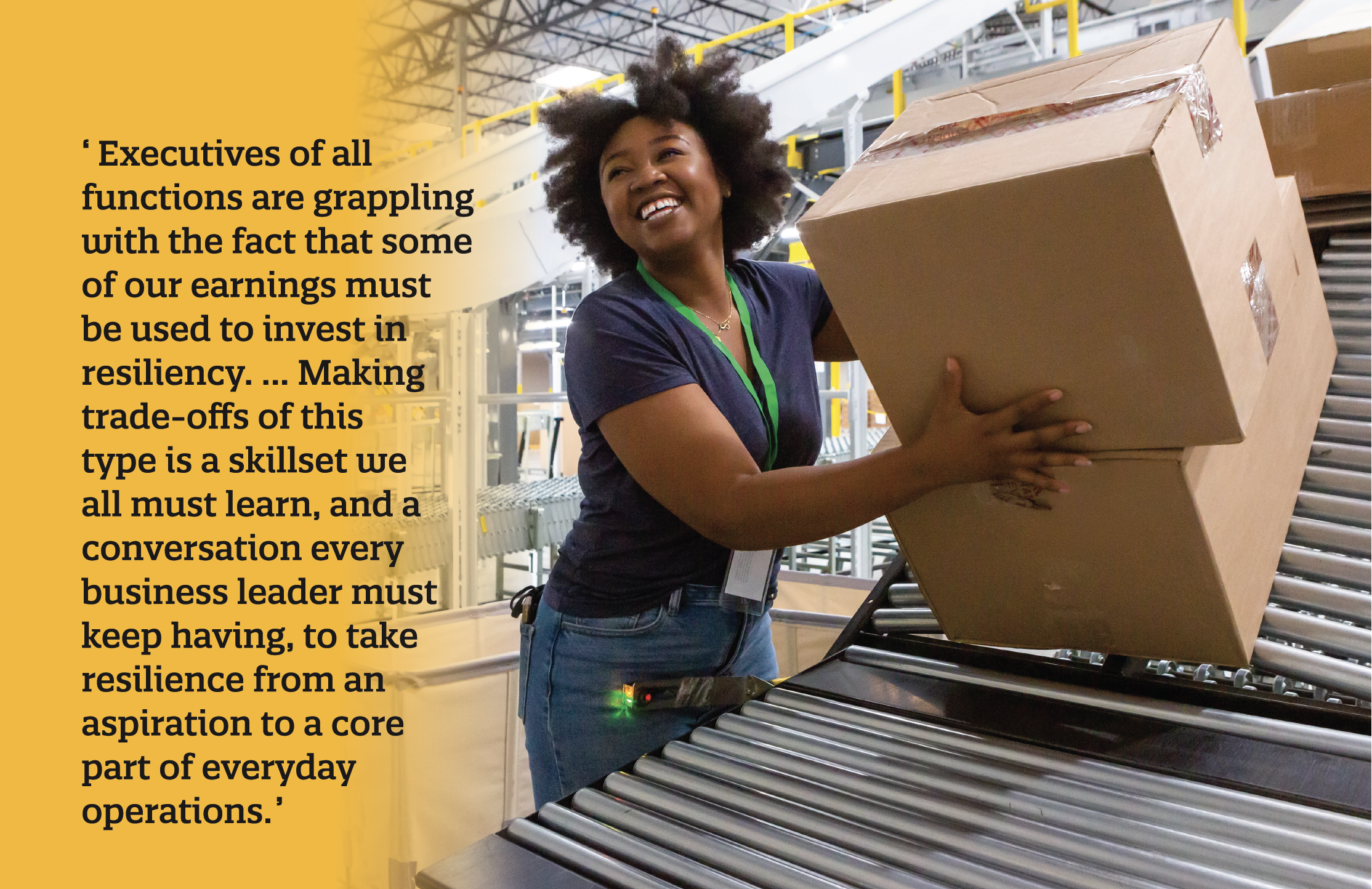
Executives of all functions are grappling with the fact that some of our earnings must be used to invest in resiliency. No one knows for certain the right balance of insurance for managing future volatility. But making trade-offs of this type is a skill set we all must learn, and a conversation every business leader must keep having, to take resilience from an aspiration to a core part of everyday operations.
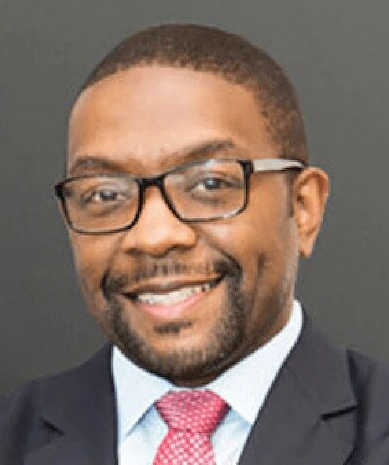 | Ernest Nicolas is the chief supply chain officer for HP Inc., and he also drives the company's social and environmental sustainability efforts. Nicolas has more than 25 years of supply chain experience with General Motors and Rockwell Automation. |
Was this resource helpful?

Validate your HR expertise
Earning your SHRM-CP credential makes you a recognized expert and leader in the HR field.
Related Content

Transform HR with mobile technology to streamline workflows, enhance communication, and boost employee engagement across distributed teams.

A new study found that talent development practitioners believe performance-based assessments are more effective at measuring employee learning outcomes than knowledge tests.

As AI makes deeper inroads into organizations, employee concerns about the technology continue to grow. Here's how HR leaders can address the fear of AI among their own staff, as well as in the wider organization.