- Video
- Audio Only
How do top organizations solve their toughest leadership challenges when full-time resources are scarce? Some companies are relying on fractional c-suite leaders, seasoned executives who have opted to lend their expertise to companies on a contract basis rather than work full-time for one company.
In a special recording with a live audience for SHRM’s podcast, People + Strategy, fractional HR leaders share their insights on how they approach HR from a fractional perspective and their view on what longevity looks like for the HR profession.
Attendees will learn how fractional HR leaders are shaping the future of work and hear real-world stories of navigating change.
Related to this Episode:
3 Attributes of Successful Fractional C-Suite Execs
The fractional C-suite role has emerged, offering a new approach to finding essential expertise. Learn what makes a successful fractional leader.
The Rise of Fractional C-Suite Leaders
In this episode of People + Strategy, we talk to Sara Daw, co-founder and group CEO of The CFO Centre and The Liberti Group, about the growing impact of part-time or fractional executives in the C-suite.
The podcast is just the beginning. The weekly People+Strategy Brief also features articles on all aspects of HR leadership excellence. Explore these must-read stories featured in the latest issue. Subscribe now and elevate your strategy.
News + Insights

Discover what SHRM’s latest research reveals about AI adoption, policies, and employee perceptions and how HR leaders can better navigate AI integration.

Learn why organizations need to look beyond AI adoption and rethink how work, workforce planning, and organizational value are changing according to an HR leader.

Cost pressures are causing many organizations to cut back on benefits. But some experts say the best strategy may instead be to double down on employee support.

Explore how CHROs and CFOs form a powerful partnership, balancing people and financial strategy to drive organizational success in today’s complex landscape.
Episode Guests
-
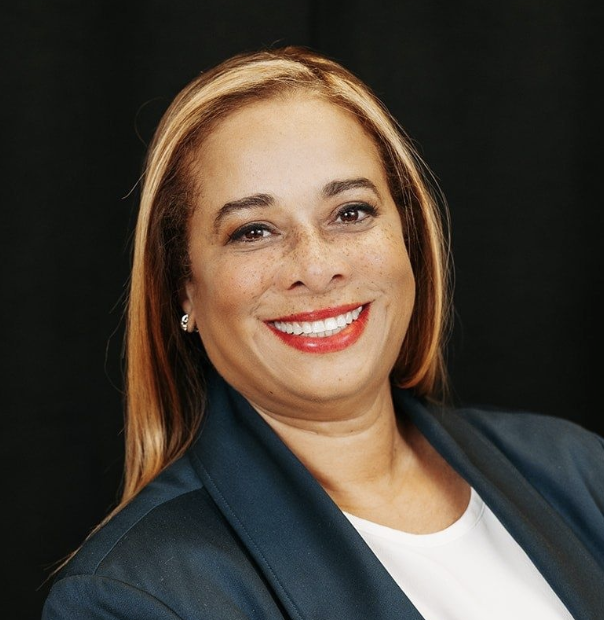
Erica Ellison
Erica Ellison is the founder of CoreSight HR Solutions, where she serves as a Fractional CHRO and strategic advisor to small and mid-size organizations. With more than 30 years of HR leadership across technology, defense, education, and global nonprofits, she helps leadership teams build the people infrastructure that supports real growth. Her career includes roles with HP and Northrop Grumman, and most recently as SVP of People & Culture for a nonprofit operating in 33 countries. Ellison also leads a mediation practice for people and businesses who are ready to move forward, helping them get unstuck and back to the work they were meant to do. She holds a J.D. and MBA, is admitted to the Maryland Bar (inactive), and is certified in Mediation. Ellison lives in Virginia.
-

Jamie Viramontes
Jamie Viramontes is the founder & CEO of Konnect and a seasoned HR executive with more than 25 years of experience leading people strategy for organizations including Chipotle Mexican Grill, JPMorgan Chase & Co., UCI Health and Forever 21. He founded Konnect in 2020 to help organizations elevate their HR functions through solutions that combine high-touch expertise with AI-enabled technology. A recognized thought leader in AI-powered HR transformation, Viramontes recently led the launch of KonnectAi and helped develop “The Future of HR: AI Strategy & Leadership” executive education program in partnership with UCI Paul Merage School of Business. He is a member of the Forbes HR Council, serves on the Dean’s Leadership Circle at UCI’s Paul Merage School of Business, and is a Trustee of the UCI Foundation. Viramontes is passionate about advancing inclusive workplaces and shaping the future of work through strategic HR leadership and innovation.
Episode Transcript
This transcript has been generated by AI and may contain slight discrepancies from the audio or video recording.
Mo: Welcome to today's episode of People and Strategy. I'm your host, Mo Fathelbab, President of International Facilitators Organization. Today, we're recording our episode at SHRM 26 in Orlando with a live audience.
People and Strategy is a podcast from the SHRM Executive Network, the premier network of executives in the field of human resources. Each week we bring you in-depth conversations with the country's top HR executives and thought leaders. For today's conversation, I'm excited to be joined by two SHRM Executive Network members.
Today we have Jamie Viramontes, founder and CEO of Connect, and Erica Ellison, founder and principal of CoreSite HR Solutions. They both work in fractional HR, supporting companies through HR consulting. Welcome, Jamie and Erica.
Jamie Viramontes: Thank you.
Mo: Great to have you both. You've both had extensive experience working as HR leaders at different companies. How have you seen the HR profession evolve over the last decade? Erica, I'll start with you.
Erica Ellison: Well, it really has transitioned quite a bit from my first role. I remember — and this was kind of funny to me at the time — whenever we hired at a large tech company I was working for, you could not hire without going to this green book and getting an employee number. That was the only way somebody could officially be hired, and then you'd put it in a computer.
It was fascinating, but we've evolved so much since then. The work is much more significant and impactful now. All of that administrative work is automated, so what we get to do is really impact organizations and the people in them in a much more meaningful way. I'm excited about where we are today in HR.
Mo: Thank you. Jamie?
Jamie Viramontes: I think back to a long, long time ago when we used to call HR "personnel." You probably remember that. Then it went from personnel to HR, then HR to people, and people to people experience. Now I think it's modern HR — though I'm not entirely sure what we're calling it today.
We've seen a lot of evolution through all of that. Similar to what Erica said, I've seen things change significantly. One thing that has stayed consistent, though, is the resistance that can come with fractional HR. There tends to be this initial pushback of "who is this outsider coming in?" The internal HR team might feel threatened by the person coming in, or they can choose to take them on as a partner.
As a fractional HR person, it's super important to embrace that dynamic and figure out ways to alleviate some of that anxiety — to show your worth through numbers, through factual evidence, and through partnerships. That's what ultimately gets you embraced as you enter an organization.
Mo: How long does that typically take before you feel embraced?
Jamie Viramontes: It takes a while. Thinking back to my non-fractional HR work, I was the head of HR at UCI Medical Center — a union-based organization. My first day, workers were outside picketing, essentially ready to fight. I walked in looking young, facing people who had been at the company for 35 or 40 years, and they were looking at me saying, "Who's this young guy coming in?" In a union environment, that's really hard.
That experience of having to build credibility and earn people's trust — just that one role alone took a solid year. The same applies in fractional work. It could take six months to a year. Sometimes the engagements aren't that long, so you have to do it quickly.
Mo: You have to do it quick.
Jamie Viramontes: You've got to do it quick. Yeah.
Mo: Erica, you previously worked across multiple industries, including global organizations, nonprofits, and healthcare. What was the pivotal moment that led you to decide to work as a fractional CHRO?
Erica Ellison: I've always been a bit entrepreneurial by nature — it's just part of who I am. Even in large companies, I always found myself wanting to rotate around, figure out what the issue was, and try to solve it. So that shift to having my own business was kind of in the road map for my whole life.
At a certain point, I started reflecting. I remembered growing up and watching my father after he had completed his service at the White House — he started his own business, and I was with him as a little kid stuffing envelopes, interrupting phone calls. I stood at the door and listened, and I saw how much he dedicated himself to his work, how much he committed his time, his effort, his life, to building that business.
Everything converged for me during that reflection. I said, "I want to help these founders have lives again. If I can bring that infrastructure to them — so that the thing they're committing blood, sweat, and tears to gets proper support, and their people are taken care of — I want a part of that." That's where I decided this is what I want to do and what I'm going to lean into for the next phase of my career.
Mo: I can see this is a little emotional for you.
Erica Ellison: Yes.
Mo: What touches you in that story?
Erica Ellison: Just seeing the lives that the founders I work with lead — their businesses are everything to them. They've sacrificed time with their children, their families. We do that in corporate America too, but the difference I see with founders is that everything is on the line. Their whole livelihood — literally, their house — may be at stake.
Knowing that I can make a difference in that, that I can enable them to take something off their list so they can focus on the growth of the business rather than people challenges — that means so much to me. It's enriching.
Mo: That's beautiful. Jamie, you were in HR leadership at Chipotle and Forever 21, and then you struck out on your own. What was the moment that led you to make that decision?
Jamie Viramontes: It was a tough decision. I had experienced so much as VP of HR at Chipotle — it was a great company, great experiences, expanding the organization. I got to work for people like Scott Boatwright and Brian, who is now at Starbucks. It was just incredible to be part of that leadership team.
I actually tried to go straight from there into launching Connect, but the CEO of Forever 21 — who had just come from H&M — reached out and said, "Jamie, you have to come help me transform this company." So I thought, I'll try this one more time and see how I feel. Because all those years, I had felt this entrepreneurial spirit pulling at me.
Two years into Forever 21, I got the sign. I knew internally that I wanted to try entrepreneurship. I knew it was going to be a tough road — going from the comfort of these great companies behind me to being that entrepreneur who puts everything on the line. I have a family, four daughters, and I'm the sole breadwinner. People thought I was crazy. But it ultimately came down to believing in yourself.
For me, it was about taking what I had learned and bringing it to people who may not have had the same experiences, to help shape the organizations they were trying to build.
Mo: For both of you, what was the hardest part of starting your business?
Erica Ellison: One concern I've talked about with other fractional HR professionals is being alone. When you come from a corporate environment, you have coworkers, partners, and people you can tap into day-to-day. But when you're by yourself and you suddenly have time — time you've never had before to think through your challenges and what you need to work on next — it's a significant adjustment. You are in the driver's seat.
Part of that shift is accepting that it's not going to be perfect. In corporate, you're always trying to deliver a perfect product. As an entrepreneur, you have to accept flaws and mistakes, but also commit to keep driving forward. That was a big shift for me.
Mo: What about you, Jamie?
Jamie Viramontes: I would say business development is probably the toughest thing. Having the experience and a great product or service — that's all well and good for you internally. But there's a lot of resistance out there to bringing in outside expertise, not only from internal HR teams but also from the company at large. And then there's cost. People assume that consultants come with high price tags they'll never pay.
There are a lot of barriers to get through. I felt very alone at first. We started with two employees, and today we have upwards of 90 people on our team. We help other fractional HR professionals find roles to place them in, and it's because I know how hard that journey is — which is exactly why I wanted to pave that path for others.
Mo: That's impressive growth.
Jamie Viramontes: Thank you.
Mo: Among SHRM's HR predictions for 2026, we noted that workforce fragmentation will peak. SHRM's 2026 CEO Priorities and Perspectives report found that 72% of CEOs expect an increased use of independent contractors, gig workers, and freelancers in 2026. You've both transitioned from corporate HR to fractional contract HR. What do you think longevity looks like for the HR profession? Erica?
Erica Ellison: The HR profession is in an interesting place. It needs to shift from how we've worked before and embrace fractional work and partnerships with fractional professionals in a much bigger way.
Part of what supports that data is the sheer number of small businesses. According to the Small Business Administration, 99.9% of businesses in this country are small businesses. Think about that when you consider the percentage of large corporations. Fractionalization is already here. The question is: how do we tap in as HR professionals and add value across that spread of companies?
It's not just large companies that employ people — it's smaller ones, too. So how do we bring professional skill sets, quality of work, and real impact to those organizations? And using platforms for AI — like some of the work Jamie has created — to take the tactical, basic work away and shift our focus to the strategic and more human parts of work? That shift is right in front of us. We're at such an exciting place where we can tap into a different part of ourselves beyond just delivering data and numbers.
Mo: Jamie?
Jamie Viramontes: I think it's going to continue to evolve even more quickly. In every area — even outside of HR — you're seeing this trend. Technology led the way with programmers and developers. Now you see it in accounting and finance, with fractional firms popping up everywhere. HR is following suit, and you can go right down the list — procurement and beyond. It's all there.
We've grown so much because the model works for the fractional HR professionals on our team. They may already hold a full-time position but want to do something different — maybe they need additional income, or maybe they're just bored. I've heard that a lot: "I like to do multiple things at once." This allows them to do their full-time job and take on fractional work on the side. And it's a win-win for the company that needs help because they don't want to pay for an entire full-time employee but can still access real expertise within their budget.
As AI integrates into HR even more, the need for fractional support will grow. There isn't a lot of in-house expertise around AI strategy, change management, and knowledge base development. Companies will have to farm that work out to fractional help.
Mo: Are AI-competent CHROs one of your criteria for placing people?
Jamie Viramontes: It's not a formal criterion yet, but I suspect it will be at some point. What I need right now are people who are innovative and able to embrace technology, because it is here. Even more than that, they need the ability to drive change. A lot of change is happening inside organizations — once you roll out an AI tool, you've got to get people to embrace it. People are worried about their jobs, they don't know how to use the tools, they don't understand the framework or the risks. There's a lot of change management involved, and that sits right in our wheelhouse.
Mo: As fractional HR leaders, what is the biggest challenge you find yourself being tasked to solve when coming into a company — and why do you think so many companies struggle with it? Jamie?
Jamie Viramontes: About 95% of our engagements start with, "We have a huge problem and we need you to come in and help us solve it." They might have a remediation plan that went sideways, or they were hit with a lawsuit and realized internally that they don't have the capability to do what needs to be done. So I'm literally walking into a crisis.
I have to figure out what exactly happened, understand the history, and help develop a plan moving forward — all while navigating the politics of being embraced, proving your worth, managing your own team, and handling multiple accounts at the same time. There's a lot you're juggling when you walk into those scenarios.
Mo: What about you, Erica?
Erica Ellison: I agree completely — the juggling is real, but it's also work all of us have done as HR professionals. You're not always walking in fully embraced, so that's kind of part of the challenge.
What I'm also seeing with some of the founders I work with is that they may have heard about HR from others, but for their own business, having HR as part of the operation is completely new. I had a founder I'm working with now — brilliant person, built a multi-million dollar business while still working her regular job, which was remarkable. We had signed the engagement, had a clear road map, a plan, and prioritization in place.
Then I had a check-in meeting with her, and she said, "Yeah, well, I created a handbook last night." I said, "What? What do you mean you created a handbook?" She had Googled it. I asked her why, and she said, "You know what? I've been everything to my business — the finance department, payroll, the strategic leader. I was up at midnight, like I always am, thought of something that needed to be done, and just did it."
I said, "Okay, let that one go." And that is the real challenge — helping founders understand what HR is, accept the contribution it can make, and let that go so they can focus on the rest of the business.
Mo: Can you share a moment of impact that you're proud of from your work as a fractional HR leader? Let's start with Erica.
Erica Ellison: I'll tell you about an experience I had with another leadership team. I was serving as their fractional head of HR, and we were in the room having a somewhat loose conversation that shifted to complaints about recruiting and then compensation.
What became clear — and I'm not sure the CEO or leadership team fully realized it — was that this mission-based nonprofit held a specific belief: that paying lower salaries helped demonstrate an employee's commitment and sacrifice to the organization. It's not unheard of in the nonprofit world, but it was worth addressing.
I said, "Okay, wait a second. Is their bread a different price at the store? Is the rent a different price?" Of course it's not. I said, "I hope we can think more about what the market price is for each role and how we define value that way." It was an important shift to make — and it's one of the opportunities you sometimes have as a fractional: to say the thing that might have gotten someone internal into trouble. I was able to say it, and I helped everyone in the room see it a little differently. It's about holding up the mirror and calling out beliefs that might be unconscious. I found that to be an interesting challenge and a really helpful conversation.
Mo: Great story. Jamie?
Jamie Viramontes: It's very difficult — and I'll go back to gaining credibility, because we all know how hard it is just to be appreciated by a CFO, or even a CEO, especially when you're first trying to build an HR function. Despite all the evolution from personnel to HR and everything in between, I still think there's an underappreciation for HR.
I can think of one example where I went into a company — the HR team was called people operations, and the leadership essentially wanted to get rid of the function altogether. Their view was: "We don't need HR. The leaders can just do it themselves."
Walking away from that engagement, the CEO made me an offer: "You need to come work here full-time. Leave your company and be my head of HR." And it wasn't about me — it was because they finally saw the value of the function. The CFO told me, "Jamie, you're like a bad drug. We cannot get rid of you." I wasn't sure if that was a great compliment, but it was one. We went from them being resistant and thinking HR just paid bills and handled benefits, to "You guys can help us drive culture, think differently, and take our company to the next level."
Mo: What has working in fractional HR taught you about leadership? Jamie?
Jamie Viramontes: To really be adaptable. And within that, to be empathetic to the situation I'm in. That empathy helps me not only with my own people — where I need to be available, present, and tuned in to what's happening — but also in how I deliver results to clients, because things are always changing.
AI comes up in every single engagement now. People are asking me for advice, and it's not because we're leading with our own AI product, Connect AI. They're asking about AI first and then learning about Connect AI. That's the trend, and I think it's only going to continue.
Mo: Thank you. Erica?
Erica Ellison: I agree with a lot of what Jamie said. Something interesting I've observed is that there are far more leaders out there than I previously understood. Working with small businesses and founders, you see the level of leadership and business acumen they bring to what they've built.
A quick story: I had a client who asked if we could grab a quick coffee on a Saturday. We met and talked through a real challenge. She's a very small-business owner with one employee who had been with her for quite some time, and this employee kept coming back with requests — wanting to expand his role or try something new. It was wearing her out.
I asked her, "Can your business handle expanding his role? Is there more for him to do that makes sense for your model? Or is this the time to say, 'Thank you for your service,' and help him move on?" I appreciated the thoughtfulness of the conversation. It was deeply personal to her because this person had been with her from the very beginning. Helping her think through his future, and how to support both him and her business, was a great conversation.
It's the same kind of conversation you might have internally, but it carried a different weight. What I've come to appreciate about leadership is that it's much broader than what I'd seen in corporate environments. I see it in many more places and in many more people — and that's exciting.
Mo: Another emerging trend is the co-CHRO. In your opinion, what makes a co-leader partnership successful? Erica?
Erica Ellison: Trust. Absolutely trust. Let me give you an example. I once brought in a fractional partner to help me tackle a compensation program that hadn't been touched in decades — the structure, the jobs, the org design all needed significant work. What made that partnership work was that we had trust, a shared way of working, and the same values for the organization.
I partnered with her in a way that wasn't just, "Come in and execute." It was true partnership. And I think that's what will help the co-leader model succeed as it becomes more common — when someone brings in a specialist with deep expertise who sits next to you and contributes while you contribute your own. What you need, though, is that trust piece, because we all know organizational politics. It can feel risky. But it is possible with intentionality and an expressed agreement upfront about what the partnership looks like for both people.
Mo: Was the trust already in place, or did you do something to build it? What did you do?
Erica Ellison: Very good question. Let me walk through some of the stages of trust, because this actually ties to business development as well — people buy from people they know, like, and trust, and a lot of our business is referral-based.
The person I worked with came through a referral from someone I trusted completely. That gave us a foundation, but there was still a lens of caution — you may not know this person fully. So what we did was communicate constantly. My commute was 45 minutes or more each way, and that drive became our daily meeting. On top of other meetings, the volume of back-and-forth, the questioning, the partnering — combined with clear role clarity — is what made it work. The head of HR role was mine, but she was my expert partner on board. Those two things made that partnership successful.
Mo: Got it. Thank you. Jamie, what makes a co-leadership partnership successful?
Jamie Viramontes: I couldn't agree more. Role clarity is super important, and trust is essential. When I go into an engagement and work side by side with another CHRO, I want them to know that I'm here as an extension of them. I have zero interest in taking their job. I'm clear about that upfront — "Please don't feel threatened by my presence."
I do everything I can to uplift that person so they get the data and support they need. Everything filters through them so they maintain their sense of ownership and control. The more you can establish that at the front end, the better the whole engagement goes.
And then something shifts. They start pulling for more — asking me to come to a board meeting, to present, to take on X, Y, and Z directly. That happens because you've earned their trust and they see the value of having another set of eyes and ears reinforcing the same message they've been trying to convey for maybe five years. When an outsider says it, it becomes gospel.
The other key thing neither of us has mentioned is that they know their culture — and we don't. We're walking in fresh. I might recommend something that worked brilliantly at another client, but it may not translate culturally to this organization. The internal CHRO is the one who knows that, and the implementation and change management have to reflect it. That's why the partnership matters.
Mo: And I love how you disarm them right away by saying, "I don't want your job — this is my business."
Jamie Viramontes: Right. Exactly.
Mo: What is one moment from your time in corporate HR that continues to serve you in fractional HR? Erica?
Erica Ellison: I'll try to be quick because I have two. The first goes back to when I started in HR at HP. There's an old book called The HP Way that I still have on my shelf, and one of its core values was respect for the individual. I absolutely fight for that — for how we treat people in good times and in bad, and especially in the bad times. It's foundational to me.
The second is a quick story. I had been heavily recruited by a company, and three months after I joined, the leader who recruited me announced her retirement. I thought, I need to make the most of this last meeting with her. So I asked her directly: "Give me some advice. How can I be successful here?" She said, "I'm going to give you one word: anticipate. Always anticipate, and work toward the thing you're anticipating, not toward today."
I wrote it on my board and kept it there for years. And I believe that's exactly what we need in fractional HR too — the ability to anticipate where business is headed and where the opportunity lies for us as HR professionals to make an impact.
Mo: Thank you. Jamie?
Jamie Viramontes: Since you had two, I have two now.
Erica Ellison: I love it. Let's hear them.
Jamie Viramontes: They both actually come from the same company — SmileBrands, a dental group with locations across the US, where I served as VP of HR. I was sitting in the boardroom with my fellow VPs, and the CEO asked a question. No one answered. Everyone just nodded along saying, "Yeah, of course. Do that. Yeah." He stopped and said, "If you don't give me your honest opinion, I'm going to replace all of you. Get out of here." He said it with love, but it landed. The lesson was clear: speak up. You have a seat at the table for a reason — use it. He also said, "Don't let perfect get in the way of great," and that one has stayed with me ever since.
The second moment came from a dental mission trip to Africa with the same company. There was this little girl who was afraid to get her teeth done. She and I locked eyes, and the moment we did, she ran to me and hugged my leg and wouldn't let go. I walked her up to the dentist, and that moment was everything — the power of connection. It impacted me so deeply that I named my company Connect.
I always teach that there is nothing that can replace human connection — with your people, your manager, everyone around you. AI will never replace that. If we embrace that connection — through one-on-ones, touch bases, listening to people's professional development goals — that's what helps companies grow. Not all the other noise.
Mo: Lovely story. Wow. And that's where we'll end it for this episode of People and Strategy. A huge thanks to Erica and Jamie.
Jamie Viramontes: Thank you. Thank you all.
Mo: Thanks for tuning in. You can follow the People + Strategy Podcast wherever you get your podcasts. Podcast reviews have a real impact on visibility, so if you enjoyed today's episode, leave a review to help others find the show. You can also find all our episodes on our website at SHRM.org/podcasts — and while you're there, sign up for our weekly newsletter. Thanks for joining us, and have a great day.
Featured Story

Learn what strategic HR looks like when the CHRO-CFO relationship is aligned. Discover a real-world example of HR alignment as told by a fractional HR company.
Enjoy On Your Favorite App
Feature Stories
As part of SHRM's commitment to providing cutting-edge resources, get additional perspective and more insights in content curated from SHRM and around the web.

Discover what SHRM's latest research reveals about L&D executives' top priorities and challenges, and how leaders can better align strategy with business needs.

Build a succession planning strategy that lasts. Learn four data-driven ways to align leaders, assess scalability, and secure your leadership pipeline.
Discover what SHRM’s latest research reveals about AI adoption, policies, and employee perceptions and how HR leaders can better navigate AI integration.