- Video
- Audio Only
Among SHRM’s 7 HR Trends of 2026 is workforce fragmentation, which is reshaping how organizations structure work, leadership, and culture. In this episode of People + Strategy, Nichole Oocumma, SHRM-SCP, draws on her experience leading HR across healthcare and public-sector organizations to make sense of this reality, exploring how remote, hybrid, and in-person models force difficult tradeoffs — and often create cultural tension. The conversation also examines how generational shifts and increasingly fragmented executive teams are changing the demands on today’s CHROs, requiring clearer messaging, tighter alignment, and more intentional leadership.
Related to this Episode:
Get Your SHRM People Manager Qualification (PMQ)
SHRM’s People Manager Qualification paired with one-on-one professional mentorship gives your people managers the skills, confidence, and peer support they need to lead effectively.
Webinar: The Top 5 Culture Mistakes HR Leaders Will Make in 2026
Discover what the most adaptable, high-performing organizations are doing to build cultures that drive results in 2026.
The podcast is just the beginning. The weekly People+Strategy Brief also features articles on all aspects of HR leadership excellence. Explore these must-read stories featured in the latest issue. Subscribe now and elevate your strategy.
News + Insights

View the top-asked questions on building a culture of learning and get responses from SHRM EN Member Nichole Oocumma, HR leader at The MetroHealth System.

Discover three proven strategies leaders can use to transform and strengthen workplace culture, boosting engagement, retention, and performance.

At The AI+HI Project 2026 in San Francisco, main stage speaker Jeremiah Owyang will discuss what he has called “the dawn of the Co-Intelligence Era” of AI.

Experts urge HR to redesign work, not just adopt AI, guiding organizations to harness AI for growth, efficiency, and future-ready workflows.
Episode Guest
-
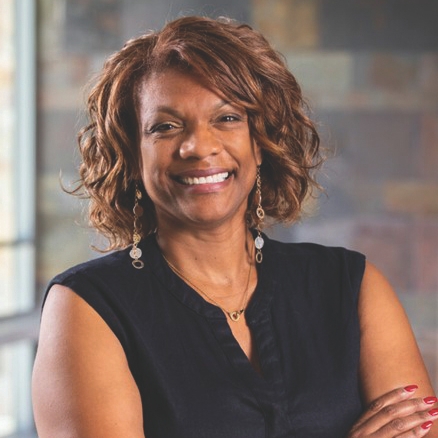
Nichole Oocumma
Nichole Oocumma, SHRM-SCP, has more than two decades of HR leadership roles at large healthcare organizations. She was previously senior director of talent management and development at CareSource as well as VP of HR and chief learning officer at The MetroHealth System. She recently became chief administrative officer for the Northeast Ohio Regional Sewer District.
Episode Transcript
Mo Fathelbab: [00:00:00] Welcome to today's episode of People and Strategy. I'm your host, Mo Fathelbab, president of International Facilitators Organization, People and Strategy is a podcast from the SHRM Executive Network, the premier network of executives in the field of human resources. Each week we bring you in-depth conversations with the country's top HR executives and thought leaders.
For today's conversation, I'm excited to be joined by Dr. Nichole Oocumma, who has held senior HR roles at large healthcare organizations. She was previously senior director of Talent Management and Development at Care Source, as well as VP of HR and Chief Learning Officer at the Metro Health System. In December, she became chief administrative Officer for the Northeast Ohio Regional Sewer District.
She's here today to discuss workforce fragmentation, which SHRM identified as one of the top seven HR trends to [00:01:00] watch in 2026. You could find the link to the full list of the 2026 HR trends in the episode description. Welcome, Nicole.
Nichole Oocumma: Thank you so much for having me, Mo. Good to see you.
Mo Fathelbab: Great to see you.
So Nicole, let's get started. We are seeing workplaces set their own unique policies to adapt to today's changing workforce needs leading to fragmentation. So what are you currently seeing in terms of workforce fragmentation and why should HR. Execs and CHROs be paying attention?
Nichole Oocumma: Well, I think that post pandemic, we were all trying to figure out what's the best way to come back, what makes most sense for our organization, but also our employees, our culture.
And so as a result, I think workforce fragmentation really grew. Post pandemic. And now we're sitting in spaces where we're trying to figure out how do we collaborate, how do we coordinate, how do we build relationships when some of our employees are remote or working hybrid, um, and all other [00:02:00] different structures in which employees sit.
So I think workforce fragmentation is a state that we're in. It's just a matter of figuring out how are we going to. Continue the business, continue our employee experience, invest in our employees. Our employees feel valued when the environment in which they work is so varied. And I think one of the things I've found is every person I talk to, they've landed on a different solution, but they're fragmented.
So one organization solution doesn't work for me and my solution doesn't work for them. So it's really been about figuring out what works, trying things here or there, but there's no full solution to workforce fragmentation right now.
Mo Fathelbab: So you've led HR across different environments in your past rules and at Ki Source, uh, the pandemic opened the door to accessing, uh, top talent through remote work, but it also created tension.
When in-office [00:03:00] policies returned. So why did you decide to bring people back to the office and how did you communicate this policy, uh, of change to them?
Nichole Oocumma: Well, there were a lot of reasons. I think one of the things Care Source mission is about community engagement. You know, when our employees are not near the offices, they're not downtown, they're not together.
We miss that vital value as an organization. We were in multiple states in Care Source, and so each state responded differently to the pandemic. Every office looked a little bit different when we were trying to come back, but what happened over the the pandemic time is we really opened our talent pool and so we were no longer just hiring folks that were in the communities in which our offices were.
And, um, so post pandemic, when we said we need to come back, uh, there were people in the same jobs in different cities and different locations in different states, and, um, it was [00:04:00] really an issue. Um, so we had the value of community engagement, public engagement in the communities we serve, and we had this top talent that we wanted to keep hold onto and really continue to do the work that we were doing as a growing organization.
So we, we made a decision though. Ultimately it was the CEO and the board's decision that we needed to be back. We had really had a long standing relationship with the communities and the cities that we serve and the states that we were in. And not being in the office was a problem, right? We were not engaging our communities.
We were not as accessible to our, uh, customers and our members. Um, we were not even accessible to each other. Um, because although you could be highly productive at. Your desk at home, um, you weren't collaborating. You didn't have the nuances of in-person relationships, and so it was really an issue. Um, [00:05:00] so ultimately we decided, we went through job by job to figure out who needed to come back.
The majority of employees, um, I would say. We're not happy, but, um, it was a value. And so over time, um, we tried to establish in-office days, Tuesday, Wednesdays, Wednesdays, Thursdays, we re renovated our facilities so that we had more, uh, downtime, I think Google where they had the couches and the TVs and things like that.
So we weren't just in the traditional meeting rooms or traditional, um. Uh, office spaces. So we worked really hard to understand and hear the employees about what they did value when they did come in the office. But we did make the hard choice to bring people back. Um, if you were a director or above, you were required to be in an office, which was a, a pretty big deal with our talent pool being so geographically.
All over the place. [00:06:00]
Mo Fathelbab: So that is really interesting that within the same company you had different situations in every state. Uh, how did you deal with that at the time?
Nichole Oocumma: Lots of conversations and. You know, lots of conversations with our leadership as an HR leader, we had done multiple engagement surveys during the time of the pandemic when we were all still at home.
And we actually had an engagement survey right before we started the um, back to work initiative, and we actually changed the name from back to work. Because people were like, I've not stopped working. And so the engagement survey, we were able to break it down by different roles, different parts of the business, different areas of the company, different states, and really hear the employee's voice.
So we had some focus groups. It was really important for us to have the voice as we were making some decisions. At the end of the day, we knew we were coming back into the office and people were not gonna be happy, but we can [00:07:00] be as thoughtful as possible with what we can do to support some of the needs of our employees.
And so that engagement data was really critical. And then we also had some focus groups with different areas of the organization.
SHRM AD: Strategy only works when people do. At SHRM 26, leaders and visionaries come together to shape cultures that thrive. Learn more at SHRM dot org slash SHRM 26.
Mo Fathelbab: So for those that weren't happy, did you see some turnover as a result of it?
Nichole Oocumma: Yes, we did see some turnover. Not as much as I would've predicted as the HR leader by all the calls that we were getting. But, um, we did have some turnover and in some cases we did lose some top talent. Um, but, you know, people make choices for their lives, not just for their work. And so we, we tried to be very supportive of that.
We did have some turnover. Like I said, we didn't [00:08:00] have as much turnover as we, um, thought we would, but, um. I think employees just needed to settle into this new ways of working. And, um, you can't always make your employees happy, but you can do things to make it easier for them. And so even though people were not happy to come back to work, they appreciated some of the things that they were getting as a result when they had to be in the office.
Mo Fathelbab: And you mentioned some of those things like having a couch and a place to relax. What else did you all do?
Nichole Oocumma: Um, we actually put in a, a gaming area. Each one of our C-suite executives would have quarterly in-person meetings with their entire vertical. So that was new. So of course we had town halls, but we actually started bringing entire, like it brought, uh, everyone from IT into the headquarters for multiple days.
And so the, uh, CIO would have their meeting and then that next level would have some meetings, and [00:09:00] then they would wind up having a time together at in, in person. Um, so they really did, uh, something formal. Um, our chief medical officer did something similar, chief Transformation HR. When we brought everyone from all of our locations into the office together.
Um, we often did strategic planning on those times and then more employees were involved in those conversations. Um, so. The collaboration. So it wasn't just the renovation of the space so people could relax 'cause you're still working. Um, but it was also, what am I doing when I go into the office and what's the purpose?
And so more in-person meetings, thoughtfully scheduled, more intentional, all the way down from our C-suite into the management. Um, and then the last thing I wanna add is we, um, did some manager training. Managers are often left out of the conversation and don't always have the ability or capability to articulate the why.
So we often, [00:10:00] we provided some professional development for managers around communication, around, you know, how do you engage your staff, how do you demonstrate value with your staff? And, um, we provided that, um, training in person as well as virtually for that management team.
Mo Fathelbab: Wonderful. So Nicole, what did that experience teach you about balancing culture with employee expectations?
Nichole Oocumma: That is really difficult. Um, I mean, I tell people that culture is what employees say, so it's not what we say, it's what the employees say. So how do they feel about the organization when we're not around? What are they saying? Because they'll call us pretty quick if what they're thinking doesn't match what we're saying.
So culture is really about what the employees are saying. And so if you listen to your employees. They're telling you about their experience and their thoughts. You might see a gap between what you want [00:11:00] them to say and what they are saying. So that's the difference with the employee experience and culture.
And if you really wanna impact your culture, you're gonna work hard to close that gap of what employees are saying they're experiencing and what you want them to experience, what you want the culture to be. Um, you can't tell an employee what the culture is because it's their experience.
Mo Fathelbab: And how
did you close that
gap?
Nichole Oocumma: That's an ever ending effort. I think the example that we really utilized was the engagement surveys and focus groups. We really asked a few additional questions to understand what employees, and we really did a deep dive into the open-ended answers to the, to the survey because there's a lot of color in the open-ended surveys, uh, questions in the, um, engagement surveys.
And so we spent a lot of time trying to hear the employee voice. And we did the same at Metro Health, um, last year. [00:12:00] And, uh, this effort is really having an honest conversation up with the executive team about what the employees are saying and what we want the employees to say and how does that align. Um, and then what do we need to do?
My manager values me. I have a strong team. I feel included, right? Or I don't feel safe. We have to have those difficult conversations. Um, visibility of leadership. My, my executive is not visible. I don't understand change. No one's explained to me change. Um, so the engagement surveys and the focus groups, the conversations with employees are really critical to understanding the employee experience.
And then of course we, we interviewed a sample of all the executives, a sample of leaders and employees to get an aspiration, like, what do we want our culture to be? And so we, and in many cases it matches, right? [00:13:00] We want it to be inclusive, we want it, you know, I wanna be my best self on any given day, right?
Um, I wanna feel valued. I wanna feel like my work is making a difference. And so a lot of times the employee's experience matches. Um, it's not always so separate. But it gives you a roadmap. So we spend some time looking at, okay, what do we need to do to get us from here to here? Even if it was just a little bit of a step at a time.
But that was really important at Metro Health because we're going through a lot of change organizationally and in our community, in the region with healthcare, a lot of federal laws changing, and so we really needed to make sure we were hearing our employees. I think we were a little surprised at some of the concerns employees had versus what we said the culture was.
But it gave us an opportunity to make some shifts and have some conversations that we wouldn't have had otherwise.
Mo Fathelbab: So speaking of your time, uh, leading HR at Metro Health, [00:14:00] you made a deliberate choice to keep many administrative roles remote and reinvest physical space into patient care. So what structural technology shifts were required to make that work and.
What lessons should other large organizations take from that?
Nichole Oocumma: It was a huge change for people to be remote. We were in place in the clinic, in the facility, all of the administrative offices, finance, HR, everyone had space and offices. And so, you know, coming back from the pandemic, we recognize that. We had been working remote.
Who needed to be in the office? Why did they need to be in the office? What services can we do? So at at Metro Health, we actually stood up an HR office that was manned. Every day from seven to five 30 and employees could come into the office. Of course we had the phone number and the email and all of those things, but I think we realized that employees were [00:15:00] used to stopping down at the end of their shift or coming and talking to someone and knowing that someone would be there.
But we didn't bring the entire HR team back. I would say 90% stayed remote. Um, and then that allowed the hospital that was always having growing pains. And I think with any organization who has space, uh, the opportunity to re-look at their space design, their space use, and that's what we did at Metro Health is we're like.
We need, we, we need more clinical space. Uh, we've been hiring these physicians. We've had an increase in this clinic, so can we open and revamp this facility so that we can now use it for clinical care or even telemedicine? 'cause you have to be in a private space for telemedicine. And that happens throughout the day for our, our clinicians.
And so we renovated a lot of the administrative space, um, for our finance team. They went remote. Some of our [00:16:00] risk team, they went remote. A lot of our advocacy, government relations team, they were partially remote, but they were in the field anyway. So I think for companies who are trying to figure that out and who are still in the midst of it, it's.
It's really a matter of what can we do with this space besides put our employees back into it.
Mo Fathelbab: Yeah. And in your current role at Northeast Ohio Regional Sewer District, the model is fully in person. Fully in person, with a heavy emphasis on peer time and engagement. So what are the benefits you're looking forward to in this new work model and, and maybe speak more about this concept of peer time
Nichole Oocumma: collaboration, having meetings face-to-face.
Was who we are. Our executive team, um, didn't like the remote experience. They liked to be able to see employees talk to the employees, and, um, the leaders, uh, at all levels thought that [00:17:00] their team meetings in person, their engagement, their problem solving was just better in person. And so very quickly after, after the pandemic ended, whatever that means, um.
Here at the sewer district, we came back to in person. There are some teams that have one day remote, so there's more flexibility to be remote. Um, but the op, the expectation is really an in-office expectation. And team meetings, uh, senior leadership meetings, um, we have community engagements, resource fairs, things like that, that are physically collated at one of our plants or one of our buildings.
And, and. The presence of employees is, is important to our board and our executive team.
Mo Fathelbab: And are you personally noticing a difference in the culture as a result of that compared to other places that you've worked?
Nichole Oocumma: Well, I think the one interesting thing I've noticed in my few weeks here at the sewer district is, you [00:18:00] know, the group has already moved past, we're back to the office, we've settled in, this is who we are, this is our new way of working.
Um, and. And so those conversations are not as important as I think they still were at Metro Health and at Care Source. And when I still talk to my peers at Metro Health and Care Source, there's still some conversation, right? But here at the sewer district, we've been back in the office for two years. And people are here talking, chatting, um, working together to solve problems, scheduling time, even at the last minute 'cause we're both in the office.
So we've gone back to that and I've appreciated that. I like engaging with people. That's my HR hat.
Mo Fathelbab: So, uh, Nicole, when looking broadly at the workforce environment, uh, generational expectations are shifting. We're seeing an occupational mismatch between what job seekers and employers want, and as mentioned in SHRM's US labor shortage data brief, what [00:19:00] do you see from job seekers and, and what are organizations doing to accommodate their wants?
Nichole Oocumma: There's so many varying wants right now from our workforce. And we're really seeing people with different expectations. I think there's a new generation of workforce, those who might be, I'll say 23 to 28, 27, who spent a good amount of their early professional life remote, they also grew up in with technology.
They've always played video games with their friends in other states and other places after school. They're not running down the yard like, like I was to meet my friend in the neighborhood. So I think their ways of working and their wants and their expectations align with how they were raised and their experience with technology and learning.
I think it's advanced. All of us though, because it's [00:20:00] required us to look at things like teams and AI or what are our service centers and resource centers for employees? What's the self-service level? So I think that it's, it's really forced us with the broad range of generations to up our engagement with technology and I think our IT folks really have met that demand.
Mo Fathelbab: Good to hear that we're also seeing fragmentation of executives across industries. Um, how are your peers approaching executive fragmentation, uh, for fractional CHROs?
Nichole Oocumma: You know, I have a few peers who've stepped into the fractional CHR role, um, and they love it. I think you have to be at a space in your career where you're really looking to come in a short period of time and help a CEO and or the executive team shift or move or find those new ways of working.
And so I think. [00:21:00] The good part of the fractional CHRO is that often we have the opportunity for expertise that we wouldn't have, um, had we hired someone and we have very experienced people in the CHR role who are amazing problem solvers and innovators. But organizationally, you can really, if the CHRO doesn't do a great job in their fractional space with.
Not only standing up and strengthening the HR function and the employee experience, but handing it off and transitioning it right? That can be a real issue for an organization if the fractional CHRO is gone on Tuesday and they don't have a plan for Wednesday. Um, and I think I've seen both sides of that.
But I think we're seeing that with fractional CH CHROs, but we're seeing it with CFOs and from an HR perspective, identifying an executive and putting the [00:22:00] contract in place and figuring out what's expectations and what's realistic for time and pay. And the, the contract is a lot of work for me and my HR peers.
So if we take this fractional CHRO off, we're looking at a fractional CFO or a compliance leader. And, um, there's another aspect to finding the right person and not just someone to fill the seat until you can find the next person.
Mo Fathelbab: Uh, so from your perspective, when does executive fragmentation strengthen an organization and when does it create risk?
Nichole Oocumma: I think that if. Executives have a great relationship with each other. It doesn't matter where they're sitting. If they can speak honest to each other, they value each other's knowledge, expertise. They're open to being questioned and challenged. That relationship of the executive team, that fragmentation [00:23:00] doesn't hurt an executive team if they are strong.
If they're not strong, if they don't communicate well, if the CEO isn't able to learn, lean into uncomfortable or have real feedback conversations that trickles down and that fragmentation just, I think widens and it causes more problem because if the employees are also fragmented, the information they're receiving is fragmented when that leadership team is not, um, in one accord.
Mo Fathelbab: So you also mentioned an executive mindset and an organizational mindset. How do these two mindsets work together when determining what your workforce policies are going to look like?
Nichole Oocumma: Well, I think that in many cases the executive team needs to set the charge to set the challenge, the expectation. It's HR and the, the other leaders, the responsibility to figure out what does that look like, what does that look like for our employees?
But I [00:24:00] think HR also has a responsibility to bring that data to the executives and vice versa. And then the executives have a responsibility to be responsive to the information that they're receiving from their HR team or their leaders. And so if I go back to your question, Mo, it was, you know, executive response, organizational response.
And I think that there needs to be some listening. That has to occur. Our employees for the broader organization doesn't always understand the why, but sometimes if we can message in a way that aligns with what they care about, it's easier to do that. Maybe I'm old school, but I think the executives need to drive the charge.
They can't drive the charge without the information. The employee's voice. The employees what they care about and value 'cause that's what's gonna impact culture.
Mo Fathelbab: Uh, and Nicole, how do you anticipate workforce fragmentation evolving over the next few years?
Nichole Oocumma: We're all trying to [00:25:00] figure it out. We're asking each other, what are you doing?
What's the impact? So we're seeing quite a bit of reduction in force and layoffs again, um, we're seeing different industries really impact it by funding or, you know, moving forward. And so I think that is gonna have just as much impact as the workforce fragmentation. I actually think employees may be more acceptable to, uh, jobs in different locations than they would have previously.
I think that allows employers to make decisions about what they want their talent to look like, remote, hybrid, in person, in the same state, in the same region, whatever that looks like. I think that's really important. I also think. For workforce fragmentation in the future, the, the workforce, like you [00:26:00] talked about before, the generational changes, what people are expecting.
I think that's really important to the future of figuring out workforce fragmentation and the impact of it. Um, ultimately, I think we're gonna have to keep talking to each other, identifying what works, what doesn't work. Identifying a. Different industries and how things have worked in different industries.
Like when I was in healthcare, I would talk to manufacturing, what are you doing? How are you managing your fragmented workforce? And I would say five years ago, I might not have reached out to a manufacturer. So I think that's gonna be the future. There's gonna be less industry lines because we're all drawing from the same employee population and we're all making those really hard decisions.
Mo Fathelbab: So looking ahead, what is the shift in workforce fragmentation require from today's CHRO?
Nichole Oocumma: You know, I've probably said this 10 times. It's that messaging. Um, it's messaging. I think the CHRO has a responsibility to message to the CEO and the executive [00:27:00] team, uh, the impact of workforce fragmentation. We have to have some really hard conversations.
Equally, I think the CHRO needs to ensure that their HR team. Has a tap on the employees. Who are we hiring? Who are we promoting? Who are we keeping? What is our employee relations issues looking like? What is the engagement data saying? Um, what is our employee base? The HR leader needs to have a broad view of what their team is doing, as well as being able to communicate that and articulate to that, to the executive team.
There's gonna be great impact with workforce fragmentation, and we don't really know what that means.
Mo Fathelbab: And the last question, what is one piece of advice that has shaped your work or personal life?
Nichole Oocumma: Um, think big, move slow. I say that to my team, I say it to myself, um, I have a tendency to move really quickly and I have to remind myself, but I also have to remind my team [00:28:00] and my HR peers know that we have a lot of ideas and we have a bit of OCD and perfectionism, and we care about people so much that we're always moving, moving, moving.
And so thinking big, but moving slow is really important. And slow varies, right? Slow to you is different than slow to me, but that gives you time for intentionality. And I think that's what we're gonna need with this workforce. Fragmentation is some intentionality. Um, think really big for solutions, move very slow towards that, um, solution.
Mo Fathelbab: And that's where we'll end it for this episode of People and Strategy. A huge thanks to Nicole for your valuable insights.
Nichole Oocumma: Thank you, Mel.
Mo Fathelbab: Thank you Nicole. Thanks for tuning in. You could follow the People in Strategy podcast wherever you get your podcast. Also podcast reviews have a real impact on podcast visibility.
So if you enjoyed today's episode, leave a review to help others find the show. Finally, you could find all our episodes on [00:29:00] our website at SHRM dot org slash podcasts. And while you're there, sign up for our weekly newsletter. Thanks for joining us, and have a great day.
Featured Story

Workforces are fragmenting to retain employees and keep their budgets in line — learn how HR is being impacted.
Enjoy On Your Favorite App
Feature Stories
As part of SHRM's commitment to providing cutting-edge resources, get additional perspective and more insights in content curated from SHRM and around the web.

Walk through the process of launching an AI program. Learn best practices for setting constraints, collecting feedback, and developing a validation protocol.

Discover a CHRO’s best practices for preparing to implement AI through the performance evaluation process. Learn how to define clear objectives and outcomes.

Learn the pitfalls to avoid in order to ensure that AI adoption is a success at your organization, such as avoiding adoption friction and invisible risks.