
In the recent SHRM webcast “Brand, Build, Belong: Powering Talent for the Next-Gen GCCs,” hosted in collaboration with LinkedIn, leaders from fintech, biotech, financial services, and technology came together. The session focused on reimagining talent strategies for a rapidly evolving global workforce. They discussed the force behind the development of Global Capability Centers (GCCs) in India. The conversation shed light on valuable insights and effective strategies for building future-ready organizations.
India’s Shift Toward Global Innovation
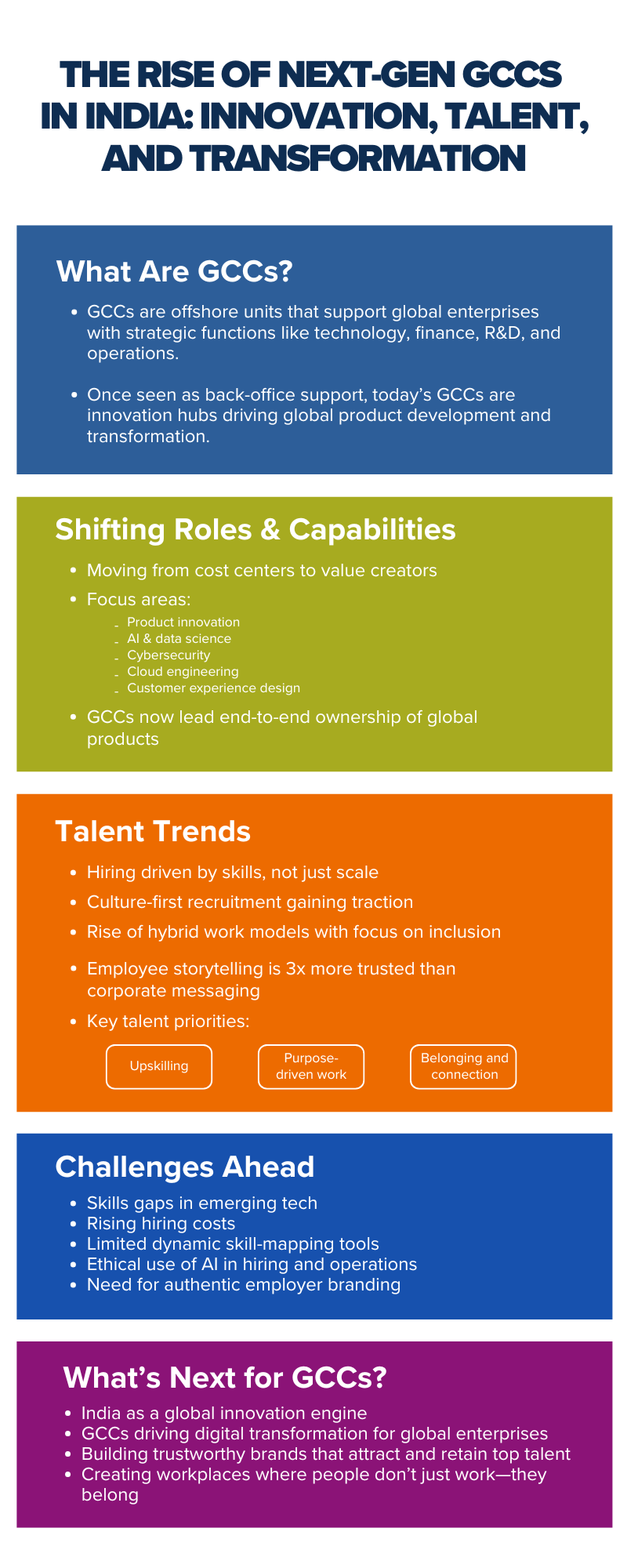
India’s growing role in global product innovation was a focal point of discussion. What’s interesting to note is that GCCs are no longer support functions. They’re slowly evolving into creativity, engineering, and strategic thinking hubs of creativity, engineering, and strategic thinking. The shift is already happening. Companies are now building products from India that are designed to serve global markets.
Fintech: Scaling with Intention
A standout story from the fintech sector highlighted how a company scaled from zero to over 250 employees across 15 functions in a year. The secret wasn’t just speed, it was clarity. Clear role definitions, culture-first hiring, and a strong focus on professional networks made it possible. As one leader aptly put it, “Network is net worth.” Growth doesn’t always mean reinventing the wheel—it often means knowing where to plug in.
Biotech: Impact on Headcount
In biotech, the conversation shifted from numbers to meaning. Talent strategy is no longer about how many people are hired—it’s about what they’re working on. Teams are being built around high-impact projects that drive breakthroughs in healthcare and improve lives globally. This is where science and technology converge to create real change.
Financial Services: Precision in Hiring
With a vast talent pool and intense competition, financial services companies are leaning into data-driven hiring. Structured intake processes, rigorous assessments, and market scans are helping them find the right fit. But there’s also a growing awareness that while AI can streamline hiring, it must be used responsibly, with ethics and safeguards at the center.
In the tech space, the message was clear: glossy campaigns don’t build brands; authenticity does. Employees’ stories are three times more trusted than corporate messaging, yet many GCCs still rely on global narratives that don’t resonate locally. It’s time to showcase culture in a way that feels real, relatable, and rooted in the Indian experience.
The panelists agreed that what matters most in remote, hybrid, or office work is inclusion and connection to purpose. Flexibility is important, but it’s the sense of belonging and mission that keeps people engaged. Where someone logs in from is secondary to why they’re showing up.
Discussing the Challenges
Despite the progress, there are real challenges ahead. Skills gaps, rising hiring costs, outdated skill-mapping tools, and the slow pace of embedding AI into daily workflows are barriers that GCCs must address. Solving these will be key to staying competitive and future-ready.
Conclusion: Staying Human in a Tech-Driven World
The biggest takeaway from the webcast? The future of GCCs will be defined not just by technology or scale but by how human they remain. Success will come from building brands people trust, focusing on capabilities over headcount, and creating workplaces where people feel they truly belong.
Because today’s talent isn’t just looking for a job. They’re looking for a story worth joining.
Was this resource helpful?

Validate your HR expertise
Earning your SHRM-CP credential makes you a recognized expert and leader in the HR field.
Related Content

Transform HR with mobile technology to streamline workflows, enhance communication, and boost employee engagement across distributed teams.

A new study found that talent development practitioners believe performance-based assessments are more effective at measuring employee learning outcomes than knowledge tests.

As AI makes deeper inroads into organizations, employee concerns about the technology continue to grow. Here's how HR leaders can address the fear of AI among their own staff, as well as in the wider organization.