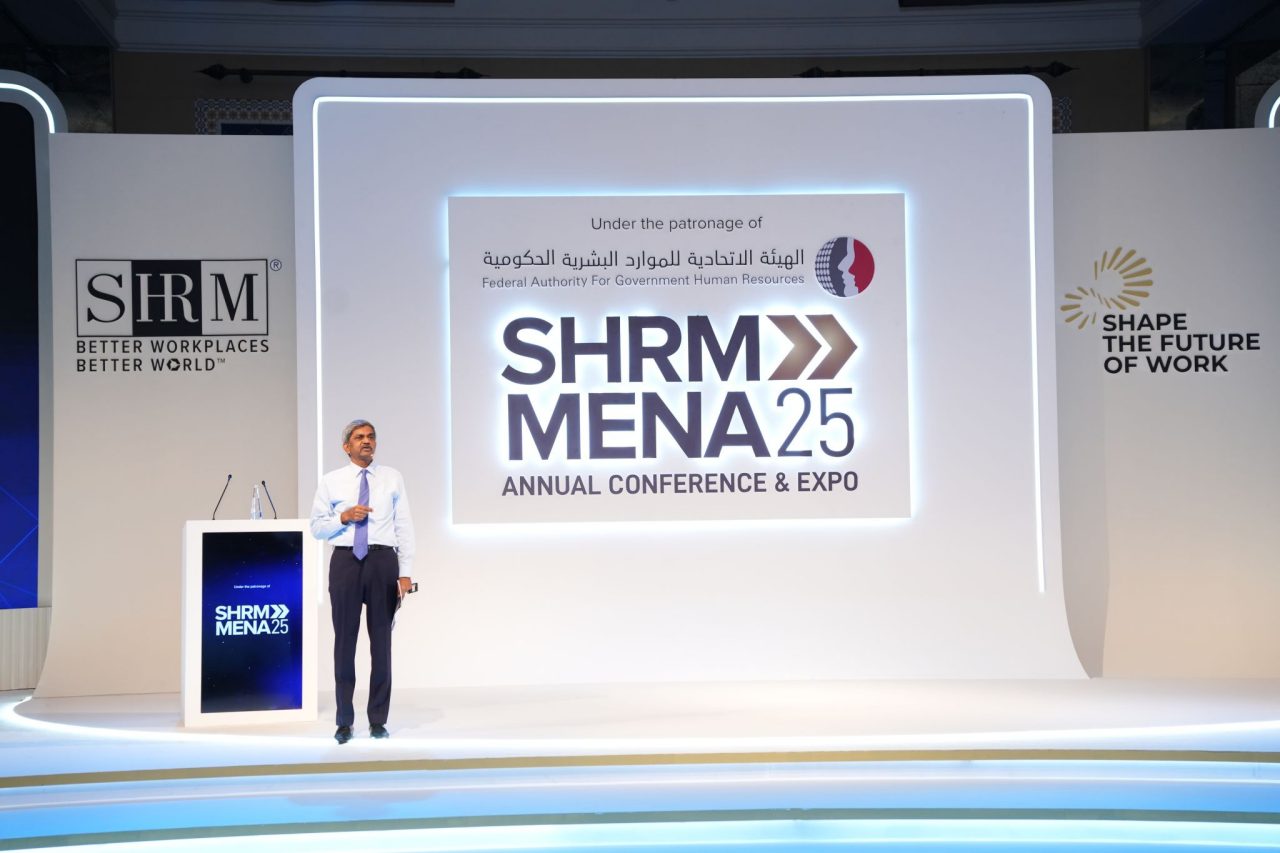
Leadership today is not what it used to be. Change is happening much faster, expectations are higher, and the workplace looks nothing like it did a decade ago. At the recent SHRM MENA Annual Conference and Expo 2025, Shiv, Operating Partner at Advent Private Equity, Former Chairperson and CEO of PepsiCo, and former CEO of Emerging Markets at Nokia, shared a powerful perspective on what it takes to lead in this new reality.
Change Isn’t Just a Process
Change is often approached as a structured and logical exercise. But that mindset overlooks the emotional side of transformation. Real change happens when people feel connected to the mission. Analytical strategies alone can lead to resistance and insecurity. To make change stick, leaders must engage with empathy, build trust, and inspire belief in the journey ahead.
The HOT Framework: A Mindset for Modern Leadership
Leading through change requires more than a plan. It demands a mindset that embraces complexity and human connection. The HOT framework offers a valuable lens.
Hybrid: Workforces today are a blend of remote, in-house, outsourced, and insourced roles. This mix creates flexibility but also challenges cultural cohesion. Especially in service-driven industries, collaboration across these boundaries must feel natural and purposeful.
Open: Change that grows from within is more sustainable than change imposed from the top. Encouraging new behaviors and nurturing internal momentum leads to lasting transformation.
Technology: Small adjustments are no longer enough. Leaders must be willing to reimagine systems, structures, and relationships. Bold thinking is essential, but it must be paired with practical steps that bring ideas to life.
Rethinking the Return to Office
The gap between employer expectations and employee behavior is widening. While many companies request three to four days of in-person work, attendance averages just over two. This disconnect reflects deeper issues around trust, autonomy, and purpose. Remote work has empowered individuals, but it has also weakened workplace relationships and contributed to a troubling trend of women exiting the workforce.
To rebuild connections, organizations must rethink benefits, create intentional opportunities for interaction, and avoid assumptions about productivity. Data alone does not tell the entire story.
Balancing Managers and Leaders
High-performing organizations strike a balance between operational efficiency and visionary leadership. Managers keep things running. Leaders drive change. The ideal mix includes a significant portion of managers who also lead. This blend ensures that execution aligns with strategy and that momentum is sustained.Not every manager is a leader, and not every leader is built to manage. But getting the mix right is essential for long-term success.
Staying Connected in a Fast-Changing World
OOO stands for Out of Office
OOT means Out of Touch, Out of Time or Out of Talent
Being out of office is acceptable. Being out of touch is not. Leaders must stay connected to their teams, their industries, and the evolving expectations of the workforce. If adaptation is slow, relevance fades. If investment in people is lacking, talent walks away. While companies are shrinking in lifespan, employees still expect long and meaningful careers. Bridging that gap is a leadership responsibility.
What You Can Do Now
Make change feel personal and purposeful
Build hybrid cultures that support connection and flexibility
Use technology to generate insight, not just speed
Balance your leadership mix with both vision and execution
Stay open, stay curious, and stay human
Leadership is no longer about control. It is about clarity, empathy, and adaptability. The future belongs to those who lead with both heart and strategy.
Was this resource helpful?

Validate your HR expertise
Earning your SHRM-CP credential makes you a recognized expert and leader in the HR field.
Related Content

Learn how Marsh McLennan successfully boosts staff well-being with digital tools, improving productivity and work satisfaction for more than 20,000 employees.

The proliferation of artificial intelligence in the workplace, and the ensuing expected increase in productivity and efficiency, could help usher in the four-day workweek, some experts predict.

As artificial intelligence technology continues to develop, the demand for workers with the ability to work alongside and manage AI systems will increase. This means that workers who are not able to adapt and learn these new skills will be left behind in the job market.