
As AI transforms how work gets done, organizations must reconsider what they reward, recognize, and measure.
Is it time to HAIL a new era of performance management?
Before we answer that question, we need to rethink what workforce performance means in an AI-augmented workplace. Here’s a question that organizations are increasingly struggling to answer:
If AI helped an employee produce an award-winning piece of work, who deserves the credit?
The employee? AI? Both? Neither?
The AI Adoption Paradox
AI adoption is accelerating across organizations, yet many leaders remain unsure how to measure its impact. The challenge is no longer access to AI. It is redesigning work, performance systems, and accountability structures around it. Bridging this gap is something most organizations continue to grapple with.
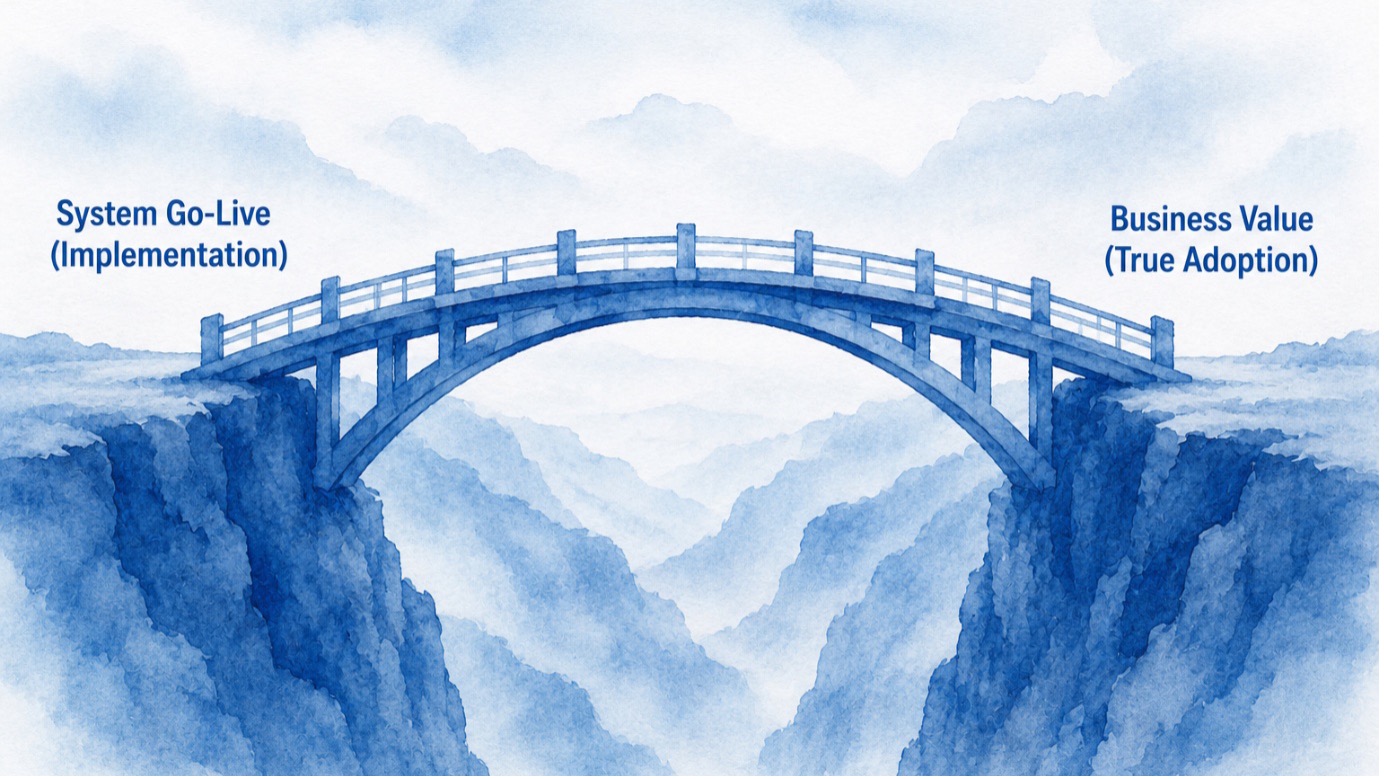
Consider these data points to gauge the extent of the disconnect:
• The Implementation Boom: 39% of organizations have already adopted AI in HR, and 46% expect to do so by 2026 [1]
• The Adoption Conundrum: 56% do not formally measure the success of their AI investments [2]
• The Resistance Factor: 37% of employees with access to AI still don't use it because adoption hasn't spread through their teams. [3]
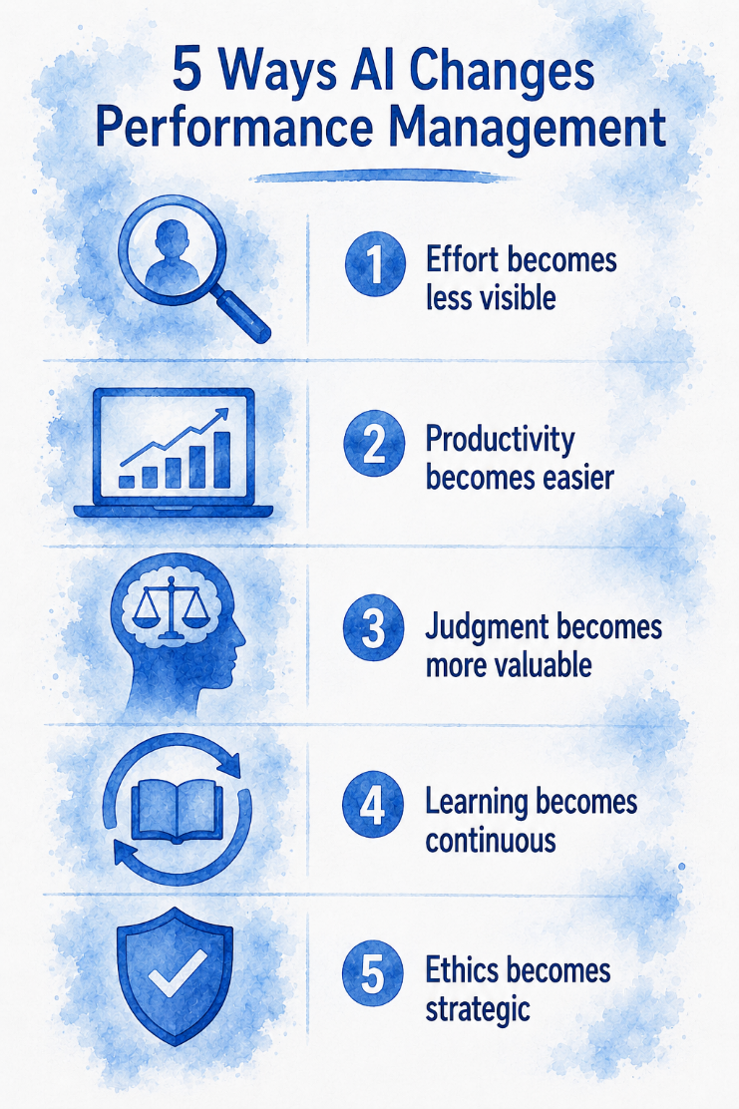
The question, therefore, is not whether AI will reshape performance management. It is whether our performance systems are evolving quickly enough to keep pace.
Is Performance Management Broken?
Consider two employees – one who insists on taking the stairs no matter what, and the other who opts for the elevator. While both reach their destination, what varies is the time taken and effort involved. In today’s workplace scenario, AI is the elevator.
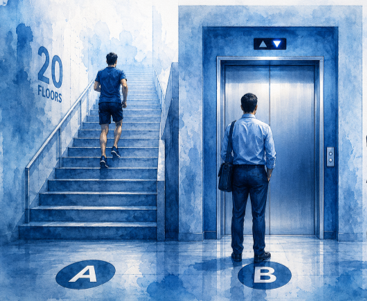
Traditional performance systems often reward effort. The future rewards leverage. For decades, organizations rewarded visible effort. The employee who stayed late, attended every meeting, and produced work manually often appeared more committed than the employee who found a smarter way. AI disrupts this equation because leverage is becoming more valuable than effort.
The question is: are we still rewarding stair-climbing?
So, what really has changed?
The Great Shift in Performance Management
The metrics that defined high performance in the industrial and knowledge economies are no longer sufficient in the age of AI.
Then | Now |
Effort | Impact |
Activity | Outcomes |
Knowledge | Judgment |
Individual Work | Human + AI Collaboration |
Experience | Adaptability |
The AI Productivity Trap
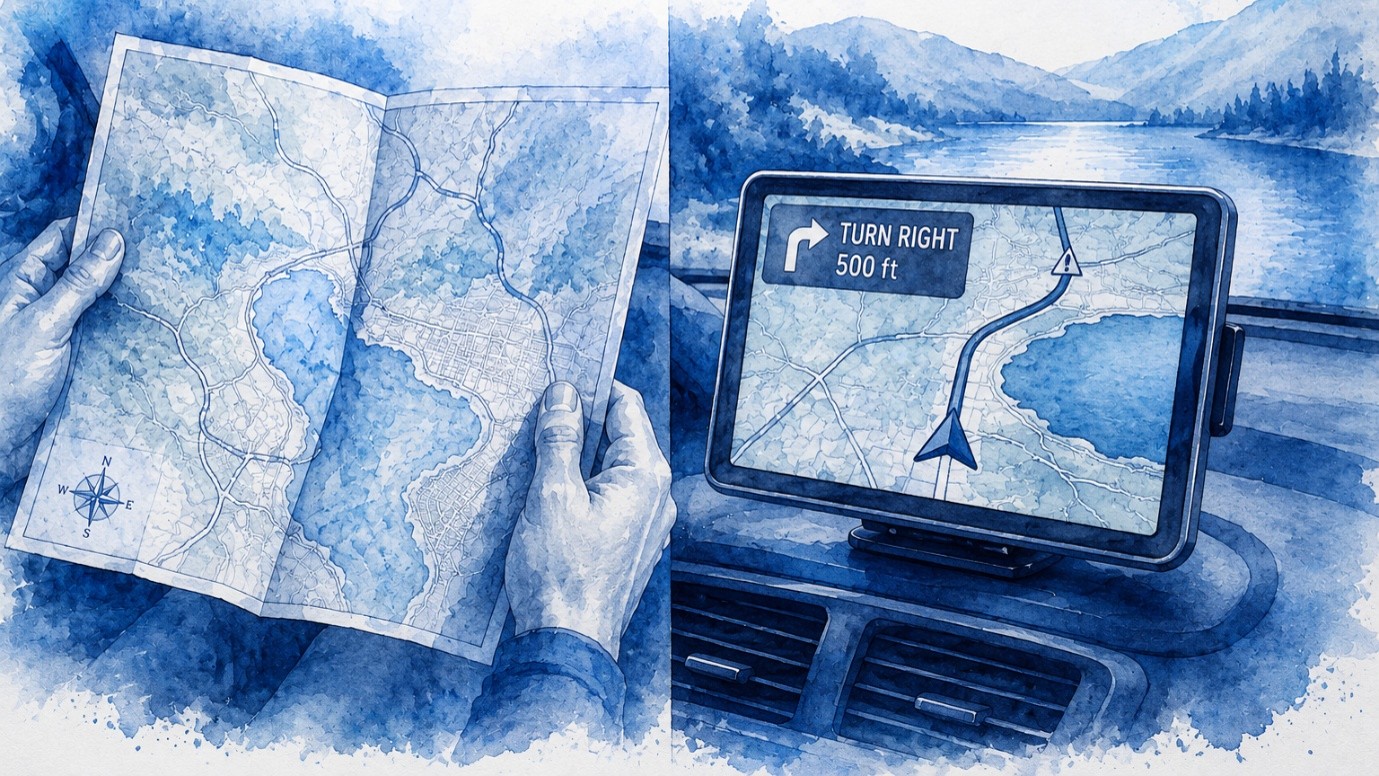
Here’s a parallel: GPS is our go-to solution when we are unsure of the exact directions to reach our destination. However, we still need to leverage human judgment when GPS suggests a ‘quicker’ detour and sends us into unexpected locales.
Likewise, AI may provide direction, but judgment and accountability remain fundamentally human responsibilities. AI can generate information, recommendations and predictions but humans will lead decisions, face consequences and operate within ethical guardrails. AI is unlikely to eliminate high performance. It is redefining it.
Understanding the Performance Paradox
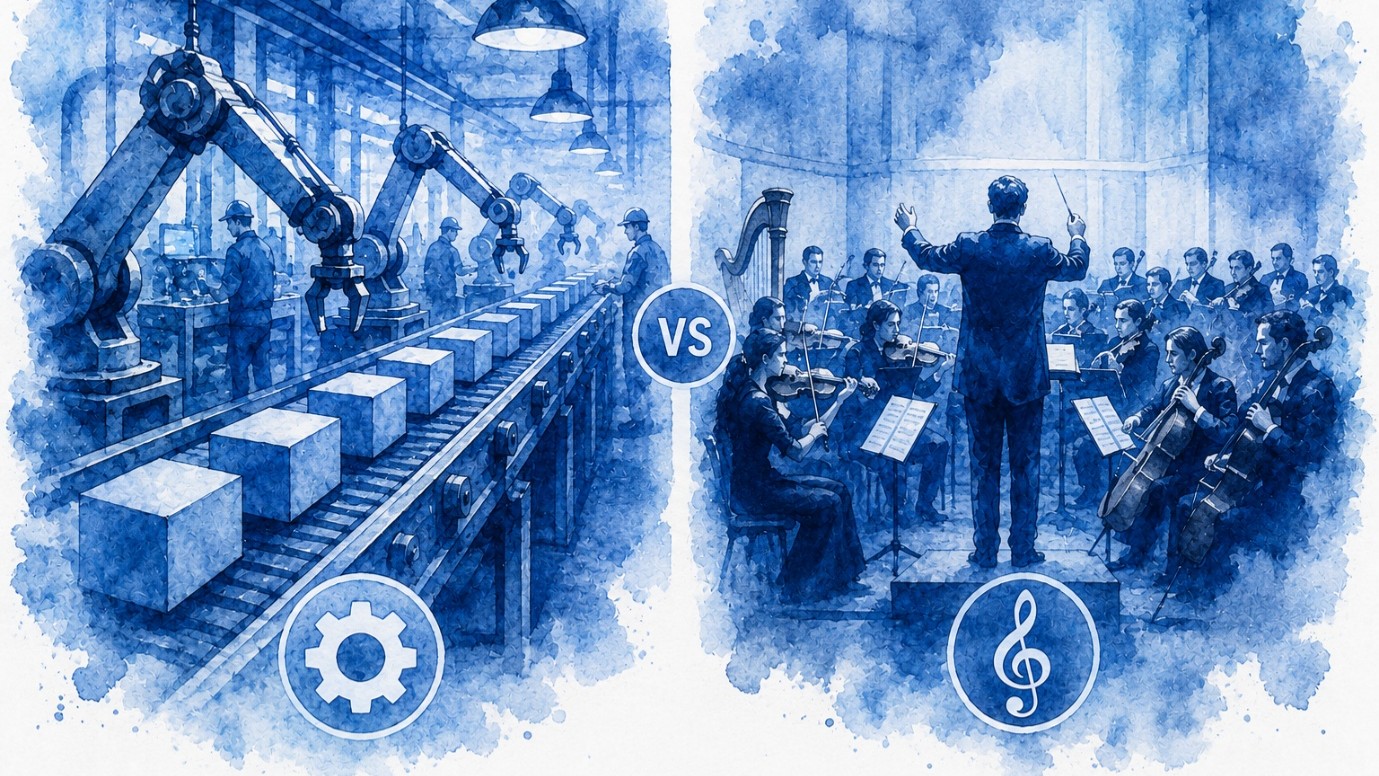
Consider skillsets required by the workforce at an assembly line and musicians as part of a highly specialized orchestra. Factories prioritize manufacturing output, while orchestras optimize harmony. Many organizations continue to use industrial-age metrics to evaluate knowledge-age work. AI is making this mismatch increasingly visible.
Pause to Ponder: Which performance metric in your organization is most likely to become obsolete in the next 3 years?
Enter the Performance 3.0 Framework
Performance 1.0 rewarded effort.
Performance 2.0 rewarded expertise.
Performance 3.0 rewards judgment.
The question for organizations is simple: Are our performance systems evolving accordingly?
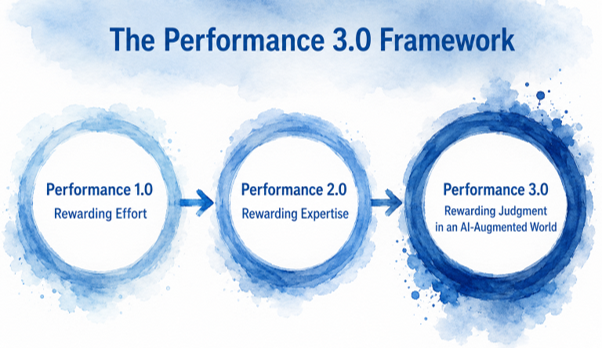
Another related question is: If effort is becoming less visible and expertise is increasingly augmented by AI, what capabilities become more valuable?
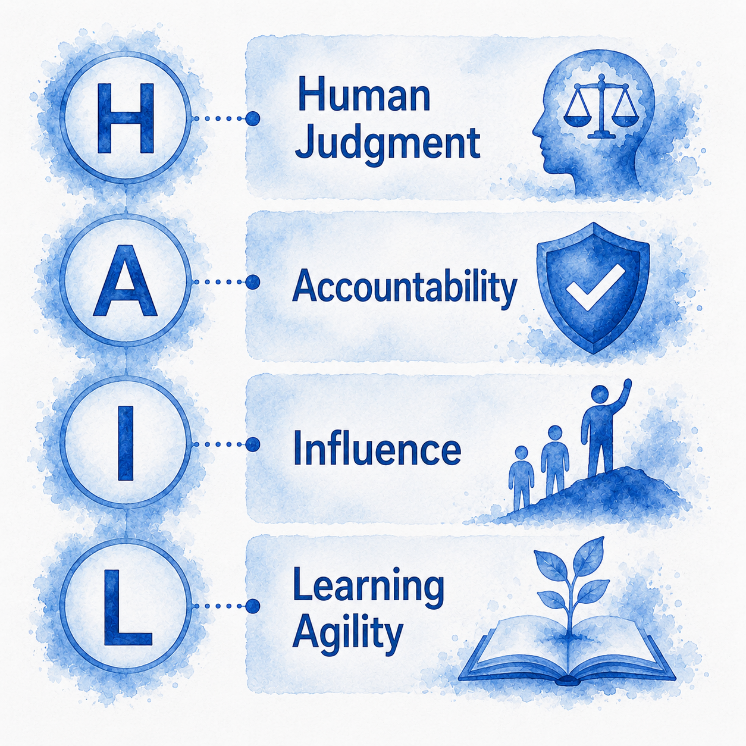
The answer may lie in four distinctly human capabilities that become increasingly valuable as AI becomes more capable.
H - Human Judgment
The ability to evaluate recommendations, navigate ambiguity, and make decisions when AI offers multiple plausible answers.
A - Accountability
Owning outcomes, even when technology contributes to the work.
I - Influence
Aligning people around decisions that data alone cannot resolve.
L - Learning Agility
Continuously adapting as tools, roles, and expectations evolve.
AI sits right at the center of HAIL - not because technology is the focus, but because it amplifies the importance of every capability around it.
HAIL - Human Capabilities that Matter More in the AI Era
The Future HR Scorecard should measure Productivity, Potential, Adaptability, AI Fluency, and Ethical Conduct - not just output.
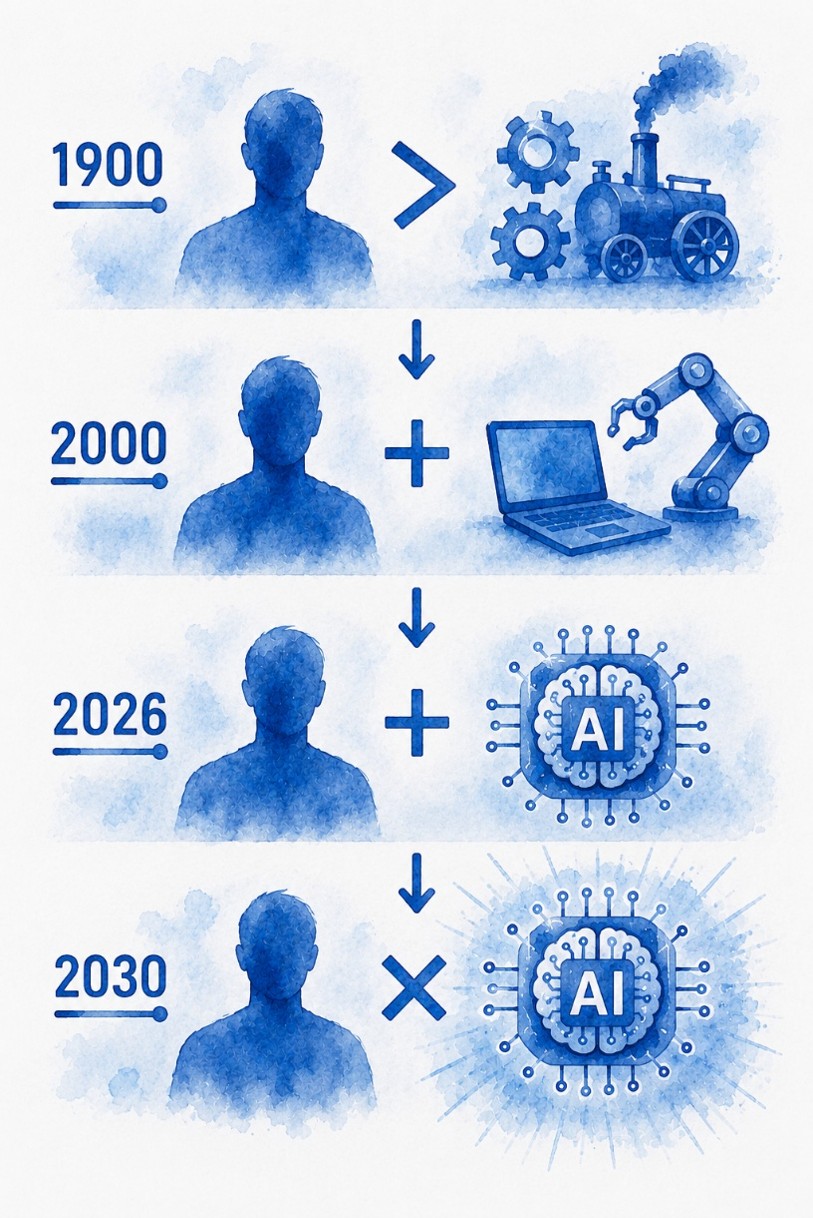
AI as the Force Multiplier
Compared to the time when human effort was far more than that of machines, the present era of Industry 5.0 which heralds greater human-machine collaboration with AI as a key disruptor. From being a productivity enabler to a force multiplier, the future is all about AI technology compounding human efforts exponentially. As a result, the quality of human judgment becomes even more crucial.
Embracing Change
What makes a winning Formula One team? Not the driver, nor the engineers, the strategy, or technology in isolation. The winning streak takes shape when all of these work in tandem.
Performance is increasingly becoming a system outcome rather than an individual one.
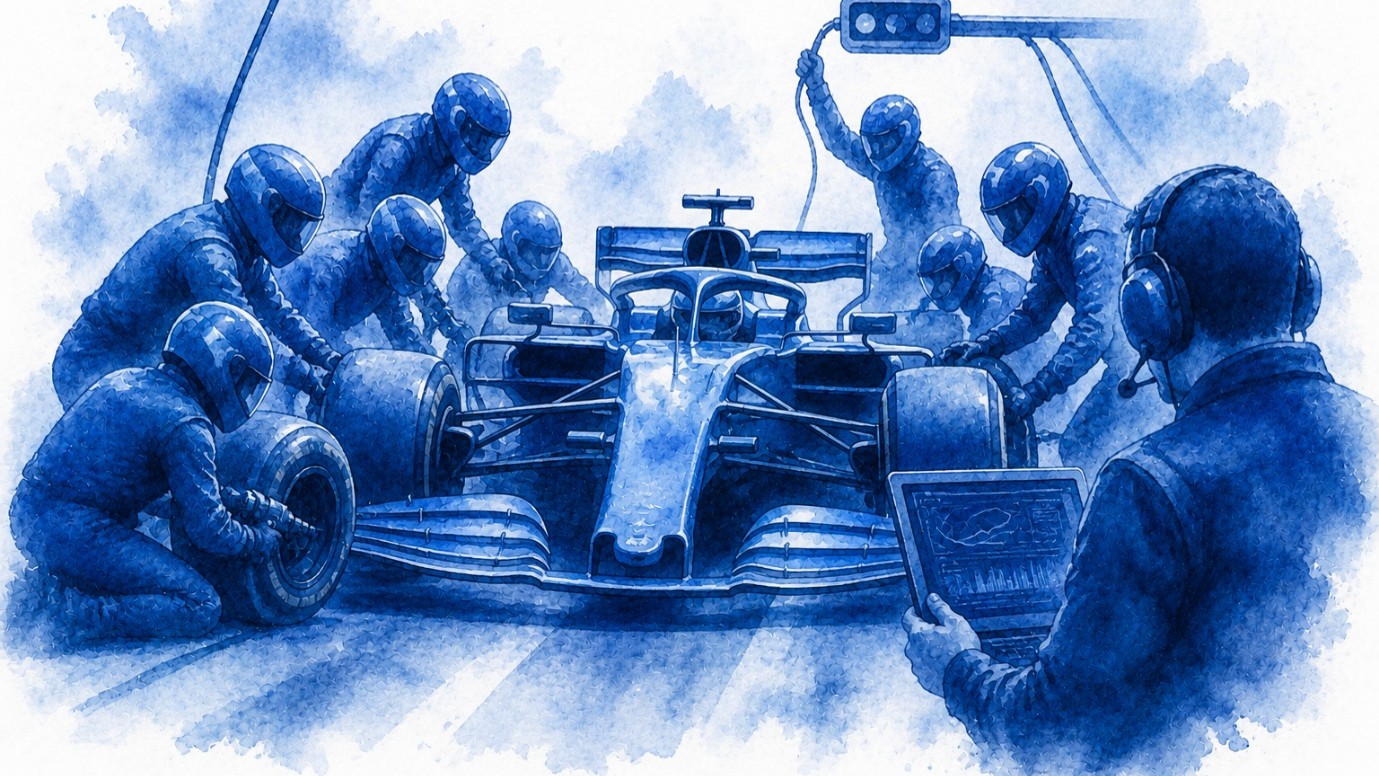
The future of performance management is unlikely to be defined by how effectively people compete against AI. It will be defined by how effectively they collaborate with it while remaining accountable for outcomes. Winning organizations won't be those with the most AI, but the ones that redesign work most effectively around it – all this, while rewarding the right performance metrics.
As AI becomes embedded in everyday work, organizations may need to shift their focus from measuring effort and expertise alone to evaluating judgment, adaptability, influence, and accountability. Organizations that successfully make this transition will unlock the value of AI along with distinctly human capabilities that AI makes even more important.
Was this resource helpful?

Validate your HR expertise
Earning your SHRM-CP credential makes you a recognized expert and leader in the HR field.
Related Content

Learn how Marsh McLennan successfully boosts staff well-being with digital tools, improving productivity and work satisfaction for more than 20,000 employees.

The proliferation of artificial intelligence in the workplace, and the ensuing expected increase in productivity and efficiency, could help usher in the four-day workweek, some experts predict.

As artificial intelligence technology continues to develop, the demand for workers with the ability to work alongside and manage AI systems will increase. This means that workers who are not able to adapt and learn these new skills will be left behind in the job market.