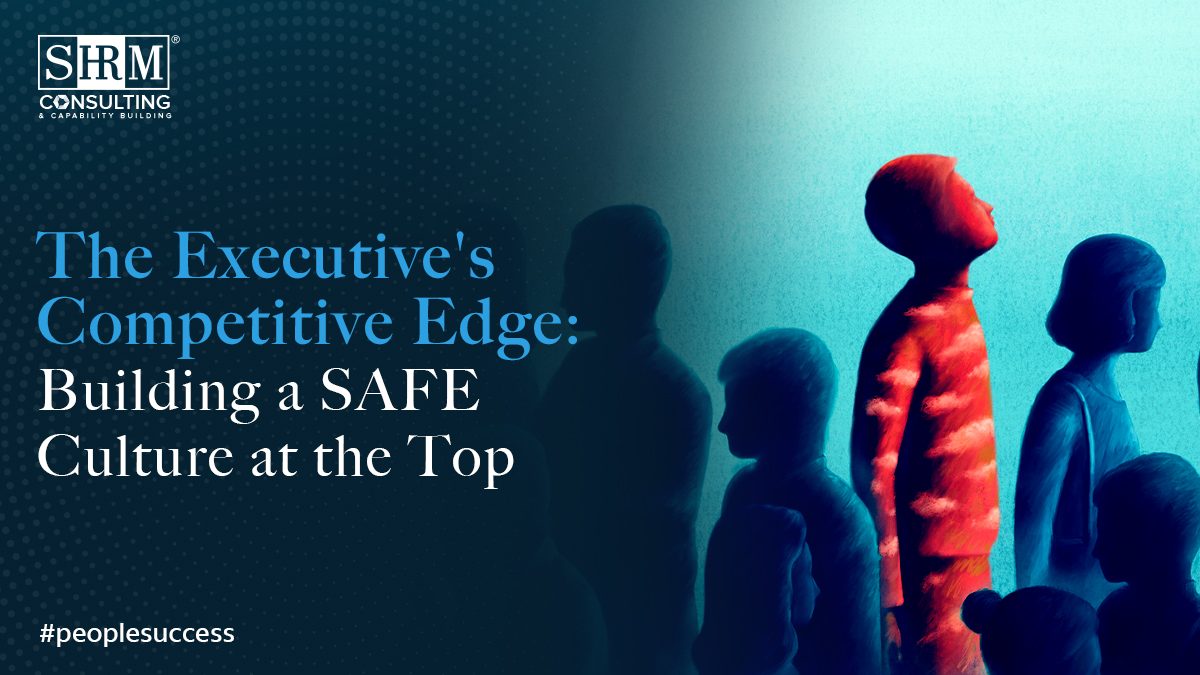
While there are many critical elements of a high-performing senior executive team, with the technological disruption happening around us, I've observed one critical differentiator between high-performing executive teams and those that underperform: “psychological safety.”
While most “C-suites” naturally focus on vision, strategy, and financial results, I've learned that the less visible element of psychological safety forms the foundation for everything else. At its core, this is about creating an environment where people can speak up, take risks, admit mistakes, and challenge assumptions without fear of embarrassment or retaliation.
I've sat in rooms where silence was mistaken for agreement. I've also been in rooms where honest, respectful debate led to breakthroughs we'd never have discovered otherwise. The difference wasn't intelligence or competence. It was safety.
The SAFE Framework: Our Leadership North Star
Over years of refinement, we've developed what we call the SAFE model - a framework that guides how leaders can build psychological safety across the organizations:
S – Sense of Belonging (Inclusion)
While a lot is said about the whole concept of inclusion, I have seen very few organizations that can live it to the spirit of the letter—“Everyone feels included and respected.” When executives feel seen as equals regardless of their background or style, they bring their authentic perspectives forward. This element will be highly important over the next few years as Gen Z gets into senior leadership roles.
A – Ask & Explore Freely (Curiosity without Judgment)
As CXOs, it is our responsibility to address biases. Leaders need to be comfortable with the fact that they may not have all the answers. When executives feel embarrassment-free in asking questions, they avoid costly assumptions. Organizations have averted multi-million-dollar mistakes because someone felt safe enough to ask what others assumed everyone already knew.
F - Freedom to Contribute & Add Value
Each leader must feel empowered to bring their expertise to the table. As senior leaders, we need to acknowledge contributions and foster psychological ownership across leadership levels explicitly. When we rolled out our digital transformation initiative, it succeeded precisely because executives felt safe taking calculated risks and learning from inevitable missteps.
E - Engage Respectfully
We've developed a culture that challenges ideas vigorously but respects people unfailingly. Our feedback protocols focus on facts, specificity, and actions rather than personalities or assumptions. Setting the feedback culture is “The key element” of the SAFE model. Challenging viewpoints are welcomed when delivered respectfully. A health conflict is seen as an opportunity to collaborate, learn, and grow together, not as a threat. Executive Leadership teams need to invest a lot of energy to set this culture and hold themselves accountable for driving the same across the organization. In fact, psychological safety needs to be adopted as a measurable KPI for the executive team.
The CEO's Critical Role
Let me be candid: psychological safety starts with the CEO. A CEO's words and silences carry disproportionate weight. A dismissive comment can shut down risk-taking across the organization. A curious question can spark innovation.
The Strategic Imperative
The higher the stakes, the more crucial psychological safety becomes. As executives, we face decisions with limited data, high uncertainty, and complex dynamics. If anyone on the team holds back their perspective out of fear or political dynamics, we're effectively handicapping ourselves.
We've all witnessed the catastrophic costs when bad news gets buried or concerns go unspoken. Conversely, when safety is high, resilience flourishes. Teams bounce back faster, adapt more effectively, and deliver superior results.
This isn't just about culture - it's about competitive advantage. In today's environment, the quality of your decision-making process is often the difference between market leadership and obsolescence.
The Leadership Challenge
Every day, we as senior leaders have the choice to create an environment where truth can surface or let fear and silence rule the room. Our legacy won't just be measured by quarterly results but by the organizational capacity we've built - and the conversations we've enabled.
The SAFE model isn't soft - it's strategic. It's not about making people comfortable - it's about making it safe to be uncomfortable in pursuit of excellence.
That's the leadership standard we should hold ourselves to. That's the leadership standard that drives sustainable success.
Was this resource helpful?

Validate your HR expertise
Earning your SHRM-CP credential makes you a recognized expert and leader in the HR field.
Related Content

Transform HR with mobile technology to streamline workflows, enhance communication, and boost employee engagement across distributed teams.

A new study found that talent development practitioners believe performance-based assessments are more effective at measuring employee learning outcomes than knowledge tests.

As AI makes deeper inroads into organizations, employee concerns about the technology continue to grow. Here's how HR leaders can address the fear of AI among their own staff, as well as in the wider organization.