
This is news no employer wants to hear: the Occupational Safety and Health Administration (OSHA) plans to inspect your workplace and talk to employees.
The good news is that the stress of facing OSHA can be mitigated by planning and preparation, according to employment experts. Here’s what HR professionals should know about best practices for responding to OSHA worksite visits and interviews.
Make a Plan
Employers should strive to be on the front foot in the event of OSHA inspections, which typically involve interviews with workers and leadership, said Thomas Buckley, an attorney with Goldberg Segalla in Raleigh, N.C.
Only in rare cases will the agency give more than 24 hours advance notice ahead of an inspection, which is why it’s essential for employers to have processes generally at the ready.
Once notified, employers have the right to make employees aware of their own rights in the event of OSHA inspection.
There should be a detailed plan that covers the decision tree in event of inspection, Buckley said. The decision tree should include key points of contact within the organization and potential ways to respond to requests for interviews and site inspections, as well as data and documents and how they may be accessed.
It might be useful to appoint a representative who is willing to accompany OSHA around the worksite, and take notes and photos to ensure a thorough record of the visit from the employer’s perspective, Buckley suggested.
Ideally, this can lead to an organized response in real time, instead of ending up a chaotic one, Buckley said. “There should be a plan for how the response should be handled, and who’s going to be responsible for that.”
Know Your Rights
Experts agree it’s critical for employers to be familiar with their rights when OSHA arrives. Under law, OSHA is authorized to inspect workplaces and speak with employees “during regular working hours and at other reasonable times, and within reasonable limits and in a reasonable manner” if the agency has probable cause to believe an infraction has occurred.
While this does provide employers with some leeway, “if you don’t consent to inspection they’re going to get a warrant, so you may be on a better foot starting out a bit more cooperative,” according to Buckley.
During this process, an OSHA compliance safety and health officer (CSHO) will likely ask to speak with members of the workforce. Employers should be aware that making staff available for interviews is voluntary, according to Kaiser Chowdhry, an attorney with Morgan Lewis in Washington, D.C.
With that said, “we don’t advise our clients to tell OSHA to get a search warrant to talk to a witness,” he added.
“OSHA technically needs a subpoena if they’re going to interview somebody. I think it’s empowering for employers to know that,” he said. “That keeps employers more focused on the fact that if they do think OSHA is overreaching in some way or another, they should speak up.”
The vast majority of OSHA’s inspections are partial inspections, which are limited to certain potentially hazardous areas, operations, conditions, or practices at the establishment, the agency’s field operations manual states.
These are typically inspections that stem from an employee complaint, referral, reported accident, or incident, and should be limited to the specific work areas, operations, conditions, or practices forming the basis of the unprogrammed inspection.
However, “a partial inspection can be expanded based on information gathered by the CSHO during the inspection process,” the field manual notes.
An expanded “comprehensive inspection” can cover “all potentially hazardous areas of the establishment.”
With this in mind, experts say employers should strive to understand the scope of OSHA’s investigation at the outset, so as to not provide extraneous information and accidentally broaden their examination of the workplace.
“If you’re giving them more than what they’re asking for and more than what they’re entitled to, you’ve consented to expanding the scope of the inspection,” Chowdhry explained.
Chowdhry said he’s noticed that sometimes for clients — especially those who have less experience interacting with OSHA — “the initial inclination is to help them as much as possible.” But he recommended employers “fight the urge to be overly helpful” thinking it might help their standing with the agency.
“We don’t want clients to be obstructionist in any sense, but you’re not there to help OSHA make their case,” Chowdhry said. “Keep in mind that OSHA has a job to do, and that’s to find violations and issue citations.”
Interviews with Employees vs. Management
Facts gathered from interviews with employees are usually critical to OSHA’s investigations, but employers have different rights in OSHA’s interviews with workers depending on whether the interviewee is a member of management.
When it comes to interviews with rank-and-file employees, the basic rule for nonmanagers is that OSHA has the right to talk to them without the employer being present, explained Jonathan Crotty, an attorney with Parker Poe in Charlotte, N.C.
For employers, when it comes to requests for interviews with nonmanagers, “you don’t have to make them available but you can’t interfere,” Crotty said. Employers should completely avoid any kind of instruction about how nonmanagers should speak to OSHA, including implicit communication or directives to stick to the company line, he emphasized.
Preparation for these employees should be brief. A manager should explain that OSHA has requested to speak with them, while making clear that “nobody has to talk to OSHA if they don’t want to,” Crotty explained.
It’s natural for employees in these cases to be anxious or nervous, so the employer should strive to make them comfortable and emphasize that they will not be punished in any way for talking to OSHA, experts noted.
Chowdhry said it can even be beneficial to have this interaction in front of OSHA, as “a touch point that shows the company operates in good faith.”
In cases where the interviewee was witness to a traumatic incident or fatality, sensitivity and empathy are of the utmost importance, and it may be reasonable to ask to delay the interview until the worker is feeling ready to speak about it, Crotty said. Employers might refer traumatized workers to employee assistance programs to help support the workers.
“Human beings just react differently when they’re in those situations. Some people are ready the next day to talk to OSHA and some people are really traumatized,” he said. “It could be weeks or even longer before they feel it’s in a position that they can.”
During interviews with managers, employers have the right to have a company representative present, which experts agree is best practice, as the manager is speaking on the organization’s behalf.
When it comes to making managers available for interviews, it’s reasonable to ask for time to coordinate that conversation in order to account for possible disruptions to regular business operations.
“For OSHA to prove a violation, they need to prove employer knowledge,” Chowdhry explained. “When a manager speaks, that’s the company speaking, which is why it’s important to take the time to prepare a manager before an interview with OSHA.”
Preparation for OSHA interviews with managers is similar to getting ready for a legal deposition, experts say.
Generally, advice boils down to “tell the truth, but don’t speculate,” according to Chowdhry. “If you don’t know, then just say you don’t know the answer.”
Request for a Signed Statement
One key piece to consider is that while OSHA may ask witnesses to sign a statement summarizing their notes from the interview, they are free to refuse. According to Chowdhry, there is “no obligation and more importantly no upside to signing this statement.”
“They’re going to be taking their notes from your interview and invariably their notes will include their mental impressions or the way they want to frame the evidence they’re collecting,” Chowdhry said. “A signed statement is far more useful to OSHA down the road to prove a violation than an unsigned statement.”
Taylor Telford is a freelance writer in Washington, D.C.
Was this resource helpful?

Validate your HR expertise
Earning your SHRM-CP credential makes you a recognized expert and leader in the HR field.
Related Content
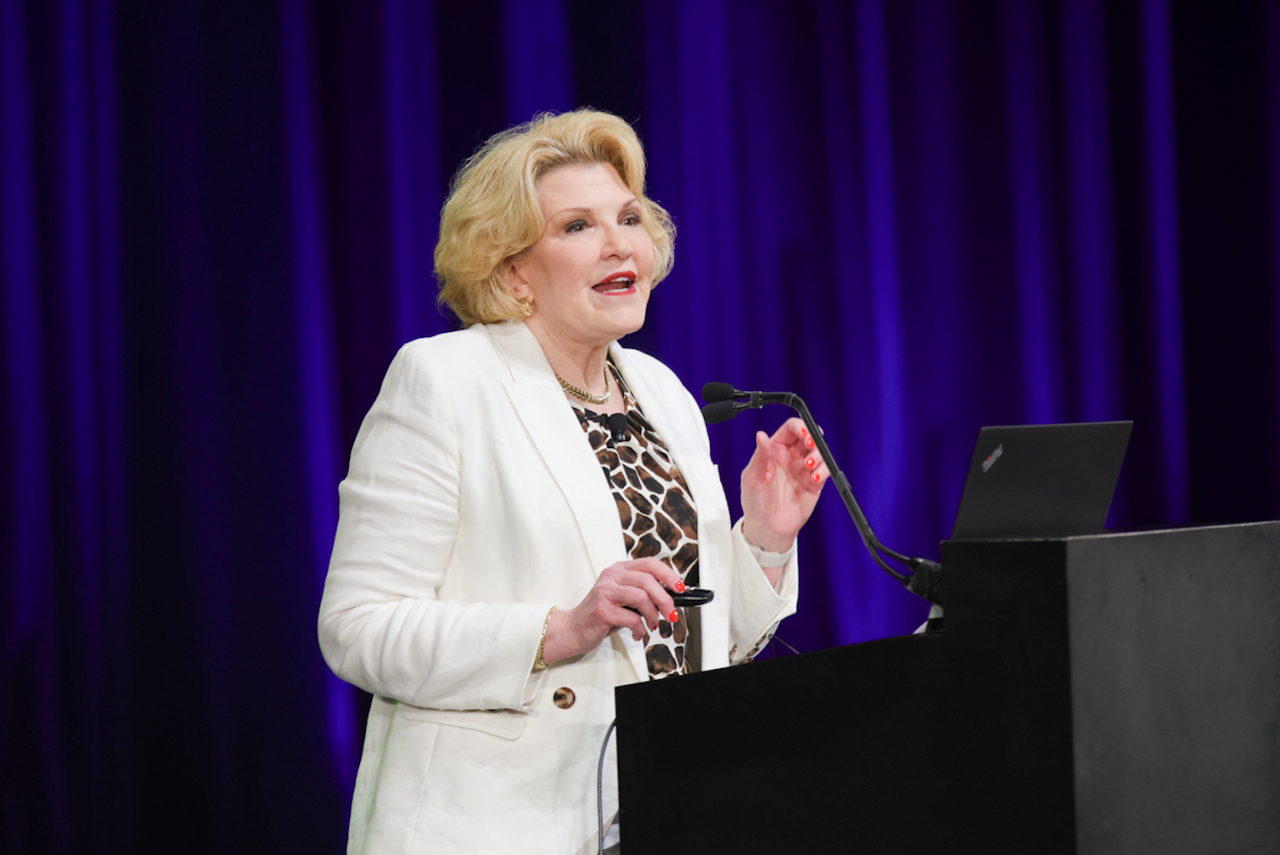
HR must always include human intelligence and oversight of AI in decision-making in hiring and firing, a legal expert said at SHRM24. She added that HR can ensure compliance by meeting the strictest AI standards, which will be in Colorado’s upcoming AI law.

The proliferation of artificial intelligence in the workplace, and the ensuing expected increase in productivity and efficiency, could help usher in the four-day workweek, some experts predict.

Learn how Marsh McLennan successfully boosts staff well-being with digital tools, improving productivity and work satisfaction for more than 20,000 employees.