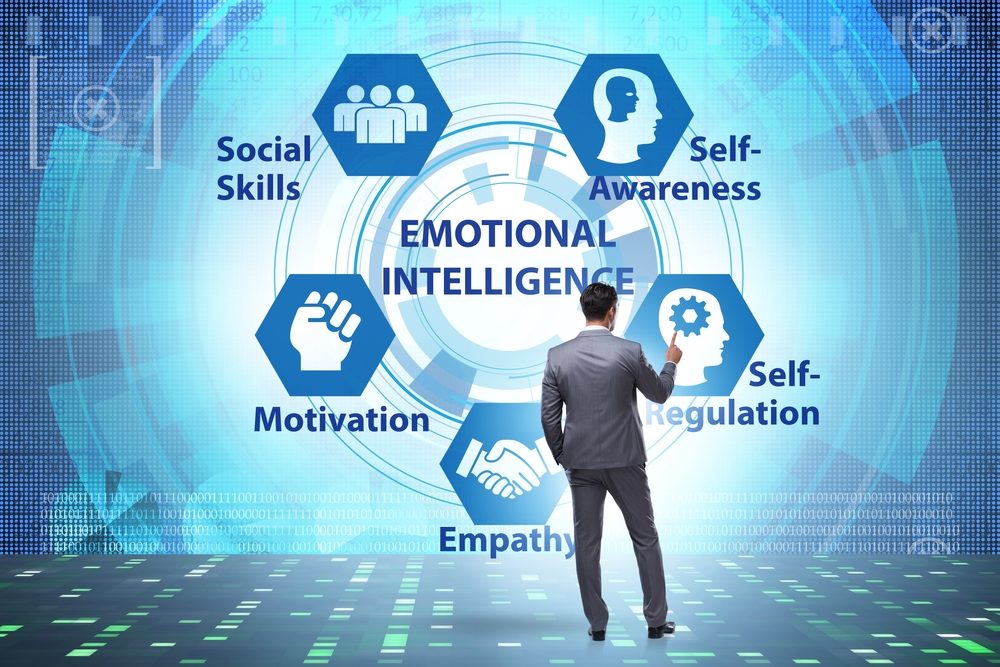
Artificial Intelligence (AI) is rapidly transforming the modern workplace, from drafting reports and screening resumes to responding to customer queries and analyzing data in seconds. However, the importance of emotional intelligence (EI), the ability to understand and manage emotions in ourselves and others, cannot be ignored. As AI becomes a bigger part of the workplace, we need to consider whether emotional intelligence can keep up with technological change.
Organizations can fill this gap by developing EI through manager training, assessing emotional intelligence using behavioral indicators, and safeguarding EI through human review of AI-supported decisions. Converting AI adoption into trust and results is more about human readiness than about the technology. This article explains why AI adoption depends on human readiness, where empathy and judgment carry the work, and how organizations in India can strengthen EI as a capability, with implications for Human Resources (HR) professionals and business.
Why AI Adoption Depends on Human Readiness
AI adoption is often viewed as a technology or training problem, and technical skills in AI, electronic devices, and data are essential. Adoption also depends on leadership direction and employees' mindset. Mindset refers to the attitudes and assumptions employees have about change, such as fear of losing their jobs or uncertainty about whether a tool will be reliable.
Leaders who recognize these reactions and respond openly will find it easier to get real buy-in, not just superficial buy-in. Adoption, therefore, needs emotional awareness as much as software training. Measurement adds a further layer. Organizations tend to measure technical skills through certifications and completion rates, while emotional and interpersonal skills, which are more challenging to measure, receive less structured attention. The gap between AI investment and human readiness can therefore widen unnoticed.
Also Read: Emotional Intelligence Matters Most When Workplace Conversations Get Difficult
Where Empathy and Judgment Carry the Work
AI tends to take over repetitive and rule-based tasks first, such as writing standard reports, sorting applications, and answering routine queries. Unscripted work remains with people. Examples include resolving a complaint that an automated channel was unable to settle, interpreting ambiguous data in context, and supporting a colleague through a transition.
Three capabilities become more essential in this transition:
Empathy in Escalated Interactions: Empathy is the ability to understand others' thoughts and feelings and acknowledge them. Complaints are being routed through automated channels, and human agents will likely be used for those with high levels of frustration or urgency. This is important for AI-driven workplaces, as automated channels can answer basic queries quickly but cannot identify and adapt to distress. AI can work alongside humans, with AI handling routine volume and humans handling escalated volume. The AI summary provides context for the human to respond. Agents that de-escalate these situations help the organization achieve its revenue targets by protecting customer trust and retention.
Judgment in Uncertain Decisions: Judgment is the ability to consider imperfect information, context, and consequences before making a decision. Workplaces need it, especially those powered by AI. AI can detect trends in hiring, performance, or employee data. A pattern, however, does not explain why an employee is disengaged or whether a recommendation is fair to an individual. The two can coexist, with AI performing the analysis and HR professionals reviewing the outputs, bringing contextual awareness. This review enables them to find recommendations that could be discriminatory for a group of people, leading to fairer people decisions and reducing legal and reputational risk.
Interpersonal Awareness in Hybrid Teams: Interpersonal awareness is sensitivity to colleagues' reactions, cooperation, and communication. Such awareness is critical in AI-enabled workplaces, where the growing use of AI tools changes how work gets done and who people report to, leaving employees uncertain about their roles and contributions. The two can co-exist if managers are alert to signs of this uncertainty (e.g., withdrawal from discussions or less participation) and address concerns through early conversations. This way, uncertainty does not become disengagement, and collaboration continues through the transition.
Strengthening Emotional Intelligence as an Organizational Capability
EI is more easily developed as an organizational capability than as a personality trait. There are a few steps that organizations in India can take:
Manager Capability Development: Reporting managers are the primary channel through which EI reaches daily work, as they influence how employees interpret and respond to AI-related change. Organizations in India can build structured practice on feedback, active listening, and change communication into manager development programs, using scenario-based exercises, such as responding to a team member's concern about role changes, followed by coaching. This format is generally more likely to transfer to the workplace than one-time workshops, although results depend on participation and ongoing reinforcement. This brings consistent, dependable communication throughout AI adoption, helping overcome the mindset barrier that can slow it.
Evaluation in Existing Systems: Evaluation increases the visibility of EI within the organization, since skills that are not measured tend to receive less sustained investment. Organizations in India can use existing performance and feedback systems to evaluate observable behavioral indicators, such as team communication quality and conflict management. EI is not one thing, but a collection of factors. Therefore, a range of inputs, such as peer feedback and manager observation, gives a better idea of where an individual stands than any single score. The benefit is that development efforts can be directed to specific gaps, and leaders can track whether training investments change behavior over time.
Human Review of AI in People Decisions: Organizations can establish a review process in which trained HR staff review AI recommendations for hiring, performance appraisals, and disciplinary actions before implementation. This risk-based approach is a practical compromise in which higher-risk decisions are reviewed more closely by humans, as it may not be feasible to review all outputs at scale. The benefit is that employees are more likely to see such processes as fair and accountable, and organizations reduce the risk of legal and reputational exposure from decisions that are not fully contextualized by an automated system.
Keeping Human Judgment at the Center of AI Adoption
Emotional intelligence can remain relevant in AI-driven workplaces, but organizations must shift their mindset to recognize it as a capability that requires nurturing, assessment, and strengthening rather than being overlooked. Leadership direction and employee mindsets can influence AI adoption just as much as technical expertise. In functions where empathy, judgment, and interpersonal awareness shape trust and outcomes, these human capabilities become especially important. AI and human skills can complement each other, with AI handling routine tasks and data analysis while people bring the judgment, empathy, and contextual understanding that technology alone cannot replicate.
HR leaders can therefore view manager capability development, behavioral assessment, and human review of AI decisions as elements of a single AI strategy that strengthens adoption, supports fairer decisions, and protects customer and employee trust. Business leaders can reinforce this argument by placing equal value on human capability and technical certification. Technology will continue to evolve rapidly, and human capability will depend on deliberate investment. Organizations in India that make this investment are more likely to translate AI adoption into sustained productivity gains.
Was this resource helpful?

Validate your HR expertise
Earning your SHRM-CP credential makes you a recognized expert and leader in the HR field.
Related Content

Transform HR with mobile technology to streamline workflows, enhance communication, and boost employee engagement across distributed teams.

A new study found that talent development practitioners believe performance-based assessments are more effective at measuring employee learning outcomes than knowledge tests.

As AI makes deeper inroads into organizations, employee concerns about the technology continue to grow. Here's how HR leaders can address the fear of AI among their own staff, as well as in the wider organization.