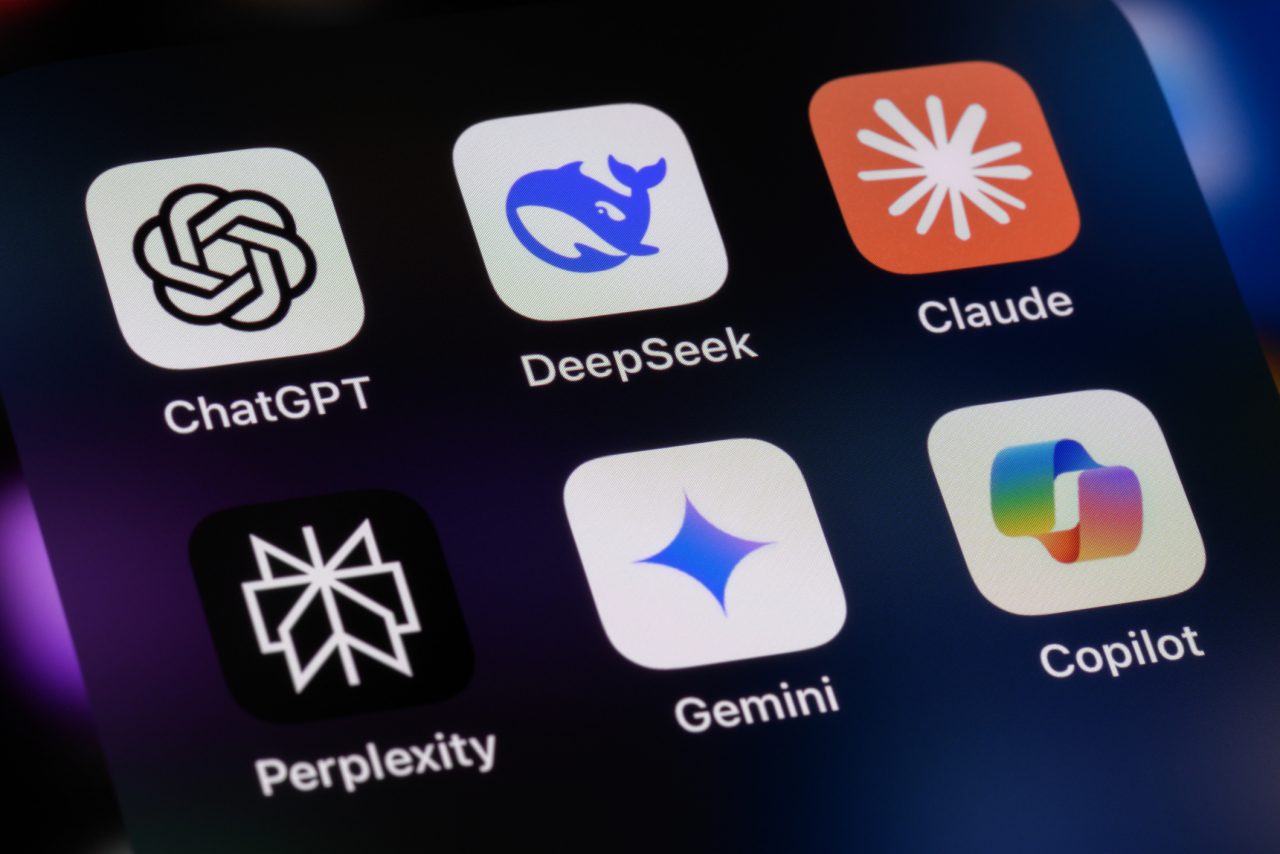
AI is changing how work gets done at a fundamental level. Early adopters report sharp productivity improvements, along with heavier supervision requirements and faster cycles for building new skills. Companies navigating this shift are prioritizing task redesign and clearer use of human judgment. Industry leaders caution that capital pressure, timing decisions, and governance exposure are rising just as quickly as technical capability. State policymakers are also beginning to set limits. Taken together, these developments show a system moving faster than the structures meant to guide it.
1. How AI Is Transforming Work at Anthropic
What to Know:
Anthropic surveyed 132 engineers, conducted 53 interviews, and analyzed 200,000 Claude Code transcripts to examine how AI is reshaping engineering work. Employees now use Claude in 59% of their work and report 50% productivity gains — more than double last year.
Debugging and code understanding are the top uses, and 27% of AI-assisted work represents tasks that previously wouldn't have been done. Engineers say Claude broadens their skills and accelerates learning but raises concerns about losing deeper expertise and reduced peer collaboration. Usage data show growing autonomy: task complexity rose from 3.2 to 3.8, autonomous tool-call chains increased 116%, and human turns dropped 33%.
Why It Matters:
The findings capture an early shift from writing code to supervising AI systems. Output rises quickly, but questions about skill retention, oversight quality, and career paths remain unresolved.
"I ask way more questions [now] in general, but like 80-90% of them go to Claude," one employee noted. This creates a filtering mechanism where Claude handles routine inquiries, leaving colleagues to address more complex, strategic, or context-heavy issues that exceed AI capabilities ("It has reduced my dependence on [my team] by 80%, [but] the last 20% is crucial and I go and talk to them"). People also "bounce ideas off" Claude, similar to interactions with human collaborators.
And these changes are forcing organizations to rethink how work is designed.
2. The Enterprise AI Blueprint
What to Know:
Erik Brynjolfsson, director of the Digital Economy Lab at Stanford University, argues that most firms are discussing AI but few have reorganized to use it effectively. Productivity gains depend on "co-invention" — new workflows, skills, and processes — not just deploying models, creating an AI "J-curve" where returns lag early.
Surveys from McKinsey and BCG show only a small share of firms achieve value at scale; those that redesign how people and algorithms work together outperform peers. Brynjolfsson warns against automation-first approaches and promotes augmentation via "centaur" teams. He emphasizes task-level redesign, noting AI often benefits less-experienced workers by scaling expert tacit knowledge. He also urges causal testing to avoid overstating AI's impact.
Why It Matters:
The framework positions AI adoption as an organizational rewiring challenge. Firms that prioritize augmentation and task redesign are more likely to realize gains than those focused on automation alone.
The same redesign pressures are now shaping decisions in the wider market.
3. Dario Amodei on the Risk of an A.I. Bubble, Regulation, and A.G.I.
What to Know:
Anthropic CEO Dario Amodei told the DealBook Summit that although he is confident in AI’s technological trajectory, the economic side carries real risk if companies mistime their massive infrastructure spending. Big tech firms are investing tens of billions per quarter, with OpenAI planning at least $1 trillion and Anthropic $50 billion.
Amodei criticized "YOLO" spending and said circular financing deals for data centers are defensible only if revenue projections remain realistic. He argued that A.G.I. will emerge through continued scaling rather than breakthroughs, reiterated opposition to selling advanced chips to China on national security grounds, and called for stronger regulation, noting researchers — not investors — are the most concerned about alignment and economic impacts.
Why It Matters:
Amodei’s comments highlight the tension between rapid AI progress and the financial, geopolitical, and regulatory risks surrounding it.
And policymakers are starting to respond to those pressures.
4. Governor Ron DeSantis Announces Proposal for Citizen Bill of Rights for Artificial Intelligence
What to Know:
Florida Governor Ron DeSantis proposed an Artificial Intelligence Bill of Rights aimed at regulating AI use across the state and limiting the development of hyperscale data centers. The proposal includes privacy and consent protections, reenacts existing bans on deepfakes involving minors, and prohibits state or local agencies from using Chinese-made AI tools. It bars AI systems from using an individual's name, image, or likeness without consent, requires clear notice when interacting with AI, and prohibits AI from providing licensed mental-health or therapy services.
The plan includes parental controls for minors' AI interactions and new data-security requirements. A companion data-center proposal would block utilities from passing costs to residents, eliminate taxpayer subsidies, allow local governments to reject data centers, and restrict sitting on agricultural or environmentally sensitive land.
Why It Matters:
The proposal reflects growing political interest in defining boundaries on AI use, especially in privacy, public services, and large-scale compute development.
Was this resource helpful?

Validate your HR expertise
Earning your SHRM-CP credential makes you a recognized expert and leader in the HR field.
Related Content

Transform HR with mobile technology to streamline workflows, enhance communication, and boost employee engagement across distributed teams.

A new study found that talent development practitioners believe performance-based assessments are more effective at measuring employee learning outcomes than knowledge tests.

As AI makes deeper inroads into organizations, employee concerns about the technology continue to grow. Here's how HR leaders can address the fear of AI among their own staff, as well as in the wider organization.