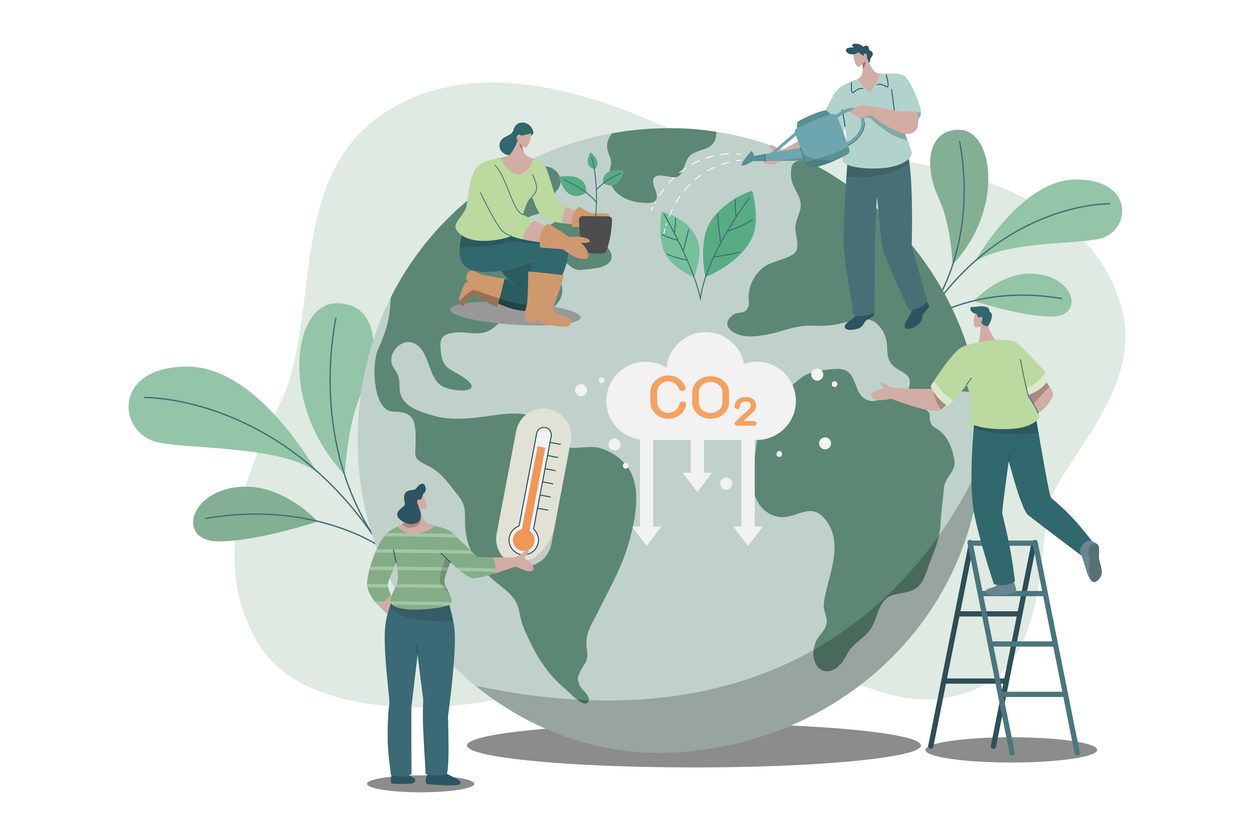
Companies that integrate climate action and sustainability into the heart of their organizational culture may develop an employer brand proposition with a clear and, importantly, measurable impact that prospective candidates can readily quantify and assess. According to the World Economic Forum, 41% of global leaders view increased investments in climate-change adaptation as a critical strategy to advance their business in the upcoming years. Climate consciousness and sustainability emphasis significantly influence recruitment, retention, and workplace engagement.
Companies should take deliberate and verifiable steps to meet the evolving expectations of the climate-conscious workforce. A few imperative strategies that may be implemented as a new standard for business advancement include
1. Integration of sustainability into corporate strategy
As a strategic imperative, sustainability may be ingrained in business practices, processes, core values, and policies.
Clear, measurable climate goals that align with international standards like the Paris Agreement or the Science-Based Targets initiative may be developed. These pathways can include supply chain decarbonization, renewable energy commitments, and emission reduction timelines.
Companies may closely ensure alignment with environmental, social, and governance (ESG) principles when selecting and implementing digital initiatives.
A planned commitment to investments in sustainability may be demonstrated, including laying out and disclosing an actionable strategy to achieve desirable environmental goals. Commitments may be time-bound, published publicly, and science-based. These may avoid vague or generic promises that showcase a lack of serious commitment or potential for inaction.
ESG tenets may be embedded across organizational policies, processes, frameworks, and platforms.
2. Transparent reporting mechanisms
Like its financial history, a business's environmental performance may be readily available. Annual sustainability reports highlighting progress, including third-party audits, and recounting setbacks may be published with honesty and transparency to build credibility with climate-conscious workers.
Engaging in deceptive practices like corporate greenwashing—misleading employees or exaggerating about a company’s environmental commitment—can breed distrust and, in some cases, negative pro-environmental attitudes among employees. Therefore, sustainability claims may be sincere and transparent and match operational realities.
3. Employee empowerment to drive change
Developing sustainability task forces to reduce barriers to green innovation and providing training on climate literacy can be a means for organizations to include employees in their environmental efforts. The notion that climate-positive initiatives are less about engagement and more about shared ownership may be propagated within organizations. Employees who contribute to climate-positive initiatives may be rewarded.
4. Employer brand messaging
Employer branding can be a powerful tool to enhance organizational culture and drive the impetus for meaningful change. However, for this to happen, HR must deepen its understanding of climate change and its implications for its business. If hiring teams are kept uninformed about a company’s sustainability strategies and goals, they may be unable to lead climate-focused conversations with candidates effectively. As awareness of climate issues grows among job seekers, recruiters may need to engage in clear, informed sustainability dialogues with potential hires, and to do so, access to the proper knowledge, data, leadership, and a climate-conscious recruitment culture is paramount.
Climate consciousness may be a key component of employers’ positioning with job seekers and existing workforces. It may be reflected in their core values, principles, mission, and culture.
Recruiters and hiring managers may be offered training to respond to climate-conscious candidates’ priorities by highlighting their company's intentional steps to reduce its ecological footprint and how prospective employees can play a role in their socially responsible initiatives.
HR may engage job seekers in environments and social challenges they are most passionate about solving, and a commitment to them in their company’s mission and objectives.
Environmental responsibility may be prominently featured in employer brand messaging—across recruiting materials, executive communications, onboarding measures, etc.
Career websites and social media platforms may provide insight into businesses’ reputations as climate-conscious employers and highlight their strong track records and performance. To promote transparency, they may underline measurable achievements and ongoing challenges.
5. Periodic revision of policies to support climate goals
To align with climate commitments, policies and practices surrounding resource procurement, remote work arrangements, investments in digital initiatives, etc., may be constantly updated and made increasingly ethical and sustainable. An effective strategy is to embed sustainability into KPIs and performance reviews. Revising vendor selection criteria may prioritize green partnerships. Hiring teams may emphasize green skills like carbon intelligence, tracking, and reporting a company's environmental impact.
6. E-waste management practices
Increased investments in resource-intensive artificial intelligence (AI) solutions are reportedly increasingly contributing to electronic waste. According to the United Nations 2024 Global E-waste Monitor, roughly 62 million tons of e-waste were generated globally in 2022, with reuse and recycling initiatives lagging far behind.
Climate-conscious companies may adopt more sustainable operations and policies, including developing less energy-intensive and more efficient AI algorithms, reducing their carbon footprint, and setting up regulatory frameworks to adhere to green standards.
Conclusion
The employer-employee relationship is at a turning point due to the rise of climate-conscious workers. A growing number of job seekers now demand climate accountability from their employers. This shift in mindset may no longer be a peripheral concern; it also affects an organization's retention ability.
Organizations may lead by committing to environmental integrity, transparency, and continued climate-positive action to attract and retain the increasingly climate-conscious modern worker. ESG principles may be represented across organizational policies, platforms, and processes for success.
Was this resource helpful?

Validate your HR expertise
Earning your SHRM-CP credential makes you a recognized expert and leader in the HR field.
Related Content

Learn how Marsh McLennan successfully boosts staff well-being with digital tools, improving productivity and work satisfaction for more than 20,000 employees.

The proliferation of artificial intelligence in the workplace, and the ensuing expected increase in productivity and efficiency, could help usher in the four-day workweek, some experts predict.

As artificial intelligence technology continues to develop, the demand for workers with the ability to work alongside and manage AI systems will increase. This means that workers who are not able to adapt and learn these new skills will be left behind in the job market.