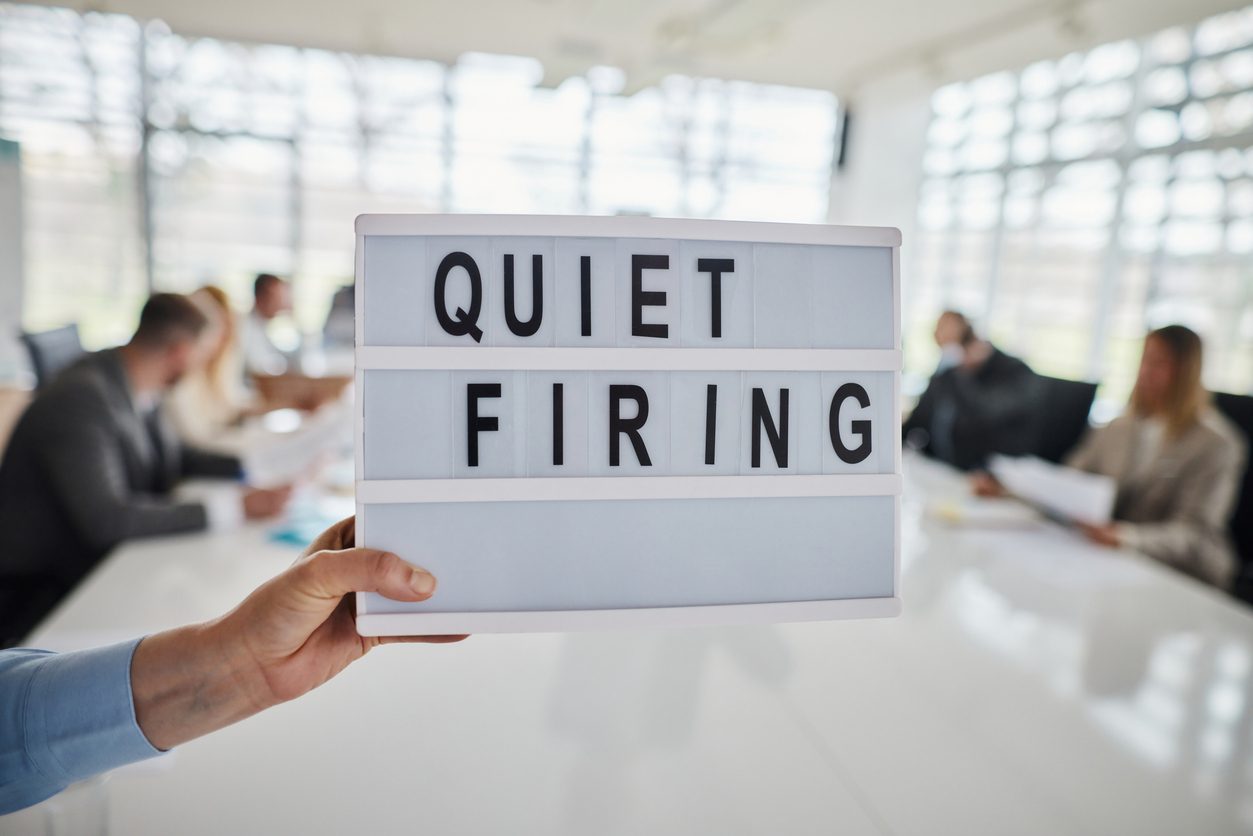
In the workplace, nonverbal cues often speak louder than words. A once-promising employee begins to withdraw: they speak up less, contribute less, and seem increasingly detached. At first glance, it looks like disengagement. But often, something deeper is at play. Sometimes, it’s not the employee choosing distance; it’s the workplace pushing them away in ways that are too subtle to call out directly. That is quiet firing, and it’s one of the more insidious patterns shaping the modern workplace.
This article explores how quiet firing happens, the HR red flags that signal it early, and the steps leaders can take to prevent subtle firing from becoming part of organizational culture.
What Quiet Firing Really Means
Employee turnover is inevitable Some leave for better pay, others for new opportunities or a change in scenery. However, quiet firing is something else entirely. It occurs when managers, either intentionally or through neglect, exclude employees from the decision-making process. They’re not explicitly asked to leave, but they’re subtly excluded from decisions, stripped of meaningful responsibilities, and left without support or recognition.
The consequences can include reduced responsibilities, being consistently overlooked for promotions, or being left out of projects that once defined their role. In other cases, it’s about silence: no feedback, acknowledgment, or signs of progress. This subtle firing doesn’t happen overnight; it builds slowly until the employee has no real choice but to resign.
The Subtle Signs of Quiet Firing
If you know where to look, you can find evidence of quiet firing. This section highlights the subtle yet telling signs that something is amiss.
One of the most apparent signs is when career growth comes to a halt. A high-performing employee who once had a clear growth path now finds no training, no new tasks, and no development conversations. Over time, this lack of movement communicates that the organization has stopped investing in them.
Exclusion is another red flag. An employee consistently left out of meetings, group discussions, or informal team gatherings begins to feel invisible. That sense of being on the outside often leads to a slow decline in confidence and contribution.
Then there’s recognition, or rather, the lack of it. Even small achievements often go unnoticed, and feedback can dry up. This silence is a form of disengagement on the manager’s part, and employees read it as a signal to step back.
Finally, some managers turn to overloading. Assigning unrealistic workloads, with little guidance or support, can quietly set employees up to fail. It’s still quiet firing, only wrapped in pressure instead of neglect.
Why Quiet Firing Hurts More Than It Helps
Some leaders convince themselves that quiet firing is easier than direct conversations. It avoids conflict and paperwork. However, the truth is that the damage runs deeper than many realize.
Pushouts rarely leave quietly in spirit. Long before they exit, they mentally check out. Productivity suffers, collaboration weakens, and negativity spreads through the team. Others who remain watch closely. They see how one colleague is treated and start to wonder if they’ll be next. This is how disengagement ripples through an organization.
The financial cost is another repercussion. Replacing an employee isn’t just about posting a job ad. It includes recruitment, training, the loss of institutional knowledge, and the time it takes for a new hire to reach full productivity. Proper turnover analysis reveals the high cost of attrition. Ignoring the HR red flags of quiet firing only multiplies those costs.
The most significant damage is cultural. When subtle firing becomes a habit, trust erodes. People stop speaking up, innovation slows, and high performers begin to scan for better workplaces where they feel valued.
How to Address Quiet Firing Early
Managers often receive training on how to evaluate performance but far less on how to communicate with people when things aren’t going well. That gap matters. Quiet firing often starts in those uncomfortable spaces where managers avoid tough conversations. Instead of saying, “Here’s what’s not working, and here’s how we can improve it,” they pull back. What begins as silence eventually looks like exclusion. Coaching skills, paired with the confidence to have honest dialogue, can prevent that slide from becoming disengagement.
Also Read: Quiet Firing: Are You Being Quietly Nudged Out?
HR also plays a crucial role. Employees need places to raise concerns without fearing that it will come back to hurt them. Whether that’s through regular pulse surveys, private check-ins, or a genuine open-door practice, the important thing is that feedback isn’t just collected but acted upon. Nothing erodes trust faster than speaking up and seeing nothing change.
Additionally, ensuring clarity is crucial. When expectations around promotions, recognition, or project allocation are vague, favoritism has room to creep in. Publishing clear criteria sets a level playing field. People might not always like the outcome, but they’ll respect the process if it feels fair.
Then there’s accountability. If one team consistently loses talent or if engagement scores decline in a specific department, those patterns should prompt tough questions. High turnover is rarely an accident. More often, it’s a signal that leadership needs support or correction. Quiet firing isn’t just a failure of communication; it’s a failure of leadership, and someone has to own that.
Building a Culture That Prevents Quiet Firing
Policies can help, but culture ultimately determines whether they are effective. In workplaces where openness and fairness are the norm, quiet firing has little room to survive.
That starts with leaders who make time for honest conversations, not just task updates. It also shows up in small gestures, recognizing effort, checking in when someone seems off, and listening before making assumptions. Tools like HR analytics can help spot early disengagement, but culture determines whether leaders respond with empathy or indifference.
When people feel included, supported, and respected, they stay for the right reasons. They envision a future that is worthy of their commitment, not a workplace that is gradually pushing them away.
Also Read: The Growing Trend of Quiet Firing in India
Conclusion
Quiet firing doesn’t make noise, but its effects echo across the organization. It weakens morale, drives disengagement, and fuels avoidable turnover costs. The solution isn’t complicated, though it does require courage. Recognize the signs early. Confront them with honesty. Build a culture where trust runs deeper than avoidance.
In the end, the measure of leadership isn’t how quietly someone can be pushed out of the way. It’s about how effectively leaders can create environments where people are motivated to stay, grow, and contribute their best work.
Was this resource helpful?

Validate your HR expertise
Earning your SHRM-CP credential makes you a recognized expert and leader in the HR field.
Related Content

Transform HR with mobile technology to streamline workflows, enhance communication, and boost employee engagement across distributed teams.

A new study found that talent development practitioners believe performance-based assessments are more effective at measuring employee learning outcomes than knowledge tests.

As AI makes deeper inroads into organizations, employee concerns about the technology continue to grow. Here's how HR leaders can address the fear of AI among their own staff, as well as in the wider organization.