“Tomorrowist” Podcast Episode
Inside HR-X: How to Drive Change and Business Outcomes (Organizational Impact)
- Video
- Audio Only
This week, host Jerry Won revisits impactful conversations from Season 2 of Tomorrowist through the lens of SHRM's HR-X framework. Drawing upon research from more than 1,200 organizations, SHRM's HR-X framework identifies the practices that distinguish high-performing HR teams and the business outcomes they deliver. This episode focuses on Organizational Impact — how companies can rewire themselves at the system level to navigate change, enhance innovation, and drive business outcomes.
Tune in for expert perspectives on organizational design, change leadership, and adaptability from leaders exploring what it takes to design organizations that are ready to evolve and shape the future of work.
Related to this Episode:
HR-X Is the Standard
HR-X captures exactly how your HR practice supports and drives enterprise success, helping you act with intention instead of reacting under pressure.
Research: The Business Case for HR Excellence (HR-X)
SHRM’s HR-X research shows that higher levels of HR maturity across four dimensions are associated with stronger financial performance, greater productivity, higher employee engagement, and more.
The podcast is just the beginning. The weekly Tomorrowist newsletter features articles on the trends redefining the future of work. Explore these must-read insights from the latest issue. Subscribe now to prepare your business for what's next.
News + Insights
Host
-
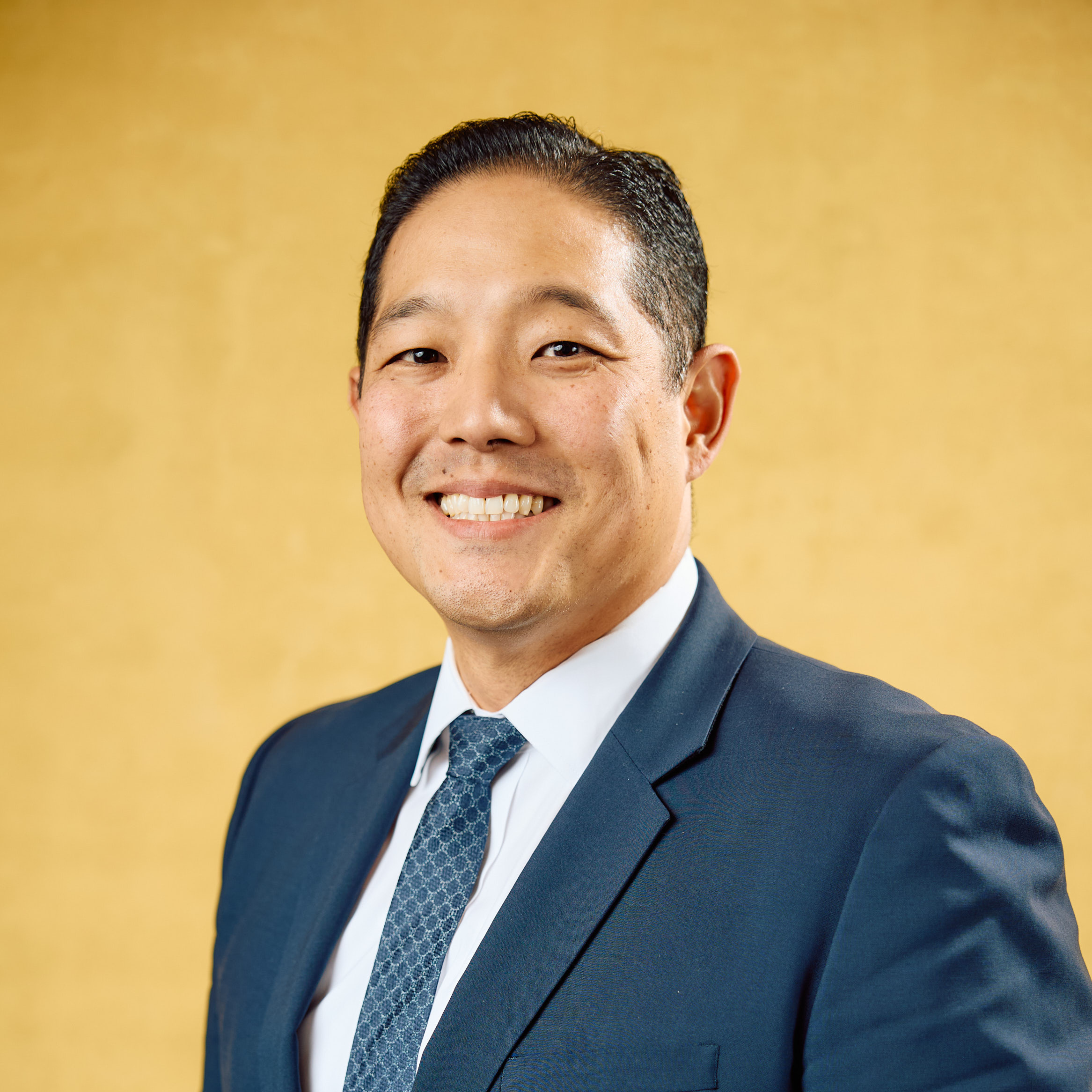
Jerry Won
Jerry Won is a renowned keynote speaker, speaking coach, and entrepreneur. He has worked with JPMorgan, Harvard Business School, SXSW, Google, and Meta, and his insights have been featured in Forbes, Business Insider, LinkedIn, and more. In 2023, he hosted a conversation with Vice President Harris at The White House Forum for Asian Americans, Native Hawaiians, and Pacific Islanders. Jerry is the Founder & CEO of Just Like Media, an innovative storytelling company, and World Class Speakers, a speaker coaching and training company.
This transcript has been generated by AI and may contain slight discrepancies from the audio or video recording.
Jerry: Business leaders know the future is already here. The economy is shifting. Non-humans are entering the workforce. Nothing feels certain. SHRM understands those evolving challenges, both in the workplace and the wider world. In this podcast, we'll bring together authors, researchers, executives, and non-traditional experts to help you take on the challenges others haven't yet considered.
Because you don't need to be a futurist, you need actionable insights now. You need to be a Tomorrowist.
I'm Jerry Won. Welcome to Tomorrowist, where we explore the trends shaping the future of work. As we wrap up this season, in the final episode of Tomorrowist, we're revisiting some of our most unforgettable moments in a special four-part Best of Tomorrowist series.
In each episode, we'll revisit key insights from past guests through the lens of SHRM's new framework for measuring HR excellence, called HRx. We'll use it to explore what high-performing organizations are doing to navigate change, develop talent, and drive business results. Built on SHRM data gleaned from more than 1,200 organizations, HRx identifies the practices that distinguish high-performing HR teams and how they drive measurable business outcomes.
The framework is built around four dimensions: functional acceleration, talent optimization, market discernment, and organizational impact. In this final episode, we're exploring organizational impact — how organizations engage leadership, manage change, and adapt to the trends reshaping the future of work.
We'll hear from experts on everything from organizational design and change management to preparing for a rapidly evolving workplace. The companies that excel in this HRx dimension are better positioned to adapt their organizations, navigate change, and build workplaces that are ready for what's next.
Before we dive in, use the link in the show notes or visit SHRM.org/hr-x to learn more about SHRM HRx and where your organization stands.
Let's start with one of the biggest forces reshaping how organizations operate: the changing nature of work. In this conversation, Darren Murph, an expert on distributed work, explains how remote and hybrid work moved from a niche model to a mainstream way of operating, and why organizations need to build new capabilities around that reality.
What stands out is Darren's point that whether an organization considers itself remote, hybrid, or in-office across multiple locations, most companies are distributed in some way. That means leaders need to rethink how they manage teams, make decisions, and access talent. It's a clear example of the future of work in action — adapting how work gets done to create more flexible and agile organizations.
How has organizational design evolved over the last decade? Obviously, the pandemic was a big shift right in the middle of it all. But talk to us, especially regarding flexibility and adaptability. Was the trend going that way before the pandemic, and how have most organizations rebounded or evolved in the post-pandemic world?
Darren Murph: There's a line in there that I think is really important: was the trend already heading there before the pandemic? For my entire career — 20 years — I've worked across the spectrum of remote. I've been hybrid, in-office, and remote well before there was a term for this, well before there were technologies like Slack and Teams. These teams have existed, but they were always a niche way of running a business.
Then the pandemic happened, and suddenly a niche became mainstream. You saw a lot of organizations trying to figure this out — thrust into a new way of working, a new operational model, without a choice and without a lot of time to prepare. In the five or so years since, you've seen this kind of shuffling: are organizations going to continue to evolve and build new muscles and move toward a new frontier, or are they going to retreat back to something more familiar?
We're in the messy middle of figuring out who is going to go which way. But there are a couple of things we can focus on. In 2025 and beyond, every company at scale is a distributed company, and I think this is critical for leaders to understand. Even if you're asking people to return to an office, even if you're still figuring out your hybrid policy, even if you want to identify as something other than distributed — the reality is you are distributed.
If you have multiple offices across the country or across the world, those offices are remote to each other. There's no getting around time zone issues. There's no getting around managing projects and decisions without everyone in one place all the time. That's why I work with clients on mastering remote-first principles, which are essential for officeless companies, but they really just boil down to great business principles that all businesses can benefit from.
The second thing is talent mobility. This was already shifting going into the pandemic, and it's going to look very different as we look ahead. Some people are sitting on the sidelines right now because full-time employment — the conventional way of contributing to a company — doesn't fit their lifestyle.
The organizations that are progressive enough to evolve and say, "Maybe we can bring you in from a skills first approach and plug you into a team working on something specific" — they're going to be the first to have access to all of that talent. Fractional work and portfolio work is an industry that is happening. A lot of larger organizations are being slow to respond to it, but startups and small caps are taking advantage by plugging these people in in more unorthodox ways.
Jerry: Adapting to a changing workplace also means taking a hard look at the structures and processes we've relied on for years. In this next conversation, Alex Alexander Alonso (Alonso) (Alonso), Chief Knowledge Officer at SHRM, explores how employer dissonance — the gap between what organizations say they value and how they actually operate — can be reinforced by legacy systems and the human tendency to stick with what's familiar and convenient.
Alex challenges leaders to ask a deceptively simple question: Does this job have to exist the same way? That mindset is at the heart of organizational design and change management. Instead of automatically replacing roles or repeating familiar processes, he encourages leaders to step back and consider whether there's a better way to structure the work — and ensure that the systems behind those decisions actually align with what the organization says it values.
How much of the collective dissonance do you think is tied to our outdated systems and our ever-present challenge to move away from — or build upon — them? And how does that play into the old ways of doing business, and how should forward-thinking leaders be approaching things in 2025?
Alonso: When I think about your question, one of the things that strikes me is how much of what we do is tied to two old values — two ways in which we approach things as organizations. First and foremost, as humans, convenience is king. We've heard this over and over again. And when push comes to shove, human behavior takes us back to convenience. The ultimate driver ends up being convenience — not safety, not the various needs we know about from Maslow and all those frameworks. It's straight back to convenience.
What we find more often than not is that convenience is tied to legacy systems. Whether we like it or not, the two biggest legacy systems in an organization are the way we hire and the way we reward performance. The way we hire is very much designed to do exactly what we want it to do from a convenience perspective. What people get measured for is what matters: How quickly can you fill jobs? How many qualified candidates can you bring in? How quickly can you turn around a particular opening? Cost per hire — everything you might think of.
What ends up happening is that this thinking is so antiquated that when somebody leaves, what do we call it? A backfill. We're going to conveniently fill it back with someone who had the same skill or could do the same work. Never once stopping to ask, "What more could we get out of this work? What more could we do with this role?" In large organizations, volume often pulls you right back to that convenience model.
The other thing that stands out is performance and the way we reward it. We fall back into a compliance mindset. Most organizations end up asking: What am I required to do? What will ensure I'm providing reasonable information without putting myself at risk? That very paradigm causes us to fall back into faulty assumptions — and that's what creates the dissonance.
Now, I'm not advocating for blowing up the whole system. The system is about 85% of the way there. What I'm saying is, let's build in that creativity so you can overcome the dissonance. And there are easy ways to do that. When I was in HR for airlines, I always thought about this: Does this job have to exist the same way? Do we have to compensate performance on this role the same way? Is there a different way of achieving the same goal? Just building that layer of questioning into every part of these systems is enough to push you further from being susceptible to dissonance.
Jerry: That question becomes even more important as organizations navigate major transformations, including the rapid adoption of AI. Chris Moll, partner and managing director at AlixPartners, breaks down some of the biggest barriers organizations face when redesigning themselves for the future. Chris points to three in particular: culture, leadership, and hierarchy. His message is clear — transformation can't happen if leaders cling to old ways of thinking, or if rigid organizational structures slow experimentation and decision-making.
For HR, this is a critical part of organizational impact: helping leaders build structures and cultures that are agile enough to support the organization's strategy. You've worked with businesses across all types of industries on transformation. Even our own research here at SHRM notes that 30% of CHROs ranked organizational design and change management among their biggest focus areas for 2025 — the second-highest priority. Leaders are thinking about it and wanting to get ahead. What are some of the most common pitfalls organizations face when they start redesigning their structures for modern challenges?
Chris Moll: That's a great question, Jerry. I think there are three things that come to mind. The first is culture. In legacy businesses that weren't built AI-native, there are processes and rituals that have formed over time and given people successful careers. Now we're talking about completely changing those — tearing them up and starting fresh with processes and rituals that have AI embedded in them. From a cultural perspective, that's a really hard thing to manage through.
The second is leadership. Many people got into their seats the traditional way — with traditional processes, traditional mindsets. If they're not willing to break those paradigms in how they think and how they operate, the business isn't going to transform, because everything starts with the executive team. If they're not pushing this, driving it, rewarding it, and building it into the fabric of how the business runs during the transformation stage, they're going to fail.
And then lastly, hierarchies. Old organizational structures with siloed pyramid models are rigid by nature. When you're bringing AI and technology into organizations and redesigning operating models, many of the core processes — sales, customer interaction, R&D — are cross-functional in nature. If you've got rigid, siloed structures and you're trying to embed AI in cross-functional processes, it can get very bureaucratic very quickly and bog down the pace of change, which is the last thing you want.
You need this transformation to be nimble, agile, and flexible — rapid testing, rapid failure. You can't do that with a cloud of bureaucracy sitting over the top of it: multiple levels of approval, multiple departments, heavy oversight and steering. You need to eliminate that and set up more of a network structure, because that's going to be the unlock to make this as nimble and agile as possible.
Jerry: Redesigning an organization is only one piece of the puzzle. Leaders also have to bring people through the change. In this conversation, Bill McCarthy, Executive Chairman at Logos, reflects on leading an organization through a period of significant transformation and the role that communication, transparency, and culture play in that process.
His distinction between having change happen to you and choosing to lead change is particularly powerful. Organizational change isn't just about new structures or processes — it's about helping people understand where the organization is going, why it's changing, and how they can move forward together.
So you were asked to lead in the CEO role with change on the horizon. You navigated it, and now you've transitioned out of the role and into a board role. During that intentional time of foreseeing change — but also facing unforeseen challenges — how did you approach culture, recruitment, and retention of your workforce? It feels like an organization where people tend to stay for a while. How did you navigate the culture component and the promotion and leadership components?
Bill McCarthy: Change can happen to you, or you can lead change. There are people in a company who feel like change is happening to them. Most of us would say we love change — but when it actually starts to occur, it's usually disruptive to what we know. So what becomes most important is this: we are nothing without great people.
How do you maintain strong communication, keep the culture alive and thriving, and do your very best to give people transparency? We try to be very transparent — in the good things and in the areas where we need improvement. There's a quote that gets overused, but it's a Swahili saying: "You can go fast alone, or you can go far together." We try to institute that idea — that we're on a long journey, and we're going to do it together.
Leadership has a responsibility to lead against that vision and bring the organization along. Recruiting and bringing in the right people is part of that. Sometimes, the natural part of change is that some people say, "This isn't for me." That gives you a chance to bring in new talent with very different backgrounds, and we've had some of that. But for the most part, it's been a pretty good journey.
Jerry: And that brings us to the capability organizations may need most as the pace of change continues to accelerate: adaptability. Heather McGowan, futurist and bestselling author, explains why businesses need to move beyond simply reacting to change and instead build learning and adaptability into the way they operate.
Her point that learning is the point of work challenges the idea that leaders can simply identify the skills their teams need today and train employees to match them. When the future is uncertain, organizations need to build the capacity to learn, unlearn, and adapt as circumstances change.
Taken together, these conversations offer a powerful view of organizational impact. It's not just about responding to change when it arrives — it's about designing organizations that are prepared to evolve, from the way work is structured to the way leaders lead and the way people learn and adapt.
You frame adaptability as a strategic capability. What does it look like for organizations to truly embed adaptability into how they operate — not just how they react? Because adaptability can feel like a reactive tool. How do you use it as a proactive one?
Heather McGowan: Well, first, it gets conflated with flexibility — people think of them as the same thing. I spoke with a professor we interviewed in the book who explained it this way: flexibility is the equivalent of reaching into your toolbox to use a tool you've used before on a project you've done before. It's switching between two things you already know. That's flexibility. When you conflate the two, there's really no change.
Adaptability is different. It requires a tool you've only partially forged, applied to a process you're somewhat unfamiliar with — a half-drawn map. It requires finishing that tool, learning, and also unlearning. For an organization to do that, it's not about asking, "What skills do we need? Where's the program? Let's get everyone through it." Sometimes you don't even know what those skills are yet.
So instead of building an organization with a set of predetermined skills, it's about creating learning capability as part of the organization itself. It's not about having educated people. It's about realizing that learning is the point of work. That is a fundamentally different approach.
Jerry: If you could boil down all of your ideas into the one thing leaders can focus on today to build adaptability into their organizations for tomorrow, what would that be?
Heather McGowan: Focus on human connection. That is the thing we're starving for the most. Put your phone down. Talk to your spouse, your children, your family members. Find out what's going on with them. People are starving for human connection. We have so much more in common than we have in difference. We've got algorithms primed to provoke us and make us think we hate each other. Nobody has ever changed their mind based on something written on Facebook or Instagram, so stop doing that and just talk to your neighbors. Ask them how they're doing. Ask them about their dog. You probably like the same beer or the same sports team. You have so much more in common than you have in difference.
We have to break down that social divide and create more social cohesion. AI is a wonderful tool, but community is the ultimate operating system.
Jerry: And that'll do it for this episode and for our Best of Tomorrowist HRx series. Over these four episodes, we've explored what it takes to move HR from a support function to a strategic driver of business performance. For additional resources on HRx — SHRM's framework for measuring how HR drives business performance — check out the show notes.
As we close out Tomorrowist, we hope the show has given you new ideas and a new perspective on what's possible when HR and business move forward together. It's been a real pleasure being your host and having these conversations over the course of 50 episodes. I've had the chance to sit down with some incredibly thoughtful people, ask a lot of questions, and learn something from every conversation. I hope you've enjoyed listening as much as I've enjoyed being a part of it — and that you'll take some of these ideas with you as you think about the future of work and the role you can play in shaping it.
Featured Story

For our AI use case series, discover how one HR executive uses AI to sharpen her board presentations and communicate workforce priorities more strategically.
Feature Stories

Discover six proactive strategies to combat employee fatigue, reduce business risk, and build resilience in workplaces defined by rapid change and upheaval.

With many U.S. workers fearing that AI poses a threat to their jobs, HR can ease concerns with clear strategy, training, and a strong culture of learning.

Learn how rethinking hiring systems can unlock untapped talent and help build a stronger, more resilient, and future-ready workforce.