- Video
- Audio Only
What does a fast-growing company gain by deliberately slowing down? When Populus Group was scaling, founder and CEO Bobby Herrera hit the brakes, and his team revolted. The leader Patrick Lencioni calls "the best CEO you've never heard of" explains how rebuilding around culture cut his attrition to more than 50% below the industry.
In partnership with:

Tools + Guides
Podcast Episode Guest
-
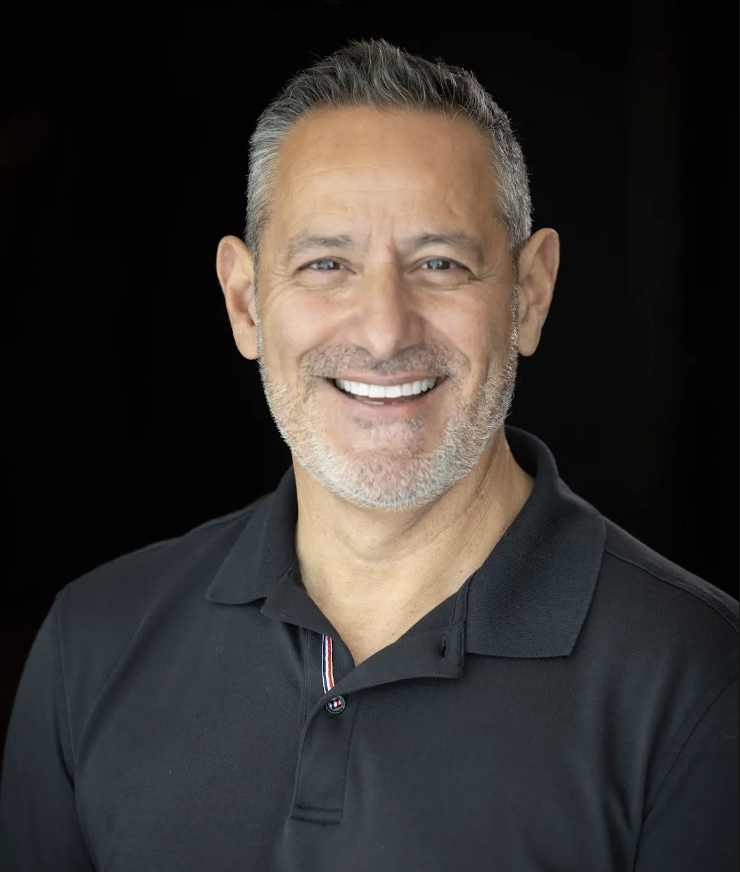
Bobby Herrera
Bobby believes a good story should give you something that makes your story better.
In his bestselling book, The Gift of Struggle – Life Changing Lessons about Leading, Bobby shares pivotal stories from his life, as 1 of 13 children in a large migrant farm working family, and from his entrepreneurial journey building his company, Populus Group, an HR Services firm with annual revenue greater than $650 million that is well recognized for it’s unique culture. His ability to help you reframe what struggle teaches us is laced with simple and palatable wisdom. His piercing questions will call you to reframe the chapters you’ve lived and the ones you’ve yet to write.
Bobby was the first Latino author to have his book converted into a Video Book for LIT Video books and his story has been featured in The Storytellers Secret by Carmine Gallo, Master Mentors Volume 2 by Scott Miller, & Humbitious: The Power of Low Ego, High Drive Leadership by Amer Kaissi .
Bobby’s a proud Army Veteran and a front row fan of the Underdog. Above all, an All-Pro Dad to his 3 kids. At his core, he believes everyone deserves the opportunity to succeed.
Episode Transcript
This transcript has been generated by AI and may contain slight discrepancies from the audio or video recording.
Anita Grantham: Bobby, I'm so grateful that we get to spend this time together today. I've been a huge fan of yours for so long, and thank you for taking time out of this week to be with us on Culture Creators.
Bobby Herrera: You're welcome. I admire your work, and I was looking forward to meeting you.
Anita Grantham: Thank you. When we're talking today, I wanted to challenge us to go back and talk to each other 20 years ago. So I'm new in my career working for a CEO. You're starting your organization. You're getting ready to celebrate your 24th birthday at PG. Happy birthday to both of you. You're in September.
I'd be curious — if you look back at 20 years ago, what would you have told yourself then that you didn't know that would help you get to where you are today?
Bobby Herrera: Well, we don't have enough time for me to tell myself everything I didn't know. As it pertains to what I envisioned then versus what I'm living now, I think I had a desire and a feeling that I wanted to bring to life — I just didn't necessarily know how.
I eloquently tell the initial story of Populus Group in eras, and that first era I call "the most fun I never want to have again." I was trying to figure out how to build a business, but more importantly, I was trying to figure out how to bring to life a culture that I felt I wanted to create inside, without knowing some of the challenges that lay ahead.
Anita Grantham: Totally. You describe four eras — a lot of CEOs ask this — in what era do you need an HR or people partner? When did you know, "Okay, I have this vision and this culture I've been living. I need to take myself out of it to focus on other areas." When did you first hire that first HR teammate?
Bobby Herrera: I'm going to answer that a couple of different ways. When you're first starting a company, as you know, having been through the journey of managing those life cycles, in the very beginning you are pretty much like a Swiss Army knife, and there's a lot of versatility in every role.
Anita Grantham: That's a great analogy.
Bobby Herrera: In the beginning era — the "most fun I never want to have again" — we were all playing numerous different roles throughout every part of the organization, just trying to figure things out. In the second era, I call that the "holy bleep" era, because we had some fortunate growth, and that versatility and need continued. But we were trying to bring to life some more structure.
At that point in time, I didn't have a full-time HR leader, but I had someone trying to fill the majority of that role — both tactically, strategically, and culturally. I was still trying to bring that to life with the clarity that I needed to. And if I'm honest, I was failing miserably at that time.
Anita Grantham: It's a tough time. So the "Holy Bleep" era was five years into your journey?
Bobby Herrera: The first era — "most fun" — was the first five years, and then the "Holy Bleep" was the second five, where we experienced some good growth. And then it was in the third era that I call the "era of slow," where I intentionally slowed the organization down.
Metaphorically, what I was doing up to that point was trying to build something with a very shallow foundation. The whole essence of me slowing the organization down was to say, "If we want to build something special, meaningful, and structurally strong, we have to dig a deep foundation of our culture, our purpose, and our values in order to build something special for years to come."
That's what I did in that third era of slow. I'd like to say it was met with a lot of excitement and energy from my team, but they were literally coming at me with pitchforks. They were like, "What are you doing? We're growing. We have all this work that we need to do. Why are you slowing us down?"
It took years of me battling that resistance to really bring it to life. Finally, we started building together. It was during that era where I brought in the HR leader on a more full-time basis to help me build it.
Anita Grantham: Okay, so just to back up and give everybody a framework — because everybody's going to ask, "How many employees? How many years?" When you were sharing the role, about how many employees were you when you decided to bring someone in part-time?
Bobby Herrera: We were starting to get upwards of about 100 employees as we were growing.
Anita Grantham: Climbers. We're going to call them climbers. That's the PG language.
Bobby Herrera: Yes, about 100 climbers at that time. We were growing rapidly. As we were selecting more climbers into our community, we were in dire need to build more human systems that allowed us to bring them into Populus Group the way that we wanted.
Because up to that point, there was no consistency. And ultimately, that's what I needed in order to create the culture. I often say consistency on its own is a superpower, especially when it comes to building culture. I had so much lack of consistency with how we were doing those things, and I needed this HR leader to help me come in and build that.
Anita Grantham: Build consistency. So what were the flags? You're just coming up on 100 people, it sounds like it's feeling extremely chaotic, and you know you're going to bring somebody in to help you. What were the flags of chaos that made you think, "I need this to be consistent. We can't have these waves"? What were some of those big areas where you felt like you needed help?
Bobby Herrera: I'm sure every HR professional and every CEO has seen this — higher-than-healthy attrition levels. We definitely had that. That was very symptomatic. There was also a lack of clarity in terms of how we were supposed to behave in the organization. There were a lot of unwritten and unspoken behavioral codes.
People will generally behave in a manner that keeps them safe if they actually know it keeps them safe. Those were the two biggest areas. Because people didn't know how to behave, we couldn't create the safety that we wanted, which was prohibiting us from building the trust that we needed in the organization.
To this day, that is the single most important metric that I measure in the organization — trust. The more trust you have within a community, the faster things move and the less things cost. The inverse is also true. Inconsistency in those areas significantly impacts any business leader's or HR leader's ability to build that asset. I was no different during that stage.
Anita Grantham: Okay, so you're growing quickly, you're at 100 climbers, you have inconsistency in levels of trust, speed to execute, and autonomous decision-making because of low trust and low safety. You're experiencing high attrition. So those are some of the key flags you had at that time.
Bobby Herrera: And there was also a feeling you get when you're building a sense of belonging in your culture. We can tell when someone isn't a fit. Sometimes it's hard to touch and define.
Anita Grantham: It is.
Bobby Herrera: But you can tell. One of the things we weren't doing up to that point — that we do now — is what I call "flipping over the resume" when we first begin the selection process. We select, we don't hire. The key difference is that when you first meet someone, we flip over the resume ceremoniously so we can really understand who they are, what brings them joy, and what defines who they are — because what they've done on their resume doesn't give you those answers.
We really want to get to know that person in the selection process. But up to that point, we were very inconsistent with that part of our human system.
Anita Grantham: Okay, so we don't call it hiring — we call it selection. I love that. You're flipping over the resume. Can you walk me through what that looks like? If I am applying to be selected, what are the questions you're going to ask me? How do you get to know me, and how many selection interviews do I go through?
Bobby Herrera: I'm going to give a little bit of context first, because I think it'll be helpful. My observation over the years has been that organizations that build really strong, well-defined, and healthy cultures do three things better than anyone: they select well, they welcome well, and they develop well.
Those are uniquely different from hiring, onboarding, and training, which are very common terms in the human resources space. When it comes to selection, over the years we've continually evolved the process to tweak it and make it better. But at a minimum, the first two interviews and interactions were strictly culture-based. We focus on our values and ask questions that help us understand whether or not someone has actually lived and appreciated those values.
Anita Grantham: Can I ask you a quick question? Have you already prequalified them? Like, you know they're qualified on a skills level to do the job, and then you're bringing them in to select and determine if there is cultural fit?
Bobby Herrera: Yes. In order to even qualify for that first conversation, our internal recruiting team will have made the judgment call that they have the skills and the potential to be successful in this role. Now let's see if they will come in and enhance our culture even more than it is now.
A responsibility that we proactively communicate to every climber within PG is: you had one day to be new. On day two, we expect you to start contributing to the culture and helping us make it better. That's all built into our welcome, which is different from traditional onboarding. We'll have climbers go through a week of nothing but a cultural experience — learning why we exist, who we are, how we behave, and lastly, what we do.
We focus on those two initial foundational pillars of our story before we even get to any job shadowing. Our philosophy has been: you either invest now or you pay later. So we want to do that up front.
Going back to what we talked about earlier, it was during the era of slow that myself and my HR leaders started introducing that into all of our human systems. Prior to that, we were trying to do it on the fly and learning the hard way — but that never works.
Anita Grantham: So in the selection process, how many interviews do you go through before you get a welcome offer?
Bobby Herrera: Four. At minimum. With different people within different parts of the ecosystem so that we can get a versatile view. The climbers we bring in will be hand-selected by our internal recruiting team depending on the needs for the role.
Anita Grantham: And the hiring manager is a part of that?
Bobby Herrera: One thousand %. The hiring manager is the consistent component throughout.
Anita Grantham: Okay, great. Talk about how this system was developed. Was it your vision passed off to your people leader, and that person built out the framework? Did you build the framework? How did you partner to make this a reality?
Bobby Herrera: You're dusting off the cobwebs. So if I go back to that "Holy Bleep" era and that transition to the era of slow, what I realized as a leader was that I had done a major disservice to my organization. The mistake I made was assuming that everybody else was flipping over the resume the way I had been.
Up to that point, I had hired some really good people who were a great fit, and I had been involved in almost every interview. Then as we were trying to scale and grow, I was delegating more and empowering more. Climbers I had selected early on — who had sat in interviews with me and ceremoniously watched me flip over the resume — I incorrectly assumed they were doing the same.
Then I started observing that someone was a good person, but not a great fit for who we are, and they weren't behaving the way we expect our climbers to behave. Obviously that resulted in attrition. And it's nobody's fault — we're not all a perfect fit for every place.
We were not living what we now have as a core principle when it comes to managing behavior. We have a simple term we've applied to how we manage behavior: "twos or train." The first time someone goes off track in terms of behavior, culture, or performance, we believe that if they're not living up to expectations, it's either because they can't, they don't know how, or they won't.
Bobby Herrera: If we determine that they won't, that's a simple decision — we're not a great fit for one another, and we have to make them available to the marketplace compassionately. We have to do that the right way.
Anita Grantham: Okay, we've got to double down on that term so everybody gets it, because it's genius.
Bobby Herrera: Sure. We have to exit them gracefully, compassionately, and in a way that gives them encouragement to go do good somewhere else. That's very important to us as an organization.
However, in that evaluation process of "twos or train," if we determine that they can't or that they don't know how, that's a leadership obligation. That's on us. We set them up for success, and if they still can't do it, then we have that exit process. It's not someone's fault if you put them in the wrong role — that's on us.
That's a breakdown of how we keep climbers safe in our community, because everybody knows. Everybody's watching.
Anita Grantham: They know. They see it. So in that time, you were experiencing all of this — did you have your HR team organize it and train on it? What was the way that you took it out of yourself and scaled it to the organization so you weren't a part of it all the time?
Bobby Herrera: I'll explain this in a way that I would want to understand it if I was a CEO or an HR leader in that stage. If I was a business leader seeing some of these symptoms in my organization, as a CEO I would be asking myself: have I given my HR leader the clarity required for them to know what the vision of the culture is, and how I want it to feel three years from now?
If you haven't done that as a CEO, your HR leader will never be successful. Now, from the HR leader's seat, what he or she needs to do is discern what that leader is communicating to them and ask, "What current systems exist, and how can we tweak those to bring more consistency into our welcome, our selection, and our development — in order to build more trust and engagement for the community?"
I kind of answer those as an initial starting point from both sides. That's step one — that's one %. I often say the secret to bringing both of those to life is over-communication from both sides. That's where I see most CEOs fail.
I actually put that responsibility more on the CEO than on the HR lead. Your responsibility is to create clarity and then to consistently over-communicate that clarity. Give them the empowerment to build it, but also give them the routine and the rhythm to ask questions in a safe manner so you can work through them together.
I was blessed to have a very courageous HR leader who would ask questions when she sensed I wasn't giving her enough clarity, or that we had something in place that needed to change. And I also needed to be willing to listen to that.
Anita Grantham: I love the advice to the CEO. What's the advice to the HR leader to gain that courage to ask the question? Who do they need to be to get that out of you?
Bobby Herrera: I'll still go back to the CEO a little bit, because I don't want to let any CEOs off the hook here. First and foremost, in order for that HR leader to ask those questions, you have to have created the safety. I will give HR leaders a lot of grace if the CEO hasn't created that safety.
So, Mr. or Ms. CEO, you must create that safety in order for that HR leader to demonstrate that courage. Assuming that's done, the HR leaders I've observed who are most successful at bringing culture to life and building those human systems are the ones who can be very Socratic. They can say to the leader, "We've been doing it this way, and if we make these changes, we can build even more trust or more consistency sooner."
Because that's what every CEO wants — more trust and more consistency within the organization, regardless of what service, product, or problem they solve. That is the key to being a successful business. And the HR leader, I believe, is the unsung hero in every business who can help the CEO do that better than anybody.
Sales is important. Finance is important. I'm not downplaying those. But if you really want to create trust and engagement, it starts with your partnership with the HR leader. That can't be overstated in my mind.
Anita Grantham: You said you measure trust. How do I know if I'm winning at trust?
Bobby Herrera: We've been strong students of the Covey Institute and their Speed of Trust methodology. We've implemented that over the years and built consistency measuring it for many years. What that helps us do is take the voice of the community — they tell us how well we're doing. They evaluate how much they trust me, how much they trust the executive team, how much they trust the business and the decisions we're making.
It's their collective voice through a very proven process. To this day, that is the most important metric that I measure in our organization.
Anita Grantham: That's incredible. Okay, so I want to back up. We've talked a lot about words — changing words from "hiring" to "selection," from "onboarding" to "welcome," from "exiting" to "offering to the market." I love alternate words.
Early in my career, I had a CMO come to me and say, "Anita, stop making up words and acronyms. You're confusing everybody." I will still die on the sword that customized words and vernacular are part of a cultural building block. Give me your argument for that, and how did you do it?
Bobby Herrera: It's actually part of a bigger journey in building culture. The way I've evolved the Populus Group story from where we started the conversation to where we are now is a three-part process that I had to own as the leader of the organization.
To build a strong, healthy culture, you have to do three things: build identity, guide behavior, and speak a common language — which is at the heart of what you're saying. You have to bring to life the purpose, the identity, and the behavior with a common language that everybody understands and can associate with.
Anita Grantham: So purpose, identity, behavior, values — and language brings one and two to life?
Bobby Herrera: Exactly. For example, we've been talking about "climbers." That's my term for employees at Populus Group, and I introduced it back in 2006.
Anita Grantham: What era were we in?
Bobby Herrera: We were still in the "most fun I never want to have again" era — about to exit it. It was early chaos, early life cycle. I was walking through a minefield with clown shoes on trying to build a big business.
At that point in time, I had been a student of Patrick Lencioni's work, Verne Harnish's work, Mastering the Rockefeller Habits, and so forth. From Verne Harnish's book — and Verne knows this, we talk about it — people tend to connect to a theme.
I had learned through my journey in the military, and then I worked at Disney, and I had this passion for the mountains. So I introduced this climbing theme around the whole essence of, "I believe we're all climbing our own mountain." There's a place we imagine that looks and feels better than where we are today.
I started calling employees "climbers," and then based on what I had learned through my other experiences, we actually give every climber that is selected and welcomed into our community a carabiner on day one — that says "choice" for the way we want to behave. We also assign them a climber number that helps them connect to the story.
Through the years, we have climbers with numbers like two and 1,000. When climber number 1,000 and climber number one are talking, they know, "Wow, you were here during the era of 'most fun I never want to have again.'" That helps us institutionalize the stories, because during the week of their welcome, we introduce new climbers to other climbers within the community so they can hear the stories of our values.
Anita Grantham: One of the things I want the audience to take away from this — especially people who are struggling with welcoming in hybrid and remote environments — is that you encourage new climbers to call other climbers who have been there for a while as part of a scavenger hunt. They have to call and ask and find the answer, which creates incredible connection from the start and increases the level of safety and trust.
Bobby Herrera: Correct. I think it happens on day three or day four of their welcome. They go through our culture quiz — a list of questions that we give every climber, along with a list of tenured climbers in the community that they reach out to. Those climbers who have been in the community for a while will tell them stories related to each question about how we live those values.
Our normal behavior when we're trying to learn something is to visualize it. That helps new climbers visualize the behavior. The reality is they expect me as the CEO to tell them, "This is how we expect you to behave." But they're going to believe their fellow climbers before they believe me. They'll hear what we do before they hear what I say.
That's why we do it — so they can build that connection, all in week one as part of their welcome. It gives them great context before they even learn a single thing about their job.
Anita Grantham: It's so important because we take so much for granted and want to get people into the work too quickly. They don't have the context to be successful. I hear this from people who have joined organizations all the time: "I feel like I got sold a bag of goods that didn't exist." What you're doing is creating the value proposition. It really is a funnel, like customer marketing. You're bringing in the climber, you're selling something, and then you're delivering all the way through the welcome period saying, "What you signed up for is actually what we're delivering."
Bobby Herrera: Exactly. The Kool-Aid actually tastes the way we said it was going to taste.
Anita Grantham: Yes, and you're not the only one delivering the Kool-Aid.
Bobby Herrera: Exactly. One thing I often hear — and I think it's important to highlight — is when I talk about this with business leaders, whether it's the CEO or the chief people officer, there's often this narrative: "That's great and all, but we don't have time to do it."
So I'll often ask them: "You don't have time to do it now. Tell me — when will you have a more curious or engaged employee entering your organization? Will they be more curious in that first week or in month six?" You have a prime opportunity in that first week to take advantage of their energy, their curiosity, and their excitement, and capture their loyalty.
One of the things we've been able to do over the years is bring our attrition rate to more than 50% lower than our industry. And our net promoter score is more than three times the industry average. So when a business leader says they don't have time, I say, "Well, are these things important to you? Because if building confidence with your customers is important and building trust with your people is important, I think you can find the time."
Anita Grantham: I think you can. I'm going to go a little off book here, but this has been top of mind for me lately, especially with AI. I think the ROI use case to hire a human over a bot just got a lot harder. And so if you're going to invest in a human asset, you have to give them the setup to be successful. Because they're expensive assets.
Bobby Herrera: One thousand %.
Anita Grantham: And they were before this era. But why wouldn't you? So now instead of number of climbers, it's lifetime value of a climber — just like it is of a customer.
Bobby Herrera: Correct. And if I'm looking at it through the lens of an HR leader, I also think there's another fundamental way to break this down. As an HR leader, one of the things you have to do for the great people you're bringing into the community is check what I call the three basic desires that we all share.
When someone enters our organization, they enter sharing three basic desires with everybody else already there: they want to stand out, they want to belong, and they want to be a part of something bigger than themselves. You have to build the structure within your welcome to check all three of those boxes.
As that person is entering your organization, they're asking themselves, "Am I going to be able to stand out here? Am I going to belong here? Am I going to be able to contribute to the purpose of this organization?" They may not ask it that clearly, but intuitively, that's exactly what they want.
Especially this younger generation coming on board — one of the things I think they're doing incredibly well for business leaders is holding us accountable to build businesses for good. You tend to hear a lot about what they're not doing. Let's talk about what they are doing. As an HR leader, you can capitalize on that by checking those boxes.
Anita Grantham: Okay, I've got to go nitty-gritty with you here. Everybody's going to listen to this and come out saying, "We're giving everybody a carabiner. Everybody's going through two weeks of welcoming." If I am a CHRO, how do I start to have this conversation with a CEO who may not be open to this? Where do I start, Bobby?
Bobby Herrera: Great question. Because what we're doing today is discerning through that 20-year journey that we started the conversation with. I'll go back to what I said earlier: consistency on its own is a superpower for any organization that wants to build a healthy, meaningful culture.
So if I'm that CEO or CHRO beginning this process, I'd go back to that three-step breakdown. Building identity — number one, I would ask myself, how clear are we with the identity of the organization? Number two, how clear and how consistent are we with how we expect everyone to behave in the organization? And lastly, do we have a common language, and does that common language complement and breathe life into one and two?
You start wherever you start — it's going to be situational. But you have to think in the mindset of, "What do we want to make progress toward?" We tend to overestimate what we can do in the short term but underestimate what we can do in the long term.
I would encourage them to measure their progress in six-month debriefs. What are we doing well? What do we need to do better? What do we need to tweak? And don't be afraid to do that.
I was just explaining to you when we spoke a few days ago about a values-driven award that I give in our community — we call it our Compass Award, and it's my version of the Heisman. Every year we give an award to one climber who best represented and lived our culture code. I can't select it myself — the nominations come from former Compass Award winners and my executive team.
What we do is take them to a surprise retreat every October, zoom out, and focus simply on the culture. We talk about what we're doing well, what we need to do better, what we need to change, what we need to start doing, what we need to continue doing, and what we need to stop doing. It's a room of cultural ambassadors speaking up and saying, "What if we tweak this?" or "This is working well — how do we put more energy into it?" I've been doing that for over 15 years. Start this year.
Anita Grantham: Just start. Just be consistent. Start between the CEO and the CHRO. Go sit down and have that conversation. That's easy.
Bobby Herrera: Right.
Anita Grantham: Is there a tool that you think CEOs and CHROs can use if they need to work on defining their identity or setting the vision?
Bobby Herrera: I'm a big student of Patrick Lencioni's six critical questions. Those have been an incredible guide for me over the years. I started using them back in that initial era, and I've been a student of his work for a long time. It's worked for us, and what I've been able to do is create clarity using his six critical questions.
First and foremost, every business leader needs clarity around why they exist. For Populus Group, we exist because we believe everyone deserves an opportunity to succeed — and that's based on a kind act that came into my life when I was 17. It's the bus story from The Gift of Struggle, and it's the story that gave me meaning and purpose. It's the whole reason I started my company.
Anita Grantham: If you're listening and not watching, Bobby has a great book called The Gift of Struggle. We're not going to tell the story today — it's in the book. I want you to get the book because it's so good.
Bobby Herrera: So I start with that, and then question number two is: how do we behave? That's the culture code of the organization. I would encourage an HR leader to write down your five best people in your organization, draw a big circle, and say, "What is it that makes them our best? What is it that they do consistently?" Then you'll be able to discern that in your mind. That's an exercise you could do with your fellow executives or your CEO, and you could bring real clarity to that.
Anita Grantham: I would also share — if you're in a large organization and the management team isn't doing this, you could do this with your department. And that also works.
Bobby Herrera: Absolutely. That'll give you the micro culture. What I would encourage that leader to do is make sure it interconnects to the macro culture of the organization. Good judgment and good business leaders can do that.
One of the things I would also encourage HR leaders to do during that process is make sure they're bringing the values they discern to life in a way that people can understand through stories that have been lived out in the organization. For example, the three pillars of our culture code are: give more than you take, speak from the heart, and go off the beaten path. We have stories that bring each one of those cultural values to life that other climbers share.
Speaking from the heart — we will literally teach climbers in that first week how to say anything to anyone. We teach candor. We teach people to tell the kind truth. That's an important skill. If we want to create safety and trust, you have to teach people how to communicate.
Anita Grantham: So one of the questions we get — which you've answered, but I just want to be precise — I am a head of people going to you as my CEO, and I say, "I want this tool to help measure trust. I want this tool to help measure engagement or appreciation." And they say, "Well, what's the ROI? What do I get for it?" Especially to a CFO who has to write the check. How do I convince them that they need to believe in this and pay for it?
Bobby Herrera: Big question, Anita. I want to encourage HR leaders to zoom out in a way that's more situational to them, because everyone's situation is going to be different. I believe there are more leaders who want to do good than not.
But if I'm that HR leader and I want to approach the CEO or the CFO about aligning to start this journey, I think you could focus on this — and I'm going to use some Populus Group language. I think if you could get both of their attention by saying, "Hey, we've been measuring our KPIs. We've been well-intentioned about how we're measuring our KPIs, but I think I have a better way."
Here's how I define KPI: most people know it as the business term "key performance indicator." I would instead tell their leader, "Here's how we should be defining it: How well are we keeping people inspired? How well are we keeping people interested? And how well are we keeping people involved?"
That applies to every part of every organization's ecosystem. Imagine the return we get as an organization if we were able to more successfully do that — if we kept more people interested, more people involved, and more people inspired. As leaders, that's our responsibility to the organization. You could have a real, meaningful conversation starting there, and then drill down to the traditional key performance indicators.
Anita Grantham: Bobby, we've gone through so many amazing concepts. When we started our conversation, we said, "Imagine us 20 years ago — we're starting on this journey. Where do we start, and what are the key concepts our audience needs to take away?" So what do you think are the top three things a CEO needs to take away from this, and the top three things a head of people could take away based on everything we've talked about?
Bobby Herrera: Great question. We've been piecing together parts of the journey. So as I zoom out and look at that 20-year picture, I think step one as the CEO is: have I evaluated my organization in a way that helps me understand where I've been well-intentioned, and then built that bridge to become very intentional about bringing the culture I want to life?
Step two would be: what do I need to do to bring the clarity required for this vision to life, and who needs to hear it first? Spoiler alert — that's going to be your core executive team.
And lastly, I would encourage that CEO to ask themselves: how can I continue or start building consistency with the level of trust in the organization and incrementally make it better every year?
Now, if I shift over to the chief people officer — whatever title we have in the organization — I would look at it from a complementary lens. The first question is: how consistent have we been with all the human systems that help us bring trust and engagement to life?
Number two: how can I establish a better and more aligned rhythm with my leader to keep bringing his or her vision to life as it pertains to culture?
And lastly, as that HR leader: what can I do to institutionalize all these human systems so that I don't feel like I'm carrying the weight of the world? Because if you don't include the entire community in this journey, you're going to fail.
I often say the stories we tell today determine the chapters we write tomorrow, and the chapters we write tomorrow are better written together. That could not be more true as it pertains to building culture and building alignment between the CEO and the CHRO — two critical components of that truth.
Anita Grantham: What a beautiful way to close this conversation. I learned so much and just love spending time with you, Bobby. Thank you for sharing and dusting off the cobwebs and going back.
Bobby Herrera: I felt like I was having a bit of a pop quiz here and there.
Anita Grantham: We are going back to the future. We have two final questions. One is: do you have a culture crush — somebody you admire who does culture really well?
Bobby Herrera: Yes, I have a few if I may. I've been a student of culture for quite some time. I've been a big student of the All Blacks, which is the New Zealand rugby team, and studying how they do things. I've applied good theft from a lot of what they've done in their organization.
I've also been a big student of things I learned from being a cast MEMBER at Disney — I worked at Disney before I was in the military, so I've taken some things from them. And I'm also a big student of Southwest and Chick-fil-A in terms of how they brought their culture to life. They're very unapologetic about saying, "Hey, it's not for everyone, but for those of us that it is for, this is how we succeed."
Those would probably be my four — I just love studying culture so much that I've really taken a lot from each of them.
Anita Grantham: I'm surprised you didn't cite — and thank you for your military service —
Bobby Herrera: Absolutely. Thank you.
Anita Grantham: — but that seems like a big influence as well.
Bobby Herrera: A big, big influence. I proudly served in the Army. I'm a proud Army veteran of eight years, and I've taken a lot of things from that part of my story and embedded them into our vernacular, our behaviors, and so forth.
Anita Grantham: You get to ask our next guest any question. What would that be?
Bobby Herrera: I think I would ask them: if you were to ask everyone in your organization what the single most important asset that you collectively own is, would they all tell you it's trust — or would they give you a different answer?
Anita Grantham: That's interesting. I don't know that I'd want to leave with the answer.
Bobby Herrera: Yeah. So maybe we ask them: does everyone in your organization know what the single most important asset that you all collectively own is? I would ask them that.
Anita Grantham: That's a good one. You know, one thing we didn't talk about that I thought was awesome is how you offer people back to the marketplace. I love that term, and I love that you said it's no surprises and it's humane. Will you share the process for how you go about doing that?
Bobby Herrera: I'll give you the philosophical approach. One of the things that was really important for me was to build a common and consistent approach from our leadership brand. It's very important to me that everyone who is a leader in our organization is very skilled at speaking what we call the kind truth to our climbers.
We always want to make sure that we extend them the courtesy of knowing where they stand. So we built our rhythm of making sure they have not only feedback, but feed forward. I think they're both important. As most organizations focus on feedback, I actually think the more successful leaders focus on feed forward. This is what you've done — we can't change it. However, let's talk about how you're going to behave going forward.
That's step one. Step two, when someone can't do that for one reason or another, we have to take pride in making sure it's a no-surprise event. And then also making sure that you extend grace and recognize that at one point in time, we all believed this was going to work. We weren't successful. Nobody's fault. We gave it our best. Let's exit this relationship gracefully, and how can we help you be successful in your next chapter?
I've been imperfect at this, but consistent for more years than not. I actually take tremendous pride in hearing from Populus Group alumni. I still have personal relationships with a lot of our alum from the past. I just believe that anyone who steps on the mountain with you — not everyone will summit. Recognize that going into it.
I think a lot of business leaders have this inaccurate narrative — and I did too in the beginning — that if they join my team, they have to be with me to the end, or else it's not a good thing. But that's not necessarily true. Life happens. People leave for different reasons. Just recognize that there's a human factor involved.
Anita Grantham: That's so amazing, because many CEOs I've worked with get really personally offended when people leave.
Bobby Herrera: I was the same. I had to get over it. I call it ROE — return on ego. It's okay. Welcome to humanity. We're all wrong. We all make mistakes. Getting to that stage of leadership security is an important step in having that type of philosophical approach to helping people leave your organization.
Anita Grantham: One of the many things I admire about you is that you will share your mistakes with the team.
Bobby Herrera: Everybody saw them. Why wouldn't I admit it?
Anita Grantham: That's such a great way to say it. You're watching it anyway.
Bobby Herrera: Exactly. They saw the train wreck. Why wouldn't I talk about it? They make for a better movie anyway. We walk out of boring movies — why tell the boring parts? We're all doing our best. Leaders, HR leaders — I've always believed if we knew a better way to do something, we would do it. We have to extend people that benefit of the doubt. And that actually starts with the CEO.
Anita Grantham: It does. But sometimes people put the CEO on a pedestal — that they never make mistakes. And that's dangerous.
Bobby Herrera: As a CEO, you have to be willing to walk off that stage. Put someone else on stage. That's what they want. They want to stand out.
Anita Grantham: They do.
Bobby Herrera: So let them have some fun.
Anita Grantham: So Bobby, we have a question from Derek Hall, who is the CEO of DynaBax. He wanted to know: how do you encourage your climbers to be as innovative as possible?
Bobby Herrera: Great question, Derek. Looking back, what I learned to do differently in creating that encouragement was to first and foremost start with being very open and transparent about not only what I got wrong, but what I didn't know.
Building consistency over time as the prime model for the organization — and also igniting curiosity. I would encourage other leaders to get really curious within the organization and be very consistent with reaching out and saying, "Hey, I have a good idea on how to do X. I've heard great things about what you've done. Do you think you have any way that you could take this good idea and make it a great idea?"
How well are you giving people what I call "the pen"? Be really consistent with giving people the pen. Tell them where you're at, and then give them the pen and ask them to make it even better. I've learned that through my own mistakes over time — from not doing it at all, to not doing it well, to building consistency with it over the years.
Anita Grantham: Incredible. Thank you for sharing that.
Bobby Herrera: Good question, Derek.
Anita Grantham: Yes, thank you, Derek. And thank you, Bobby, for being here. Thank you for sharing your wisdom, your learnings, and your failures. We wish you all the best.
Bobby Herrera: Likewise. My pleasure. All hail the underdogs.
Anita Grantham: There we go. For real. I love it. All hail the underdogs.
Feature Story

Experts explain how leadership perception gaps affect trust, engagement, and retention, and how organizations can help leaders close them.
Enjoy On Your Favorite App
Feature Stories
As part of SHRM's commitment to providing cutting-edge resources, get additional perspective and more insights in content curated from SHRM and around the web.

Deciding to openly share compensation information across your workplace requires careful planning, stakeholder buy-in, and a commitment to ongoing communication.

Learn how inclusive spirituality initiatives in workplace wellness programs can reduce stress, boost resilience, and foster connections among employees.

Discover actionable strategies to foster trust, improve communication, and strengthen relationships with team members by avoiding common leadership pitfalls.