- Video
- Audio Only
AI may be transforming hiring, but identifying the right talent still requires human judgment. David Cohen, executive consultant and author of Selecting the Best, joins Nicole Belyna, SHRM-SCP, for a live recording of Honest HR to explore how behavioral interviewing, culture-driven hiring, and values-based selection can improve retention and long-term performance. Together, they discuss the promise and pitfalls of AI in recruiting, the rise of “skillfishing,” and how organizations can balance efficiency with ethics, transparency, and human connection.
Related to this Episode
Finding Talent: Rethinking Recruitment for Today’s Dynamic Labor Market
The success of an organization depends largely on its ability to attract and secure the right talent, yet this task has become increasingly complex today.
Real change starts with real talk. And every Friday, our Honest HR podcast is the top story in SHRM's HR Daily newsletter. Subscribe now so you never miss an episode! Plus, get daily breaking news, feature articles, the latest research, and more.
News + Insights

Discover three common obstacles HR faces when investing in AI recruiting tech — unclear goals, poor processes, and lack of adoption — and how to avoid them.

Artificial intelligence is reshaping the recruiting process by enhancing efficiency, accuracy, and the candidate’s experience. Identify the advantages and challenges of using AI in recruiting, plus get insight into what is to come.

During the April EN:Insights Forum, SHRM President and CEO Johnny C. Taylor, Jr. explained why skills-first hiring is key in today’s shifting labor market.
From candidate sourcing to internal talent marketplaces, AI is transforming how organizations find and elevate talent. Rachel Graham, strategic solutions consultant and advisor at Oracle, explains how HR leaders can activate AI responsibly.
Podcast Episode Guest
-
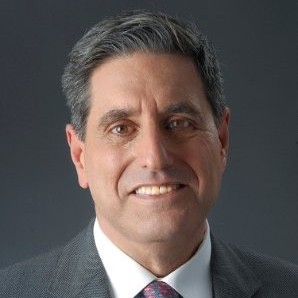
David S. Cohen
Since 1991, David has continued to be a sought-after, internationally respected advisor to leadership and culture guru, best-selling author, and business speaker. He delivers a powerful punch that inspires leaders and teams and invigorates people's engagement, leading to improved business results.
When it comes to empowering audiences and teams to succeed—and to be their best every day—David leads the way with insight, laughter, and personal reflections. His team-building workshops and motivational keynote speeches receive rave reviews from managers and business leaders alike. "Energizing," "hilarious," "Who knew learning could be this much fun," and "ideas I can easily implement" are things regularly said by David's clients about his keynotes and corporate consulting engagements.
David is a thought leader who works internationally with organizations ranging from Fortune 100 companies to start-ups, from municipal to federal government levels.
Episode Transcript
This transcript has been generated by AI and may contain slight discrepancies from the audio or video recording.
Nicole: For decades, HR professionals have wrestled with a fundamental challenge: how do you identify candidates who won't just perform well on paper, but will truly thrive in your organization's culture? Raise your hand if you've ever felt uncertain about whether a candidate truly felt like a fit in your team's spirit and values.
Anybody? Most of us, right? Absolutely. Traditional hiring methods relied heavily on resumes and intuition, tools that often struggle with how to predict how someone will actually show up to the job. Now, AI promises unprecedented speed and precision in candidate screening. How many of you worry that we're losing the human element that makes great hires stick around?
Anybody have that concern? A few of us. Yeah. So welcome again, everyone, to a special live recording of Honest HR, where we turn the real issues facing today's HR departments into honest conversations with actionable insights. I'm your host, Nicole Belyna, and let's get honest. Today we're exploring the critical balance with David Cohen, executive consultant and the author of Selecting the Best.
Welcome to Honest HR, David.
David Cohen: Great to be here. Thank you.
Nicole: So after 40 years of working in the field, when did you realize that traditional questions were not yielding the information needed to make an accurate hire?
David Cohen: Actually, when I first started. I was asked by, and I can use the name because they're in my first book, Michelin Tires, to come in to a plant in Nova Scotia to figure out why entry-level engineers were voluntarily leaving before the first year was up, when they were so good at their job skills-wise, but they weren't fitting in.
So I realized that obviously a skills first approach of hiring was not going to work. And so, because of my background and education in behavioral science, I said, "Well, it's got to be about behavioral interviewing." And behavioral interviewing was often confused with situational interviewing, but behavioral interviewing is really about how one has recently behaved.
One of the problems with behavioral interviewing is it's based on this concept that past behavior predicts future, but that's not true.
Nicole: Right.
David Cohen: We're not the same people we were in high school, I hope. And so it has to be recent. And frequent. So the more you demonstrate that behavior, I would say within the last 24 months, the more likely you'll do it on the job.
So I started the whole behavioral interviewing process with them, and the results were only we hired 18 new entry-level engineers. Only one left in three years. They were real happy, and they took the process throughout North America for all jobs.
Nicole: Yeah. Really good key points, the recent and the consistent behavior.
David Cohen: Right.
Nicole: Yeah.
David Cohen: Predictable behavior is consistent, right.
Nicole: Yeah, yeah. That's actually a really good point. You know, behavioral interviewing, people often ask, you know, "Tell me about a time when..." But they don't necessarily ask when.
David Cohen: Yeah. I always say that, you know, I look at it from what's the skills, knowledge, education, behavior, experience, and timeframe.
So you can do all those things, but if you don't have the timeframe, you can't accurately judge will they work for me accurately?
Nicole: Right. Yeah. So your book emphasizes the importance of aligning hiring practices with organizational culture. SHRM's 2026 Global Workplace Culture Report identifies eight distinct culture types, with global collaborator being the most prevalent at 37.2%.
How can hiring managers use insights like these to better align candidates' selection with their organization's unique culture type and the organization's strategic goals?
David Cohen: Well, generically, there are eight different types. But within that, each organization has its own culture and its own value set and behaviors within that value set.
So even if the company has the same value, let's say respect.
Nicole: Sure.
David Cohen: What's respect in one company is not respect in another. Then to make it even more complicated, respect in Southeast Asia is different than respect in the Gulf region, different than respect in Europe, and definitely different from respect in the United States.
So I might be highly respectful in Southeast Asia and be considered someone who doesn't contribute or speak up in the United States.
Nicole: Yeah, context matters, right?
David Cohen: Because the context. So you have to understand not what is written on the website what the values are, because those often are just what I call wall decor.
And, you know, employees read it and say, "I wish," which is unfortunate. But what are the authentic values? What are the norms that get rewarded, get recognized, get punished? What are the things that are behind the behaviors that drive the values? Once you identify those, you can begin to interview. Not identifying those means that you can interpret them any way you want.
So you're going to have two managers interpreting them completely different, wondering why the one worked out, the other... So you really have to have a consistent definition of behaviors by the organization of what the authentic values are.
Nicole: So you advocate for behavioral questions that start with phrases like, "Tell me about a time when..." rather than hypothetical situations such as, "What would you do if you faced a tight deadline and a team MEMBER was underperforming?" Walk us through why this distinction matters so much.
David Cohen: Well, let's think of hypothetically, if I graduated or had any understanding or went to ChatGPT and said, "If I was asked this question, how would I answer it?" And I memorize it, it's not my experience. And even if it was my words that I came up with, it's still not my experience. So I look at it from the point of view as, what did you specifically do at that point in time that demonstrates your existence with that organization? So I need to understand your behaviors and understand that they're authentically yours.
Hypothetically, you know, anybody who's gone through any interview training course can come up with a great answer.
Nicole: That's right. And so are there any techniques or frameworks hiring managers can use to evaluate a candidate's response to behavioral questions?
David Cohen: Well, first thing is, and this is where I think most people fall down when they use behavioral interviewing, is before the interview starts, they don't know what the behaviors are they're looking for.
Nicole: There you go.
David Cohen: So if you have the list of behaviors, not the words, and not some Hallmark card expression of whatever it is you're looking for, but authentic that you can say, "I can back it up. I know people that do that here." You need to know that in advance, and then have the intelligence to translate what the candidate said in their words, to decode it to your words that you understand that it just doesn't sound good.
Nicole: So in your research, you found that recent behaviors that are frequently demonstrated have a greater predictive power. You shared that with us earlier. Once you're asking behavioral questions, how should hiring managers assess which behaviors are actually predictive, especially in terms of recency and frequency?
David Cohen: Well, the ones that match the behaviors they're looking for. They can tell a great story and talk about behaviors that were recent and frequent, but they're not the behaviors they're looking for. So people... Communication is everything. So there are people that are, have the gift to gab.
Nicole: Yep.
David Cohen: And they will be able to express themselves eloquently. But if you don't pick up on the nuance of what they're saying, you might think they're a good candidate.
You've got to get past the nuance to did that really happen? But I do have a trick. All right. So if the story is good and you're interested in this person and you think the story... You want to validate it's true, what you do is what I call the honesty check, is you ask the candidate for the name of somebody that was involved in that story, and tell them, "I want to call that person."
Find, get permission from them, find out how I get in touch with them, and then you don't ask them any questions evaluative about the individual. You say, "The individual described a situation where you were late on a deadline," yada, yada, yada. "We often have that, too. Like, how do you guys handle it?"
Nicole: Yeah.
David Cohen: And then you say, "What was so-and-so's involvement?" And they say, "He was on vacation those weeks."
Nicole: Right.
David Cohen: And you know, well, that's a great story, but it's not him.
Nicole: Yep.
Ad: Every HR leader knows the pressure behind a big decision. You're expected to move fast, manage risk, and choose the right strategy for your people and your business. That's why SHRM 26 matters.
It brings together the insights you need to make smarter decisions on compliance, AI, talent strategy, leadership, and more. You get practical guidance that you can apply right away, but time is running out. This June 16th through June 19th, invest once and deliver value all year long. And as a loyal SHRM podcast listener, you get 15% off SHRM 26 registration when you use promo code PODCAST15.
Register now at SHRM.org/shrm26 and turn conference time into smarter decision-making for your team.
Nicole: So skill fishing, as we, have you heard the term?
Speaker 3: Yeah.
Nicole: Yep, yep. So that's where candidates appear highly qualified on paper but lack the underlying skills. It's becoming more and more common, especially with the rise of AI tools and padded resumes.
How can managers adapt their interviews, and you kind of gave us a couple little tips, right, in their selection process by identifying genuine skills to avoid being misled by those polished but unqualified candidates?
David Cohen: You know, many years ago in the Dark Ages when I was young, when you went to get an administrative assistant job, you had to take a typing test.
Right. And if you didn't get accuracy at 70 words a minute, let's say, you didn't get the job. Many of my clients in engineering will give what they call a bench test. "So we're interested in you as a candidate. You have to come in and, say, you know, do this exercise." I have one client that made up an exercise that there was no right answer. What they were looking for, does the person ask the resource for help and further clarification because that was one of the behaviors they were looking for with new hires. So they combined the behavioral, so sort of like a mini assessment center. Took 15 minutes. You're down to two candidates, takes you 15 minutes for each. You know, can they actually do it or not do it?
I was doing work for Thomas Cook Travel many years ago for the money exchange booths, and what I realized in observing them is they do not look at the currency or the country, they look at the color because except for the US, all currencies are different colors.
Right. Yeah. So they knew it was in the so-and-so tray. They looked for color, and they had to know math in case electricity went out because the plane is still going. They have to exchange the money accurately. So I said to them, "From a skill and knowledge point of view, you have to first ask, are they color blind, and can they do math without a calculator or a computer?"
So every candidate came in, before they even filled out an application, had to take those two. If they were color blind, they couldn't hire them. If they couldn't do the math, they said, "Thank you very much. When you learn math, come back."
Nicole: I have to wonder how many people can do math without a calculator today.
David Cohen: Yeah. So has, I wanted to ask the audience, has anyone experienced skill phishing as you're hiring? Yeah. I see a few people shaking their heads. And so David, as AI becomes more sophisticated, how do you see the skill phishing challenge evolving?
David Cohen: I see it as a real challenge because if you... You know, I had a client once in the IT industry, and they got a resume reader. This is in the early days, and it was just reading skills, and the VP of HR put a false resume together and his phone number on it, and he just put it in there, and they knew that they should not hire this person because of a lot of other things, and they got called for an interview.
Yeah. And he was rather upset. But skill phishing is going to happen more and more, and AI cannot handle the things that are important, and that's behavior. People are hired for their technical knowledge, their skills. They're promoted for their innovation and their success, and they're fired for their interpersonal behavior.
And but most people... That's my big fear with this skills first hiring is people are going to go back to what we did in the '50s and '60s, and if you can, you know, you got the degree, you got this, you got that, then you have the skill, we'll hire you. Without any consideration of you're going to get along with anybody, or you're going to do the right thing when there's no directions.
So I'm very concerned about it. The only way to, as I said before, to make sure is test it. Make sure you don't get fooled by it.
Nicole: Right. Yeah. And I think what I'm taking away from our conversation already is, you know, just being really, really prepared as a hiring manager. So as HR professionals, making sure that we are training our hiring managers to understand the skills that they're looking for, and understand what they're actually asking when they ask questions at an interview.
David Cohen: Yeah, it's very important. There's, it's... There was... I was working at the University of Notre Dame when they hired a coach, a football coach, and he had on his resume that he graduated from university. Third week on the job, they fired him because he never graduated from anybody. So they fired him, but they never checked it out in advance.
Yeah. There's so many cases of that, that people just, if there's a certification or agency, if they're coming in some way that you can check it through a third party, most of these are available for free online. Sure. Just check it and see if, you know, they're, are they certified? Yeah. And if they're not, thank you very much.
Nicole: Right. Yeah. So kind of trust but verify, if you will. You know, and I think also having multiple people in an interview process helps. You know, there is the use of different tech tools, right, to that you can combine with actual humans interviewing as well. But yeah. And then there's that old trust but verify piece of it.
Right. You know? So you write about the M&G Corpus Christi case study where employees took 10 to 25% pay cuts to return to work there. What did they get right about the hiring and culture to make that kind of loyalty possible?
David Cohen: They made it right by the senior leadership demonstrating almost every day they live the values, being there for other employees when they needed them, being sensitive to the... Showing emotional intelligence, basically. And one gentleman moved from, had left the company when it closed down for, because of a situation they had, and then they started rebuilding again. He had moved to from Corpus Christi to Seattle, and when they offered him a job, he moved back on his own to Corpus Christi, and he's the one that took a 25% cut in salary, and was proud of it because he never had worked for leadership that actually meant every day what they believed in.
Nicole: And so, I mean, you've shared, you know, it seems very simple, right? But it's not. Do you think other organizations would actually be able to easily replicate what M&G did?
David Cohen: If they had Jeff as a leader, yeah. I would say yes, because if instead of not being honest about what you believe in and making it look good, but being honest till it hurts, that these are the behaviors that we're going to create as our culture.
These are the behaviors we reward, punish, celebrate, and we're going to do that no matter what. And that is seen and it's transparent, and those managers who, especially senior managers, who don't live it, demonstrate it, are fired, and fired quickly, then, yeah, I think that people can do that.
Nicole: Yeah. Being transparent when times are tough.
David Cohen: And it's not any... I mean, one of the organizations, and it's not a small organization, I mean, Michelin does it very well. Airlines, most airlines do it very well. You know, people get let go during a downsizing or reorganization at airlines are angry at the airline, but don't let anybody outside ever comment on their airline or make a snide comment.
They'll defend it even though they just got laid off because, you know, those people are passionate about what they do, and many of the airlines live their values.
Nicole: Yeah. Good example. So AI tools promise efficiency in screening candidates, many of them. But your book suggests video interviews may introduce additional complications and bias.
David Cohen: Oh, yeah.
Nicole: What specific risks should HR leaders be aware of?
David Cohen: Well, video interviews, especially if you have a bot writing them down and translating them... I'll give you a couple of examples. I was on one of those bots that record what you're saying, and I was on a call with people in Jamaica.
Nicole: Mm-hmm.
David Cohen: Now, they speak perfect English. It's easy to understand.
Nicole: Sure.
David Cohen: But that bot couldn't get it right.
Nicole: Yep.
David Cohen: And they... Some of the words, they just, you know, they hallucinated and came up with their own words. And when I reviewed it, if I was judging them for an interview at the time, I would say, "What are they talking about?"
The other thing is, First Nations, Native Americans, First Nations in Canada, they have a language structure which is slightly different. Now, they speak perfect English, easy to understand, but a double negative is still a negative. So if the bot is trained that a double negative means a positive, but they say a double negative, then it's going to be misinterpreted.
So these language programs misinterpret it. The other problem is, and this is well known, that people of color are not well interpreted by AI, and women have a difficulty with AI in the way they're interpreted. But there are these new hiring techniques using AI that rely on body language and rely on facial recognition, and those I would stay away from like the plague because they're misleading.
Nicole: Yeah. Yeah. Yeah, I think, you know, also other people who may have disabilities, right, that may show up differently in a video interview. There's a concern for bias there as well.
David Cohen: Well, there's also the problem of internet connection.
Nicole: Yeah.
David Cohen: How many times has it frozen?
Nicole: Yeah, right.
David Cohen: Or how many times has it gone off and you had to reboot it? And how does the system handle that? Or is the system lost? Once it's gone, it's gone. So there's so many issues with it that still have to be worked out. It'd be nice if it worked, but I still say that AI is not going to replace anybody in HR. If they're smart, they'll use it, but they're going to check it every time.
Nicole: Right, yep. So what are some strategies and safeguards that HR leaders can use to mitigate these risks, you know, while they're leveraging the tools to enhance their work?
David Cohen: I think the first thing is, each algorithm is written by somebody who has a prejudice because we all have prejudice whether we like it or not, and most of us won't admit it, but we all have some sort of prejudice.
And Amazon ran into that problem when they used AI for resume screening when they wanted to hire more women, interview more women. It just kept producing men. When they looked at it, why, is because it was trained on all male resumes, and somehow it kept on doing that. Workday's had a problem with rejecting resumes over 40 years of age.
How do they figure it out? When you look at the resume, you can kind of calculate that.
Nicole: Right.
David Cohen: Especially if somebody puts down the year they graduated from school.
Nicole: Yep.
David Cohen: Which is illegal in Canada. You can't do that because it could go to prejudice.
Nicole: Sure.
David Cohen: So those are the things that they have to look out for, but the big thing is the algorithm. They have to test the algorithm against these things, but they also have to test the algorithm, is it aligned with their culture and policies and procedures? And when they come from a third party, you didn't do it. It's according to their values, procedures, policies, not yours. Right. And so yeah, you know, human resource information system (HRIS) system can tell you they got a great algorithm, and it's this and it's been tested, but is it tested for you?
And that's where I think people are running into problems.
Nicole: Right, yeah. And I mean, you can't stress it enough that AI tools are not going to necessarily replace the entire interview process, but it may be a piece of the process.
David Cohen: It may be a piece of the process, but it can also do damage.
Nicole: Yeah. Yep. Yeah, and I think another tip would just be, you know, if you're going to use an AI tool, you know, really vet the tool very, very well.
I always love to ask for references or sort of find a reference not provided by that vendor to give me some unsolicited, like, you know, give me all the down-and-dirty details of the good, bad, and the ugly of the tool.
David Cohen: Well, if the vendor wants to sell it, they're only going to tell you the good.
Nicole: Exactly. Yeah, yeah. Like, when they offer up companies, you know, to say like, "Oh, you can ask this client of ours," I'm like, "I'm not going to ask that person, but I will find somebody else."
David Cohen: What I would say is, "Give me a list of 10 of your clients, and then I'll go on LinkedIn and call them myself."
Nicole: Yep.
David Cohen: Yeah. Yeah. Or see who's on LinkedIn who's said they're using it and just call them directly.
Nicole: Exactly.
Ad: SHRM certifications, the global standard for HR professionals ready to lead with impact. Whether you're building your foundation or driving strategy, SHRM certifications validate what you can actually do on the job, not just what you know.
Stand out, grow your career, and turn HR expertise into real business results. Get certified. Get recognized. Lead the future of work with SHRM.
Nicole: So many organizations struggle to connect hiring and culture strategies with tangible business outcomes. What evidence or examples have you seen that demonstrate the direct impact of values-based hiring and cultural alignment on financial performance, employee retention, and customer satisfaction?
David Cohen: Yes.
Nicole: Yes.
David Cohen: Michelin was one of them, obviously. But I have seen that over and over again because if you hire somebody who's going to get retained and somebody who fits your values, you know that you're going to do the, they're going to do the right thing in a difficult situation, so you have higher trust. But because they hire, have higher productivity, because they stay longer, there's going to be better financial return, so there is a direct connection.
One of my clients actually did an analysis of their hiring process, and this is about 20 years ago, and they said that their return on investment for what the process cost was $2 million. Because we were, we know we saved money because retention went down. We know that we saved money because there was new productivity that came from those people we hired.
They were able to align them, and they said this is, the growth is a result of hiring these people.
Nicole: Yeah. Yeah, so have the data, right?
David Cohen: Have the... But here's the thing, remember ROI is for investment in machinery.
Nicole: Mm-hmm.
David Cohen: It's not an investment in people, but they keep asking HR people for ROI. And ROI, when it comes to HR, is a lagging indicator, not a leading indicator, and they keep thinking it's a leading indicator without realizing I can't judge whether somebody is a high-quality hire until after they've worked here.
Right. Because even behavioral interviewing is, while it's the most accurate, it's not 100%. Right. So there's going to be problems along the way.
Nicole: Right. So it's getting to that point where you have the predictive data.
David Cohen: And I am always asked, you know, "How do we prove the ROI for this?" And I said, "You'll know in about a year."
Nicole: Right.
David Cohen: It's theory until then.
Nicole: Yeah. So how can organizations measure and track the long-term, well, ROI or, you know, the right metrics for value-based hiring practices?
David Cohen: Well, I think the right metrics is has the people we hired done what we predicted they would do? Have they been retained?
Have... They're making contribution. Are they honest? Are they living our values? As a result of that, do they have a better relationship with our customers, per se, or whatever? And if not, then it's not working.
Nicole: Right.
David Cohen: But again, it's... Now, you're not going to know until after you hire them.
Nicole: Right.
David Cohen: Sorry.
Nicole: Yeah. Fair enough. So if you had to choose where should organizations be willing to slow down their hiring process, and where can they safely move faster?
David Cohen: Well, because most organizations do hiring wrong, they ought to slow down in every area. I think they have to slow down in order to get the behaviors of the values first identified, and they have to socialize those behaviors, especially with the hiring managers.
So different hiring managers, especially ones that interview the same candidate, can interpret those answers the same way. So you have to slow down in order to go fast. Once you do it, you can do panel interviews, get everybody in to a panel interview, decode it afterwards, and make a decision much quicker than having the person come back for three, four interviews.
Right. Because the longer you take to make a decision, the more likely the person has accepted a job somewhere else. So you can, once you have the foundation, panel interviews are, from research, panel interviews are far more accurate as long as you don't go by consensus. You go by consensus, you don't go by voting.
So if you go by consensus, the odd person out of the one person tells the other two no, and has proof of it, they begin in a dialogue, oh, well maybe the other two are going to see it the same way. So you have to, you can't just each one individually score it and then add the scores up and see who's got the highest score.
That's not going to work on a panel interview.
Nicole: Right. Yeah. And so preparation really is key. Yeah. Doing slowing down before you even get started.
David Cohen: Right.
Nicole: Yep. I think that's a really important takeaway from this conversation. How do you think hiring strategies should differ across industries, if at all? Or do you think there's some universal principles that can apply regardless of industry?
David Cohen: Well, I think behavioral interviewing... I'm often asked that question, "Is this behavioral interview only good for certain people?" And then people will say, "Well, what about the new college grad doesn't have work experience?" Behavior is transferable. Sure. So tell me about a time where you got a grade from a teacher you did not like.
Oh, yeah, I can tell you about that.
Nicole: Yeah.
David Cohen: Or tell me about a time where you were under pressure by your friends to do something that made you feel uncomfortable. You know, does the person, you know, does the person give into peer pressure? I mean, there's so many ways of wording the questions, even with people without job experience.
They have life experience, so they have behaviors. Yeah. So you got to figure out the right wording, and it'll come to you. Yeah. But it works for everybody.
Nicole: David, thank you so much for joining us for this special live episode of Honest HR.
David Cohen: My pleasure.
Nicole: And thanks to you here in the live audience. This was really, really fun.
That's going to do it for this week's episode of Honest HR, and we will catch you next time.
Outro: Hello, friends. We hope this week's episode gave you the candid tips and insights you need to keep growing and thriving in your career. Honest HR is part of HR Daily, the content series from SHRM, that delivers a daily newsletter directly to your inbox filled with all the latest HR news and research.
Sign up at SHRM.org/hrdaily. Plus, follow SHRM on social media for even more clips and stories. Like, share, and add to the comments, because real change starts with real talk.
Speaker 3: This podcast is approved for 0.5 professional development credits (PDCs), also known as PDCs, towards SHRM Certified Professional (SHRM-CP) and SHRM Senior Certified Professional (SHRM-SCP) recertification. Enter the following PDC activity ID in your SHRM activity portal to log your credit: 275459. Again, the PDC code is 275459. This code expires June 1st, 2027.
Feature Story

Leverage your role as a talent advisor to become a strategic partner in your organization.
Enjoy On Your Favorite App
More Feature Stories from HR Daily

New legislation signed by President Trump might boost more workplace adoption of employee stock ownership plans.

Discover the latest AI news, including the percentage of tracked workforce reduction due to AI and a new dashboard tracking AI’s impact on family wages by state.

A federal judge declined to block the president’s I&D restrictions on government contractors but clarified that the order does not prohibit lawful I&D programs.