Culture Creators, S1, EP8
Can Flexibility and Accountability Coexist? A People-First Culture Approach
- Video
- Audio Only
How do you give employees freedom without losing accountability?
Crystalee Beck, founder of Comma Copywriters, has built a company around the belief that work should support people’s lives—not the other way around. In this episode, she shares how she turned that philosophy into a scalable workplace culture, from offering flexible and part-time work to creating clear systems for accountability, delegation, and decision-making.
She also discusses supporting working parents, navigating layoffs and difficult conversations with care, and building trust without sacrificing performance. The conversation offers practical lessons for leaders looking to create a more human-centered workplace while still delivering strong business results.
In partnership with:

Tools + Guides
Podcast Episode Guest
-
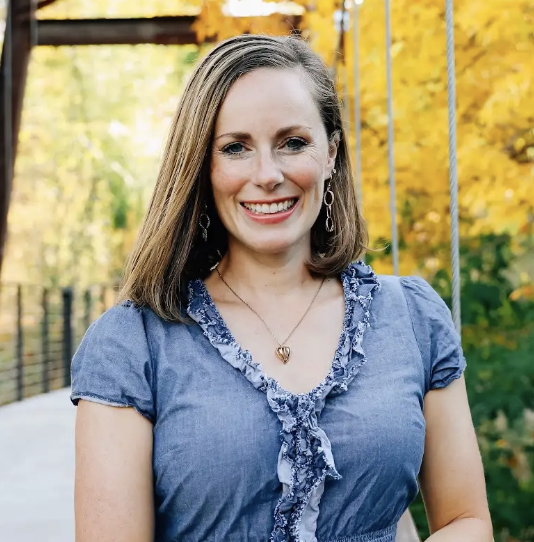
Crystalee Beck
Crystalee Beck, MPC, is a wife, mama of four cute mess makers, award-winning speaker, and founder of Comma Copywriters. After leaving the corporate ladder world, she created her own ladder in 2016, determined to be there for her kids. Her business has recently been named five times on Utah Business magazine's Fast 50 list as one of the fastest-growing companies in Utah, and twice on the Best of State list for Writing Services. Comma has also been recognized by the Utah Governor's office as one of 100 Companies Championing Women. Her team writes and edits content worth reading for world-class brands. She made it to all 50 U.S. states during her flight attendant days and gets her best ideas while hiking mountain trails.
Episode Transcript
This transcript has been generated by AI and may contain slight discrepancies from the audio or video recording.
Crystalee Beck: Even the phrase "work/life balance" is backward because it puts work first. So I believe in life first work.
Narrator 1: Crystalee Beck was laid off while pregnant.
Narrator 2: So she built her own company, Comma Copywriters.
Narrator 1: Now a five-time Utah Fast 50 company.
Narrator 2: Powered largely by moms corporate America overlooks.
Crystalee Beck: We had seven people on our leadership team, and four of us were pregnant. We had babies in a six-month span, and we just made a plan for who would cover who. That was our first million-dollar year.
Crystalee Beck: Kind of like a kite — if it's all freedom and there's not that string of accountability that holds you to the ground, you're just going to fly away. I lowered my own salary, and I shared that with her. Lindsay had been with me from the very beginning of the company, and she was my right-hand woman. She gave me a call and said, "This just isn't working with my family, and I need to leave."
Crystalee Beck: It was such a stark moment for me to decide if I was really going to live my values.
Anita Grantham: Crystalee, it's so great to be with you.
Crystalee Beck: Thanks for having me. I love what you're doing with this podcast.
Anita Grantham: Thanks. I knew that we had to talk from the moment that Nectar did the Mother's Day video about you. That was just so inspiring.
Crystalee Beck: Thank you. What an honor. That was so fun, so thank you.
Anita Grantham: It's so great. I think one of many things that we have in common is the disbelief that there is such a thing as work/life balance, and you have a really defined view on this. I'd love for you to share what that is.
Crystalee Beck: Yes. For me, even the phrase "work/life balance" is backward because it puts work first.
Crystalee Beck: So I believe in life first work, and to me, that means seeing the people on your team as humans first and recognizing that they are willingly giving their time and life energy to help the company. Because of that, as a small-business owner, I feel a very real responsibility to help my team with what matters to them in their life.
Anita Grantham: I really want you to share your journey with the audience, because you started in corporate and now you have your own business called Comma Copywriters. That was an evolution that got you to the life perspective that you're in.
Crystalee Beck: So in my corporate ladder life, I worked with smart, kind, good people. I had interesting projects, and I was young and new to having a full-time job.
Crystalee Beck: I was doing grad school at night during that time, and I worked a lot. Between my full-time job and grad school, I was doing 16-hour days often between homework and everything. And honestly, during that time, I did not have a life-first work life.
Crystalee Beck: It was a lot of work and very little life. A lot of my philosophy came from that time when I was so overloaded — it was so imbalanced, there was so much work — that I kind of lost touch with myself and what I was passionate about. I just didn't have time for it.
Crystalee Beck: After that season, when I had my first baby, I was still working full time and figuring out how to be the mom I wanted to be while also working. I ended up getting laid off when I was pregnant with my second baby, and it really was stepping back from corporate culture that gave me the chance to pause and see what mattered most to me.
Crystalee Beck: For me, that's my kids. I wanted to be there for them, and I realized that going back to a corporate ladder wasn't going to work. Instead, I would create my own ladder because I wanted my work to fit around my family, and that's what's most important in my life.
Crystalee Beck: I've grown to understand that not everyone wants kids, and family isn't always the thing for everyone — and I totally respect that. But whatever is important to someone in their life, whether it's travel, yoga, reading —
Anita Grantham: Puppies —
Crystalee Beck: Yes, puppies.
Anita Grantham: Plants —
Crystalee Beck: Yeah. Whatever their thing is, I want to support them in that, because that's really the juicy abundance of life. It's not what you're doing sitting at a desk.
Anita Grantham: Okay, there's so much goodness in that. I want to zoom out and go back for people that are watching. You've kind of described a feeling of being trapped inside the corporate world. So before you had all this awareness, what were the signals you were getting that let you know — even before the birth of your first child — that you were missing that whole juice of life?
Crystalee Beck: Looking back, I was young — early to mid-20s — and I was still very much in a people-pleaser phase, wanting to do what everyone else thought I was supposed to do. I'm a recovering people-pleaser.
Anita Grantham: I am, too, and a recovering perfectionist.
Crystalee Beck: Me, too. I was totally in that mindset of "my job is to please the people above me and make them happy." And I'm just not a corporate person. I'm just not.
Anita Grantham: But I think it's okay to say that. It's okay to not be corporate. So what were the things that you had an allergy to?
Crystalee Beck: During my corporate ladder time, I realized I don't like being told what to do, and I really value creative autonomy and having the freedom to just have an idea and go for it. That's really important to me, and I work best when I have the space to jump when I want to — to work on my own terms.
Crystalee Beck: I also saw that there can be this need for constant approval, where some employees are essentially living their lives to get approval from their manager. I didn't want to play that game. I wanted to be focused more on results and outcomes instead of company politics, which frankly felt like a waste of time compared to the quality of outcomes.
Crystalee Beck: I learned in my first year of business for myself that I could get just as much done in 20 hours a week as I was getting done in 40 hours a week in the office, because there was so much politics and water-cooler talk and extra fluff that comes with an office environment.
Crystalee Beck: Having my own business let me step all of that aside. We're a no-drama company. We speak well of each other, we support each other, we're not perfect, but there's a lot of care. That's one of our core values. We really care about each other, and I don't tolerate gossip or talking behind people's backs. We just don't operate that way.
Anita Grantham: Okay, that's incredible. So I want to get into the core values of Comma Copywriters. You're here, you're feeling these signals, you're pregnant, you get laid off while pregnant. I was also fired on maternity leave, so I was anxious to chat with you about that.
Anita Grantham: When we were preparing for this, you had kind of shared that it was that incident — and I believe that it is an incident, and it's something I have never really spoken that much about because I've never wanted to be tied to it as a brand differentiator. But without question, it was such an accelerant for me to create what I wanted.
Anita Grantham: It was such a gift in hindsight, something I'm forever grateful for. You also kind of shared that it forced you to look and say, "Okay, I've had all these signals. Now I've had this event. Now I can create something new." Talk about the birth of Comma and what pieces you were putting in place to bring that to life.
Crystalee Beck: I love that you said "the birth of Comma." There truly is something that happens to a woman when you give birth to a human and you've created this new life — you realize how powerful you are and that you can do anything. I had my second baby, and within six months I launched my business, and I really had no idea what I was doing. But I made a promise to that little baby in the hospital.
Crystalee Beck: He was brand new, and we were living on my unemployment checks — we had no money. But I promised him, "I'm going to be there for you, and I'm going to be me, too." I didn't know what that would look like, but I knew the corporate ladder wasn't it.
Crystalee Beck: I really feel like when you have those moments that might feel like rejection or letting down, it is a new door opening. If you look for it and you have the courage to step through it, you can truly create your dreams and blow your own mind. That's been my reality the past 10 years, and I have kept that promise to him. I am there for my kids and spend a lot of time with them, but I'm also living a very fulfilling professional life in the way that works for me and my family.
Anita Grantham: It is so beautiful. We had our own business at that time that my husband was running, and I remember literally crying on the bathroom floor thinking, "I don't know how we're going to pay our mortgage because I don't have a job and we have this eight-week-old baby." It was our second, too, and it was just a time of almost self-rebirth.
Crystalee Beck: Mm-hmm.
Anita Grantham: I love that you say you don't realize how powerful you are to be able to give human life, but I feel like that's what you've given into Comma — life for everyone else through that experience. Because it's so beautiful.
Crystalee Beck: Well, I'm surrounded by a team of very smart, capable people — a lot of women. We also have men on our team, too, but we share that as a way that we see the world. Our top value is freedom: life first! Exclamation point.
Anita Grantham: That is so cool.
Crystalee Beck: I created a business to have more freedom and time, and I wanted to share that with my team. I can't go back to any other way.
Crystalee Beck: Once you realize how precious your time is and how short your time is with your kids, you want to do everything you can to protect it. The time that you're working needs to actually be working — not office politics and not fluff. It needs to be getting results. So yes, freedom and life first are our top value at Comma.
Anita Grantham: So many founders I work with have freedom, but the team does not. What was the moment when you decided, "I want this, and I am going to instill it as a cultural norm — not just something I get because I pay the bills"?
Crystalee Beck: I remember seeing a quote my first year in business that said, "You can get anything you want in life if you help enough other people get what they want in life, too." Or something very similar to that.
Crystalee Beck: That really hit me, because I realized that yes, I was very clear on what I wanted, but in order to get it, I could create a space where I was respecting my team and giving them as much freedom and autonomy as I could. I don't think success is success unless it's shared.
Anita Grantham: We can win together.
Crystalee Beck: Yes. The best success is shared.
Anita Grantham: So how does it work? Because I've even struggled with this. You know this with family life — we didn't just have one tough week last year. We had nine tough months. How, inside your culture, do you balance the freedom of life first when work still has to get done?
Crystalee Beck: It's not always easy, and I'll be honest about that. But I think of the time when we had seven people on our leadership team, and four of us were pregnant. We had babies in a six-month span.
Anita Grantham: That's amazing.
Crystalee Beck: I think we're the only company in the world that can say that — more than half the leadership team had babies in a six-month span.
Anita Grantham: Including you, right?
Crystalee Beck: Including me. I was nervous about it. Someone made an announcement, then I did, and then someone else, and I'm thinking, "Oh man, how are we going to pull this off?" It was really incredible. We had an in-person team retreat, sat down for an hour and a half.
Crystalee Beck: I brought a giant calendar, we all had sticky notes, and we mapped out when our maternity leaves would be. We each came prepared and wrote out all of our responsibilities. We went one at a time and basically divided up who would cover what.
Crystalee Beck: When this person is out, you'll take on these responsibilities; when she's out, you'll do these. We made a plan for who would cover who, and we had overlap for each of the four. We made it work, and that was our first million-dollar year.
Anita Grantham: Wow. Wow. So what were the lessons? If I want to operationalize this — I think I've had two people out at most, and we do job sharing, job shadowing, overlap before people go out, and overlap when they come back.
Crystalee Beck: Mm-hmm.
Anita Grantham: I call it re-entry — a re-entry plan. I even do this when people go on vacation, so they don't just come back into meetings. They come back into a debrief: "Here's what we started with, here's what happened while you were gone, here's what's different, and here's what you need to know to reacclimate. And we're going to work side by side to get through that."
Crystalee Beck: I love that.
Anita Grantham: What were the things that you would replicate every time in this model?
Crystalee Beck: We always had a written plan so that we weren't just guessing or trying to remember. Every one of us had a written plan with all of our responsibilities, who would be taking them on, and at what point. We were also aware that babies don't always come on schedule.
Anita Grantham: They don't come on time.
Crystalee Beck: Right. Some were early, some were late. So we basically had a four-week window — it could be any time in that span. And we had very clear steps for communicating with our clients, letting them know in advance about the maternity leave.
Anita Grantham: Okay, so what did that look like?
Crystalee Beck: For us, that looks like giving a heads-up about two weeks before maternity leave, letting the client know someone will be going on leave and introducing them to whoever will be covering. There's a little overlap before the person leaves, so the client can at least get familiar with the new person.
Crystalee Beck: When someone goes on maternity leave, they have coverage for those 12 weeks, and then they come back. We try to think through all the stakeholders who need to be informed in advance and do our best to let them know what's coming.
Anita Grantham: Was there an "oh crap" moment?
Crystalee Beck: Actually, this year I had two people out on maternity leave at the same time, and their roles both landed on me. That was very hard.
Crystalee Beck: It was about a six-week span when someone announced she was going to leave, and then I had two on maternity leave, so all three of their roles were suddenly on me. That was really when the rubber hit the road. It was hard — very hard — and I couldn't sustain that long term. I was so relieved when they came back.
Crystalee Beck: But yeah, sometimes it's not easy. It's not always easy. But if you're really committed to it and committed to giving people what matters most to them, they will be so loyal to you and give you their best work.
Anita Grantham: That is the truth, because you're caring about their whole life.
Crystalee Beck: Yes.
Anita Grantham: So one of the things that we get into as CEOs, founders, and executives is that we give all that freedom to the team but don't demonstrate taking that freedom ourselves. What I'm hearing you say is that in that last moment, you were struggling to be the representation of that. So how well do you think you do at demonstrating freedom and life first?
Crystalee Beck: I'm not perfect at it, but I never send weekend emails. I might write them on the weekends, but I schedule them to show up in inboxes on Mondays.
Anita Grantham: This is a pro tip. I used to work at 11 at night or while the kids were at soccer on Saturday morning. I'd preface it with, "I'm just getting my stuff done because it works for me right now — by no means do you need to feel the need to respond." And then I realized I just needed to use a scheduled send.
Crystalee Beck: That's my trick. Because sometimes I do write those weekend or late-night emails, and I never want them to feel pressure to respond, so I just schedule it for the next workday.
Crystalee Beck: I also keep very clear boundaries when I go on a family trip. They do not hear from me. We went on a family cruise this summer, and I was 100% offline for 10 days.
Anita Grantham: I love a good cruise. You really can't get online.
Crystalee Beck: Exactly. It was so good for me. I came back refreshed and recharged. And so when my team goes on trips for a week or two, I'm like, "Do it. I support you. Do it." I definitely have my moments where I make mistakes, but I really try to protect my own time.
Anita Grantham: That's amazing. Okay, so you have someone on your team focused on the people side of the business. How do you two partner to make sure this is consistent throughout? What are some of the practices or rituals at Comma that we could learn from?
Crystalee Beck: Our director of operations also wears what we call the "team support" hat — kind of like an HR role. That's what we call it instead of HR. She really supports our hiring, onboarding, and training.
Anita Grantham: I love "team support." That's cool.
Crystalee Beck: I typically step in if there's a firing. But for any kind of accountability matter, I want to say that our second value is accountability — and you can't have freedom without accountability.
Anita Grantham: Talk about that.
Crystalee Beck: If you have too much freedom — kind of like a kite — and there's no string of accountability to hold you to the ground, you're just going to fly away and not get anything done. But if it's all accountability and not enough freedom, you feel trapped in a cage, without the flexibility people need to feel like human beings.
Crystalee Beck: The way I see it, there's a marriage between freedom and accountability. When you have both, it allows you to have clear, direct conversations when someone hasn't kept their word or hasn't shown up and done their part. You can hold them accountable and say, "Hey, this is an accountability conversation. You had something due at a certain time, and we didn't see it come in. Help us understand what happened." It removes the emotion and the blame. It just becomes about a shared outcome and shared product when it's governed by accountability.
Crystalee Beck: The way I work with our director of operations is that she really understands these values and has gotten very good at those conversations because I've trained her. We use a notice policy — you get three notices in an 18-month span. If something is egregious, they're fired. But if it's something like misspelling a client's name — which is a big deal for us since we're a copy company — or delivering something late, those are our big no-nos.
Crystalee Beck: If you do one of those, you get a notice. She'll schedule a call and say, "We're all learning. This is just a learning lesson. Help us understand what happened." Our third value is humility, and it's amazing how the team will just say, "I made a mistake. I overcommitted and didn't keep my commitment." Then there's a moment to admit it and make a new plan, and it's a very simple five-minute conversation where both people come away feeling better.
Crystalee Beck: We have a three-notice policy, and we haven't had to fire anyone yet because of it. Usually after 18 months, a notice rolls off. We've had people get up to two, but no one has reached three yet.
Anita Grantham: So are there some examples of what the training looks like? A lot of people struggle with accountability conversations. How have you moved that from you to her in a way that's operationalized across the organization?
Crystalee Beck: I love this question. This is one of the biggest things I've learned as a business owner — how to have accountability conversations — and it's actually really fun when you know how to do it.
Crystalee Beck: We did a mad-lib-style training where you fill in the blank. Basically, first you state the facts. You say, "When you turned in that piece a day late," and then you share how it affected you: "I wasn't able to do my best work or deliver it to the client or keep my commitment." Then you ask a question — not accusatory, but out of support — like, "How can we do this differently next time? Or how can I support you?"
Crystalee Beck: We practiced this at a company retreat, all in the same room. Usually creatives and writers like to hide behind a computer — we're great with words on a screen but not always in verbal conversations. And it's not easy to feel like you've let someone down, and it's also not easy to bring it up when someone has let you down.
Crystalee Beck: But when you can state the facts and frame it around the shared outcome you're working toward together, it doesn't have to be as emotional. One phrase I use a lot at the beginning is: "I need to share something that might not be easy to hear, and it's also not easy for me to say." After that, I just let it rip and say what the thing was.
Anita Grantham: So you just said this — I want to rewind it for everybody to make sure they caught it, because it's really important. You're saying this phrase for yourself.
Crystalee Beck: Yes.
Anita Grantham: Not for the person hearing the conversation.
Crystalee Beck: Right. It calms me. It helps me feel like I'm giving myself permission to say what needs to be said.
Anita Grantham: I've read this a lot — if you can just say, "I want to have this conversation and it's really hard for me," you're just putting it out there. "I'm nervous about having this conversation. I'm afraid to have this conversation." All of those are just human neutralizers.
Crystalee Beck: Yes. And I actually had to let someone go this year, which is the very worst part of being a business owner. But it was a very caring conversation. We both cried, and neither of us wanted to get off the call. It was really a moment for gratitude. It was a financial decision I had to make, and I made that clear.
Crystalee Beck: I said, "This is not about performance. You have done so well for this company." I highlighted the things she had accomplished. "But this is a decision I have to make." I think those exit conversations can be done with grace, care, and dignity.
Anita Grantham: What were some of the things you did to ensure that grace, care, and dignity?
Crystalee Beck: I came prepared to offer a severance package — not anything huge, but what I could offer. I also came prepared with the basic facts to share why it had come to that point and everything I had done to avoid it, so she knew this was truly a last resort and not a flippant decision.
Crystalee Beck: I also tried to give her space to feel her feelings. I knew this was coming; she didn't. That's very shocking. And it's different from firing someone — when you fire someone, they should have some sense it's coming because of performance issues and months of conversations. But a layoff is different.
Crystalee Beck: I tried to stick to the facts, keep it brief, and I called two mentors beforehand to help me feel supported so I could say what I needed to say. Because it's painful.
Anita Grantham: It's hard.
Crystalee Beck: When you really care about your people, it is painful. But I knew her well enough to know she was going to have a great next chapter, and I let her know: "I'm here to support you however I can. If you want to start a business or find a different job and want a reference, I am here for you. You never even have to ask. Whatever I can do to help you."
Anita Grantham: That's incredible. I think saying out loud "I will refer you" and "I will help you find that next position" takes so much of the weight away. I'm sorry you had to go through that.
Crystalee Beck: Well, it's more her than me — but yeah.
Anita Grantham: It's both, though. Especially as a founder and CEO, it's tough.
Crystalee Beck: It really is the worst.
Anita Grantham: In hearing you describe your experience going through that layoff with a strong performer, you shared what you believed her pain to be, your own pain, and the methodical, caring approach — because care is one of your values. You put a lot of intentional time and care into how you delivered that message.
Anita Grantham: It makes me think of a conversation I was having yesterday with a senior leader. She described how there's always a trade-off. You could not have care as a value. A lot of big corporations claim care as a value, but then the founder isn't the one doing the layoff. We see it in the news all the time — CEOs are two or three steps removed from the actual process. You're right in it and getting to exemplify the care. What do you think is the cost of care?
Crystalee Beck: The cost of care. I probably overdo it in some ways. I try to err on the side of generosity whenever possible. In this case, the truth is I lowered my own salary — months before — and I shared that with her.
Crystalee Beck: I told her I had really done everything I could, including lowering my own salary. So that's a very real, financial cost of care. But emotionally, I think it's worth caring about people even though it can hurt — really hurt.
Crystalee Beck: It can hurt when people betray you. It can hurt when people leave. It can hurt when you have to let go of people. But those emotional costs are worth the reward of seeing people thrive in life versus work. It's worth it to me. But it's a very real thing, and it can be extremely painful to feel like you're letting someone down.
Crystalee Beck: I've had to learn that taking care of a company also means making the hard decisions. That's my job as the owner, and no one else can do it for me. I will put off those decisions or delay and procrastinate, not wanting to look at them. But at the end of the day, someone has to make them, and that person is me.
Anita Grantham: One way we described it at one organization was: care for people and care for the cause. Because the people can't go to work for the cause if the cause isn't healthy enough to exist for the people.
Crystalee Beck: Yes.
Anita Grantham: It is a symbiotic relationship. And sometimes, just like with work and life, there is a constant shifting between the two to make them both work. It's challenging.
Crystalee Beck: Yeah. My mentor, Elan Store, taught me the phrase — and I think of this a lot — "No margin, no mission." You have to have something sustainable to keep the whole team on board, and sometimes that means making hard choices.
Anita Grantham: It does. And I will say that one woman, who is CEO of her own company but also a CHRO of a very large brand you would know, always says that when you take this high-care approach, you eliminate lawsuits. I've seen this too. When teams take this approach and really go after the conversation the way you describe — whether it's one to one or one to 100,000 — the legal risk actually diminishes.
Anita Grantham: Now, I know my legal friends will balk at that, and it's their job to identify the risk. But I will fully assume that risk in an operational or founder role, because I've seen it work. I don't have as many legal issues when I apply care. And to me, that is a huge benefit when weighing the cost of care.
Crystalee Beck: I agree. And I think you don't necessarily do it to get something out of it for yourself — it really is out of genuine care for other people. But there are intrinsic rewards. When you're being a good human, it's good business.
Anita Grantham: It is. And it's not to say — I can see people watching this who might say, "Well, Anita, I remember this thing you did." I haven't been perfect. It is this evolution of learning and applied learning over time.
Crystalee Beck: Yeah.
Anita Grantham: And you know this too. I always learn something new, and I always learn how I could be better. Business is messy, and the actions that involve humans aren't perfect. We do make mistakes. How do you give yourself grace?
Crystalee Beck: I really work on my relationship with myself on a daily basis. And as a recovering perfectionist — like we said — I've had to work on this intentionally, because I used to be so hard on myself for any mistake or anything I did that people didn't like.
Crystalee Beck: But at this point in my life, I see mistakes as lessons. I really try to have a growth mindset, and it's not always easy — sometimes I'm still hard on myself. But I've shifted to asking "what can I learn from this?" instead of "what's wrong with me?" or "how awful am I?" or "I can't believe I did that."
Crystalee Beck: Instead, I think: okay, apparently I still have something to learn. What can I learn from this? I'm always looking for the lesson.
Anita Grantham: Lifelong learning is a capability I've seen across these interviews as a marker of great leadership. It just never stops.
Crystalee Beck: Never stops. We're always making mistakes.
Anita Grantham: So what would you say to the leader watching this who is thinking, "My CEO won't allow me to offer generous severance. My CEO won't allow me to care the way that Crystalee cares"? How would you go about securing that investment to treat people the way you treat people at Comma?
Crystalee Beck: So if it's not currently part of your business policy to have severance or some of these caring gestures in place, you can absolutely go to bat and advocate for them. But you can also offer what you have right now.
Crystalee Beck: That could be your network — introducing them to someone who needs a person with a similar skill set. You could write a LinkedIn post: "We have this amazing person. Anyone would be so fortunate to have them on their team." If you want to help them, do what you can. And make sure first that that's what they want — don't just do it without their permission. Ask: "Do you want to take a break, or are you looking for a job right away? What does that look like for you?"
Crystalee Beck: There are so many little things you can do that are free. Kindness is free. Just think: if you were in that position, what would you wish someone else would do for you?
Anita Grantham: Yeah. Is there a time where you and your director of operations have disagreed on an approach or a solution, and how did you work through it?
Crystalee Beck: In a recent hire, we had 331 applicants and got down to the top three, and we had different ideas on who was the best fit for the role. The person we were hiring would work closely with both of us, but even more with me.
Crystalee Beck: So I ended up making the final call. Just this week she said, "I'm so glad you made the call that you made — this person is a really good fit." Sometimes we just have different personal preferences, which is fine. She trusted me and said, "Okay, go ahead."
Anita Grantham: So it really is that ebb and flow. A key part of creating scalable culture is alignment between these two positions. What I'm hearing you say is that there's a high level of trust — she's willing to trust what you see.
Crystalee Beck: Mm-hmm.
Anita Grantham: Sometimes I'll say, "My CEO must see something I don't see, and I'm going to go with them on this." It's just a great way to make things happen.
Crystalee Beck: And I really trust her, too. I let her know that on a regular basis, because she makes a lot of decisions without me. We have something called a decision tree at Comma, and we review it about every six months, because when I hire someone, I'm hiring them to remove mental load from me.
Anita Grantham: Do you have reminders going off in your brain constantly?
Crystalee Beck: Exactly — can you just take it off my brain? I have too much going on in here.
Crystalee Beck: So the decision tree works like this: the leaves are super simple decisions, like what gift to send a client. I'm like, "You have full power for leaf decisions." Branch decisions are a little more in depth and usually involve a couple of other people, but they can generally make those decisions too — things like how to organize files or tools that other people would use. I fully trust them with that.
Crystalee Beck: Trunk decisions are more operational and affect the whole company — I want to at least know what's happening and have some say. And root decisions — things like our identity, our brand, our values — those are decisions I'm making, and I want their input on.
Crystalee Beck: Sometimes I'll just remind her, "This is a leaf decision. You've got this — just run with it." Or, "This is a branch. Go for it." It's helped me enormously with delegation — having a quick visual that tells me this is not something I need to spend my energy on. I can just give it to them and they can take it and run.
Anita Grantham: That's incredible. What was it in you that said, "I can't own all of this anymore. I can't be the switchboard for every decision"? How did you come to implement the decision tree? I think more companies should use this.
Crystalee Beck: Sheer brink of insanity. Physical and emotional pain. Something kind of broke in me. When I had my fourth baby, I hit a wall and thought, "I cannot keep going the way I've been going."
Crystalee Beck: Here's a good example — laundry in my house. Before that, my husband would wash the laundry, and I was in charge of putting it all away. I hate putting away laundry. So I was surrounded by laundry with a brand-new baby, trying to fit business in between, and I thought, "This is the moment when the kids start doing their own laundry."
Crystalee Beck: They each got their own bins, and I let them draw all over them with permanent markers — put their name on them, design them however they wanted. If you're six years old in our house, you're doing your own laundry. So suddenly the two oldest were in charge of their laundry, I had the nanny handle the baby's laundry, and all I needed to do was my own. And I don't even always do that.
Anita Grantham: I just have enough underwear that I can go two weeks.
Crystalee Beck: So basically, the laundry moment translated into the business — "My brain is going to explode. We've got to do this differently." Decision fatigue is real. I hit a max, so we spread out the decisions. Take away half of them, and I'll just keep the big ones.
Anita Grantham: My mom once said to me, "You don't make any decisions — your husband runs your life." And I said, "Oh, no. I make decisions Monday through Friday. On the weekends, I don't care. Everyone else can just decide, and I will fall in line — weekends are decision-free for me." I love this because so many CEOs feel like they have to hold everything, and it really lowers the bar for growth.
Crystalee Beck: Yeah.
Anita Grantham: So what has been the result inside Comma since you had that breaking laundry moment and built the decision tree? I'm going to totally steal this idea, by the way. What has happened at Comma as a result of the tree?
Crystalee Beck: We grew. We doubled three years in a row, and we were on the Fast 50 as one of Utah's fastest-growing companies five years in a row. It opened us up to see new versions of what the company could be.
Crystalee Beck: I've really lived through many different versions of Comma — it's the same company on paper, but it's a different company. My mentor Seth Waite told me that when you double your revenue or double your team, you're essentially a new business.
Anita Grantham: That's a good rule.
Crystalee Beck: We've done that many times, and it's required me to think differently, lead differently, and let my leaders lead instead of it all being about me. And with humility — that's our third value, with the subtext of "we work as a team, no egos" — I really try to remove my own ego. This will all fall apart if it's all up to me. I cannot do it all. So I trust my people, and they do a great job.
Anita Grantham: That's incredible. And growing that fast — a lot of CEOs will say, "I've never been at this phase before," and they need to be ahead of the curve. So when you double, is there a process you go through with your director of operations? What is your reset? Like, "Okay, I've doubled again — this is a new business." What do you do? Do you redo the tree? Do you redo the values?
Crystalee Beck: For us, the values have stayed in place for about five years now, and we've held strong to them — though it might be time to look at them again. But we have changed company structure.
Crystalee Beck: I'm not a hierarchical person. Even our org chart doesn't follow a traditional format. Ours looks more like a flower. I was trying to figure out how to show structure without putting someone above someone else. So we have our leadership team in the middle — like the pistil of a flower, which holds it all together — representing the support roles and anyone who supports the writers. And the petals are really what make a flower a flower. For us, that's our writers.
Crystalee Beck: In my head, it's a coming-together rather than a top-to-bottom hierarchy. We've also cut out a lot of middle management. At one point we had some middle-layer reporting roles, and I ended up removing them, which was hard because those people felt like I was taking something away. I tried to make it as smooth as possible while showing that the goal was fewer layers and faster outcomes.
Crystalee Beck: We went from three separate content teams to one full-time dedicated person doing the role that three part-time people had been doing. We've restructured how people report and how work gets done, but it's all in service of on-time delivery of quality content.
Anita Grantham: That's so good. Okay, so we've talked through freedom, accountability, humility, and care.
Crystalee Beck: Yes, and the fourth value is curiosity.
Anita Grantham: Okay.
Crystalee Beck: Keep learning and growing. Those are our five.
Anita Grantham: That's incredible.
Crystalee Beck: I read the book Traction by Gino Wickman, and I love the way he frames company values — that it's not aspirational, it's not just what's on the wall, it's how you're already working.
Anita Grantham: Yes.
Crystalee Beck: So we sat down as a leadership team, and I had everyone write Post-it notes about someone on the team who really lives the Comma way. We put all those notes up, found lots of similarities, and landed on those five — freedom, accountability, humility, curiosity, care — because that's what we were already living.
Crystalee Beck: And then we call it out in each other. We have a monthly "Right On" award for someone who lives the values. They get a shout-out and a gift card, and we call out specifically which value they demonstrated — whether it was humility or curiosity or one of the others.
Anita Grantham: That's incredible. What else do you do to reinforce the values, to show them in action, to make them come to life? Because this is what people struggle with most. They put them on the wall, they might be reinforced through strong action, but how are they operationalized?
Crystalee Beck: My operations director and I did an exercise where we sat down, looked at the values, and I said, "I want us to have a budget for each of these. How do we support them?"
Crystalee Beck: For freedom, we have bucket list grants. If I really support people in their life, I want to help them actually go get what they want. When you hit year three at Comma, you get a big check — $1,000 — to check something off your bucket list. We all cheer for you.
Crystalee Beck: When you start with us, you write out a 50-item bucket list, because some people never write one in their whole life. We have them share some of the items from it, and then when the grant comes, we say, "Use it however you want for your bucket list — just make sure you check something off."
Crystalee Beck: We've had people go to Broadway shows, travel to retreats in other countries, go on a mother-daughter trip to San Francisco. There are a lot of trips, but also things like one person who redid her garden and her closet. A thousand dollars can only go so far, but it's really fun to see what people use it for. That's freedom and life first in action.
Crystalee Beck: For curiosity — keep learning and growing — we're all word nerds and we love reading, so we have a reading challenge called Page Turners. Each month we share how many pages we read and which books, so we're seeing what other people are reading. The person who reads the most during the quarter gets a free book.
Anita Grantham: Oh, great. That's incredible.
Crystalee Beck: It's fun.
Anita Grantham: You also have something called the Mama Ladder.
Crystalee Beck: Yes. That's a separate company — The Mama Ladder — and it came from me wanting to create my own ladder that fit my motherhood. I'm very passionate about the intersection of motherhood and entrepreneurship. We serve women with retreats and workshops, and we have a grant program called the High Five Grant for Moms, where we give grants to businesses owned by moms to help them grow.
Anita Grantham: That's incredible. I love that. And your customers can actually participate in a scholarship program, right?
Crystalee Beck: Yes, and this connects to our care value. We have been partnered with Carrenza — I believe the name means "love" in another language. They're based in Mozambique and run schools for girls. So when we get a new client, we send a girl to school in Mozambique.
Anita Grantham: I've been to Mozambique.
Crystalee Beck: You have? I want to go so badly.
Anita Grantham: We took two full checked suitcases to bring diapers and materials to orphanages there. It's an incredible place that needs a lot of care.
Crystalee Beck: Wow. It really is exciting when we get a new client, because it means another girl is going to school.
Anita Grantham: Yeah, that is awesome. I love all these examples of your values in action — in a way that helps your team, helps the community, and brings the customer along. You get all three together, which really is a perfect flower.
Anita Grantham: One of the things I'm super curious about — I've always wanted to have a company where I hire moms and retired people. You've really focused on the mom piece. Can you talk about how you've built a pipeline and a company built on motherhood and part-time work?
Crystalee Beck: It's interesting — I didn't start off specifically looking to hire other mothers. They just seemed to find their way to me. But it makes sense because we do offer a lot of flexibility, and moms often need that.
Crystalee Beck: I think more rigid corporate cultures could really benefit from an injection of flexibility to retain top talent. There's so much talent being lost.
Anita Grantham: There's a lot of talk about that without a lot of action.
Crystalee Beck: Exactly. I truly believe that if there were more part-time jobs available — and almost everyone at my company is part-time, flexible, or contract — it would unlock so much talent. We have a core team of W-2 support staff and a lot of contractors.
Anita Grantham: Do they get benefits? This is something I get so frustrated with — why do you have to be full-time to get benefits?
Crystalee Beck: Not at my company. Part-time employees can have retirement benefits and parental leave benefits. I don't offer health insurance, but I do offer retirement and parental leave.
Anita Grantham: That's incredible.
Crystalee Beck: I think it's just been a natural extension of offering what I wanted for myself. I believe in trusting people and trusting that they'll do their best work until they prove otherwise. I offer trust right out of the gate, and flexibility too. If someone needs to go to the dentist, I don't need to know they're going to the dentist. I just trust that they'll get their work done that day.
Crystalee Beck: My director of operations used to be a teacher for 13 years. I really had to ease her into this approach, because she was so used to a rigid schedule — getting a substitute, reporting every appointment. And I told her, "You don't need to tell me. I don't even need to know. I just trust you to do your work."
Crystalee Beck: If you're going to take a day off, you can let me know, but I don't need to know about every little thing during the day. You're a grown-up. You can handle it.
Anita Grantham: I get calls all day from people saying, "My CEO wants me back in the office four days a week. They just want to see me there checking the box." What would you say to the CEOs and heads of people watching this who are thinking, "How does she do that? How do I even make a case for this?"
Crystalee Beck: Work on trusting your people. And hire adults.
Anita Grantham: Yes — hire adults.
Crystalee Beck: Trust them. If you trusted them enough to hire them, trust them to do their job without micromanaging. Are you fully remote?
Anita Grantham: Are you fully remote?
Crystalee Beck: We are. We were remote before COVID, so COVID was right in our wheelhouse — we were already working that way and just continued. When we do get together in person, it's really special. I'm someone who values freedom over structure. You need structure too, but —
Anita Grantham: I think structure is different from accountability. Your kite example was great — you've built accountability that allows for the freedom.
Crystalee Beck: Yes. And you can still have structure with freedom. You actually have to have some structure. I just don't believe in butts in seats. Let people have the freedom. If they're giving you the results you're asking for, if they're hitting their goals and delivering what they're supposed to deliver — who really cares if they're in their seat for six and a half hours versus eight and a half hours? It's about results.
Anita Grantham: It's so interesting because you hear large corporations saying the same thing, but they can't seem to get there without mandating presence.
Crystalee Beck: I think that's micromanaging. It's a trust issue. Work on trusting your people.
Anita Grantham: Is there a trust-but-verify approach? The decision tree is super useful. Are there any other frameworks or tools for someone who says, "I want to trust, but how do I know"?
Crystalee Beck: Having weekly reporting is really important. We have structures in place so people are accountable and reporting what's being delivered to clients and whether it was on time. For my direct reports, I have them send me a weekly report on what they worked on that week.
Crystalee Beck: It's very simple — three questions: What did you do this week? What are you proud of? What didn't you get to, and how can I help? It can be a five-minute email. I read it, respond, and address anything they need help with. If you really need more visibility, you could do daily 10-minute standup meetings — just touch base on what you're working on today and how yesterday went.
Crystalee Beck: But I just don't believe you need to physically see someone in their chair. If it's thought work or computer work — as opposed to a factory or retail environment — you can do that from home or anywhere.
Anita Grantham: Yeah. That's amazing. You had talked about one story where you have a teammate who decides to leave. Can you share a little bit about that?
Crystalee Beck: Lindsay had been with me from the very beginning of the company and was my right-hand woman. I counted on her so much. She had her fourth baby, which we celebrated and supported her through. She came back, and after about a month she called and surprised me by saying, "This just isn't working with my family, and I need to leave." She was sad about it.
Crystalee Beck: I still remember exactly where I was — on the freeway coming back from California — because it was such a stark moment for me to decide if I was really going to live my values. In a matter of seconds I had this whole internal conversation: "You could make her feel bad right now. You could kind of chew her out. Or you could truly support her in her life — life first." And thankfully, that's what I chose.
Crystalee Beck: I said, "I respect your decision. I support you. I'm going to miss you, but we will figure it out." And we did figure it out. But that was the first time I really had to make that choice in the moment.
Crystalee Beck: We stayed in touch over the years, and at this point she's come back. Three or four years later, she returned to the team. Now she's had her fifth baby.
Anita Grantham: Oh, wow.
Crystalee Beck: People will come back when you treat them well on their way out.
Anita Grantham: That's a perfect segue into the last question, which comes from our last interview. The question was, "What do you do to get people to want to come to work?" That story you just shared is a great example, but is there anything else you'd give our listeners on this?
Crystalee Beck: The basic rule: treat others how you want to be treated. Treat them with respect and kindness. And remember that everyone wants to do good work — they really do. They want to feel proud of themselves.
Crystalee Beck: So I'm a big believer in celebrating when people do well. It can be the simplest thing — just calling it out. "Hey, you did a great job on that." Just say it. Don't hold it back.
Crystalee Beck: Those little moments are like beads on a necklace — you're building a string of celebration. It keeps going even when it's out of your sight. Everyone adds to it. And who doesn't want to show up somewhere where they can do good work and other people notice and celebrate it? Who doesn't want that?
Anita Grantham: Everybody wants that — even at home. From home to the office, both hold true.
Crystalee Beck: Yes.
Anita Grantham: What would be your question to the next CEO, or any final thoughts?
Crystalee Beck: Well, thank you for having me. This truly is an honor.
Anita Grantham: Thank you for being here. I feel like we could sit here all day.
Crystalee Beck: It's so fun, and I just feel honored. Thank you.
Crystalee Beck: My question would be: what have you learned about yourself as a leader in the past year?
Anita Grantham: That's a good question. Well, thank you so much for being here. We're really grateful for you sharing your thoughts, your experiences, and your lessons. Thank you.
Crystalee Beck: Thank you.
Feature Story

Discover how seven HR trends predicted for 2026 are playing out halfway through the year, including AI recruiting, upskilling, and I&D. Gain executive insights.
Enjoy On Your Favorite App
Feature Stories
As part of SHRM's commitment to providing cutting-edge resources, get additional perspective and more insights in content curated from SHRM and around the web.

Deciding to openly share compensation information across your workplace requires careful planning, stakeholder buy-in, and a commitment to ongoing communication.

Learn how inclusive spirituality initiatives in workplace wellness programs can reduce stress, boost resilience, and foster connections among employees.

Discover actionable strategies to foster trust, improve communication, and strengthen relationships with team members by avoiding common leadership pitfalls.