All Things Work, S4, EP6
Recalibrate, Don't Retreat: The New Rules of Inclusion and Diversity at Work
- Video
- Audio Only
Good intentions are no longer enough when it comes to supporting inclusion & diversity in your organization. In this new era shaped by shifting enforcement and rising incivility, the leaders who thrive treat I&D like any other core business process — measured, documented, and built to last.
Carolynn Johnson, president of SHRM's Center for I&D and acting CEO of SHRM Linkage, brings clarity to a topic buried in confusion. She explains what's really changing with I&D at the federal level, why the laws themselves haven’t moved, and how HR can respond with confidence instead of fear.
Dive deep into game-changing topics impacting today's workplaces. And every Saturday, we have top stories, featuring our bi-weekly All Things Work podcast, in SHRM's All Things Work newsletter. Subscribe now so you never miss an episode! Plus, get feature articles, related content, SHRM's latest research, and more.
News + Insights
Podcast Episode Guest
-
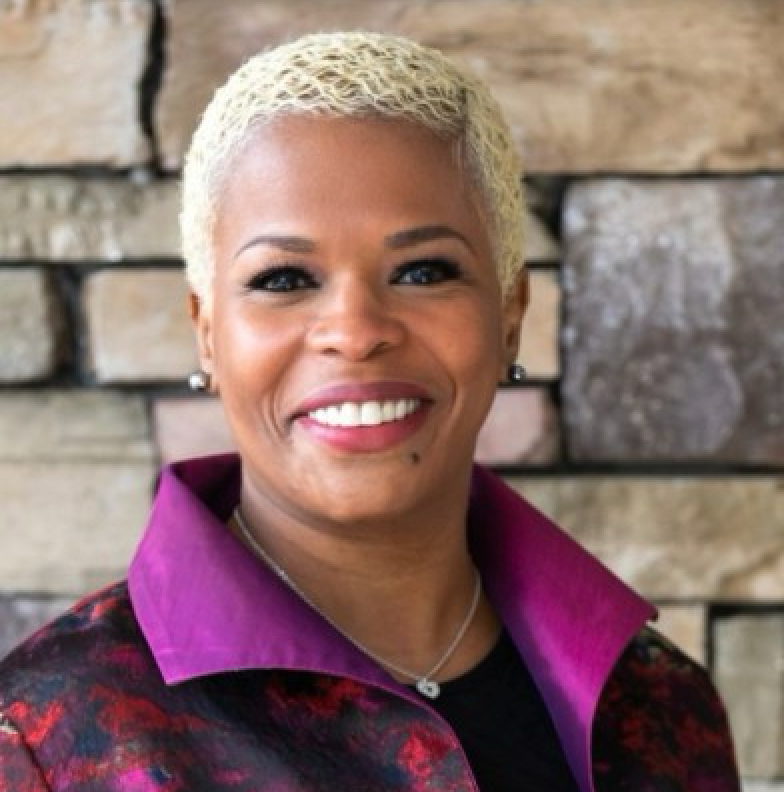
Carolynn Johnson
Carolynn Johnson is President of SHRM Center for Inclusion & Diversity, a credible, research-based “source of truth” think tank and member community for inclusion and diversity. Johnson is also serving as Acting CEO of SHRM Linkage.
Before joining SHRM, she served as Chief Executive Officer and Executive Editor of Fair360 (formerly DiversityInc), the leading workplace fairness management platform for content comparative benchmarks, and predictive workforce analytics. She led teams of data scientists to build advanced analytics, benchmarking tools, and predictive models measuring inclusion, diversity, and performance. Under her leadership, the Top 50 survey became a catalyst for thought leadership and revenue growth, and she launched the DiversityInc Top 50 Event series in 2009—widely known as the “Oscars of Diversity and Inclusion.”
Carolynn has testified twice as an expert witness before the U.S. House Committee on Financial Services. She was named a Distinguished Alumna of Rutgers University (2016) and, in 2022, received an AACSB honor for her research on intersectional workplace issues with a focus on gender—recognizing alumni who demonstrate leadership and societal impact. A CEO Action signatory since 2019, she worked alongside senior leaders at PwC and public-policy partners to help expand the coalition’s reach by engaging executive leaders across client organizations.
She completed an executive management fellowship at the Tuck School of Business at Dartmouth and earned her MBA from Rutgers Business School. She also holds two MIT certifications in Artificial Intelligence in Business Strategy and Machine Learning and Data Systems. In 2023, she consulted with Wharton to design talent development coursework for undergraduate, MBA, and EMBA students. The creator of the Women of Color and Their Allies Leadership Program, Carolynn serves on national nonprofit boards including the Center for Healthcare Innovation (CHI) and is Co-director of the Relationships Across Differences Roundtable within Wharton’s McNulty Leadership Program. She is also a proud member of Alpha Kappa Alpha Sorority, Incorporated.
Episode Transcript
This transcript has been generated by AI and may contain slight discrepancies from the audio or video recording.
Anne Sparaco: Hey, it's your favorite co-worker, Anne, and this is the All Things Work podcast. If you're in HR or managing a team right now, chances are you've asked yourself what is still okay when it comes to building an inclusive workplace. Can we still use certain language in our policies? Can we even still talk about equity?
What happens if we get it wrong? And honestly, those aren't easy questions to answer anymore. The rules are shifting. Court decisions are changing. Federal agencies are putting workplace practices under a magnifying glass. Meanwhile, employees still expect to work in places where they feel respected.
Leaders still need to build high-performing teams, and HR is stuck trying to make sense of it all. So today, we're going to cut through the noise, and there's no one I'd rather have guide us through this than today's guest. Carolynn Johnson (Johnson) is president of SHRM's Center for inclusion and diversity, SHRM's research-based hub dedicated to building high-trust, high-performing workplaces.
Carolynn is also the acting CEO of SHRM Linkage, a research-driven leadership development organization backed by SHRM. Together, we're unpacking what's actually changing, what isn't, and how business leaders and employees can move forward with confidence instead of confusion.
Anne Sparaco: Hey, since you're tuning into this episode, you already know the workplace is changing fast, and smart leaders are making sure their team's inclusion and diversity (I&D) strategies can keep up. At SHRM Blueprint for I&D this November, you'll build an enterprise-ready I&D framework that goes beyond good intentions. Through four days of breakout sessions, deep discussions, and expert insights from world-class speakers, you'll walk away with a practical and actionable I&D strategy that aligns legal, cultural, and business expectations.
This is the path for business and I&D leaders who are ready to move from intent to real measurable impact. Join SHRM Blueprint for I&D, part of All Things Work 2026. It's where I&D strategy becomes your business advantage. Learn more and register your team at SHRM.org/atw-blueprint. We'll see you there.
Anne Sparaco: Johnson has spent her career helping organizations turn complex workplace challenges into measurable business outcomes. Before joining SHRM, she led Fair360, formerly Diversity Inc., where she helped organizations understand what actually drives inclusion and performance. Johnson has even testified before Congress as an expert on workplace issues. In other words, she doesn't just follow what's happening — she helps organizations and leaders understand what it means and what to do next.
So Carolynn, welcome to All Things Work.
Carolynn Johnson: Thank you for having me. I love our studio. I understand this is the first time we're using it for this podcast, right?
Anne Sparaco: Yes, made it special just for you.
Carolynn Johnson: Well, you got me already.
Anne Sparaco: All right, let's dive right into it. We've heard so much about the executive orders in 2025 — it was creating a lot of noise. And now we're hearing even more about compliance pressure from the federal level, and even lawsuits related to I&D. So how much of what we are hearing right now is signal versus noise?
Carolynn Johnson: It is a lot of signal — specifically enforcement signals. But let's separate out those two things. What we are talking about right now is not just signals, but reputational risk and compliance. These legal actions and enforcement truly can impact an organization's bottom line or very existence.
If you think about earlier this year, one of the first false claims settlements — with IBM — somewhere around $17 million. That was the first large settlement that was a major signal of enforcement. So the law hasn't changed, but the way in which agencies are leveraging their enforcement arm definitely has. This is not a noise moment. This is absolutely a signal moment.
Anne Sparaco: And I love that you pointed out that difference, because the law has not changed, even though there's a lot of noise about that going around. Thank you for clarifying that, because I think that is very essential to our conversation today. So why exactly does this moment feel different than the other moments we've been seeing in the past couple of years?
Carolynn Johnson: I can speak to what I am seeing from a pattern perspective. This is truly about compliance. This is truly about not what you intended to do, but what you can prove you actually did or have done.
We have historically, in a lot of ways — which has brought us to this moment — looked at I&D, formerly known as I&D, as feel-good advocacy work. But this has always been about civility. This has always been about understanding how teams perform at their best, make us more competitive, and allow us to remain in business. This is not about feeling right now. This is about whether we are building the structure and the systems to ensure that we are creating workplaces that are fair for everyone. That's not a feeling. That's a strategy.
Anne Sparaco: Yes. And so right now, we're seeing four federal agencies cracking down on I&D. This includes the Department of Justice, the Equal Employment Opportunity Commission (EEOC), the National Labor Relations Board (NLRB), and the Federal Trade Commission. So what is each agency scrutinizing right now, and why should HR leaders really be paying close attention to what they're saying?
Carolynn Johnson: So I'm not an attorney — this is not legal advice. Here's the thing: I'm not an employment attorney, and I'm not someone who follows the Federal Trade Commission or the NLRB on a regular basis. What I do is build.
When I joined SHRM in January of this year — after having been a recertification partner, a member, and formally in my role as CEO of Fair360, formerly Diversity Inc. — I don't use not knowing as an excuse. I build. That's how I learn, and I said that to the team when I got here. Understanding what potential enforcement activity comes out of each of these agencies is not easy.
But in that spirit, SHRM has tried to make it easier. In partnership with DCI Consulting, we developed FedAssure. It's a compliance AI-powered tool that helps you understand the state of your documentation — whether it's your employee handbooks, programs you've developed for your workforce, or even investments. And if you're a federal contractor, it helps you understand whether you are in compliance and whether you have created or run any programs that seemingly discriminate against any particular group.
That's what we built to help people understand, even without formal training in these areas, what each agency may be looking at.
Anne Sparaco: Mm-hmm.
Carolynn Johnson: And then in addition to that, on the SHRM Center for inclusion and diversity side — where I am proudly the president — we also wanted to make sure that if we are going to continue to lean into this work of I&D, we help people understand the language.
The same way we think about generally accepted accounting principles — you've got EBITDA, profitability, expenses — those things don't change. That is the rigor from a language perspective that we must bring to this work. So in partnership with Dr. Alex Alexander Alonso (Alonso) (Alonso), our Chief Knowledge Officer, we set out to create the lexicon — the I&D Workplace Inclusion Lexicon. It helps people understand the language that is legally compliant, workplace unifying, and business accretive. And most importantly, it doesn't stop us from being able to continue to do the work. It just makes sure that we're communicating in a way that doesn't alienate people or cause unnecessary or unintended consequences.
The lexicon tool is something you can use on a daily basis. The FedAssure product is something you can use annually to make sure you are in compliance if you are a federal contractor.
Anne Sparaco: And I love your work with Dr. Alonso. I truly just love the person he is. Running into him on the elevator, he will ask you, "How are you? How are you doing?" — and he means it. You're just one of so many employees, and he really means it. There are just really good intentions in the work that you both are doing together. A tool like that isn't saying, "Don't do this" — it's saying, "Do it right."
Carolynn Johnson: Exactly. And education is something that, growing up — youngest of seven — even when you don't realize it, you're learning from those you spend the most time with. Nowadays, that's often folks we work with. We don't say work/life balance anymore; we say work/life integration.
I'm learning from the other members of the executive team, and one of my takeaways from my first day sitting around that table was: how do I create something that gets us all aligned, saying the same things, understanding what those things mean, and continuing this work forward? So the lexicon now has 338 terms organized by low, moderate, and high risk. They're also built and pressure-tested over a case library of 234 cases — letters that attorneys general have sent, settlements, and other enforcement activity from Office of Federal Contract Compliance Programs (OFCCP), EEOC, the Department of Labor, the Department of Justice, and the Meltzer Center.
Legal libraries are constantly making sure we have the information we need to follow the law. So the lexicon is built over a case library with language that is compliant. If you are using tools like that appropriately and your program design is lined up with it, you should be just fine in this environment.
Anne Sparaco: SHRM Certification — the global standard for HR professionals ready to lead with impact. Whether you're building your foundation or driving strategy, SHRM Certification validates what you can actually do on the job, not just what you know. Stand out, grow your career, and turn HR expertise into real business results. Get certified. Get recognized. Lead the future of work with SHRM. Get certified today.
Carolynn Johnson: SHRM.
Anne Sparaco: I want to pivot to this question. If people were tuning into the news over the past few years, the biggest headlines I think they've seen were that businesses were pulling back their I&D efforts. Experts like yourself, though, are seeing a different pattern — companies actually doing quite the opposite. Can you tell us more about what the companies you're seeing are actually doing and how that's creating an impact right now on both their organization and others?
Carolynn Johnson: Right. There's a radio personality, his name was Joe Madison, and he would say, "Let's put it where the goats can get it." So if we wanted to point specifically to an example of what folks may mean when they say pulling back, I think we can all point to the idea of data transparency — how much information organizations are putting out there for people to understand the demographic makeup of the workforce, or which employees inside of the organization actually have access to that information.
Of all the ways in which people can mean "pull back" or "retreat," I'd say that's probably the most popular one.
I would also say that in my time as the lead architect of the methodology for the Diversity Inc Top 50 competition, I always cautioned our partners: are we being careful with who has access to this information? Because not everybody understands how to use it. We know that bias creeps into decision-making, and we've historically heard it called unconscious bias. You want to remove the opportunities — on purpose or not — for people to make decisions with information they don't know how to use. That has always been the case.
A level of good data stewardship is always required, but that doesn't mean retreat. And I want to say that again: removing access levels around raw data about your workforce makeup does not mean retreat. That means you are making sure you are measuring and managing risk. Sometimes you have to change how you do things. That's just business. We have to be agile, smart, and nimble.
Also, if we think about organizations that have maybe gotten rid of certain departments or job titles, there's a difference between retreat and recalibrate. If we want to do something efficiently and correctly, it doesn't mean we can always be quick about doing it. I just urge folks to make sure you understand what's really going on before you jump to conclusions or assume the worst about the leaders of organizations that you trusted in the past.
Anne Sparaco: And honestly, you could take that into your everyday life. Whether you're listening in the car or watching on YouTube, just take that into consideration in your daily life. Not making assumptions, educating yourself before speaking out — that will just make you a better person. I agree.
So I want to talk stakes here. For our audience tuning in right now, what does non-compliance with I&D actually cost? Can you walk us through that legal and financial exposure?
Carolynn Johnson: Before I step through the financial and reputational risk, let me share the framework in which I approach this work now that I'm here at SHRM. Diversity is the input. There is no workforce over a certain size where there are not dimensions of diversity that we are happily dealing with. Diversity makes us better.
Then we think about civility — civility is the process. That's how we are actively making sure that the diversity at work is respected, considered, and activated. If those conditions are met, then inclusion becomes the outcome. That's the framework in which I approach this work.
When you ask me about financial repercussions or reputational consequences — the SHRM Civility Index, which is a quarterly pulse, our Q2 results told us that we are losing $2.6 billion per day in lost productivity and absenteeism. I think the young people say, "Say less." I don't need to say another word for anyone listening to understand how that dollar amount comes with reputational risk.
You may have people who have witnessed or been the target of incivility who leave your workplace feeling like they weren't protected. Now they're not customers. And now they're not folks who are saying great things about why you're a healthy environment to work in. That's the financial and the reputational risk right there.
Anne Sparaco: And I love that you pointed out the civility data, because our quarterly data has shown that even just one minor act of incivility can deter a single worker for 30 minutes or more — they simply can't focus. A lot of this work really does come down to civility. I love that we're maintaining this campaign. I've got my civility mug right here — it's literally tea in here, so it's civili-tea, as we like to say here at SHRM.
Carolynn Johnson: I love it.
Anne Sparaco: Okay. So we talked about the reputational and monetary risks, but there's also a cultural cost here. When organizations feel the ground shifting, some may feel pressure to abandon their inclusion work, or they may not even know which direction to take. Beyond what you just mentioned, what do organizations lose when employees stop feeling like they belong or feel like their voice doesn't matter anymore — even if they are still with the company?
Carolynn Johnson: Engagement. Depending on how an organization measures it, the risk is that you have folks who are less engaged. And we know that when people aren't engaged, there is a lack of innovation, a lack of desire to contribute, to raise your hand, to be part of the team.
So while that may happen, communication — whether inside the organization or externally — is key. You've got to partner with your comms team, and you've got to partner with legal. This is not an environment to be loose and free-spirited. You have to make sure you are in lockstep with your legal counsel and your comms team. But you have to communicate. You cannot leave people to come up with what is happening on their own, because then you don't control the message. People don't understand what you're doing and where you're trying to go — and that's your message and yours alone. As leaders, that is our responsibility. No one else's.
Anne Sparaco: You had a recent SHRM article that I really loved — it's called "Inclusion's Next Decade Belongs to the Builders." You wrote about how organizations don't need more rhetoric; they need evidence, standards, and tools that can hold up in the boardroom, the courtroom, and the break room. Can you tell us more about this and how it coincides with the federal-level pressure we're seeing? What does this look like in practice?
Carolynn Johnson: It looks like making sure that we are approaching the work of I&D just like we would any other foundational business process. That's really it in a nutshell. We have to make sure that we are solving a problem or differentiating when we approach this work. We're not doing it for the sake of doing it, or for folks to feel good. If a secondary benefit is that they feel good, great. But what problem does it solve? How can we prove that it solves that problem? And how are we monitoring and documenting along the way?
When your auditors come in — if your organization does an external financial audit — you don't just say, "Well, we meant to be profitable." They're not going to accept that. So we have to approach this work with that same discipline and that same rigor. Those are the builders of tomorrow: the people who are disciplined, follow a process, and can prove it.
Anne Sparaco: I love that. Thank you for breaking that down. It leads nicely into our next segment. Our audience wants to start working today to address these issues and try to balance both compliance and culture — because we know that's not the easiest task. For those in HR, what would you say is the very first thing they can do this week to make sure their organization is building inclusive practices that are both compliant and business accretive?
Carolynn Johnson: So first, before we go outside of our organization or even ourselves, we just have to pause and say: even if I meant well, or even if we as leaders meant well — was this fair for everyone? I have not met a perfect person, and I don't think I ever will. Perfection is not my destination. When we're striving for that, we lose so much along the way. But fairness will always be one of the core tenets by which I behave and by which I measure.
So when I think about what folks can do today, it's this: have the humility to understand that intent can go wrong, and make sure that intent is not the only driver going forward. Once you've accepted that, go back and look at everything you've done. Be honest with yourself and with your teams, and say, "Okay, we're about to rip up these tracks and lay them down again so we're not pulling them up again in 10 years."
That's number one. Number two: be honest about what other organizations are doing that can help you, even if you've had issues with them in the past. Let the nonsense from the past go and focus your relationships — from a business solutions perspective — on who is committed and helping now.
And last but certainly not least: be relentless and ruthless with the process. Don't let outside people tell you, "Oh, well, you don't have to worry about that right now." Build your process and own it, because nobody else is going to do it if not you. We all have to take up this work as if our lives depend on it — because in some ways, they do.
Anne Sparaco: And managers who are leading individual teams and trying to work with HR and leadership — they should also be taking this similar approach into consideration, right?
Carolynn Johnson: Absolutely. Talent is organizationally the greatest asset. Every single day, we have to make sure that we are doing our level best to create environments where talent can thrive. Every single day. If we're doing that, people will want to be contributors to the solutions and contributors to the success — not folks who are running away as if the building is on fire.
Anne Sparaco: Exactly. So we're coming up on time. I want to tie in the four federal agencies again, because we're seeing a lot of headlines, lawsuits, and arguments against those lawsuits. When companies face that decision about what they're going to do — and like you said, good intentions are not enough — what really separates organizations that are responding thoughtfully in this moment from those that are simply reacting to it?
Carolynn Johnson: First and foremost, if you have questions around what's happening and what it means, turn to SHRM. Led by Emily Emily M. Dickens (Dickens), our Chief Administrative Officer, our government affairs team does an outstanding job of helping people understand what's happening from a policy perspective and how it can impact you. So that's number one.
Number two: as organizations, we must follow the law. But just because, for example, the requirements on submitting an EEO-1 form change, it doesn't mean that information and the collection of it doesn't help an organization be better. Separate the perceptions of what is happening with government agencies from how you know — by following the law — you should be running your business and understanding your workforce. Simple as that.
Anne Sparaco: And I want to close with the theme of civility, because it's been the perfect thread throughout this episode. As individuals working at SHRM, we're just trying to make sure we get the work done — and we do it proudly. But sometimes we can forget, in the stress of work, to be civil, to be inclusive. In my opinion, civility and inclusion hold hands. You can't have one without the other.
Carolynn Johnson: Diversity, civility, inclusion.
Anne Sparaco: Yes. So what's one thought or one action we can start taking today to shift our mindsets and help contribute to a civil environment — a workplace culture that will eventually result in inclusive efforts?
Carolynn Johnson: It's kind of interesting. I have two children under the age of 15, which means I'm often in classrooms or spaces with young people where the energy is just lit. I'm a people watcher — I think that comes from being the youngest of seven and having two parents with amazing personalities. So I'm quiet, but I'm taking it all in.
The one thing I see across the board is that sometimes people behave in certain ways because they feel powerless. So I think it's important as leaders to remind people that we all have power of influence, we all have a choice, and we have to use that responsibly. If we frame our thinking and the ways in which we design our interactions with people, I think that is the start of it.
You have to remind people that even without a title, they are still a person of influence — and that, in a way, is power. You're not powerless, so you don't have to behave a certain way. Everybody has a choice, everybody has influence, and those are forms of power. We just have to make sure that we remind people of that and pour into them those things. Because to me, helping people understand why they're great — that's the start of creating workplaces worth staying in, worth fighting in. And when I say fighting, I mean toward a shared mission. Those are places that are sticky, that people want to stay in and invite others to come to.
Anne Sparaco: Well, Carolynn, I truly enjoyed this conversation. We really appreciate your insights today.
Carolynn Johnson: Thank you. I had a great time with you.
Anne Sparaco: All right, that's all for this week. We'll catch you next time. If you enjoyed our conversation today, be sure to subscribe wherever you enjoy your podcasts so you never miss a new episode. Also, did you know All Things Work is more than a podcast? That's right. We're also a weekly newsletter that includes in-depth articles and the latest research from SHRM to keep you in the know. Just head to SHRM.org/allthingswork to sign up, plus follow SHRM on social media to view the latest clips and join the conversation on game-changing topics that are redefining the world of work.
Feature Story

Business leaders explain why business accretive diversity matters in today’s shifting workforce. Discover tips for practicing business accretive diversity.
Enjoy On Your Favorite App
Feature Stories
As part of SHRM's commitment to providing cutting-edge resources, get additional perspective and more insights in content curated from SHRM and around the web.

Deciding to openly share compensation information across your workplace requires careful planning, stakeholder buy-in, and a commitment to ongoing communication.

Learn how inclusive spirituality initiatives in workplace wellness programs can reduce stress, boost resilience, and foster connections among employees.

Discover actionable strategies to foster trust, improve communication, and strengthen relationships with team members by avoiding common leadership pitfalls.