Culture Creators, S1, EP9
The Business Case for Generosity: A CEO's Two-Rule Plan That Led to Profit
- Video
- Audio Only
What happens when generosity gets a line item?
Derek Miner, partner at Lemonade Stand and Build Then Bless, gives every employee a monthly budget with two rules: spend it on anyone but yourself, then share the story back. The results read like a sales deck: a close rate past 50%, 95% of employees saying the program affects whether they stay, and mid six figures in referral revenue traced to a single act of care. This is the ROI case for the soft stuff, with receipts.
In partnership with:

Tools + Guides
Podcast Episode Guest
-
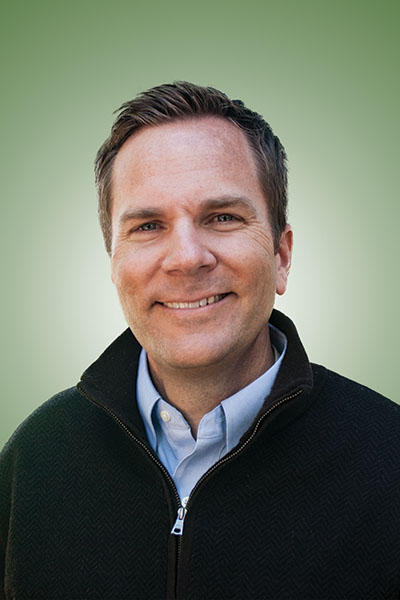
Derek Miner
Derek Miner is a partner at Lemonade Stand, a creative marketing agency, and Build Then Bless, a social impact platform that transforms company culture through individual interactions.
Recognized as one of the top 100 founders and entrepreneurs in Utah, Miner has received Inc. 500 and Inc. 5000 awards five times. He has helped build winning company cultures across multiple businesses.
A speaker and business mentor, Miner enjoys cycling, skiing, playing drums and spending time outdoors with his family.
Episode Transcript
This transcript has been generated by AI and may contain slight discrepancies from the audio or video recording.
Derek Minor: Okay. I'm so excited to have this conversation with you. Thank you so much.
Anita Grantham: I'm excited to hear your experiences. I'd love to start with your history and what happened in the past that inspired you to create the culture you have today at Lemonade Stand.
Derek Minor: Well, thank you. What an honor and a privilege to be here and spend time with you. I'm inspired by your work and all the good that you're doing.
I think my very first experience — I say that I was spoiled rotten because I worked with an incredible management team at an early startup. Startups are crazy. We had super high highs and very low lows. We battled through a lot together, and we showed up for each other in meaningful ways, and I worked with some incredible people. I'm still in touch with many of them today, 20-plus years later.
I'll never forget — we ran out of money. A lot of us worked for free. It happens. We rallied around each other, and we ended up growing the company. We had an offer letter to be acquired. I'll never forget sitting at the management room table in my late 20s, being one of probably two or three people that age — under 40 — and our CEO paused.
He said, "Tomorrow we announce the acquisition of our company, and things are going to change." Then he paused and said, "I feel really bad for you young guys. This is not how business works." I thought he meant all the ups and downs, running out of money, all of that. But he said, "No, the relationships we have here — you'll remember forever."
He paused again and said, "You'll spend the rest of your lives trying to recreate what we have here." And that has been the case.
Anita Grantham: Me too. And you don't realize in the moment what you have. I don't have people calling and asking me for a job. I have them calling and saying, "How can we have that again? I want to go back to that."
Derek Minor: Right.
Anita Grantham: What was it that lives in your heart today most frequently?
Derek Minor: It was showing up every day super engaged in the work and loving who I worked with. I had this saying: you have to love who you work with, you have to love what you do, and the economics have to be right — kind of in that order.
That was a mantra I learned early on. I loved working with those people and loved the customers we served. The relationships I built there — I'm still in touch with so many of them today.
What does that look like? It looks like when you have one of your kids' games and part of the management team shows up to cheer them on. Or — I'll never forget — I was without a car and finishing school, and the CEO came and picked me up. Those were the kinds of relationships we had that were just absolutely extraordinary.
Anita Grantham: That is extraordinary.
Derek Minor: When you take apart the puzzle pieces and ask what it was — it was care. We all cared so much about each other and about the work that we did. I think that's what it was.
Anita Grantham: Okay. Everybody's going to say, "Right, Derek, we care." But did you intentionally choose these people? How did you choose them? Was it a random act? In my similar story, I didn't know what I was getting into. I've rolled the dice, and for every good throw, I've had a not-so-great throw. So was it magic?
Derek Minor: I like to think it was, especially early in my career. But no — I knew a lot of the people there, and I frankly trusted them. When I knew what they were building, I said, "I want to be a part of this."
Anita Grantham: What was it that did that for you? If I'm watching this and I'm early in my career, trying to figure out how to suss out the magic — there are a lot of people. I just had a relationship in a business context that I'm changing because we'd been great friends for a long time, and as we got into the work, I realized things were different than I thought they'd be. How do I navigate that? How do I choose wisely?
Derek Minor: That's a really good question. Trust is built over time and can be lost instantly. The reputation that many of those team members had when I chose to join preceded them. I knew who they were and what they stood for. I also saw many of them sacrificing much for all of us and for serving all of us.
That's what some of the best leaders do, in my opinion — they're the best servants. Servant leadership is incredible. When someone does something for you, you'll answer their call. You'll do whatever you can for them when you feel almost this sense of debt to them.
So how did I select them? It was really through relationships — knowing their reputation, what they stood for, and ultimately what they were building. I wanted to be a part of something special.
Anita Grantham: So that's one of three: love the people you work with. You also said — I'll use my words — love the work that you do. How did you know at that phase and stage that this was the work you were meant to do?
Derek Minor: What was so fun about the work we were doing is that at the time, in the early 2000s, the whole dot-com internet thing was taking off. We saw a massive opportunity and so many customers who needed our help. We wanted to help them succeed in this rapidly changing landscape. We loved serving those customers and loved serving alongside our team members.
A really good culture, when you're building something, comes down to two things in combination: this is what we believe, and this is what we are actually going to do. When those two things are consistent, that's when you have a winning culture.
Anita Grantham: It is the formula. Say it one more time for everybody — I feel like you have to write it down.
Derek Minor: What you believe and what you do — the degree to which those are consistent is when you have "it." A lot of times people go through the motions with values, vision, and mission. "Here's the vision, here's where we're going, here's our mission, here's how we're going to get there, and our core values are the guardrails that keep us on the right path." But do you hire and fire according to those values?
In this case, we did. We held each other to a very high standard. We felt that sense of responsibility — not only for ourselves, but for our team and for our customers.
Anita Grantham: It's incredible. You've done some incredible things. I've read stories about cancer, about IVF. How do you drive towards accountability when life happens?
Derek Minor: Life happens to every single one of us, and life is messy and challenging. We have no idea what is coming.
One of our team members just shared this story publicly. Picture going in for a screening, the husband waking up and having a jovial time coming out of sedation, and then the doctor comes in and says, "I have horrible news for you." Your whole world turns upside down.
What I saw not only strengthened these two incredible people, but I also saw our team show up in a meaningful way — and that's speaking to the current context within Lemonade Stand and what we've tried to intentionally build here.
The immediate question becomes: how do I provide for my family and my two young daughters? The first call was to Greg, my partner at Lemonade Stand. He said, "We've got you, and we're going to take care of you. You're going to have a job no matter what happens."
But then to see the team — his team, her team — all rally around them and say, "How do we show up for each other? Because if we show up for each other really well, we're going to show up really well for our clients." The leadership team and their peers said, "We've got you. We're going to buy groceries for you, give you date nights, and help you through this entire journey." You have no idea what the outcome looks like when you're in the moment.
But as we're now able to look in the rearview mirror, we can say he was able to ring the bell on cancer. And I think a lot of what he shared was, "Look at what my team has done for me. How can I best show up for them?" — even in his moment of trial.
To have that kind of support rally around you when life happens, both through the good and the bad — that's where your values are manifest.
Anita Grantham: That's where they really show up.
Derek Minor: That's right.
Anita Grantham: One of the reasons I love these conversations is I want more leaders to do this. I have a confession to make. Early in my career, I had to go into somebody's house — a team member who had cancer — and tell her that I couldn't employ her anymore because she'd run out of short-term disability, and I had to put her on long-term disability, which we would cover, but she couldn't be an employee anymore.
It was horrible. I knew in every inch of my body that it was wrong. To have a more senior leader say, "We're not going to do that" — how can we inspire that when you have attorneys and everyone saying, "What you do for one, you have to do for all. Equal treatment for everybody."
I kind of just want to encourage everybody listening to say, "Yes — equal treatment of care for everybody, all the time." Is that how we do it?
Derek Minor: That's a great question. Scenarios are different, but I think care and how your values align with how you execute on them are everything. We have to show up for everyone in a meaningful way — with human connection, with hard conversations, with conversations that are not easy.
Anita Grantham: How would you coach that young leader who wants to do something different to have that conversation with a founder?
Derek Minor: It's interesting when you give someone autonomy. The very best leaders are the ones who see the potential in young and up-and-coming leaders and give them the freedom and ability to go, do, and make an impact. Every company and context is a little bit different, so how do you navigate the nuance?
The very best leaders see the best in others and help them become the best. They give them an environment, a culture, a team, and a structure to help them reach their potential.
Anita Grantham: Share with the audience — it's not like you have a dedicated people team here at Lemonade Stand. You're doing it through the infrastructure, almost like a spider web across the team. How do you operationalize what you just shared? How does it work day to day? How do I know how far I can go?
Derek Minor: Great question. One of the things we did early on — in fact, before I joined Greg here — I asked him, "Tell me some of the things you're doing beyond just making money to make an impact." He said, "We give our team the opportunity to contribute a portion of their paycheck, we match it, and then we donate it to a not-for-profit."
I loved that idea. And it was actually through a rejected donation to a not-for-profit that we had this money left over and said, "What are we going to do with this?" So we gave it back to our team and said, "We want you to go do good in your local communities."
COVID put a fine point on this, right? Everyone was searching for connection. We were all isolated and alone. So we empowered our team and said, "You know the needs, you know what matters most to you. Go out and do good — and then will you share the stories back?" That's the accountability piece.
We gave them some key criteria: this is to be spent on anyone other than yourself, and then share the stories. When we started hearing these stories come back — the hearts that were touched, not only from our team but from those impacted — it was absolutely unbelievable. We thought, "We need to capture these stories so they live forever," because this is how we tell the story of our culture and what matters most to us.
Then team members started saying, "I know there are local needs in our community, but I also know a team member who's really struggling right now. How can we help them?" When you pay attention to small details like that, you can have a big impact.
Our clients started catching on as well. They'd say, "We noticed that your team found out I was sick when I didn't show up for our regularly scheduled marketing call, and I got a care package on my front doorstep. Who are you guys, and why are you doing this?"
That was the team rallying around a need and fulfilling it. When clients see that level of care, they start to think, "If your team does this for each other, the work you're doing for me must reflect that same level of care."
We have thousands of stories like this over the last several years since we started doing this — what really began as an experiment. Our clients then started asking, "How can we become more outward-minded like this? We love how your team shows up happy and engaged, and we love how you show up and care for us as clients."
In fact, I joined Lemonade Stand on March 9th, 2020 — a week before the world unraveled. Greg and the team had just brought me on, and it was a relatively small team at the time. As our clients started calling in saying, "We're going to put everything on pause," Greg, John, and many of our team members said, "Why don't we continue to do work for these clients even if they can't pay us?"
I got a sense of, "Who would do that?" And we continued to do that — and they're still our clients today. Many of them for just that reason. To know that no matter the situation, no matter the landscape, we're all in on helping to support them and be our best for them.
If you do that for your clients, should we not do that internally as well? That was a really big moment: let's empower our team to go and do good, trust them, and empower them. As we've done that, that's what builds deep relationships.
Anita Grantham: That's incredible. So we've got great people working on a great mission, and then you said economically viable. What does that look like?
Derek Minor: The economics. You think about why you join something — obviously you want to provide, you want to be part of a team, part of something big. Every person determines what those economics look like for themselves.
To reward someone for the work that they do is very important. I'll never forget when a leader said, "Here's what this means if we hit these specific numbers." By the way, I had also worked for free for months — so this meant so much to me.
When you can see the vision and align around a team, you can say, "Let's go accomplish this together." As we do this, we are all fortunate enough to be blessed. We've put ourselves in a position of strength so that we can weather storms, support team members, and do all of these things.
A lot of people say, "When I hit this number, then I can give back, then I can do this." It seems like you're always chasing that. But what we found is that with very small, even limited resources, we can still give back — and watch what happens to your team's hearts and how they change and how they're impacted.
I love what Claude Silver, the Chief Heart Officer for VaynerMedia, said: the central operating system of the human is the heart. The central operating system of a culture is the people and the humans, and how we lead with heart. That's so powerful.
That's manifest when times are tough and you say, "How do we navigate through this together? And how do we celebrate when things are great?" Having economics that are viable not only for a company but also for the team — that's when great things can happen.
Anita Grantham: That's incredible. Is there a time when a team member has disagreed with how you want to go forward? What happens when you both see a different path?
Derek Minor: That has happened. We've brought people in, they loved the values — and then when the values started to hold them accountable, they didn't so much love them.
Ultimately, it's about having heart-to-heart conversations. One of my favorite questions — we ask it in the interview process and also when people are leaving — comes from our belief in treating everyone the same. I think the off-boarding process is just as critical as the on-boarding process. We want to make sure people leave in a good position.
Where there's misalignment from values, the values are what hold us all accountable — no matter where we are in the organization. When there are values violations, we have to have those conversations.
But ultimately, we try our best to set our team free to become what they really want and where their heart is. We've had team members come in and say, "I just want to be here." We helped show them a path to more, they took on more responsibility, and it's incredible to see them step up.
Anita Grantham: Is there a framework or a training you could share that helps people have those accountability conversations or helps them grow? Is there a ritual you use?
Derek Minor: One of the greatest rituals we have is talking frequently as a team. We have our all-hands meetings where we talk frequently — especially because, ever since the pandemic, we're 100% remote. We invite team members to come into the office whenever they're nearby, but we have team members all over, and we want to make sure that connection remains deeply rooted.
We get together frequently and share stories. One of the things I love most is when we open it up and share Build and Bless stories and experiences. Someone will say, "I was able to do this in my community." And when we feel like, "How can I do more? How can I give more?" — we see and experience someone else who may not have had that opportunity, and we're able to fill that need.
That ritual has bound us together. We're very close-knit because of it. We also talk frequently about our values and showcase team members who are emulating those values — we recognize them and talk about how that looks in different scenarios. That's been incredibly inspiring and has helped draw us together in putting our core values to work.
Anita Grantham: Can you share a few of the core values and how you see them tied back into the work?
Derek Minor: One of my favorites is our first one: smile. It's so interesting because on a Zoom call, a phone call, or in person, you can tell so much when someone is smiling. We actually had one of our clients call and say, "I just needed a smile in my life."
When you can make that impact — when life is so hard and difficult — saying "Hey, team, put a smile on someone's face" is powerful. One of my favorite stories just happened this past week. One of our team members — we empower them to go and do good, and the communication level is high.
Anita Grantham: Actually, real quick — you mentioned Build and Bless as a program. Can you share a little bit about the name and the history? Just for our listeners to catch up.
Derek Minor: Absolutely. This idea of giving our team resources to go and do good in their local communities — we said we're building campaigns, building things to support our clients, but we're also building people. I'll never forget, we were in the office upstairs and someone said, "Hey, how about — we're building this so we can then bless the lives of other people."
I said, "Wait, what did you just say?" And she said, "Build then bless." That became our culture operating system — how do we serve, how do we show up, how do we see people, how do we pay attention to small details in an uncanny way, really to surprise and delight and bring smiles to people's faces.
For example, one of our team members was on a call with a client who said, "Hey, I'm going to miss our next call because it's my birthday." Our team member said, "Oh, what do you want for your birthday?" The client said, "If I could have anything in the world, I'd love to have all of my family over with a big Slip 'N Slide and a big inflatable water slide."
Most people would just say, "Oh, that's a really fun idea for a birthday party. Good luck. Send us some pictures." But our account manager said, "We're going to make that happen for them." They called our team, we all rallied, and we figured out how to get an inflatable water slide.
When the client sent pictures back, she said, "You have no idea what this meant to me." That's how you build trust. That's how you build relationships.
That one small act is the essence of Build and Bless — the same story for a family going through something difficult. So many people think, "I'd love to do good, but I may not have the resources." We flip that script and say, "Now you do." Then your eyes are opened to new opportunities.
That's what Build and Bless is all about. We love to say it's the software that helps us feel human again — the antidote to the algorithm that we're all so deeply in. The opportunity to look up and see. So often our heads are down, glued to a device.
One of our team members said, "I don't know if this is a great story, because I didn't spend any money. I was driving home from my office and I saw someone standing behind her car. She had a car seat down, trunk was popped, and there was a big box in the back." He said, "The immediate thought was, 'What would my team do?'" He turned around and went back. She was trying to get the box up to the third story. He helped her, and she started crying.
These are the kinds of human experiences that are so important. I was listening to Brené Brown recently in May. She talked about the need for deep human connection having never been more important than it is right now. Deep humanity — seeing each other. That is hard a lot of times. Why aren't we more generous, more kind, more often? I think maybe our priorities get in the way.
Anita Grantham: There's this term that a coach used with me — the difference between going through life asleep and going through life awake. What I hear you describing is being awake to catch those details. If you're just going through the motions, you'll never see the nuances.
Derek Minor: That's right. Being awake and aware and paying attention to small details. It's amazing having been the recipient of that from my own team.
My father passed away, and my team said, "Derek, we've got you. Turn off everything and just spend that time." We had no idea how long it was going to be, but that week I had with my family was all-time. I can never get that back. Every minute of every day, I wanted to be fully present. I tried to check in a couple of times, and they said, "No, we've got you."
When I came home, my dad was a concert pianist. There was a big poster on our front door. My wife said, "Did you order anything?" I said, "No, I didn't." I opened it up, and it was my dad's name with music — in a big frame that now hangs above the piano.
Every time I see that, I think about that week I had with my dad without distraction. I think about my team and how much they care for me. That's just one of many examples of how, when we get into the details and genuinely show care and concern, we can show up for someone no matter where they are or what they're going through.
Anita Grantham: When people watch this, they'll say, "Derek, is there a budget? Is there a line item for this?" Not too long ago, I had to fight for bereavement. I went back to the CEO and the CFO and said, "We have three days of bereavement. I don't think it's sufficient." They asked why, and I said, "Hypothetically — your parent, your spouse passes away tomorrow. Do you think three days is going to work for you?"
And then it was, "Well, I'm the CEO. I'll take what I need." And I said, "But what about the team?" We eventually landed on 12 days. But honestly, if I have people on my team, I'm just going to make the call: you come back when you're ready, and I will cover you. But that's a more mature version of me.
So how do we say to founders who are like, "Derek, I can't afford that. How do I know people aren't just taking advantage because they know I'll give it to them?"
Derek Minor: There are two pieces. The bereavement is one thing, and we do our very best to give all of our team members the same. Another one of our team members just lost a mother, and we said, "Take the time and space that you need." And to see our team show up and cover for her — this isn't just a one-time thing because Derek's the CEO. We want to show it across the board for the entire team.
What we've tried to do is be very intentional around having a specific budget that each team member can allocate every month to go and do good. And where we see a need, team members will rally around and say, "Hey, I can use part of mine to help support this because I know it's important to you and to our client."
We've allocated the budget that way because we believe the very best cultures and companies are a collection of stories — stories of impact, stories of making a difference, stories of life. That's literally what happens outside the nine to five. When we open and close the door and go home, we're dealing with all of these very hard challenges.
When we know that someone has our back and someone's watching out because they're more outward-minded — that's what changes the game.
Anita Grantham: What would you say to people who need to have everybody in the office?
Derek Minor: We say everyone works where they want — get your work done, wherever. There is something magical about having people together in person. But to mandate it is tough, especially when there's been a context of flexibility. Humans need flexibility within reason.
But again, it comes back to the core values — how do you live them, and is everyone held accountable to those values in a similar way? We say: we trust you. And trust is earned. With trust comes deep relationship.
Ultimately, we have to have results. We can't confuse fun with results. The reason we can do all of these things is because we have to do great work for our clients. This is the economics piece — it has to work. You have to love who you work with, you have to love what you do, but the economics have to be right. That's essential for a healthy and thriving culture.
Anita Grantham: Definitely. I saw you have five values. We've done smile and trust. I think it's "do what you say you're going to do."
Derek Minor: Do what you say, say what you mean. And there's even more. Another one of my favorites is "listen, really listen."
Anita Grantham: What does that one mean to you?
Derek Minor: You can tell when you're talking to someone and they're thinking about the next thing to say. One of my favorite questions — the one that I've never forgotten — is when someone said, "Tell me more. Tell me more about that."
That means you're genuinely interested in what I'm telling you. That's what "listen, really listen" means. So often we want to jump to a quick solution. Listening — really listening — is so important.
"Serving others first" is another one. One of my favorite quotes is from Phillips Brooks: "How often most men creep into nameless graves while one or two forget themselves into immortality." When someone has done something for you that you couldn't do for yourself, you feel this sense of, "I will do anything for you." You've literally become immortal to me.
We hope these experiences translate into being a better human all around — an opportunity to see each other, not just during the day, but all the time.
Not to be too autobiographical here, but I had an opportunity to travel with my son, who's 14 years old. I learned from a team member and others that most people, when they're serving — even if they have a name tag — won't hear their name for over two weeks.
So as we were heading back to our hotel room, I noticed the people who were cleaning and taking care of our rooms. I said, "Hey, what's your name?" They told me, I called it back, and you should have seen their faces light up — because they do so much, but they are so unseen.
I started doing that, and my son was a little uncomfortable. He said, "Why are you calling everybody by their name?" So I explained: "Think of what they're doing for us as they're coming in and cleaning up after us. What a gift that is." It was a teaching moment — something I learned from other people.
As we were getting ready to check out, I had everything out in the hallway and couldn't find my son. I went back in, and he was handwriting a note to the cleaning crew saying, "Hey, thanks so much for taking care of our room and keeping it clean for us. You rock." He pulled out a little gift card for a sandwich and left it there for them.
I just stopped for a second and thought, "That's why we try to do this." The technology changes so rapidly — now faster than ever — but the relationships we have, those who became immortal, those who helped me become hopefully a better human, they mean something to me. That's what lasts.
Anita Grantham: I do the same thing — I call everybody by name: waitstaff, housekeeping, all of it. We've been traveling all month, and my girls did the same thing. They wrote three handwritten notes when we left our last place, put everybody's name on it. We even went to breakfast, came back, and they said, "We forgot Sylvia. We have to add Sylvia." They undid the note, put her name on it, recolored it, closed it back up, and delivered it. And it's these little demonstrations at home and at work — that's where culture change happens.
Derek Minor: That's right. It's not on the wall. It's showing those things.
Anita Grantham: But they get kind of embarrassed — like, "Mom's calling so-and-so by name again. Does she have to talk to everybody?"
Derek Minor: This is what we believe, and this is what we're going to do — do we actually do it? Do they see that consistency, not only with our team but also at home, with our friends, and in everything we do? That's how you build trust.
Where those things are misaligned — you talked about it at the beginning — that's really hard. Sometimes you have to say, "Values-wise, where I want to be and where I want to go is not in alignment." You have to find a different path and work with those who are aligned. Everyone wants to do good in some small way.
Anita Grantham: I was having this conversation yesterday, and we were outlining the millions of dollars I've given up by making different choices. Everything is a trade-off — you could stay and sacrifice your integrity, and there's a cost for that. There's also a cost for caring about what you stand for. For me, that choice has gotten easier and easier over time.
But if you think about the cost of care, how do you think about it? Now it just doesn't matter to me, because I know I can go find another place with people who align with how I see the world. I'll take that risk every day. But it's taken a lot of time to seek it out. What would be your advice for understanding the cost of care and how to apply it in making those hard choices?
Derek Minor: I think integrity is exactly as you described — do what you say, say what you mean. And the litmus test is how many times I say that to myself and then actually follow through.
When you do have to step away because of total misalignment, it's hard. There are decisions I've made where I thought, "That was really hard" — but I believe it was the right one.
Anita Grantham: And so if somebody says, "I can't do it because I won't know how to put food on the table" — I get this question a lot, especially from people in the head of people position. They'll say, "I don't agree with where my CEO's going." It may even border on something egregious. And in these conversations, I feel sometimes I'm perceived as flippant because I say, "Well, then find a new partner." But the fear is so great — fear of not being able to provide, not having stability.
I just believe that if you can close one door, there's another door that will find its way to you. How could we inspire these people to say, "You will find something else"? I'll reach out to people and say, "How can I help you find the next thing? What do you need?"
Derek Minor: Absolutely. For those in that scenario, the ability to show up, be there, listen, help, and understand is so important. For those in the process of making that decision — that's really difficult. More than anything, how fast everything seems to be moving means people often just feel forgotten.
So how can we reach out and genuinely listen? The University of Toronto did a study that says every day we have nine opportunities for empathy. Empathy is best demonstrated in those scenarios where you say, "Look — I've actually been in that situation. How can I best help?" And then follow through on those actions.
These are messy, hard, difficult things to navigate, but knowing you have a trusted relationship or a friend who can offer help, advice, or just sit and listen is priceless.
Anita Grantham: It is, especially at work. There's no greater gift than being heard. And if you can provide that gift, it's the moment you'll remember forever.
Derek Minor: Which is one of our core values: listen, really listen. Listen with the intent to genuinely know, not just to reply.
Anita Grantham: Have we gotten through all five of your values?
Derek Minor: There are actually more. "Always keep learning" is another important one.
Anita Grantham: How does that one show up at Lemonade Stand?
Derek Minor: We give almost every team member the opportunity to train in their specific domain of expertise. Then we ask: What have you learned? How has this impacted our clients or our clients' results? And they share with the entire team.
These are opportunities to come together and share stories. It's great because when we share these stories, people can see themselves in them and think, "If they're doing that from a learning perspective, there's something I could do. Let me look at my area and see how I can make a difference." That's what "always keep learning" means — listening, learning, and trying to be better all the time.
Anita Grantham: That's great. Are there any more we haven't worked through?
Derek Minor: Yes, there are more. Build and Bless is our culture operating system for how we execute on all of this. "Be humble" is another important one.
When I first started, I responded to a customer as though they were a new customer, but they were actually a current customer. John, who is the president, called me up and said, "Hey, tell me about this response." He called me right out on it. I had no idea. But I hope I was humble enough to take that feedback — knowing that John's intent wasn't to attack me, but just to say, "Hey, this is one of our core values that we want to live by."
Anita Grantham: What a great example — having the courage to say, "Hey, maybe this could have been better or different." And this is where I think it gets tricky. People will say, "Well, no, that's not how I meant it." That defensiveness — "No, no, I am humble." Have you had that response before?
Derek Minor: Hopefully you're never in a scenario where you're saying, "Oh, look how humble I am." Because once you think you're humble, you actually aren't. But the opportunity, again, comes back to another core value: help me understand where you're coming from, and really listen to find out where they are.
And from Covey — seek first to understand, then to be understood.
Anita Grantham: That is the gold standard. It's so good.
So Derek, we've talked a lot about care and what it means and how you use it to show up at Lemonade Stand. I can see some of our viewers saying, "Derek, that seems so soft." What would you say is the way to look at it from an ROI standpoint? How would you categorize the return on what you've done and why others should consider it?
Derek Minor: That's a great question, because I think a lot of times the soft stuff is hard. I'll share some specific examples of what we've seen.
There were key metrics we were measuring — like the very first engagement we have with a customer. When they first reach out, how quickly do we respond? We put the Build Then Bless model and mantra into place and said, "Let's find a way to bless their lives. Let's pick up on little cues in the background of their Zoom call — and then ask questions." And the conversation shifts — "Oh, these guys are real people." They don't just have an agenda to sell something.
On sales calls, if we're not the right fit, we'll let them know upfront. But we also said, "Let's put this to work on the sales side right from the beginning." At the end of a call, we'd say, "We'd love to send you something for your time — thanks so much." We'd find something meaningful and send it, whether they did business with us or not.
We'd then work on the proposal and send it out, and oftentimes that something would show up right as they were reviewing it. They'd say, "This is different — tell me more about why you're doing this."
Our close rate, which we already thought was really good in the double digits, went over 50%.
Anita Grantham: That's incredible.
Derek Minor: Just by having genuine conversations and picking up on those little cues. When our sales close rate went up, we said, "Wow, we're onto something." When people called to ask, "Why did you send that to me?" it's because we genuinely wanted to. And if that's strange for you, we may not be the best partner — because we genuinely want to show up for you in a way that hopefully surprises you in a meaningful way.
We had a client say, "Hey, I'm going to miss this call. We're actually coming out to Utah to take a tour of the Mighty Five." When he got back, we got a call: "Why did you guys do this?" We had sent him and his family a picture of all the national parks so they could remember that experience.
Okay, that's really soft. But we did it in an effort to build that relationship. Where there's more trust — delivered consistently through what you say and what you do — that's what helped us win more business. We looked back at that close rate and thought, "Things are working."
One of our team members internally put together a little survey that asked, "Has Build and Bless impacted your wanting to stay at Lemonade Stand?" It came back at 95%.
Anita Grantham: Yeah.
Derek Minor: They said, "Yes, this means something to me because I can now do something outside of myself. And I've also been impacted by this." So we saw engagement — not only engagement, but also connection amongst the team. We saw team members continue to perform at incredible levels.
Our retention was amazing, and our team members were happy and engaged with each other. Sales close rate up. Team doing amazing work. And on the client side, we had a few clients who left, chose someone else, and then came back — because they said, "We didn't like that experience. We'd love the opportunity to connect with you again."
If you look at dollars and cents, we literally saw a return on investment — not only for new customers, but also for current customers and returning customers, just based on that experience. In terms of total dollar impact, we've seen our business continue to grow while many others haven't.
Anita Grantham: You're here, and it's working, and it's growing.
Derek Minor: That's right.
Anita Grantham: That's incredible. Because a lot of times, too, when customers see that happening, they want to give you more business. Has your expansion motion also increased?
Derek Minor: Can I share one of my favorite stories? This is really soft — but if you can do something like this and make someone's day, you never know what will come as a result.
One of our team members was just starting a call, and in the background, her dog was going crazy, jumping all over the place. She was on mute and said, "Oh my gosh, I'm so sorry." Our team member said, "No worries. Come off mute. What's going on?"
She said, "I'm so sorry. We'll make this call nice and short." Our team member said, "Your dog is obviously very excited to go spend some time with you." She started laughing and said, "You'll never believe it — it's my dog's birthday today. We're going to have a little dog party and everything."
Most people would just say, "Oh, I hope your dog has a great birthday" and move on. But our team member, through the Build Then Bless platform, ordered a BarkBox and sent it off. She called back and said again, "Who are you guys, and why are you doing this?" Because we genuinely just wanted to celebrate alongside her.
We tracked over a year how many referrals we saw from this client. How much was the actual revenue impact? It was in the mid-six figures of referral revenue. We didn't do it for that reason — we did it because we genuinely wanted to show up and say, "We care about
Feature Story

Find out how Ally Financial uses employee feedback to shape its benefits strategy, from family support to menopause care, while boosting engagement.
Enjoy On Your Favorite App
Feature Stories
As part of SHRM's commitment to providing cutting-edge resources, get additional perspective and more insights in content curated from SHRM and around the web.

Deciding to openly share compensation information across your workplace requires careful planning, stakeholder buy-in, and a commitment to ongoing communication.

Learn how inclusive spirituality initiatives in workplace wellness programs can reduce stress, boost resilience, and foster connections among employees.

Discover actionable strategies to foster trust, improve communication, and strengthen relationships with team members by avoiding common leadership pitfalls.