Culture Creators, S1, EP10
A Culture System: How This Company Kept Turnover at 4.5% Without Paying Top Dollar
- Video
- Audio Only
In 1993, turnover at Southwest Airlines was 4.5%, less than half the industry's, and the company wasn't paying top dollar to keep anyone.
Ann Rhoades ran the People Department then, went on to co-found JetBlue, spent 15 years on its board, and now runs PeopleInk. Culture, she says, is not an HR project. It's a five-part operating system, and most companies build the first part, hang it on a wall, and stop. In this live season finale, she walks through all five, plus what to say when your CEO won't live them.
In partnership with:

Tools + Guides
Podcast Episode Guest
-
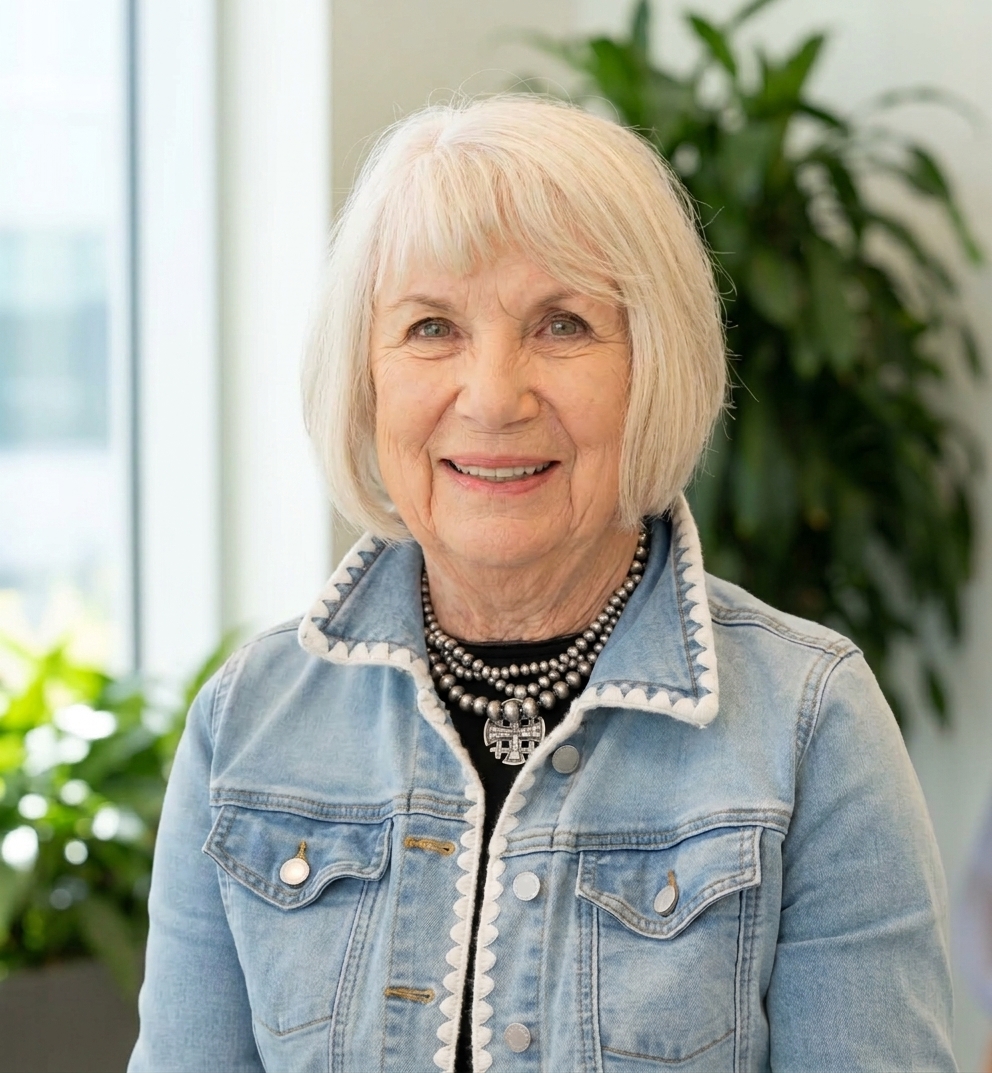
Ann Rhoades
With more than 25 years of experience in a variety of service-based industries, Ann Rhoades has been part of the development of some of the most recognizable and impactful corporate cultures in America. Currently, she serves as the president of People Ink, her consulting company that helps organizations create unique workplace cultures based on values and performance. She previously held positions of vice president of the people department for Southwest Airline, executive vice president of team services for Promus Hotel Corporation, and, most recently, the executive vice president of people and co-founder of JetBlue Airways.
During her time as the head of the people department at Southwest Airlines, Rhoades helped solidify Southwest’s reputation of retaining and hiring the best people in the airline business. Today, Southwest Airlines is consistently ranked as one of the best airlines in the United States and has been listed as one of the best companies to work for. Thanks to her work, Southwest Airlines remains at the top of the airline industry for safety, corporate culture, customer satisfaction, and employee satisfaction.
One of the five founders of JetBlue Airways, Rhoades once stated that she wanted to bring humanity back to air travel, and it started with hiring the right people at the top. Today, JetBlue is consistently rated as one of the top airlines for customer satisfaction and has been recognized as one of America’s best companies to work for.
Rhoades’ passion for improving human experience also extends to the patient experience in healthcare. As a UNM Health Sciences Center Board of Director, Rhoades has worked to bring her leadership model to the healthcare industry. Rhoades was part of the team that opened the UNM Sandoval Regional Medical Center in Rio Rancho, New Mexico. Her team understood that the human element—the physicians, nurses, and staff who would be providing the services—was just as important as the physical structure. In 2013, Press Ganey Associates named the Sandoval Regional Medical Center as one of its Guardian of Excellence award winners. This prestigious award recognizes top medical facilities that have consistently achieved the 95th percentile of performance in patient satisfaction.
Rhoades has served on more than 20 corporate and nonprofit boards in her career. This distinguished list includes the University of New Mexico Health Sciences Center; UNM Alumni Association; Safer New Mexico Now; New Mexico Appleseed; JetBlue Airways; P.F. Chang’s China Bistro; HireVue, Inc.; the Executive Council-Center for Patient Safety Research and Practice; Brigham and Women’s Hospital and Harvard Medical School; Accion New Mexico; Restoration Hardware; the Albuquerque Community Foundation; the University of New Mexico Foundation Board; United Way of Santa Fe; Western Warehouse; and the University of Dallas.
In 2011, Rhoades published her book, titled Built on Values, about creating an enviable culture that outperforms the competition. The book helps companies get on the pathway to greatness by showing the exact steps for either curing an ailing company culture or creating a new one from scratch,
Episode Transcript
This transcript has been generated by AI and may contain slight discrepancies from the audio or video recording.
Ann Rhoades: You can never keep C players. If they don't represent the values of the organization, it's on you as leaders. Culture is a collection of behaviors of an organization, and when a leader does not behave in that way, those values aren't worth the paper they're written on.
Anita Grantham: Ann Rhoades is a bestselling author, executive, and co-founder of JetBlue Airways. She pioneered Southwest's acclaimed culture, setting a new standard for human resources leadership. As the founder of People Inc., she helps companies build values-based workplace cultures to scale hiring and performance.
Ann Rhoades: Attract and develop, retain talent — that is the number one job if you're in the people side. What you need to do is be a partner, and partnership means it's 50/50.
I'm doing the reviews with the CEO. He wants to give a raise to someone who at the time was not one of his top performers, and he was going to give a significantly less raise to a female who was a top performer. I asked why he was doing that, and he said, "Well, because her husband makes a lot of money. I know who he is. The guy needs it because he has a small family." I said, "If you do that, I will quit today."
Anita Grantham: We're going to start where Nate left off, which was the interview with Johnny, and how many CEOs that Johnny meets don't want us, Ann. I heard that, and literally, this is where I wanted to stop my face from reacting as I was talking with him. Can you talk a little bit about your relationships with the CEOs that you've worked with, and how you've built a relationship of trust? I think culture comes from the relationship between the CEO and the CHRO. What can we learn from how you've done that?
Ann Rhoades: I was lucky enough to work for a lot of great CEOs. The most famous one was probably Herb Kelleher at Southwest, though David Neeleman and many of the others I've worked with were great, including Peter Ueberroth. The great thing I learned quickly is we need to have the same agenda.
Working with the CEO means that HR really needs to be part of the system. When they say you have to be part of the business, they don't mean just understand the financial situation — you have to understand operations. We actually make any HR player that we hire spend time in operations before they ever go to their office.
An example is Joanna Geraghty, the new and first female president of any major airline in the country at JetBlue. Joanna started in HR, and then she went to operations. But before she ever spent her first day in HR, she spent 60 days in the field learning the operation — that was by design.
Then she became the COO, and now she's the president. My point is they have to understand that you understand the business, and then talk about how you're going to get to where they want to go in terms of culture. I think culture is critically important to the success of an organization.
Understand that you need to be on the same track and know what they want in terms of their culture definition. In other words, this is the "is" state. This is where you're going to help them get, which is the "wow" state. You need to be a partner. And I hate it when I hear that only 10% of CHROs are seen as great by their CEOs — that just isn't acceptable.
Anita Grantham: Ann, you've talked about two things I want to make sure everybody here really hears. One, you said, "If you want a seat at the table, don't just read financials — get in and understand the business." When Ann says operations, she doesn't mean HR operations; she means the operations of the business. So what advice would you have for this group to go back and do next week?
Ann Rhoades: How many of you have ever spent time in operations? And as a result, what happened?
Audience Member: Understand more.
Ann Rhoades: That's right. And you understand what you have to do to make them successful. At Southwest, my entire team met with the heads of operations and the COO every single month to understand how we get them where they need to get in terms of results.
It is critically important that culture is not an HR project. Culture has to be operationalized, and it has to result in a higher level of performance. It is not soft. It is not unmeasurable. But to do that, you have to understand where they need to go and how you can help them.
Anita Grantham: Before we get into operationalizing culture — because that's a hot button for both of us — you also said you've got to be a partner with the CEO. Was there a time where you and Herb, or any of the great CEOs you've worked with, didn't see eye to eye? And what did you do to build that level of trust and partnership?
Ann Rhoades: I think that will happen to everyone. How many of you have had an experience where you and the CEO did not agree? Pretty much everyone in the room.
What I found is that when that happens, you sit down and talk about it. I'm very clear about going to the CEO and not letting the partnership fall apart. If you're a partner, you start talking. If you aren't a partner, you sit there and fume, or you leave.
What you need to do is be a partner, and partnership means it's 50/50. You have to ask them, "What do I need to do to help you be successful?" Everybody wants to know what's in it for them — and that includes CEOs. Being a CEO is a lonely job. How many people actually evaluate a CEO or tell them the truth?
I honestly believe they need you as a partner. Herb used to say his favorite job was actually mine — the head of people. He said, "Without a great culture and a great people organization, our customers will never be satisfied."
It's about your people coming first, and then they make the customers happy. I know there are many people in this audience who know that, believe it, and live it. But you have to be a partner — remember that, ask them what you need to do, and then deliver.
Anita Grantham: I've had the pleasure of spending the last 24 hours with Ann, and it's been wonderful. One of the stories she shared earlier is that being a partner doesn't mean that you agree. She has been explicit about saying, "No, I will not sign off on that. This isn't the way this is going to go." I find that oftentimes people are afraid to draw the hard line.
Is there an example you could share around that? Because I think it amplifies what partnership really is. We were talking earlier about how not enough people are honest with their CEOs. A lot of our founders are young — they've never worked anywhere else — and so we have to be that hard line for where the culture needs to be upheld and when people are pushing it over.
Ann Rhoades: I've had many disagreements. Some they were right about, and some — well, I always thought I was right. Right after grad school, I went into banking. I had my MBA in finance and strategic planning, and I went to work for a large bank in Texas.
The CEO and I were doing performance reviews together. He wanted to give a raise to a male employee who at the time was not one of his top performers, and he was going to give a significantly smaller raise to a female employee who was a top performer. I asked why, and he said, "Well, because her husband makes a lot of money. I know who he is, and the guy needs it because he has a small family."
I said, "If you do that, I will quit today." He came up to my office afterwards as I was literally starting to clear it out. He apologized, said he would never do it again. That was 30 years ago, and I still talk to him — he says he still remembers what he learned that day.
Don't be afraid. Always stand up. I have example after example. I had another CEO in banking who became my mentor for 25 years. He loved one of the individuals who ran one of our bank branches and told me how great he was.
I did a tour in operations and spent time as the assistant manager of that branch. The manager didn't care about customers. He was a very poor leader and certainly wasn't living the values that our CEO espoused. I went back and told the CEO, "We need to let him go. I've talked to him. We've worked with him. It's just not going to happen — he's never going to emulate the values of this organization."
The CEO said, "I can't. He's like my son. I know I can change him." So I got his resume and sent it to the competition. He started getting calls from other banks, called me and said, "Wow, I'm getting a lot of calls." I said, "That's great. You ought to go talk to them." And he got hired by the competition.
There is always a way. You can never keep C players. If they don't represent the values of the organization, it's on you as leaders to let people go, even though it's extremely tough, when they are not representing the values of the organization.
Culture is a collection of behaviors of an organization, and when a leader does not behave in that way, those values aren't worth the paper they're written on. We all have values — either ones you decided on or ones that just happened. We all have a culture.
If you haven't defined your values, how do people know what they are? They watch the leaders. It's all about behaviors at the end of the day. And there is always a way to not retain the people who don't fit your culture. You'll be amazed at the results.
Anita Grantham: We've talked about operationalizing values, and Ann's book is here — it's a whole blueprint for how you do this process, and it's where people miss. We call out values like "integrity," but we don't talk about what it means. Can you share how you actually go about operationalizing values so you can help CEOs and executive leadership teams see the difference between values and the behaviors and actions that bring them to life?
Ann Rhoades: Whenever we do values blueprinting sessions with companies, it's always interesting. Integrity, trust, honesty — it always becomes one theme, because we always want some variation of that within our organization.
We had integrity as a value at JetBlue when we started, and two people came in after an incident that had cost $100,000 on one of the aircraft. Both were high performers in the baggage and operations area. One came in and blamed the other. The other came in and took total ownership — and by the way, both had been involved.
I told David, the CEO, who really cared about both employees, "We have to let one of them go." He said, "One? You have to let both go." I said, "No. One lived the value — he admitted it and had the integrity to tell us the truth." That is how you actually operate by living the values.
You stand up for those who live the values, and you take a risk. Some of the lawyers told me we had to let both go. We let one go, and we never had a problem with it. In those moments, you have to make sure you're living the values even when it's tough.
Anita Grantham: You mentioned that at Southwest Airlines, you paid below market and still had the lowest turnover in an industry notoriously high in turnover. Do you think that would still apply today? Do you believe these values about how to treat people and run companies hold true so that we can invest more back into taking care of them?
Ann Rhoades: I think you have to pay market — I would never say below market. But when I got to Southwest, we didn't have that much money. We were close to market, but not at market, especially for critical positions like pilots who could go to American in the same city. We were slightly below market, but we had a reputation for being a great place to work, and that was genuinely helpful.
We ended up getting applicants we wouldn't normally attract when we weren't paying quite as much as others. And today, I still believe that holds true. We pay market. Of course, in New York, you have to pay almost above market to get anyone.
But JetBlue and Southwest, at any given time, never have fewer than 100,000 applications when other industries can't even find people. The latest number I got from Southwest is over 200,000 applications, and JetBlue has 100,000. People still want to work for great companies.
If you read anything about Gen Z and what they want, people don't create best places to work to be featured in the news or on the Fortune cover. They do it because there's an ROI to it. The ROI is attracting people who are competent and have the right values.
It's never been more important than it is now. We don't have as many A players who are eager to work. But great places to work still have applicants — and that's my point about both JetBlue and Southwest. Even though there have been changes in both organizations recently, they are still very attractive to talent. The first thing you should always do — and remember — is attract, develop, and retain talent. That is the number one job if you're in the people side.
Anita Grantham: There's something else you do, and you have a very specific term for it: re-recruiting. You mentioned that you call your team — because Ann is CEO of PeopleInk and has her own team — you call them every day to re-recruit them. Can you talk a little bit about that process? Maybe the Thanksgiving story would be a good one.
Ann Rhoades: Herb was one of those people who was an intuitive leader. Every Thanksgiving — which, by the way, is the worst time in an airline; not Christmas, Thanksgiving — he would tap the shoulder of an individual working in operations, tell them to go home with their family, and he would work that job that day. And he continued to do that in several ways.
Re-recruiting became critical to me when I was at Southwest and we had reservation centers that were physical locations. We looked at the performance of three major res centers and saw that one consistently outperformed the others.
We went to see what behaviors were consistent with that leader and what the leadership traits were, so we could duplicate them. We had a lot of turnover in our reservation centers, and they were critical to our success — this was before reservations were largely taken online.
We found one behavior from that res center manager that was completely different from all the rest. She ran three shifts — it's 24/7 — and every single day, the first thing she did when she walked in the door was talk to every employee. Before she left the second shift, she talked to every employee. Her assistant manager did the same thing first thing when they came in. I call it re-recruiting every single day.
Average turnover in a reservation center at that time was 25%. She had 6%. Most of what she couldn't control was people moving or wanting to stay home with family. It was incredible. We started duplicating that behavior with other managers and got the same results.
Think about what turns your people on, and make sure you duplicate those behaviors. Leadership behaviors matter. Look at your greatest leaders, duplicate what they do, and remember — it's the little things that make a real difference in outcomes.
[Sponsor segment — Derrick Hall, President and CEO of the Arizona Diamondbacks, discusses Nectar.]
Anita Grantham: There's another thing you shared while we've been chatting, and it's something I think our profession needs more courage around. You ask your vendors for what your employees want. You don't make decisions for them — you let them tell you. Can you share a little bit about how you do that?
Ann Rhoades: I've never believed that we should sit in a room and design the benefit packages ourselves. I have always believed we need to ask people what they need.
At JetBlue a few years ago, we kept getting feedback through our "Speak Up" employee survey that employees weren't really excited about the benefit package. So we started asking them, "What is it you would like that you're not getting?" We thought we had a great benefit package, so we asked what was missing. Pet insurance. We got it. They love it. And it doesn't cost us a penny because the pet insurance company wanted access to another 24,000 potential customers.
There are so many things people might want, but if we don't ask them, we'll never know. I'm also a believer in flex benefits. I believe we should give people an amount to spend, because our lives change.
When we're single, we may not want the ultimate health and welfare benefit package or want to spend that much money. When we have a family, we want family coverage. But later on, there are other things that might be more important. So why wouldn't we ask people again what they need?
You give someone — I'm just making this up — $10,000 to spend. What would they like to spend it on? In HR we say that's too hard to manage, but with technology today, it's not hard at all.
We started JetBlue 26 years ago and did exactly that. The pilots wanted stock, a greater 401(k), and profit sharing. The flight attendants wanted more money per hour — we tried to give them stock, but they wanted something else. They all got profit sharing, by the way. And our mechanics wanted something totally different. So we created three packages — and that was before we had the technology to support it.
Our turnover was in the single digits when the industry's turnover is typically double digits. It sounds simple, because it is simple. It's one-on-one leadership: figure out what they want and find a way to give it to them. It's just that simple.
Anita Grantham: It's so good. There's another thing you did at JetBlue around bringing humanity back to flying.
Ann Rhoades: That was our theme — let's bring humanity back to travel. It's funny, because I was on a flight going to a board meeting from Albuquerque with David Neeleman, the CEO. It was an American flight because JetBlue didn't fly to Albuquerque at the time.
We were boarding, and a flight attendant on American was asked to help an older woman put her bag in the overhead bin. The flight attendant said, "That isn't my job." David and I put her bag up. I couldn't wait to tell the board. And then the flight attendant added one more comment: "Do I look like a JetBlue flight attendant?"
I couldn't have paid her for that. If I'd had a recording, I could have sold it for a mint. Because one of the things we decided to do when we started JetBlue was not to be like everybody else — not to have rules that kept you from delivering an outstanding customer experience.
Has anyone flown JetBlue? What do you think?
Audience Member: Great.
Ann Rhoades: The people are the critical part. Southwest, JetBlue, and Delta consistently get the top customer satisfaction scores. I checked the latest numbers last night, and we're still in the top three. That's because people come first, and as a result, the customer feels it.
It's simple. It's not difficult. We can't blame technology. We can't blame anything else for not serving people. We have to continue to lead by caring, by hiring the right players first, supporting them, retaining them, and having them deliver on the promise.
Bringing humanity back to air travel also meant we wouldn't charge for things others were charging for. One of the first questions we started asking was, "What is the one thing you would change on JetBlue?" The first thing they came back with was, "We hate your coffee." It was Seattle coffee — expensive. We thought they'd want expensive coffee. What coffee do you think they wanted? Dunkin' Donuts. Saved us $100,000 the first year.
Anita Grantham: A year. That's incredible. So, Ann, what would you say to the cynics in the audience? They're going to say, "Ann, this sounds great, but my husband doesn't have a job. I can't have the courage you have. I can't be that honest with my CEO. I have to do what I'm told and keep my head down." What would you say to someone to help them gain the confidence —
Ann Rhoades: Well, while you look for another job — no, I'm kidding. What you need to do is find out what the expectation is. At the same time, it's very hard to work for someone who doesn't share your values, and I won't sugarcoat that. There are situations where you have to endure it for a time.
But at the end of the day, if you look at most of the data, it shows that long-term, we don't perform as well if we aren't working in an environment where the values align with our own. I believe you need to find the right place for yourself.
And I disagree with the idea that only 10% of CEOs value HR — that's going to drive me nuts. Today's CEOs increasingly know and believe that culture is important. Having a strong HR leader who ensures culture is defined, lived, and breathed is critical. We get calls all the time from CEOs starting companies who want to make sure they begin with the right culture. They understand the value of it.
It's really worth making sure you work for someone who understands that. If you're in the people side, make sure you work for someone who values it.
Anita Grantham: You shared something else I want to highlight. You said being a CEO is awfully lonely, and a lot of people don't tell them the truth. Johnny actually said this in the first interview of the season — he said, "One of your key jobs is to be a truth-teller." I think finding that inner confidence to be a truth-teller will actually serve you well if you can just take that step. You'll be rewarded for it. Find your inner Ann and go for it. Ask yourself, "What would Ann do?"
Ann Rhoades: That's a little scary. But here's an example. As we grew at Southwest, we did an evaluation of all of our station managers — what we called GMs — across all the cities we had. We were seeing more turnover and not getting the feedback we wanted.
The evaluation consistently showed that about 10 of those GMs were not living the values and had not embraced the culture of Southwest. But they were original employees, and Herb had a loyalty in him that would not allow him to let go of anyone who had been with him so long.
I went to him with the feedback — specifically the data from the employee surveys — and he said, "Ann, I just can't do it. They've been with me forever." I said, "But we're not getting the outcomes. We've tried and tried — we've sent them to leadership training — and it didn't work."
He got pretty upset about it. But then he called me later and said, "Let me do it one by one, and let me see if we can change some of it, but if we can't, I'm going to agree with you — we need to do it." And by telling him the truth, he said, "I appreciate you telling me, because people should have been telling me this before."
Telling the CEO the truth not only makes you a partner — it makes you a valued one. I know it's tough, but the results speak for themselves. You're not only helping the organization, you're fulfilling your role: to drive a higher level of performance and build great culture. If you don't do that, you're not doing right by the organization. It's tough. It's not easy. But once you do it, you'll do it every time.
Anita Grantham: That's true. Early in my career I didn't have the courage to do it, but once I came around to Ann's way of thinking, I'll never go back. A lot of times CEOs say, "Can you just stop already?" But I just can't stop myself anymore. Once you get over that line, there's really no going back.
Ann Rhoades: And I really believe that you become more valuable when they know you're going to tell them the truth.
It really is hard being a CEO. It's very tough when no one is telling them there's a way to improve performance. And sometimes the person they trust most is the problem.
When we started JetBlue, the president was Dave Barger, and he had brought someone who worked for him for years at Continental Airlines. He was a friend — the godfather of both of this individual's children — but he was not performing, and what he was not doing was living the values we had committed to.
Dave asked me to let him go, because he just couldn't do it himself. Once we let him go, the rest of the team came to us and said, "We wondered if you were really going to lead with values, because we knew he was a good friend of the CEO's, and we knew he was not performing at the level and not living the values."
I can't overstate it — it's the toughest part of your job. But being honest is really what it's all about.
Anita Grantham: You know, every executive I've let go actually calls me for a reference. It's really interesting — if you do it the right way, it works out. And I think you've also shared examples of giving candid feedback to senior-level candidates when they're not qualified for the job. This is another area where we need to build our muscle. If you ever want to know why you didn't get hired, you can call Ann and she'll tell you. We've gotten afraid, and frankly soft, about giving candid feedback. We need to let people know why they didn't get the job — it can be genuinely beneficial to the rest of their career.
Ann Rhoades: Honestly and truly — when you let someone go or when you interview someone — we've been told just to say things like, "You didn't fit the job," or "We're eliminating the position." All kinds of vague explanations.
Anita Grantham: AI did it.
Ann Rhoades: AI. Yes. So we had a senior pilot, and we were really short on pilots. I had moved to peer interviewing in the airline world — I had pilots hiring pilots alongside an HR professional — and no one had ever done it before. We did it at Southwest, and one day this pilot called me and said, "I cannot believe you're not hiring me. I have offers from American, United, and Delta."
I said, "Let me pull the comments that the pilots made, and I'll call you back." I called him back the next day — I didn't answer right away because I needed to verify it was actually him and not an attorney.
I called him back and said, "The comments say: arrogant, arrogant, arrogant." I said, "You do know that arrogant pilots can cause accidents. That's why we are not hiring you." He hung up. He was furious. He called me back the next day, and I thought he just wanted a job.
He said, "I'm so sorry. I apologize." I said, "I wanted to give you real feedback in hopes that it would help you going forward." He said, "I told my wife what you said, and she said you're right." So I saved a marriage.
Anita Grantham: I love it. I want to switch gears a little bit. We've done nine episodes, and as our finale, there are a few common themes. One: all great companies have CEOs who live the values and behave accordingly. Another: many of these CEOs have backgrounds in marketing and communications, and there's a shared language there. Can you share how you see what this job really is, and what marketing and communications can do to operationalize culture?
Ann Rhoades: First of all, HR is a marketing job. I've always felt it should not be siloed — it should be very active and fully part of the organization. I've always reported directly to CEOs.
Marketing means you've got to be able to sell what you represent. I've always felt I should be the biggest ambassador for the company. Having some marketing background genuinely helps. My head of talent at Southwest and at JetBlue came from operations and from marketing.
I really believe you have to incorporate people with those backgrounds, and there are a lot of HR professionals who are best at marketing. Look at Anita — she believes it and she lives it. HR has to be a marketing job. How can you hire people and not be excited about the organization you're asking them to join?
I'm a huge fan of bringing operators in. Once I brought pilots in to hire pilots, we cut our training costs — which were millions of dollars a year — by 15%, because they knew how to hire pilots. And I always had candidates see the head of talent on the way out.
We had 100% acceptance rate. Because it is a marketing job. You've got to convince people they want it. From the minute you interview them, you've got to make them want to work there. Even if they have to go through three or four more interviews, be the welcoming committee. Don't be the person they don't want to see again.
Anita Grantham: You've also shared that core values are really a brand.
Ann Rhoades: It's a branding exercise. When you fly Southwest or JetBlue, what do you think is one of the values? Southwest is known for it.
"Have fun" is one of the values. You won't be hired there unless you can answer the question: give me an example of a time when you used your sense of humor in a tough customer situation. It doesn't matter what job you're applying for — you will never be hired without that example. They want people with a sense of humor, and that has been part of the Southwest brand.
Anita Grantham: I'm going to switch gears one more time and go back to the CEO-CHRO relationship. Who takes the lead?
Ann Rhoades: It depends on the situation. The CEO should take the lead as soon as they hire you in terms of articulating what they want. Herb sat me down and said, "We've never had a head of people. We've had operational players doing the HR job, but we've never had a true head of people." And my question was, "Why do you have it now, and what do you want?"
Because at the end of the day, I had to deliver on what he wanted. He took the lead in telling me what he wanted, and then he expected me to lead in delivering it.
We had a problem with hiring when I got to Southwest. We were hiring people who had been referred in but who had never really been interviewed for competencies and values. We completely changed to behavioral hiring, and it totally changed the outcomes — the turnover, the results. It took about a year, but we completely turned it around. He led by telling me what he wanted, and then I took the lead in delivering it.
Anita Grantham: You also — and people will say this often — "I can change my CEO." What would you say to that?
Ann Rhoades: Good luck. Honestly, it depends. When I came in, CEOs always said they wanted a great culture and a great place to work, but they weren't always sure how to do it. In our world, we build it around a set of values and behaviors that consistently become the brand. It's a five-part process, and they don't always know how to do it — they know they want it, but you have to systematize culture.
It starts with values and behaviors — not just words. The second thing is you have to have a hiring model that reinforces those values and the competencies. The third is you have to build recognition and reward systems.
If you don't do that, you're never reinforcing accountability for getting the right results the right way. The fourth thing is to build that model into your branding. And the fifth is that every single person in the organization has to know the numbers.
You need metrics that everyone can see every day. At JetBlue, you turn on your phone and see the 10 metrics we track, and you see yesterday's results. Every station asks every customer who comes through, and employees answer questions every day. We see the results the next day.
We have a group that looks at customer satisfaction and employee satisfaction every single day — red, yellow, or green. You turn on your phone and see what customers said in your station, wherever you are, about yesterday's performance. People have to know the goals and know what they are — and you have to help them do that.
That has to be part of the process. You have to work with finance, marketing, and all the other parts of the organization — not stand alone in HR — to get those metrics that will tell the story. What we love about it is that if someone sees the numbers weren't great yesterday, they will literally say, "How do we fix it today?" Continuous improvement is part of what we help make happen in HR.
Anita Grantham: Out of those five areas, which do you find is the hardest to keep going, or the one people struggle with most?
Ann Rhoades: Reinforcing the values. So many companies put values and behaviors on a wall and never reinforce them. One of the things I love is recognizing people on a daily basis through a consistent process.
We have had companies give up bonus plans to create recognition programs, because the data shows that recognizing people — especially by their manager and in front of peers — has enormous impact.
Today, recognition is online. What I saw with Nectar today is what people want — recognition that every employee in the company can see. It matters as much as a bonus or a raise.
The data is clear: recognition is critically important. At JetBlue, we have a policy that within 24 hours of a resignation, a manager needs to talk to that person to understand why they're leaving and whether we can turn it around. What we consistently found is that people say, "I wasn't recognized for my performance." And they didn't think anyone cared about them.
How simple is that? Put in place a process that makes recognition easy. We're all busy. By using technology and doing the things people care about, we deliver an outcome that retains your A players.
Anita Grantham: So with that, here's a question I get often. You talk about reporting data from your five areas. What are some examples of metrics you would report on frequently?
Ann Rhoades: Every company is different. What we do is figure out at least five metrics that would make a difference and help them get to their "wow" state. Each company customizes those.
At JetBlue, we asked customers, "What is it that you want to see?" One of the things is on-time performance. Sometimes we can control it, sometimes we can't, but it is one of the metrics. Another, interestingly enough, is baggage. People want to get their baggage within 14 to 16 minutes — we calculate that and watch it closely.
The third is we always look at turnover, and we always look at customer satisfaction. Every day, we want to know: are we keeping the right people, and what are customers saying about us? Companies will customize from there. We say a minimum of five. At JetBlue, we have five to 10 that everybody sees every day, customized by location.
But you need a minimum of four or five metrics that everyone in the company agrees on. That's not something you dictate — it's something you need the CEO and management team to agree matters for performance.
Anita Grantham: This is where I want to show the shift: you're talking about top-level, board-level metrics — and the people team really is contributing to all of them. It's about creating that connection showing how our work impacts those top five.
Ann Rhoades: As a board member at JetBlue for about 15 years, it was really interesting. When we started getting the board package, the people side was the last thing in it. I went to the CEO and the chairman of the board and said, "We never get to it." We had 100 pages — 50 pages of finance alone. So we started moving the people side to the front of the board meeting.
We always got to it then, and the board started recognizing its importance. They started asking more questions: What is the turnover? How are you attracting A players? How does it matter? By moving it to the front of the board meeting, we started getting different outcomes and different levels of interest from board members. We also showed the relationship between the people side and performance.
Anita Grantham: If I'm a senior people leader struggling with budget allocation — I want to spend money on rewards and recognition to reinforce values and behaviors, but my C-suite won't back me — how do I make that case?
Ann Rhoades: You have to make the case by asking people what's important to them. You need data to show that recognition matters, and I doubt you'll struggle to find it — employee surveys across every industry consistently show that recognition matters.
Anita Grantham: I didn't prep you with this question, but I'm genuinely curious. Every CEO I work with struggles with recognition. It's not hardwired for them, yet everyone in the organization needs it. Have you experienced that? How do you get a team of achievers — an executive team that's always focused on what's next — to stop and recognize what matters to the people doing all the work?
Ann Rhoades: We put it in the bonus. We changed the bonus system at JetBlue to include recognition, turnover, and people-related metrics as part of the bonus plan for the CEO and all leaders. All of a sudden, it had more impact.
We also gave them tools — tools like Nectar, and others — that remind you to recognize and track it. And then the outcomes become what you're rewarded for. Remember: what's in it for me? When we changed the structure, the employee survey results shifted completely. People were telling us they felt better because they were being recognized.
We built an app — because airlines have everyone flying every day, not in one location — that included a recognition program. It's coded so that recognitions go to the manager, who then highlights those behaviors at the monthly town hall meeting held at every site.
What I loved seeing today was that with platforms like Nectar, every employee sees the recognition every single day. They don't have to wait for a town meeting. With technology today, we can recognize on the spot, and I think that's incredibly powerful.
Anita Grantham: So while we're on the topic of technology and talking about AI regularly, what skills do you think people leaders need today? Have they changed?
Ann Rhoades: No. The skills have not changed. We still need to be humble — that's my first trait for a great leader. We need to be empathetic. We need to be good communicators and good models for the values. But AI will give us more time to do that.
We're all stressed for time. If we use AI the right way, we'll have more time to do the things that actually have the highest ROI — which, frankly, is retaining people.
Herb and Colleen — the CEO and president of Southwest — did something I don't think has ever been published. At the time I left, we had 20,000 employees, but about 200 very senior leaders and managers. Starting in January each year, they spent their own money and bought 200 personalized gifts — paid for themselves — and hand-delivered them before Christmas to every one of those 200 leaders.
I still have some of the things they gave me, and it was remarkable. How they knew what each person loved — and the personalization — was extraordinary. I do it for my team because of what I learned from them. They took the time to learn something meaningful about each leader. It was very unique.
Anita Grantham: There's someone else in this audience who is an excellent personalized gift giver — Derek, the CEO of Lemonade, from episode nine. But I always tell the story about how I once received beautiful, customized Nike shoes — very expensive — in the wrong size. The thought can absolutely be there, but you've got to see it all the way through. Otherwise it doesn't land the way it should, and the customization is what speaks volumes.
Ann Rhoades: It really does. Yesterday, our CTO celebrated his 50th birthday. He loves cheese. So I called my favorite Wisconsin cheese shop — I'm from Wisconsin, I love cheese — and said, "I want 20 of your best cheeses sent to him right away. And pick some special crackers and special honey to go with it."
He opened it and sent me a picture. It took up the whole couch. He said, "You're making me gain weight, but I'm absolutely loving this." That was his birthday gift yesterday.
Anita Grantham: I do have to ask — what is the best cheese in Wisconsin? Which place do you recommend?
Ann Rhoades: There are six or seven I use, but Formagination is a great one.
Anita Grantham: Okay. So we're down to our two final questions that we ask everyone who closes out the show. The first one you actually answered earlier, so let's see if you say it again. Who is your culture crush?
Ann Rhoades: Of course, Herb. I literally had a crush on him — and my husband never knew. I just loved being with him, and we traveled a lot. When Colleen found out how much we traveled together, she got a little upset and said, "You two spend too much time with the people. You've got to keep moving."
We would open new cities together, and it was really fun. We were on an American flight going to Baltimore to open that city — we didn't have anything there yet. Herb and I are on this American flight, and the CEO of American was in first class. The employees moved him to the back and put Herb up front because they wanted to spend time with him. It was incredible to watch.
We had a great flight, but when we got there, he realized he didn't have his wallet. I said, "How did you get on the flight? You didn't have your ID?" He said, "They just let me on — they know me." So he didn't have his wallet, and I had to cover his expenses for the week. But it was really fun.
I had a crush on Herb because he was the model for what I hoped to be as a leader. He was extremely bright, extremely caring, and tactically brilliant. But he wasn't just tactical — he was strategic, tactical, and operationally brilliant all at once. Sometimes people are only one of those. He had it all.
I'll never forget that when he passed away in 2019, they held his celebration at the Dallas Cowboys stadium because every employee wanted to attend and say goodbye. That was because of his leadership. He turned Southwest around — he was an attorney who was owed $100,000 by the company, and when they couldn't pay him, he took over as CEO.
Anita Grantham: What I love about you and Herb and this story is that it's timeless. It's a story of principles that never go out of style. I'm forever grateful that you're continuing his legacy and sharing your experiences and stories. It's amazing.
So, the last question comes from Derek. If you've watched the show before, every guest gets to ask the next guest a question. Derek's question for you is: in a time when AI is becoming central to how we work, how do we continue to lead our organizations with heart and keep humanity and human-centered experiences at the center?
Ann Rhoades: We use AI to our advantage, but we also remember that the most important things we do are not about AI. We can use AI to reinforce the right behaviors and to recognize people — we can use it for all of those things. But we also have to remain very human and very caring.
We have to be empathetic and understand that each individual is just that — an individual. Many times in HR, we say, "Well, if we do it for one, we have to do it for all." You don't. Take care of people individually, and you will keep your A players.
Don't get scared of AI. Use it for the right things. We're redoing all of our training and many of our products using AI, and they've become so much better. If you incorporate it into your operations, it will give you more time to do the one-on-one work with people that matters most.
That one-on-one touch is everything. I had a rule that I would never close my door, because I wanted people to know they could walk in. Keep an open door to people. Use AI in the right way, and at the same time, don't forget to be human. Don't be inhumane resources — be human resources.
Anita Grantham: I love that as the close. Thank you so much, Ann, for being here and sharing all of your wit and wisdom. We are grateful — and thanks to everyone for making time to be here.
Feature Story

The law on successor liability in mergers and acquisitions is shifting, and so is what HR must assess, such as the rise of AI as well as pay transparency.
Enjoy On Your Favorite App
Feature Stories
As part of SHRM's commitment to providing cutting-edge resources, get additional perspective and more insights in content curated from SHRM and around the web.

Deciding to openly share compensation information across your workplace requires careful planning, stakeholder buy-in, and a commitment to ongoing communication.

Learn how inclusive spirituality initiatives in workplace wellness programs can reduce stress, boost resilience, and foster connections among employees.

Discover actionable strategies to foster trust, improve communication, and strengthen relationships with team members by avoiding common leadership pitfalls.