- Video
- Audio Only
What would it take for your team to tell you, every week, exactly what you got wrong?
Roxanne Petraeus, co-founder and CEO of Ethena and a U.S. Army veteran, stopped trusting open-door policies the day she realized most leaders never mean them. So she built the opposite: a weekly, bidirectional ritual where her direct reports are expected to criticize the CEO, not just praise her. In this episode she breaks down how that expectation gets built, why "maybe is not our standard" governs her hiring, and who really owns culture when the CEO and head of people disagree.
In partnership with:

Tools + Guides
Podcast Episode Guest
-
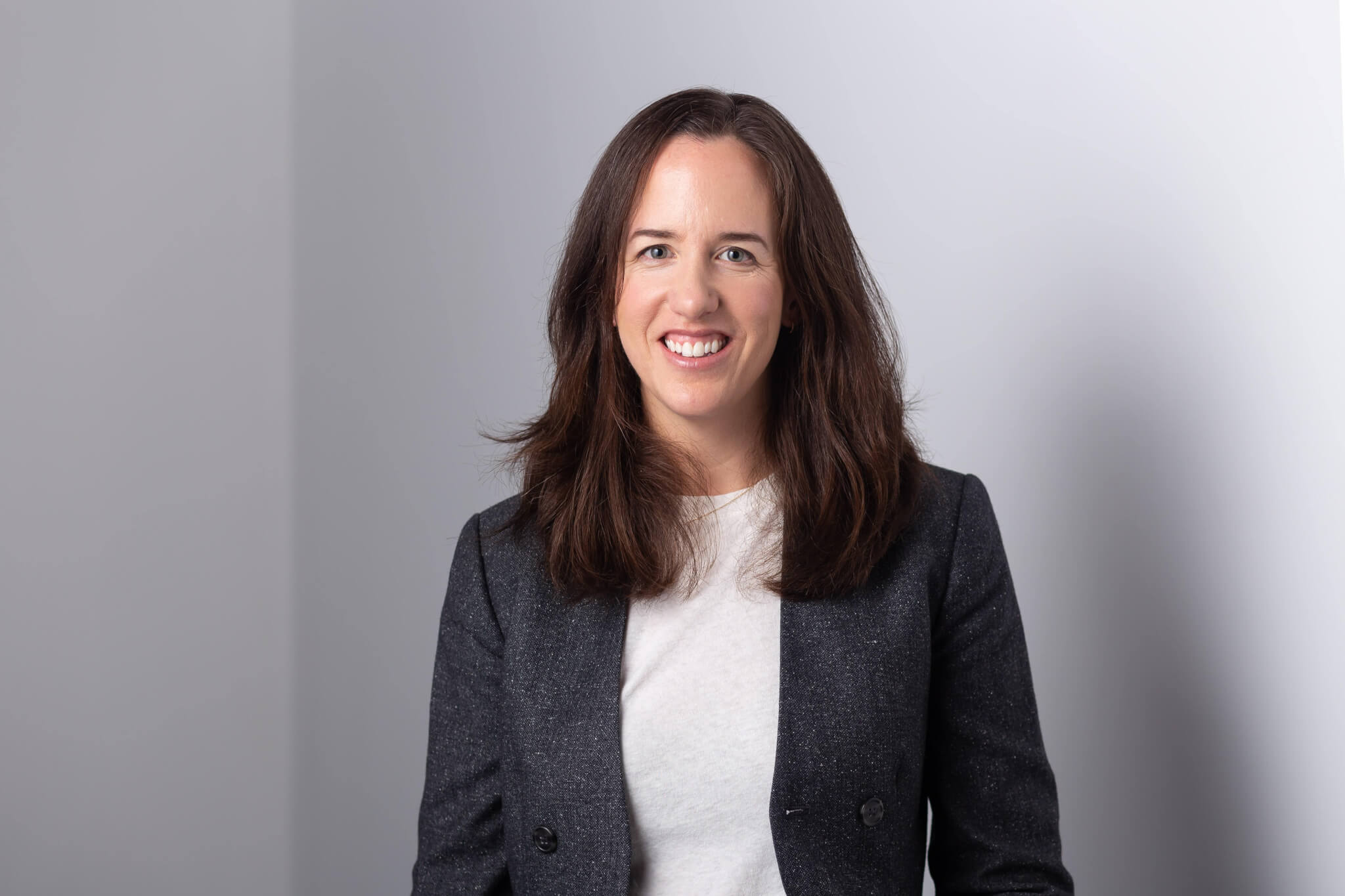
Roxanne Petraeus
Roxanne Bras Petraeus is the co-founder and CEO of Ethena, a modern compliance and workplace-culture training platform used by teams at Netflix, Zendesk, Figma, and other leading companies. She founded Ethena in 2019 with CTO Anne Solmssen to replace box-checking compliance training with content people actually remember.
Roxanne grew up in Central Florida and studied economics at Harvard on an ROTC scholarship, then earned a master's in international relations at the University of Oxford as a Rhodes Scholar. She served as a U.S. Army officer, including a combat deployment to Afghanistan and Civil Affairs work in Cambodia and Mongolia. Before Ethena, she was a consultant at McKinsey & Company, where she led large-scale transformations and organizational-design work with C-suite clients.She writes and speaks widely on building ethical, high-trust, high-performing cultures, and has raised capital from investors including Felicis, Lachy Groom, GSV, and Homebrew.
Episode Transcript
This transcript has been generated by AI and may contain slight discrepancies from the audio or video recording.
Roxanne Petraeus: I think your culture is generally the worst behavior you will tolerate.
That's Roxanne Petraeus, co-founder and CEO of Ethena, the compliance platform trusted by Netflix, Zendesk, and Figma. She's an Army veteran, McKinsey alum, and she built a company that people don't leave by refusing to say anything she won't back up with action.
Roxanne Petraeus: It becomes very tempting to talk yourself into a candidate or talk yourself into changing your standards — always the wrong move. We've absolutely turned down candidates who passed everything else and failed the values interview.
I think hiring people who generally have the perspective that "It's all my fault" is really important.
Every company that we would consult with, they all want to be more innovative. Everyone wants to be more innovative. And then someone makes a mistake and the whole org freaks out. It's like, well, you can't have both. So you kind of have to pick.
I was in the Army, and senior officers would say, "I have an open-door policy." And I never believed them. I only believed what I saw.
Anita Grantham: But how do you build a culture where somebody can go to the founder and say, "Oh my gosh, Roxanne, that is not the brightest idea you've had this week"?
Roxanne, I am a huge fan, and I am so grateful to be spending this time with you.
Roxanne Petraeus: Thank you. This is really fun.
Anita Grantham: It's such a treat. I've read so many incredible things about your story and how you got to be here as the founder of Ethena, and I think it's going to be a lot of fun for our audience today.
Roxanne Petraeus: I hope so. That's the goal.
Anita Grantham: Our whole purpose today is to look at the relationship between the CEO and your head of people and talk about how culture transforms inside of that relationship. I'm curious if you could go back to your early career self when you first started and talk about anything you wish you could have known then from what you know now.
Roxanne Petraeus: Definitely. I started Ethena about six years ago. When I look back, I'm generally not someone who wants to change things — I think you have to go through and learn and grow. So I don't have a ton of regrets.
But one of the many things I would tell early me about company building is very simple as an idea but hard in practice: the people make the company. There's really nothing outside of the people. And so where that shows up is things like really holding the line on hiring.
Everyone told me this, but when you get into those really busy moments where you're like, "We're behind, we need three more people yesterday," it becomes very tempting to talk yourself into a candidate or talk yourself into changing your standards — and that's always the wrong move.
The flip side of that is finding the right person — someone with very high agency who can just get stuff done. It's wild how a small group of people can create disproportionate value and impact.
Really finding those people matters. And also recognizing that not everyone comes in looking like that. When Melanie, our wonderful chief people officer, joined us, she had never really posted on LinkedIn aside from sharing a job board. She was on the quieter side, had never done any conferences or speaking, and didn't have a big body of work about her perspective on company building and culture.
And she just flew. She was one of those people who, given the right environment, really bloomed and hasn't hit her ceiling. Sometimes when you're starting a company, you think you have to find the right people — but sometimes you can grow them internally as well.
Anita Grantham: That's awesome. So if I recap: you'd say hiring really matters, you need what I'd call athletes — people who are really strong at executing, who you can throw in the deep end and they'll figure out how to swim. And then sometimes to really get talent, you just nurture them, and they can become outstanding. You don't really know at the time of hire where they're going to end up, but given the right environment, the right space, and the right leadership, they really can flourish.
Roxanne Petraeus: Definitely. And the flip side of that is always being really honest with yourself and your team when people aren't flourishing. You always hope for the Melanie story, but that's not always the answer. Having a really disciplined approach to understanding what's happening when it's not working is just as important.
Anita Grantham: Right. So hire slow, but make changes quickly if you're not seeing it go.
Roxanne Petraeus: I'd say hire methodically. Sometimes the right person is the first candidate who comes in, and lucky you. But making sure you hold that discipline is key. For us, for example, we instituted founder interviews a while back, and we still do that for every new hire.
Myself or my co-founder will be part of the interview process, no matter how junior, no matter what role. That's not because she and I are the only people at the company who can uphold that bar. We think it's really important to signal through our own time that, yes, I am going to be interviewing a junior SDR.
It ensures the rest of the team has held that bar. Because it's so tempting when you're the hiring manager and you're drowning and need that person to occasionally just think, "Ah, I don't know — maybe." Having that internal check and balance means "maybe" is not the standard.
Anita Grantham: For sure. "Maybe is not our standard" — that is a great line. Can you walk me through how you've designed the hiring process so that "maybe" is not the standard?
Roxanne Petraeus: It has been incredibly iterative. If we rolled back the clock five years, our hiring process was loosey-goosey, if I'm being honest.
When Melanie came in, she was around employee 25 or so — a bit earlier than most.
Anita Grantham: That is early. I would not typically advise a CHRO hire at 25.
Roxanne Petraeus: Totally. And she wasn't a CHRO or chief people officer hire at that point. But you're exactly right that a head of people really isn't necessary that early in a different company.
The reason we did it is that at the time, Ethena sold very heavily into people leaders and into the enterprise, so we thought it would be important to have that voice of the customer internally. And then of course there were people things popping up.
My co-founder and I are obsessed with a couple of books. One is The Advantage by Patrick Lencioni, which is like a Bible.
Anita Grantham: We've had a lot of Pat Lencioni fans on this show.
Roxanne Petraeus: It's just really good stuff. It ages well, and the concepts are very simple — they're just hard to operationalize.
My co-founder and I have also been long obsessives of Netflix's internal culture.
Anita Grantham: We were just talking about Reed Hastings.
Roxanne Petraeus: Their stuff is so good, and they really live it. We thought we would definitely welcome the opportunity to up our culture game. But yes, you're exactly right — if someone asked, "Should I hire a people leader at 25 employees?" I would mostly say no.
Anita Grantham: Okay, so I have so many questions. We're still in the context of hiring. You brought Melanie in at 25 to really design the process. What should people take away from how you've designed it? If I'm designing my process for the first time, or it's been loosey-goosey and I want to bring more discipline to it, what would you advise?
Roxanne Petraeus: Everything is simple in theory and hard to operationalize. The simple-in-theory version is: start with your company values and what you're trying to do. We have four of them, and now I'm terrified I'm not going to be able to name all of them.
Okay — "humor is human," we have an excellence value, "play to win" — oh my goodness, this is deeply embarrassing. You can keep this in, because this is very on-brand. We have a joke that I'll come in with really strong opinions, loosely held, and the next day someone will be like, "Roxanne, you were arguing for this point yesterday." And I'm like, "I have no memory of that." Which I think is actually really helpful, because you don't get attached to things.
But the point is: start with your values and ask, "Okay, what are we designing for? Who are we looking for who fits these values?" For us, the "play to win" value was particularly important for hiring, because that's where "maybe isn't cutting it" comes from — we're really looking for excellence.
Then design a hiring process that optimizes for that, recognizing there's no such thing as a perfect hiring process. There are real diminishing returns to adding step after step. At the end of the day, it's a leap of faith — like a marriage, like anything. You do all your due diligence and then you're just like, "I love my husband, it's worked out great." You get the idea.
Anita Grantham: But what you speak to, which I do love, is a level of bidirectional commitment inside that leap of faith. You're giving as much as you can to say, "Are both parties willing to commit based on what we know today?"
Roxanne Petraeus: Yes. For us, for example, we added the founder interview and a values interview, so we have someone on the team trained in asking questions around our values. We have absolutely turned down candidates who passed everything else and failed the values interview — and I think that's really important, because otherwise, what are you doing?
Anita Grantham: Are they prequalified on technical skills before they get to this point?
Roxanne Petraeus: They are. And so it can be painful, because you're like, "The person was really good." But don't have a values interview if you don't want to make a decision based on it. That's been the right move.
Anita Grantham: Just for reference — how many current team members do you have?
Roxanne Petraeus: We're at about 60.
Anita Grantham: Still at 60. I feel like all founders start inside the process, and then it gets to a point where other things are happening in the business and the founder has to go do other things. How do you not hold up the hiring process because of your other responsibilities as a co-founder?
Roxanne Petraeus: The mistakes we have made in this area come from thinking that hiring isn't our number one priority and pulling ourselves away from it. When I look back at the company and see moments where we got it wrong, that was it.
It's so tempting when you're busy with a million things going on to just think, "I don't have time to be in this interview." And I think that's always the wrong move.
Fast-forward to the age of AI, and we're really seeing that our phenomenal employees are just flying. A really, really good employee with the power of AI now occasionally feels like they're worth 10 of their role — they're just that good.
Anita Grantham: And the justification has to be there, because hiring a bot is really inexpensive compared to hiring a human. You have to make sure, even more so today, that you are making the best choice you can.
Roxanne Petraeus: Yeah, because you're looking for an employee who can manage the bots and manage themselves. So much of the AI discussion can feel really dystopian, and I totally see how it can get there.
But at least my perspective on how Ethena has approached this has been really positive. We know that for a vast majority of employees, Ethena won't be the last place they work. I would love for them to be here for as long as they are excited, growing, and contributing — but we totally recognize that you will spread your wings and find an opportunity.
So one of the things we're telling our team is: we are going to set you up for success both here and in your next job, because you are going to be at a disadvantage if you do not know how to use these tools. Lucky you — you're at a company where we are giving you all of them. Any employee who wants an AI tool just has to raise their hand in a channel and they will get it. They can get specific training on it.
We're really highlighting that there's something in it for the company — our CS team is vibe coding implementation dashboards, they're not doing any manual follow-up, they're spending more time on calls. The company gets something, but the employee gets something too: they can tell their next employer, "Yeah, I know exactly how to use this tool. Here's something I built with it."
Anita Grantham: I love that you're saying this, and I want to double down on it. I lead a CEO mastermind, and we've had this discussion: is it our responsibility to make every team MEMBER AI-native? And we've really pushed to say yes, it is. These CEOs have taken it on and said they want to make sure their people have all the tools, because of where AI is going — it's almost a contribution to something bigger. I really think it's a valuable perspective for other CEOs to have right now.
Roxanne Petraeus: It's incredible. I'll pop onto Slack every morning and see something someone did where I'm like, "How did they do that?" And as a tech company, it would almost be ridiculous to say, "We're a tech company except for not that tech." Come on.
Melanie and I have talked about this. I didn't flawlessly execute our AI approach. Some of the conversation can sound almost threatening, and that's hard. I'm a big proponent of being really honest about both upside and downside.
For example, in hiring, we often ask a question of senior leaders: "If this doesn't work out, why? You join and six months in it's not working — what would be the reason?"
Anita Grantham: Such a good question.
Roxanne Petraeus: It's a brutal question. It's a bit like the marriage analogy — "We get divorced. What would be the reason?" It can feel like a downer of a question. But it's really important, because instead of pretending difficult moments don't exist or sweeping them under the rug with corporate speak like "the alignment just isn't there" —
Anita Grantham: "You're not a culture fit."
Roxanne Petraeus: Yeah. It's just much better to be really honest about it: "Hey, we're a company that does part ways with people if they're not meeting our high standards. We just want to be really clear about that so there's no confusion. Where do you think we might have problems?"
I think it tests for self-awareness and gives candidates a really fair understanding of the company they're joining. If someone doesn't like that question, we're probably not the right company for them — and I'd much rather they know that, even just for their own ability to make a smart choice.
Anita Grantham: I'm so glad you're saying that. This is another takeaway I'd love CEOs to have. I feel like post-COVID, everybody wanted a peanut butter spread culture — "We are all things to all people."
Roxanne Petraeus: Yeah.
Anita Grantham: And I do believe — to use a Jim Collins or Pat Lencioni term — we are cult-like. Ethena is cult-like. There is a standard that is uniquely yours, and you want to attract people who find value in that. Not everybody will, and that's okay.
Roxanne Petraeus: 100%. Another big perspective we have is that we are remote-first. I get that people have incredibly hot takes in all directions, and I do not care because I run my company, and my company is remote-first.
We're really clear about that and about the why, so we attract people who love it. It tends to be a lot of parents and a lot of people who thrive in an environment where they can run on their tasks and be very autonomous.
I would totally understand if someone said, "Look, this is my first job and I'm really looking for that in-office experience." I'd say, "Amazing. You should go find that." Ethena is not going to be everything to everyone.
Anita Grantham: Okay. We're still in the context of things you wish you'd known. Hiring is one — we've done a good deep dive on that. The second topic I really find value in is athlete hires. People always say they want to do this, and it often ends up blowing up for the high performer as well as the company. How have you done this? Can you define "athlete hire" for us?
Roxanne Petraeus: Sure. I love the term — I was in the Army, and I love CrossFit and weightlifting, so I love athlete analogies.
Anita Grantham: Thank you for your service.
Roxanne Petraeus: Thank you. What I heard you describe is someone who can thrive in anything. You throw it, they'll catch, deliver, and serve back up. Instead of you pulling things out of them, they're pushing to you.
Anita Grantham: Yes, exactly.
Roxanne Petraeus: One of the reasons I love athlete hires is actually connected to feedback — and that's another one of our values: "embrace feedback." And that's not just "feedback is good." It's that you must embrace it. Great athletes — Serena Williams has a coach. You can be the best tennis player in the entire world and there's still something you messed up in every play that a good coach can point out.
The best people I've ever worked with, I joke, are like little LLMs — always learning.
We have one salesperson who is just flying. She wasn't a traditional salesperson but got into the role. I'm very bad at giving positive feedback — not because I don't see it, but it's just really hard. I have a sticky note on my Notion reminding me to say something positive.
Anita Grantham: What does the sticky note say?
Roxanne Petraeus: "Say something positive." It's still very hard.
Because I appreciate feedback I can act on, I tend to give more of the "Hey, here's a thing" kind of feedback. So for this woman, I watched a sales call, hadn't given her positive feedback in a while, and then saw something she could've done better.
It was just the most classic athlete approach. She said, "Hold on, I need to watch the clip." She watched it, saw exactly what I was talking about, and said, "Oh yeah, I see it. Makes sense. Here's what I could've done differently. Appreciate it" — and moved on.
You're left thinking, "I would love to give you feedback five more times a day because this interaction was so pleasant. You did not make it difficult." And that's not to say I'm looking for doormats. A lot of people at Ethena will tell me that I'm wrong occasionally, which I think is great. I have ten ideas a day — I think a couple are great and most are bad. Hiring athletes means you'll have people who will happily tell you that.
You want people who are open to feedback but also have strong perspectives. I think sometimes people confuse one for the other. Having people who spike on both is something I've really valued.
Anita Grantham: You did a post on LinkedIn last week where somebody didn't tell you that your AirPods were not optimized.
Roxanne Petraeus: Ironically, it was literally the same woman — the salesperson. It's the classic case: the person who takes feedback will also tell you when you're wrong.
Anita Grantham: So how do you build a culture where somebody can go to the founder and say, "Oh my gosh, Roxanne, that is not the brightest idea you've had this week"? As a chief people officer, I had to build a team that wasn't afraid of my reaction. They tell me I'm wrong, and I'm like, "It's okay — I realize that was a dumb idea." They have to feel that it's true. Otherwise, they won't believe it.
Roxanne Petraeus: 100%. I was in the Army, and senior officers would say, "I have an open-door policy." And I never believed them — I only believed what I saw. People would claim to have an open-door policy and clearly did not.
The same is true of building a feedback culture or a speak-up culture. The same people who will tell you your AirPods aren't working are the people who will tell you, "I think this employee is acting inappropriately." That's a really hard thing to say.
The only way you build it is through continuous action. Every time an employee comes to me and says, "Your AirPods aren't working" or "This was a dumb idea," I try — and don't always succeed — to take a breath, thank the employee, and show them I'm taking it seriously.
Something else that people don't love is giving feedback to the CEO, and then the CEO saying "Yep, thank you" and doing nothing visible with it. I had a big disagreement with our head of product recently. He's incredibly smart and has made a bunch of great decisions. But I disagreed with him on one recently, and I tried — I'm not sure if I succeeded; you'd have to ask him — to show him: I really heard you. And here's why I'm still going in the other direction. But I want you to know I listened to your points.
You build the muscle through continuous actions, not through any slogan or value.
Anita Grantham: That makes me think of something else I read about you — where you take a very "it's always my fault" approach. Is that something you learned from being in the Army? And how does that play into your culture and your chief people officer relationship?
Roxanne Petraeus: Yeah, totally. I think I borrowed the exact phrasing from Andy Dunn — the founder of Bonobos, who wrote the incredible book Burn Rate. He's an angel investor in Ethena, and I think very highly of him. He had an article about how being a leader means everything is your fault. The Army definitely has a version of this as well.
I've had a couple of great executive coaches over the years, and usually what happens is I roll into a coaching session and I'll say something like — using my co-founder as an example — "Anne is really bothering me." Anne does not bother me; she's wonderful. But hypothetically: "She's always being Negative Nancy about this and that, and I'm so frustrated."
A really good executive coach responds with: "Okay, that seems like a you problem, because you're tolerating it. I'm not hearing any action steps. Ultimately, you think you're upset with Anne, but you're upset with yourself for dealing with this situation."
I think hiring people who generally have the perspective that it's all their fault is really important. Something I do in interviews to test for this is always ask about a current or previous company. What I'm looking for is how someone talks about their previous employers. Certain ways of complaining say a lot about whether someone thinks about the agency they have in situations.
I'm typically looking for people who have positive things to say about places they've worked and who show a high degree of agency — recognizing that if you're at a place that's not great for you, you can make a move.
This is the type of thing that gets you criticized on LinkedIn, because I understand there are situations where it's not that easy. But I've found it's easier to take the absolute approach that everything is my fault and I can fix things in my professional life — and therefore it's on me if I'm not.
Anita Grantham: I totally agree. I've had an executive coach for years and we've worked through exactly that — the really hard recognition that "I've created this. I'm becoming a victim of it, or a martyr." And to really own that is life-changing. Because at the same time, as a leader, it can be your fault and you can still disagree with your head of product. Is there a time when you and Melanie have disagreed? How do you take sole ownership while still not seeing things the same way?
Roxanne Petraeus: Definitely, and it's hard. As CEO, everything rolls up to me. An area where Melanie and I disagreed, for example, is back-channeling candidates. I am very pro back-channeling.
Anita Grantham: I am too. I probably get a call a quarter on somebody.
Roxanne Petraeus: I'm sometimes shocked when people don't do it. Melanie didn't love it, and she had very logical reasons — back channels can be very biased, you don't want to over-rely on one data point — which is incredibly true.
But something Melanie has said she appreciated is that at least I didn't sideline her or gaslight her. I told her directly: "Melanie, I am back-channeling. You can know about it or not, but I'm not going to tell you I won't do this and then secretly do it anyway." I totally could have said, "Great point, we're not back-channeling," and then done it on my phone.
Through conversations, Melanie either got bought in or got worn down — not sure which one, but I think bought in. Either way, we got to disagree and commit. She did eventually agree that for senior candidates, if you cannot find one person who has something positive to say about someone, that tells you something.
Melanie then took the approach of: "Okay, Roxanne's going to do this — what's a way she can do it that mitigates some of my concerns?" And I think the point that's different for a CEO versus anyone else is that if the back-channeling backfired, it wouldn't have been Melanie's fault — it wasn't her idea. But you can't have mutiny at a company where everyone does whatever they want. You need some unified approach to things.
What I've heard Melanie speak to is the idea that as a people leader, you need to decide if, on balance, you're good with your company and leadership. If you find yourself at a place where you fundamentally disagree with the direction, culture, or ethics, then it's time to find a new role — or to make peace with it. You kind of have to do one of the two.
This is why Melanie and I agree that I'm ultimately in charge of culture. It would be really unfair for me to say, "Melanie, you're in charge of culture" and then back-channel, mess around with comp plans, and do whatever I want. Is she really in charge of culture then?
Anita Grantham: This is the heart of it. This is the core of all the issues. But what I want to detail is this: what I hear you saying, which is how I've operated with my CEO partners, is that outwardly we are backing each other — even if we disagree and commit.
Roxanne Petraeus: Yeah, yeah.
Anita Grantham: That's very important. You and I might come together privately and say, "Hey, I don't support it, but I'm going to back you outside. You and I have to figure out how we're going to work through this and decide if we're really committed to this relationship going forward." That is the direct, honest way to have these conversations.
Roxanne Petraeus: 100%. Melanie had to make a decision about a WeWork benefit — I don't remember exactly what it was — but she was announcing a rollback of a perk at a leadership meeting, and there were some grumbles. VPs were like, "Great, now my employees are going to grumble at me." And I just said, "Melanie had a really hard decision, and none of you would've wanted to be in her spot, so knock it off."
Sometimes I use the analogy that Melanie has to pick the restaurant but everyone has different preferences. Do not bring your complaints to her about it. It's not a fun role to be in when you have to balance competing priorities and recognize that roughly half the people are going to be unhappy with any given decision.
That's something a CEO can do to back up the people leader when they have to be the messenger of a change people don't love.
Anita Grantham: It's a great way to be an ally — around performance, compensation, all of those things. Having this alignment is critical.
Roxanne Petraeus: Yeah.
Anita Grantham: Otherwise it will break down the executive team. You can't go to the CFO and say, "My chief people officer is off the rails on this." I can't go to the head of sales and say, "My CEO is off the rails." That will divide a management team like nothing else.
Roxanne Petraeus: It's very bad — it's toxic. I much prefer fighting things out in the open versus a feeling of backroom politics where, if I don't get Melanie on board, then I can't get what I want. That is not the company I want to work at.
Anita Grantham: I agree.
We know every day that culture really trumps all. We have our mission and values at Nectar, and we have a mission committee of our board. What's been great for those board members is for us to bring in charts and reports from Nectar showing what values are being acknowledged. I think engagement has improved — we're filling positions, and the word of mouth in the community that we can define and acknowledge through Nectar is making a difference.
Anita Grantham: Okay, let's take a little diversion.
Roxanne Petraeus: Yeah.
Anita Grantham: Let's talk compliance.
Roxanne Petraeus: Everyone's favorite topic.
Anita Grantham: Everybody's favorite topic. I've long been known for saying I don't do compliance — even as a chief people officer. I really want you to teach me on this, because it's not that I don't see compliance as important. I feel like to make compliance effective inside a values-driven culture, you need your people leaders to know when to raise the flag. But they can't always know — at one point I had 2,000 people across 12 countries and all 50 states. I couldn't keep track. So I was like, my job and your job is to raise the flag, and then we'll go get help from our experts.
Roxanne Petraeus: Yep.
Anita Grantham: You've said that compliance is really culture with documentation. Talk me through a better way to handle it.
Roxanne Petraeus: Well, I think that approach may have been right, but compliance as a word is almost by definition box-checky. Culture is something people get is a living, breathing thing.
When companies really get their approach to compliance right, they're thinking about it from a culture perspective. Your culture is generally the worst behavior you will tolerate. So if you're the type of company that keeps a great salesperson even when they're not very ethical or very inclusive, that is your culture. You can have nice flowery values on posters, but everyone knows it's what you do, not what you say.
I think running a company and being a parent are basically the same thing — there's really not that great of a distinction between the two. When it comes to compliance, it's a similar approach: break it down. For a lot of tech companies, their customers' data is super important. You could have an approach to data privacy compliance that's just box-checking while telling employees to use whatever AI models they want and be loud at restaurants talking about their deals.
Anita Grantham: This is huge right now.
Roxanne Petraeus: Totally. Sometimes I even hear CEOs of products I use talking about their approach to data on podcasts and I think, "I don't feel great about that."
Instead, I remember talking to a compliance leader at one of the dating apps specifically for the LGBTQ+ community. He said something like, "We have data that could literally get someone hurt — or killed — depending on what country they're in." When he talks about data privacy at his company, he talks about that — how the data they have is so important and sensitive and that being good stewards of it really matters.
That's a great example of compliance done right: you make it specific. Why does it matter to your company? If the answer is that it really doesn't, then skip the window dressing and move on to something else. But I'd argue that for almost every company, the core things — do the right thing (your code of conduct), be good stewards of company information and finances, and be inclusive and thoughtful (which also keeps you out of HR investigations around harassment and discrimination) — apply universally.
Compliance done right is just making those things specific so that a junior salesperson or junior engineer can understand: "Okay, what do you want me to do with this information?"
Anita Grantham: And again, that can tie back into your mission.
Roxanne Petraeus: Totally.
Anita Grantham: Because if you're a junior salesperson or an executive who's never been hit by a loud communications crisis, you won't understand what you're playing with. So how — between the chief people officer and the CEO — if the CEO just hasn't been bit yet and isn't taking it as seriously as they should, how do I make that case in a way that lands for my CFO and CEO? Because I didn't feel like I was reporting on it at management team meetings. My job was really to be a deflector shield with my partners in legal and finance. We would surround the CEO and I'd only bring it up if I felt we were at a breach that was very public to our reputation or connected to the CEO in a way that would touch them personally. Otherwise, it was handled outside.
Roxanne Petraeus: Totally. When you're trying to convince somebody, using their language and what they care about is the move.
If you're trying to convince your CEO that you don't do harassment prevention training when you're in states where it's required and the cost of not doing it is extreme, think about what your CEO actually cares about. They probably don't care about state regulations — "What's the worst that can happen?" What they do care about is attracting and retaining great talent, and about what shows up in the press about them.
Fear-mongering doesn't help, especially when something feels unlikely. But at a certain size, you will absolutely have an HR investigation — it's not hypothetical anymore. The CFO cares about how much those investigations are going to cost. There are real dollars and cents you can assign to all of this.
Map your key stakeholders, understand what they care about, and tie what you want to what they want.
Here's a smaller example: we work with a ton of really large companies — 50,000-plus employees — and one of the biggest things on everyone's mind right now is running lean teams and keeping everyone oriented toward the mission.
A lot of our compliance buyers want to run sophisticated training programs where the data privacy training for the salesperson is specific to that salesperson, and the data privacy training for the engineer is specific to them. That's role and risk-based training, which is absolutely the right way to do it. When you just talk at everybody, people think, "I'm in HR — what am I supposed to take away from data privacy?" What I want them to take away is: you know everyone's salary and Social Security number, so be super thoughtful about that. That's really different from what a CSM needs to know.
Anita Grantham: I have to double down — role and risk. It's not peanut butter spread. It has to be applicable to their role so they buy in and see their impact.
Roxanne Petraeus: Totally. The scenarios need to look and feel like their actual day. "Oh yeah, I'm on customer calls, so I totally see how this would show up."
Our compliance buyers get excited about role and risk-based training. A CEO does not care about role and risk-based training in the abstract. But what they do care about is seat time and productivity. The way I've seen really successful compliance and people leaders pitch this is they don't say "role and risk-based" — they say, "We're going to save everyone 55% seat time. We're going from six hours of training to three."
Anita Grantham: And more customer time, more sales time.
Roxanne Petraeus: Yeah. They put a dollar on it. Average salary at this company is this — here's what it spits out. They get a big thumbs up back because they've pitched what they want in a way that the CFO, CEO, or general counsel actually cares about.
It's really just reframing. Sometimes I think of it like a video game where you're navigating and thinking, "All right, what does this boss care about?" And you find your battle strategy from there.
Anita Grantham: Such a great visual.
Some companies that sell HR tech are just tech companies selling HR tech. What I hear from you is you demonstrate the power of your product inside Ethena. Can you share a little about how you make sure you're walking the talk?
Roxanne Petraeus: It's really hard because, like anything, it requires constant tending. This isn't a one-and-done.
What comes to mind recently is our rollout of a ton of internal AI tools. Our head of engineering could've just said, "Here, everybody — here's Claude, here's this, here's that. Go nuts." Instead, he put together this really smart and thoughtful training on what different types of data you might have access to depending on your role at Ethena, which systems that data can and can't go into, and all the controls he's put in to mitigate risk.
He explained it in a way that helped people understand: if you're Melanie, you can use this tool for that thing, but someone else can't. He even explained how the enterprise license for a particular model doesn't train on certain data, and why that makes it okay for the CS team to use it.
It was a great example of show, don't tell. Our VP of engineering had important, big things to do — and instead, he took the time to really walk us through it. He wasn't phoning in his version of compliance. He was showing that we take this seriously.
Anita Grantham: That's amazing.
Roxanne Petraeus: It was pretty cool. And fun, too.
Anita Grantham: Okay, real quick — we have more time. Talk about Feedback Fridays: why it matters and how you do it.
Roxanne Petraeus: I'm going to start by acknowledging I've been a bit of a hypocrite here, because my schedule's been a little nutty this past quarter and I have slacked on it. I say that because I think it really matters.
Anita Grantham: This is accountability.
Roxanne Petraeus: It is accountability. I think it's better to be honest about where you fall short. That said, I do take the concept into my one-on-ones.
What Feedback Fridays are is bidirectional. If Melanie and I were having a Feedback Friday, she would fill in something for each box — essentially: what is something Roxanne did well, what could she have improved upon, what's going well with the team, and what could the team improve. She can interpret "team" broadly — whole company, her direct team, whatever.
One of the key points is that there is constructive feedback required. You can't just give three pieces of feedback where you're deciding how many should be positive. Instead, making dedicated space for your direct reports to tell you something you could've done better every week destigmatizes those "your AirPods aren't working on Zoom" moments.
What I've seen, when I'm more diligent about it, is that it acts like a pressure valve. Someone will have been sitting on something, and then they roll into Feedback Friday and you can kind of tell. Usually, the shorter and more generic the feedback, the more you know they're about to open up. It might just be something vague — referencing a point from last week — and I think, "Oh, they were sitting on that one."
Because it's an expectation that you need to bring me something I could've done better, it surfaces whatever's at the top of the queue versus waiting for an employee to feel comfortable enough to find the right moment. Senior leaders are very busy, and it's intimidating to say, "Can I take five minutes out of your super busy schedule to tell you this thing you screwed up on?"
Anita Grantham: That's the piece — you're creating the space.
Roxanne Petraeus: Exactly — and the expectation. I've had folks who report to me who went a couple of weeks without anything constructive, and I kind of dug in and said, "There was something — come on. I'm expecting you to have something to say here."
Anita Grantham: That's incredible. One term I like using is, "What do you see that I could do better or differently?" To open it up. And then we can start rolling and I can say, "Okay, tell me more — how bad did I handle this?"
Roxanne Petraeus: Yeah. And I like that it's weekly too, because you don't let too much time pass.
Correct. When feedback sessions are quarterly, you feel like you need to summarize the person's whole quarter. And honestly, I can barely remember what I had for breakfast. The idea that I'm clearly remembering something someone could have improved upon from two weeks ago is a stretch.
What I do try to take from this practice is giving both positive and constructive feedback in the moment. Coming off a sales call and just saying, "Alright, I noticed a couple of things." To the point of athletes: you'll always notice something. I'm hard-pressed to think of any stretch of time where there isn't one thing the person could've done better.
Anita Grantham: Yeah, that's great. Okay, our two final questions — the ones we ask every guest. The first is a question from our last CEO. He wants to know: what's the most important asset you hold in your organization?
Roxanne Petraeus: I mean — people generally? Yeah. I've really seen it, especially with AI amplifying everybody. I've been so impressed with the creativity and cleverness of our employees. You give them a couple of tools and they take off. I mostly see this with folks who aren't engineers, and I think AI is really magical for non-technical people because it takes you from zero to somewhere truly impressive.
I 100% believe that having these really intelligent, motivated, clever people who are tinkerers — always trying to optimize and be a little bit better — is absolutely Ethena's best asset, by far.
Anita Grantham: Amazing. Do you have a question for our next guest?
Roxanne Petraeus: This is kind of a hard one, but: what is a decision you regret, or a decision that weighs heavily as something that was maybe unmade or unresolved? I know that's a tough one, so if it's too hard, I'm happy to come up with an easier one.
Anita Grantham: Do you have one? Now I'm like, "What's yours?"
Roxanne Petraeus: Oh, man. That's totally fair of you to ask. Okay. My risk is always underthinking — I am a ready-fire-aim person, and my co-founder is incredibly methodical, which is great.
Anita Grantham: What a great match. It's a little ironic with the Army background, though.
Roxanne Petraeus: Yeah. Although the Army has this saying — I always mess it up — but it's something like, "A good decision executed today is better than a perfect decision tomorrow." The idea being: if you're not sure what to do, just do something and you'll figure it out.
So I always make a decision — I don't really have any unmade ones. But when I look back at decisions I regret, I posted on LinkedIn a couple of weeks ago about a situation where I needed to make a personnel change and I handled it in a bit of an "okay, we're all hearing this at the same time" way. I could've been a little more thoughtful, rolled out the communication a little more deliberately so people weren't just hearing about it all at once.
My oopsies are usually in that direction — I made a decision, but could've been more thoughtful in how I executed it. Or the decision itself was wrong and I needed to stay with it longer, get more feedback. We've had situations where we went aggressively trying to expand our market a little too early and didn't get it right — those sorts of things.
Anita Grantham: I feel like, and you probably have this with your co-founder, when I get that way I always have the one person I call to just be like, "Double-check me." Because I'm similar to you — just go, go, go. And sometimes I'm like, "Okay, what am I missing before we go?"
Roxanne Petraeus: Yeah. And I also just believe that in every company — when I was at McKinsey, for example, every company we'd consult with all wanted to be more innovative. Everyone wants to be more innovative. And then someone makes a mistake and the whole org freaks out. You can't have both. You kind of have to pick.
I'd rather be at an innovative learning culture, which does mean I'm not immune to making mistakes. Leaders often say some version of, "I want to give people freedom and autonomy and then hold them responsible and accountable." And that means you don't expect perfection — you expect learning. You can't be making terrible decisions all the time. But holding yourself to the same standard, while allowing yourself the same grace — of course I made a poor decision, I made 50 decisions that day and one of them wasn't executed well, and I can learn from that — that's not an excuse. But not beating yourself up is really important.
Even Serena Williams misses shots. Holding yourself to some version of perfection causes people to slow down, to not be ambitious enough. If you're only trying to do things you can execute perfectly, you're not pushing yourself.
Anita Grantham: Definitely. Alright, final question — do you have a culture crush, somebody you admire who does it in a really great way?
Roxanne Petraeus: Netflix is coming out. I'm pretty clear they're far and away my culture crush. I think they're so innovative, and I've seen this in talking to folks who work there as well as consuming their book and culture deck.
Coming from the Army, I think the Army does a lot of things right. But understandably it can't really give everyone freedom and autonomy — it needs to be more of a safety culture, and that makes complete sense for what the Army does. But I've learned that I really thrive in a place where I can take swings and bring on people who are ambitious and want to try. That's why Netflix's culture of giving people a lot of freedom and autonomy and then holding them accountable has really spoken to me.
Melanie has had to hear my Netflix fangirl moments more times than she would like.
Anita Grantham: It's a good one. I've been a Netflix fangirl for a long time too.
Roxanne Petraeus: You can't argue with success.
Anita Grantham: So Roxanne, you've talked a lot about walking the talk inside your own organization. Why is that so important to you?
Roxanne Petraeus: I think it was Paul English, the Kayak founder — you can fact-check me — but he said something like, "People will be interested in charisma, but will follow authenticity." And I think there's really something there.
We are building a generational business. I want Ethena to be thriving in 20 years, not a flash in the pan. We really need people who are inspired by this mission and want to be on this journey with us for as long as they want to be. Those types of people have an expectation that their leaders will be honest and walk the walk.
We built the company a couple of months before COVID started, and it feels like every year or so there's been some macro crisis — everything in 2020, political cycles, tech corrections, Silicon Valley Bank, now AI. It just hasn't stopped. And we have had incredible employee retention throughout that period. I think our average tenure is something like four years.
Anita Grantham: That's incredible, especially right now when tenure is dropping massively everywhere.
Roxanne Petraeus: 100%. And that's while maintaining a really high bar for employees. We uphold that standard, and that means we have to part ways with folks.
I think the reason we're able to do this is that through all of those crises — or even internal moments at the company — I've always been very clear about what's happening. When Silicon Valley Bank happened, I told everyone, "Guys, this absolutely affects us. This is not great. Here's what I'm doing about it, and there's nothing you can do right now, but I'm going to communicate regularly." On that one, we committed to sharing an update every six hours — even if the update was just "I have nothing new." That gives people a sense of calm.
My dad is an airline pilot, and I think about how the best pilots communicate what's happening to the passengers. You're sitting in your seat and they say, "We're going through turbulence. There's a maintenance issue, I don't know how long it's going to take, but here's my best guess and I'll talk to you every ten minutes." And you can just settle down, because you know what's happening.
The best people can smell inauthenticity from a mile away. And honestly, I'm kind of the same person here as I am as a parent, as I am everywhere. I just don't have the energy or interest to cultivate multiple personas. It's too hard to remember which front you're putting on for which group.
I've found it much easier to build Ethena around the company culture I want to work at — one grounded in honesty, clarity, a high bar, and humor (which is one of our values I did forget earlier). We ask a lot of people at work, and if it's not an environment you want to be in, you won't give your best. Creating this culture has kept really good people and, candidly, has kept my own interest, ambition, and drive alive.
One of the privileges of building your own company is that you can build it to be the type of place you actually want to show up and work at.
Anita Grantham: That's awesome. Thank you so much for sharing. Being moms — and I don't mean to generalize — but for me too: what you see is what you get. I'm this way at home, I'm this way at work.
Roxanne Petraeus: Totally. And it means my kids get to watch me work, and my colleagues get to see me parent. There's something really special about blending those and taking the learnings across both. I learn so much from parenting my kids that I can bring into work, and vice versa.
Anita Grantham: I'm doing these posts right now — "What I Learned in Seventh Grade" — because my 13-year-old is in seventh grade, and I'm like, wow, all of this translates right into leadership today.
Roxanne Petraeus: It's wild how perceptive and thoughtful kids are. Sometimes when I'm frustrated, I'll ask my oldest, "Okay, I had kind of a rough day — what do you think I should do?" And he'll say, "Well, did you do your best?" And I'll say, "I did do my best." And he'll say, "Okay. Okay." And I just feel better. There's real wisdom in that childlike curiosity.
Anita Grantham: That's so true. What a great way to end. Thank you so much again for being with us.
Roxanne Petraeus: You bet. This was really fun.
Anita Grantham: So fun. Thanks.
Feature Story

Experts explain how leadership perception gaps affect trust, engagement, and retention, and how organizations can help leaders close them.
Enjoy On Your Favorite App
Feature Stories
As part of SHRM's commitment to providing cutting-edge resources, get additional perspective and more insights in content curated from SHRM and around the web.

Deciding to openly share compensation information across your workplace requires careful planning, stakeholder buy-in, and a commitment to ongoing communication.

Learn how inclusive spirituality initiatives in workplace wellness programs can reduce stress, boost resilience, and foster connections among employees.

Discover actionable strategies to foster trust, improve communication, and strengthen relationships with team members by avoiding common leadership pitfalls.