- Video
- Audio Only
HR leaders are expected to influence business decisions, but gaining executive buy-in requires more than great ideas. In this live recording of Honest HR, Bruce Waller, vice president of corporate relocation at the Armstrong Company and bestselling author, shares practical strategies for building trust, developing business acumen, and communicating the value of HR initiatives.
This episode is sponsored by:

HR is about people, not just paperwork. Intuit QuickBooks Payroll connects payroll, employee management, time tracking, and accounting in one place, so you can focus on what matters: your team. Learn more at QuickBooks.com/workforce.
Related to this Episode
Do you know what your HR is worth? Prove it with HR-X.
SHRM HR-X is the standard for measuring how HR drives business performance. Built on data from 1,250+ organizations and validated across industries, it evaluates HR across four dimensions — Functional Acceleration, Talent Optimization, Market Discernment, and Organizational Impact — to define overall HR maturity.
Real change starts with real talk. Subscribe now so you never miss an episode! Plus, get daily breaking news, feature articles, the latest research, and more.
News + Insights

SHRM's HR-X framework reveals how HR maturity drives ROI and why most teams aren't there yet. Learn where to focus to build a high-impact HR function.

In this episode of the People + Strategy podcast, Susan Schmidt Winchester, former CHRO and author of Healing at Work, introduces a game-changing framework for smarter hiring, succession planning, and talent alignment. Schmidt Winchester provides actionable strategies to elevate your hiring processes and create lasting organizational impact.
Podcast Episode Guest
-
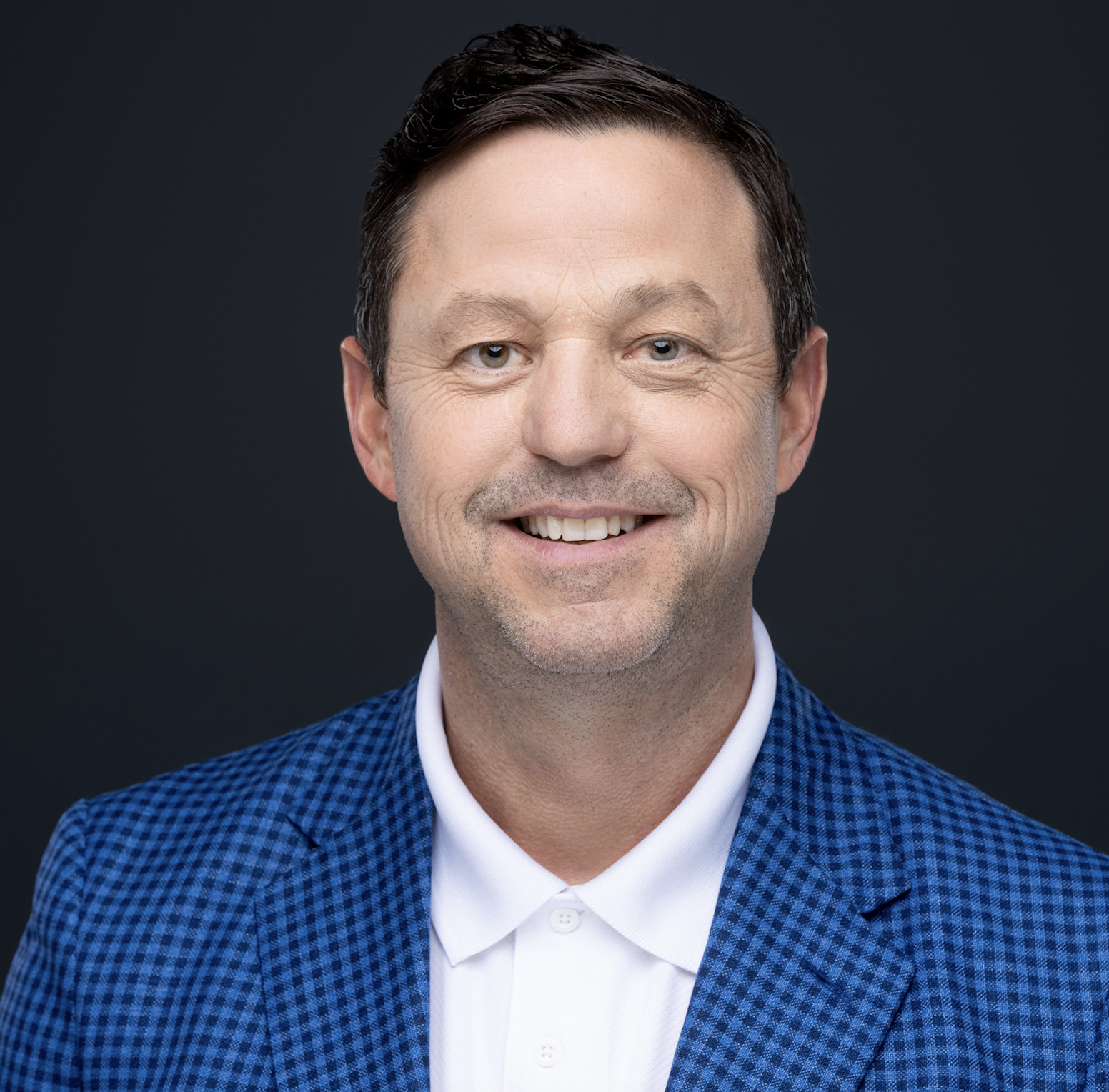
Bruce Waller
Bruce Waller is an award-winning relocation executive, author, keynote speaker, and podcast host who inspires professionals to “find their lane” gaining clarity, confidence, and purpose in the workplace.
As Vice President of Corporate Relocation for The Armstrong Company in Dallas, Texas, Bruce partners with HR, TA, and Mobility leaders to deliver comprehensive employee relocation and transportation solutions across the United States and around the world. He brings more than 30 years of experience helping organizations navigate the complexities of global mobility.
A passionate volunteer leader, Bruce serves as Assistant State Director for Texas SHRM and is a former president of DallasHR, demonstrating a long-standing commitment to advancing the HR profession… and an influencer for SHRM National Conferences.
Bruce is the author of four books, including the award-winning Find Your Lane, and hosts the podcast Life in the Leadership Lane, where he interviews leaders who are making a meaningful difference in today’s workplace.
His recognitions include: Unigroup Stewardship Award, the highest honor in sales leadership, NTRP Saul Gresky Relocation Professional of the Year, Global Mobility Top 100, and Texas SHRM Distinguished Volunteer Leader of the Year. In 2025, Bruce was the recipient DallasHR’s Lifetime Achievement Award.
Fun fact: Bruce’s middle name is Wayne and has bowled ten perfect 300 games, including one during the U.S. Open Qualifying Round.
Episode Transcript
This transcript has been generated by AI and may contain slight discrepancies from the audio or video recording.
Sponsor: This episode is sponsored by Intuit QuickBooks Payroll. Intuit QuickBooks Payroll helps you focus on the people you're supposed to support, and now they've evolved into QuickBooks Workforce with tools for the entire team lifecycle. With QuickBooks Workforce, you can easily implement smart automation, spend less time reconciling and more time acting, and stay ahead of compliance, labor costs, and workforce changes so you can be there for your people. Learn more at quickbooks.com/workforce.
Nicole: Think about it. Every day, the success of our ideas, initiatives, and even careers hinge on our ability to inspire action, shape decisions, and earn the trust of those around us. To the audience, I've got a question for you: How many of you have seen a great idea stall simply because you couldn't gain the right support?
All of us, right, at some point. Influence is not a luxury in the world of work — that's for sure. It's a skill that moves everything forward, yet many of us struggle to gain the executive buy-in needed to move our most important initiatives forward.
Welcome to this special live recording of the Honest HR podcast. Whether you're joining us as part of our studio audience or tuning in from home, we're excited to have a room full of talent leaders united by one powerful truth: In our profession, influence is not just helpful — it's essential. I'm your host, Nicole Belyna. Let's get honest.
Today, we're going to do a deep dive into this challenge with Bruce Waller. He's the Vice President of Corporate Relocation at The Armstrong Company, an award-winning business leader, and best-selling author. Welcome to Honest HR, Bruce.
Bruce Waller: Thank you so much. It's so good to be here, and being in front of a live audience is really cool. I love this.
Nicole: We're super excited to have you, and you're a local.
Bruce Waller: I love that. And I see several people here who are local too. It's great.
Nicole: So, Bruce, you've worked with HR leaders across various industries for 30 years. What's the biggest misconception executives have about HR's role in driving business strategy, and how does this impact our ability to influence organizational decisions?
Bruce Waller: I appreciate this question being the very first one — it really kicks everything off. Let me demonstrate. How many here are in HR? Raise your hand. Okay, most everybody. How many are in talent acquisition? Raise your hand. Okay, still a lot of people. How many are in sales? Raise your hand.
Not so many hands this time. But I want everybody's hand to go up, because everyone here is in sales. Think about it — when you are selling your ideas to the leadership team, you're always selling. You're selling your ideas, you're selling candidates to business unit leaders. And the business unit leader is saying, "Hey, bring me three more candidates," when you already have the very best one. You're selling yourself. Does anybody here want a promotion? Who wants a raise?
We're always selling as leaders. And if you were here yesterday for the opening presentation with Jim Link, SHRM-SCP – Chief Human Resources Office (Link), Joy, Jesani, and Mary Beth, they were all talking about their organizations — they were selling. I even heard Joy say she offered someone a job. So you're always in selling mode, and I think that's the misconception we need to think about.
When we are in the workplace every day, we need to be thinking about how we can get buy-in and how we can lead the way for our organizations. That's a great way to kick this off.
Nicole: Great. And I think you've kind of segued into this, but in your research with high-performing HR professionals, what do they do differently to gain executive buy-in?
Bruce Waller: I love that. I wrote the book Life in the Leadership Lane, and I talk about being in a different lane. People who influence — you know who they are — they're just different.
When I read this question, I was thinking about Tom Hanks. Does anybody like Tom Hanks? What's your favorite movie? Yell it out. Forrest Gump? Saving Private Ryan? There are so many great ones. I was watching an awards show — I can't remember exactly which one — but Tom Hanks was receiving a lifetime achievement award. I thought, if he's getting a lifetime achievement award, I want to hear what he has to say.
He went up to the microphone and said, "There are three things we all need to do every day when we go to the movie set." I'm thinking: the workplace. He said, "We need to show up on time. We need to know the script — know your surroundings." I'm thinking: know the business, know what's happening. But the last thing is what stuck. He said, "You need to bring ideas to the workplace."
That's what separates influential leaders. They are always looking for ideas, trying to bring them to the workplace. They're having conversations, learning from others, and figuring out how to move businesses forward.
When I'm talking to talent acquisition leaders and business leaders, I'm always asking, "When's the last time you brought an idea into the workplace?" Think about that for a second. You brought a real idea — maybe it wasn't even for your department, it was for another one — and all of a sudden people start looking at you differently. "I wonder if they've got more ideas." It's a great way to drive influence.
You can bring ideas to the workplace every single day. Sometimes they won't land — and we all know what that feels like. But when it's a good idea, you're just looked at differently.
Nicole: And you're right. I think bringing curiosity when you're having a conversation with an executive always helps. And not just bringing questions, but even posing them alongside a solution — "Hey, I heard your challenge, and I have a solution."
Bruce Waller: Yes. Even walking through the conference today, I'm getting ideas. "Oh, that's different — I'm going to take that back to our company and see what they think." The way someone made a sign, the way they're marketing — whatever comes to mind. You're always thinking, "Oh, there's an idea." We do that in our personal lives too. My wife is reorganizing our living room right now and looking for ideas. She wants to go visit some model homes for inspiration. I'm sure if I brought an idea, she'd love it — but then it would cost me money, so I don't know about that.
Nicole: Going into model homes is dangerous.
Bruce Waller: That's right.
Nicole: So for listeners and audience members who are new to your approach, can you walk us through the five key strategies you've identified for building real influence in HR, and briefly explain why each one is essential for ensuring that lasting impact?
Bruce Waller: Sure. To give some background: I started the Life in the Leadership Lane podcast in April of 2020. We all know what happened in March of 2020, and I needed to stay connected, so I started a podcast. After about a year of episodes, I wanted to find a way to give my audience a gift — not just a koozie or a pen.
My guests were sharing so much wisdom, so I thought, "I'm going to take some of that wisdom from the show and put it out there." One of the chapters of the resulting book is called "Speaking Influence," and it pulls perspective from many different leaders. I asked myself, "What are these leaders doing to be influential?"
I'm in sales and marketing for my company, and I started thinking about five things that come up in the sales cycle. I sent those five things to high performers in the workplace — heads of HR, heads of talent acquisition, CEOs — and asked, "When you think about these five things, what comes to mind?" That became the chapter.
Here are the five things. Number one: build trust. No trust, no influence. Are we all with me on that one?
Number two: define the problem — and not just any problem, the right problem. Have you ever been in a meeting where you threw out an idea and they said, "Put that in the parking lot"? It's because it's not the right problem. The right problem is centered around the mission, vision, values, and current goals. At our company, if I bring a problem around quality, safety, profit, or revenue, they're going to listen.
Number three: build a business case. This is where everybody gets stuck. Who has time to build a business case? But that's what your leaders want to see. They want to know: What's the return? What's the investment going to look like? How will this affect performance and people? You've got to build the business case.
Number four: develop sponsors in the workplace. I was thinking about this when I interviewed former SHRM Board Chair David Windley. We were talking about mentors, and I asked who his mentor was. He said, "Bruce, mentors are important — but you know what's more important? Sponsors." I said, "Tell me more." He said, "Sponsors can move your ideas through the organization when you're not there — behind closed doors, at the board table. They can advocate for you."
I had a CHRO on the podcast who talked about the importance of developing sponsors as well. She said to engage even the naysayers. Anyone got naysayers in your company? She said they will help shape your challenges so that when you go into the boardroom, you'll be ready.
Number five: be persistent. If you really believe in the idea you're bringing forward and you truly want to influence something, you have to keep going. You have to believe it's going to help your company, help the people in the company, help the community. Keep going if you really believe. But if you don't believe in it, it'll fade away — because you'll be like, "Nobody's listening."
Nicole: If you're not super excited and persistent about the idea, likely no one else is going to be, right?
Bruce Waller: So true. I had a guest on the show who said something that really stuck with me. We were talking about the business case, and she said, "It's one thing to challenge the situation, but it's another thing to be open to being challenged." Many times I'm thinking, "We need to do this — we really need to work on this," and then I get pushback and walk back to the office deflated.
But you need to be open to being challenged. "You know what? I need to think through that. Maybe I haven't considered this angle." That's a responsibility of a leader — yes, we need to challenge, but we also need to be open to being challenged along the way.
So those are the five steps: build trust, define the problem, build a business case, develop sponsors, be persistent.
And let me just say one more thing — you're never truly at the end of the cycle. You might have built trust and figured out the problem and now you're building a business case, and then — a new leader comes in. Now you've got to go back and build trust again. Is it still the same problem? Is it a different problem? Great leaders know where they are in the cycle at any given time.
Nicole: So, you recommend asking leaders about their challenges in 15-minute meetings — little sprints, I guess. What's the most effective way to frame these conversations so that executives see value rather than seeing them as just another meeting on their calendar?
Bruce Waller: I was in a session yesterday, and I heard Scott Telema talk about having courage. And I think that's really it. We just need the courage to decide, "I want to be more influential in the workplace. I want to figure out how I can help move the business forward." That means having the courage to go and ask for those meetings.
A lot of times, it's not just about having the meetings — it's about building relationships. We talked about that earlier. We need to figure out how to keep building relationships. And I know a lot of people feel uncertain about those closed-door conversations, but we can do it in many different ways. We just need to figure out how to talk to different people in the organization, let them know what we're thinking, and get buy-in along the way.
We need to keep asking ourselves: How am I serving the organization? It's not about us — it's about the organization. We need to make that part of our day. And many times our schedules are full. Anyone have an open calendar? No. So we've got to find ways to block out time to be purposeful — intentional — about connecting with someone that week about a specific topic.
If you reach out and they say, "Can we do it another time?" Of course. What works for you? Get it on the calendar. Continue to collaborate, walk slowly through the crowd, find out what the challenges are, and connect with different people in the organization to move that influence forward.
Nicole: I love the idea of the 15-minute meeting. I'm somebody who protects my time quite a bit — I am not a meeting person, I will tell you that. But there's something to be said for intentionality and being purposeful. When you walk into a meeting with a clear topic, and you can deliver that message with purpose and be succinct about it, that shows influence. That shows credibility.
Bruce Waller: Absolutely. I had a guy walk into my office last week — you know you're in trouble when they're not on your calendar and they follow you in and sit down. "Hey, how you doing? How was your weekend?" There's no intention there. It's just catching up.
Yes, that's part of building relationships, and it matters. But you've also got to be intentional. "Hey, do you have five minutes? I want to talk to you about this one thing." That brings me to another point — focus on one thing. Many times people say, "Hey, can I get your time real quick? I've got 10 things to cover." That's exhausting. But if you say, "Hey, we've been working on this initiative. I just want to get your input — is this still a priority for us? How can I help? Five minutes." That's effective.
Nicole: So I have a question for our audience. How many of you have found yourselves having meetings about meetings before meetings — and after meetings? It's like my favorite thing to do. Just kidding.
Bruce, you argue that if done properly, meetings before the meeting are crucial for HR professionals seeking to build influence. How does this strategy work in practice?
Bruce Waller: At the end of the day, when I talk to different leaders and ask them questions, what comes up is this: if you have an idea or something you're working on and you really want to create influence and get buy-in, you've got to get other people on board first.
One of the ways I talk about doing that is through drip campaigns. Has anybody heard of a drip campaign? It's where you're always talking about something — socializing it — just to see if it sticks with someone. Sometimes it doesn't need a formal meeting with everyone around the table. "Let me just tell you what I'm thinking and see where it lands."
I also always talk about the 100-0 rule. Does anybody know what that is? It's where you give 100% and expect zero in return. You put something out there, and if it doesn't come back, you're good with that. You just put it out there.
There's also what I call the seven times seven rule — the idea that people need to encounter something seven times before it really registers. Anyone ever bought a car and then suddenly saw that same car everywhere? I remember buying a white Chevy Blazer years ago, and the moment I drove it off the lot, I saw white Chevy Blazers everywhere. You'd never noticed them before.
Having meetings before the meeting can take many different forms. Just keep communicating what you're trying to influence, letting people know, and then asking, "Hey, by the way, what do you think about that?" Get a pulse read.
Don't try to do everything on your own. And sometimes it's just not the right season. The drip campaign may go on for months — but if you believe in it, you keep going. I have some ideas in our organization that I've been trying to land for a while. Some have landed, some haven't. But I believe in them, so I just keep dripping. "Hey, by the way, did you ever think about that thing I mentioned?" Drip, drip, drip. Just see what happens.
Nicole: I call it breadcrumbing.
Bruce Waller: Yes. Exactly.
Nicole: It works especially well for executives who aren't quick to buy into change. You sometimes have to play the long game.
Bruce Waller: We all need that.
Nicole: So, you surveyed high performers in HR and talent acquisition. What's one habit or practice that consistently separates influential HR leaders from the rest?
Bruce Waller: Just one? They do a lot of things very well. I always talk about what great listeners they are, how they walk slowly through the crowd. But there's one habit I think outshines all the others.
In the book, I have a top 10 list of what high performers do well — and continuous learning is number one. But the habit that stands out most is that they act. A-C-T. Write that down. ACT stands for Action Changes Things.
Every time I'm in a presentation or group meeting, at the end I will ask people, "What was your act?" Because if you go to a conference, hear all these great things, feel inspired, and walk out without an act — you'll forget it, and you won't be intentional about it.
So I want to challenge everyone listening to the podcast, and everyone in this room: write one act down right now. Write it on a sticky note and put it on your computer. That act might be around building trust, or defining the right problem in your organization. Maybe you realize you don't even know what that problem is yet. Maybe it's about building a business case, because you know you won't gain influence without putting together data for your leaders. Or maybe you need to go talk to that naysayer — make them feel valued, heard, ask for their perspective. Or maybe you just need to be more persistent.
What's the one thing you're going to act on?
That's what leaders do well — they take action. Action changes things. Each week I have a planning process where I write down everything I'm going to accomplish that week. Every weekend, it's already filled in. And then each day, I write down my top three MVPs — my Most Valuable Projects. Because we'll do a lot of things in a day, but we won't remember half of them. Has anyone ever gone home thinking, "I don't even know what I did today, but wow, what a day"?
Being intentional and taking action — that's what it's about. That action might simply be blocking 15 minutes to meet with someone and share an idea that you think could help your organization or your people. If you can build that into your every day, it will change your career.
Nicole: That's good advice. And you're right — there are a lot of really sharp HR professionals with great ideas who perhaps don't have the confidence to actually act on them. Because that's the brave part. That's the hardest part. So what advice do you have for those who are nervous about talking to executives about big ideas?
Bruce Waller: I love this question — it takes me back. I've been with my organization for 22 years now. I remember going into that role after being with three different companies over the previous four years, thinking, "I've got to find a job that sticks." I remember sitting around the table with all of these experienced leaders, and we would go around the table reporting on things — sharing insights, updates, whatever it was.
When they got around to me, I didn't really feel like I had anything to share. I just wanted to learn from the more experienced professionals. And now I'm that person at the table. We have young people around us, and I want to hear from them. Some are ready — they're eager to speak up and share their voice. But some are like I was.
First thing I'd say: use your voice. People want to hear from you. It doesn't matter where you are in your experience. People want to hear from someone coming into the organization — how do you see it from your perspective? That matters.
Second, I'll share something from a conference just a few weeks ago. I got a chance to interview SHRM CEO Johnny C. Johnny C. Taylor, Jr., SHRM-SCP, President & CEO (Taylor) Jr., and it was a lot of fun. As I reflected on how I got to that point, I thought about something I did early in my career — I took a Toastmasters course. Anyone here done Toastmasters? Those listening — that was one of the best things I ever did.
I remember going to those meetings thinking, "I don't have time for this, but I want to be a better communicator." I set a goal: complete the 10 speeches for the Competent Toastmaster designation, then I'll leave. Well, several years later, I was giving a presentation and someone said, "Oh man, Bruce, you're a natural." But they didn't see me at those Toastmasters meetings when I'd stand up and someone would hit a bell every time I said "uh." Ding, ding, ding, ding, ding. So the lesson: work on yourself. Invest in your communication wherever you can.
And the last thing I'd say: at SHRM 2021 in Las Vegas, Johnny C. Taylor Jr. was interviewing Michael Phelps. Anyone there? I was fascinated — the most decorated Olympian in history, talking about mental health. And what stuck with me was when Michael Phelps said, "The more you talk about it, the easier it gets." The more you do something, the easier it gets.
So if you're trying to work up the confidence to have that conversation with an executive, you just have to do it. Don't let the fear of failure stop you. I have a love-hate relationship with failure. I hate it because it feels terrible — like a black cloud sitting over your head. But I love it because I know it's going to lead to something great. You learn from it.
When you're in that valley, building up your courage, trying something and failing, say to yourself, "That's one step closer to where I need to be." One day, someone is going to say to you, "Wow, how did you develop that kind of influence?" And you're going to say, "Twenty years ago, I started climbing the mountain." That's what it takes — being intentional every single day and continuing to work on it.
Nicole: So you ask, "How do you want to be remembered?" You've interviewed my boss, Link, twice, and his thing is always, "What do you want to be known for?" Very similar. So, if HR leaders want to build a lasting influence and legacy, what should they start doing differently?
Bruce Waller: I like that question. When I interviewed Link, his question was, "What are you known for?" Everybody needs to be known for something. When I give presentations, I always ask the group, "What are you known for?" Someone might say, "I'm known for HR benefits," or "I'm known for being a soccer mom." And I go around the room with that question.
For me, when I put out my bio, I'm known as a relocation executive, an author, a speaker, and a podcast host. But really, what I want to be known for is being a great dad, a great husband, and a great co-worker. That's the intention — I want to try to be that every day.
As I've done more writing and thought even deeper about it, what I really want to be known for is being the best 60 minutes of somebody's day. Whether I'm helping someone with a relocation, someone's reading my book, listening to the podcast, or I'm speaking somewhere — that's what I'm going for.
We all know about five-star Google reviews. You walk into a five-star restaurant and you know it's going to be a great experience — the setting, the service, the energy. I was at a hibachi restaurant the other day and the chef was incredible. You just knew it was going to be a great time.
I share this because we have that same opportunity in the workplace. When someone comes into our office for a conversation — sometimes a tough conversation, sometimes a meeting before the meeting — when that person walks out, what review would they give you? Would it be one star? Or would it be five stars, the kind they'd want to write a whole review about?
How do we make people feel? That is influence. Whenever I'm at a networking event, I want to be the best 60 seconds of someone's day. Just smile, tell people you're glad they're there. That's what really drives influence.
And I want to share one more thing before we wrap up. A few years ago, I was at a sales leadership conference — more than 100 people in the room. At the very end of the two-day meeting, the chairman of our board stood up and said, "I want to say a few words." He hadn't spoken the entire meeting. He said, "I want to share some wisdom with you."
I had my notepad out. I was ready. He was talking about being a better salesperson — but really, just being a better person. He shared four things.
First: use the golden rule. Treat people how they want to be treated, from the president to the person who sweeps the floor. Acknowledge them and respect them.
Second: make the people around you better. Be humble and have great humility.
Third: be generous. Big or small, it can change your life.
Fourth: have good manners. Because manners will take you places that ability won't.
When he shared those things, I thought: that is influence without a title. Anybody can do that. People are watching us every day. So if you want to have great influence in the workplace, just do that. Keep serving people, use that 100-0 rule, help people along the way, and good things will happen. You'll blink one day, and you'll be so influential in your workplace that people will be saying, "I want to be just like that." Hopefully this has been helpful.
Nicole: Absolutely. Well, Bruce, thank you so much for the five-star conversation.
Bruce Waller: Five stars — I love that. Thank you, Nicole.
Nicole: Thank you for joining us for this special episode of Honest HR, and thank you to those of you in our live audience. That's going to do it for this episode of Honest HR, and we will catch you next time.
Bruce Waller: Awesome. Thank you, Nicole. Appreciate you.
SHRM: We hope this week's episode gave you the candid tips and insights you need to keep growing and thriving in your career. Honest HR is part of HR Daily, the content series from SHRM that delivers a daily newsletter directly to your inbox, filled with all the latest HR news and research. Sign up at SHRM.org/hrdaily. Plus, follow SHRM on social media for even more clips and stories. Like, share, and add to the comments, because real change starts with real talk.
Sponsor: This episode is sponsored by Intuit QuickBooks Payroll. Learn more at quickbooks.com/workforce.
PDC: This podcast is approved for 0.5 professional development credits (PDCs), also known as PDCs, toward SHRM Certified Professional (SHRM-CP) and SHRM Senior Certified Professional (SHRM-SCP) recertification. Enter the following PDC activity ID in your SHRM activity portal to log your credit: 27-46W79. Again, the PDC code is 27-46W79. This code expires on August 1, 2027.
Feature Story

Boost your HR career with networking! Set goals, hone skills, and follow up to build meaningful connections. Start growing your network today!
Enjoy On Your Favorite App
More Feature Stories from HR Daily

New legislation signed by President Trump might boost more workplace adoption of employee stock ownership plans.

Discover the latest AI news, including the percentage of tracked workforce reduction due to AI and a new dashboard tracking AI’s impact on family wages by state.

A federal judge declined to block the president’s I&D restrictions on government contractors but clarified that the order does not prohibit lawful I&D programs.