“The AI+HI Project” Podcast S3, E7
How AI Misinterprets HR’s Strategic Importance — and What to Do About It
- Video
- Audio Only
Is AI misrepresenting HR’s influence? Andrea Henderson, partner at leadership consulting firm DHR Global, unpacks how HR fuels culture change and talent optimization. Henderson highlights that the data AI is trained on often overlooks HR’s hidden work — such as managing corporate reputation, driving culture change, and optimizing talent — which are essential for business success.
This episode is sponsored by:

Related AI+HI Resources:
The AI+HI Project 2026
At The AI + HI Project 2026, you won't just hear about AI, you'll use it. From hands-on demonstrations to peer-driven innovation labs, every part of your experience is infused with AI to elevate your learning, your network, and your impact.
AI+HI Specialty Credential
Master the intersection of artificial intelligence and human intelligence to lead innovation and equip yourself with practical, ethical, and strategic tools to implement AI solutions with confidence.
Podcast Episode Guest
-
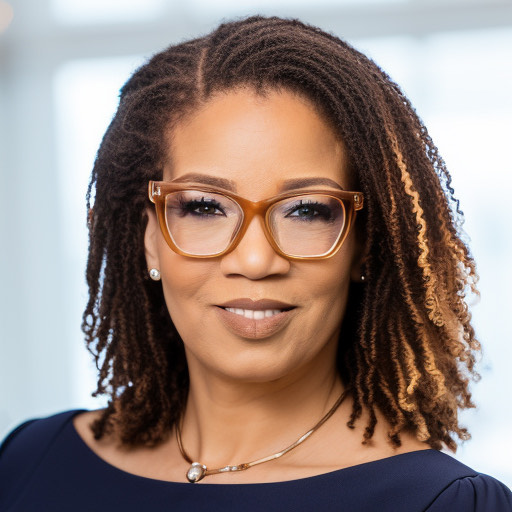
Andrea Henderson
Andrea Henderson (andrealhenderson.com) has been helping organizations match talent to value for over 25 years. She helps organizations scale, manage people risks and capture market opportunities via talent. Andrea is a Partner in the Life Sciences, Healthcare, Diversity, CEO & Board practices with DHR Global, a top 6 executive search and talent advisory firm. Prior to this, she has held leadership roles with Genentech, Pfizer, Novartis, SUNY Downstate and Trinity Health.
She was selected as part of the inaugural cohort of Perplexity Fellows, reflecting her leadership at the intersection of talent, strategy, and emerging technology. She is also certified by Google in ai.
With a passion for growing and sustaining strong organizations, Andrea has developed a niche helping organizations scale using innovative executive talent strategies. She is an executive mentor for the Miller Center for Social Entrepreneurship’s accelerator program at Santa Clara University.
Understanding that a pillar of strong organizations is good governance, Andrea serves on the Audit Committee for the Private Directors Association and is certified in Private Company Board Governance. She is also on the global Nominating Committee for the Healthcare Businesswoman’s Association.
Profiled in the book, Ambition Is Not a Dirty Word, by business psychologist Dr. Debra Condren, and congruent with the title, Andrea is an Angel Investor and LP in a female-focused venture fund.
Andrea obtained a bachelor’s degree from Edmund A. Walsh School of Foreign Service at Georgetown University, a master’s degree in international relations from Clark Atlanta University, and a master’s degree in business administration from Columbia Business School.
The podcast is just the beginning. The weekly AI+HI Project newsletter features articles on AI trends that are redefining the future of work. Explore these must-read insights from the latest issue. Subscribe now to start turning AI+HI into maximum ROI.
News + Insights
Episode Transcript
This transcript has been generated by AI and may contain slight discrepancies from the audio or video recording.
Alex: [00:00:00] HR, the function that bridges people and business strategy, the function that drives culture, workforce planning, and talent outcomes, and apparently the function that ChatGPT doesn't fully understand. Even as AI tools become more powerful, they sometimes miss what HR truly brings to the table: the judgment, strategy, and human insight that can't be automated.
That's exactly what caught the attention of Andrea Henderson, partner of DHR Global. Andrea is an executive talent strategist and a diversity advocate who has spent years building leadership teams across healthcare and life sciences. Today, we're exploring why AI seems to hate HR, what that reveals about human judgment in the age of AI, and how HR leaders can make [00:01:00] technology work for them rather than against them.
Andrea, welcome to the AI+HI Project.
Andrea Henderson: Thank you so much for having me.
Alex: We've got a fascinating conversation ahead right after this brief message
Ad: Every HR leader knows the pressure behind a big decision. You're expected to move fast, manage risk, and choose the right strategy for your people and your business.
That's why SHRM 26 matters. It brings together the insights you need to make smarter decisions on compliance, AI, talent strategy, leadership, and more. You get practical guidance that you can apply right away. But time is running out. This June 16th through June 19th, invest once and deliver value all year long.
And as a loyal SHRM podcast listener, you get 15% off SHRM 26 registration when you use promo code PODCAST15. Register now at shrm.org/shrm26 and turn conference time into smarter [00:02:00] decision-making for your team.
Andrea Henderson: I'm so happy to start here because I was testing tools. I was writing about HR strategy and workforce planning and, and the business impact of HR, and I kept getting these answers that were biased.
Um, ChatGPT kept coming back with, with all of the worst of HR, the administrative part of HR, and none of the impact. And so in that moment of frustration, I said, "ChatGPT hates HR." And the answer that I got back, the response, uh, proved that I wasn't wrong.
Alex: Really? That's fascinating. So you're referring to a famous LinkedIn post now where you literally highlighted how ChatGPT hates HR, and you, you really went to bat for the HR profession, but also what it is that HR leaders do.
And as, as someone who's been invested in that at SHRM for 15 years, you know, serving as our [00:03:00] chief knowledge officer, launching our certification programs, and a variety of different tools for the HR profession over the years, it, it means something to me to see somebody say that. So just out of curiosity, tell us a little bit about that.
What led to that? How did you... Where did you land?
Andrea Henderson: I was writing content and, and putting together programs, and the responses kept coming back like, "This is not HR. This is board level risk." Or it would say, it would try to correct my language and say, "You don't wanna sound so HR policy-ish." And it was very demeaning.
And when I kept rewriting and editing, I finally said I'm insulted, um, because this is not reflective of the impact that HR really has. Um, and that's how the whole thing started.
Alex: I gotcha. And so let me ask you a question. Do you think it's really about bias within the AI, or is it something deeper? Is it living up to some sort of stereotype?
I, I think [00:04:00] back because I've, I've had the good fortune of meeting Ethan Mollick at Wharton, and he talks about, you know, being feisty with your AI a little bit, right? To get it to do the things you need it to do, and I-- it certainly changed my prompting. I-- you know, you, you have to let it know when you're happy and when you're not happy, what you're do- what it's doing is not right.
What, what do you think, what do you attribute that all to?
Andrea Henderson: Yeah. Well, I think it's two things, uh, or more. I think it's, it's bias in the AI, but it's reflecting, uh, the data set that it's been trained on. It's reflecting an outdated, uh, perspective on HR. You know, when I started in HR way back when, um, the career path was one where people who were extremely organized or extremely friendly, um, excelled.
And then you started seeing people come in from other disciplines. They would put f- a finance leader as the head of HR, or an ops leader, or a marketing leader, um, because they would say, "This, this person [00:05:00] understands the language of business. They understand the business model." Uh, but then you start seeing HR professionals who grew, grow up in HR as a discipline with MBAs who understand the business, who are fluent in, in, in finance and P&L and those dynamics.
So there's less incentive to go outside the function. Um, and HR leaders of today, the best HR leaders of today are truly enterprise leaders.
Alex: So, you know, I, I think about this, and I had an experience with ChatGPT myself early on, where I asked it to think-- And it, it clearly knows who I am now. It doesn't even hide from me.
It knows you're Alex Alonso, Chief Knowledge Officer at SHRM, right? But one of the things a-a-and I've built out different variants, different GPTs over the years to kind of think a little differently. What stereotype do you think it's actually picking up? Uh, just out of curiosity. Is there a, a, a prototypical kind of, uh, stigma that it's picking up?
'Cause it gave me an answer one time. I'll, I'll share with you what that answer was. It said Toby Flenderson from The [00:06:00] Office, right? And to me, I have yet to meet an HR professional who is like Toby from The Office. So I'd love to get just, you know, even a little bit, talk to me about what those biases are.
It's based upon the data, to your point, and what it's been trained on. Yeah. But I'd love to see what stereotypes it picks up when you think about that.
Andrea Henderson: Yeah. It, it's more like the corporate police. Yeah. It's the corporate party planners. It's make everybody feel good. It's, you know, put the fires out. Very administrative, very policy focused.
Not strategic, forward-thinking- drivers of value that we actually are.
Alex: Yeah. And I think specifically about how many... Mark Huselid from Northeastern University and the value chain of HR, right? It makes me think about how much there is there, and we don't actually see it come, come through in, in systems and tools that we actually have over the, you know, to, at our disposal in many ways.
Andrea Henderson: Well, that, that's exactly right because the dataset doesn't reflect the hidden work that HR does. It doesn't reflect the way that HR is involved in managing corporate rep- reputation, right? It doesn't [00:07:00] reflect the culture work, um, that, uh, protects valuations. It doesn't reflect, uh, some of the strategic, um, workforce planning that looks out into the future and protects the business model.
Alex: Yeah. It's funny. Uh, uh, you know, I think about this. I, I go back to my own work, and I think about some of the things that we've seen where the, the real secret sauce of HR is in talent optimization and culture optimization, right? Uh, not just the strategy and, and those components, but it's about getting the most out of those two pieces, those two engines of what makes strategy come to life.
Why do you think people still miss, uh, you know, that, that part of what HR does? And more importantly, what happens when people actually see HR as purely transactional?
Andrea Henderson: I think people miss it because for two reasons. Mm-hmm. Um, it's not as visible, and because we as a profession have-- we have to take some accountability, aren't [00:08:00] as, uh, vocal about what we're doing.
I think we need to be more visible at that, about that as well. I also think that, uh, we're seeing more Subject matter experts, people culture talent experts in the boardrooms that are driving some of the conversations around how HR can drive value, and extracting that value, and highlighting how, uh, HR should be involved.
Alex: You know, uh, you're absolutely right, and I see that, right? But I think part of what we also learn is people don't see the entirety of the job, to your point. What-- Can you share some examples of where you've seen HR either change people's mind, right? 'Cause, uh, to me, that's an important thing, right? I'm not just purely transactional.
I'm not just purely a, a party planner. I'm not just purely, uh, your compliance cop, right? I am somebody who is, uh, who's delivering value, right? Can you share some examples from your own [00:09:00] work or what you've seen just in thinking about how, uh, in this era of AI, how it's changed?
Andrea Henderson: Yeah. I, I'd love to talk about a couple of examples.
Alex: Please. Yeah.
Andrea Henderson: One is, uh, Pfizer.
Alex: Okay.
Andrea Henderson: At one point, the culture of Pfizer was notoriously, let's say, difficult.
Alex: Mm-hmm.
Andrea Henderson: To the point where it was not realizing the synergies from its acquisitions that, uh, the Street thought it could. So the CEO made a promise to Wall Street that it would change the culture, and HR created a new culture model.
It was called OWNIT. OWNIT was the acronym, and the N in OWNIT stood for No Jerks.
Ad: Oh, really?
Andrea Henderson: Yes. And so once that culture was changed, I won't take you through all of the- ... details, but once the culture was changed, the value was realized, and the CEO was t- able to communicate to the Street that, um, that it worked.
There's another example of, um- Moderna that actually led with its people strategy. [00:10:00] And they had a moat because of the talent that they had and were able to enter new markets and create an entire business because of their talent strategy. Last, uh, I would also like to highlight, um, what we're seeing now in boardrooms, where the biggest issues facing modern boardrooms, cybersecurity, digital transformation, AI adoption, and, and, and strategy really have a people, talent, and culture component.
Their cybersecurity issues are not just tech issues because there's a person who's not trained well who let the hacker in. Um, there is a t- issue around decision rights. Digital transformation is about the, the leader who's executing the strategy. And AI, as, as we know and as we're talking, is really about org design and governance.
And so a- all of those things, th- each of those examples [00:11:00] highlights how HR being at the table, but not just to support the strategy, but also to drive the strategy, is really the future.
Alex: You know, it's not lost upon me the, the, the first two examples you highlight are sort of the, uh, the, the saviors of the day when it came to, uh, the COVID-19 pandemic, right?
At least in the US. Uh, they were the two biggest producers of vaccines, right? Uh, a- and each one of them has its own, uh, kind of proprietary information and, and, and tools that they built their own vaccines on. Uh, we at SHRM even had Dr. Bor- Bourla over, uh, participate in a variety of different interviews with our CEO over the, the, the COVID period, right a- immediately after COVID.
One of the things that strikes me is both those organizations actually innovated and started their innovations with culture, to your point. Mm-hmm. Uh, such that in many cases, they were actually ready to take on not just the, the pandemic and the innovation spirit that was required during the pandemic, right?
Where you had some tried and true [00:12:00] older names that were also f- uh, participating in that, uh, older brands that were participating in that, in that innovation space. But one of the things that also kind of stood out to me is even after COVID, we've seen that continued kind of, uh, transition, that transformation that allows them to innovate even further.
I mean, we've, we've, we've all seen the story about, uh, Moderna and how they're taking their H- their CHRO, and n- now it's the Chief Technology Officer or the Chief Intelligence Officer doing all those pieces together, both AI plus HI, as we like to say at SHRM. What do you think really drove the leaders to buy into those different transformations, those cultural transformations, the talent transformations they had to go through?
You-- I- obviously, you're close to it, so I'd love to hear what you think.
Andrea Henderson: That's an excellent question, and I think it's a function of seeing the possibility Uh, many leaders are reluctant to embrace this new HR if they haven't seen what good looks like.
Alex: [00:13:00] Mm-hmm.
Andrea Henderson: I also think it is li- extreme pressure to deliver results and willing to be-- the ability to The willingness to take a risk when you have to deliver.
Alex: It's funny because they really did do it all. I mean, obviously it's very, very much salient when it comes to that, that COVID pandemic period. But they've continued to live that culture and, and do that work. Uh, not to sing their praises, these are not endorsements by any stra- stretch, right? But it's, it's fascinating how they've, they've, uh, they've, they've managed to maintain that.
And so it strikes me that it's also not a surprise that they're now building in AI as the core tool that they're using in concert with their human intelligence, right? And you see that in the design of new medications, you see that in the design of new kind of trials, all sorts of things that typically you would not have seen in the speedy nature in which we're seeing it today, right?[00:14:00]
Yeah. So in your experience, uh, what parts of HR are most often misrepresented, right? The kinds where immediately people think about purely transactional, and it's not actually fully transactional.
Andrea Henderson: Well, I think culture is, is a huge one. Culture, um, sometimes people assume that culture is about making everybody happy, when it's really about accountability, and it's about decision rights.
It's about, um, willingness to be agile, things that are, are sometimes a little bit harder to define. Um, and I would say HR technology is another one. Uh, sometimes it has been an afterthought, right? There's an, a enterprise system or a financial system, and then the HR module is, is added on as an afterthought, and that's a big miss.
Um, and so there's, there are many other examples of where it's, uh, HR is thought [00:15:00] of as, uh, tactical and really could be strategic. In fact, I also have a problem with, um, when we say HR supports the business, because I think there are often many times where HR drives the business.
Alex: You, you're hitting upon something that is, uh, near and dear to the heart of Johnny C.
Taylor, Jr., our CEO. Um, he w- one term, and he is friends with Dave Ulrich, right? So this is something that is near and dear to his heart, but is part of an ongoing debate with Dave Ulrich, where he talks specifically about, uh, the term HR business partner, right? I'm in the business, so why am a p- why am I a partner to the business, right?
If I'm driving value, I'm a member of the business. I'm a business leader just like anybody else. And I remember just this No- past November, we were in, uh, at another event, and, uh, he asked Dave to kind of, "Have you given it more thought now that you're evolving this notion of what is the next phase of what we do?"
And Dave wouldn't go so far as to not say HR business partner, but he did [00:16:00] say, "You know, I, I agree with you because at the end of the day, HR, like any other organization, has to do one thing: help the organization create customers And then increase value. It is as simple as that. And whether it's shareholder value, whether it's stakeholder value, but you're building value for the organization.
Um, so I'm, I, I'm glad to see that we've got some alignment there.
Andrea Henderson: Absolutely. And if you look at the number of CEOs in recent times that came up through the HR organization- Yeah ... it's evidence.
Alex: Yeah. It, it is evidence. In fact, I think the last time I looked at, in the Fortune 500, we are now seeing about eight CEOs that came through HR, which is, uh, compared to what was at one point only two b- uh, with Mary Barra and GM and, and a couple others.
So it's nice to see that we're seeing some traction in that space. Uh, so let me ask you this, 'cause I'm, I wanna pivot for a second. How is it that you see or you foresee, right, the interaction of humans and AI, right? And I say [00:17:00] that in large part because I have a sneaking theory that we're actually in this, this notion of this agentic AI era.
Mm-hmm. Mm-hmm. I actually think that we're in an era where for the next 10 to 15 years, we're actually gonna see the combination of humans and AI working together rather than this notion of displacement. Is displacement a reality at some point? But I'm not a big believer that it's the kind of reality that we're seeing immediately, right?
Uh, recently I read a Fortune article, it came out just this past weekend, uh, focusing on the notion of, uh, many of the layoffs that you see in the tech sector are actually because of big AI investment risks rather than the notion that AI is displacing those jobs. None of those jobs that are the kind that you would expect to be displaced have been fully displaced.
Where do you see humans and AI interacting, and how do we take advantage of it as best possible, especially in HR?
Andrea Henderson: That's such a great question. Um, I think that It's all about keeping human in the [00:18:00] loop. It's all about keeping the decision-making responsibility with the, with the human. Um, it's about designing a workforce and org chart that accounts for both, and that you have someone overseeing, um, the agents, um, and, and building the agents, training the agents to seek ultimate approval from the human.
Um, so I think there will be some displacement, as we're seeing now in the short term, but over the long term, I think the people will be back as they're re-skilled and the organization of the future is reimagined. Um, I, I think about HR as a Crockpot, and the Crockpot did not replace the cooks. It just made cooking easier.
And also, like a Crockpot that can not only simmer and stew and, um, [00:19:00] do all of these things, most people don't know all of what a Crockpot can do, and, and that's why I say HR is like a Crockpot because there's so much that HR can do that people don't realize, and the best, most competitive companies will take full advantage of all of those possibilities.
Alex: I love that likening to a Crockpot, I'm not gonna lie. Just, not, not just because I use my Crockpot, like, once a week. Uh, a- and candidly, I need to stop 'cause I've been making too much cobbler. I've been making a lot of cobbler. It
Andrea Henderson: makes desserts, yeah.
Alex: As a diabetic, it's probably too many desserts for me.
But, uh, one of the things that stands out is, uh, uh, it, it is also sort of a... Uh, what I love about it is it-- when you really think about it, it is a relatively low energy e- expense, but one that delivers so much value, right? And when I think about that, HR, if done right, is that low energy, lower bar expense, but the kind that actually drives so many different results, so much value, right?
Uh, do you see that kind of l- coming through even [00:20:00] more with AI?
Andrea Henderson: Absolutely, and that's why I love the analogy. Mm-hmm. Because it's, uh, it's, it's the unlikely hero that is able to extract so much value in so many ways, and it keeps... There, there are multiple ways that keep being discovered.
Ad: Manager effectiveness directly impacts performance, retention, and cost.
People are stressed and they're stressed because of their people manager.
Traditional training builds awareness but often fails to change behavior.
SHRM developed this thing called PMQ. That stands for People Manager Qualification.
PMQ. Teach managers how to manage, how to be more effective, more empathetic, more understanding, and better motivators of people.
Driving behavior change when it matters most.
Where the plus part comes in is Life Guides.
We unleash the power of every employee. If your manager was better and you were feeling mentally well and safe.
What Life Guides does is serve as that [00:21:00] coach to connect with another human being who can help you navigate through all those real-life examples that relate to you from the things that you learned in that training.
PMQ+ is an addition to my toolbox. I've seen a better relationship with my managers and how they collaborate, how they work with each other. There's not that stress anymore 'cause they feel like they have somebody to release.
That's why we created this PMQ+, Life Guides plus SHRM's PMQ.
Increase performance.
Get PMQ+ today.
SHRM.
Alex: So quick question for you, and I, I just wanna kind of dive in a little bit further. If AI continues to really kind of mischaracterize HR- Mm-hmm ... what do you see are the potential risks, especially not just for HR, but for employees, the workplace experience, and even the organizations?
What do you see happening there?
Andrea Henderson: Yeah. I think you've hit the nail on the head in the fact that there are risks to [00:22:00] multiple stakeholders. Um, and so we have to, uh, HR professionals n- need to be involved in the development of, of the AI tools, in the training of the tools, in the governing of the tools. Um, and so, you know, i- in the policy regulation and, and looking at the, uh, ethics of the, uh, of the use, um, I, I think we need to embed ourselves deeper in, um, in the adoption, um, in order to ensure that we're represented well.
The risk is really about losing competitive edge. Um, the winners will fully embrace the possibilities, um, and the losers will s- continue to be a step behind, um, and that's at the end of the day. Um, employees and other stakeholders will [00:23:00] follow, but I think HR has to take the lead
Alex: You know, I, I'm so happy to hear you say that 'cause at SHRM I lead the Ask an Advisor service.
One of my, my teams is the Ask an Advisor team, and they're a team of seasoned HR professionals who respond to over 70,000 inquiries a year, live inquiries from, uh, our members, uh, everything short of legal advice, right? And I encourage anyone to really join SHRM in large part because that is a great service that comes with your, your membership, right?
You can call up to 15 times a year. But what I also challenge that team to do is, you are my data generators. When I think about how HR should be trained, what it is that w- we need to teach people about the way to respond to these things and respond to new, novel kind of things, I t- I, I almost think of them as also the data trainers, right, the machine learners who eventually are also gonna evolve into teaching the AI tools to really respond as well as possible, right?
I, I, I challenge them. I said, [00:24:00] "You're my AI advisors. You're my, my learners," right? And so, uh, you're probably ahead of the curve more than anyone else is what I always remind them. One of the things that strikes me is, uh, they built their entire business line on providing advice, and so I'm gonna ask you- Mm-hmm
for some advice.
Ad: Sure.
Alex: Let's say you're talking to a fellow CHRO, someone who's really driving, uh, their organization in a different direction, maybe in the life sciences, maybe in health, but, uh, w- what is it that you see? What advice would you offer one HR leader to another how they should evolve, what they should do in thinking about their AI strategy, and really making it an AI plus HI strategy?
Andrea Henderson: Yeah, that's a great question. I'm going to say that learning AI is a non-negotiable. That's table stakes. You have to be deeply conversant with the [00:25:00] possibilities. Um, and from there, I would say think about your role, um, as a driver of value and look for ways to, uh, t- to extract value, but not only in the HR vertical, in the r- in the functions that HR is typically responsible for, but when there's a people t- talent or culture component in finance or in operations, there, there's always a people, talent, and culture component And we should insert ourselves in those conversations as well.
Alex: I couldn't agree more. I'll, I'll share that with you 'cause I even think about some of the most common decisions that are being made. You alluded to it earlier, right? Uh, the selection of an employer resource or employee resource planning tool, right? Everybody's using something like NetSuite. Everybody's using something like Oracle or Workday, something like that.[00:26:00]
But in reality, think about what we do, right? Uh, that, so much of that is actually about HR, and so, uh, you know, traditionally we haven't had so much of a foot in the door to kind of com- w- weigh in on those things. But one of the things that strikes me is the new thing that we need to weigh in on with each of those tools is the native AI tools that live within them, right?
And how it is that our workforces will either be trained on them, but more importantly, how our data also goes back to those tools so that it's being developed, and that we're not just ensuring cybersecurity, but also that it's learning us, it's making us better and more efficient, not the humans, but also the business.
Um, I, I... To me, that's the, the best advice is think about how you should be engaged in every part of those types of discussions. So I have to ask because, and this is completely a curveball, so forgive me, right? But I have to ask you, what is the one meanest thing or, or prompt that you've ever shared with [00:27:00] ChatGPT?
And I'll share mine, right? I, m- Cha- my ChatGPT and my, most of my, uh, GPTs know that I'm really upset when I say, "Do better." Right? I say two words to them, "Do better," and they start apologizing. I told them, "Don't apologize. Cooperation is better than sorrow. Give me cooperation." So what do you, what is the one thing that you use to kind of be a sharp command with, with your GPT?
Andrea Henderson: Well, first I use all caps.
Alex: Oh, okay.
Andrea Henderson: And I say, "Stop saying this is not HR. It is HR." You s- wh- when, when ChatGPT says, "This is an enterprise risk level decision. This is not HR," I said, "Stop saying that. It is HR."
Alex: I love that. I, I appreciate that very much. Andrea, you have had the coolest glasses of anyone I've ever done or, or interviewed in these, uh, these podcasts.
Thank you so much for sharing your wisdom with us here today.
Andrea Henderson: Thank you for having me.
Outro: Did you know our podcast is only one part of the AI+HI project? We [00:28:00] also host an annual event featuring visionaries from the worlds of business, tech, and HR. Plus, we publish a weekly newsletter that includes topical articles and the latest research from SHRM, all to help you stay ahead of the trends.
To sign up, just make your way to shrm.org/aihi, and you can also follow SHRM on social media for even more clips and stories. Like, share, and tell us how you're innovating towards a brighter future.
Ad: SHRM
Feature Story

LinkedIn’s latest HR Skills on the Rise report highlights AI literacy, compliance, analytics, and change management as critical capabilities.
Enjoy on Your Favorite App
More AI Headlines from SHRM

Learn how AI can audit employee goals, identify common weaknesses, assess alignment with organizational priorities, and uncover conflicting goals.

Learn how AI can analyze engagement survey comments to identify key themes, compare feedback with survey scores, and uncover workplace concerns.

Learn how AI can analyze exit surveys and interviews to identify turnover trends, uncover workplace issues, and highlight opportunities for improvement.