Why Hiring Veterans Makes Good Business Sense
How to attract and retain those with military experience.
Amber McCollum, 28,  spent five years as an intelligence officer in the U.S. Army, including nine months stationed in Afghanistan. She’s proud to have served her country.
But when she decided to leave the military in 2015, she worried about her transition to the corporate world. She didn’t want to jump into the first civilian job that came along and realize later that it was the wrong decision.
“I really wanted to settle into something where I could see myself long term,” McCollum says.
Last year, she began her job as a senior consultant in the advisory services practice at EY in New York City. She believes that she has found the long-term career she was after.
McCollum is one of more than 4,000 veterans hired by EY since it created its veterans hiring program in 2012. The tax and consulting company is among hundreds of private and public employers that have collectively hired or trained more than 1.2 million former service members and military spouses in the past five years.
By participating in initiatives such as the Veteran Jobs Mission and the White House Joining Forces, these organizations helped reduce the previously high unemployment rate for post-Sept. 11 members of the military who served in active duty to 5.9 percent in July 2016 from 12.1 percent in 2011, according to the U.S. Bureau of Labor Statistics.
However, with as many as 360,000 men and women leaving military service each year, even more companies will need to create programs to recruit veterans, many of whom have the skills needed to help address talent shortages across a range of functions and industries.
“Certainly, it’s just the right thing to do,” says Ken Bouyer, EY Americas director of inclusiveness recruiting, who heads the company’s veterans recruiting program. “But for us, when we look at the skills these veterans bring, their experiences, their insight, their ability to work in a team, their strong work ethic—all these things translate into what we do as a firm as we serve our clients. We’ve benefited immensely from having their perspective and point of view.”
Why Veterans?
While there’s no direct correlation between McCollum’s former role in military intelligence and her job at EY, she’s using a lot of the other skills she learned in the Army: writing, giving presentations and problem-solving.
“My job is so unpredictable. Being a consultant, there’s no playbook. The clients have different needs every week. Adaptability is huge,” she says. “The military was very much like that—you never knew what to expect. Things would change on [a] dime. So learning to have that flexibility, to react to change and to quickly come up with a plan is a valuable skill here.”
That’s just one example of how veterans can provide valuable skills to employers.
Most also have learned to be safety-conscious, detail-oriented and team players—all attributes that make them a good fit for any number of jobs, including those at New York City’s Metropolitan Transportation Authority (MTA). Since 2014, the MTA has hired 650 former military service members into a variety of positions ranging from bus and train operators to logistics, management, and high-level repair and maintenance roles.
“We need someone who can react quickly and rationally and coolly” when the region is hit with snowstorms, floods or other major calamities, says Aleyda Meyers, director of the MTA’s veterans recruitment and staff initiatives. MTA employees work through such emergencies “because we make New York City run. We make New York state run. We make part of Connecticut run.”
People with military backgrounds are similarly mission-driven, she says. When Meyers explains MTA’s objective during recruiting visits to military bases in the New York area, it resonates.
“We have a mission that people can clearly see,” she says. “It’s not nebulous. Did people get home safe at night because of us? Did people get to their destination in a clean environment, a safe environment?”
False Impressions
Despite the positive results that many employers have experienced, 80 percent of organizations lack veterans recruiting programs, according to a 2015 survey by Futurestep, a Korn Ferry company specializing in talent solutions.
Uncertainty about hiring veterans is often based on a lack of knowledge about the military or misconceptions gleaned from Hollywood stereotypes, says Peter Gudmundsson, CEO of Cincinnati-based RecruitMilitary, which helps employers recruit and retain veterans.
For example, the public overestimates the rate of mental illness among post-Sept. 11 veterans, with 40 percent believing that half of them have mental health issues, according to survey results released in July by the George W. Bush Institute’s Military Service Initiative.
 In reality, only 10 percent to 20 percent of those deployed to Iraq and Afghanistan experience post-traumatic stress disorder.
Research also shows that employers often don’t understand how military skills can translate to civilian jobs.
That’s an obstacle knowledgeable companies can overcome. “Our talent acquisition staff gets trained in how to read a military resume,” Meyers says. “Start with the simple things: What are the different ranks? So when we’re reading the resume, we aren’t losing out on good employees because we didn’t understand that jargon.”
When interviewing veterans, cultural differences between the military and civilian worlds can cause HR professionals or hiring managers to miss out on good candidates. Veterans often speak about their team’s accomplishments, using “we” and not “I,” when hiring managers want to know their individual contributions.
The New York City Metropolitan Transportation Authority hires veterans because of their ability to ‘react quickly and rationally and coolly’ when the region is hit with snowstorms, floods or other major calamities.
“They are very humble. They’re not good at singing their own praises—all the opposite of what you might expect in interviewing a civilian,” says Melissa Stirling, director of military, campus and youth programs at Hilton Worldwide. “So you really have to get HR people to shift their mindset to make sure that they are giving this veteran the best chance that they can.”
She trains her HR team and hiring managers to probe for details and examples of how the individual contributed to his or her team’s success. One example: “Tell me about a time when you had to be very resourceful and what were the results.”
Fortunately, many free resources are available to help employers train their hiring teams. Hilton has sponsored an interactive training video, “Reinventing Michael Banks,” which is available online. The U.S. Department of Veterans Affairs has training videos for HR professionals on its website. In-person training for HR and hiring managers is available as part of the U.S. Chamber of Commerce Hiring Our Heroes job fairs.
Are You Military-Friendly?
Before inviting veterans in for interviews, ensure that your company is military-friendly.
“The worst thing you can do is say you are military-friendly and then have them come in and not experience that,” Stirling says.
This fall, Hilton expects to hit its goal of hiring 10,000 veterans and military spouses since its program began in 2013, a milestone it will meet two years ahead of time.
To build awareness and get stakeholder buy-in, Hilton kicked off its program with a military-themed roadshow for HR and hiring managers in 10 cities. Stirling and her team presented a one-day program on the value of hiring former service members with practical tips on interpreting military resumes and interviewing. They invited representatives from a local veterans organization to meet with HR recruiters over lunch. In the afternoon, they sponsored a Hilton hiring fair and asked managers from various Hilton brand hotels to be ready to do first-round interviews. “The idea was to move things rapidly,” she says.
In the evening, Stirling and her team hosted a reception for veterans already on Hilton’s staff. “Who better to be advocates for the program than the veterans we have internally?” she asks.
To solidify that military-friendly culture, Hilton provides pins representing the different branches of the military that veterans on staff are allowed to wear on their Hilton uniforms.
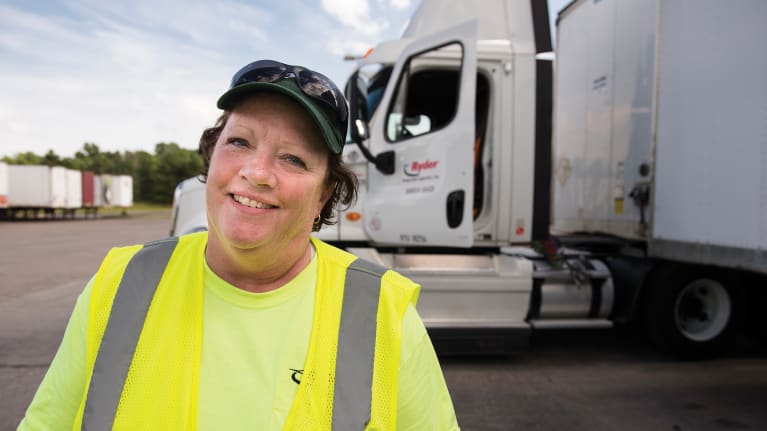
“We want them to be proud of their military service,” she says. The pins, which are approved by the Defense Department, are a conversation starter for guests, who frequently share that they have a family member in the military, too.
The company also issues “challenge coins,” similar to the recognition coins given by leadership in the military, to employees who have supported Hilton’s military program in significant ways. A “commander” at each hotel runs the program locally and is the liaison with corporate headquarters.
[SHRM members-only toolkit: Becoming a Military-Friendly Employer]
Recruiting Tips
One reason Hilton was able to ramp up so quickly is because it hired a full-time military sourcer, Abie Chong, who served more than 20 years in HR roles in the U.S. Air Force and now works with recruiters at Hilton’s nine U.S.-based talent acquisition centers.
He enjoys introducing military personnel to the hospitality industry, which most haven’t considered before.
“Not everyone in the military thinks of hospitality as a career path,” he acknowledges. They’re aware of the front-desk position, but not all the behind-the-scenes roles, including engineering and maintenance, IT, and accounting, each of which can lead to manager and executive positions.
HR professionals should avoid pigeonholing veterans, Chong cautions. For example, don’t assume that someone who was a cook in the military is capable of doing only that as a civilian.
“I always compare our military veterans with being in a team sport. They’re athletes. They strive for greater achievement.
You can give them any task to do, send them to any type of training, and they’ll learn it,” he says.
Ryder trucking company has partnered with Hiring Our Heroes and Fastport, a recruiting company, to mentor current military members, giving them the opportunity to learn about the trucking industry. Since joining Hiring Our Heroes in November 2011, Ryder has hired 4,360 veterans, adding to its 27,400 total U.S. workforce. Two years ago, it became a corporate sponsor of the Hiring Our Heroes Fellowship program, a 12-week unpaid internship that provides senior noncommissioned officers and junior to midlevel officers experience in the civilian workforce.
The company has also partnered with the Soldier for Life Transition Assistance Program to provide 12 weeks of diesel technician training for people transitioning from the Army. Participants receive a job offer when they start, which is contingent on successfully completing the program and meeting other hiring criteria. They are paid by the Army during the instruction; Ryder pays for the training itself.
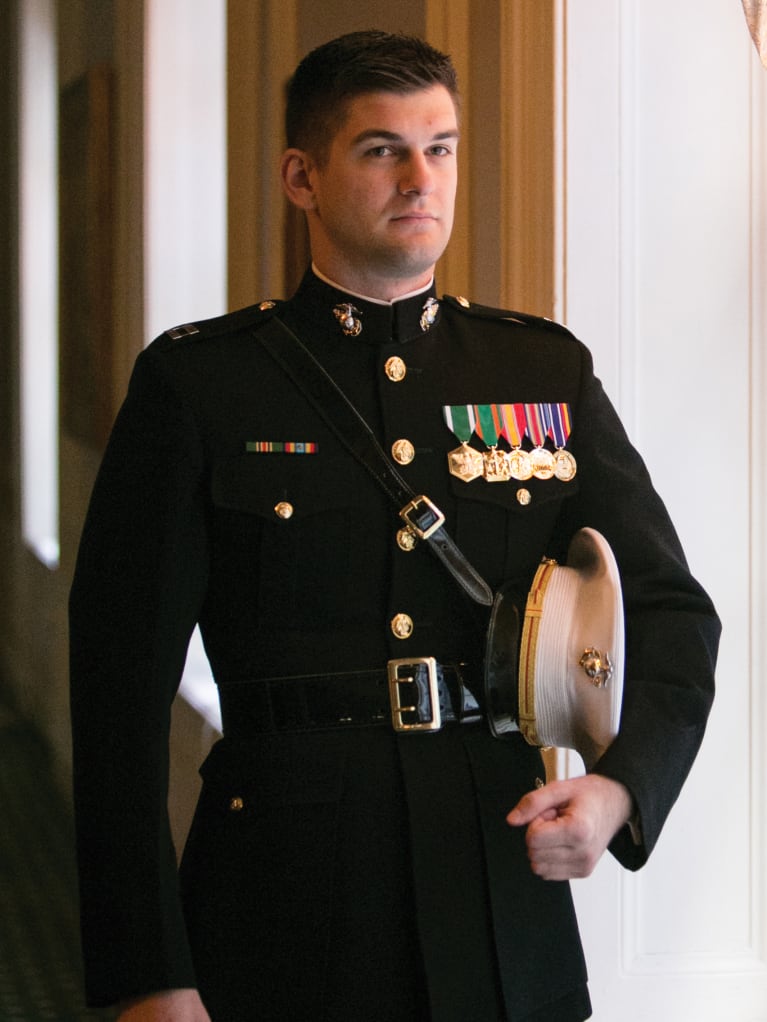 “Yes, it takes some time and investment of resources. But what you get in return are some really terrific employees who can add value to your company,” says Patrick Pendergast, Ryder’s group director of recruitment.
Smaller companies are also seeking out veterans, with positive results. Kyle Stavig, CEO of Myers Container, a trash and recycling company in Portland, Ore., discovered the value of hiring from the armed services when he attended leadership development training at the U.S. Military Academy at West Point two years ago. After observing how well the cadets were trained to learn and problem-solve, he worked with Bradley-Morris Inc., a private veterans recruiting company, to identify two individuals for management positions in his rapidly growing business of 250 employees.
With just 25 managers at six facilities, “having somebody who is competent and capable and isn’t scared to go off and research how to do something that hasn’t been done is invaluable,” Stavig says.
Will They Stay?
As veterans hiring programs become more established, employers are working to improve job satisfaction and retention, which has been a particular challenge. One recent study showed that about half of the 1,200 people surveyed left their first post-military job within 12 months.
“It’s one thing to get them hired; it’s another thing to keep them and make sure they feel comfortable,” says JoHanna Martinez, AT&T’s military talent attraction manager and a U.S. Marine Corps veteran.
AT&T has hired 12,000 veterans (13 percent of all new hires), with most going into technician roles, in the past three years since it launched its military hiring program. The Dallas-based telecom company has 280,000 employees total. The retention rate for newly hired service members is within a percentage point of that for nonveterans, Martinez says.
Affinity groups and mentoring programs are among the most highly touted ways to boost retention. At AT&T, more than 9,000 employees belong to the company’s veterans employee resource group, which has 42 chapters around the country and provides a community for those taking their first post-military job.
For some, knowing that a potential employer has other veterans on staff who can help them transition into the civilian workforce makes a huge difference.
At EY, in addition to the mentor that all new hires receive, veterans are assigned a peer advisor from the 1,000-member veterans network to help them transition to the corporate world. As soon as McCollum accepted her job offer, she was contacted by two former service members who were hired by EY within the past year and knew what she was going through. They fielded her questions on a range of topics from what to wear to work to where to live.
“That was very helpful to have the veteran perspective,” she says. “They knew exactly where I was coming from.”
And, with this simple personal connection, companies are hoping to retain the value that military veterans bring to their organizations for years to come.
Dori Meinert is senior writer/editor for HR Magazine.
Photographs courtesy of Metropolitan Transportation Authority and Ryder. Photo illustration by Laura Bruce for HR Magazine
Was this article useful? SHRM offers thousands of tools, templates and other exclusive member benefits, including compliance updates, sample policies, HR expert advice, education discounts, a growing online member community and much more. Join/Renew Now and let SHRM help you work smarter.
Related Articles

Transform HR with mobile technology to streamline workflows, enhance communication, and boost employee engagement across distributed teams.

A new study found that talent development practitioners believe performance-based assessments are more effective at measuring employee learning outcomes than knowledge tests.

As AI makes deeper inroads into organizations, employee concerns about the technology continue to grow. Here's how HR leaders can address the fear of AI among their own staff, as well as in the wider organization.