- Video
- Audio Only
In this episode of People + Strategy, we sit down with Jessica Kriegel, chief strategy officer at Culture Partners and author of Surrender to Lead. Drawing on her life’s deeply personal turning points, Kriegel reflects on how learning to surrender reshaped her approach to leadership, accountability, and organizational change. Through candid stories, she challenges traditional assumptions about transparency and examines why many leaders fall into the “action trap,” mistaking activity for progress. Kriegel makes the case that modern leadership is about shifting beliefs and creating the conditions for people to choose accountability, adapt to change, and perform at their best.
Related to this Episode:
SHRM PMQ+ Manager Qualification
SHRM’s People Manager Qualification paired with one-on-one professional mentorship (PMQ+) gives your people managers the skills, confidence, and peer support they need to lead effectively.
Webinar: The Top 5 Culture Mistakes HR Leaders Will Make in 2026
Discover what the most adaptable, high-performing organizations are doing to build cultures that drive results in 2026.
The podcast is just the beginning. The weekly People+Strategy Brief also features articles on all aspects of HR leadership excellence. Explore these must-read stories featured in the latest issue. Subscribe now and elevate your strategy.
News + Insights

Discover how fear-based leadership limits potential and why selfless, accountable love is the antidote.

Uncover how HR leaders enhance strategic influence, manage workforce challenges, and shape culture for sustained organizational performance.

HR strategy must be aligned with business priorities to deliver value. Discover gaps between CEOs’ and CHROs’ 2026 priorities and learn how to bridge them.

Discover three key elements playing out across the C-suite and how they are projected to shift in the year ahead. Plus, learn CEOs' top macroeconomic challenges.
Episode Guest
-
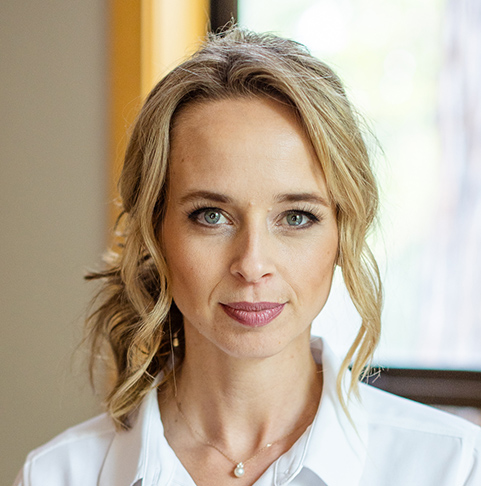
Jessica Kriegel
Jessica Kriegel is an industrial-organizational psychologist, author, and speaker with over fifteen years of experience working in human resources and consulting, helping organizations build cultures that unleash the potential of their people. She is the chief strategy officer at Culture Partners, a global consulting firm, where she leads research and thought leadership on what drives results inside organizations.
Episode Transcript
Ad: [00:00:00] Great news for HR leaders. The winter issue of People and Strategy Journal is now live exclusively for SHRM Executive Network members. The theme of this issue is risk management. Get expert insights on leadership, resilience, building agile teams, and more. All in our new interactive digital format. Read the winter issue now on the SHRM Executive Network website at SHRM dot org slash en.
Mo Fathelbab: Welcome to today's episode of People and Strategy. I'm your host, Mo Fathelbab, president of International Facilitators Organization, People and Strategy is the podcast from the SHRM Executive Network, the premier network of executives in the field of human resources. Each week we bring you in-depth conversations with the country's top HR executives and thought leaders.
For today's conversation, I'm excited to be joined by Jessica Kriegel, chief Strategy [00:01:00] Officer at Culture Partners and author of the book Surrender to Lead. She has served in a variety of leadership roles over the course of her career, including as an HR leader. Jessica recently moderated the SHRM Blueprint Conference, and today we're going to discuss her change framework for leadership, the action trap of leadership, and share strategies for leaders to unlock more results.
With their workforce. Welcome, Jessica.
Jessica Kriegel: Thank you so much for having me. It's a total pleasure to be here.
Mo Fathelbab: Great to have you with us. Jessica, tell us about your career journey and what brought you to the field of HR and today to Chief Strategy Officer.
Jessica Kriegel: Well, I fell into it as I think many HR people do. I moved to Italy when I graduated from college and was teaching English, and my very first client was someone who had a leadership development firm, and he was learning English because in Italy, English is the common language when you're working across countries, and he had a need to facilitate.
[00:02:00] Leadership development trainings in English. And that's why he was learning the language. And I said, well, why don't you hire me and I'll be your English facilitator and you can teach me everything that you know. So I did that for three years and I was in, over my head. I, I mean, I was 22 years old facilitating leadership development programs for, I remember the vice president of Communications at Sky News was one of my clients and I had no idea what.
Communications he was managing. I didn't, I knew nothing about business, but I was a theater major, so I was good in front of a room. And so it worked for a little while until I realized I gotta go learn a little bit more, get that business acumen. So I went and got an MBA, and when I graduated from my MBA, I got my first real corporate job at a technology company.
It was called Taleo at the time. It was later acquired by Oracle doing training, consulting in the HCM space. Then when I joined Oracle, I transitioned into HR doing change management. I was an [00:03:00] organizational development consultant. I worked there for 10 years. I was working with the top. C-level executives at Oracle doing really interesting work around their culture and their strategy from moving from an on-prem to a cloud company.
And then when I left there, I became the CHRO of a technology firm based in Silicon Valley. And then. Started my own business, which eventually I sold to Culture Partners and now I'm a chief strategy officer. So, you know, as with many people's careers, it comes and goes from things we expect and things we don't expect.
Mo Fathelbab: Yeah. And clearly you're an excellent salesperson. If at the age of 22 you are able to convince some execs to let you do their, uh, strategy work.
Jessica Kriegel: Yeah. You know, I, it's funny, I did, uh, door to door sales during the summer in college where you're knocking on doors selling people, they were books to help parents teach their kids new math, and they didn't know new math.
And so I, I got my sales training on the streets quite literally, [00:04:00] knocking on doors from 7:00 AM until 9:00 PM It was a brutal, brutal work, but, you know, made a lot of money. So I guess that's where my training came from.
Mo Fathelbab: I love it. I love it. So, uh, Jessica, a key part of your leadership style today is about surrendering, um, and, uh, surrendering to lead.
What does that mean to you? And, and maybe walk us through how you got there.
Jessica Kriegel: Thank you for asking that. It is such a big part of my leadership journey because I think leadership journeys for everyone are, are deeply personal. And so I went through a personal transformation. In my, my private life, we'll call it five years ago, where I got in touch with the need to surrender for my own wellbeing.
I was micromanaging and a control freak and trying to get everything to be the way that I wanted it to be. And when it wasn't the way I wanted it to be, I would get very restless, irritable, and discontent and frustrated, and it was bringing me [00:05:00] down and it was bringing everyone around me down. And I had, you know, not to get too touchy feely, but I had what I would call a spiritual experience that I can simply describe as I, I, I had a coincidence happen to me.
That was far too much of a coincidence to be a coincidence, if you know what I mean. And I went from being a lifelong atheist to a believer, and I learned about the power of surrender. And I, I went back to school. I, uh, studied, I was getting a master's in divinities in divinity. And as I was learning about surrender and the ability to let go and what is created in that, I started to apply that into my work life.
As the CHRO, I started to surrender more and my role at Culture Partners, I started to surrender more. And in the work that we do with our clients, we, we started to encourage surrender, and it unlocked. This incredible amount of potential in our clients and drove an [00:06:00] ROI beyond what we possibly could have imagined.
And we realized that we were onto something that wasn't just touchy-feely and four year wellbeing, quote unquote. It was something that actually drove business results. So we partnered with Stanford Graduate Business School to study at scale. Whether this idea of letting go really does drive profitability.
We want it to measure results the way that the market measures it when you look at revenue growth and as it turns out it does. So we found something that seems fairly counterintuitive, but is actually deeply effective when you're, when it comes to growth for reasons that make a lot of sense. And so to answer your question, I got there a long way around to surrender.
To lead is to surrender to reality. The reality today is that to lead in business is very challenging because change is happening so quickly and you've got economic uncertainty, AI rapidly advancing, competitive landscape changing every moment, and there's so much [00:07:00] that we cannot control. And yet leaders clinging to the delusion of control because it makes them feel like they might be doing a better job.
That hustle culture mentality that manifesting, I just do more and I'll get what I want. And actually that holds us back because we are not tapping into. The skillsets of the people around us on the team. This is really about delegated leadership at some level and realizing what could be possible if you unlock what your team has to offer, and also getting yourself out of a box.
I mean, it has to do with innovation and getting the energy away from, I wish it were different. I wish that department was more helpful. I wish that leader wasn't so difficult. I wish that the employees were more proactive. I wish that the board was more investing in us. I mean, there's all these things that we can spend energy on that aren't the way that we want them.
Or we could surrender that and focus on the one thing that we can control, which is ourselves. [00:08:00] And the way that we react and the way that we respond and the way that we adapt, which is the number one skillset for companies today, is the ability to adapt. And when you surrender to lead by focusing all your energy just on the way that you're showing up according to the research, you can drive four times the revenue growth over the course of three years.
Mo Fathelbab: So I love all that. Uh, but first and foremost, I'm really interested in how you were able to actually just let go. 'cause you know, people that I've known that, that may be a little bit of me, that have this notion of we wanna control things and we wanna make sure everything is done the right way and our.
Uh, that's a hard, that's a hard thing to let go of. So how did you manage to let it go and, and how long did it take you to actually get to a point where you feel like you've let go?
Jessica Kriegel: I literally had to get to the most desperate emotional place where I could no longer move forward the way that I was moving forward because you know, some of us take a little bit [00:09:00] more learning than others to, to start to do things differently.
That was my experience, and it's an ongoing process I have to remember to surrender every day. And. The first opportunity of applying this lesson in the workplace was actually in my CHRO role, so this was maybe a month or so. After I had that rock bottom, I was, I'm a recovered alcoholic, so I was drinking.
I mean, that was, it was a real, real bottom. And I got to that bottom place. I decided to get into sobriety. I started doing the work of getting sober and a, a lot of that has to do with letting go a lot of. People drink because they don't wanna feel all of the negative emotions. Right. And I had to surrendered to the emotions.
I had to surrender to reality. And then within a month I got a new job as the CHRO. And in my first week in that job, I was invited to the board meeting and the board called me in and they let me know that we had to lay off 20% of the workforce and that I was in charge. [00:10:00] And here I was having just experienced this.
Moment of surrender in my life, and now I've gotta manage a layoff, which was the last thing I wanted to do. But all of the, I, I obviously couldn't do anything about changing their mind. We had just signed Class a, uh, lease LA office space in Silicon Valley right before COVID OD. Were underwater. This just had to happen.
So I surrendered to that reality, first of all, which is that these layoffs were happening. And then here's how layoffs usually happen. And you know, your audience will know this. Layoffs get managed in private rooms. The executives know that they're gonna happen way before the rest of the organization, and they control the process.
They control the narrative. They work with the budget to figure out how many people who, when, how, and then. They get to the point where they drop the ax and then they control the narrative and control the fallout. And I just wasn't in the place personally where I could do it that way. So I decided to let [00:11:00] go and I went into the office the day of the board meeting and I called everyone in and I had a meeting and I told everyone, I've just been informed that we have to lay off 20% of the company.
And I don't know when, and I don't know who, and I don't know how exactly, but we'll keep you updated every step of the way. That was me letting go of needing to control the outcome of this layoff because this was a risky move, right? I mean, so now there, this was an experience that I created for people that had a couple of reactions.
One reaction was people got scared that they were gonna be on the list, and they started looking for jobs, and then they started slowly, they started quitting, right? I mean, we lost a lot of people. The second reaction was people who were so grateful. I told them the truth. That was something they had never experienced before.
A leader that was willing to just tell them transparently what was going on, not keep it a secret, because why do we keep it a secret? We keep it a secret because we don't want to lose the [00:12:00] wrong people, quote unquote. Right. Well, what ended up happening after a couple months, enough people had left the company on their own free will.
On their own terms that we didn't actually have to do any layoffs, and the people that were left were so grateful for the transparency and they were so all in with us and ready to adapt to every situation because they knew that we had them. We were leading from a place of. Love. Love the way that St.
Thomas Aquinas defines it, which is to will the good of another and not leading from fear, which is, oh no, everything's going downhill. We've gotta control this. I hope no one finds out. Make sure that we cut off their slack as soon as we tell them so that they don't send out a message that we don't want them to send.
Right? I mean, there's all of this fear, fear-based tactics that we often lead by simply because that's the way we've always done it. And so. You can really think outside the box on how to show up as a leader when you surrender to lead, and the results may surprise you. When I had that [00:13:00] experience, I knew we were onto something.
Ad: The future of work is shaped by the talent you hire today. Join us in Dallas, Texas, April 19th until the 22nd to gain the tools and strategies to build a stronger, more resilient workforce at SHRM Talent 2026. Learn more at SHRM dot org slash talent. 26 dash podcast.
Mo Fathelbab: So what other leadership lessons did you learn along the way from that experience?
OB obviously, transparency being one of them. Uh, what else?
Jessica Kriegel: Well, I think accountability is one of the most challenging things for leaders right now, and one of the most coveted mindsets of all time, right? I mean, imagine if you had a hundred percent of your workforce that was a hundred percent accountable all the time.
It would be the dream workplace and CEOs. Are dying for more accountability, but it is very hard to do because first of all, [00:14:00] accountability is, is kind of a bad word in corporate America. When do we hold people accountable? The only time we hold people accountable at work is when something goes wrong. And so no one wants to be held accountable because it's when something has gone wrong.
And the reality is we operate in hierarchical systems that have more resources at the top for fewer people, and we are in competition with one another to get those resources and to move up the ladder, no matter what your values statement are, you can have your values be around teamwork and unity and collaboration.
And one of the lessons that I learned through this process is, is surrender is ultimate accountability. It's saying, I'm not gonna focus on what everyone else needs to be doing and holding other people accountable. I'm gonna take accountability for myself and make a personal choice to focus on what I can control to drive key results.
I. When you do that, you have surrendered the need to control others because in these hierarchical systems, you may have the title of manager or [00:15:00] director or chief, whatever your title is. You still can't control people. You cannot make them accountable. That's something they have to opt into. That's how you get their discretionary effort is to get them to choose it.
Mo Fathelbab: Why is it important to not give advice and and why are so many leaders stuck in that mode?
Jessica Kriegel: Oh my goodness. I mean, how many times have you been given advice by someone and you already thought of that and it didn't work, or they don't know the full context and you know that's not going to work? And how many times?
I mean, that's one, right? I mean, oftentimes the advice we get is just poor because they don't have the full picture. The second reason is. We are trying to develop the leaders of the future. Everyone is on their own journey, right? I mean, they have their leadership journey that they need to go on, and when you give them the answer and you tell them what to do, you're taking their growth opportunity.
Mo Fathelbab: So another concept of yours is the action trap. Can you walk us through what that is? [00:16:00]
Jessica Kriegel: Yeah. The action trap is something that I think most people today fall into. It's part of that control. Tendency that we have. So we all wanna get results. I mean, if you are, whatever role you are in, you have a goal that you are trying to achieve.
And we all know that results come from actions. People need to do stuff. And then that doing stuff leads to a result. And that's where most leaders stop. They just think about what do we need to do to get a result? We'll create a roadmap. We'll communicate that roadmap, and then you do that. Have you achieved the, the sudden revenue growth of the AI adoption?
No, that's not enough. So now we need to have meetings and we need to check in with people. We need to set up KPI dashboards. We need to have, uh, pips with people who are not on board. And is that enough? No, because you hire new people and they didn't even get the memo about the thing you're trying to accomplish.
Okay, let's set up systems. We're gonna create an orientation and we'll do training and set up an LMS and learning and development, and then we'll [00:17:00] have coaching and peer mentoring. And it's all these actions. It, it is the endless cycle of activity that feels like progress. Doesn't actually move the needle because in the 35 years that Culture Partners has been in business, what we see is leaders always think that what will create change and activate change is policies and procedures and plans.
But what we have found is those don't work as nearly as much as you wish they were because people will act in alignment with what they believe. What they believe about the company, what they believe about the product, what they believe about you as a leader, what they believe about themselves and their role.
And if you can shift what their beliefs are, then they will opt in to the right action. So action trapping is the, is the micromanagement. It's the delusion of control that you just tell everyone what to do and you're gonna get the result. But what you really need to do is tap into the beliefs. Where do all of our beliefs come from?
The beliefs that we have about [00:18:00] every single thing in this world come from the experiences that we've had. Experiences shape beliefs, beliefs drive people to take action, and action gets result. So you have to get outta the action trap and shift people's beliefs by focusing on the experiences that they've had and that you are creating for them.
Mo Fathelbab: Can you give us, uh, a specific example where, uh, in the real world this, this action trap came into play and how you changed, uh, people's beliefs?
Jessica Kriegel: Absolutely. This is a healthcare example. So it was in Boston. There was, uh, an emergency department that we were working with. And in healthcare, your audience will, a lot of them will know there's this tension between data entry and patient experience.
Right. A lot of regulat regulation, a lot of things to, to input, but also you're trying to create. The right experience for the patient, health outcomes and also the lived experience, you know, the bedside manner, so to speak. So in this emergency department, the head of the department could not get her [00:19:00] employees to gather the information that was required when they check into the er, specifically the next of kin information.
So she was in the action trap. She tried training everyone on the form. She tried, uh, let's have a pizza party if we get the form filled out enough. Or then she's tried giving, having difficult conversations with people who were not filling out the form. She tried everything and they were not filling out the form.
They were only gathering the data 42% of the time, which is less than half. And after six months of being in the action trap, she was able to move the needle 5%. So they were gathering the information 47% of the time after all of that time and effort, and the burnout that it created, not just for her, but the experience was negative for employees.
So when we came in, we asked her the simple question. This is a really powerful question for anyone listening. What are the currently held shared beliefs that are getting in, in the way of you achieving your results? Simple [00:20:00] and the belief was that, you know, this form is a waste of their time. So we helped her identify what is an experience that you can control, that you can take accountability for that may shift that belief.
And it was storytelling. So we helped her identify two stories. One was about a patient who came in, they did not gather her next of kin information. She ended up falling unconscious and ultimately she died. And the doctors later found out that if they had known something about her medical history, they might have been able to save her.
The second patient, different time, but same hospital, came into the er. They did gather his next of kin information and they, he fell unconscious. They called the daughter. The daughter told them about medication that he was on and something that had happened a few weeks prior and they saved his life. She told those two stories for three weeks, and within three weeks they were gathering the next of kin information 97% of the time.
I mean, that was it. She shifted [00:21:00] their belief by creating a new experience and got out of the action trap and everyone opted in. She could not control them, but she could surrender that they had beliefs that needed to shift and she could do something to shift those beliefs. So we looked at 243 companies with Stanford graduate business school, and we looked at their purpose, their strategy, their culture, and their results over the course of three years.
And one of the questions we had was, what is the winning culture and the culture that won was the adaptive culture. So what does that mean? It means the ability to shift your culture from one to the other and then back again is actually what wins. It's not people first. It's not discipline, execution.
It's not innovative. It's the ability to be people first, shift to discipline, go over to innovative, come back to people first and adapt. To the needs of the environment, to the needs of the strategy, to the competitive landscape, to what your employee [00:22:00] expectations are as they shift. So shifting culture is actually what wins, which means we all have.
To surrender our bias, right? We all have a preference that we think is the winning one, and sometimes we have to let go of that, go to the one that we don't like, because it may be what the company needs right now to win and then go back as needed. That was, I think the, the most shocking research that we saw was that because no client had ever said, help us be more adaptive.
Ad: Strategy only works when people do. At SHRM 26, leaders and visionaries come together to shape cultures that thrive. Learn more at SHRM dot org slash SHRM 26.
Mo Fathelbab: So, so Jessica, you know, I love what you've shared with us and I think it's really, uh, quite profound. And as I think about other leaders who may be stuck in this action trap, um, and you are having, you know, your [00:23:00] epiphany, uh, your rock bottom experience.
Un lodged you. What if leaders don't have that rock bottom experience? How do we get them to un lodge and change the way and, and get out of this action trap and surrender?
Jessica Kriegel: It's a great question. I mean, the most powerful experience I think that we can create is storytelling. So I hope that in hearing this story, we've created an experience that will shift their belief.
And if they are not into storytelling, we hope that the data that is in the Stanford research will shift their belief because some people are data nerds and they need to see it on paper. And if that doesn't work. I hope that being an example and a role model and the clients that we work with, which we work with some of the biggest companies in the world and they are embracing this and it's working and we hope that, you know, that's how you create change.
Mo Fathelbab: Amazing, amazing. So what should leaders be mindful of when distinguishing between changes that require strict enforcement and those [00:24:00] that need a more collaborative approach?
Jessica Kriegel: I think that one of the things that leaders need to be mindful of is there, obviously every employee is different, right? And there is that golden rule, treat other people the way that you would like to be treated.
There is a platinum rule as well, which is treat other people the way that they would like to be treated, which I think is even harder because it requires much more conversation and to get to that truth. We have to have conversations with each other and we have to be willing to give feedback and receive feedback.
Feedback is one of the hardest things to, to, to do in the workplace because oftentimes it's like accountability.
Mo Fathelbab: Jessica, last question. What is one piece of advice that has shaped your work or personal life?
Jessica Kriegel: Ryan Lee is one of these keynote speakers. It's a friend of mine that I look up to a lot, and he wrote.
In his book about wouldn't you rather work for the leader who gives credit rather than takes credit? And ever since I thought that, [00:25:00] I think so much about how I can give credit to other people. For the work that I'm doing, which is really hard for me because I'm a, you know, I'm the thought leader for culture partners.
I'm like the face of the company. I'm the one who's on this podcast right now, but there's 40 people at the company. Many of them are much smarter than me and, and have, have worked with more people than me and have been in business longer than me. Right. And so it's hard to be in this role and. To give credit because it feels like I'm constantly out there trying to get attention.
So that is one of the biggest challenges I have. So it's one of those leadership lessons I'm actively working on all the time is how can I give more credit rather than take credit? And I think it makes me a better person when I work on that.
Mo Fathelbab: And that's where we'll end it for this episode of People and Strategy.
A huge thanks to Jessica for your valuable insights.
Jessica Kriegel: Thanks Mo for having me.
Mo Fathelbab: Thank [00:26:00] you.
Featured Story

Discover how fear-based leadership limits potential and why selfless, accountable love is the antidote.
Enjoy On Your Favorite App
Feature Stories
As part of SHRM's commitment to providing cutting-edge resources, get additional perspective and more insights in content curated from SHRM and around the web.

EEOC's reminder on civil rights laws highlights the need for legally compliant I&D initiatives. Prioritize civility to strengthen trust and drive performance outcomes.

Discover the latest data regarding CHRO tenure and appointments and learn what skills CHROs are prioritizing in 2026 for preparing leaders of the future.

Explore five trends reshaping HR technology strategy including hiring transparency, digital wellness, talent investment, and governance risks facing CHROs.