HR’s Sweet Spot: Protect the Business, Develop Talent
Jason Sutheimer reflects on his career, exploring how Midwestern values have shaped his strategic mindset and professional decisions.
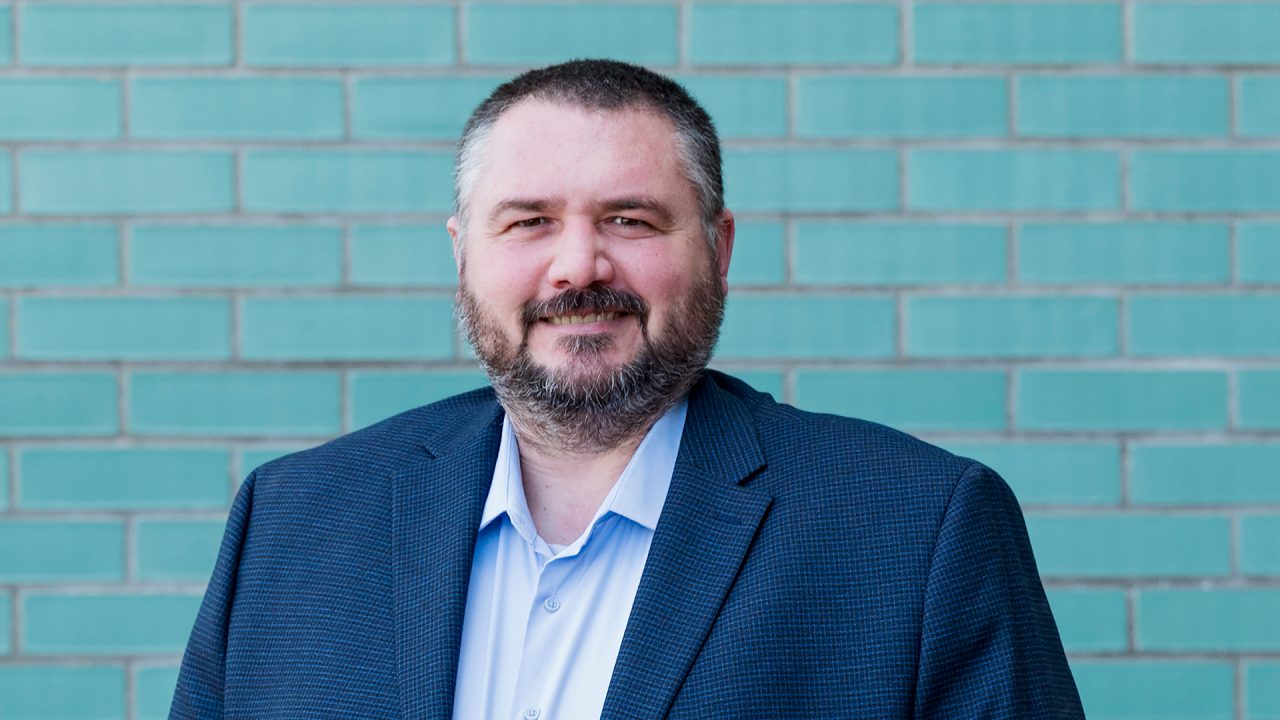
Small-town values and a rural upbringing are a strong foundation for a career in HR. At least, that’s the case for Jason Sutheimer, SHRM-SCP, who serves as HR business partner for the adjutant general of the North Dakota National Guard.
“Community involvement and helping each other out ... it’s instilled in you at a young age, and I think that’s where it started,” said Sutheimer, a lifelong North Dakotan. “That’s been the thing: How can we help people get to where they want to be?”
Like many in the profession, Sutheimer said HR “found” him. After earning a bachelor’s degree in information systems management with a minor in computer science from North Dakota State University, Sutheimer realized he didn’t have the programming skills necessary for Y2K-era tech roles.
So he pivoted. He pursued an MBA from the University of Mary in Bismarck, N.D., to build upon his business acumen. As a graduate student, Sutheimer also interned for the North Dakota Department of Transportation and oversaw its recruitment efforts while getting an introduction to the many different facets of human resources.
“What really got me excited about HR was the impact you have on the business and all the ins and outs of all the different” functions, he said.
That internship launched a decades-long career in human resources, during which Sutheimer has worked in nearly every specialty, including talent management and acquisition, employment law, compensation, and job classification.
Essential HR Skills
Sutheimer acknowledged the myriad paths one can take in the HR field but noted that certain characteristics are vital to any HR function.
“The biggest thing for me is adaptability,” he said. “You have to be a well-rounded individual, and you have to be adaptable to situations.”
It’s also key to have a strategic mindset. “If you’re not being strategic, you’re just chasing your tail,” Sutheimer said.
Sutheimer noted that HR involves elements of marketing, sales, employee relations, consulting, and sociology, among other disciplines. It’s crucial to see the big picture and understand how these functions work in tandem.
To foster that strategic mindset, Sutheimer challenges HR pros to ask themselves why they’re doing what they’re doing and how it aligns with their organization’s goals.
In his work with the adjutant general — which oversees North Dakota’s emergency services and homeland security operations — he asked the talent acquisition team why it was tracking applicants. The team’s rationale was to be able to make quick hiring decisions if someone reapplied to a role later. But Sutheimer pointed out that the applicant may have gained new skills and relevant experience between applications. By understanding the big picture and asking smart questions, Sutheimer streamlined the hiring process and saved his team time.
HR’s Balancing Act
Over the years, Sutheimer has found the most challenging part of being an HR professional is maintaining the balance between the interests of the individual employee and the employer.
“We have talented employees, and we want to develop them,” he said. “But as HR pros, we also have to focus on protecting the business, right? So you’re always asking yourself, ‘How can I help somebody, while protecting the ... organization?’ ”
Making these calls isn’t always black and white. Sometimes they necessitate difficult conversations. For example, Sutheimer encourages talented employees who are not a good cultural fit for his agency to pursue roles elsewhere, both for their own professional development and to support the organization’s goals.
“Being the right person to protect the agency and the employee is challenging,” he said. “I think every HR professional has dealt with that.”
The Value of Community
Sutheimer learned to manage HR challenges both on the job and through the SHRM community and its resources. He first became involved with SHRM during his internship when his supervisor introduced him to the local chapter — the Central Dakota Human Resource Association — and its networking opportunities.
SHRM “will do things for your career that you just can’t get” elsewhere, he said.
At the beginning of his career, Sutheimer said, the volunteer work he did with SHRM gave him crucial experience, bolstering his skills, resume, and job prospects. Having to ask another volunteer to step down, for example, prepared Sutheimer for similar difficult conversations he would later have in an official career capacity.
Today, as a more senior professional, Sutheimer focuses on giving back to the SHRM community that helped him along his career path.
“How do I provide these opportunities that I was given through SHRM — whether that’s the webinars or volunteering or conferences — and how can I give back to that community?” he said.
Sutheimer now serves on the SHRM Membership Advisory Council, representing the North Central Region of the U.S. He attributes his passion for this work to his gratitude for the opportunities he was given through SHRM as well as his small-town roots.
“A lot of people don’t see the value in volunteering, and I think society has moved toward that [attitude],” he said. “But I believe we have a responsibility to make our communities better and stronger. ... And if I can use my skill set and talents to do that, why shouldn’t I?”
Creating a Legacy
Sutheimer aims to make a real difference in his work with the North Dakota adjutant general. His short-term goal is figuring out how to make the organization an outstanding career option, “where people want to go, where people feel valued, and where people know that we helped them get where they want to go.”
Still 12 years away from retirement, Sutheimer is already thinking about his legacy and how he can leave the communities he’s involved with better than he found them for future generations.
“What can I do now to help these emerging professionals, these student populations, to grow and develop and become this next group of individuals who are going to push HR to the next level?” he said.
Sutheimer advises emerging HR professionals to “become more well-rounded” and develop a variety of skills because HR is a field that’s not tied to a specific degree or career track.
To the Future, for the Future
Sutheimer also anticipates significant challenges that will shape the world of work and the lives of HR professionals. Artificial intelligence, for example, has been rapidly implemented in different sectors, but Sutheimer doesn’t believe it will affect job stability.
“I see [AI] like computers,” he said. “It’s going to change the way we work, but I don’t see it taking people’s jobs."
But the current political discourse and changes are likely to present significant challenges for HR, Sutheimer predicted.
“The back-and-forth of this political environment and the legal environment is going to be crucial for HR people to stay up-to-date on and prepare to navigate,” he added.
But like many challenges in human resources that have come before, Sutheimer believes these hurdles are not insurmountable — nor should they scare off anyone looking to enter the profession.
