- Video
- Audio Only
Employee perks are evolving beyond traditional benefits, with workers expecting more personalization, choice, and support than ever before. Jordan Peace, CEO and co-founder of employee experience platform Fringe, joins host Monique Akanbi, SHRM-CP, to explore how non-traditional perks, recognition programs, and employer-covered AI tools are reshaping the employee experience in 2026 and beyond. Learn how creative approaches to benefits can strengthen workplace culture, reduce burnout, rebuild trust, and become essential tools for attracting and retaining talent.
Related to this Episode
2025 Employee Benefits Survey
Since 1996, SHRM has delivered the Employee Benefits Survey, one of the longest-running and most trusted sources of annual U.S. benefits data. The 2025 edition offers rich insights and tools tailored to help you benchmark, modernize, and stand out in attracting and retaining talent.
Real change starts with real talk. And every Friday, our Honest HR podcast is the top story in SHRM's HR Daily newsletter. Subscribe now so you never miss an episode! Plus, get daily breaking news, feature articles, the latest research, and more.
News + Insights
Designing employee benefit plans can be complicated. We give you the how-to in 5 easy steps.
Podcast Episode Guest
-
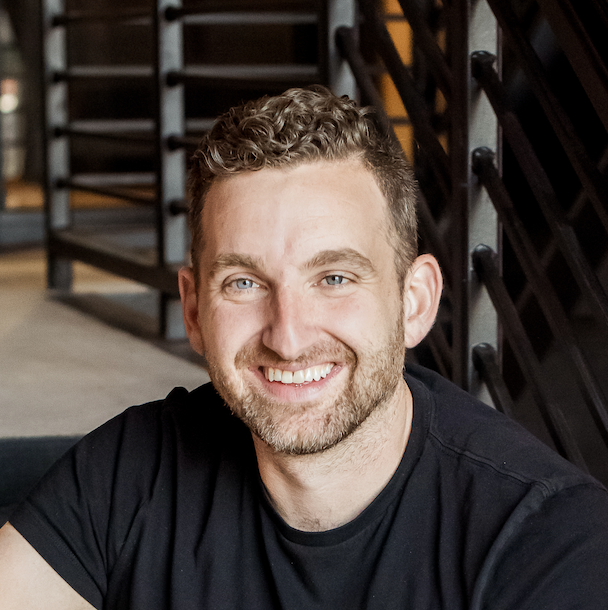
Jordan Peace
Jordan Peace is the co-founder and CEO of Fringe, an employee experience platform that consolidates rewards and recognition, lifestyle benefits, wellbeing programs, life events and gifting, swag management, learning and development, and more into a single, integrated tool. Fringe runs the engine that powers elite company culture – helping organizations care for their people in ways that actually matter, inside and outside of work.
A husband, father of five, and self-proclaimed ADHD entrepreneur, Jordan’s work is rooted in his personal mission to convince the world that work is good, life is short, and that relationships are the only real treasure worth pursuing. His upcoming book, Stop., challenges the modern addiction to speed, distraction, and hustle – inviting readers to rediscover stillness, joy, and what really makes a life worth living.
Jordan lives in Richmond, Virginia with his family, where you’ll usually find him outside, barefoot, or around a fire pit dreaming about land, legacy, and what comes next.
Episode Transcript
This transcript has been generated by AI and may contain slight discrepancies from the audio or video recording.
Monique Akanbi: Employee perks are evolving fast. Traditional benefits still matter, but today's workforce is looking for something more: more personalization, more creativity, and more support that reflects how people live and work. Welcome to Honest HR, where we turn real issues facing today's HR departments into honest conversations with actionable insights.
I'm your host, Monique Akanbi. Let's get started. From non-traditional perks to employer-covered AI tools, organizations are rethinking what it means to engage and recognize talent in 2026 and beyond. Today we'll explore the rise of non-traditional benefits and recognition programs, how employers are adapting with creative and inclusive perks, and which emerging benefits are likely to become workplace must-haves.
Joining us is Jordan Peace, CEO and co-founder at Fringe, an employee experience platform that offers recognition, rewards, well-being, and more. Welcome to Honest HR, Jordan.
Jordan Peace: Thank you, Monique. I'm excited to be here.
Monique Akanbi: We are excited to have you. Employee expectations are rising for creative perks and recognition. According to SHRM's Employee Benefit Survey, eighty-eight % of employers rated health-related benefits as very important or extremely important, showing that traditional perks still dominate. However, there's now a growing need for more creative, non-traditional benefits. Jordan, what do you see as the most in-demand non-traditional benefit in 2026?
Jordan Peace: I think what we see, Monique, is that Fringe offers a marketplace of choice, right? At its core, it's for employees to choose what is most pertinent to their life, to their family, something that might give time back in their day, reduce stress, or just spark joy. What we find is actually a great diversity of things, right?
I think we're all always looking for that one thing, like in 2026, it's all going to be about pet insurance or whatever the case may be. But in real life, what happens is companies will survey their employees, they'll get some answers back, and then they'll pick the top one or the top two and roll it out. Then twelve % of people are happy because that's what they said they wanted, and everybody else is like, "It's not what I wanted."
For us, it's all about choice because we've been doing this seven years, and I still couldn't tell you that there's one singular benefit that is meaningful to everyone. We really have to offer the ability to have choice.
But what I can say from a trend perspective is that employees are looking to have their lifestyle enhanced by their employer. They're looking to feel seen. They're looking to feel like, "Hey, you're with me when I'm at work, but you're also supporting me on my off time, my vacations."
So we see a lot of travel-related expenses coming through our lifestyle benefits marketplace. We see a lot of childcare. We see a lot of even just simple things like being able to order lunch and things like that just to be efficient and be able to continue to work and have a few things in my life taken care of. Those tend to be really important to employees.
What's neat for us is just to be able to hear those stories of how these non-traditional benefits actually really spoke to the individual employee, enhanced their life in a certain way, and gave them a sense of loyalty to their employer because they feel seen.
Monique Akanbi: I don't know if I shared with you, Jordan, but prior to joining SHRM, in a past life I was the HR director for an employee benefits firm. So you're speaking my language when you talk about benefits, and I remember the days when even pet insurance was booming.
If I were to put myself in that position back when I did HR for an employee benefits broker, one of the biggest things that we looked at was what benefits can we offer when it comes to attracting and retaining top talent? In your opinion, which new benefits or perks now do you think will become non-negotiables for attracting and retaining top talent, and why?
Jordan Peace: Yeah, I mean, that's how things work, isn't it, Monique? Something is a new idea, and then it's somewhat adopted, and then it's widely adopted. Before you know it, it's table stakes, and you better offer it because everyone else is offering it, right? That was the same with the 401(k), just a long time ago. We think of it now as these are table stakes benefits and these are new, but that trend will continue over the course of time.
What I see is that companies need to focus on developing culture, right? How do you develop culture in an organization? How do you develop a sense of "I want to be here, I want to stay here, I feel like I belong here"? It's not just benefits. I think it's benefits that are combined with a sense of community, right? That's combined with the ability to converse with my teammates, tell them they did a great job, maybe send them a benefit, send them some swag, send them a gift, right?
Those sorts of interactions within the benefits budget do multiple things at once, right? It packages up the culture and ships it home so that the family can appreciate the benefits and appreciate the offerings of the employer and appreciate some of the culture. But it also turns employees toward each other and gives them the ability to say, "Great job. I appreciate you. I love having you on the team. Happy birthday, happy holidays," whatever the case may be, in order to breed that culture.
Because at the end of the day, why are we working where we're working? Is it just a job? For most people, not anymore. Where we work is a sense of community. A lot of our friends are there. People meet their spouses at work. It's a big deal. We're aligned to a mission and a vision, and we care.
So I think building that community and sense of belonging is so important. In the work we do, we try to tie the two concepts together. What are the benefits you can offer? How will those benefits make employees feel? But also how do those employees feel about the employer and how do they feel about each other, and what can we do to enhance all of that at once?
Monique Akanbi: I love that you've made the correlation between culture and benefits. SHRM recently released our 2026 State of the Workplace Report, and in the report it highlights stress, burnout, and eroding trust as top concerns—things that I would attribute to the overall culture of an organization. What role can creative perks and benefits play in rebuilding trust and reducing burnout?
Jordan Peace: I think it's going back to people feeling seen, right? You can offer quite a few things. You could offer text-based therapy, for example, or you could offer mental health days. You could offer a lot of things to your employees, but it ties back to culture in that there are stigmas associated with these things. People are nervous to admit that they are burned out or that they need help or that they would benefit from therapy.
What's really important, and we try to highlight this for the customers that we work with, is like, "Hey, we can provide a technological solution for you with a marketplace of a ton of services, some of which are mental health related, that would be helpful. But people also need to feel the freedom and the safety to use these things without judgment, without stigma." Leaders have to lead from the front.
So I try to take the opportunity, Monique, when I'm on a podcast or speaking in some capacity to say I'm in therapy. I was in therapy today. I was in therapy two hours ago, actually. That's a big part of my life. It helps me tremendously. By saying that, I'm inviting any Fringe employees that might be listening to go, "Hey, that normalizes that for me. That's something that he can do. That's something that I can do, and it's offered as well." There's money actually in place to help pay for those services.
So you have to offer it, you have to fund it, and then you have to be the example and light the path for people as well.
Monique Akanbi: That makes me think back to when I practiced HR, and oftentimes—and I love that this platform, Honest HR, allows us to be honest and share—it's really important, in my opinion, and to your point, that leaders share that they utilize the benefits that are available to them. But it's also equally important for HR as well to share that.
It just makes me think back to when I practiced HR, and in the beginning for me, it was very much that I felt I needed to have all the answers and that everything was okay. It wasn't until I realized, "Wait, this is human resources, so if I take the human out, right, and feel that I need to have all the answers, how am I creating a space for employees to leverage the benefits or to even see that I am human as well?"
So I raise my hand with you. I too am in therapy. It has saved my life for the past three years or so. I love that you shared that.
The report also goes on to reveal that HR professionals believe that employee expectations are higher than ever, and employee experience is now a top HR priority for 2026. How are you seeing organizations shift their mindset from offering perks as extras to making them core elements of a holistic employee experience?
Jordan Peace: It's funny, Monique, as if HR folks needed any more priorities. But you're right, it is another priority, and it's important. To your point around taking the human out, I think that's what can be so problematic sometimes. We titled this thing human resources, but sometimes I think we forget that we're working with people—full human beings with emotions and paths and histories and scars and wounds and bad experiences at other employers and failed, difficult relationships. There's so much there to care for and to protect.
So I think what I see happening that's really positive is I think we're starting to value human beings in a more human way. Maybe this whole AI thing is helping us in that, because we have a clear differentiator between what people can do and what technology can do, right? Maybe we're starting to understand like, "Oh, I could have the most clever AI in the world, but it can't build trust with customers. It can't build trust with prospects. It can't create culture where people feel like they belong," right?
So it's become more clear, perhaps, or becoming more clear what human beings are uniquely capable of. All of those things tend to be very human, very emotional, very personal. As a result, maybe we're looking at our human employees with a more holistic lens, and maybe we're thinking about not just "Are they healthy and are they at work?" Those are two very important things—we want them healthy and we want them at work—but that's not nearly enough.
Because you can be healthy and at work and be completely disengaged and be unhappy and spend your whole day applying for other jobs besides the one you have, or complaining about your employer on the websites where people go and complain about their employer in an anonymous fashion. Just because people are healthy and present doesn't mean that they're okay, and it doesn't mean that they're actually productive or engaged.
So I think this employee experience term is such a useful term because it's saying, "What is the overall experience of an employee who works here? How do they speak about working here to their friends, to their family, to would-be employees that might come in as well?" What's that employer reputation, that employer brand? The employee experience is exactly what will define the employer's brand in the same way that customer experience is exactly what will define the company's brand and the product's brand.
I actually think there's a lot of clarification that has happened in terms of the value of employees, why they're so important, the fact that they're humans with all of these complicated aspects to that, and how do we care for the whole person? I absolutely love that that question is being asked. For me, in terms of just being an entrepreneur that's passionate about HR tech and building solutions for people, I'm like, "Yes, the right questions are being asked now, and we can start to bring some answers." It won't be easy. It'll always be complicated with people, but it's work worth doing, and I'm excited to be a part of it personally.
Monique Akanbi: We'll continue the conversation in just a few moments. Stay with us.
SHRM AD: HR never stops evolving, and neither should you. Join your peers at SHRM 26, June sixteenth through the nineteenth in Orlando, Florida, for fresh ideas and real solutions that help you move forward. Learn more at SHRM dot org slash SHRM 26.
Monique Akanbi: You touched on this just a moment ago around generative AI (GenAI). We know that AI is making waves in the workplace. Actually, according to SHRM research, ninety % of CHROs expect AI to become much more prevalent, and sixteen % of employers are now covering subscriptions to generative AI (GenAI) tools like ChatGPT or Microsoft Copilot. What impact does this have on employee satisfaction and innovation?
Jordan Peace: Oh my goodness. What a question. We have thirty minutes for just this one.
Yeah, so satisfaction and innovation. I'll start with the satisfaction side. No one likes, almost no one likes change at first, right? There's usually a lot of aversion to change. There's a lot of "I don't know how to use this." And then also maybe deeper and behind that is "I wonder if people are wondering, am I still valuable? What do I need to do to still be valuable? What skills do I need to develop?" Those are very scary thoughts.
When you're secure in your career and you feel good about what you've been doing for a long time and you feel confident and you've earned that confidence over time, and now all of a sudden there's this machine that's supposedly going to be able to do a lot of what you can do, I don't blame people for being intimidated by that.
But like I said before, there's no replacing human beings building trust with other human beings. That's the basis of what business is. Business is just relationships—people buying and selling services and goods to one another based off of trust. You can't replace humans in that scenario. We won't have business anymore. So I don't think it should be quite as scary as it feels.
But for the moment, I think the satisfaction probably is down because people just don't feel as confident in themselves and confident in their future. I think that'll all shake out. I think we'll figure it out.
But if I were an employee who is asking those questions, I would say remember that school isn't something you do when you're a kid and a young adult. Learning isn't something you do when you're a kid and a young adult. We are lifelong learners. The world is going to demand from here on out that we are lifelong learners. That's not a bad thing. It's a great opportunity to stay fresh and stay abreast of what's new and what's exciting in the world. So I'd say be encouraged and learn.
And then of course, the innovation side of that question is pretty much the very same thing. Yes, employers are footing the bill now for a ChatGPT subscription. Great. That's great. I think that the way we need to look at that is like, "Wow, I've been empowered with this tool." Does it also feel like I am training my replacement some days? Yeah, it does, and that's terrifying. I get that. But that's not what's happening.
The employees who have the confidence to learn it and get better and learn new skill sets and use a tool to do things they used to be doing to free themselves up to do other things—now they can do more critical thinking. Now they can do more strategy work. Now their voices can be heard all the more because they're not buried in tasks all day. I have an optimistic view of how all that can play out personally.
There's a pessimistic version of that, obviously, but I look at it more so as the opportunity's the same as it has always been. Who steps up to the plate? Who utilizes the new tools? Who makes themselves seen and known and uses their voice, and who shrinks back in fear and gets left behind? That's the story of many technological evolutions that's not unique to AI really.
So yeah, there's a lot of change coming, a lot of innovation necessary. But I think it can be an exciting time. But I also know that these HR practitioners, they're dealing with people's fears. People need some encouragement.
Monique Akanbi: Well, and I love that—looking at AI subscriptions as a benefit and as a perk, right? Because we recognize that for whatever reason, many organizations are not offering these tools readily or don't have these tools readily available. So just even looking at it from a benefit or a perk perspective and how that correlates with their satisfaction and innovation. You're absolutely correct in terms of resisting change in the beginning.
But we have a saying even at SHRM whenever we're asked, "Will AI take my job?" And we always say AI will not take your job, but maybe the person that's learning AI will take your job. So it made me think about that as you were sharing your response to that question.
Let's shift to integrating and managing non-traditional benefits. As organizations integrate these newer benefits into their overall employee experience strategy, recognition becomes a big part of the conversation. What are some challenges and best practices for ensuring recognition is inclusive and resonates with all employees regardless of location or role?
Jordan Peace: Yeah, I think recognition is one of the places where getting some tools in place is really useful, right? I think that you can have all the best intentions as an organization where you value your people and you say you do and you mean it, and you allocate budget toward recognition and rewards and some of these things. But then the ball gets dropped. Managers just don't take that extra second to write something nice and say, "Hey, you were really awesome on that meeting," or "I hope you had a great birthday weekend," or "How did the kids' graduation party go?" or whatever that personal touch that needs to happen in organizations. That ball gets dropped a lot. We're just busy and we're moving and we don't stop and think, most of us, about that encouragement that people might need, that acknowledgment.
As we all know from our personal relationships, those little moments of acknowledgment are huge. So I think that's where tools are really helpful. Not to make it an infomercial for my company, I don't want to play it that way, but one of the things that I think Fringe is useful for is being able to not just be the tool that folks can actually recognize each other or send a gift or send swag or whatever the case may be, but also those reminders. Like those managers getting that in their inbox or in their Slack to say, "Hey, you've recognized these four people in the last two months. These two people you haven't recognized in ninety days. You should do that." Just helping everybody see, "Hey, we all believe that recognition is important. We all know what it feels like to be recognized and we see that that's vital to our happiness as employees, but we also might just need some help and some nudging." So I think it's really huge that we provide the tools to help.
The biggest challenge or the biggest risk that I see in employee experience becoming more and more important to the HR professional, which again, I think it's great, but the biggest risk I see are: one, the cost gets out of control because I've got to have my recognition and I've got to have my wellness and my challenges, and I've got to have my learning and development, and I've got to have—there's all these programs and they all have a price tag associated with each one. So there's the cost.
Then there's the administrative burden. Like we talked about, HR needs another thing to focus on. So there's this administrative burden of like, "Well now I'm this vendor management person that's managing five different platforms," and it's just a mess to log in. There's data everywhere. That's no fun.
And then I actually think you can make the employee experience worse by just giving them too many things to log in to, too many things to remember. So our whole intent is to enhance the employee experience, but we actually bring it down while we add and add and add things.
That's a piece that we're really focused on as an HR tech company: how do you actually bring consolidation of all of these ideas into one platform and one login, one price, one administrator, one vendor to deal with, right? So that all these things work together really well, and it feels more like, "Wow, my recognition collaborates with my wellness and my wellness collaborates with my lifestyle benefits." All of these things actually speak to each other. The data's in one place. That's going to be vital that we provide an employee experience like that where there's a culture hub.
Monique Akanbi: Well, I can definitely relate to balancing it all, right? Balancing all the benefits and the perks, but then also managing multiple platforms and multiple systems as well. It's a lot.
I want to have a little fun with perks. Company perks and benefits can be some of the most creative parts of the workplace culture. As someone who works with perks every day, I want to get your take on the fun side of it through some rapid-fire questions. So this is my favorite part. Are you ready?
Jordan Peace: All right. All right. If you're excited, I'm excited.
Monique Akanbi: Okay. What's the most creative perk you've ever heard of?
Jordan Peace: A desk made of Legos.
Monique Akanbi: Okay. I'm supposed to keep going, but now I'm intrigued.
Jordan Peace: Okay. Now, I heard this secondhand, but apparently, a company was trying to hire an executive and they offered the package and the executive was like, "Ah, this other company is offering me more." And they're like, "Well, what really matters to you?" And whoever this person was was like, "I've always wanted a desk made out of Legos." And they just did it. They didn't change the salary offer, they didn't change the benefits. They just built him a desk made out of Legos and he took the job. Talk about personalization. You just never know. It's not always about money. It's just not. Sometimes it's just how you make people feel. So that was what was special. I just thought that was a crazy story. That's what comes to mind.
Monique Akanbi: That tops the cake for me. So what's your favorite employee perk?
Jordan Peace: My favorite to use personally? So we have a service called Stitch Fix. I don't know if you've ever heard of Stitch Fix. They call me, right? So I don't have a particularly—actually this shirt's probably from there. I don't have a ton of style. I don't have a ton of time. I got five kids at home. The idea of like, I would probably just wear the same stuff for decades till it fell off of me if I didn't have a service like Stitch Fix, where they ship stuff in the mail to me. "Here's some stuff that fits you that's aligned with the style that we know you have." And I can just pick what I want and ship the rest back. Love that.
My favorite that I see play out in my organization, so not so much me personally, is probably DoorDash. So we use DoorDash in a really cool way at Fringe, and I see some of our customers do this too, that when somebody has some big event going on, and it could be anything from a wedding or the birth of a child, but sometimes it's sad things like the death of a parent or something like that. I've seen people pull together their points and then be able to give somebody a huge amount of credit to DoorDash so that if they're—I can think of one situation where we had an employee that was just staying in an Airbnb next to the hospital so that they could be near their loved one. And so we just showered them with all this DashPass credit so that they could just get meals delivered and not even have to think about that and just be the caregiver. That type of stuff is like, you want to talk about building loyalty and goodwill and have people feel a sense of belonging? That's huge. So that is one of my favorites.
Monique Akanbi: I will tell you, as a remote employee, and for our audience who have remote employees, that would, I would say that's a really good benefit, especially for me. Sometimes I'm working throughout the day and then I completely forget to even have something to eat, or now I have to stop and think about what am I going to eat for lunch. So I can definitely relate to that benefit or that perk.
If budget wasn't a concern, what's one benefit you'd love to offer employees?
Jordan Peace: Well, we brought it up already, but it would be therapy. If the budget was such that I could just pay for weekly or every other week therapy appointments, in person or however they wanted to do it, I would do that. I can't imagine this day and age as fast as we go and as many things that we're trying to juggle as human beings. I can't imagine anything more valuable than being able to slow down for an hour and just talk about what's going on and how you feel about it and what a gift. So that would be mine.
Monique Akanbi: Yeah, I would agree with that. You can't put a price tag on that, but I can certainly agree.
Well, as we get ready to wrap up, I have one more question for you, Jordan. What emerging perks or non-traditional benefits do you predict will become must-haves for organizations over the next few years?
Jordan Peace: I think we've got to rethink learning and development altogether at this point. I think that if you really think about it, information is commoditized these days. Information's very easy to come by. I go in my generative AI (GenAI) app and I say, "What's the capital of such and such," or "Help me think through an email to this person related to this thing," and I can just get information. So it's become easy to get information.
So the idea of maybe having a database of videos that I could watch to learn a skill—that's fine, but I can probably learn a skill more quickly just prompting and asking and having more of that conversation with the AI. I don't think that we really nailed that learning yet, and we haven't really nailed teaching people the skill to be able to utilize these tools and get the most out of these tools so that they can be the most valuable employee in the future.
It's something I want to develop and provide internally, but also externally. I think that's going to be a really hot thing because everyone's asking the same question like we talked about: "Am I valuable? What do I need to know? How do I need to develop? What are the skills I need?" Well, we need to answer that question and we need to provide people a path for developing those skills and being the employee that they want to be here on out.
Monique Akanbi: That's good. Learning and development, I probably wouldn't have thought of that as kind of an emerging benefit over the next couple of years for a must-have, but I would definitely agree with you on that one.
Well, Jordan, thank you so much for sharing your insights with us.
Jordan Peace: Yeah, absolutely. I so enjoy talking to you, Monique.
Monique Akanbi: Absolutely. Well, that's going to do it for this week's episode of Honest HR. We'll catch you next time.
Hello, friends. We hope this week's episode gave you the candid tips and insights you need to keep growing and thriving in your career. Honest HR is part of HR Daily, the content series from SHRM that delivers a daily newsletter directly to your inbox, filled with all the latest HR news and research. Sign up at SHRM dot org slash HR daily. Plus follow SHRM on social media for even more clips and stories. Like, share, and add to the comments because real change starts with real talk.
SHRM VO: This podcast is approved to provide 0.5 professional development credits (PDCs), also known as PDCs, toward SHRM-CP and SHRM-SCP recertification. Enter the following PDC activity ID in your SHRM activity portal to log your credit: 27VT3KH. Again, the code is 27VT3KH. This code expires February first, 2027.
Feature Story

Gen Z employees, in particular, are looking for better benefits help from their employers—a finding that can have a big impact on employers if they don’t get it right, experts say.
Enjoy On Your Favorite App
More Feature Stories from HR Daily

Employers are pulling back on GLP-1 coverage as healthcare costs soar. Here’s why more companies are rethinking weight-loss drug benefits.

Inflation soared in the past month, driven in part by rising gas prices and the effects of the Iran war, according to new government figures — a finding underscoring the financial squeeze employees are experiencing.

Trump’s new executive order pushes for a federal AI framework, challenges state regulations, and threatens funding for states with AI laws.