- Video
- Audio Only
Work has never been busier — yet progress often feels elusive. Eric Martin, executive director of Blue Pinnacle Solutions, joins host Nicole Belyna, SHRM-SCP, to unpack why meetings, hidden work, and outdated productivity norms are draining organizational capacity. Together, they explore how reclaiming capacity supports agility, focus, and performance — and what HR leaders can do to move from measuring activity to driving impact.
Related to this Episode
SHRM State of the Workplace 2026
Drawing on insights from over 2,000 U.S.-based workers and more than 1,800 HR professionals, including more than 350 in a vice president role or higher, this research provides a snapshot of the current state of the workplace, offering valuable insights to inform and shape organizational strategies for 2026 and beyond.
2026 CEO Priorities and Perspectives
SHRM Thought Leadership surveyed 116 CEOs from various industries and organizations of different sizes. The findings offer key insights into the priorities that CEOs are setting for the coming year and shed light on the challenges and trends shaping leadership and business strategy in today’s rapidly changing environment.
Real change starts with real talk. And every Friday, our Honest HR podcast is the top story in SHRM's HR Daily newsletter. Subscribe now so you never miss an episode! Plus, get daily breaking news, feature articles, the latest research, and more.
News + Insights

Burnout is a workplace culture crisis. SHRM’s latest research reveals that burned-out employees are three times more likely to leave.

Woodrie Burich, a CEO, author and TEDx speaker, offered some simple ways HR professionals can help reduce employee stress and create a more meaningful, inclusive and productive workplace on Oct. 30 at INCLUSION 2023 in Savannah, Ga.
Podcast Episode Guest
-
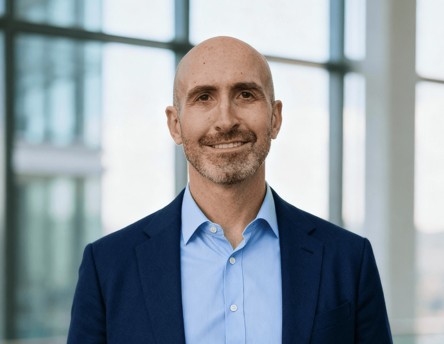
Eric Martin
Eric Martin is a strategic HR leader and transformation catalyst with more than 15 years of experience partnering with organizations across life sciences, technology, retail, and telecommunications. As Executive Director of Blue Pinnacle Solutions, he helps companies build scalable, future-ready HR functions by aligning people, processes, and technology to real business outcomes. Eric specializes in HR transformation, operating model design, AI-enabled HR technology, and translating strategy into practical, executable solutions. He believes HR should move beyond support and compliance to become a true accelerator of organizational performance and growth.
Episode Transcript
This transcript has been generated by AI and may contain slight discrepancies from the audio or video recording.
Nicole Belyna: If busyness were a sport, most workplaces would be undefeated. Calendars are packed, meetings run long, and yet at the end of the day, people are left wondering what actually moved the needle. Welcome to Honest HR, where we turn the real issues facing today's HR departments into honest conversations with actionable insights.
I'm your host, Nicole Belyna. Let's get honest. Today's conversation focuses on reclaiming organizational capacity, why busyness has replaced effectiveness, how creating space supports agility, and the role HR can play in protecting focus, well-being, and performance. Joining us is Eric Martin, executive director of Blue Pinnacle Solutions, a consulting firm that helps businesses grow and develop their HR departments.
Welcome to Honest HR.
Eric Martin: Thanks Nicole. Appreciate being here.
Nicole Belyna: Oh, it's my pleasure. So let's dig right in. When workers say they are busier than ever, what are they usually reacting to and why does that constant activity often fail to translate into meaningful progress?
Eric Martin: Sure. That's a good question. Think about a scenario where you're driving into the office, you know, maybe you have two to four priorities on your mind for the day. You say, look, these are the things I need to accomplish to make sure that I'm meeting my performance objectives, that I'm generating outcome, progress, whatever that looks like.
I get there, I sit down and there's fifty emails in my inbox. There's ten Slack or Teams messages waiting for me. Now, a lot of that might be noise, but it's things that I have to go through, and some of that will not be noise. It'll be things that are asks of me.
Half my day might be booked with inconsequential meetings, some of which I probably should be there, some I probably shouldn't. But in any event, half those meetings will generate now new to-dos for me, right? There'll be some action I'm to walk away with, and so my to-do list grows as I go through the day.
I sit down maybe for a few minutes and Bill and Sally are popping over to say, "Hey, I need something from you." Whatever that something looks like, your boss is unintentionally or intentionally pinging you and saying, "Hey, remember that thing from last week? I need a copy of that. Or hey, I need something new done today. It's not super important, but can you just kind of get by the end of the day?" And it's like, okay, great. So my to-do is really piling up.
And so I spend the time between those somewhat inconsequential meetings to try to bang out some of those to-dos, right? And so I'm not actually spending time on those two to four things that I've gone into the office to complete for that day. And so it feels like I'm spinning my wheels trying to get a lot, trying to do a lot to get something done, but not actually achieving the goals I set out to do that are actually relevant to my performance and the organizational performance.
So on top of that, we're actually talking about a myriad of process complexities, right? It's like a maze. So even when I go to get something done, it takes me half hour to do something that really should be like a five minute task. It's navigating disparate systems, things that are disconnected in some way, relationships that I have to manage in different departments for different reasons.
There's a real heavy emphasis on communication channels and the volumes that are coming in. Which I totally get right. We're in a virtual environment a lot of the times, we're global in nature in a lot of companies. And so you created these channels to make sure we can stay connected, and that's fair, but then that means you're also getting inundated with, again, somewhat inconsequential messaging all the time. So you have to really sort of compete with those things.
The complexity, the tech overloads, the communications that are nonstop coming in. And really it allows for me as an employee, that focus, recovery and innovation that I'm really setting out to achieve for the day. It doesn't exist. I'm really just spending my time trying to get through the day, and that's on general repeat every single day.
And so if I'm feeling overwhelmed and just I'm sitting in the seat of an employee, right? If I'm feeling overwhelmed, it's because all these things are happening to get basic work done, and then nothing's actually progressing. That's something in my space that I have to achieve functionally for the organization. And so it just feels like we're doing a lot, but not actually getting things achieved.
Nicole Belyna: Yeah. And I think about those coworkers who send you an email and then follow up with you on like Slack or Teams to say, "Hey, I just sent you an email." You know, or they might try and call you. So very, very valid points and I think that we can all relate to that, you know, that day in the life that you have just showed us.
So what are some of the most common forms of hidden work that you see consuming employees' time today? And why do they tend to go unnoticed by leaders?
Eric Martin: So I think that goes back to a lot of the formal and informal process complexity that we had just talked about. The maze of things you have to do to get stuff done, that generally isn't something that everyone knows what's happening behind the scenes.
And we're talking about coordination and communication overhead, right? So having a lack of autonomy to make decisions or take actions on your own. Sometimes you're going to other departments and people because there's segregation of knowledge, so things you can't actually achieve on your own independently.
We're a lot of times saddling people that are high skilled workers. So somebody that has a particular expertise to do something and achieve something. And we're saying, there's so much process here that I need you to do. Also, fifty % of the time these sort of inconsequential administrative tasks, right? That either we could stop doing or someone else could be doing or a system could be doing. But really I'm gonna leverage you for that, even though you should spend your time on strategy innovation, deliver on the things that actually makes sense for you in your expertise space.
Again, I do think that we're in a sort of a tech overload. And so trying to navigate disparate systems that are sometimes connected, sometimes not, but to achieve a very basic task now, or a lot of organizations are required to go into two, three, four different systems to pull information from here, bring it over there, start a process here, and end it there. Right? And there's a lot of things that have to happen just to make it work.
So it's really more about informal processes, kind of developing around all that stuff where the system is not effective for you as a worker trying to get a task done. Right. So it just takes forever.
Why that isn't actually noticeable by leadership or other people. You know, I do think leaders, managers, organizations, on a whole are looking for specific deliverables and their outcomes. Right. So kind of going back to the first question, going into the office and saying, I have two to four tasks I need to do today because that's part of my performance expectations and the things I need to deliver.
Well. One, they don't see all that noise that's happening that we had talked about. They're not seeing that stuff occur, so they don't see that you're actually active. They just see that the outcomes weren't necessarily delivered in the time they were supposed to be delivered. They don't know all that flow of work that goes into making those outcomes occur. So all those different systems, all the different coordinations and collaborations and communications that have to happen, so they're not seeing that stuff.
It's in part because there's a distance from the leader and the manager to the person doing the work that that's fair. So if that person stepped out of the role, could the manager step in and say, confidently, yes. I know the eighty-seven steps it takes to do task one and two. No, they probably don't. Right. So they don't really realize what's happening there.
And so I do think that employees in a lot of cases are trudging through that layer of layer of work and they're not telling their manager, "Hey, listen, I'm burning out. There's too much stuff here." They just kind of get by and they say, look, you know. Bill, I've achieved what I need to achieve. I'm good to go, but without actually explaining the strain. And so sometimes managers just don't know that that exists.
Nicole Belyna: Yeah, that's absolutely true. So SHRM's 2026 State of the Workplace report shows workers feel mounting pressure while their organizations still expect productivity. Why do you think, and you kind of touched on this, right, why do you think many companies respond by adding more processes instead of removing friction?
Eric Martin: Yeah, that's a great question. I think the very basic answer is adding something is just much more visible than removing friction, right? I also think it's easier. So I think a lot of organizations don't know how to redesign work and redesign roles to actually make friction less obvious.
So when something comes up, maybe the business has a specific need, and maybe not just a business, an organization of any kind. They have a need that they need to serve. They have a problem they need to solve. The easiest thing for a leader to do is say, okay, well let me tack something on top of that or around it that actually I can demonstrate through a presentation very simply that here's what I did, right? I've done something active. Here's what I expect the outcome to look like.
But all you've done is you built layer upon layer upon layer of challenge and complexity that didn't need to be there. And so, again, I think a lot of organizations don't know how to navigate that effectively. So instead of really looking deep, sometimes stripping away the whole structure and redesigning it, they just add things on top of that because it's the easiest thing to kind of get through.
There's a lot of reasons I think they do that, but you know, I think the most recent example is AI. We have, again, all these disparate systems that kind of interact with one another or don't, but it requires you to have this very complex maze of process that you're going through day to day. So to solve the challenges of workload burnout, not meeting business needs, we're looking at now and saying, how do we apply AI to that?
So let's find some AI solutions. Let's invest in that and let's tack it to the top of that complex web of process, right? So maybe it solves some kind of purpose, but probably not. But that is a deliverable that's very visible. It's easy to present. It's easy to say, look, I've done something. Whether how's the outcome you're looking for? Maybe not, probably not, but that is why I think organizations tend to lean that way.
Nicole Belyna: Yeah, and I think an HR team specifically are sort of historically have been trained to be very process driven. You know, you refer back to like, well, it's very easy to show a process and a PowerPoint presentation, right? So you can say, oh, we've mapped out this process. It starts here. You hit these milestones, you end here, and everybody says, oh, this is so tidy. It looks great. It'll be perfect.
And so that made me laugh a little bit because, you know, one thing that I do with my own team. Somebody builds out a new process, right? We then go through the process and say, well, what does this step to, you know, how does it impact each stakeholder? And what it is it does it actually give us the desired outcome? Because a lot of processes, again, particularly in HR, yes, they'll get you from point A to point B, but to your point, they won't necessarily get you the outcome. And sometimes it slows down what you're actually trying to do. Right.
Eric Martin: Absolutely. And I think HR really needs to be great in this space because we need to model what that looks like for the rest of the organization. If we don't do that well in our own function. How do you say to leaders, look what we can do. Look what we can't achieve if you follow this particular pattern versus that pattern. But we're not doing it ourselves, right? So you need to model that behavior if you want that outcome, right?
Nicole Belyna: Yeah. So instead we kind of ask ourselves, you know, does it. Is this gonna allow us to move faster? Is it going to make our employees happier? You know, versus do we just get from point A to point B? Exactly. Yeah. Perfect.
We'll continue the conversation in just a few moments. Stay with us.
Quick reminder, early bird pricing for SHRM 26 ends February thirteenth, join your HR community in Orlando and save when you register early. Learn more at SHRM dot org slash SHRM 26 Early Bird, all one word. That's SHRM dot org slash SHRM 26 Early bird.
So seventy-eight % of CEOs are increasingly focused on organizational agility. According to SHRM's CEO Priorities and Perspectives report. How does reclaiming organizational capacity actually support agility and practice?
Eric Martin: Yeah, that's a great question. I do think that extra capacity is a core component of having an agile environment in general anyway. You need that slack and that flexibility just to make sure that you can pivot and move and adapt as you need to, which is, you know, sort of the core feature of an agile environment.
When people are running at one hundred ten % all day every day, it really makes it hard for them to shift gears to change, to adapt to something new coming down the pipeline. It also prevents people from thinking strategically from learning and growing and to adjust.
You want people to be able to innovate, to step back, to focus, to reprioritize as needed. So if something happens to disrupt the business in some way. You need to be able to shift gears and go to that something right. Pay some attention to that. But you can't really do that if you are boxed in from end to end for your day currently just to get the basic stuff done. So that extra capacity is absolutely important for a agile environment to succeed.
Nicole Belyna: Yeah. And how is a healthy organizational slack different from doing less or lowering expectations? And why is that distinction so often misunderstood?
Eric Martin: Yeah, so I think the basic thing is slack isn't really about doing less work, it's just doing less of things that don't matter in the work. Right. So again, those sort of meaningless meetings or things like that, that sort of, you can strip away.
So having that space again really gives you time to be more innovative and creative. It allows you to focus on things that are important. It allows you to also figure out ways to reduce that low value, add minimal task work that you're doing. Where otherwise without that, again, that time to sort of breathe and reflect on those things, how do you make those changes? So you'll constantly run it one hundred ten % because you can't ever strip away those unnecessary components of the work.
I do think that people tend to see, and some leaders tend to see it as a, well, if you're not so busy, then did we really need you in the first place? If you're not so busy, do I need five people versus four? What are you really working on? Like, I totally get that perspective because you want to, you want people to be perceived as busy, but there's a lot of things I think that happen in, you know, that extra capacity, that slack space that's really important that they're not, that's not visible at least immediately.
It's not visible when someone's sort of sitting back thinking for twenty-five minutes going. What's the best way to solution this particular problem? We're trying to solve for. You can't see that, but you will, you know, maybe a month, two months later, you see that solution generate some kind of outcome that's beneficial to the organization and that's what you wanna wait for.
So if you look at it on a day-to-day basis, yeah, maybe it doesn't actually show a benefit. But over the long term organizations, I think that allow for that slack to occur. They have much better chances of succeeding than those that don't.
Nicole Belyna: Well, yeah. 'Cause I imagine, you know, I, for me anyway, I like I put reflection time on my calendar and it might be just as you pointed out, twenty-five minutes, you know, here and there. But it allows for some time for me to, and my team to, to not focus on task related items or checking things off, off a list, but rather, you know, sometimes those like. Slack times or like down times are where the best ideas come from or that's where the innovation comes from. Where you're like, ah, I'm not focused on do this, do this, I've done that, I've done that. It's like, ah, I have this brilliant idea, right? Because I can turn, turn away from a lot of the other noise. Right?
Eric Martin: And then you have those five, ten minutes to actually do something to get to that point, right? You can have a great idea, but if you have no time to succeed in that idea, how do you do it anyway?
Nicole Belyna: Yep. So reclaiming capacity often starts with subtraction. So let's have a little fun with this. If you had permission to delete just one thing from everyone's workload, what would it be and why?
Eric Martin: I think there's a lot of things, but I'm gonna go with, in this case, unnecessary meetings. Again, a lot of calendars are booked sort of end to end, and even if it's half day, it's end to end because, you know, you have an hour in the morning, an hour midday, a couple hours at the end of the day, and so it really keeps pulling your focus and attention from things that matter.
There are, I think, important meetings to occur, but in those meetings, if you bring six people to a meeting and six people are highly engaged and they're solving a problem. Fully make sense. Let's keep those going. The meetings where ten people are there and two or three are having conversations as live in that conversation. The other six, seven are sitting back, camera's off and they're working on something else. Did they need to be there? No. It's just their distraction and they're distracted. Right?
So I think stripping away those unnecessary meetings give you a lot of time back in your day to focus on things that matter. And also it just, it takes away that requirement to sort of follow your calendar throughout the day to say. Oh, shoot. I gotta stop working now and go to this meeting. I can go back to that later. It keeps you from pivoting all day, every day on things that don't necessarily matter in your world.
Nicole Belyna: Yes. Yes. I second your vote on unnecessary meetings. So let's talk a little bit about what HR and leaders can do differently. HR often sits at the center of this tension. Our employees are paid for time, but leaders want outcomes. How can HR help leaders in the C-Suite move the organization from measuring commitment by hours worked to evaluating readiness, impact and capacity?
Eric Martin: Yeah, it's a great question. And I do think that there's a lot of organizations which overly rely on the model of hours worked. Hours worked in an office, who comes in, who doesn't, right? So I'm measuring, you've been in the office three days this week, four days this week. That's what matters. 'Cause that's what moves the needle. I mean, does it really? Probably not. Right? And I think maybe it's a misunderstanding around the impact of that kind of approach.
I think from an HR perspective, we really have to be very clear around what the business does, what it tries to achieve, and how it tries to achieve those things. So understanding the core concept of what the business is and how it does what it does, because then you can go back to leaders and speak that language, right?
So is the question leader A or leader B? Is the question, do you wanna know the metric of how many hours this group of people worked in a week? Does that matter to you? Is that a measurable outcome that matters to you? They probably would say no unless they thought that that somehow fit into the long-term value for the organization. But really the question we need to reframe for them is we want to ensure that we're achieving the outcomes that actually matter. And so how do we do that?
And a lot of that is, you know, it's redesigning roles, it's redesigning work and it's focused entirely on those particular outcomes that we've defined for the organization. And it's recrafting how we manage those expectations in a performance setting.
So, as an example, instead of having annual performance reviews where we sort of spend two months, you know, doing a retroactive look around what was or wasn't achieved, have ongoing conversations that are all geared towards those outcomes, right? Making sure that we're on track with those outcomes. Developing people to make sure they can achieve those outcomes, understanding where any roadblocks are, and fixing those for those people.
And then building measurements that the organization can actually leverage to say we're moving the needle in the right direction, or we're not. And being in the office three or four days a week is not a measurable metric that matters, in my opinion. Number of hours worked is not a measurable metric that matters. In my opinion. It's really what happens within the hours that are worked and what are the outcomes that were achieved for the organization. That's really the only thing that matters, and that's how we have to frame it for leaders.
Nicole Belyna: Yeah. Well, and I think that all good points. I do think that in some organizations it is a tough concept to sell. I mean, that's a pretty significant change in some organizations to sell to a C-suite, particularly one that's like, we're in the office five days a week. You must, you know, you work eight hours a day. You clock in, you clock out. Very much a shift in mentality for sure.
Eric Martin: Of course. And to be fair, I think in my thought process, I exclude things that don't really fit the mold I'm talking about. So obviously a Starbucks location's gonna be treated differently than an Amazon warehouse versus a corporate. Totally get that. So I'm thinking a lot of organizations with heavy, professional, white collar workers, that's kind of the core of what we're talking about. So people that can get work done that doesn't fit in defined hours.
And they also work across, in a lot of cases, global environments. And so you have people that are. It's already midnight, their time when it's noon your time. And so does it matter if you work nine to five in those scenarios? Probably not. Right? You need to figure out solutions to collaborate with other people and to work in ways that make sense for you and for them. And so being flexible as an organization is so important to that kind of outcome.
Nicole Belyna: Yeah. Yeah. I mean, you may be, you know, you may be based in the East coast and taking a call at, you know, ten PM or two AM because you have clients, you know, someplace else in the globe. So, you know, also really, really good points.
So in cultures that still equate busyness with commitment, how should HR measure success when capacity is reclaimed?
Eric Martin: Good question. So I think again, sort of looking back at the last question, we need to look at reclaim capacity in terms of the outcomes it achieves. And the measurements need to be specific to what that organization is looking for from an outcome perspective.
And it could be things like measuring innovation philosophy. So before we made these changes, it would take us three months to go from an idea to delivery of that idea. Where after we made these changes, maybe it's, it took, you know, one day you have a great idea, three weeks later that's being delivered to the market or internal to the organization. So it changes the way we work or the way we deliver something to our clients. That kind of thing.
It's quality of work. So how are people actually doing as an outcome? What's the customer impact? Are we seeing a difference in the NPS scores from customers before the change to after the change? How long does it take to get a product to market, or into new markets? So if I want to branch out and work in India also and deliver that there, how long does it take to go from the US to India?
What's our profit per employee and also what are people outcomes, right? How are people feeling from an engagement perspective? How's retention for our high value workers? What does overall wellness look like?
And are we adaptable? So sort of back to an agile environment when something changes. In the past, maybe a team or a department or the whole organization, they kind of just faltered, right? We acquired a smaller company, everyone kind of loses their mind, doesn't know what to do, and they, the whole organization fails. New product fails, whatever it looks like. They can't manage their work with within the context of something changing.
And so after whatever we've done for the organization as we're measuring it. How adaptable are we truly, right? Can we now sustain changes to a team, to a department, to the company, in a way that's meaningful, that still allows you to progress forward And it doesn't make you fall in your face every single time, right? Like of course you're gonna do that. Sometimes you learn from it, that's fine. But how adaptable this an organization? So I think those are the kind of things you wanna measure to see how successful is an organization in the space where we now have newly, or renewed capacity.
Nicole Belyna: Yeah, really good point. So to me the biggest takeaway from what you just said and 'cause you said a lot of really, really good things, is identifying the correct measurements of success are critical when shifting from, you know, a culture of busyness, if you will, to some, to a culture that's more focused on being agile.
Eric Martin: Absolutely. Instead of tracking time and presence and proximity, track the outcomes to the business that you're actually looking for.
Nicole Belyna: Perfect. Well thank you Eric for sharing your insights with us.
Eric Martin: Yeah, this is great. I appreciate it.
Nicole Belyna: So that's gonna do it for this week's episode of Honest HR and we will catch you next time.
Hello friends. We hope this week's episode gave you the candid tips and insights you need to keep growing and thriving in your career. Honest HR is part of HR Daily. The content series from SHRM that delivers a daily newsletter directly to your inbox filled with all the latest HR news and research.
Sign up at SHRM dot org slash HR daily plus follow SHRM on social media for even more eclipse and stories like share and add to the comments. Because real change starts with real talk
SHRM.
This podcast is approved for 0.5 professional development credits (PDCs), also known as PDCs towards SHRM, CP and SHRM-SCP recertification. Enter the following PDC activity ID in your SHRM activity portal to log your credit. Two seven. F-Z-C-M-D again, the PDC code is two seven F-Z-C-M-D. This code expires February first, 2027.
More Feature Stories from HR Daily

Employers are pulling back on GLP-1 coverage as healthcare costs soar. Here’s why more companies are rethinking weight-loss drug benefits.

Inflation soared in the past month, driven in part by rising gas prices and the effects of the Iran war, according to new government figures — a finding underscoring the financial squeeze employees are experiencing.

Trump’s new executive order pushes for a federal AI framework, challenges state regulations, and threatens funding for states with AI laws.