Talent Is Everywhere. The Pathways to Opportunity Should Be, Too.
Across the country, employers are searching for skilled workers, educators are preparing the next generation, and workforce organizations are helping people develop new capabilities. Yet too often, these efforts operate separately rather than as part of a connected system.
The result is a persistent disconnect. Employers struggle to find the talent they need, while students, workers, and job seekers often lack clear pathways to opportunity.
This challenge came into focus during a recent roundtable in Las Vegas convened by SHRM, JobsFirst, and Workforce Connections, where employers, educators, workforce leaders, community organizations, and policymakers explored how Southern Nevada could strengthen the connections between education, skills development, and employment.
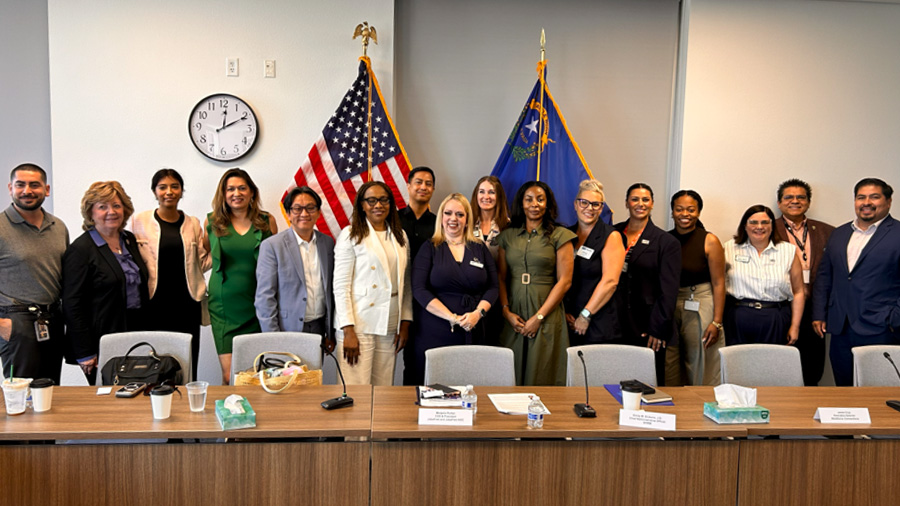
While the conversation reflected Nevada's unique workforce needs, the issues raised were not unique to one community. Across the country, leaders are asking the same question:
How can we better connect education, workforce development, and employers to create stronger pathways to opportunity?
That is the challenge SHRM and JobsFirst are working to address.
Through its Education-to-Employment (E²) Initiative, SHRM convenes employers, educators, workforce organizations, policymakers, and community leaders to strengthen the connections among learning, skills, and work. Building on two decades of experience, JobsFirst works with communities to align and strengthen systems that connect young adults to education, careers, and economic mobility.
Together, we share a simple belief: education-to-employment pathways work best when the people who prepare talent, hire talent, and support talent share responsibility for the results.
Too many young people complete high school without understanding the careers available to them or the pathways to reach them. Career exploration should begin earlier and continue throughout a student's education, helping students understand how classroom learning connects to future opportunities.
Those opportunities extend well beyond a four-year degree. Apprenticeships, community colleges, career and technical education, skilled trades, industry-recognized credentials, and shorter-term training programs can all lead to family-sustaining careers. Every pathway should be viewed as a respected route to success.
Creating stronger pathways, however, requires more than expanding educational options. Employers should help identify emerging workforce needs, inform education and training, expand work-based learning, and expose students to real career opportunities.
The strongest workforce strategies are shaped by employers, educators, workforce organizations, business leaders, and policymakers working together—not in isolation.
Strong workforce systems also recognize that people face different barriers at different stages of life. Whether entering the workforce, adapting to new technologies, balancing caregiving responsibilities, or returning to work after incarceration, individuals need coordinated support to succeed.
The Las Vegas discussion reinforced three priorities that apply to communities nationwide.
First, introduce young people to careers and career pathways earlier.
Second, ensure employers, educators, workforce organizations, and community partners have a meaningful role in shaping workforce strategies.
Third, measure success not only by enrollment or program completion, but by whether people secure jobs, advance in their careers, and achieve long-term economic mobility.
No single organization can close the gap between education and employment alone. Progress requires sustained collaboration among employers, educators, workforce organizations, community partners, and policymakers.
Through SHRM's E² Initiative and JobsFirst's systems-building work, our organizations are helping communities bring those partners together to create stronger, more connected pathways to opportunity. The Nevada roundtable is one example of how local collaboration can produce solutions with national relevance.
Every community has talent. Our shared responsibility is to ensure the pathways connecting that talent to opportunity are just as strong.
Talent is everywhere. The pathways to opportunity should be, too.
Emily M. Dickens is the Chief Administrative Officer of SHRM. Marjorie D. Parker is the CEO and President of JobsFirst and JobsFirst NYC.
Was this resource helpful?

Validate your HR expertise
Earning your SHRM-CP credential makes you a recognized expert and leader in the HR field.
Related Content

Transform HR with mobile technology to streamline workflows, enhance communication, and boost employee engagement across distributed teams.

A new study found that talent development practitioners believe performance-based assessments are more effective at measuring employee learning outcomes than knowledge tests.

As AI makes deeper inroads into organizations, employee concerns about the technology continue to grow. Here's how HR leaders can address the fear of AI among their own staff, as well as in the wider organization.