- Video
- Audio Only
As Gen Alpha begins to enter the workforce, their expectations around learning, technology, communication, career growth, and workplace culture could challenge some long-standing assumptions about how organizations develop talent. James Harrell, former chief of Human Capital Management at the San Antonio Independent School District, shares practical lessons on building youth workforce programs and what they can teach employers about mentorship, career growth, workplace learning, communication, and culture.
This episode is sponsored by:

HR is about people, not just paperwork. Intuit QuickBooks Payroll connects payroll, employee management, time tracking, and accounting in one place, so you can focus on what matters: your team. Learn more at QuickBooks.com/workforce.
Real change starts with real talk. Subscribe now so you never miss an episode! Plus, get daily breaking news, feature articles, the latest research, and more.
News + Insights

Discover the intergenerational challenges employees face and explore innovative solutions, such as tailored family care benefits and flexible work arrangements.
Today’s workforce is more generationally diverse than ever, with Baby Boomers, Gen X, Millennials, and Gen Z working side by side. But with diversity comes challenges — from communication breakdowns to tensions over AI adoption and return-to-office policies.

Younger employees expect transparency around digital privacy at work. Learn how evolving laws and attitudes are reshaping workplace monitoring and trust in 2025.
Younger employees expect transparency around digital privacy at work. Learn how evolving laws and attitudes are reshaping workplace monitoring and trust in 2025.
Podcast Episode Guest
-
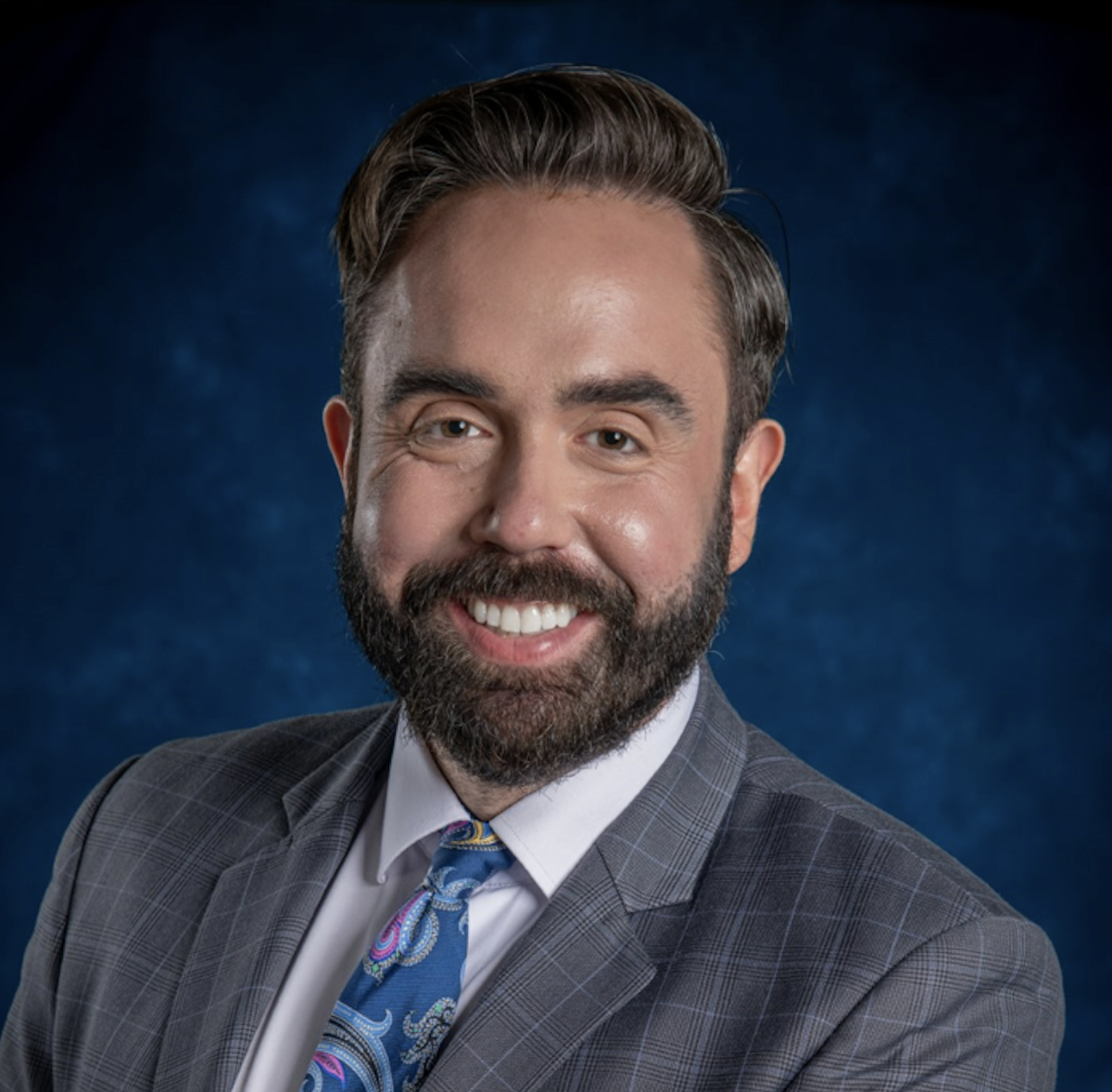
James Harrell
Dr. James Harrell is a senior HR leader focused on transforming public sector HR practices. Dr. Harrell is the former Chief of Human Capital Management for San Antonio Independent School District (SAISD), a 7,000 employee organization serving 43,000 students. At SAISD, they have launched registered apprenticeships and directly interact with youth and young adults for workforce development initiatives. Dr. Harrell has a doctorate from Harvard, SHRM-SCP, SHRM Speciality Credential, and their work has been featured in Edutopia, The Learning Professional, and Leadership.
Episode Transcript
This transcript has been generated by AI and may contain slight discrepancies from the audio or video recording.
Nicole: When we talk about youth apprenticeships, the conversation usually focuses on what young people gain from the experience — the skills they build, the opportunities they discover, the pathways they create. But what if employers have just as much to learn? Welcome to Honest HR, where we turn the real issues facing today's HR departments into honest conversations with actionable insights.
Today, we are hosting our episode recording at SHRM26 in Orlando with a live audience. Give yourselves a round of applause. I am Nicole Belyna, your host. Let's get honest.
As Gen Alpha — people born between 2013 and 2025 — begin entering the workforce, many organizations are still working to strengthen the very capabilities needed to attract, develop, and retain talent. That raises an interesting question: What can today's organizations learn from the next generation of workers before they arrive at scale?
To help us better understand, we are joined by James Harrell, Chief of Human Capital Management at the San Antonio Independent School District, a 7,000-employee organization serving 45,000 students in Texas. Welcome to Honest HR, James.
Dr. James Harrell: Thank you so much for having me.
Nicole: James, you have spent years leading talent strategy in education and workforce development. What first convinced you that teen apprenticeship programs could teach us something important about the future workforce?
Dr. James Harrell: Part of this work is always personal for me. I am a first-generation, low-income college student, and I did not have the resources to understand how to build a career. I am a millennial, and I remember the advent of technology — I used to pay 10 cents per text message, which is very confusing for young people to understand today.
I grew up without the social capital and without an understanding of how my skills could progress throughout my career. The powerful thing about apprenticeships is that they are so skill-focused and so clear about what is expected. They are really designed for the employer to be intentional about how we are building that skill progression and what our work needs.
For us in San Antonio, it is also solving a business need. I needed certified bilingual teachers, and we are in a national teacher shortage. This is our most critical worker — our most important group of individuals — so taking the time to invest in that has been really important for us. We have been privileged to partner with the Department of Labor, earn that registered apprenticeship designation, and design something that really works for our community, our schools, and the young people we serve.
Nicole: What are some of the biggest misconceptions employers have today about teenagers entering apprenticeship and workforce programs?
Dr. James Harrell: I think you started with it. I always go back to the Kim Kardashian quote — she said young people do not want to work, using an expletive we cannot say on HR. But young people do want to work. They just want work to make sense within their lives.
I think we have defaulted as a profession to assuming that people can learn through osmosis and observation. But with the pandemic, our shift to remote work, and any number of big societal shifts, we have not necessarily stopped to ask: What are the skills that are actually most important? What are the power skills that are going to get people promoted? Thinking through what that could look like has been really powerful.
Nicole: How do apprenticeship programs differ from programs such as college recruiting?
Dr. James Harrell: A registered apprenticeship through the Department of Labor is a specific designation that comes with some federal bureaucracy, but it is much smaller than it has historically been. The current federal administration is really prioritizing this. The reason employers should consider it is that it unlocks federal funds to help pay for apprenticeships and the pipeline.
How it is different is that it is entirely Skills First. There has to be both wage and skill progression for the apprentices. Unlike college recruiting, where we are hoping that someone has the skills, these have already been verified through the process. Employers are already clear about what the apprentice at a certain level is capable of doing. Through that, apprentices have been able to get promoted into different levels and ultimately enter the teaching role for us.
Nicole: So there are clear milestones along the way — a win-win for employers who can see that progression, and for the apprentices themselves who can see their own progress through the program.
Dr. James Harrell: Exactly. And it is also tied to wage progression. For Gen Alpha, whenever we are talking about career progression, it means more money — they are earning more. Being intentional about that, with an explicit shift based on mastery of skills, has been really helpful for us in building interest in this work.
Nicole: You have mentioned power skills a couple of times. Can you explain to the audience what you mean by that?
Dr. James Harrell: From my interpretation, power skills are skills that are going to translate across an entire career — thinking through what is most important for people to grow and continue to succeed within the enterprise.
Nicole: Right. Sometimes we call them power skills because they are really not soft at all. People genuinely need them throughout their whole career, as you point out.
Dr. James Harrell: Yes, exactly.
Nicole: When people hear Gen Alpha, they often think of a generation that is still very young. Based on your experience, what are the early signals you are already seeing about how they will approach work differently?
Dr. James Harrell: How I describe the different generations is: do you remember the event happening, or was it just the water in which you always swam? I am a millennial — I remember very explicitly my first cellphone, my first search online, my first computer in the classroom. Gen Z always had those things. Gen Alpha is now used to AI, social media, and streaming in ways that are just how the world works.
My six-year-old nephew grew up saying, "Alexa, please do X or Y," which did not exist when I was younger. Gen Alpha is also facing a very different economy than baby boomers, Gen X, or millennials faced. There are significantly fewer young people than there were years ago — people are having children later and having fewer of them. Parenting expectations are much higher, so there is a lot more time spent with fewer children. And then there is the digital childhood and AI.
The early hallmarks I have seen that are very different from millennials: the default to AI rather than person-to-person interaction. I teach both high school and graduate school, and I am seeing more people default to asking ChatGPT rather than their instructor or a peer. It is because they are involved in a continuous dialogue with their AI bot in ways that did not exist previously.
The other thing that has surprised me is young people's explicit calls and requests for mental health support. We have a superintendent's advisory council comprised of current high schoolers and middle schoolers, and every year for the past three years, mental health has been one of the things they have wanted to talk about — both for themselves and their teachers. I would not have predicted that.
And the one that is most important for employers: planning to engage with parents. I spoke yesterday and asked the room to raise their hand if a parent had come to an interview for one of their kids. A lot of hands went up. It was a shocking number of parents who are coming, following up, and connecting. I would expect that to continue.
Nicole: That is interesting, particularly in an audience of HR professionals — that parents were attending interviews.
Dr. James Harrell: Yes. And discipline conversations too. If a manager is rough with a Gen Z employee, expect a strong letter from mom asking what is going on.
Nicole: I want to go back to the mental health piece, because it is really interesting. Why do you think there has been a surge in mental health awareness?
Dr. James Harrell: The biggest change in childhood for me has been how much it is broadcast. We all forget what it is like to be a teenager — you are at your most awkward, most uncomfortable with yourself. And then to have your flaws potentially magnified by your whole school, documented and shared — it is very distinct in ways we are not used to.
Even teaching at graduate school — I went to Harvard for my doctorate — I was surprised by the number of people who would not say certain half-formed thoughts because they did not want them put on social media or misconstrued. That had not existed the first time I went to get my master's, a decade prior.
Social media is really impacting our young people in ways we do not fully know yet. They are also being raised by millennials or Gen X who have different expectations around mental health and are talking through that more broadly at the dining room table.
Nicole: It is kind of like their whole life is a stage. You never know when you are going to pop up on social media, whether you want to or not. And it starts as children — parents posting pictures of their kids before they even have access to social media themselves.
Where are organizations the most unprepared to meet the expectations of the next generation of workers?
Dr. James Harrell: What has surprised me is just how much the young people I serve want to lead, want to do quality work, and want to work. But they also crave specificity around information.
A lot of our historic processes have indexed on holding information and doling it out as people advanced in their careers — having conversations near the time someone might get promoted or receive a pay increase. I would expect Gen Alpha and Gen Z to want significantly more transparency, and earlier. They can access and synthesize information in ways that took me a career to build.
It is normal for Gen Z and Gen Alpha to talk openly about how much they make. There is not the same internal preference around keeping information sacred. More people are having open dialogues around pay transparency and discipline.
Nicole: Transparency is a big one. There is certainly a desire across the workforce, but particularly among younger workers, for transparency around career paths. They are often looking to get promoted very quickly. Organizations are challenged to keep up with those expectations and manage them — because you have some incredible early talent you want to harness. Career paths are not always linear anymore. But going back to the apprenticeship programs, that certainly is one path that gives a very clear road map. There is transparency. You know what you are getting into when you start, and you have those milestones.
Dr. James Harrell: One of the things we have indexed on is wanting a pretty explicit ladder at the early part of your career. Once you are on the career jungle gym, you can go up, down, sideways — however you want to move.
What we have done in our own program is started to be explicit about that. Teaching as a profession is not as appealing as it used to be, so fewer and fewer people are entering traditional teaching programs. One of the first conversations I had with a freshman this year was: "I want to be able to have a family someday. I cannot be a teacher." Which is not true at all — they just assumed the starting salary is the final salary.
So we made a very explicit apprenticeship model for them to follow to get into the profession. We have homegrown videos where part of our work is to say: once you have been teaching for a number of years, what are some paths you could consider? We have real stories of our people who have trained, and then they go into our compensation manual and look at what all of those salaries are — in part for them to know that it is possible to earn a six-figure career as a classroom educator. But you can also move in different directions as your needs evolve.
Nicole: Right. Because it is not just the technical skill you are learning — it also goes back to those power skills you mentioned, which really can take you anywhere throughout your career. How should organizations rethink mentorship and leadership development for managers who will be managing Gen Alpha?
Dr. James Harrell: The most important thing — and I do not always see it happening — is that your managers actually have to be developed. You have to train your managers before and during their management so that they are living up to your expectations, and so that expectations are fair and consistently applied throughout the enterprise.
I think you will see the model for learning and development shift pretty substantially in the coming years. It is currently the 70/20/10 model — 70% on the job, 20% from peers, 10% formal training — moving toward something more like 60% on the job, 15% AI, 15% peers, and 10% training. I have been surprised by the use of AI to continue training around certain career tasks. The more we can design for it and teach people when and how to use it, the better.
Nicole: One of the promises of apprenticeships is that they create real-world learning experiences. Based on what you are seeing, what will Gen Alpha expect from workplace learning that organizations may not be delivering today?
Dr. James Harrell: The biggest thing is that it is practical — tied to practical outcomes and that they can see how today connects to wage progression over time. There is often an inference that if you attend a class or get a certification, you might be able to advance at some point. Gen Alpha and early Gen Z are more explicit: "How does this help me? What does this look like?" They are demanding that earlier and more often than I think we did.
"Trust us" is not a strategy anymore. Enterprises need to be a lot more intentional about actually saying, "We want this for you, and this is what it leads to."
Nicole: How has growing up with AI, smartphones, and constant connectivity shaped what young people expect from employers, managers, and workplace communication?
Dr. James Harrell: The big thing is around information — both retrieval and synthesis. Gen Alpha will not understand why we have historically held certain information back. We really need to be intentional about what we want to share and why.
Whether you share the information or not, an AI chatbot will give a proxy of what they think the salary should be, what the role should be, or how interview questions should go. You will see more and more people using AI to guess at that. I also do executive recruitment, and I have used ChatGPT to deep research candidates — myself included. More young people will be intentional about personal branding. But companies also need to be aware of the results coming from popular AI chatbots, because that will drive inferences about what young people think about your organization.
The current models do not give you a confidence interval — they speak with a level of authority that you believe them. And I think that is something enterprise leaders have not figured out how to navigate, and certainly our young people have not either. Critical thinking and AI literacy will be much more important in K-12 schools. But it is also something the adults have not figured out, so we need to work through that together.
Nicole: We could have a whole separate episode about critical thinking skills. What does career growth mean to a teenager today, and how might it differ from what talent development has looked like with other generations?
Dr. James Harrell: The biggest shift I have heard directly from young people is that it means more money. When I was taking on leadership roles early in my career, I had the assumption that the more I put on my plate, the more likely a promotion would come. No one ever explicitly told me that. I just had the belief that if you did more and more, you would eventually get promoted. It worked out for me — but it did not work out for everyone.
Gen Z and Gen Alpha are seeing both sides of that. They are a lot more critical consumers of what work and credentials are supposed to be. The federal administration is also really changing the credential ecosystem. Workforce Pell Grants just came out a few days ago, and I think you will see a variety of higher education and K-12 institutions work to respond to this, so that young people are able to enter careers earlier and have a wage that sustains a choice-filled life for them.
Nicole: Some much more agile options for them as well. How can organizations create opportunities for young talent without requiring massive budgets or dedicated apprenticeships?
Dr. James Harrell: K-12 can be political and hotly contested, but across the political spectrum, people are keen on making sure that kids get jobs. Everyone wants people to have a career and be able to enter a choice-filled life immediately upon graduation. So employers and employees can really influence K-12.
The registered apprenticeship is a great model, but it requires a lot of paperwork and time. If you are a lumberyard and you require a specific Occupational Safety and Health Administration (OSHA) certification, talk to your K-12 schools. We can work to integrate that into our curriculum so that you will hire our students.
Every day in San Antonio ISD, we have students becoming phlebotomists, becoming teachers, and entering entry-level roles that are designed to build them toward a career — already having the credentials needed to directly enter that field. There is likely an advisory board in your organization, especially if you are in a large urban area. There are local workforce development agencies. If you tell us the credentials you need and you want to support us, just let us know. And if you open your internships to high school students — if you are in San Antonio, I can get you a hundred great kids tomorrow. We have so many talented young people who want to work. It is just about finding the opportunity and building the partnerships.
Nicole: Do you think there is a need to shift the mindset of employers as well — meaning, not everybody needs to come from a traditional path of a four-year degree or a master's degree, but rather some of your talent is coming through these different pipelines?
Dr. James Harrell: Absolutely. One of the things we did in San Antonio was remove the requirement for bachelor's degrees that are not required by statute. We are a government entity, so we have to have bachelor's degrees for certain roles. But some were just historical choices based on a belief about what college did. We removed those, and it significantly increased our applicant pool. Candidates still had to have relevant experience and be ready for the role — but it was not an automatic screening out of those individuals. That has been incredibly powerful.
What we did was move toward actually assessing skills and understanding what people could do, and making sure those were assessed in the interviews. Employers should look at the skills that matter. If those skills are something you can easily measure through a college degree, great. But I tend to think that experience and a combination of other training can often fulfill what those skills require.
Nicole: What metrics should HR leaders track to determine whether an apprenticeship or youth workforce initiative is truly successful?
Dr. James Harrell: For us, we are always looking at completion rates. I wear my heart on my sleeve — I am an educator, I started as a kindergarten teacher, and I will always be rooting for young people. But I am also an HR executive of a 7,000-person organization. It is solving a business need for us. I have a number of unfilled vacancies that I need to address.
The registered apprenticeship pipeline, in a few short years, will be one of the largest producers of bilingual teachers in the region for us. That is an incredible investment, coming with significant subsidies through state and local initiatives.
For metrics, I would look at: Is this actually solving a business need? Do you see the line starting to progress in the right way? The real benefit of registered apprenticeship is the unlocking of federal dollars and making sure that some of these roles are being subsidized. Is it supporting your bottom line in the way that it should be?
Nicole: When young people are considering joining a company, what aspects of culture do you think they are looking for?
Dr. James Harrell: For young people, it is about alignment — is there alignment between who you say you are publicly and how you are being experienced in the interview and in all of your interactions? If you say you are focused on X, does that actually show up in the interview process and in your informal interactions with people?
The biggest shift you will see for Gen Alpha — and that HR professionals are probably starting to see with Gen Z — is a lot more parental involvement. For the registered apprenticeship, we specifically engaged parents, in part because we were experiencing parents dissuading their kids from becoming teachers, saying, "It is so much work and not enough money. You can do something different." So we wanted to bring parents in, have them celebrate their kids, and see them sign a contract for the first time.
Our group of registered apprentices signed their contracts for their first year of work the day after they graduated college, and then ten days later they graduated high school. Mom and dad were crying. It was a really emotional and positive experience.
Being intentional about how to engage parents — not just employees — especially for communication and marketing of your employee value proposition, is going to be much more important in the years to come. It is not something we have historically done as an industry. We have not said: not just potential employee, but also potential employee's family — how are we going to engage you?
Nicole: We absolutely have not. It is a little jarring of a thought. The only employer I can really think of that has done that previously is the military — they often try to engage family and spouses when they recruit.
Thank you, James, for sharing your insights with us. And to our studio audience, give yourselves a big round of applause. We will catch you next time.
Featured Story

Gen Alpha has entered the workforce with new expectations for career growth, technology, and mental health. Find out how to adapt recruitment strategies.
Enjoy On Your Favorite App
More Feature Stories from HR Daily

Amid rising inflation, Social Security benefits are increasing 3.6% in 2027. HR can leverage the news to help workers with retirement planning and financial security.

USCIS proposes tougher scrutiny of work visa renewals and finalizes the end of automatic EAD extensions, raising workforce planning and compliance risks.

EEOC Chair Andrea Lucas signals increased scrutiny of labor unions over discrimination, expanding the agency’s focus on workplace inclusion and diversity initiatives.