- Video
- Audio Only
Today’s workforce is more generationally diverse than ever, with Baby Boomers, Gen X, Millennials, and Gen Z working side by side. But with diversity comes challenges — from communication breakdowns to tensions over AI adoption and return-to-office policies. Dr. Unnatti Jain, generational diversity researcher and CEO of Bridging Generations, joins Monique Akanbi, SHRM-CP, to address how HR teams can turn generational differences into a strategic advantage.
Related to this Episode
Civility at Work
The SHRM Civility Index uncovers what’s really happening in workplaces and how organizations can create cultures where people and performance thrive. The current SHRM Civility Index score is 48.6, marking a 0.1-point increase since the Q3 2025 findings.
Real change starts with real talk. And every Friday, our Honest HR podcast is the top story in SHRM's HR Daily newsletter. Subscribe now so you never miss an episode! Plus, get daily breaking news, feature articles, the latest research, and more.
News + Insights

Enhance workplace harmony with SHRM's insights on civility. Boost productivity and respect with actionable strategies for a positive work environment.

Five generations share today’s workplace, each with different mental health needs. Experts share tips to help employers support a multigenerational workforce.
Managing a multigenerational workforce requires recognizing and valuing the unique perspectives and skills each generation brings. Understanding the different needs and motivations of each age group is key to driving engagement and long-term success.

The multigenerational workforce is growing, and leaders should unlock the full potential of a diverse team to meet shifting challenges in today’s business environment.
Podcast Episode Guest
-
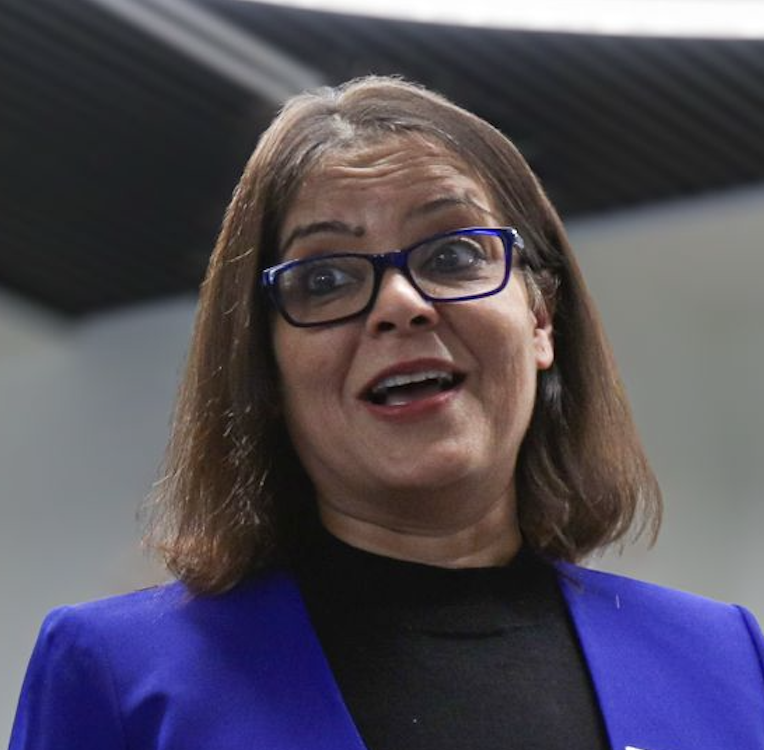
Dr. Unnatti Jain
Dr. Unnatti Jain is a keynote speaker, author, and bridge-builder dedicated to bringing people together across generations, so everyone feels seen, heard, and valued. Speaking to organizations, schools and colleges. Unnatti creates powerful spaces where connection replaces conflict and understanding replaces assumption.
With a purpose rooted in belonging, Unnatti focuses on bridging the generational gap, helping parents and teens, educators and students, and leaders and teams move from misunderstanding to meaningful dialogue. Her engaging, heart-centered talks inspire audiences to listen differently, speak honestly, and connect more intentionally—because when we build bridges instead of walls, everyone thrives.
After beginning her career as an academic writer, Unnatti has transitioned into authoring books that reach people where they are and meet them where it matters most. Her book Parent–Teen Journey supports families in navigating communication, identity, and growth together, and in 2026 she expands her impact with her upcoming book, Everything Begins with You, a powerful reminder that change, connection, and belonging always start from within.
“My purpose is simple,” Unnatti shares. “To bring people together—so no one feels invisible, and everyone knows they belong.”
Episode Transcript
This transcript has been generated by AI and may contain slight discrepancies from the audio or video recording.
Monique: Four generations, one workplace, and more friction than many organizations are prepared to handle from debates over remote work to differences and communication styles, to growing tensions fueled by rapid AI adoption, today's workforce isn't just diverse, it's divided. And at the center of it all is something harder to measure, but impossible to ignore.
A decline in workplace civility. Welcome to Honest HR, where we turn real issues facing today's HR departments into honest conversations with actionable insights. I'm your host, Monique Acon. Let's get honest.
Today we're diving into how HR leaders turn generational differences from a source of tension into a strategic advantage. Joining us is Dr. Unnatti Jain, generational diversity researcher and CEO of bridging generations. Welcome to Honest HR Dr. Unnatti.
Unnatti Jain: Thank you, Monique. Thank you for having me. It's such a joy to see you again after seeing you at Dallas SHRM. So I appreciate you bringing me on.
Monique: Yes, yes. It is such a pleasure to have you on to Honest HR and to talk about a topic that I am very interested about, which is generations in the workplace. Being a mother of a 16-year-old and a 21-year-old who are both in the workforce, I'm often talking to them about the generational differences and how they interact with each other. So I'm really excited to talk about this topic with you today.
Unnatti Jain: Of course, Monique, I'll be happy to add to that.
Monique: I'm hoping you can give me some insight as well in terms of guiding kids as well.
Unnatti Jain: I hope so. I have a 22-year-old too, so I absolutely can. This topic is very close to my heart and I work a lot with you, so hopefully we'll have some nuggets for you by the end of today.
Monique: Same here. So, awesome. Well, honestly, two SHRM reports found that multi-generational divides are major contributors to workplace challenges. Our civility index shows that age or generational differences rank among the top five causes of incivility and our 2026 CHRO priorities and perspectives report shows that 47% of CHROs expect an increase in challenges and opportunities of managing a multi-generational workforce.
What patterns are you seeing in how different generations define and experience workplace civility?
Unnatti Jain: Thank you for quoting those numbers. Firstly, Monique, I think the world needs to hear this. It's a topic that's very close to my heart, so I may go a little bit off script, but please bring me on.
So to answer your first question, what's really interesting is that the definition of civility is actually pretty consistent across generations, but the delivery is where things begin to differ. So civility according to me, isn't a soft skill. It's a business strategy right now.
For example, let's take an example. Our younger employees often equate civility with inclusion being heard, feeling psychologically safe. They're very tuned into tone and intent. Whereas more seasoned professionals may define civility more as respect, professionalism, structure.
So the conflict really isn't what civility is, it's how it shows up. One group might think I'm being efficient while the other feels I'm being dismissed. So how do you define civility? It's different definitions.
Monique: Wow. So you just said a mouthful in terms of the delivery, right? Like that is what stood out the most to me. Right. So I think that I would agree with you in terms of how civility is defined based on generations, but what's more important is the delivery of that.
So how does improving civility and cross-generational collaboration directly impact key metrics like retention, productivity, and even employee engagement?
Unnatti Jain: So, thank you Monique for that question. People don't leave companies, people leave managers, people leave environments where they don't feel seen. And that impacts everything.
When people feel respected, understood, they stay longer. It directly reduces attrition and it increases engagement because people are more willing to contribute ideas when they don't feel shut down. Right? I mean, look at it from your perspective or my perspective. I was in the corporate world before doing what I'm doing right now, and that's one of the reasons that I left my organization.
And from a productivity standpoint, you also reduce friction. Teams spend less time navigating tension and more time actually doing the work. So your ROI increases.
So civility again, once again, I'm gonna say that out loud. Civility isn't a soft skill, it's a business driver. So the more we bring civility into organizations and define civility cross generationally, the higher the ROI is going to be and the lower the attrition is going to be.
Monique: So what I get from that is understanding, and I would agree with you, people don't leave organizations. They leave people, right? And so, and I love that you call out that civility is not a soft skill, that it's a business strategy.
And the more that we're able to understand each generation and the delivery of how we interact with each other, then we're more apt to improve productivity and retention and increase engagement across all generations in the workplace. Would that be accurate?
Unnatti Jain: Yes, that's absolutely. You got that right.
Monique: Okay, awesome. So where do you see the biggest disconnects between generations right now? Is it communication styles, expectations of leadership, or even attitudes toward work?
Unnatti Jain: So I think what one generation calls efficiency, the other experiences as dismissal, right? So three big ones. Communications, expectation of leadership and relationship to work.
Now, communication is huge. Some prefer direct quick messages. Slack. Others value context and conversation. Leadership expectations differ too. Our younger employees often want coaching and transparency, while others are used to more hierarchical structures. And of course then there's work itself. Flexibility versus stability, purpose versus process.
None of these, according to me, are right or wrong. They're just different lenses. But the three big ones that I'm gonna define and answer your question too is communication, expectations of leadership and relationship to work.
Monique: So in terms of communication, right? You just said you made a comment around efficiency could then also be experienced as dismissal. Right. And then what happens in terms of, well, so how do you, what would you tell our audience in terms of how to increase communication or even expectations across generations in the workplace?
Unnatti Jain: How to increase communication? There are multiple ways of doing it. I think the first I would say is here are your employees. We are talking cross generational communication. Every generation brings different communication styles onto the table so everybody has something to add. Everybody has something to share.
If we start looking at the younger employees as an asset and using something like maybe a product like reverse mentoring. Where we learn from the younger employees while they teach, while we teach them something, we give them institutional knowledge and maybe they give us more about social media or about better communication techniques that could be helpful. And then conduct workshops, you know?
What I do normally, Monique, is when I go into places as a returner into organizations where they're trying to reduce the generational gap because they're so focused on managing conflict that they're unable to make the money. So what I do is, the first thing I do is I conduct a survey across the organization. And I get real numbers and I get real tangible results, so I know exactly what my next step is gonna be.
So whether it's going to be to conduct focus groups, whether it's going to be, we want to take it leadership down or we wanna take it bottom up. How do we want to give individual coaching to the younger employees? Do we want to develop communication workshops for them? Are they missing the work etiquettes? Are they missing the basic civility? Do they need to be taught how to come to work or what the basic etiquette are going to be?
I'm gonna quote an example over here. The other day, I wrote a newsletter I write a newsletter every Tuesday at eight 30 in the morning. And people, believe it or not, love it because they're old stories, real-time stories. There's somebody who wrote back and said, spot on, and this is an example. I don't need to quote the newsletter, but I'll give you the example.
He said, I just hired a 23-year-old straight out of college. And this was his first job. And we started working on a mailing project and he came up to me one day and he said, what do you want me to do with this? I didn't know. I looked at him very confused and he said, what do you want me to do with these stickers? And I looked at him very confused. I didn't know what he was talking about until I looked down. And guess what they were?
Monique: What were they?
Unnatti Jain: He was doing a mailing project. So what do you think that was? Stamps.
Monique: Stamps.
Unnatti Jain: Stamps. And at that moment he said, I had an eye-opening experience. And that's the time that I understood that this is a learning experience for me. I cannot presume what this generation knows because they're coming from a place where they haven't seen these things. They were not born with it. They were born in a completely different world.
So I have to take the time to train them versus blame them for not knowing basic etiquettes or basic work ethic.
Monique: Right. You know? I think about it. I don't know. My kids know about stamps, right? I mean, let's look at and let's think about it. I mean, these are things that they haven't seen. They were born into a completely different world. Yeah. So it's something to think about.
Unnatti Jain: Oh, that is, that's a really good example. Thank you for sharing that.
Monique: How do generational communication styles contribute to the perception of incivility and what are the real business consequences when these misunderstandings go unaddressed?
Unnatti Jain: Oh, I can go on and on about this. Okay, so I think firstly we don't have a generational problem. I think we have a translation problem.
Monique: Ooh, hold on. Say that again.
Unnatti Jain: We don't have a generational problem. We have a translation problem. We have five generations in the workforce right now, and all of them are speaking different languages. So a lot of what we call incivility is really misinterpretation. Right.
So for example, a short email when somebody writes a short email writes K or okay. It might feel efficient to one person, but abrupt or dismissive to another. For instance, let's take, forget about the newer generation. Let's take the older generations, the veteran generations, I don't like to call them the older generations, the veteran generations.
Somebody may write Unnatti and then the email, somebody may write Dear Unnatti, and then the email, somebody may write, hello Unnatti. And then the email Right now, from their perspective, they're being professional, they're being straight up, they're being to the point for the other person who's receiving the email on the other end may find, oh, this is quite a pro. Right. So it's a question of translation, misinterpretation.
Now, interrupting might be seen as engagement in one generation and disrespect in another. For instance, you have a room full of people. You're talking about a very passionate topic, and there are five people talking at the same time because they're super passionate about it. One person could see it as, wow, this is a really engaging room. Look at all these young people. They're so excited about the topic, whereas another person would say, wow, this is so disrespectful. They're talking over one another. Right?
But the business consequence is real. So you start to see breakdowns in trust, decreased collaboration, and eventually disengagement. Why? There's a translation problem. Now, if those misunderstandings go unaddressed, they quietly turn into retention issues.
Monique: Wow. I'm gonna have to quote you on that one. I mean, you had me, we don't have a generational problem. We have a translation problem, so thank you so much for sharing that. That was gosh, spot on. And definitely something I can relate to as well. Right.
With AI tools changing how we work, how are different generations adapting? And what challenges or opportunities does this create for HR teams?
Unnatti Jain: That's a big one. So I get this a lot. As a matter of fact, somebody had reached out to me the other day saying, we want you to speak at an AI conference and bring the human component in it. So here's what I'm gonna say. AI can scale work, but only humans can scale trust. There's definitely a spectrum, right?
Monique: Wait a minute, on the team. Sorry. Like you are dropping so many nuggets. I need to repeat.
Unnatti Jain: Am I going too fast?
Monique: No, no, no, no, no. Absolutely. So AI I just need you to repeat AI
Unnatti Jain: So AI can scale work, but only humans can scale trust. I'm a big proponent of that. I love AI. I think it can create miracles and it can scale your work. In organizations, unless we have the human touch, the trust is not gonna be scaled. So we need the humans to scale trust.
So there's definitely a spectrum. Our younger generations tend to adopt AI very quickly. We see it as a tool for speed and innovation. Right now, more experienced employees may be more cautious, sometimes concerned about their job security or losing the human element. It's not necessarily about fear all the time. It could also be about in an AI world, how do you keep the human element alive?
But here's the opportunity. When organizations position AI as a complement to human work and not as a replacement, you reduce fear and increase adoption. So the real win here is really combining digital efficiency with human empathy.
Monique: We'll be back in just a few moments. Stay with us.
Ad: HR never stops evolving, and neither should you join your peers at SHRM 26th, June 16th until the 19th in Orlando, Florida for fresh ideas and real solutions that help you move forward. Learn more at SHRM dot org slash SHRM. 26.
Some days it feels like you're just running to keep up. With SHRM, you set the pace and you stay ahead. SHRM MEMBERSHIP now gives you access to business intelligence, advanced benchmarking, and in the moment, support from HR experts all built for the decisions you are accountable for. Behind every confident HR leader is SHRM, so you know what's coming and you're ready for it. Join SHRM today. 'Cause if it's a work thing, it's a SHRM thing.
Monique: So return to the office has been a flashpoint across generations in the last few years. How can HR navigate these differences without creating further friction?
Unnatti Jain: So I think this topic came up straight after COVID. And that's when it became a real issue. And the mistake organizations, according to me are making is they're treating it as a policy issue instead of a people issue.
Different generations value different things, flexibility, connections, structure, autonomy, right? So the key is not choosing one over the other, but being very intentional about why people come together. I'm gonna want to go to an office if it's a place of collaboration, mentorship, and connection. I don't wanna just sit at my desk when I'm just sitting at my desk and I'm just working. I can do that at home. Why am I gonna spend the time traveling, commuting, going to work, coming back.
But if my office is a place where I get to connect with humans, when I'm not micromanaged, you get much more alignment. So again, if it's something to think about, are we treating this as a policy issue or are we treating this as a people issue? The minute we make it a people issue and our workplaces change, that's when the shift will happen.
If you see all of the successful companies have a very flexible schedule for their employees, whether that's Google, I can't quote numbers because I don't have numbers in front of me, but Google, Amazon, all of these places, the big companies that we're talking about, they have a very flexible schedule and there is no micromanaging.
Monique: So it's more about creating the environment, right? More of an environment rather than saying, we need you to come in the office just because we need you to come in the office. It's more of having that people centered focus and creating that environment where employees, no matter what generation they're a part of, they want to come to work and they want to come.
Unnatti Jain: Yeah. I mean, when I wake up, I should be excited to go to work that I'm gonna get to learn. I'm gonna get to be mentored. I'm gonna be able to collaborate, connect with other humans of different learn from each other. That's when you wanna go to work? If I have to sit at my desk, it's not exciting to me.
Monique: Yeah, and imagine a world like that, right? Imagine a world where everyone woke up, excited to go to work, come to go to work.
Unnatti Jain: The SHRM's Civility index data also reveals that different generations largely agree on what constitute uncivil behavior. It divides it into two specific areas. It divides it into specific uncivil behaviors in the workplace, such as belittling or insulting a colleague in front of others, maybe frequently interrupting you. Talked a little bit about that. Interrupting others during meetings where one can see that as collaboration and an engaged group where another can see that as, you know, being disrespectful. Or dismissing or ignoring someone's ideas or another team MEMBER's ideas as well.
So while generations may perceive themselves as distinct, their judgements on incivility are actually strikingly similar. How can organizations create a culture where generational differences are seen as a competitive advantage rather than this source of conflict?
Monique: So I think there are two questions here. Let's address one by one. So when we say, while generations are perceiving, correct me if I'm wrong, themselves as distinct, their judgments and civility are strikingly similar. Now, I'm gonna say that's an opportunity. If everyone agrees that things like interrupting, dismissing ideas or public criticism are uncivil, then they already have a shared foundation right from there on. It's a question of leveraging strengths.
Younger employees bring adaptability and innovation and more experienced employees bring context and institutional knowledge. So now leading on to your next question on that, so how can organizations create a culture where generational differences are seen? I think it starts with a mindset shift. Organizations have to stop managing generational differences again as a problem to solve and start leveraging them as a strength to scale.
How are we identifying the strengths of different generations in the workforce and focusing on the strengths rather than the issues that are arising in the workplace. Because the reality is each generation brings something critical to the table. Every human being is unique. We can put generations as labels, and I don't like to do that. I like to put generations as a context because putting generational label on somebody is putting them in a box. It's not necessary that they're like their generation. They're unique in who they are and what they bring to the table.
So each generation brings something critical to the table. You've got innovation, adaptability, and fresh thinking from younger employees. And then you have of course, experience, context, institutional knowledge, strategic depth from all our tenured professionals. When these are siloed, you get friction, but when they're integrated, you get better decision making. Do you agree so far with me?
Unnatti Jain: I am Amen in everything that you're saying, so yes, I agree.
Monique: Thank you. So practically that means creating intentional opportunities for collaboration, not just working side by side, but learning from each other. Things like, now I'm gonna give you a practical example, reverse mentoring, which has been there for years. We just need to step up a game on that. Reverse mentoring cross generational teams.
Are we, look, when we are designing project teams, are we very intentional about who we are placing on these project teams? Do we have the five generations? Each of them in that team to bring to break those silos and bring multi-generational perspective. And then of course, open dialogue around communication styles can make a huge difference.
And recently I thought of this. I was speaking to somebody and they said, how do you feel about bringing in a generational coach? They should be given an opportunity to be coached to decrease attrition and to increase workforce retention and help them come up to par identifying their strengths, and let's call them a generational coach. I think every organization needs to consider that person who has that knowledge, who has that expertise, who understands strengths.
Another thing that I think is extremely important is for leaders to set the tone. If leadership models curiosity instead of judgment. Simple statements like, help me understand your perspective, instead of, that's not how we do it. It changes the entire culture.
And now the biggest thing is this focus on shared values over surface level differences. I've just developed a course, which is in the process of being accredited. It's called a certified generational professional, which we are offering to leaders, which gives them, it's a 12 module course. An hour each. So it's not heavy on the leaders. We are offering it to organizations where we are saying, here's the course. Make it a part of your leadership development training. And let your leaders understand what are generational differences? How do each of these generations work? That's a starting point, right?
So as we've seen most generations actually agree on what respect and civility look like. So if you anchor the culture in those shared expectations, the differences become assets and not obstacles. And at the end of the day, diversity of thought is only powerful if people feel safe, heard and seen.
Unnatti Jain: Wow. I agree with you 100%. And I think of even myself, right? So you made a statement around being, you know, when you're identified or you're categorized as a one generation, right? You then you're boxed in, right? So then, you know, and I think about, I can relate to all generations, right? From one aspect to another.
So I love that, you know, being curious and kind of understanding rather than being judgmental of one group or another. And there are so many more similarities and things in common versus there are indifference and being able to leverage the strengths of each individual, no matter what their generation is.
Monique: Correct. Let's not box them. Let's not say Gen Zs are like this, or millennials are like this, or Alphas are like this. Let's create contexts. They're individuals. So yes, generational diversity is important. Generational knowledge is extremely important. But there are some myths that we need to bust because we come in with a very closed mind and we say, there are Gen Zs. I know how they are. These young people, they don't know how to work. They have no work ethic.
Unnatti Jain: I think about my, my 21-year-old, right? So one thing I will say, I'll, you know, tout myself, you know, pat myself on the back. They have my, both of my kids actually, the 16-year-old and the 21, my 21-year-old, they have extreme work ethic, right? They for, I have to tell them, take some time off. Right?
Monique: quality job, mom. Quality job, mom. Take some time off. Mom, you've done amazing. You can take the credit for that.
Unnatti Jain: I'm preaching to myself even when I tell them that and, and they look at me. They're like, who? Who? Imagine who we got this from, right?
Monique: Yes. That's absolutely, that's what I'm saying. Role model is extremely important. Yes. I always tell parents, I said, don't worry about they're watching you, worry about they, don't worry about what they're not listening to you worry about. They're watching you.
Unnatti Jain: That's good. Yes, absolutely. So as we look ahead in the youngest generation being generation alpha, and as they enter into the workforce, how should HR prepare the business to accommodate another layer of what we may define as generational complexity?
Monique: God bless HR. Generation Alpha is going to raise the bar even further on personalization, technology integration, purpose. They're already coming in really strong, so I think HR needs to now start by building adaptable systems, not rigid ones. We have to bring in flexibility, prioritizing continuous learning and development.
I mean, think of it, Gen Zs are the way they are in terms of learning, in terms of being present, in terms of being, you know, showing, saying we want more flexibility. So Generation Alpha is going to be a step further. So I think we need to, so HR needs to build adaptable systems, not rigid ones. They need to prioritize continuous learning and development, and most importantly, strengthening human connection in a digital world.
And why do I say that? I'm clear. I'm going to create a demarcation here between Gen Z and Alpha. Gen Z is, everybody tells me they're so hyper-focused on technology that they don't know how to communicate, which is true, right? But communication is a skill that needs to be taught. That's two. This is a generation which is asking, who is asking for more human connection? They're more looking for mentorship. I'm a coach. They are one of the generations is who is very eagerly looking for a coach willing to invest in themselves because they want that human connection.
So when we are talking about alpha alpha's going to be a step further, they're going to need more human connection in an AI world because more the more technology advances, the more people will crave belonging, meaning connection. So Alpha is going to take it a notch up.
Unnatti Jain: Wow. So build adaptable systems. Focus more on human connection. Right. Oh, that is so good. Oh my gosh, this has been so enlightening. Thank you so much Unnatti for sharing your insights with us.
Monique: Thank you for having me, Monique. It is a pleasure. It is a pleasure. It was wonderful to be, I love the conversation and thank you to you and your team for doing this. You guys are doing great work.
Unnatti Jain: Well, it is our pleasure. So that is going to do it for this week's episode of Honest HR. We'll catch you next time. Hello friends. We hope this week's episode gave you the candid tips and insights you need to keep growing and thriving in your career.
Honest HR is part of HR Daily, the content series from SHRM that delivers a daily newsletter directly to your inbox filled with all the latest HR news and research. Sign up at SHRM dot org slash HR daily. Plus follow SHRM on social media for even more clips and stories like share and add to the comment because real change starts with real talk.
PDC: This podcast is approved for 0.5 professional development credits (PDCs), also known as PDCs towards SHRM-CP and SHRM-SCP recertification. Enter the following PDC activity ID in your SHRM activity portal. To log your credit, two seven XH Qj seven. Again, the PDC code is two seven xh. QJ seven, this code expires May 1st, 2027.
Feature Story

Workplace civility thrives when toxic behaviors are addressed, managers are empowered, and organizational values align with actions and leadership priorities.
Enjoy On Your Favorite App
More Feature Stories from HR Daily

A federal judge declined to block the president’s I&D restrictions on government contractors but clarified that the order does not prohibit lawful I&D programs.

Employers can rethink GLP-1 coverage, control benefits spending, and support workers’ financial choices, experts — including SHRM President and CEO Johnny C. Taylor, Jr., SHRM-SCP — explained.

Amid rising inflation, Social Security benefits are increasing 3.6% in 2027. HR can leverage the news to help workers with retirement planning and financial security.