- Video
- Audio Only
The career ladder used to be a straight climb. You build skills, get hired, get promoted, and repeat. Then AI reshaped the ladder itself — and the path forward is no longer clear.
This episode welcomes a panel of three experts to discuss this topic:
Prudence Pitter from PEARRM Services, John Arms from Voyageur University, and Yogi Mueller from Craft Leadership LLC. Together, they discuss how psychological safety drives real AI adoption, the early warning signs that career paths are quietly compressing inside your organization, and the driving forces behind a decline in workplace mentorship.
Learn ways to build a genuine mentorship culture, an honest script for discussing growth when promotions aren't guaranteed, and a business case for psychological safety that speaks the language of the C-suite.
This episode is sponsored by:

Dive deep into game-changing topics impacting today's workplaces. And every Saturday, we have top stories, featuring our bi-weekly All Things Work podcast, in SHRM's All Things Work newsletter. Subscribe now so you never miss an episode! Plus, get feature articles, related content, SHRM's latest research, and more.
News + Insights

Build effective employee development and training programs that close skills gaps, retain talent, and align with organizational goals. Get practical resources and tips.

Understand how to approach career decisions when a new opportunity conflicts with loyalty to your current employer.

For HR professionals, apprenticeships can become an increasingly important tool for developing employees while strengthening long-term talent pipelines.

Portfolio careers are redefining work as employees pursue multiple income streams, forcing HR leaders to rethink talent strategies.
Podcast Episode Guest
-

Prudence Pitter
Prudence Pitter is the Founder and CEO of PEARRM Services, an HR consulting and speaking firm built around her proprietary Succession Architecture™ and Wellbeing Architecture™ frameworks. A former Global Head of HR at Amazon Web Services, she led people strategy across more than 20 countries.
Prudence holds a Harvard Executive Leadership Coaching certification, serves as an adjunct professor at Fordham University's Gabelli School of Business, and is a TEDx speaker. She has spoken on five continents and brings 25+ years of global HR leadership experience to every stage she graces.
-
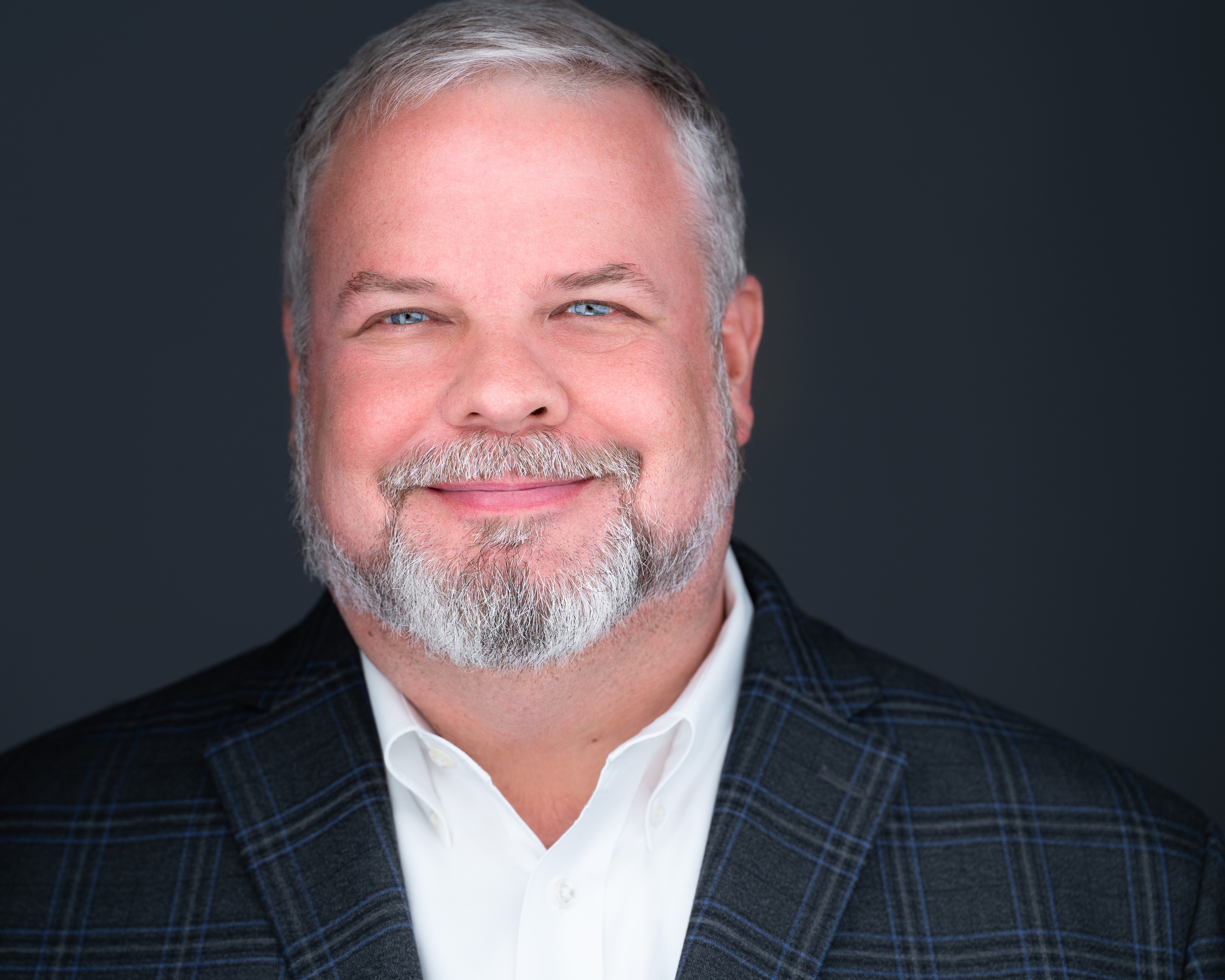
Yogi Mueller
Yogi Mueller is the Owner and Chief Craftsman of Craft Leadership LLC, a leadership and talent development firm dedicated to helping people grow with confidence, clarity, and purpose. His career spans more than twenty five years across human resources, leadership development, and organizational culture, including work with some of the strongest service and hospitality brands in the country. He built his foundation at Walt Disney World, where his HR and operational leadership roles shaped his understanding of people, performance, and culture. He later continued that work at Bluegreen Vacations and Hilton Grand Vacations, leading learning and leadership initiatives for thousands of employees across multiple locations.
Throughout his career, Yogi has designed onboarding systems, leadership programs, talent pipelines, and coaching strategies that strengthened engagement, improved retention, and supported leaders at every level. Alongside his corporate work, he has taught at the middle school, high school, college, and graduate levels, including the Rosen College of Hospitality Management at the University of Central Florida.
He is also the author of The Great Slapping, a book on mentorship and the quiet power of believing in people before they believe in themselves. His work blends real stories, practical tools, and a deep belief that mentorship is one of the strongest forces in both personal and organizational success.
-

John Arms
John Arms is Founder and CEO of Voyageur University, an education and career transition company helping experienced professionals build successful fractional and independent careers. A leading voice on workforce transformation, career ownership, and the future of work, John has helped thousands of professionals navigate career change and create new income opportunities.
He is the author of Revolt and Consult Your Way to a Full-Time Job, host of the Fractional Unfiltered podcast, and a sought-after speaker on workforce disruption, AI, talent mobility, and the evolving relationship between employers and talent.
Episode Transcript
This transcript has been generated by AI and may contain slight discrepancies from the audio or video recording.
Anne Sparaco: Hey everyone, it's your favorite co-worker, Anne, and this is the All Things Work podcast. Today we're recording our episode at SHRM 26 in Orlando with a special live audience. Can we get a round of applause for our early live audience? All right, let's jump right in.
Here's the thing about the proverbial career ladder — we've been climbing the same one for decades. You develop skills, you get hired, learn more skills, you find your mentor, you get promoted, you repeat, and up you go. Then AI showed up and started changing the shape of the ladder itself.
The path upward isn't as clear as it used to be. But the thing that's still helping people climb that ladder is the skills they build along the way. Today, we're digging into how artificial intelligence is reshaping that conversation. We're talking about promotional pathways that are compressing, mentorship cultures that are quietly eroding, and how psychological safety can help people keep learning, keep adapting, and keep growing when the path forward isn't always clear.
Joining me today are three incredible experts. We'll start with Prudence Pitter, founder and CEO of Peerm Services, an HR consulting and leadership advisory firm. John Arms is the founder and educator of Voyager University, where he helps people find clarity in career transitions. And Yogi Mueller is the owner and chief craftsman at Craft Leadership LLC, a company specializing in transforming individuals and teams into leaders. Prudence, John, Yogi — welcome to All Things Work.
John Arms: Thank you. Thanks so much. Thank you for having us.
Anne Sparaco: So I want to start with a reality check. When we say the career ladder is changing, what does that actually mean on the ground for the employees you work with every day? What does that change look and feel like? Yogi, let's start with you.
Yogi Mueller: When you talk about career ladder, I think we've been pushing away from that terminology for quite some time, talking instead about a career lattice — so it's not necessarily a direct ascension up or down. It's sideways. At the general session yesterday, there was mention of the elimination of a lot of frontline, early-entry roles and how that impacts everything.
The way that was framed really exemplified the red flags and warning signs going out in terms of career ladders. Without those entry-level positions, there is a massive gap to jump. Even in traditional ladders, if you were a frontliner, getting to that supervisor or manager role seemed like an insurmountable chasm. Now those roles don't even exist, so that perceived chasm gets bigger.
That's a tremendous call to action for those of us in this business who are passionate about people — to ensure that we have bridges to meet all of those expanding gaps.
Anne Sparaco: And John, you've discussed fractional leadership. How does that come into this conversation?
John Arms: When I look at the career ladder, all the rungs have changed and some of them are gone — for everybody going up and down — and that's just where we are as a society. What I focus on is core value: what are we really, really good at? We call it the "inner nerd" in our class. What are we exceptional at? What are we fascinated by?
Forget the career ladder for a moment, because who knows how you're going to take yourself to work over the next few years. Fractional, independent, laid off — loyalty is gone. All the ingredients of the career ladder have completely changed. So we have to take a moment and say, "What are my skills without any ladder? How do I put myself in business for myself?" That's the ultimate safety. We're not used to that. The ladder has been institutional, and now it no longer is.
Anne Sparaco: And Prudence, your perspective?
Prudence Pitter: What Yogi said about that gap — if you don't have that frontline employee, what does that mean? I believe it highlights succession planning as a core need within the organization. And both of you talked about not going up necessarily, which also takes into account cross-training and development in a horizontal way, as well as employee well-being — ensuring that leaders are tapping into what employees need to be whole.
If someone is coming out of college with their eye on a job their parents had, and that job no longer exists in this era, what does that mean for them? Mentorship, sponsorship, additional development, succession planning, cross-training — it gives us as HR leaders an opportunity to touch different parts of the organization that we potentially didn't touch in the past.
I believe that shows up in succession planning and employee well-being initiatives.
Anne Sparaco: I think that's so important — thank you all for that perspective. I'm going to turn it to our audience now. Raise your hand if at some point in the last year or two you've had an employee, or been an employee, who asked yourself something along the lines of, "What does my growth path actually look like?" and the answer was more complicated than you thought.
All right, a majority of the room. Now keep your hands up if you felt like the systems your organization has in place — the promotion criteria, the development programs, the mentorship cultures — weren't quite built for the moment you're in right now. Some hands went down, and a lot stayed up. That's exactly what we're talking about today.
So let's dig into each of your areas. Prudence, we'll start with you. You discuss in your work how organizations often unknowingly create environments where people are connected by technology but psychologically disconnected and operating in survival mode, especially as AI accelerates. How does your well-being architect model close that gap and tie psychological safety into AI adoption?
Prudence Pitter: The thing with AI is that it is highlighting what already existed. AI is bringing to the forefront issues with an organization's culture. Was communication strong to begin with? AI is fast-forwarding that. Was there an issue with overall leadership development? AI is fast-forwarding that as well.
Employees are starting to recognize that if we have all these tools and resources, and the ability to move faster and do more, why am I not getting to do what I should be doing and what I'm qualified to do? So AI is highlighting gaps that were already present in organizations.
The framework I created focuses on psychological safety, trust, leadership development, and communication — and I want to pause on the communication piece to say two-way communication: listening as much as we speak. We know these things, but we also move so fast.
The organizations that are building in listening sessions for employees and using the information they receive to actually make changes — those are the organizations that can do more with artificial intelligence.
Anne Sparaco: I love the two-way communication emphasis. That's a really important point to highlight.
So John, I'm going to throw some SHRM research at you, because this ties directly into your work. SHRM's most recent research on AI job displacement risk found that at least 50% of tasks are automated in more than 23 million U.S. jobs — which shows how this shift is painting a more complex picture than we realize. You see those headlines saying AI is replacing your job, but that's not exactly the case. It's really changing how work is shaped.
You used the phrase "job evaporation," and I think that's a really clarifying way to describe this shift. What are the early signs that career path evaporation is already happening inside an organization? How can we identify them?
John Arms: I think the data we've all seen recently — all these layoffs, the Oracle layoff, the Meta layoff, 1,000 here and 30,000 there — and they're saying AI did it. But if they laid off 30,000 people, those people didn't evaporate. They're still there. They're still people with skills and abilities who can contribute to the economy. So the idea of evaporation is very scary for people at every career stage.
We can't panic over that. We have to go back to self-agency as our primary driver for our career. I'm not bullish on AI doing anything less than it's already doing — I think it's going to continue to evaporate jobs. But there are some benefits to it. AI makes the individual practitioner very, very strong. I always say when you have AI, you've got 1,000 Einsteins at your elbow. It's very useful and helpful for the individual.
But from an organizational standpoint, it's devastating. It's like a hurricane coming through the workforce right now. We just have to call it that.
Anne Sparaco: Yeah, and we have to adapt very quickly — because like you said, it's not going away.
John Arms: There's $240 billion invested in AI right now. We can't wish it away. And its job is to take away jobs.
Yogi Mueller: That was very dystopian. Wow.
John Arms: Listen, I just report the weather.
Yogi Mueller: She's about to ask me a question and I'm depressed after that last comment.
Anne Sparaco: We're going to lighten it up. Though — I don't know — your phrase about mentorship might seem a little dark too. You say mentorship is dying. What forces are actually draining mentorship out of organizations right now? How much of it is driven by AI, and where can we step in and improve in the world of AI?
Yogi Mueller: My theory is that mentorship is dying. It's not dead yet, but it's on life support. A couple of things are driving this. You mentioned two-way communication — I think the styles of how individuals and generations communicate has a lot to do with it.
We have an experienced generation with a particular comfort level of communication, and an inexperienced generation that doesn't share that level. There's a general lack of patience to bridge those gaps. So instead of taking the time to build those relationships, people would rather just not. That's ripping at the fabric.
I also feel that we bubble wrap a lot of things these days. Mentorship, true growth, and succession planning — where we're really working with individuals and smoothing out rough edges — that takes some friction. Sea captains don't learn how to sail on smooth waters; they learn on rough waters.
If you think back over your career, some of the most important feedback you received from a mentor or a coach was blunt and honest — and all of that sensitivity went away because you knew the feedback came from someone who truly wanted to invest in you.
All of the things we've talked about today absolutely emphasize the need to make sure we're making those connections. Without entry-level positions, even how many of us got our first job at a fast food restaurant taking orders at a counter? Now that's done by a machine. And that's not just education about the job and the profession — that's working for managers, getting a paycheck, paying taxes. Those experiences are being evaporated, John. That is a great term.
John Arms: Don't get dystopian — that's my job.
Anne Sparaco: He got you. You're supposed to be the happy one.
Prudence Pitter: I want to double-click on something that was said. Leaders who create spaces where people feel safe to speak up first need to be vulnerable. They need to start with where they stubbed their toes along the way — the difficulties they had, the tough feedback they received from someone who genuinely wanted them to grow.
When you tell that story using language that meets your employees where they are, you appear more human. When you share your journey with employees — and they see you in these roles, whether you're head of HR, head of a department, or a CEO — they aspire to be where you are. They often don't know the path.
So when employees receive difficult feedback, they're really saying, "I do want to do better." But if you're the one telling them how to do better because you were once in their shoes, it changes their perspective. That's when you're able to get them to open up, share more, and grow. It's about role modeling.
Anne Sparaco: That's a great point. I'd love to take it to our audience one more time. Based on our mentorship discussion — how many of you have either a mentor or a formal mentorship program at your company? Raise your hand.
About half the audience. Now lower your hand if you think your program isn't really working effectively for you. Okay — half the hands went down. That's exactly the gap we're talking about today.
So I want to move on to a question that brings all three of you back together, because I think skill building connects all of your work here. It connects compression, well-being, and mentorship. Are organizations caught in a cycle where all three of these problems are feeding each other? And if so, where do you break the loop? Let's start with Prudence.
Prudence Pitter: They're definitely interconnected. AI is causing burnout. We have organizations doing layoffs and blaming it on AI, but I believe the data isn't there yet to confirm that it's truly AI-related. A lot of organizations over-hired during COVID and are adjusting for that. However, employees are eager to show how they can do more with the resources the organization is investing in, and that is leading to burnout.
A lot of organizations, even as they call employees back into the office, are seeing employees work longer hours. There's this need to prove, "I can use these resources and do more for the organization." And many organizations are not investing in the right training for the tools they're adopting, so employees are learning and working simultaneously — essentially doing two jobs at once.
Skill building and having that pause to ensure employees are truly learning the right things with the right tools is important. Organizations need to readjust so that employees aren't left on their own to do their regular job, learn a new tool, and try to do more with it just to stay employed.
There is a real fear that AI is going to take jobs, and a lot of employees are saying, "I won't be that one. I'm going to work so much harder." And unfortunately, that is resulting in burnout going up.
Anne Sparaco: You're trying to maintain that competitive advantage not just against others in the industry, but against the AI tools themselves. Thank you for bringing that up. John, what's your perspective?
John Arms: When we think about organizations delivering skills development, that's one thing. But think about yourself — taking your own development on and going as high as you can. I think we've missed that a little. The question becomes: what is the organization going to do for my development, versus what am I going to do for myself?
I talk about this in my class. Can you imagine sitting at your desk reading a book for an hour and a half? People would walk by and say, "How does he get away with that?" But that is one of the best things you can do — develop yourself. You bring so much value when you invest in yourself. I think we've lost the script on that, and we're almost afraid of it in a lot of ways. We need to bring it back.
Anne Sparaco: That's the self-motivation side. You can't just depend on your organization or your peers to drive your learning.
John Arms: Bet on yourself. It is the best bet you can ever make.
Anne Sparaco: And don't burn yourself out in the process.
Yogi Mueller: I want to go a little philosophical here for a second. I really think that AI is eroding Maslow's hierarchy of needs. At the top of the pyramid is self-actualization — I'm going to paint, I'm going to read, I want to do this, I'm going to do that. Well, AI does all that now for you. It paints, it writes songs, it writes poetry.
So where is the incentive to climb another rung? If you watch Star Trek, they had replicators and computers that did everything for them — but they still pursued self-actualization. I don't see that same drive today. Where is the goal? Where is the desire to better ourselves when we're given a tool that, who knows, in five years might have us sitting in a chair with our entire world taken care of at the push of a button?
We can't let that erode. We have to keep that fire burning inside.
Anne Sparaco: And I'm biased because I love Star Trek, so I think that point is incredibly important. So we've covered the what and the why. Now I'd love to cover what we do with this conversation when we all go back to work — managing our teams, our self-motivation, and our burnout.
Yogi, back to you. Let's start with managers, because they're often the first to feel the squeeze between organizational change and the employees they need to support. If a manager wants to start building a genuine mentorship culture within their team — not a formal program — where can they start this week?
Yogi Mueller: Great question. I want to give credit to an incredible person, Kemeria Scott, who did a presentation recently on how the employee value proposition is no longer between the employee and the organization — it's between that employee and their direct manager, and that is becoming ever more important.
What can a manager do? Going back to what Prudence said — model it. Embrace it. Preach it. Evangelize it. Tell your stories about how you got to where you are today because of somebody's investment in you. Be proud of your opportunities. Be vulnerable. Read Brené Brown. Show and demonstrate — not just in what you say, but in what you do — how important it is to be self-aware, self-focused, and self-driven.
Anne Sparaco: And Prudence, I'd love your thoughts on that as well.
Prudence Pitter: I'll stick with mentorship and what we can do as individuals. I had mentorship, sponsorship, and coaching later in my career — not early on. I started a LinkedIn group that now has over 200 people in it, focused on mentoring Black female HR professionals. I started it to provide for others what I didn't have, and to create a safe space to have conversations and share information.
There is a need. If each of us found that need — whether it's in your community, your neighborhood, your high school, the college you attended, or your organization — start somewhere. When you share information, people get ideas. People begin to pay it forward.
I believe we have the power and the ability to change the fact that mentorship is dying. We have the power to revive it. Take it off life support.
John Arms: Mentorship doesn't have to happen inside the organization — it can happen outside. We teach this all the time. Be part of a group of nine other individuals. We call it a circle of ten. If we can build depth with nine other people beyond our organization — helping others outside of it build a circle of depth, meaning, and participation in their career and yours — that's where real magic happens.
Anne Sparaco: So John, we mentioned career path compression earlier in the episode. You've described it as something a single manager can't fix, but they can change how they develop the people on their team right now. For people thinking, "I can't promise my employees a promotion that may not exist anymore" — because job evaporation is occurring — what can they offer instead? And how do they have that conversation authentically and honestly?
John Arms: Space. Giving people space to develop themselves. Sometimes organizations and managers ask, "What can I do to own your development and facilitate it?" And I think one of the best things you can do is say, "I'm going to give you room. I'm going to give you resources and time, but I'm going to give you space — because what I decide is good development for you and what you decide is good development for yourself might be two different things. And that's okay."
Giving people space and latitude for their own self-development is one of the best things we can do, and I don't think we do that very well.
Yogi Mueller: To tag onto that — the mentee or the protégé has to bring at least 51%. Managers can't chase people down to teach them skills. You have to have the drive to learn. I can hold the rope, but I can't pull you up the mountain.
John Arms: Lead by example — live that way as well. I think we've gotten ourselves to a place where we think, "Who's going to help me? Who's going to do it for me?" Do it for yourself, and give others space to do the same. There are plenty of great books to read.
We've decided work is 8, 10, 12 hours a day, nonstop — six hours of meetings and two hours of email. Where is the time to think? Where is the time to develop? There isn't any. Giving people space is essential. People are amazing when you give them room.
Prudence Pitter: I want to pull on a thread about giving space and encourage everyone to think about stay interviews. Many times we get information from exit interviews after someone is already out the door — and you're receiving valuable information too late.
Throughout my career, when I've invested time in stay interviews, I find out what people are truly passionate about, and you can use that to develop them. You're letting them know the value they bring to the organization and that you want to invest in them — but you want to know how to do that. It's a very powerful way to get information on what truly drives people and where they should be in the organization.
Anne Sparaco: So for leaders who want to apply the well-being architect model you mentioned earlier, but they're working inside organizations still focused on output, metrics, and efficiency — how do you build a business case for psychological safety that speaks the language of the C-suite?
Prudence Pitter: It's important that leaders understand: you can't afford not to invest in employee well-being. You need your employees to be well so that you have a healthy organization. And having that conversation requires data. It's important to know what turnover costs within the organization.
CEOs, CFOs, and executives want to understand numbers. They want to know what it costs the bottom line. As HR leaders, we should know what turnover costs the organization. If we lose top talent, how long will it take to replace that individual? What will it cost to recruit them? What will it cost the organization to go 30, 60, or 90 days without them?
Speaking to the C-suite and the board with data — and having those dollar conversations — gets them to listen more keenly when it comes to investing in employee well-being and ensuring employees are whole, so the organization can be whole.
Anne Sparaco: Because well-being is a skill.
Prudence Pitter: It is.
Anne Sparaco: I'll wrap up with one last question, and we'll go back down the line to keep it even. What is one thing each of you wants people in our audience to do this week to keep building their careers and their skills — for themselves and for their teams?
Yogi Mueller: Courage. Going back to the concept of vulnerability — be brave. Understand your opportunities. Be brave enough to ask people for feedback. Be brave enough to listen to that feedback. Be brave enough to do something about it. And then realize that no person is an island. We all got to where we are today because of the investment of somebody else. Give that back.
John Arms: Find your inner nerd. Here's an exercise: draw a box, and draw a smaller box inside it. In the middle, write the things you love — what you're fascinated with, what you're passionate about. The tasks, meetings, and everything else you have to do go on the outside. That distinction is critical, especially when talking about AI.
AI wants the outside of the box. It wants all the tasks. You need to get familiar with your inner nerd, because that's where your greatest value lives. In fractional work, that's where you get paid really, really well. Spend time on your inner nerd.
Prudence Pitter: Do something practical. Think of who you would like to have as a mentor. Even if you already have mentors, is there someone you'd love to learn from — someone it makes you a little uncomfortable to even think about asking? Reach out.
What I've found through mentorship is that I learn as much from my mentees as they learn from me. It's very fulfilling and very rewarding. Think about mentorship as a two-way street, and make it practical. Reach out to a couple of people this week.
Anne Sparaco: John, Yogi, Prudence — thank you so much for this amazing conversation. Thank you for bringing Star Trek in as well. This was so much fun and so enlightening. I'm truly grateful for the insights you brought today.
John Arms: Absolutely. Thanks for having us. It's been awesome — great conversation.
Anne Sparaco: Okay, that's it for this week. We'll catch you next time. If you enjoyed our conversation today, be sure to subscribe wherever you enjoy your podcasts so you never miss a new episode.
Also, did you know All Things Work is more than a podcast? We're also a weekly newsletter that includes in-depth articles and the latest research from SHRM to keep you in the know. Just head to SHRM.org/allthingswork to sign up. Plus, follow SHRM on social media to view the latest clips and join the conversation on game-changing topics that are redefining the world of work.
Feature Story

Discover the key ways L&D has changed, from classrooms to cohorts and activity to capability, as AI rises and organizations shift toward measuring true capability.
Enjoy On Your Favorite App
Feature Stories
As part of SHRM's commitment to providing cutting-edge resources, get additional perspective and more insights in content curated from SHRM and around the web.

Deciding to openly share compensation information across your workplace requires careful planning, stakeholder buy-in, and a commitment to ongoing communication.

Learn how inclusive spirituality initiatives in workplace wellness programs can reduce stress, boost resilience, and foster connections among employees.

Discover actionable strategies to foster trust, improve communication, and strengthen relationships with team members by avoiding common leadership pitfalls.