- Video
- Audio Only
Strong cultures don't happen by chance — they're built through intentional leadership.
Garry Ridge, former CEO of household product manufacturer WD-40 reflects on the strategies that transformed his company into a $3.6 billion business while fostering exceptional employee engagement. He shares practical insights on values-driven decision-making, replacing traditional performance reviews with ongoing conversations, and creating a workplace where leaders take ownership of culture every day.
In partnership with:

Tools + Guides
Podcast Episode Guest
-
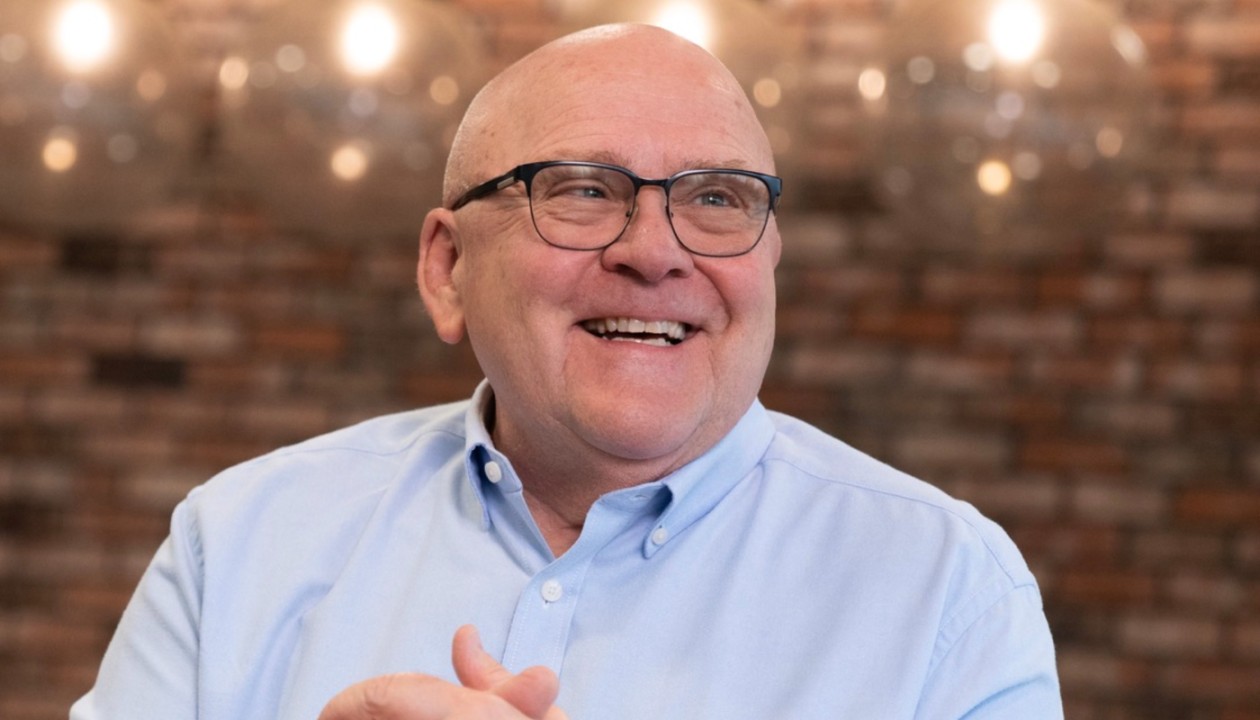
Garry Ridge
Garry Ridge is a purpose-driven founder, board member, advisor, author and educator with more than 35 years of global business experience. During his leadership at WD-40 Company, he built one of the world’s most trusted brands by creating a culture anchored in belonging, learning, and servant leadership.
As The Culture Coach and founder of The Learning Moment, Garry partners with leaders and organizations to build values-driven workplaces where people thrive and contribute to something greater. He serves on the boards of The Gorilla Glue Company and Eastridge Workforce Solutions and is a Marshall Goldsmith Certified Executive Coach.
A USA Today bestselling author, Garry wrote "Any Dumb-Ass Can Do It: Learning Moments from an Everyday CEO" and co-authored "Helping People Win at Work" with Ken Blanchard. He also contributed to Work is Love Made Visible by Marshall Goldsmith and Frances Hesselbein.
Garry holds a Master of Science in Executive Leadership from the University of San Diego, where he taught the course Culture at Work: Putting Principles into Practice in the MS Executive Leadership program. He was awarded an Honorary Doctor of Humane Letters from National University for his lifetime contribution to leadership and organizational culture.
His leadership has earned distinct recognition from Inc. Magazine in two separate features:
Named to the 2025 Top 50 Leadership & Management Experts
Featured among the World’s Top 10 CEOs
Garry believes great leadership is simple — but not easy. His philosophy is clear: when people feel safe, valued, and connected, they do their best work — and go home happy, strengthening families, communities, and the world.
Episode Transcript
This transcript has been generated by AI and may contain slight discrepancies from the audio or video recording.
Anita Grantham: Garry, I'm really grateful that you could fly here and spend time with us to teach the world about the powerful relationship between a CEO and a Head of People — or a CHRO, or whatever you want to call this position. Thank you for being here.
Garry Ridge: Oh, it's a pleasure. Thanks for inviting me along. It's great to see you.
Anita Grantham: It's great to see you too. I've been a huge fan of your work for years. I really admire you because you didn't start as CEO. You had 10 years at WD-40 before you came into the CEO seat. What did that teach you? What was the difference between being built there versus being brought in as a CEO from the outside?
Garry Ridge: Well, I think there were two things. Of those 10 years, I spent nearly six of them in my homeland, Australia. When I started with WD-40, I started as the managing director of the Asia Pacific subsidiary, which didn't exist — we had to build it up from scratch.
Those six years operating at a distance from headquarters really taught me a lot. Given our goal was eventually to take the blue and yellow can with the little red top to the world, I knew the barriers that came with distance. One of them was: how do you make decisions when you're 8,000 miles away? That was a really big learning for me.
When I moved to San Diego, I didn't move to be CEO. I was asked to move to head up our global expansion program. I'd done a lot of work in Asia Pacific, and it was exciting. One of my reflection learning moments in life is that great things happen when you disrupt yourself — and there's probably nothing more disruptive than moving a family 8,000 miles across the ocean to a country where people drive on the other side of the road.
Anita Grantham: Can you talk a little bit about who tapped you to move over? What was the process like from a people standpoint — deciding you were the right person for the next job? What was it like for your family to move, and what kind of people operation systems enabled that for you?
Garry Ridge: The person who actually employed me in Australia was the then-CEO, Jerry Schleif. Jerry used to fly down to Australia when I was actually working for the licensee of the brand there. So I'd had a few years of experience with WD-40.
In the mid-'80s, they were getting serious about taking the brand globally. They'd opened a subsidiary in the UK, one in Canada, and they wanted a base for Asia Pacific. I got to know Jerry, and one day I got a phone call: "G'day, Garry. This is Jerry. This is a confidential conversation. We're not going to renew the license for WD-40 with the licensee. We want to really invest and build the brand in Asia Pacific. How about joining us and helping us do that?"
My dad was an engineer, and I said to him at the time, "What do you think about me working for WD-40, Dad?" He said, "You can't go wrong with that stuff, son." So I guess the first rule in life is to really listen to what Dad says.
On July 4th, 1987, we opened WD-40 Company Australia, and on January 1st, 1988, we went operational. I spent most of my time not in Sydney — I was in China, Taiwan, Hong Kong, the Philippines, and all of the Asian markets as we were building up the distributor networks.
In 1994, I was having a conversation with Jerry and I said, "Hey, is there anything else you'd like me to do? What else can I help you with?" He said, "Funny you should ask. Do you want to move to the US?" I said, "To do what?" He said, "Why don't you come over here and help me take the brand globally? I don't have anyone in the organization who really has a passion to do that."
They'd opened a subsidiary in the UK, but it wasn't moving at the speed they wanted. So we packed up our toys and moved to San Diego. Three years later, Jerry retired.
For my sins, I was tapped on the shoulder and asked if I would like to be the CEO. The reason was that I really had a passion for global business and I truly believed we had great opportunities globally. That's how it happened.
Anita Grantham: So there are a few things I'm observing, and I want you to tell me if I'm tracking right. There was no HR person tapping you on the shoulder — it was a direct leader-to-team-member conversation about where you were going and where you wanted to go. You had crushed it in Asia Pacific from a business standpoint.
Garry Ridge: Yeah.
Anita Grantham: So you had done it with excellence. People ask me, "How do I get promoted?" And I say, "You crush your current job." You take real care of it, and then you earn the opportunity. It sounds like you did that. Did you know, three years before Jerry retired, that he was looking at you as a possible successor for the CEO role?
Garry Ridge: Not really. But interestingly, my dad gave me some other advice. He said, "Get in the game. Play your best game every game, and there's a chance you'll get picked on the A team." That was always my philosophy — get in and do your best, and there's a chance.
I wasn't a big promoter of myself. In fact, there were a couple of other people within the organization who were thought to be the successors for the CEO role. Why would a bloke from Australia who'd never been to Wall Street be tapped to be the CEO of a US public company? He doesn't really understand the US market because he's never worked in it. Why would any board of directors choose that person?
Everyone thought it would be someone who internally understood the biggest market. But the board, in their wisdom, saw that our growth was outside the US. They said, "It's going to take a lot to mess up the US market, but it's going to take a lot of focus to grow the global market."
Anita Grantham: So this is really interesting. When you're looking at skills and you have CEOs watching this who are looking for their successor, what advice would you give them?
Garry Ridge: The advice I would give them is: have you identified the right skill set for what the opportunity is for the company to grow? But more importantly — and this is where I come from in terms of what I believe is really important — do they understand that it's not about them?
Anita Grantham: How did that happen, though, Garry? In all the things I've read about you and the videos I've watched, you have come to a place of true service as a leader. When in your career did you figure that out?
Garry Ridge: In 1999. I was two years into being CEO of WD-40 Company — I was given the opportunity in 1997. I knew, with the help of the team we had, how to build a global strategy. What was always on my mind was how to build an organization where, no matter what time it was, anywhere in the world, people were excited and empowered to make decisions.
I learned that because of my time in Australia. When I was there, I had this distance and time zone challenge. I thought, "Wouldn't it be great if I had all the authority I needed to do whatever was necessary without having to wait for someone to wake up in San Diego?" I had a lot of authority, but I needed some sort of structure.
I was traveling on a Qantas 747 from Los Angeles to Sydney — 38,000 feet above the South Pacific Ocean at 2:00 AM, in mid-1999. As I do when I travel, I take things to read. I came across a quote attributed to the Dalai Lama: "Their purpose in life is to make people happy. If you can't make them happy, at least don't hurt them." I thought, "Wouldn't it be wonderful if you could build an organization like that?"
Then I read a quote from Aristotle, born in 384 BC: "Pleasure in the job puts perfection in the work." And I went, "Oh, duh." When I looked at all of the data out there, we weren't putting pleasure in jobs. Around 70% of people were going to work disengaged or actively disengaged.
So I thought, "We're pretty good at writing strategy, but how do you enable the strategy?" The answer I landed on was: the will of the people times strategy equals success. So how do you build the will of the people? I didn't know how to do it.
I got back to San Diego and was reading the local newspaper — the Union-Tribune — and I saw an article about a master's degree in leadership at the University of San Diego. It had been put together by Dr. Ken Blanchard, author of The One Minute Manager and a guru of servant leadership, who just had his 87th birthday last week.
I went to an information session where Ken was speaking, and he said, "Most leadership programs get people in the head. We've got to start getting people in the heart as well." I enrolled in the master's program. There I was — two years in as CEO of a US public company — and I went back to school.
I wanted to confirm what I thought I knew and learn what I didn't know. For the next two years, under the tutelage of Ken and many others, I learned the power of servant leadership. As CEO, I was able to put it into action immediately. People used to say, "He goes to school on Sunday and implements it on Monday." That was roughly right.
What worked, we did more of, and we built this engine of a high will of the people. The end result was 93% employee engagement, 98% of our people said they loved working at the company, and 97% globally said they trusted and respected their coach — which is what we called their manager.
Anita Grantham: You may know I hate the word "manager."
Garry Ridge: I do too. And our Head of HR — we didn't call it HR. It was Global Organizational Development.
Anita Grantham: That's what it is. That was my first title I chose for myself — organizational development (OD) — because I thought that is exactly what you're doing: you're developing an organization.
Garry Ridge: Exactly. So it was Global Organizational Development. We used to call it GOD — G-O-D. Not really. That was my dear friend Stan Seaforth, who I worked with for many years and still do. Stan and I do a lot of consulting together these days, helping organizations identify and clarify their purpose, define their values and what values really mean, and then determine the leadership behavior that needs to go in place.
I went back to school, and Ken and I became dear friends. I ended up sitting on Ken Blanchard's company board for 10 years. We wrote a book together called Helping People Win at Work, with the byline: "Don't mark my paper, help me get an A." Our job as a leader is not to grade people — it's to help them get As.
I loved that program so much that I created one within the company called the President's Path to Leadership. Over a 25-year period, we sent 30 people — fully paid — through that master's degree at USD. It became embedded in the organization. It was really powerful.
Anita Grantham: Amazing. Everyone watching is salivating, and I want to call something out. You didn't just have 94% positive engagement scores for a year — you had them for a decade. That's what I love about what you've done. You created a repeatable, durable pattern. It wasn't about one year; it was about a decade.
So take me back. You talked about going to get your master's with Ken and implementing it on Monday. When did you hire Stan as your Head of Organizational Development — your Head of People — and how did you know he was going to be your partner?
Garry Ridge: Stan was a consultant to WD-40 Company. He used to joke that he had the longest job interview of any type. He ran his own business — a firm called HRG Consulting — and he helped us with compensation and related areas. Then I engaged Stan as my coach.
Anita Grantham: So you called him when you were named CEO?
Garry Ridge: He was my coach when I was already CEO — probably pretty well into my role. I wanted a coach. I used to have Stan sit in on meetings and tell me how I was doing, and what I needed to change.
Anita Grantham: So what was it about Stan that made you reach out to him? What caught your attention and made you say, "I want him to give me feedback"?
Garry Ridge: He was a people-centered leader — there was no doubt about that. He understands the psychology of leadership. He has a degree in organizational psychology, which was very helpful. And he's just a really good person.
We were working together, and about 15 years ago we needed to bring in a new Head of Global Organizational Development. Stan was with me on a trip to London. We were doing some work together and were in the King's Arms pub, having a steak and ale pie and a pint of beer. I dropped it on him. One of my favorite things I was known for — if Garry says "what if," something's going on.
So I said, "Stan, what if you joined me and helped in this next season of our company to really embed what we believe in? Which is: it's all about the people." Stan had his own company, so he said, "Hmm." By the end of the second beer, I'd convinced him.
I told him, "I don't want a Head of — I want a business partner." Because the will of the people is really hard. Writing a strategy for an organization is not so hard, but it's the will of the people. And I say: culture equals values plus behavior times consistency.
I'd borrowed the first part of that from my friend Simon Sinek, who in his book said culture equals values plus behavior. I said to Simon, "Simon, you missed a word. It's consistency." You have to have values and behaviors, and you have to consistently act upon them, nurture them, and treat them well — because culture is not a microwavable event. It takes a Crockpot approach.
This is why it's so hard for CEOs. You can write a strategic plan and see what's working fairly quickly, and you can adapt. But with culture, there's no fairy dust. You've got to work at it. We didn't get to 93% overnight. It took a number of years to build the trust of the people and get there.
But once you do, you can have the best strategic plan in the world. Let's say some smart professor gives your strategic plan 70 out of 100. But if only 30% of your people are going to work every day and passionately executing against it, you're getting 30% of the value. If 80% are, you're getting 80% of the value. Well, duh.
Unfortunately, a lot of CEOs at public companies are asked only about the next 90 days. If you miss your quarter by a penny, Wall Street beats you up. I went through that. I said to Wall Street, "Don't follow us quarter to quarter, because you'll jump off a cliff." I've sat across from portfolio managers and said, "Don't buy our stock. You'll never be happy."
But we had some very large long-term investors who said, "We want to be here for the long haul." I said to them, "We want to build an enduring company that we'll be proud to hand on to others."
Those CEOs listening might ask, "That's all good — but what were the results?" We had a compounded annual growth rate of total shareholder return of 15% a year. We took the stock price from about 20-some dollars to 200. Market cap went from 300 million to 3.5 billion. We expanded to 176 countries around the world and seven-Xed revenue. But we only sell oil in a can, right?
No — we had an organization with a high will of the people and a reasonable strategy. The strategy was probably wrong and roughly right, and I understood that.
Anita Grantham: How do you blend the great thoughts of Simon Sinek — I'm a huge fan, but he's not an operator — with Ken Blanchard's principles? You took their ideas and operationalized them. How did you and Stan start that process to get to 94% engagement? What are some of the key processes you built?
Garry Ridge: Foundations. Number one: do you have a compelling purpose? I often say, imagine a place where you go to work every day and you make a contribution to something bigger than yourself. Why are we getting up every day? At WD-40, your product is not your purpose.
Anita Grantham: I love your purpose. Will you share it?
Garry Ridge: Our purpose was that we existed to create positive lasting memories by solving problems in factories, homes, and workshops around the world. We solved problems and created opportunities for the people who worked in the company and for those we served outside of it.
So number one: purpose. Number two: values. You need a hierarchical set of values that do two things — they protect people and they set people free. Each of our values had a written description underneath it explaining what that looked like.
Our first value was: we value doing the right thing. Our second was: we value creating positive lasting memories in all of our relationships. And our last value, number six, was: we value sustaining the company's economy.
Anita Grantham: I love this one. It's my favorite one I've never encountered before. Will you talk a little bit about how you operationalized that?
Garry Ridge: When we say that, we're saying that if we're protecting and growing the economy, all of the constituents benefit from that. It's not just about being profitable for its own sake — profit is the engine for growing the company's economy.
So everybody could look at that and say, "How did I help sustain the WD-40 economy today? By being better at what I do, by selling more product, by improving our margins, by being good people?" The wonderful thing about that is it helps you make great decisions.
I'll give you an example — it's a nearly-true story. I've changed it around a little to protect the innocent. It's a sunny day in San Diego, and someone walks into the supply chain and says, "Hi, I'm from ACME Chemical Company. I have an ingredient that we believe can increase your profitability by $4 million. You're going to be a hero today."
The person in our organization considers it and asks, "Is there anything I should know?" And the rep says, "Well, there's just one thing — but don't worry. It's not unethical, immoral, or illegal. You just have to put a little warning on your can that says, 'In the state of California, contents of this can is known to cause cancer.' It's called a Prop 65 warning. Don't worry about it — everybody does it."
And our person says, "I'm sorry. I can't take you up on your offer." The rep pushes back: "It's $4 million." Our person says, "I know. But I'm empowered because we have a hierarchical set of values. My empowerment comes from making decisions around those values. Our first value is we value doing the right thing. Our second is we value creating positive lasting memories in all of our relationships. Cancer does not create a positive lasting memory. I'm sorry, I can't take it."
The rep says, "You obviously can't make that decision. I need to speak to someone who can." And our person says, "You can talk to anyone you like in this organization, anywhere you want, and you're going to get exactly the same answer."
How does that person feel? Empowered — living the values, with a clear basis to act on them. That's a nearly-true story, but decisions like that were made. And one of the wonderful things we did was we called ourselves a tribe, not a team. "Tribe" was not related to any indigenous group — it goes back to the beginning of mankind. The reason I used it is that one of the keys of organizations is a place where you know and feel like you belong.
Anita Grantham: So how did you and Stan work to create the opportunity for this person to say no to that $4 million? What was the process you two built that scaled this ability — so that ownership wasn't just admired, but acted on?
Garry Ridge: We all acted on the values openly. We threw out the annual review process — I think it's a flawed approach — and replaced it with conversational reviews. We would formally sit down with our tribe members every 90 days. In that discussion, they would share how they had progressed against getting their A, because at the beginning of the year we had agreed together what an A looks like.
The second part of that conversation was our values. We asked everybody in the organization to share: how have you lived our values in the last 90 days? Give us real examples. We only had two measures — you either visit our values or you live our values.
As you can imagine, if you do that consistently over time, it becomes embedded in your behavior. Early on, we'd have lunch-and-learns where people would get together and talk about how they lived our values and what it brought to the organization. This is simple. It's not easy, and time is not your friend.
Anita Grantham: I want to talk about time not being your friend, but it is simple. We're now laden with charts, curves, distributions, high performers, and low performers. What would you say to the CEO and Head of People who are organizing that way?
Garry Ridge: Make it real to the people. Let's be real about whether we have an organization where people know and feel like they belong. Sure, you need measurements, but let's not overcomplicate this. Let's not dress it up in confusion just to look smart. We're dealing with people.
Do people know and feel like they belong? Do people know that the work they do matters and makes a difference, and are they being recognized for that? Do people feel safe? We got rid of the word "failure" and called them learning moments — because the number one responsibility of a leader is to be a learner and a teacher.
And finally: are we being coaches, not managers? Do our people wake up every day knowing that the person they're working alongside — their boss, if you will — has only one objective, which is to help them step into the better version of their personal self and help them win the game? If you have those things in place, you have an organization that's sustainable over time. But it takes time.
Anita Grantham: How do I know? Am I doing surveys?
Garry Ridge: Yes. We did the traditional employee opinion survey. I brought it in around the year 2000 because I didn't know what the state of our organization was. Let me be clear — the culture at WD-40 wasn't bad. It just wasn't a culture that was going to take us to our global position. It was a culture built for an insular, US-based company. So we had to maneuver and evolve it so we could go global.
Anita Grantham: Again, meeting your purpose.
Garry Ridge: Meeting our purpose.
Anita Grantham: You're aligning your people processes with the ability to be a global organization. So you brought in surveys. What were some of the other things you did to scale? Because I can hear people right now saying, "Well, Garry, how does that scale?"
Garry Ridge: Number one — we assigned the responsibility not to what people called Human Resources, but to the leaders themselves. To the coaches.
Anita Grantham: This is huge. We did another interview with someone from an organization like Ray Dalio's, and this is important. A lot of people think culture is HR's responsibility. I really want you to dive into what the responsibility of the leader actually is.
Garry Ridge: The responsibility of the leader is to lead in a way that builds the culture within the area they have been given responsibility to lead. When we did the employee opinion surveys, we could cut and dice them by country, by department — whatever we needed. We would take the results back to the leader and say, "This is what you and your people said. You own this. HR is here to support you and provide frameworks and tools, but I'm holding you accountable."
Anita Grantham: So you were the model.
Garry Ridge: Yeah. HR can't change the results.
Anita Grantham: You know, it's so interesting — being inside a public company, they don't fire HR if they don't make the number. So the leaders have to be where accountability lives.
Garry Ridge: Absolutely. They're the ones who are going to influence the leadership and drive the change. So we held them accountable. And we also built a wonderful internal leadership development program. Stan built it — he brought it from his previous company — and it was called Leadership Lab. It was a three-stage leadership development program open to anyone in the company.
There's very little leadership training out there. We promote someone into a role, hand them people to lead, and then don't help them understand the principles of leadership.
Anita Grantham: No. And we're also lacking leaders who will take true ownership for it. They want to offload it.
Garry Ridge: Absolutely. There were a number of things that developed in the organization over time, and consistency was key. We shared openly, and we built this culture around learning moments. A learning moment is a positive or negative outcome of any situation that needs to be openly and freely shared to benefit all people.
As the CEO, I also loved spending time in what I call the stinky locker room.
Anita Grantham: Oh, tell me about the stinky locker room.
Garry Ridge: I wasn't a sit-behind-the-desk kind of person. I was out there in the field. When I was in San Diego in my full-time role, most mornings you'd find me down in the open area as people were coming to work. I'd be greeting them, talking to them, dancing in the customer service area with the staff — because I couldn't do it without them.
I am the dean of dumbassery, and the three most important words I ever learned were "I don't know."
Anita Grantham: Yes.
Garry Ridge: So I had to show people — and that's when I created this character. This is Alec, or it could be Alice, the soul-sucking CEO of Fear Incorporated.
Anita Grantham: This is my favorite term of yours — soul-sucking CEO.
Garry Ridge: Alec or Alice has some attributes. Their ego eats their empathy, instead of their empathy eating their ego. They're a micromanager. They have to be in everything. They're always right. They have all the answers. They spend no time in the stinky locker room. They think they're corporate royalty — "I've spent my life climbing this corporate ladder. You won't find me in the cafeteria or the break room. Someone will bring coffee to my desk, if they can get through my locked door."
Now, I'm being extreme, I know. But when I'm speaking about culture and I describe this person, people in the audience do this — they nod. I give dolls away, and they end up on desks somewhere. But again, I think it's about making people aware. The fish rots from the head, and if we're not out there living the culture and being with the people —
You know, I once rode a horse into Times Square in a suit of armor. Why? Because I wanted to show I was vulnerable. That's what I did.
Anita Grantham: So what happens when you're doing all of this — running surveys, demonstrating accountability, sharing your failures and learning moments — and a leader on your team isn't demonstrating these principles?
Garry Ridge: You share them with a competitor. It's not that vicious, but — our real role was, I want people to be happy. If people aren't performing and they're not enjoying their work, they're not happy. So we would go through a process — because we had these ongoing discussions — of really coaching people along to the point where I could sit down and say, "Look, it's obvious to both of us, because we've spent time on this, that you're not happy in your role. So let's find a place for you to be happy. It may be another role within the organization. If you need to go somewhere else, we'll help you go there with respect and dignity."
One day, I got a call from the head of an outplacement firm. We had helped someone leave with respect and dignity, and as part of that we provided outplacement support. This person was in the break room, and the head of the firm overheard the conversation — this person was convincing someone else why WD-40 was a great place to work.
In reality, if you want to use hard words, we had let that person go. But we helped them along the way to realize they could be happy somewhere else. We treated them with respect and dignity.
Unless someone was behaving immorally or illegally — then there was no question. But one of the things I'm very proud of is that we never laid anybody off in my 25 years.
Back in 2008 and 2009, during the Great Financial Crisis, I said, "It's better that all of us suffer a little than a few of us suffer a lot. So let's get together and figure out what we need to do to prepare ourselves if this wave hits us." Fortunately, we didn't get hit that hard, and we didn't lay anybody off.
When I was doing my farewell tour at WD-40, I was in Europe and more than a dozen people said to me, "That was just a defining moment — because we trusted you."
In going through COVID, my mic-drop moment as a leader came in January 2021. We were nearly a year into COVID, and I was concerned that we might have been draining cultural equity, even though we'd pivoted and were doing a lot to keep people together — virtual comedians, virtual cooking classes, virtual happy hours. I wrote I don't know how many personal notes to people all around the world. We brought in my friend Chester Elton, who is all about gratitude, and we did sessions on gratitude. We reached out to people: "Hey, we know you're there. We can't touch you, but we know you're there."
In January 2021, I said, "Let's do a pulse survey and just see if we are where we think we are." We did the pulse survey, and the numbers came back strong — but one number went up. It was related to the question: "I am excited about my place and the company's future." And 97% of our people globally said they were excited about their place and the company's future.
I said, "Go back and check that. It can't be right." It was January 2021 — we didn't have any clear picture that COVID wasn't going to kill us all. So we went out and confirmed the number was right. I said, "Go find out why."
Short answer: when we asked people, they said, "I feel safe. If there's any place I want to be right now, I want to be here — because we are living our just cause." Our just cause was a group of people who came together to protect and care for each other. And I went: mic drop.
Anita Grantham: Because workplace is the new community. People aren't getting it from their neighborhoods or their religious affiliations — they're getting it from their organization. So our job, between the Head of People and the CEO, is much more dramatic in creating community than it's ever been before. Hence the tribe.
Garry Ridge: Right. That's why one of the chapters in my book is titled "Be a Place People Escape To, Not From." When we were going through COVID, there was talk about the Great Resignation. I wrote an article and said, "It's not the Great Resignation — it's the great escape." People were escaping places they hated going to in the first place, and their employers were trying to drag them back. If the culture was bad, why would you want to go back and be treated that way again?
Business has a responsibility to build a better world, and we can do that by building cultures where people go to work every day, make a contribution to something bigger than themselves, learn something new, and are protected and set free by a compelling set of values. They go home happy — because happy people build happy families. Happy families build happy communities. Happy communities build a happy world. And we need a happy world.
No wonder young people are shying away from business, when their parents sit around the kitchen table saying, "I hate my job." Those kids think, "I don't want that."
Anita Grantham: Let's talk a little bit about layoffs, because they're starting to build again — I'm seeing it on my LinkedIn feed. If I go to Ken Blanchard, I believe he would say it's our job to not over-hire, to manage our expenses so we can get through anything. How did you build a financial model — in partnership with your Head of People — to avoid layoffs? Because I feel like layoffs are actually the easy button.
Garry Ridge: I used to say, "Don't get out over the top of your skis." I ended up signing off on every new hire we brought in.
Anita Grantham: This is really important. Why did you do that?
Garry Ridge: Because we were responsible for them, and I didn't want us making careless decisions. If someone came to our organization, they were someone's husband, wife, brother, sister, significant other. They trusted us. I'll admit, I got a lot of negative feedback — "We don't have enough people." But we had enough to get the job done, and those who were there felt safe. Because we had such a high level of employee engagement, our output was so high.
I see businesses get on hiring sprees, and then things go bad. We had metrics — a gross margin target, an operating cost target, an EBITDA target — and we worked within those. We were very disciplined. When people said, "We need to invest more," I'd say, "Okay, but we need to protect our people first. Because without them, we're nothing."
Anita Grantham: And what role did Stan play in those metrics?
Garry Ridge: Stan was at the table. Any leader out there who doesn't have the Head of People sitting at the executive table is missing something critical. It's all about the will of the people. Stan was there advising, sharing points of view, and helping us build what we needed. He sat right next to the CFO at my leadership table, because he was as important as the CFO and the Head of our Trading Divisions — because culture was the absolute motivator and amplifier of everything we did.
Anita Grantham: Was Stan as proficient in metrics around margin and EBITDA as your CFO was?
Garry Ridge: Yeah. And the great thing about Stan is he didn't come out of HR.
Anita Grantham: This is a huge point. I read this about him. Share a little bit about Stan.
Garry Ridge: He was an engineer, a technical person, who then went on and got his degree in organizational psychology. And that's one of the things I made sure all of our OD people did. I said, "Get out in the marketplace and understand our business. You're not going to sit back there believing you know what's going on. Go on ride-alongs with our people. Go to China. Get alongside them. Have empathy for what they have to do and what they need. You don't do this sitting at a desk."
Anita Grantham: No. You're out with it — so you can have the real conversations.
Garry Ridge: That's getting your shoes dirty. That's getting in the stinky locker room.
Anita Grantham: So all the way through your time as a public company CEO, you were signing off on every new hire. To the question, "Garry, I thought you trusted me" — how do you respond?
Garry Ridge: I'm responsible for the lives of the people who come to work with us. That's my biggest responsibility. I knew I could make a decision today that would harm people — or help them. So I took that responsibility. And the other thing about me signing off is it forced our leaders to do their homework. You've got to make a clear case. And that matters, because I valued people deeply.
Anita Grantham: So what was the balance? You had a Leadership Academy, great benefits, all of these things. How would you make a case for ROI on programs — surveys, communications — relative to human headcount investments and protecting your people?
Garry Ridge: In any plan, you need data. Have measurements to benchmark against. Don't overcomplicate it — it can be simple. We needed something to measure against, and we had it. This wasn't cowboy stuff. It was simplified to a point that everyone understood.
We spent a lot of time talking about our people. I used to say to my leadership team, "Be under no misunderstanding: the only reason you exist is to help those you have the privilege to lead step into the best version of their personal self."
And I made a promise once. I said, "If we ever negatively impact someone's life because we've been too lazy in our role as leaders, I will make sure the highest person in the command chain pays that price." I only had to do it once.
We had someone let go, and I thought, "Why?" So I went to their immediate coach and said, "Please show me their development plan and their review process." There was a hesitation. "We don't have one." I said, "So we've let this person down."
I walked to the Vice President's office and said, "Why didn't you live up to what we promised our people?" I got some answer. I said, "You're not part of our team. You need to go somewhere else."
Anita Grantham: And you never had to do it again.
Garry Ridge: No.
Anita Grantham: That part — I've noticed — is so hard for many founders, Heads of People, and CEOs. You don't want to make the tough calls, and you wait too long — especially with your management and executive teams.
Garry Ridge: We protect our own comfort zone at the expense of other people's development. And the main reason those conversations become so uncomfortable is we haven't done the work at the beginning: making it crystal clear what you expect from me and what I expect from you.
In the book Ken Blanchard and I wrote, the first principle is: if we're going to help people get an A, we have to define what an A looks like. If an A walked in the room right now, what would it look like? If we don't do that, those discussions become very uneasy. The conversation I had was not hard precisely because the standard had been made very clear. We had collectively agreed on what it was. If you chose not to meet it, that means you didn't want to be here.
Anita Grantham: Yes. It's incredible. So Garry, in every one of these shows, we take a question from the last CEO and pass it forward. The question is: we have a purpose and a mission that's going to sustain a 10-year track. In times like today, where things are moving so quickly, would you go through learning moments more quickly — on a quarterly or semi-annual basis? And how do you think about learning moments relative to the mission when the world is moving so fast?
Garry Ridge: If you adopt the principles of learning moments, they happen on a daily basis. A learning moment is a living thing within the organization. In most organizations, people don't lie — they fake and they hide. The reason they fake and hide is fear. In an organization that is continually talking about learning and learning moments, they're happening every day, and you pivot around them as you should.
One of the things I dislike is the 90-day performance framework. We used to have an annual plan and a five-year vision, but we would be adjusting constantly. You wake up one morning and you can't do business in Russia anymore. Oil prices go to $150 a barrel. You've got to adapt. But in doing that, you take the learning moment, apply your values, make the decision, and move on.
Anita Grantham: My teams would always say, "Do you have anything for me at the 90-day mark?" And I said, "If I had something for you, I would've called you after it happened. I use a daily and weekly one-on-one cadence. Anything immediate, you can count on me to call you. Anything that isn't, we'll work through in our weekly one-on-ones." And my number one question was always: "What did you learn after that board meeting? What did you learn after that product launch?"
Garry Ridge: Interesting you mention board meetings. I was known for having a broad audience at our board meetings. We'd handle the perfunctory items in a smaller group, but then I'd invite people in to present. My daughter, Kate, is a dance teacher in Australia, and she taught me a lesson years ago. She said, "Dad, you never put anyone on Broadway until you've watched them dance off Broadway." I used to use board meetings a bit like off-Broadway. I wanted to see people dance, and then decide if they could move on to Broadway.
But to come back to the question — if you have a continual learning environment, these moments are popping up all the time, and you decide what you're going to pivot on and what you're not. The other thing we need to be very careful of is making finite decisions in times of uncertainty. That was my learning moment around COVID. Companies and leaders were making finite decisions in times of extreme uncertainty. The word "maybe" is okay. And I think the best leaders are those most comfortable with uncertainty.
Anita Grantham: Culture is made in uncertain times, in difficult times. It's easy to have great culture in good times.
Garry Ridge: Absolutely.
Anita Grantham: Well, our closing question: do you have a culture crush — someone you admire that you haven't spoken about yet?
Garry Ridge: I've been very fortunate to be exposed to some wonderful people. When I say the three most influential, it's the Dalai Lama, Aristotle, and Ken Blanchard. And Ken says, "Well, I'm in good company, aren't I?" But I've also worked alongside people like Simon Sinek and Marshall Goldsmith.
I've known Marshall for years. I was teaching at USD for 16 years — I went back as an adjunct professor to the very master's program I had attended. I used Marshall's work, What Got You Here Won't Get You There, and he came in every year as a guest presenter. We became good friends.
I don't really have a single culture crush, but I want to keep hearing what people are learning. That's why I do what I do now. This is my legacy. I owe the world this because I want the world to be a happier place, and I can't do massive things — but I can do a lot of little things. That's why I wrote the book.
I must tell you: the word A-S-S in the book does not refer to anybody's posterior. It refers to a donkey. And if you think about the attributes of a donkey, they're very aligned with leadership. Donkeys are reliable, steady, carry great loads, and will protect you. They'll go uphill. They're there when you need them. And really, that's what a leader is all about. It's not about showing off. It's about carrying the load and getting people to where they need to go. That's what leadership is about.
Anita Grantham: I love that. I've seen you say in videos that a lot of times people say, "I want to be a leader." And you ask them, why? You become responsible for that person, their family, their community. Why do you want that responsibility?
Garry Ridge: Because you're going to make a difference in the world. We've got to do that. The world's not in great shape right now.
Anita Grantham: Right. We need more great leaders.
Garry Ridge: Yep.
Anita Grantham: We do. What question would you like to ask our next guest?
Garry Ridge: What are they doing to create a culture where people actually want to go to work?
Anita Grantham: I love that. What are you doing to create a culture where people actually want to go to work?
Garry Ridge: Yeah.
Anita Grantham: Well, Garry, this has been an honor and a pleasure. I've learned so much. Thank you — you could be anywhere in the world right now, and you're here with us. We're grateful for your contribution to making the world a better place.
Garry Ridge: Thank you for what you do, because if there weren't platforms like this to talk about it, it would all go silent. So you're the most important person in this room right now.
Anita Grantham: You're very kind. Thank you.
Feature Story

Discover how seven HR trends predicted for 2026 are playing out halfway through the year, including AI recruiting, upskilling, and I&D. Gain executive insights.
Enjoy On Your Favorite App
Feature Stories
As part of SHRM's commitment to providing cutting-edge resources, get additional perspective and more insights in content curated from SHRM and around the web.

Deciding to openly share compensation information across your workplace requires careful planning, stakeholder buy-in, and a commitment to ongoing communication.

Learn how inclusive spirituality initiatives in workplace wellness programs can reduce stress, boost resilience, and foster connections among employees.

Discover actionable strategies to foster trust, improve communication, and strengthen relationships with team members by avoiding common leadership pitfalls.