- Video
- Audio Only
The talent gap is widening, and organizations are struggling to keep up. Emily Dickens, SHRM’s Chief Administrative Officer, joins host Nicole Belyna, SHRM-SCP, to explore the driving forces behind workforce shortages and the growing skills mismatch. They discuss how skills-first hiring, upskilling, and tapping into untapped talent pools can help HR professionals build a future-ready workforce.
Related to this Episode
2025 Talent Trends
The 2025 Talent Trends report explores HR’s role in addressing recruiting challenges and highlights the strategies organizations are using to fill jobs, including upskilling and reskilling existing workers, using AI in the recruitment process, and relying on apprenticeship, internship, and mentoring programs.
Real change starts with real talk. And every Friday, our Honest HR podcast is the top story in SHRM's HR Daily newsletter. Subscribe now so you never miss an episode! Plus, get daily breaking news, feature articles, the latest research, and more.
News + Insights

This toolkit is designed to help you solve your talent acquisition issues. Focus on the skills and training required for each role, rather than simply focusing on whether or not a candidate has a traditional four-year degree.

SHRM experts show how the shift to a skills-first approach to hiring and talent development helps organizations align workforce capabilities with business needs.

Explore how prioritizing skills over degrees expands talent pools, strengthens hiring outcomes, and supports workforce growth through upskilling.

Podcast Episode Guest
-
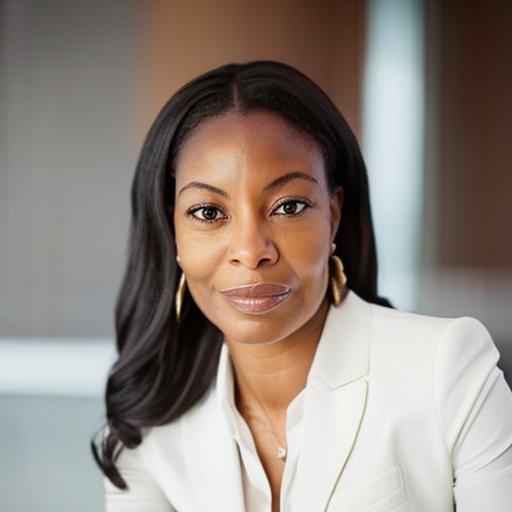
Emily M. Dickens, J.D.
Emily M. Dickens is Chief Administrative Officer for SHRM. An executive team member, Dickens is responsible for implementing the CEO's vision, corporate communications, corporate governance, global policy, government affairs, and the organization's real property.
Episode Transcript
This transcript has been generated by AI and may contain slight discrepancies from the audio or video recording.
Nicole Belyna: The resumes look strong. The job postings are live, and the roles are critical, and yet the positions stay open. Across industries, organizations are facing a growing reality. The skills they need simply aren't lining up with the talent available. Welcome to Honest HR, where we turn real issues facing today's HR departments into honest conversations with actionable insights. I'm your host, Nicole Belyna. Let's get honest.
Today we're diving into one of SHRM's top five workplace policy issues for 2026: the talent gap and what HR leaders can actually do about it. We'll unpack what's truly driving this unprecedented skill shortage, how skills-first hiring is reshaping traditional recruiting models, and why upskilling, reskilling, and tapping into underutilized talent pools may be the key to building a future-ready workforce.
Joining us is Emily Dickens, SHRM's own Chief Administrative Officer. Thank you for joining us on Honest HR, Emily.
Emily Dickens: Thank you. It's my first time on Honest HR.
Nicole Belyna: I know. I'm so excited to have you.
Emily Dickens: I'm happy to be here. And here's my first disclaimer: I'm not an HR professional. I get to play one on TV sometimes, but I tell people this because you're gonna get notes from people on LinkedIn and they're like, "Oh, I wanna talk about a career in HR," and I'm like, "Oh, I can talk about being an executive who's pivoted from one industry to the next." I can tell you everything you need to know about HR policy, but I absolutely respect the work that HR professionals do every day. It's a privilege to be their voice on Capitol Hill and in our state capitals.
Nicole Belyna: Yeah. Well, you're a tremendous inspiration, and as you pointed out, you are a tremendous voice for HR. So thank you.
Emily Dickens: Thank you.
Nicole Belyna: Yeah. All right, so what you got for me today? You ready to dig in?
Emily Dickens: Yes.
Nicole Belyna: Okay, good. Well, we'll start with some SHRM research. SHRM research shows that nearly 70% of organizations struggle to fill positions requiring new skills. Is this truly a labor shortage or a skills expectation mismatch employers haven't fully reckoned with?
Emily Dickens: So here we go. We are not... It is a labor shortage, but it isn't a labor shortage like we've seen before. It's not simple because simultaneously you're seeing a redesign of how work looks. And it's like we are on two roads that we have to move on at the same time, so we have to continue to hire the talent we need today, but tomorrow is coming much sooner and we've gotta figure out how we redesign the job descriptions.
We talked a little bit about that, and you've seen by us encouraging people to look beyond degrees, and that's just one minor thing. But there are tons of other things. When we think about leading with skills, and I know we'll talk about that later, but think of this as a full rework and redesign of what the world of work looks like.
Jobs aren't just open. They're evolving. So even between the time you post the job description and the time the applicants submit, that role has evolved for some reason. When work is changing faster than the existing pathways that we know, pipelines of how we get people into work, then we also know that a mismatch is inevitable. And that's part of the reason why we have the gap we have. We talk about this with our E-Square initiative. The jobs are not matching the talent that's out there.
Nicole Belyna: Right. So given your expertise in government affairs, where do you see the biggest disconnect between what lawmakers think employers need and what the labor market is actually demanding?
Emily Dickens: So I think the biggest disconnect is we don't do a good enough job of telling lawmakers in a timely fashion what the world of work looks like today. You remember lawmakers at some point had a job somewhere, and imagine getting a lawmaker who worked in higher education talking to a CHRO or a VP of HR who works in higher education today. Their hiring practice and process looks a lot different and the needs of that school are different.
If you think about other industries too, we have doctors and lawyers there and think about how they all had to pivot from their career of choice now to a career, another career of choice for them being an elected official. Most of them run their own offices because there's not an HR department for each office.
What I would start with is imagine your first day as a MEMBER of Congress and you're told you're responsible for hiring, retention, firing. How do you find the people you need today in your office? I think you level set that with them. But the biggest issue is we don't talk to them like that. We don't think of them as that way.
I think until we figure out a way to get them to understand that each new policy, each new idea won't work. It may work right now, but again, as I said earlier, tomorrow is here closer than we think. It'll be outdated. So we want them to think about flexibility and agility in our workplace laws and compliance policy, so that we're able to meet the needs of our industry and our offices and not have to keep going back to them asking them to change the law.
Nicole Belyna: Yeah, yeah. So, just being a little quicker, a little more agile.
Emily Dickens: They do, but we gotta be more engaged. You know, 340,000 members and we talk about our A-Team. One of the things we did last year was we changed the A-Team from just being voluntary to anytime someone becomes a MEMBER of SHRM, you are a MEMBER of SHRM's A-Team. And why do we do that? Not to put more emails in your inbox. We did that because your voice matters.
Now with the way we can set up our digital systems and through our digital transformation, I've got your address and I know which house district you are in, and I can say, "Look, your MEMBER of Congress is thinking about this. He needs to hear your voice, not mine."
Nicole Belyna: Yeah, that's really, really cool to be able to...
Emily Dickens: Oh, I'm so excited about it. Right, because I had, this was labor intensive and so I had great people like Sean McIntosh and others who would find this information out. But now that we can use technology for good, right? It's our little superpower now. We know we can engage you when we need you.
I think that's important for you to know that your voice is just gonna carry so much more weight than someone like me who represents... my job to do this. But for you to be able to tell your MEMBER of Congress this business in their district will be impacted A, B, C in this way, it's going to make much more of a difference.
Nicole Belyna: Yeah, I love that. So as organizations look for ways to close capability gaps, skills-first hiring is often cited as a solution. Do you see it as sufficient on its own or as part of a broader enterprise transformation?
Emily Dickens: Skills-first is a tool, but you gotta do the whole thing. When you're thinking about the full transformation, it's just one of the things we have to think about. If you are hiring for skills, which you only promote for credentials, then what's the point? We've gotta really think about how we can assess for those skills, hire for those skills, and then promote the continued development of those skills. That's a full scale.
We're trying to convince the government that this is the way to go and think about it. I was telling someone the other day, back during the first Trump administration, this was one of the issues that came up in the American Workforce Policy Advisory Board. Skills-first hiring gave people a shot, but one of the things this country's not done a quality job of is figuring out how you translate those skills to the world of work.
So take the military, for example. The SHRM Foundation (the Foundation) has a military initiative we work on, but I remember when I worked in Fayetteville, so five miles from Fort Bragg where you had a huge military force. The state of North Carolina for years was trying to figure out how do you translate a military resume into a regular workforce resume? Millions of dollars in technology and all sorts of things, and maybe they figured it out better than others, but it's not a wholesale because we are dealing with it here.
We've gotta figure out a better way to translate skills that people have acquired and received to what we need in the world of work. And so we can't even talk about skills-first and enjoy it to its fullness because we're still trying to figure out how to translate it. There's lots of new technology there, but we need to just sit down and I say to your teams, when you're doing retreats, it's a good time to sit down with a few of your more popular job descriptions.
For us that would be like our specialists and senior specialists and say in general, before you know the department you're going to, what are the skills we're seeing show up? I will also say, when we talk about skills-first, we're always thinking about technical skills. Let's make sure we're incorporating what used to be power skills, which we now call power skills.
Because someone with power skills, that means someone who's a collaborator or team player. Someone who can communicate well in writing and verbally. Someone who has good judgment and critical thinking skills. Those types of things are critical and we can take that person and train them to do anything, but we are not spending enough time on the power skills, and we're missing that from the discussions of skills-first.
Nicole Belyna: Yeah. So from an operational standpoint, what shifts in workforce planning, performance management, internal mobility are required to make a skills-first model sustainable?
Emily Dickens: Stop planning for people, plan for capabilities. I would say that's one of the big things I keep hearing. It's one of the things when you're on the hill trying to talk to a MEMBER of Congress or you're in a state legislature, you got two and two. Remember Chuck Woolery used to say like two and two. So I always think I got two and two to say, and so I think of these soundbites.
When you think about it, not for people, plan for capabilities. Next one is, without manager clarity and internal mobility opportunities, your skills-first initiative is going to collapse. So here's the thing. I've hired you for skills. HR has helped that they got the skills. But if my managers, my people managers don't understand how to apply those skills and at what level your skills need to be for promotion and mobility within the organization, it fails.
So this is more than just a new technique or a new way to do things. You've gotta have a full circle plan for that. And mobility has to be built into your infrastructure. So what we're learning about people is, fortunately and unfortunately, they wanna know, if I get to this level in this particular skill set, does that qualify me to be a manager or a senior specialist or whatever it is?
Now it's hard, right? Because if you're a flat organization, like we are, I just had this discussion with a candidate today because he said, "Oh, I wanna be a SVP one day." I said, "Well you done jumped from manager all the way to SVP, just that quick." And I said, "But you gotta understand in a flat organization or a small organization, the opportunity to have the Title Fairy come in and sprinkle the dust of everyone going from director to senior director to, that's not always an opportunity."
What you gotta think about is with those skills, where could you move in the organization where you have more responsibility, where you can be a leader or a team leader, a manager, a supervisor. Think about all of those pieces of the pie too. And it's not just about the title, but when people can see it. We talk about this a lot. We talk about lateral moves. We're talking about diagonal moves. When people can see that there's movement, then I think that's helpful.
So find ways for people to move once they've acquired additional skills. And here's the other thing, make sure that you're part of the plan to get them those additional skills. I'm really big on accountability and I think as an individual, you don't stop gaining skills yourself. You have a responsibility to make sure that you reskill and upskill. As an employer, we know that that investment is there and it's important, and we know the federal government is going to be helping some companies invest in their employees by this particular training.
Nicole Belyna: We'll be back in just a few moments. Stay with us.
Advertisement: Waiting for your career to take off? Well, don't. With SHRM certification, you earn more, get promoted faster, and lead with confidence. This is your sign to act. The best workplaces are led by SHRM-certified experts. If it's a work thing, it's a SHRM thing.
Alex (Producer): Hey, Honest HR listeners, I'm Alex, the producer, working behind the scenes to bring you every episode you love tuning into. We've got big news to share. How would you like to be behind the scenes too? Honest HR is hosting several live studio audience recordings at Talent 2026 in Dallas, April 19th until the 22nd. This is your chance to see the magic happen in real time. Connect with fellow HR pros and be part of the conversation that's shaping the future of work. Click the link above or visit SHRM.org/talent26-podcasts to reserve your spot today. We can't wait to see you there.
Nicole Belyna: What's the biggest mistake leaders make when they talk about upskilling and why does it fail in practice?
Emily Dickens: So I'm gonna say again when I said this is an accountability for me, upskilling and reskilling is... it's really nice to say, "Oh, we wanna upskill and reskill." What the employee needs to understand that nine times out of 10 means they're thinking of upskilling and reskilling you for a certain job. And we just said, we're going to leave job planning behind and we're gonna talk about capabilities.
So the employer needs to figure out what are the general capabilities my people have to have and how do I get them that through their reskilling, upskilling. And almost the technical things are secondary to those. And then once you get them in the spot, and this is what their to-do list is, and then you're like, "Okay, here are the technical things you need."
But for individuals, and I have to say this, I say this to people who are interviewing with us and people who say, "Oh, I want you to mentor," and I'm, you know, me, I don't do the active mentorship, but I do the, you know, let's do a call and this. You have to invest in yourself.
So I've done speeches where I said to the women in the room, and there's some beautiful Gucci bags in here, and the cost of that bag, you could have gotten some amazing personal development training that you are responsible for. And once you get it, you know, God bless the child that's got their own. Like once you own it and you did it, there's a certain feeling of accomplishment for you where your passions and your interests live can ultimately someday turn into interests that are important to your employer.
But today that employer may not see the value of investing in it, but you've got to invest in you. So this is a two-way street as we go forward with skills, that there is gonna be this expectation that employees do invest in themselves, but there's still the expectation that employers will be spending more time and more resources, investing in people to retain them and to adapt to changes in the workforce.
But the big issue is you're focusing on the capabilities and not the particular jobs.
Nicole Belyna: Yeah, and I think it goes back to what we talked about earlier, which is looking at things in a much bigger picture mindset. Not just in the moment, not just that one person, that one job.
Emily Dickens: And not even just for the organization. It starts for me now as I think about when I'm hiring people. It starts when I see the resume. Outside of the role I'm looking for, what else could this person possibly do at SHRM two or three years, or heck, six months down the line?
I talked to a woman today, a colleague of ours who is just starting two years with us. She came in in one role. She's had three roles and she's now a VP. And she probably never envisioned that in this amount of time, but the pace of change on how we've been focusing on digital transformation and centricity required us to move faster. She came in the door with talents that were unrelated to the job that she was doing a month ago, but are related to the job she'll be doing now.
So you gotta just look, you're not looking for that job. You're looking for someone that's capable for doing a myriad of roles within the organization.
Nicole Belyna: Yeah. And I love what you said about looking, when you look at somebody's resume, you don't think about the job that they're interviewing for. You think about what else they can do. I do the same thing.
Emily Dickens: Yeah. Well that makes you feel good because you're the actual HR professional, so I'm like, "Okay, good check. I'm doing that."
Nicole Belyna: Well, but you have a great eye for talent, so yeah. I'm trying, I'm trying. But yeah, I always try to imagine people's potential and that really is kind of the trick, right? Is looking beyond who's standing in front of you today and the potential of the person and their capabilities and the future of the organization.
Emily Dickens: And isn't that how humans are? I think about it. People keep saying, you know, when you look for your significant other, you're looking at them today, but you're looking at their potential. Can they keep a job? Will they make a good parent? I think you take, that's a natural thing for us, and I think you just gotta bring that naturalist to it and think about the company as a whole and don't be selfish because there's great talent.
You know, I just lost some great talent. I recruited this young man two years ago, Johnny Solo. But not really, but he's so good. But there was something I saw in him that I thought he'd be good for the organization. The other thing I said is, look for people who can teach you things. As a people manager, I say, so you don't know everything. My father used to remind my mother that all the time and so in the house we used to joke like, "You don't know everything, Alice," like, that was his thing.
But it's so realistic and so I love meeting someone and looking at a resume of someone who has a skill that I don't have. Even if they're gonna be my direct report, I know I'm going to learn something from them. And I think if you even are more open, then you just never know what type of talent you're bringing inside.
Nicole Belyna: Yep. Yeah. I always look at, you know, you were saying earlier that you look at the organization in org charts. I do. And I've always thought about it as a Tetris. You're putting these pieces together and they're always moving. I love that. And you're trying to put people together.
Emily Dickens: So you are one of my favorite games. I hate that. Like I used to have like my own little personal touch.
Nicole Belyna: All right. So with AI-driven workforce transformation accelerating, what strategies should organizations prioritize to address the growing need for reskilling and upskilling?
Emily Dickens: So, first of all, I think I'm so proud of how we manage the introduction of AI to our workforce here. So if you'll recall, November or December of a particular year, we were at an event, our CEO Academy, and a professor from Wharton gave a speech and said, "Stop hiding from AI and open it up to your people. Let them try it. There's no fear here."
We came back and we offered to every MEMBER of this staff we would pay for a subscription to ChatGPT. Subsequently, we had our transformation team working on whether we could have our own GPT because we understood the importance of being able to control our content and our information.
The number one thing is not to run. This is like any other skill, not to run from it. And you know, our AI plus HI is the ROI, and we say this. We told people, you're going to not lose a job to the technology. You're gonna lose your job to somebody who knows how to leverage that technology to do your job.
I think here and in other places, it's important to get people to figure out how this technology can help them be more efficient in their roles, more efficient for the company's resources, and how it allows you to think bigger. So what I said to someone the other day, I was doing, I do this briefing quarterly and I have to combine seven or eight reports into one briefing so that it's one voice.
I would spend days because of course I couldn't spend the whole day. I got other stuff to do. But it would be multiple days. I'd have to plot aside time for me to pull this together. With AI as a tool, I could then a couple of months ago, feed all seven in there. I still gotta edit, but it's good.
This time when I did it, I created a prompt upfront, shared that prompt with the people who were going to be submitting the report. So they did their report based on that prompt. Then I fed that prompt and their reports in there, and it cut down time. My brain had to expand to think beyond, "Oh, just attach these documents and spit it out." My brain responded and expanded to think, "Let me do it backwards. Identify a prompt that could get me what I want. Have the people write their reports to the prompt and then feed it back in."
Our brains are going to get bigger. I believe this tool helps us expand and other tools help expand your thinking. We already don't use enough of our brain anyway. People always say, we don't. We use a very small percentage of our brains. So this is an opportunity for us to expand our brains and expand the brains of the people who work for us so that those who are working for us are thinking bigger than we could have ever imagined.
So while there are concerns about using AI with identifying of course talent and things of that nature, you still need the AI. You're not going to use that automated employment tool and not look at what was spit out and say, "This isn't," and not add your own personal judgment to it as an HR professional.
It is important to get people comfortable with this tool, and I know, but depending on the industry it does, it's gonna be different, but give them the opportunity to experience it and figure out how they can use those brains of theirs to leverage the work they do daily.
Nicole Belyna: Yeah. So SHRM emphasizes the importance of recruiting untapped talent, such as veterans, older workers, and individuals with criminal histories. What are some best practices for organizations to effectively engage and retain these groups?
Emily Dickens: You gotta go to the groups. So I was talking to somebody about this today. You can't keep waiting for people to come to you and say, "Oh, we're open to hiring" and we don't go. We have the commission, SHRM's a MEMBER of the commission on disability employment. We're a co-founder of this group and the whole goal was to bring to the table organizations who hire people with disabilities and get around that table, talk about it, but don't just talk about it. My husband says, "Be about it."
You get around the table and you say, "I'm hiring and I hired this person. Where'd you get them from?" Because now I know your pipeline and I can do that. That's number one. Formerly incarcerated through the Foundation. We're working with organizations like Jump and others who are good at this and figuring out how we can get great at it.
And then the other thing is you gotta prepare your culture in your organization. So I used to say, imagine you're an employee in this organization. You like the person that the new person's been working beside you, but you know how social media is now. You happen to mention their name. Your kid goes online and they look it up and they're like, "Oh, this person went to jail for X. Here's the trial transcript."
Then you go to work and you're treating this person differently and you're kind of mad at your employer because you're like, "You didn't tell me I was sitting next to this person." What the employer has to do is be very clear and transparent and say, "This is a place that welcomes second chances. I gave you a second chance when you messed that report up the other day."
And so we embrace second chances, all types of second chances, which means that we are going to hire people who may have had interaction with the criminal justice system. And so don't be surprised if maybe you find out that the person working beside you may have been engaged in that manner. We've gotta be transparent from the beginning, and then we've gotta work with organizations.
So with that, bosses should also say, "I need to work with the local group that is working with the formerly incarcerated." So you can't wait for people to come to you that you've gotta go to them. Sit on their boards. Like one of the things we don't think about local boards, sit on the local boards, get to know it. If you're going to expose your company to this, you wanna make the environment so welcoming that they thrive here and it becomes a place that people, that that pipeline just kind of is fed continuously by good word of mouth experience. It's just simply part of your community.
Nicole Belyna: Yeah. What barriers prevent organizations from fully accessing underutilized talent pools, and what must change operationally to unlock that potential?
Emily Dickens: So I think I talked a little bit about that, the last question. We have to all acknowledge that we all have our own inherent bias. And we can't see the possible because of our bias. And it just, it's a human thing. So once you acknowledge that, you gotta be able to see the impossible. And when you do see the impossible, then your mindset will change.
I'll give this example of how we co-source our customer care center. It used to be internal and we weren't serving our members well because it wasn't a 24-hour center. And we have members all over the world. 180 countries. So we co-source it to a company that finds people all over the world. So our phone is always answered.
After the first year there was, we heard about an employee who was amazing. He was a top person in terms of meeting needs. People always had things. And so of course they said, "Do you and Johnny wanna meet him virtually?" Of course we do. So we go on this virtual call, you know what happens? This gentleman who is our top customer care professional is quadriplegic, which we would never have known.
So again, it's impossible because I wouldn't have thought about that when I thought about the top customer care person. He before that job, he was pretty much being cared for and supported by his family, and what he talked about was the dignity of work. I can't unsee that, which tells me that I can think the impossible.
So no matter what someone is dealing with or going through that is different than what we think is normal, there is an opportunity for them to experience the dignity of work. And it's our responsibility to work hard to see the impossible. And I think if we try to do that, we can give an opportunity to so many people who right now just want to work.
Nicole Belyna: Yeah. Yep. I love that. So looking ahead to 2026 and beyond, what will separate organizations that take a strategic enterprise-level approach to talent acquisition and workforce development from those that fall behind?
Emily Dickens: I thought about this because I'm so competitive, you know, it's in my top 10. Winners. The winners will run talent like a system, not a series of transactions. This is a continuous system. We joke here, we say everybody's a recruiter. And I feel like if I don't find, it's so rare where I don't find somebody that I'm like, "Nicole, this could be the person for my role."
Because I feel like I should be out there. Everyone should know that you should always be looking for talent. Always be trying to identify skills. So when everything we do every day, even if you keep your own skills list, I'm gonna start keeping a skills list in the back of my notebook I carry. What skills did I use today? I love that because how can I say what the skills are? And we're saying skills like it's just this group of things. Let's talk about what's in that group.
So we should all be more intentional about this. So, no, this is not a series of transaction. You want to put together a cohesive system of talent, recruitment and engagement in a manner that will serve you today and tomorrow. So this is big picture for you. The advantage isn't hiring harder, it's building smarter pathways.
So again, what are the things we could do when we think about pathways to getting untapped talent pools? It is how simple is it to get involved in your local nonprofits related to people who are formerly incarcerated, who are living with disabilities, older workers. You know, think about the organizations. There used to be a nonprofit group because I was at AmeriCorps VISTA and there's like a version of that for older workers who volunteered their time. They'd love to get paid. Now, they're volunteering, but I'm sure now with the price of eggs and everything else, they wanna get paid.
Figure out how you get engaged in those groups in the community. Your executive team, one of the things we talk about is your executive team should be serving on boards and things like that, that are local where you can meet these groups and get them into your pathways. And then I think when you think about your strategy is focused on skills alignment as opposed to anything else.
This will separate the people who are just doing the old school and building group of people from the people who are really like trying to chase talent. I want people to think that we're chasing the best talent, even when I don't have a job to offer them. Because I'm still gonna have that pipeline and I can't tell you, somebody who, oh heck, I've got a really great senior director. When she did the initial outreach to me, we didn't have a job available for her, but I kept her in mind and when we did and I made the call, she was ready and we were ready.
So just this is a constant, you're constantly chasing the next win, and that win is bringing in this talent with the capability and the skills that are gonna help you be a great employer and a great organization going forward.
Nicole Belyna: Yeah. Yeah. Great. Well, Emily, thank you so much for sharing your insights with us today. It was such a pleasure to have you with us.
Emily Dickens: It's been a privilege. I'm glad I finally got on Honest HR.
Nicole Belyna: I know. Thank you so much. Well, that's gonna do it for this week's episode of Honest HR. We will catch you next time.
Nicole Belyna: Hello, friends. We hope this week's episode gave you the candid tips and insights you need to keep growing and thriving in your career. Honest HR is part of HR Daily, the content series from SHRM that delivers a daily newsletter directly to your inbox filled with all the latest HR news and research. Sign up at SHRM.org/HRdaily. Plus, follow SHRM on social media for even more clips and stories like share and add to the comments because real change starts with real talk.
SHRM.
This podcast is approved for 0.5 professional development credits (PDCs), also known as PDCs towards SHRM-CP and SHRM-SCP recertification. Enter the following PDC activity ID in your SHRM activity portal to log your credit: 27JUY3K. Again, the PDC code is 27JUY3K. This code expires April 1st, 2027.
Feature Story

Learn how HR leaders can close the skills gap by building a sustainable learning culture to drive engagement, retention, and business impact.
Enjoy On Your Favorite App
More Feature Stories from HR Daily

New legislation signed by President Trump might boost more workplace adoption of employee stock ownership plans.

Discover the latest AI news, including the percentage of tracked workforce reduction due to AI and a new dashboard tracking AI’s impact on family wages by state.

A federal judge declined to block the president’s I&D restrictions on government contractors but clarified that the order does not prohibit lawful I&D programs.