- Video
- Audio Only
Hiring can fill immediate skills gaps, but developing talent builds for the future. SHRM26 speakers Amy Jauman, HR director for the DNA Doe Project, and Amber Watts, chief everboarding officer at Radical GrowthWorks, explore how HR professionals can balance talent acquisition and employee development — and build a stronger talent strategy in the process. They discuss when to hire versus develop, what metrics can help leaders find the right balance, and how to make employee growth a strategic investment.
Related to this Episode
SHRM Linkage Learning Institute
Ready to Develop Leaders Who Drive Results? Today's leaders must navigate complexity, make high-stakes decisions, and drive performance in environments defined by constant change.
SHRM Talent Acquisition Specialty Credential
Talent acquisition is a vital function that affects an organization’s ability to succeed in today’s competitive job market. It goes beyond simply filling open positions — it involves identifying, attracting, and retaining the right talent to drive strategic goals and foster long-term growth.
Real change starts with real talk. Subscribe now so you never miss an episode! Plus, get daily breaking news, feature articles, the latest research, and more.
News + Insights

SHRM26 speaker Tim Sackett explains where AI delivers recruiting ROI today and why talent teams must rethink hiring for an agent-driven future.

Build effective employee development and training programs that close skills gaps, retain talent, and align with organizational goals. Get practical resources and tips.

7 key steps to build effective employee training programs that align with business goals, boost engagement, and drive results.

Discover how leaders are coordinating L&D programs to meet today's high speed learning environment by instilling accountability and measuring the right KPIs.
Podcast Episode Guest
-

Dr. Amy Jauman, SHRM-SCP
Dr. Amy Jauman, SHRM-SCP, GPHR, is an HR professional, writer, researcher, and speaker specializing in victim-centered storytelling that fosters empathy, understanding, and meaningful change. As the HR Director for the DNA Doe Project, she applies her background in organizational development to support the volunteers and professionals working to restore names to unidentified individuals. With author Tonia Bales, she co-wrote When You See It: How I Outsmarted and Outlasted Dirty John, a narrative offering clarity and encouragement for those entangled in complex legal systems and deceptive relationships. In addition to her ghostwriting projects, she has authored several HR textbooks, eBooks, and articles. Amy has a master’s degree in experiential education from Minnesota State University, Mankato, a doctorate in organization development from the University of St. Thomas, and a graduate certificate in crime analysis from Boston University. In addition to her HR certifications, she is also a certified trauma-informed coach.
-
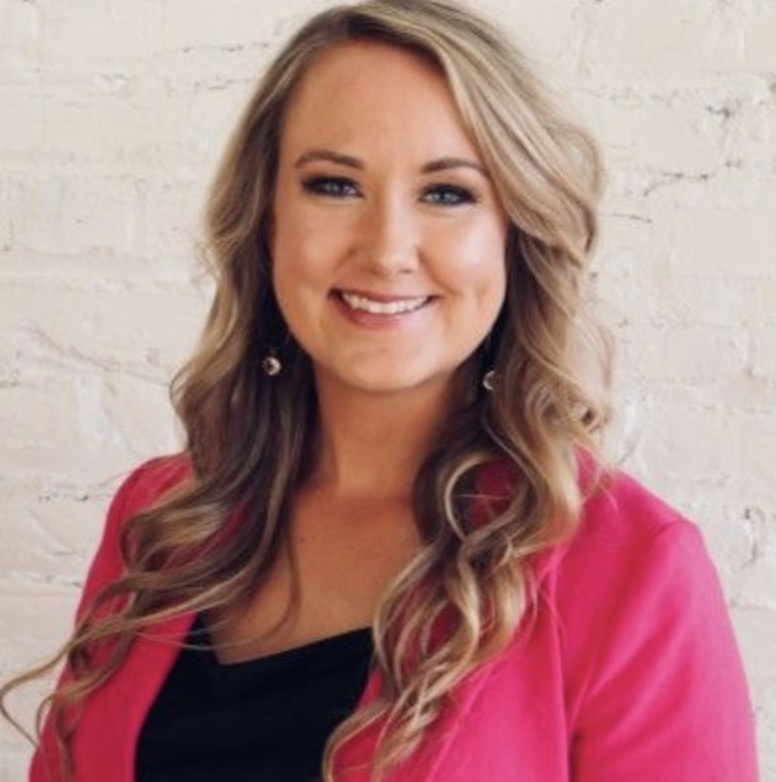
Amber Watts
Amber Watts is the author of From Onboarding to Everboarding: Redefining Employee Development (ATD Press), a keynote speaker, and founder of Radical GrowthWorks. She also serves as a Global Performance Consultant at LinkedIn, where she helps build systems-based talent strategies that drive long-term performance and retention.
A former Chief Revenue Officer turned talent strategist, Amber brings more than 15 years of real-world experience leading enablement and development in high-growth environments. She’s the creator of the Everboarding framework, a practical, strategic approach that moves beyond traditional onboarding to support employees well beyond Day 1.
Amber’s background spans sales enablement, leadership development, change management, and learning design. She’s regularly speaks at events like ATD and Training Magazine.
Known for her refreshingly honest delivery and actionable takeaways, Amber helps learning and business leaders connect employee growth to business strategy because when people grow, performance follows.
Episode Transcript
This transcript has been generated by AI and may contain slight discrepancies from the audio or video recording.
Amber Watts: We're bringing in people that talent development wasn't prepared to develop — there's a disconnect. And if talent acquisition isn't hiring anybody that talent development developed, there's a disconnect.
Amy Jauman: This is a hot button for me. I try to talk to people about development not as an exit ticket, but a retention magnet.
Nicole: Every HR leader faces a fundamental question: should we hire the talent we need or develop the talent we have? The answer isn't either/or — it's both. But finding that balance has never been more challenging.
Welcome to Honest HR, where we turn the real issues facing today's HR departments into honest conversations with actionable insights. Today, we're recording live at SHRM 26 in Orlando with our live audience. I'm your host, Nicole Belyna. Let's get honest.
With workforce expectations shifting faster than ever and business needs evolving at breakneck speed, organizations are caught in a talent tug of war. Hire too aggressively and you risk neglecting your current workforce. Focus only on development, and you might miss critical skill gaps.
Today, we're bringing together two expert voices in recruiting and development who have helped their organizations build strong talent strategies. We have Amy Jauman, HR Director for the DNA Doe Project, and Amber Watts, Chief Everboarding Officer of Radical Growth Works. Welcome to Honest HR, Amy and Amber.
Amy Jauman: Thank you.
Nicole: We're excited to have you. So Amy, I'm going to kick off with you. From a recruiting and talent acquisition perspective, what separates organizations that treat hiring as a specific capability from those that are simply reacting to talent shortages?
Amy Jauman: I think that's a great place to start. I always like to explain it by asking leaders, "Are we approaching our talent management as firefighters or architects?"
Firefighters are reactive. They're responding to what's happening, and they're often not knowing day-to-day what's going to be needed. It's important, it's unavoidable, and you need them. But an architect builds, thinks, looks, designs, and considers what they have to work with in front of them.
It's important to note that it's a spectrum — you're never always going to be on one end or the other. But the reason I like to talk about it that way is because almost every leader will say, "Well, I want to be an architect." Very few will say, "I want to get up every day with no idea what's coming and just see how much chaos I can invite into my everyday work life."
Most people gravitate toward the architecture side, which allows us to start that conversation about focusing on leading indicators — on building and looking ahead — as opposed to always responding to whatever comes at you. It's a metaphor I've used for a while, and it tends to stick well because it resonates so easily in everyday life.
Nicole: I love that analogy. And Amber, from an employee development standpoint, what separates organizations that successfully grow talent internally from those that struggle to build sustainable development pipelines?
Amber Watts: The ones that do it well treat it as a business process versus an HR program. When you treat it as a business process, you're intentional, you're measuring it, and you don't leave it up to chance. The ones that are struggling leave employees to figure it out on their own, and the biggest thing I see is that there is no manager involvement.
Most companies will invest resources — and I define resources as time, money, people, and technology — into onboarding and typically leadership development programs. There's a giant gap in between where nothing happens for employees. When you think about building a talent pipeline, if you're not investing in them, of course there's a gap.
That gap often comes down to manager involvement. Companies think, "We're going to train the managers, develop the managers, and then development will just come." But it doesn't work like that, especially when it comes to new hire development. You'll have some managers who hire one person a year and some who hire 100 — and new hire development is a very different skill set than developing a tenured employee.
Whenever I work with an organization — and I also work at LinkedIn — when I have that conversation with managers about employee development, I don't just have one conversation and assume alignment. It has to happen over time. Think about how much the world is changing right now: your onboarding programs, all of your development programs, are also changing, and you have to keep up. That's not the manager's job, but you need to bring them along in that journey.
That gap is happening because we're not bringing them along, we're not equipping them, and we're not involving them. We have one conversation and think we've aligned. Sometimes the conversation isn't happening at all.
Nicole: It's often those casual conversations in between — or those regular conversations after the event, if you will — like post-onboarding, that make all the difference.
Amber Watts: Yeah, absolutely.
Nicole: Amy, what are the risks when organizations rely too heavily on external hiring instead of investing in internal talent?
Amy Jauman: External hiring is always going to be necessary — again, it's that spectrum mentality. No one should ever strive to only develop internal talent or only bring on external talent. But the challenge with external hiring is that it can sometimes feel too easy. You post and hope that great person is out there, and you do it fast.
There are a couple of problems with over-dependence on external recruitment. First, it's expensive — and not just from the time and talent required to bring someone in. External hires also have a longer ramp-up time. The goal shouldn't be to avoid external hires entirely, because they bring fresh perspectives and different ideas that help minimize groupthink. But when you're factoring in ROI and deciding whether to lean toward an external hire or cultivate internal talent, cost has to be one of those considerations — and it's broader than just the easily measurable pieces.
The other part is that when you're cultivating talent and bringing people into the planning process and growing them, there's less risk that they will leave. You invest in finding external talent, onboard them, and get them up to speed — yes, you spent a bit more — but you're still in a riskier space because they just aren't as invested as someone who's already been with the company for years and has some kind of tie to the organization and its mission.
External hiring isn't something we can avoid, but most organizations I see should be actively working to decrease their dependence on it.
Nicole: I think about situations where organizations are introducing new, expensive technology platforms that internal employees need to be trained on. You may have to hire someone externally, but there's a scarcity of that talent. In a situation like that, it makes good sense to invest in training your existing talent — and when you look at the price of that talent externally, it could be three times the cost. So when you talk about doing that kind of analysis and looking at ROI, that's a good example of finding that balance — knowing when to buy, borrow, or build.
These conversations are exactly why we built the SHRM Talent 2026 happening in April next year. It's an event built by recruiters for recruiters. If you're an HR professional navigating these high-stakes decisions, this is the room you want to be in. So be sure to check that out.
Amber, how should organizations decide when to build talent internally versus buy externally, especially when business demands quick results?
Amber Watts: Quick results — that's always the demand. In both scenarios, you just have to ask: what is the capability we're looking for in this situation, and does it exist internally now?
If it doesn't, we're going to have to buy it. Do we need it immediately, and is it something that's highly specialized? If so, we're probably going to have to buy it. Is it something that requires cultural knowledge? Then we're probably going to need to build it.
What companies often forget is that even if you find expertise externally — say, you're entering a new market and need that expertise — it's still going to take six to 12 months to ramp up, even if they already have the skill. So it might make more sense to build it. What I caution, though, is if you find yourself year over year hiring for the same role or skill set, maybe you should have just built it in the first place. Maybe career paths already exist internally that could have been built upon, and you're simply behind the mark.
Nicole: And I spent a great deal of my career in the talent acquisition space. Organizations often want to blame the TA team for skill gaps, when in fact they also don't want to invest in developing the talent they already have. It strikes a difficult balance.
Which leads me to the next question — and I think this is one of the keys to striking that balance. What metrics should HR leaders track to know if they are getting the balance right? And what metrics suggest talent acquisition and talent development are becoming disconnected from one another?
Amber Watts: I love metrics. I love measuring. I spend a lot of time in the performance management and change management space.
When I think about metrics, I think about internal mobility and promotions especially. One thing I hear often — particularly having spent much of my career in the onboarding space — is that everyone wants to measure time to productivity or time to performance. Gartner has defined the difference between the two very specifically.
When I've built onboarding programs, I always caution people to think about it as a moving goalpost. Let's say you're hiring for sales — even if you've never built a sales onboarding program, you can answer this: if you hire someone in May versus November and there's a four-week ramp time, who's going to be more successful? The person in May, right? Because the average rate of productivity in November — for anyone, tenured or not — is going to be much lower. We have to be careful that we're not asking people to achieve something that nobody is even achieving currently.
The last metric is around skill attainment. AI is huge right now, and I'm seeing a ton of programs being built around AI fluency. At the end of your program, can employees vibe prompt? Can they vibe code? Can they build an agent? But the story you need to tell isn't just about what skill they developed — it's about what that skill did.
For example: they were able to automate a workflow that reduced their time on a task by one hour a day, freeing them up five hours a week, which reduced chat wait times by ten % for the week, and customer satisfaction went up. Those are the things you take upward that leadership will care about. Be very careful with those things when you think about dashboards.
When I think about talent acquisition and talent development getting disconnected, talent acquisition's job is largely to bring in the new. Talent development has to develop those people. If we're bringing in people that talent development wasn't prepared to develop, there's a disconnect. And if talent acquisition isn't hiring anyone that talent development developed, there's a disconnect. Those are two big signs that you need a much stronger conversation and alignment between those two parties.
Amy Jauman: I have a much simpler thought. The first thing that came to my mind was how few leaders actually know how many positions are filled externally versus internally. If you ask someone, "Do you promote from within? How do you describe the company culture? Is there a lot of growth opportunity?" — leaders consistently overestimate how well their culture promotes that kind of success.
So I think a great place to start is to just look at some of the numbers, sit with how wrong your assumptions were, and then move on to building the dashboard from there.
The other thing I'd add — and the DNA Doe Project is a nonprofit, so it's a little different — is that when we're losing people, it's important to ask not just whether we had a path for them or connected with them, but also whether they've gone on to do amazing things in the field. Have we contributed to our greater mission, even if our organization simply wasn't the right fit for that person at that time?
I say that because that kind of grace is important for leaders. They work so hard and invest in people, and when someone leaves, that leader thinks they failed. So often, that's not the case — that person is growing, and they just happened to grow out of your organization.
Nicole: If you think about the Big Four — they've all built an employer brand based on being net exporters of talent. If you hire someone from a Big Four firm, you know you're getting a certain level of talent. It's a great thought process for other organizations to adopt: "It's okay not to retain everyone forever. But this person left my organization better than when they started."
Amy Jauman: Mm-hmm.
Nicole: And you both bring up very good points about metrics — a metric is not just a metric on its own. It's very much tied to your culture, your mission, and your values. What one organization chooses to measure may not be appropriate for another, and it changes and evolves as your organizational goals shift.
Thank you. Amber, what does a strong development system look like in practice, and why do so many organizations struggle to build one?
Amber Watts: When it comes to development, I actually wrote an entire book on this. I wrote a book about everboarding, because I believe that's where a lot of organizations were missing the mark. From what I saw, it wasn't that onboarding programs were failing at companies — it was that they were ending too soon.
Everboarding came to life from that idea. I put together a framework to make it simple so that every industry and every type of company could take it and implement it without time constraints. It's a systems-based approach, and I liked that you used the word "system" — because I think that's exactly why organizations are missing the mark. We were looking at development as a standalone program before.
We are not event planners — we are system designers. If we start flipping that language among ourselves, it becomes simpler when we speak with our stakeholders and work to reverse that perception. The people we have to get on board are the managers, and getting them involved requires a lot of patience and cross-functional collaboration, and it circles back to those resources again.
I look at everboarding more as a relay. You go from onboarding to development — the manager is holding the baton, supported by the people function. But managers don't know what they don't know. When's the last time they developed a new employee? They just need guidance. We need to draw out best practices from our organization and figure out which managers are doing it well.
If we're not looking at it from a systems approach and we're just designing more formal training, we're going to continue to miss the mark. If we do it right, we can hand the baton to the employee — and now they're self-led. They're showing up to your on-demand learning library and making more appropriate selections rather than over-consuming and taking things that aren't relevant to their role.
It takes time, and I get a lot of pushback that says, "Well, that's what Fortune 500 or Fortune 100 companies are doing." It's not. I've seen very small organizations do this well.
Nicole: For both of you — organizations often hesitate to invest in development because they're worried employees will leave. How do you respond to leaders who see development as a risk rather than an investment?
Amy Jauman: As an educator, this is a hot button for me. I try to talk to people about development not as an exit ticket, but as a retention magnet. If people don't see you investing in them, there's less of a draw or connection — it just happens naturally. There's plenty of data to prove it. It's a fairly well-known concept that investing in someone leads to reciprocity.
But there's also the very human element of fear of the unknown. If you're working with a really small budget, or in a high-conflict or high-stress industry, a lot of that fear goes into what people can control — what they can say yes and no to. The idea of investing in someone you feel you can't hold onto is a long conversation, and in many cases, a cultural shift.
I try to go with the analogy that you're not teaching them how to get out — you're drawing them in, keeping them close with that pull. The short answer, though, is that data is the best way to make the case. There's constantly new information coming out across industries, and no matter how unique your space feels, we consistently find that connection and retention improve when an organization is willing to invest.
Amber Watts: I'm going to lean on the data too, because that's where I tend to go and where I see the most success. And I would lean on internal data specifically.
Take a look at where you're losing people in the first year — voluntarily and involuntarily. That's actually how I got my first everboarding program approved. I said, "We know that at six weeks, people are being let go for performance. We know by month four whether or not they're going to make it." And by month four, we were losing people voluntarily. It was because we had stopped investing in them. Onboarding ended, and there was an immediate cutoff with no involvement.
We had managers who were really good at developing people after onboarding and some who were doing nothing, so we had a very diverse new hire experience within our own organization. In order to build that business case, I had to show what was happening and say, "Here are points in the employee timeline where I'd like to add value."
If you present it that way, you have information that illustrates turnover in a way leadership can take to a boardroom — and a recommendation for how to turn it around. Go talk to the managers before you have that conversation too, because what leadership is thinking in that moment is, "You want me to pull them off the floor and away from their jobs." If you can say, "I've already talked to them, and here's the solution we came up with together" — that's one big relief off their shoulders already.
Nicole: Amber, can you clarify for the audience how everboarding differs from traditional onboarding?
Amber Watts: I love that question. I think about onboarding as just the launch phase of everboarding. Everboarding is a strategy that combines all of your talent management programs. It's not going to replace what you're doing today — it's going to systematize what you're already doing.
So in this conversation about the talent tug of war between talent acquisition and talent development, everboarding is about getting everybody on the same page and creating a holistic new employee experience along the entire employment journey.
Nicole: If everybody were as excited about training and developing employees on day one, two, and three as they are during onboarding — whether that's through training, experiences, or stretch assignments — imagine what that retention looks like.
Amber Watts: Exactly.
Nicole: Thank you for explaining and clarifying that. I think it's a really important piece.
Are employee expectations around career growth and development changing across generations, and what should organizations do differently?
Amy Jauman: Yes, absolutely — those expectations are changing. Where I've seen it most is tied to time with the organization. Earlier generations often operated with the understanding that you both need time with an organization to be well-equipped to advance, and that you shouldn't advance if you've only been in a role for a short time.
Newer generations entering the workforce are much more focused on micro-credentials and skills. It's less linear, and much more of a lattice framework — they will zig and zag and fulfill their potential in the workplace in that way. I think in the long run, that also shows up as people moving to different organizations, because they're looking much more at specific skills as opposed to the investment into a single organization as the greatest way they can contribute.
Amber Watts: I would say we're at a point where things are changing so much faster than generations are entering the workforce. Careers used to just happen to people. Now, I don't think the difference between generations is as stark as we assume. It's going to vary in terms of what types of skills they're looking to develop, but they're all looking to develop new skills.
Skills are being viewed as a form of currency. Each generation is starting to want to become more of a generalist, and we're seeing fewer people looking to be so niche in their roles — because being a generalist is how they see themselves as more valuable. Every generation right now also wants more visibility into what opportunities are open to them, and more ownership over their career.
There has been a huge rise in online coaching, and I think it's because organizations have pulled back on that as an internal benefit. But no matter what generation you're in, people still want that. Having that type of ownership feels like a sense of stability. The ability to say, "I did this, and I gained X skills because of it," is something not everyone is lucky enough to have with their manager or through a company benefit.
I'll add one more thing: I'm seeing a huge AI boom, and many companies are investing in leaders to gain those skills while leaving the rest of the organization to figure it out on their own. People are desperate, asking, "How do I do that? How do I find the time — without losing my job?"
Nicole: You both brought up a good point — career paths are not linear anymore. You may start in one function and zigzag. Amy used my favorite term, the lattice, when thinking about internal talent. That framework has genuinely changed employee expectations, as well as our own as talent leaders.
So if an HR leader listening today realizes their organization is out of balance, what's the one thing they can implement immediately to improve their talent acquisition and development balance?
Amy Jauman: I think most HR professionals would do well to invest time in learning about the people in their organization — who is where, doing what, and what interests they have. If you're going to increase communication, open up new opportunities, or evaluate whether you're measuring the right things, you can't do any of that without a deep understanding of the organization. And the people with that deep understanding are already there.
I always recommend starting with an internal review. I also recommend being highly visible in that work — let people know that you're there to learn and that you're asking questions because you want to strengthen the organization. That will embolden them to come forward with the best ideas you'll ever hear, because they're the closest to the work.
Amber Watts: Similar to Amy, organizations are often too quick to just open a job req. And I'll throw this idea out knowing it's not possible for every organization right now — so keep it in your back pocket. Before opening a job req, ask: is there anyone we have right now who is capable of doing this in the next six to 12 months?
Consider framing it as a development opportunity instead. Create a development plan rather than a job req, and use it as an opportunity to bring talent acquisition and talent development together to go about it in a different way — instead of rushing to hire externally, or even internally. It goes back to that talent pipeline. This is how you're proactive in building it instead of just being reactive.
Nicole: And that's the architecting that Amy was talking about earlier.
Amber Watts: Exactly.
Nicole: All right. Thank you so much, Amber and Amy, for sharing your insights with us, and thank you to our studio audience. We will catch you next time.
Featured Event
Stop developing your people in silos. Make a single investment to bring high-performing leaders, I&D specialists, and HR professionals together to drive workforce performance.
Enjoy On Your Favorite App
More Feature Stories from HR Daily

A federal judge declined to block the president’s I&D restrictions on government contractors but clarified that the order does not prohibit lawful I&D programs.

Employers can rethink GLP-1 coverage, control benefits spending, and support workers’ financial choices, experts — including SHRM President and CEO Johnny C. Taylor, Jr., SHRM-SCP — explained.

Amid rising inflation, Social Security benefits are increasing 3.6% in 2027. HR can leverage the news to help workers with retirement planning and financial security.