- Video
- Audio Only
HR has a bigger seat at the table than ever before, but with it comes the pressure to deliver measurable business results. Alex Alonso, SHRM’s Chief Knowledge Officer, joins host Nicole Belyna, SHRM-SCP, to discuss the Talent Optimizer dimension of the HR Excellence Framework. Together, they explore how organizations can align talent strategy with business outcomes, close skills gaps, and leverage talent analytics to drive performance, engagement, and retention.
This episode is sponsored by:

Related to this Episode
The Business Case for HR Excellence (HR-X)
Nearly 90% of organizations operate with average or low HR maturity, leaving substantial business value untapped. Companies with higher maturity see markedly better financial results, lower turnover, and a more engaged workforce. Advancing your HR maturity can drive real impact across your business.
Real change starts with real talk. And every Friday, our Honest HR podcast is the top story in SHRM's HR Daily newsletter. Subscribe now so you never miss an episode! Plus, get daily breaking news, feature articles, the latest research, and more.
News + Insights

Enhance workplace harmony with SHRM's insights on civility. Boost productivity and respect with actionable strategies for a positive work environment.
Managing a multigenerational workforce requires recognizing and valuing the unique perspectives and skills each generation brings. Understanding the different needs and motivations of each age group is key to driving engagement and long-term success.

The multigenerational workforce is growing, and leaders should unlock the full potential of a diverse team to meet shifting challenges in today’s business environment.
Podcast Episode Guest
-
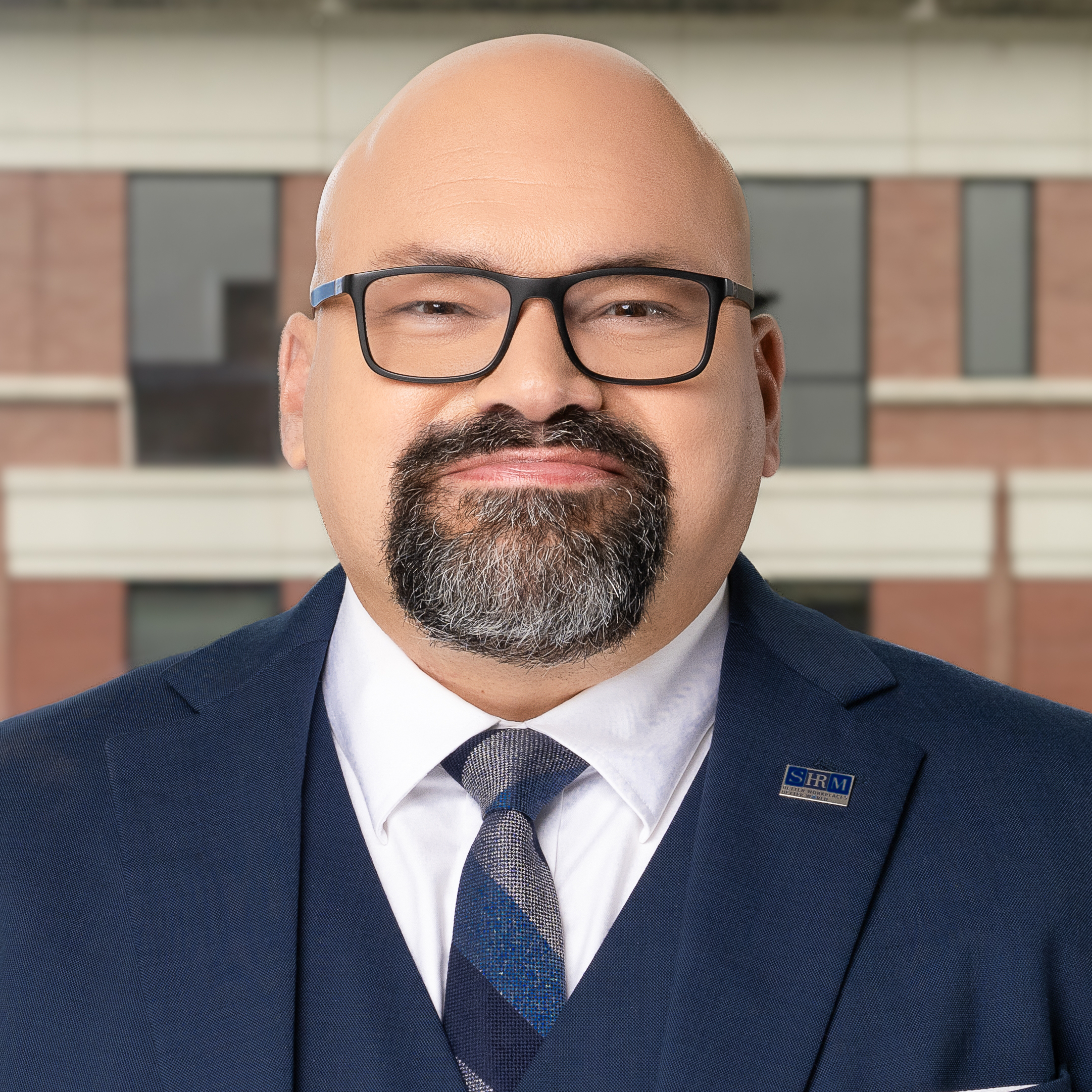
Alexander Alonso
Alexander Alonso, Ph.D., SHRM-SCP, is SHRM's Chief Knowledge Officer, leading the organization’s intelligence, insights, and innovation divisions. As leader of SHRM’s Thought Leadership & Business Intelligence operations, his total career portfolio has been based upon practical thought leadership designed to make better workplaces and grow revenue across industry.
Episode Transcript
This transcript has been generated by AI and may contain slight discrepancies from the audio or video recording.
Nicole: HR has a bigger seat at the table than ever before, but it comes with bigger expectation to deliver measurable business insights. The challenge, most organizations aren't fully equipped to turn talent strategy into real impact. Welcome to Honest HR. Where we turn real issues facing today's HR departments into honest conversations with actionable insights.
I'm your host, Nicole Belyna. Let's get honest. As organizations face rapid and constant change, HR teams are under more pressure than ever to deliver results. But here's the reality. Most organizations still can't clearly connect their talent decisions to business outcomes and the gap it's costing them in speed, in performance, and in competitive advantage.
That's why SHRM developed the HR Excellence Framework, and today we're focusing on one of its most impactful and most underdeveloped dimensions, the talent Optimizer. This new report reveals where organizations are falling short and what it actually takes to align talent strategy with real business impact.
To help us break it all down, I'm joined by Alex Alonso (Alonso), SHRM's chief Knowledge Officer whose team developed the HRX framework. Alex, thank you so much for joining us. I know you are traveling right now.
Alonso: Hi Nicole. It's great to be with you here today and I am traveling. I'm sitting here at JFK as we speak, working my way through a couple different locations.
Nicole: Well, welcome to Honest HR Alex. We'll dig right in here. The report describes the talent optimizer dimension as driving performance, engagement and retention through innovative talent management approaches, and identifies it as the most influential driver of HR maturity. Yet it also says it's the least mature. Why do you think that gap exists?
Alonso: So it's funny because when we were working on this effort, our goal was actually to build an HR maturity model for functions. For HR organizational functions. And what we were trying to capture is HR capability and how it is that HR functions work their way to being the most mature possible and achieving the greatest results.
What we discovered was if you take the 16 dimensions of HR excellence and you break them into four buckets, you see that there are buckets that have a bigger influence when it comes to achieving greater success. And for instance, you can see in the areas that deal with compliance that deal with all the pieces that we've seen over the years that are really the bread and butter of HR. Those are the ones that really set the stage for HR maturity.
But the one that makes the biggest difference is the one that deals with two key facets. First and foremost is identifying talent. The second is actually turning that talent into really productive talent. Making them, making sure that they're learning, that they're achieving all the things that they need to do.
And when you take that into account, it makes logical sense. But what's funny is we've broken out the stages of maturity and organizations that are truly high in maturity in this one bucket, that talent optimizer bucket are rare. In fact, only one in eight organizations actually achieve that, which means roughly 12% or a little bit less than 12% are actually achieving that level of maturity.
And when you take into account the ones that have the biggest bang for their buck, the ones that are returning the most revenue for full-time employee, all those are the ones that are in that bucket of being the most highly mature.
Why is it that the organizations struggle to achieve that? If you were to ask Dr. Alonso, and I'm gonna give you unvarnished Dr. Alonso here, there may be cursing and all those things. I think the areas that we struggle with are really trying to identify workforce planning and identifying what workforce planning looks like in an era where we have both an automated workforce and a human workforce where we have AI plus human intelligence.
A little drop for my own podcast, the AI Plus HI project. But one of the things that stands out is we see specifically that organizations and really CHROs are focused on trying to develop a true cadence for where it is that I can find good talent and where it is that I can find the way to develop good talent. And that's still something that alludes many organizations, especially as the environment is shifting.
Nicole: Yeah, topics very near and dear to my heart. And so the research shows that organizations are very strong in compliance areas, but much less mature in strategic areas like skills identification and talent analytics. Why has HR historically leaned towards compliance, and what's the business risk of staying there?
Alonso: So you'll laugh because at SHRM, I'm about to hit my 15th anniversary at SHRM and I've had eight different roles. But my first role was as Captain Competency, and I was focused on developing the SHRM competency model, which is the precursor to the SHRM Bach and then the SHRM Bask and so on.
And what I've learned over the course of time is we lean on compliance for two key reasons. One is, I've had HR professionals across the world over the 50,000 that I've met in my career at SHRM tell me, oh, you know, I went into HR because I'm a people person. And what's hilarious is nine times out of 10 when somebody tells you they're a people person, they're not telling you that they like people. What they're telling you is they hate numbers.
And so what I find in particular is for years we sort of built this pipeline for HR that was built upon people not being focused on numbers, but anybody who's been in HR for more than 10 years can tell you HR is a numbers business. And it's a numbers operation. I know I lean on you. Just as an example, with our being our head of talent analytics and our head of talent management, that you focus significantly on the numbers and what it is that we're doing in driving our numbers down as much as possible.
The other thing that I think sort of strikes us is, for better or for worse, the foundation of our profession is based upon a legal element. It's based upon what happens historically to help us reduce risk, and historically to ensure that we are not creating greater risk for the organization. So whether we like it or not, compliance is at our core, but it should not be the core for the next hundred years of our profession.
Nicole: We'll be back in just a few moments. Stay with us.
Nicole: As an HR professional who has been in HR for more than 10 years, compliance is kind of table stakes, right? You kind of start there and then you go from there.
Alonso: Nicole, there's no way on earth that you've been in HR for more than 10 years. It's not possible.
Nicole: I knew I wanted to be an HR professional since I was, you know, five years old.
Alonso: Fair.
Nicole: So skills identification and gap analysis came up as a major opportunity area. In the era of skills fishing, where candidates exaggerate or misrepresent their skills, how can HR teams build a clearer, more actionable view of workforce skills in a way that actually informs business strategy?
Alonso: So the first thing that comes to mind is be clear on what that business strategy is. And more often than not, what I find is a lot of HR teams are hunting for what was the role that we had? That was the back filling mentality, as opposed to what I've heard over the years, which is forward filling, in fact, you're the one that taught me that mentality.
And the idea being I shouldn't look at what I had and the job that was being done. I should look at the job that is necessary moving forward. And what are the tools that are available to accomplish that job, whether it be automated, whether it be human, whether it be something, some combination thereof.
And so as I look at this, one of the things that I find in particular is we see a lot of organizations sort of stuck in a trap because we are seeing that automation is a bigger reality. We are seeing that there is a much more robust world out there that can rely on generative AI (GenAI), that can rely on a lot of the machine learning tools that we have out there.
This morning alone, I was working on a series of research that looks specifically at how if you had coders and you were remarkably dependent on computational engineers, mathematicians, those kinds of occupations, you just don't have that need anymore because of generative AI (GenAI). There's a significant drop in the number of job postings for those fields to the point that we're seeing some of them are actually almost 35% of those professions are at risk because of those types of tools.
What that speaks to me is we are now much more susceptible to not doing that forward filling that we should be doing. Couple that with then this phenomenon of skills fishing. And I don't know that everybody knows what skills fishing is, but they should, because skills fishing is the workplace based cousin of catfishing.
If you've ever been on the dating market, you know what catfishing is. You know, you've seen the show Catfish on MTV, and you all know what it's like to be told that there's this great love of your life out there, and then you're in this relationship. And before you know it, you realize that person is a whole other human once you get a chance to meet them.
Well, skills fishing is what happens to employers when they get catfished, and they get catfished based upon this notion that you're getting all these skills. And before you know it, what you realize is you don't actually have those skills.
What we do to be much more effective in that environment is actually not to just identify how you get over skills fishing, not just to improve the assessments that you go through, but really also to layer on a person's ability to learn and adapt quickly. The reason I say that is sometimes it's okay to fake it till you make it, but you need to be able to make it. That's the key component and the biggest component in that sometimes is somebody's ability to learn and pick up skills as quickly as possible.
Nicole: Sure. Yeah, I would add to, and I won't stay on my soapbox too long, you know, is recruiting teams sometimes will, you know, they just start searching a number, a bunch of keywords. And so they've got this list of skills that they're looking for, and they may not actually have a really good understanding of the business itself. Being able to zoom out and understand the business.
And so they find these people who can articulate the skills, and they have the list of skills on their resume and they're like, okay, yeah, this is the person. And I know also your team is doing some really good work to help inform more elevated talent teams as well, that I just love. But I think that that's another component of it as well too.
Alonso: You know, I'll tell you what, since this is Honest HR, and I know that we try to tell it like it is here, I still think that there are moments where we're all gonna get skills fished.
I remember my first experience being skills fished. I was working at a think tank before I came to SHRM. It was actually my last employer before I came to SHRM. And I'll never forget, I read this person's resume. It was beautifully crafted. I actually got to read half of their publications. I got to read a lot of what it is that they were putting out in the world.
And before you knew it, we were three weeks in and this human just could not even open Excel. Imagine this person's got a PhD in organizational psychology and they can't even figure out how to put data into Excel.
And it reminded me right away that even though we weren't living in an era of AI, what this person had done was taken advantage of the system around them to say, okay, this person's gonna help me publish. My major professor's gonna help me finish my dissertation, and I'm gonna be able to put together a resume that is beautiful.
This person went to the number one program, number one program in IO psychology and somehow got out of it and didn't have the basic skills to do that. And we were purely skills fished based upon the resume, based upon all the writing samples, based upon everything that we had seen, even some of the grants that they had worked on.
And I'll tell you what, my beard wasn't gray at that point. I had hair and I never drank scotch. And today I love single malt whiskey.
Nicole: Same. Well, so anybody can get distracted by shiny things.
Alonso: Yeah, absolutely.
Nicole: Absolutely. So leadership and manager development emerged as one of the biggest drivers of talent optimizer maturity. What are high performing organizations doing differently here and how does that translate into business performance?
Alonso: Yeah. So one thing that they're doing is that right off the bat, they have high potential programs. And it sounds funny, but many organizations don't actually have high potential programs. They basically rely upon a leadership perspective where let's say your boss says that you're really good, you've performed really well over the years, and then the company invests in you, but they don't do it in a structured fashion.
And many organizations actually do have what is basically their war room where they are identifying a particular set of skills and identifying how people fit in those and who are their high potentials ranking them from one to 400.
I remember years ago, I visited Tyson Foods, and it was magical to see. Back then the CHRO was a gentleman by the name of Larry Hopkins. And I'm talking about 20 years ago, and they had a war room with a full draft board like you were in an NFL team's draft room. And you were seeing how they were putting together their entire high potential structure for the top 450 leaders coming up in the organization.
They were basing it on a really structured skills first assessment. It was not just leaders' perspectives. They had to have assessment that was done by an independent party, whether it be another leader within the organization or whether it be a vendor or some sort of group like that.
What I also learned specifically was when thinking about leadership development, they were not challenging humans to follow the prescribed universal competency model for Tyson Foods only. They were actually going through the process of seeing how well does this person have a potential for leadership outside of our own organization.
If we will put our hat on as a talent exporter, how well will this person be seen as a leadership potential person in another place? And that was valuable to them because they said, okay, those people are gonna perform and outperform your just typical high potential within our own culture.
And to me that's the kind of stuff that those top organizations are doing. So much so that if you look at our SHRM research today, you ask CHROs what it is that is their top priority. The number one thing that 68% of them say in 2026 is a top priority is leadership development. Leadership development as a core basic principle for that.
And when you dive deep, you look at some of the qualitative research that we've done in that spot. You see specifically what they're talking about is not just leadership development, like developing leaders, identifying the top ones. It is creating a system for doing that.
And there are a variety of groups that have done it over the years. PepsiCo is the gold standard for having done it. Allen Church is somebody who I worked with for years who was part of this at PepsiCo and he really pioneered that.
At PepsiCo, one of the things that I find is particularly critical is organizations have to build that for themselves. Even if they are not large organizations, it's not about building expense, it's about building what is the most valuable way to identify those leaders.
Nicole: Yeah, absolutely. Earlier we talked about just how important numbers are in HR. And so talent analytics ranked among the lowest maturity areas in the report. What does it take for HR to move from simply collecting workforce data to actually using it to drive strategic decisions?
Alonso: So this is an area where I think a lot of organizations, and especially HR is very good at admiring the problem. What I try to think about is how well are organizations actually moving towards decision making using that data.
And there's a couple things that come to mind immediately. I think about the old paradigm. We always know about the maturity as far as talent analytics is concerned. That maturity model that Bersin put out years ago, it was about 10, 15 years ago, they put out this maturity model and it basically said, okay, if you are able to capture the data, that's one thing and build analytics, just basic analytics based upon it, that's really great. That means you can define or describe the problem.
The second layer is that you can actually start to see the relationships among the data. So you can actually analyze it to the point where you see those relationships with different variables. Engagement with loss prevention outcomes is a prime example.
The true layer that most organizations want to hit is that predictive layer where you are now starting to see, okay, I see that if engagement at a specific store drops below a certain level, that means that absenteeism is gonna go up. But then the second thing that I see is that loss prevention is gonna go up, or loss metrics and data is gonna go up, meaning I'm gonna have a lot of theft going on amongst my employee pool or amongst people that they are allowing into the stores, that kind of stuff. That's where you start to see that, not just the relationships, but the predictive power of data.
And then there's the strategic perspective, which is, I'm gonna go a step further and actually determine how I take proactive steps to eliminate the issues associated with that.
What I have found with HR is it can be boiled down even further, not just those four layers. The real question is how am I actually taking programmatic activity and turning that into something that says, okay, I need to rebuild or rethink the way this business happens.
And I call that not the strategic layer, it's the fifth layer in my mind, which is the re-imagination layer. How am I redesigning business and determining what the future of this business is.
Case in point with that particular issue is am I thinking about how I build in new loss prevention models? Am I thinking about how my business is no longer an in-person store based business? Am I doing something that takes me into an e-commerce perspective and focuses on that primarily? Those are all factors that indicate how talent analytics can drive future business.
Nicole: We'll be back in just a few moments. Stay with us.
Nicole: If you had to prioritize what's one investment area that delivers the biggest return for both employees and the business?
Alonso: One investment area in terms of talent in particular. To me, the biggest layer that we see that actually drives return on investment, if any, is actually, to be candid. In recent years, we've actually partnered and seen quite a bit of what happens when you focus on wellness in particular.
And if you're driving greater wellness, coupled with professional development and learning across your entire staff. You are more likely to see a huge return for wellness. You are seeing in some cases, six to one. And what I mean by that is for every dollar I spend on wellness programs, I could expect to see somewhere around six dollars worth of return per employee. That's a nice yield when it comes to actual development and skills development, we're starting to see patterns like that and starting to see some data around that.
You could even see in some cases, especially in future years of HRX, where I would expect to see quite candidly we're gonna see a return that is closer to 10, $12 per each dollar that you spend on learning because it is becoming so critical. It's even becoming more critical when you think about how the workforce is about, the demographics of the workforce are changing.
We're having a lot more people reenter the workforce than people who are entering the workforce for the first time. And so with that, the ability to train people is gonna become much more and really reskill people is gonna become much more powerful.
Nicole: I couldn't agree more. So, looking ahead, as technology and workforce expectations continue to evolve, what will separate organizations that truly optimize their talent from those that fall behind?
Alonso: So to me, there's three things that I think will actually separate those groups. First and foremost is, are they asking themselves how, what part of this work can be done by a combination of human AI and basically an AI enabled human, and the reason I say that as opposed to full displacement is whether we like it or not, displacement is coming.
We know that for a good portion of society displacement is coming and that there are social and societal things that need to happen at the government level and at larger employer levels to really help us have a response to that. That being said. I do think that we are in an era of the next 10 to 12 years where we are seeing the true power of any kind of work being a function of a human who is really empowered to use AI.
The second thing that I think is particularly critical that is a lever that I think we have not used and is not as clearly drawn out. But is truly development based upon coaching and coaching that is a meaningful design for coaching. Meaning coaching that means, I'm going to tie that to someone's actual productivity on the job.
Think of it as game sharing models based upon coaching. If a coach can show that they've actually delivered a person who is 10 times as productive as they used to be, they should see a cut of that in some ways. Is the way I think of it. And Lord knows my good friend Dr. Woody, who's the chief coaching officer at BetterUp would agree with me, but he's not gonna send a check in the mail. I know that for a fact.
That being said, the third thing that I think is particularly critical is what are we going to see in terms of the kind of talent acquisition, and I know this is near and dear to your heart, that allows us to actually see true skills upfront, but not only true skills, it's those forward developmental skills.
Because when we look at that displacement, the first layer of displacement that is likely to happen is those first tier jobs, those early career jobs that nobody has an answer for. So if I was putting my dollars behind something, it would be some sort of tech, some sort of tool that is startup based, that actually allows and permits for those types of tools and those types of skills to really be captured without having those jobs in place.
What are those basic skills that people will take advantage of and turn into second level jobs, and how do you get them and accelerate that without them having had those jobs?
Nicole: Yep. Well, you've certainly given me a lot to think about. My mind is racing. I'm also thinking about single malt scotch. But thank you so much, Alex, for joining us this week and sharing your expertise.
Alonso: Thank you Nicole, and I promise I'll bring you back some single malt scotch from the homeland itself.
Nicole: Yes, please. That's gonna do it for this week's episode of Honest HR and we will catch you next time.
Outro: Hello friends. We hope this week's episode gave you the candid tips and insights you need to keep growing and thriving in your career. Honest HR is part of HR Daily, the content series from SHRM that delivers a daily newsletter directly to your inbox. Filled with all the latest HR news and research. Sign up at SHRM dot org slash HR daily. Plus follow SHRM on social media for even more clips and stories like share and add to the comments because real change starts with real talk.
Nicole: Deal helps HR teams hire onboard and manage employees in over 150 countries without a local entity or third party. Visit deal.com/ SHRM to book your demo. That's D-E-A-L.com/ SHRM.
PDC: This podcast is approved for 0.5 professional development credits (PDCs), also known as PDCs towards SHRM-CP and SHRM-SCP recertification. Enter the following PDC activity ID in your SHRM activity portal to log your credit. Two seven Z nine EY seven. Again, the PDC code is two seven Z nine EY seven. This code expires May 1st, 2027.
Feature Story

See how HR maturity drives revenue, retention, and engagement, with data-backed insights to help HR leaders strengthen business impact.
Enjoy On Your Favorite App
More Feature Stories from HR Daily

New legislation signed by President Trump might boost more workplace adoption of employee stock ownership plans.

Discover the latest AI news, including the percentage of tracked workforce reduction due to AI and a new dashboard tracking AI’s impact on family wages by state.

A federal judge declined to block the president’s I&D restrictions on government contractors but clarified that the order does not prohibit lawful I&D programs.